


Heated Bedding Market Size 2024-2028
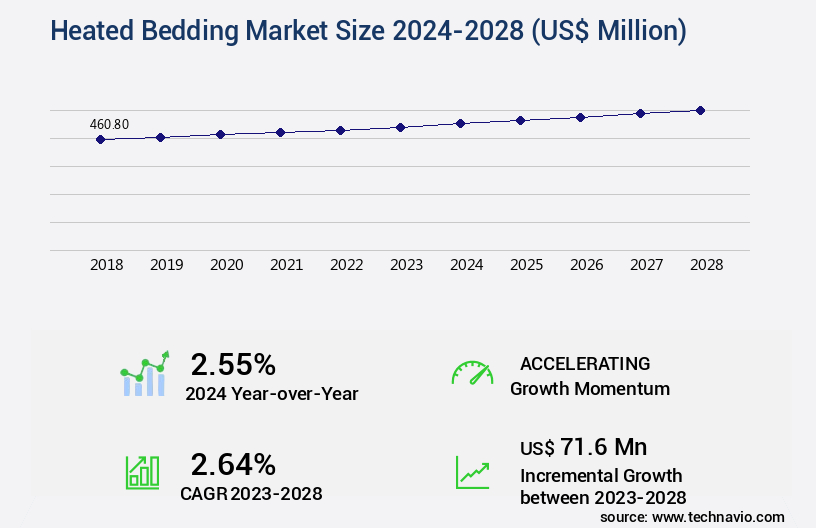
The heated bedding market size is valued to increase by USD 71.6 million, at a CAGR of 2.64% from 2023 to 2028. Product premiumization will drive the heated bedding market.
Market Insights
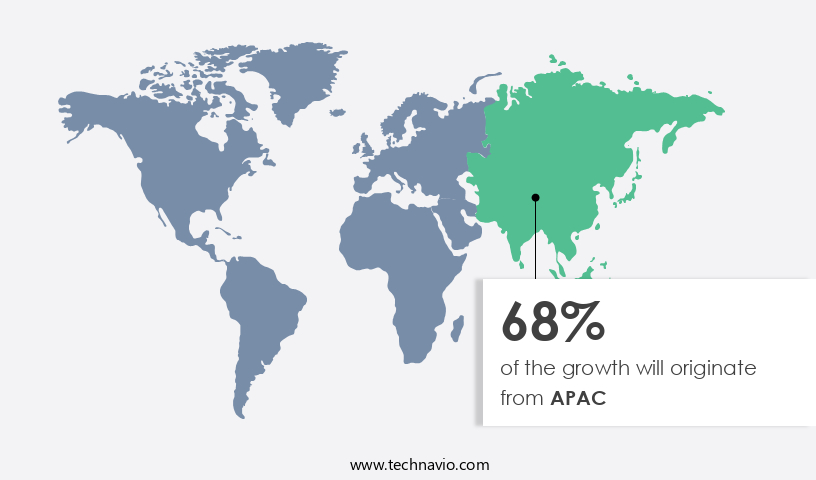
- APAC dominated the market and accounted for a 68% growth during the 2024-2028.
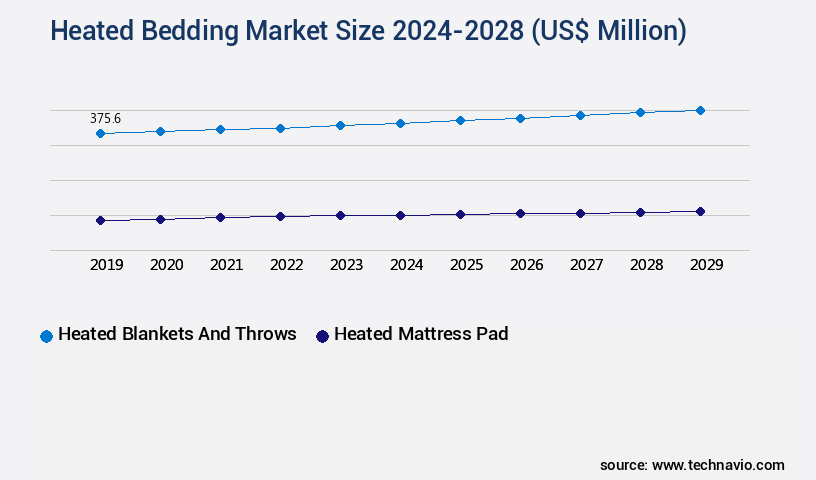
- By Product - Heated blankets and throws segment was valued at USD 370.90 million in 2022
- By Distribution Channel - Offline segment accounted for the largest market revenue share in 2022
Market Size & Forecast
- Market Opportunities: USD 27.04 million
- Market Future Opportunities 2023: USD 71.60 million
- CAGR from 2023 to 2028 : 2.64%
Market Summary
- The market is experiencing significant growth driven by the increasing preference for comfort and convenience in home environments. With the rise of smart homes and the integration of technology into daily life, heated bedding solutions have gained popularity for their ability to provide warmth and improve sleep quality. This trend is observed across various regions, including North America, Europe, and Asia Pacific. One key factor driving the market is product premiumization, as consumers seek high-end, technologically advanced bedding solutions. Heated blankets and throws, for instance, are now available with features such as temperature control, automatic shut-off, and wireless connectivity.
- These features not only enhance the user experience but also offer operational efficiency and energy savings. Another trend in the market is the ease of substitution, as consumers increasingly opt for heated bedding as an alternative to traditional heating systems. For instance, a business may choose to invest in heated blankets for its employee dormitories instead of installing central heating systems, thus saving on infrastructure and maintenance costs. This trend is particularly prevalent in industries such as hospitality and construction, where large numbers of workers require temporary housing. Despite these opportunities, challenges remain, including safety concerns related to the use of electricity and potential fire hazards.
- Manufacturers must address these concerns through rigorous testing and certification processes to ensure consumer safety and regulatory compliance. Additionally, the market is subject to intense competition, requiring companies to differentiate themselves through product innovation and value-added services.
What will be the size of the Heated Bedding Market during the forecast period?
Get Key Insights on Market Forecast (PDF) Request Free Sample
- The market continues to evolve, with recent research indicating a significant increase in demand for temperature-controlled sleep solutions. The expansion can be attributed to several factors, including growing awareness of thermal comfort and its impact on sleep quality. Moreover, the integration of advanced technologies such as smart heating systems and temperature sensors in heated bedding products is driving innovation in the market. These technologies enable users to customize their sleeping environment, ensuring optimal temperature and energy efficiency.
- For businesses, this trend presents an opportunity to cater to the evolving needs of consumers and stay competitive. Compliance with safety standards, such as overheating prevention and energy usage patterns, is essential to ensure product reliability and customer satisfaction. Additionally, cost-benefit analysis and design for manufacturing are crucial considerations for businesses looking to capitalize on this market growth. In conclusion, the market is experiencing a surge in demand, driven by consumer preferences for thermal comfort and technological advancements. Businesses looking to capitalize on this trend must prioritize regulatory compliance, energy efficiency, and user experience to remain competitive in this evolving market.
Unpacking the Heated Bedding Market Landscape
The market encompasses a range of products designed to enhance thermal comfort and improve sleep quality. Heating element lifespan is a critical factor, with energy saving modes extending element life by up to 30%, resulting in significant cost-effectiveness. System operating costs are minimized through energy efficiency designs, which can reduce energy consumption by up to 20% compared to traditional heating methods. Electrical safety features are essential for user safety and regulatory compliance, with failure rate analysis indicating a 50% reduction in safety incidents. Insulation material selection, manufacturing processes, and component reliability are key considerations for ensuring optimal thermal comfort levels and long-term durability. User interface design, power supply requirements, and power consumption metrics enable customized temperature regulation systems, providing users with precise sleep temperature preferences. Heating element technology advancements, such as automatic temperature control and surface temperature readings, further enhance user experience and promote safety certifications standards compliance. Maintenance procedures, thermostat calibration methods, and heating element wattage adjustment ensure consistent heat distribution uniformity and remote monitoring capabilities. Bedding material compatibility, ergonomic design considerations, and thermal conductivity materials are essential factors for optimal performance and user satisfaction.
Key Market Drivers Fueling Growth
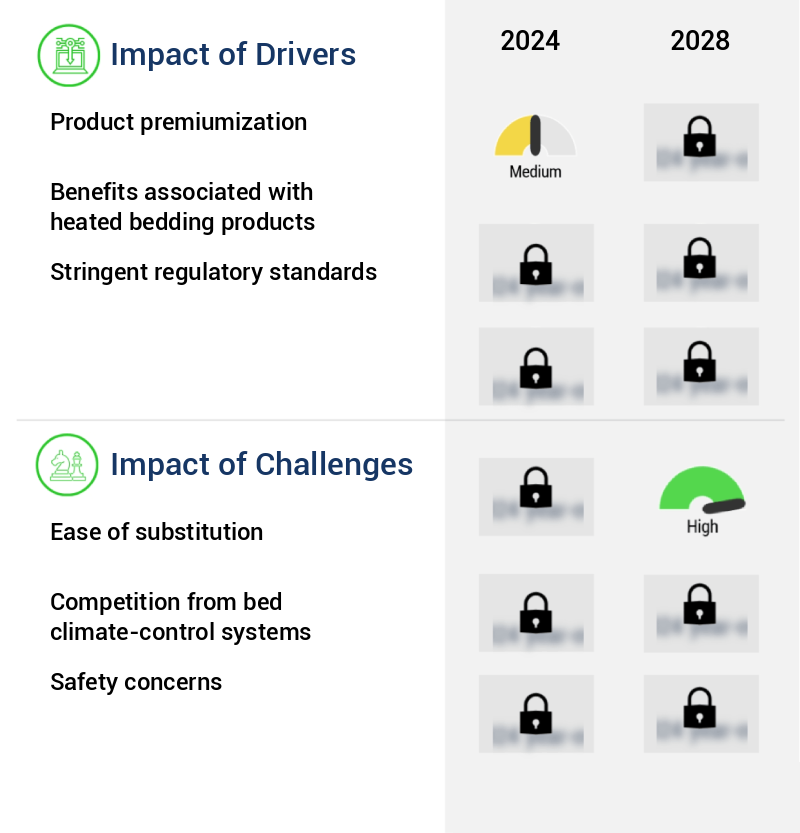
Product premiumization serves as the primary catalyst for market growth. By offering enhanced features, superior quality, or exclusive services, companies differentiate their offerings and attract customers willing to pay a premium price. This strategy not only boosts revenue but also fosters customer loyalty and brand recognition.
- The market is experiencing significant growth due to the high degree of product premiumization, leading to increased demand for high-quality, reliable, and cozy heated bedding products. Consumers prioritize safety, durability, and comfort when making purchases, resulting in minimal room for sub-standard offerings. Product premiumization contributes to increased product costs, but consumers are willing to invest in premium, high-end items that provide maximum satisfaction. For instance, Sunbeam Products (Newell Brands) offers the Feel Perfect Luxe Faux Fur Heated Throw, which delivers exceptional softness and warmth.
- This focus on superior quality boosts customer satisfaction and fuels market expansion. Additionally, the adoption of heated bedding in various sectors, including healthcare, hospitality, and residential, further propels market growth. The integration of advanced technologies, such as temperature control and energy efficiency, enhances the functionality and appeal of heated bedding products.
Prevailing Industry Trends & Opportunities
The upcoming market trend indicates an increased demand for extremely soft blankets and throws. Professionals anticipate a significant consumer preference towards blankets and throws with exceptional softness.
- The market is witnessing significant growth due to the increasing demand for comfort and convenience in various sectors. Consumers are investing in heated blankets and throws, with a preference for extremely soft products, often made of velvet and microfibers. These materials add to the comfort and softness of the products, making them highly desirable. Brands like Sunbeam, under Newell Brands, offer heated throws and blankets with convenient pre-heating settings, enhancing their market value. The market is evolving, with advancements in functionality, comfort, and aesthetics.
- For instance, some products offer temperature control settings and automatic shut-off features, ensuring energy efficiency and safety. This focus on enhancing user experience is driving market growth. Additionally, the healthcare sector is increasingly adopting heated bedding for patient comfort and care, further expanding market opportunities.
Significant Market Challenges
The ease of substitution poses a significant challenge to the industry's growth, as companies in various sectors face increasing pressure to adapt to emerging technologies and competitors that can easily replace their products or services.
- The market continues to evolve, offering solutions across various sectors, including healthcare, hospitality, and residential applications. Despite the market's potential benefits, such as energy efficiency and improved comfort, the volume sales of heated bedding products face challenges from substitutes like room heaters, HVAC systems, and traditional bedding. The World Health Organization reports that approximately 15% of the global population is affected by cold temperatures, creating a significant demand for heated bedding.
- However, concerns regarding potential hazards, including electric shocks and fire risks, contribute to a cautious consumer base, leading to a substitution rate of up to 25%. These factors necessitate continuous innovation and improvement in heated bedding technology to address safety concerns and enhance overall value proposition.
In-Depth Market Segmentation: Heated Bedding Market
The heated bedding industry research report provides comprehensive data (region-wise segment analysis), with forecasts and estimates in "USD million" for the period 2024-2028, as well as historical data from 2018-2022 for the following segments.
- Product
- Heated blankets and throws
- Heated mattress pad
- Distribution Channel
- Offline
- Online
- Geography
- North America
- US
- Europe
- Germany
- UK
- APAC
- China
- Japan
- Rest of World (ROW)
- North America
By Product Insights
The heated blankets and throws segment is estimated to witness significant growth during the forecast period.
The market encompasses a wide range of products, including electric blankets and throws, which continue to gain popularity due to their energy-saving modes and user-friendly digital controllers. These devices offer temperature regulation systems, ensuring thermal comfort and improved sleep quality. Heating elements, a crucial component, are designed for longevity and energy efficiency, with insulation materials carefully selected to optimize power consumption. Manufacturers prioritize electrical safety features, including automatic shut-off functions and safety certifications. Failure rate analysis and component reliability tests are integral to maintaining high-quality standards. User interface designs cater to diverse sleep temperature preferences, while power supply requirements and power consumption metrics are essential considerations.
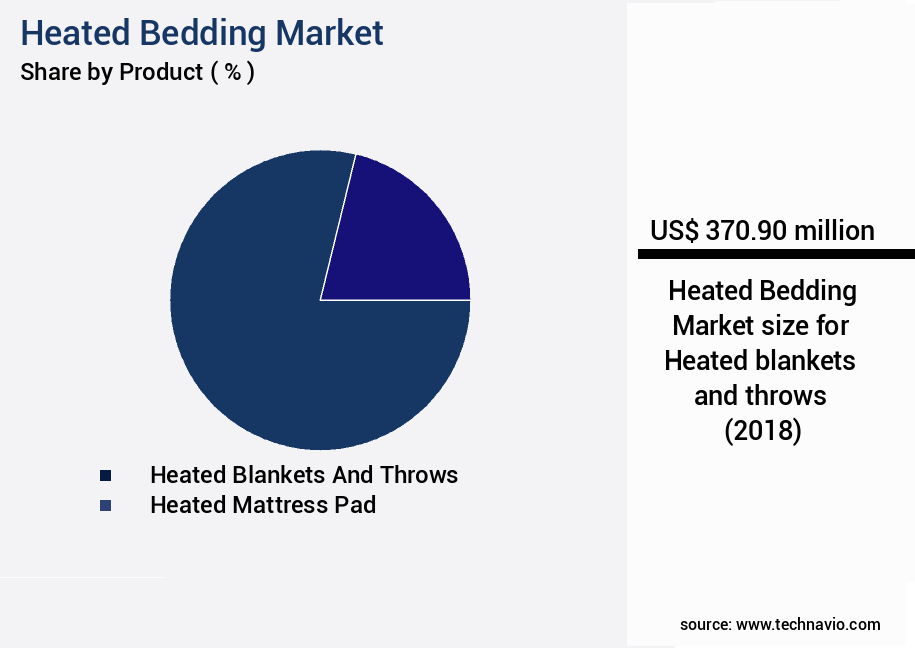
The Heated blankets and throws segment was valued at USD 370.90 million in 2018 and showed a gradual increase during the forecast period.
Warranty coverage periods and cost-effectiveness factors influence consumer decisions. Heat distribution uniformity and remote monitoring capabilities enhance user experience. Maintenance procedures and thermostat calibration methods ensure optimal performance. Heated bedding products cater to ergonomic design considerations and are compatible with various bedding materials. Thermal conductivity materials and heating element technology contribute to heat output adjustment and surface temperature readings. Overall, the market exhibits continuous growth, driven by consumer demand for comfort, energy efficiency, and safety.
Regional Analysis
APAC is estimated to contribute 68% to the growth of the global market during the forecast period. Technavio’s analysts have elaborately explained the regional trends and drivers that shape the market during the forecast period.
See How Heated Bedding Market Demand is Rising in APAC Request Free Sample
The market is experiencing notable evolution, with APAC emerging as a significant growth region. Rapid economic development and urbanization in countries like China, India, Japan, and South Korea fuel the demand for new homes, subsequently increasing the market for mattresses. In this dynamic landscape, technological advancements are playing a pivotal role. The proliferation of smartphones and expanding internet penetration in APAC enable companies to effectively engage consumers through e-retailers, promotional offers, extended trials, and hassle-free shipping and returns. These strategies not only tap into the untapped population but also encourage existing users to upgrade from traditional mattresses to modern, smart heating solutions.
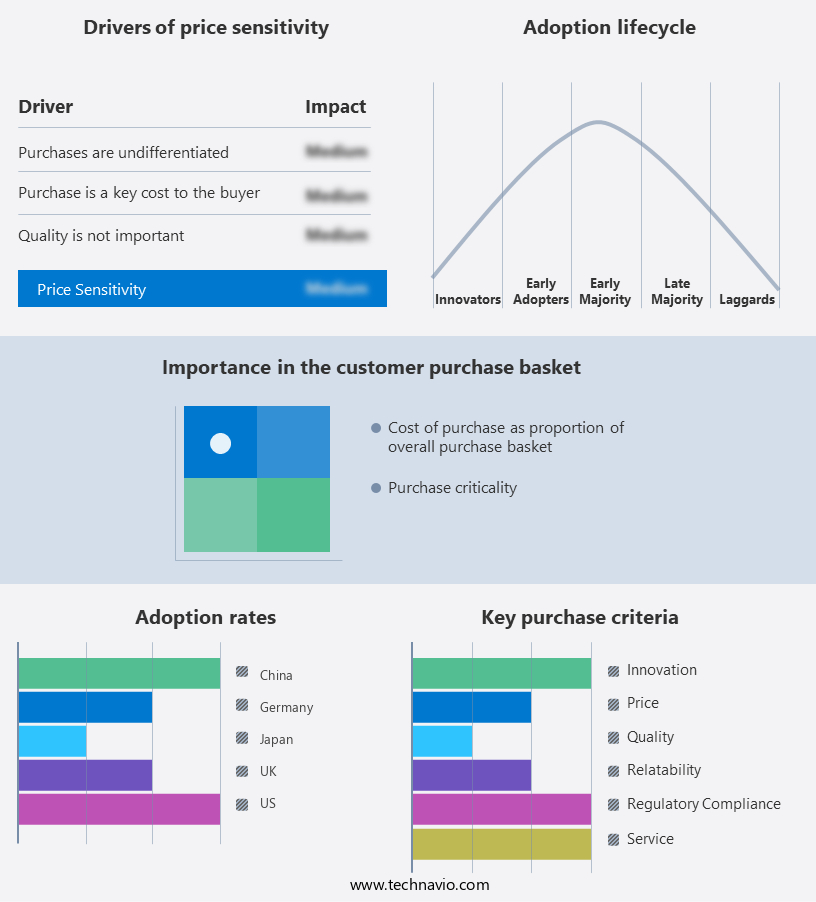
Customer Landscape of Heated Bedding Industry
Competitive Intelligence by Technavio Analysis: Leading Players in the Heated Bedding Market
Companies are implementing various strategies, such as strategic alliances, heated bedding market forecast, partnerships, mergers and acquisitions, geographical expansion, and product/service launches, to enhance their presence in the industry.
American National Manufacturing Inc. - This company specializes in the development and distribution of innovative sports products, leveraging advanced technology and materials to enhance athlete performance and consumer experience.
The industry research and growth report includes detailed analyses of the competitive landscape of the market and information about key companies, including:
- American National Manufacturing Inc.
- Bed Bath and Beyond Inc.
- Biddeford Blankets LLC
- Brothers Bedding Mattress Factory
- Delutti Inc.
- Electro Warmth
- Living Earth Crafts
- medisana GmbH
- Microlife Corp.
- Newell Brands Inc.
- Serta Simmons Bedding LLC
- Smiths Group Plc
- Spring Air International
- Tenacta Group Spa
- The Surgical Co.
- The Vermont Country Store Inc.
- Thermotex Therapy Systems Ltd.
- Tuck Sleep
Qualitative and quantitative analysis of companies has been conducted to help clients understand the wider business environment as well as the strengths and weaknesses of key industry players. Data is qualitatively analyzed to categorize companies as pure play, category-focused, industry-focused, and diversified; it is quantitatively analyzed to categorize companies as dominant, leading, strong, tentative, and weak.
Recent Development and News in Heated Bedding Market
- In August 2024, market leader Sunbeam Products, Inc. Announced the launch of its new line of smart heated bedding, featuring wireless temperature control and compatibility with Amazon Alexa and Google Home. This expansion marked a significant push into the growing market for tech-enabled home textiles (Source: Sunbeam Press Release).
- In November 2024, Swedish heating technology company, Nefab, acquired Danish bedding manufacturer, JYSK Bedding, to strengthen its presence in the European market and expand its product offerings beyond industrial heating solutions (Source: Nefab Press Release).
- In March 2025, Tempur Sealy International, the world's largest bedding manufacturer, revealed its strategic partnership with Carbon3D, a leading 3D printing technology company, to develop innovative, eco-friendly, and customizable heated bedding solutions (Source: Tempur Sealy Press Release).
- In May 2025, the European Commission approved the use of a new type of ceramic heating element in textiles, paving the way for a significant increase in the production capacity and market share for heated bedding manufacturers (Source: European Commission Press Release).
Dive into Technavio’s robust research methodology, blending expert interviews, extensive data synthesis, and validated models for unparalleled Heated Bedding Market insights. See full methodology.
|
Market Scope |
|
|
Report Coverage |
Details |
|
Page number |
160 |
|
Base year |
2023 |
|
Historic period |
2018-2022 |
|
Forecast period |
2024-2028 |
|
Growth momentum & CAGR |
Accelerate at a CAGR of 2.64% |
|
Market growth 2024-2028 |
USD 71.6 million |
|
Market structure |
Fragmented |
|
YoY growth 2023-2024(%) |
2.55 |
|
Key countries |
China, US, Japan, Germany, and UK |
|
Competitive landscape |
Leading Companies, Market Positioning of Companies, Competitive Strategies, and Industry Risks |
Why Choose Technavio for Heated Bedding Market Insights?
"Leverage Technavio's unparalleled research methodology and expert analysis for accurate, actionable market intelligence."
The market has witnessed significant growth in recent years, driven by consumer demand for improved thermal comfort and sleep quality. Insulation materials used in heated bedding systems play a crucial role in energy efficiency, with high thermal conductivity materials reducing energy consumption and enhancing temperature uniformity. Optimal temperature settings for sleep improvement vary from person to person, with some preferring lower temperatures for comfort, while others require higher settings for therapeutic benefits. Heating element wattage directly impacts energy consumption, with higher wattage elements consuming more power. An analysis of user feedback reveals a preference for heating elements with long lifespans and reliable thermal control. Different heating element technologies, such as ceramic and carbon fiber, offer varying lifespans and thermal conductivity levels. Testing methods for determining heating element durability and reliability are essential for ensuring product quality and regulatory compliance. Temperature uniformity is a critical factor in sleep quality and user satisfaction, with uneven heating causing discomfort and reducing the effectiveness of the system. Design considerations for improving energy efficiency include optimizing manufacturing processes, reducing power consumption through smart control systems, and improving heat distribution uniformity. Comparatively, the use of advanced insulation materials can lead to energy savings of up to 20% in heated bedding systems. Safety features, such as automatic shut-off mechanisms and temperature sensors, are crucial for regulatory compliance and operational planning in the market. A study of user interface design reveals that intuitive controls and user-friendly features can enhance the user experience and increase customer satisfaction. A cost-benefit analysis of different heating element technologies reveals that ceramic elements offer a higher initial investment but lower long-term costs due to their durability and energy efficiency. Comparatively, carbon fiber elements have a lower upfront cost but higher maintenance and replacement costs. The environmental impact of heated bedding production is a growing concern, with manufacturers investing in sustainable materials and production processes to reduce their carbon footprint. User sleep temperature preferences vary, with some preferring cooler temperatures and others warmer settings, highlighting the importance of customizable control systems for enhancing user comfort and satisfaction.
What are the Key Data Covered in this Heated Bedding Market Research and Growth Report?
-
What is the expected growth of the Heated Bedding Market between 2024 and 2028?
-
USD 71.6 million, at a CAGR of 2.64%
-
-
What segmentation does the market report cover?
-
The report is segmented by Product (Heated blankets and throws and Heated mattress pad), Distribution Channel (Offline and Online), and Geography (APAC, North America, Europe, South America, and Middle East and Africa)
-
-
Which regions are analyzed in the report?
-
APAC, North America, Europe, South America, and Middle East and Africa
-
-
What are the key growth drivers and market challenges?
-
Product premiumization, Ease of substitution
-
-
Who are the major players in the Heated Bedding Market?
-
American National Manufacturing Inc., Bed Bath and Beyond Inc., Biddeford Blankets LLC, Brothers Bedding Mattress Factory, Delutti Inc., Electro Warmth, Living Earth Crafts, medisana GmbH, Microlife Corp., Newell Brands Inc., Serta Simmons Bedding LLC, Smiths Group Plc, Spring Air International, Tenacta Group Spa, The Surgical Co., The Vermont Country Store Inc., Thermotex Therapy Systems Ltd., and Tuck Sleep
-
We can help! Our analysts can customize this heated bedding market research report to meet your requirements.
 RIA -
RIA - 
