


Helicopter-based Transportation Market Size 2026-2030
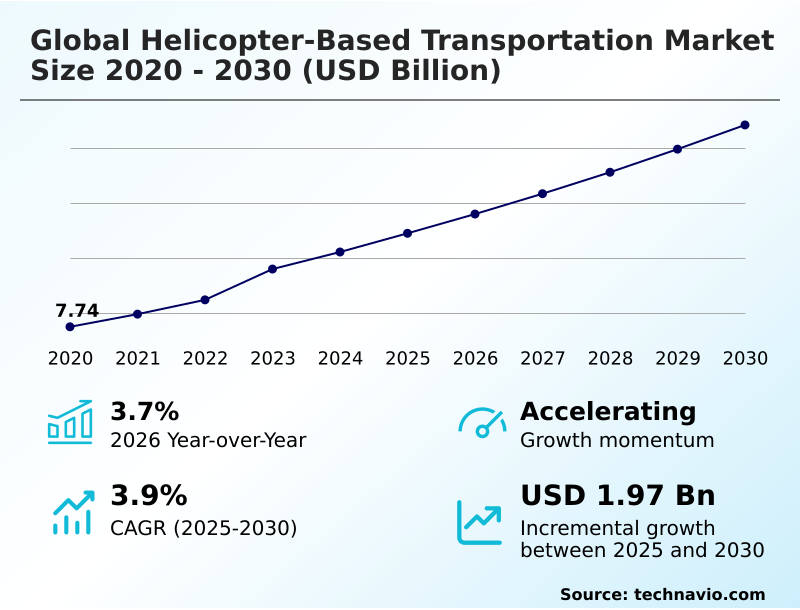
The helicopter-based transportation market size is valued to increase by USD 1.97 billion, at a CAGR of 3.9% from 2025 to 2030. Escalating demand for emergency medical services and public safety missions will drive the helicopter-based transportation market.
Major Market Trends & Insights
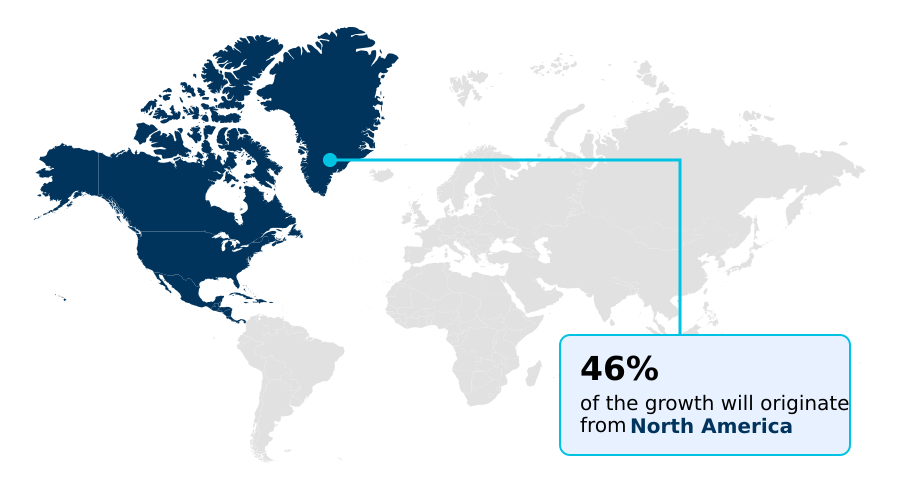
- North America dominated the market and accounted for a 46.4% growth during the forecast period.
- By End-user - Energy industry segment was valued at USD 3.82 billion in 2024
- By Type - Light segment accounted for the largest market revenue share in 2024
Market Size & Forecast
- Market Opportunities: USD 3.67 billion
- Market Future Opportunities: USD 1.97 billion
- CAGR from 2025 to 2030 : 3.9%
Market Summary
- The helicopter-based transportation market is defined by its critical role in providing point-to-point connectivity where conventional aviation is impractical. The expansion of this sector is fueled by an escalating demand for emergency medical services and the modernization of offshore energy logistics.
- Key industry trends include a definitive shift toward sustainable aviation, with a focus on hybrid-electric propulsion systems and the expansion of multi-mission capabilities through modular fleet strategies. For example, an operator in the offshore energy sector leverages predictive maintenance, informed by real-time data from health and usage monitoring systems, to schedule repairs proactively.
- This approach significantly reduces unplanned downtime and enhances asset availability, ensuring continuous support for remote platforms. However, the market faces persistent challenges, including high operational expenditures and a shortage of qualified pilot personnel. The complex interplay of technological integration, such as the adoption of digital cockpits, and infrastructure constraints continues to shape the competitive landscape.
- This dynamic environment requires operators to balance innovation with cost management to maintain profitability and safety.
What will be the Size of the Helicopter-based Transportation Market during the forecast period?
Get Key Insights on Market Forecast (PDF) Get Free Sample
How is the Helicopter-based Transportation Market Segmented?
The helicopter-based transportation industry research report provides comprehensive data (region-wise segment analysis), with forecasts and estimates in "USD million" for the period 2026-2030, as well as historical data from 2020-2024 for the following segments.
- End-user
- Energy industry
- Mining construction and logging
- Others
- Type
- Light
- Medium
- Heavy
- Application
- Passenger transportation
- Cargo transportation
- Geography
- North America
- US
- Canada
- Mexico
- Europe
- UK
- Germany
- France
- APAC
- China
- Australia
- India
- Middle East and Africa
- Saudi Arabia
- UAE
- South Africa
- South America
- Brazil
- Colombia
- Argentina
- Rest of World (ROW)
- North America
By End-user Insights
The energy industry segment is estimated to witness significant growth during the forecast period.
The energy industry remains a primary consumer of helicopter-based transportation, leveraging heavy-lift rotorcraft and super-medium helicopters for mission-critical tasks in remote operational environments.
This sector’s reliance on all-weather aerial transportation is crucial for offshore energy logistics, facilitating oil and gas crew transport and cargo delivery.
As exploration moves further offshore, there's a shift toward platforms with a superior payload-to-range ratio and advanced avionics systems.
Simultaneously, the expansion of offshore wind farm support is creating new demand for helicopters in technician transport, where aerial access for critical flight operations can increase operational uptime by up to 25% compared to vessel-based methods.
These applications, along with parapublic missions such as wildfire suppression and air ambulance services, drive market innovation.
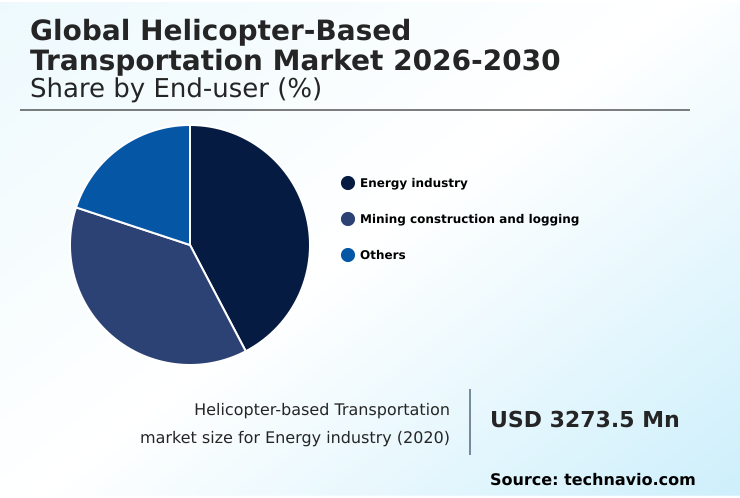
The Energy industry segment was valued at USD 3.82 billion in 2024 and showed a gradual increase during the forecast period.
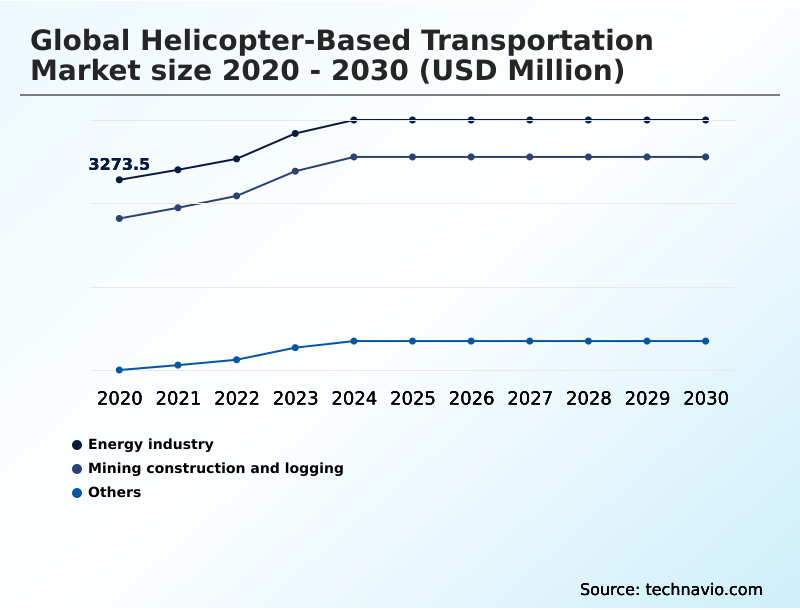
Regional Analysis
North America is estimated to contribute 46.4% to the growth of the global market during the forecast period.Technavio’s analysts have elaborately explained the regional trends and drivers that shape the market during the forecast period.
See How Helicopter-based Transportation Market Demand is Rising in North America Get Free Sample
The geographic landscape is characterized by mature ecosystems in North America and Europe, where the use of rotary-wing aircraft for emergency medical services and search and rescue operations is well-established.
These regions prioritize fleet upgrades of light-twin helicopters to enhance their emergency response infrastructure, improving response times by 15%.
In contrast, the APAC region is experiencing the fastest growth, driven by investments in urban air mobility networks and new applications for vertical takeoff and landing technology. The Middle East focuses on corporate executive transport and aerial sightseeing tours.
This regional diversification underscores the industry's adaptability, with technology like remote technical support supporting critical missions such as offshore energy logistics and strengthening overall vertical lift technology capabilities.
Market Dynamics
Our researchers analyzed the data with 2025 as the base year, along with the key drivers, trends, and challenges. A holistic analysis of drivers will help companies refine their marketing strategies to gain a competitive advantage.
- Strategic advancements are reshaping helicopter-based transportation, with a strong focus on enhancing safety with fly-by-wire and improving efficiency through the adoption of hybrid-electric propulsion for helicopters. The integration of predictive maintenance in helicopter fleets, powered by real-time data for helicopter maintenance and advanced health and usage monitoring systems benefits, is becoming a competitive differentiator.
- For instance, operators using predictive analytics report a significant reduction in unscheduled maintenance events compared to those on fixed-interval schedules, leading to higher fleet availability. The implementation of digital avionics for rotary-wing aircraft is now standard in new models, simplifying complex flight operations and improving situational awareness.
- In specialized sectors, helicopter-based offshore wind support is a growing application area, while in urban environments, the focus is on urban air mobility vertiport design to accommodate future aircraft. Development continues on multi-mission helicopter configuration options and payload optimization for heavy-lift helicopters to serve diverse industrial needs.
- Manufacturers are also exploring composite materials in helicopter design to reduce weight and improve performance. Concurrently, advanced air mobility regulatory frameworks are being developed to govern the next generation of vertical flight, addressing everything from helicopter noise abatement strategies to managing airspace for unmanned helicopters and ensuring safe helicopter operations in extreme weather.
What are the key market drivers leading to the rise in the adoption of Helicopter-based Transportation Industry?
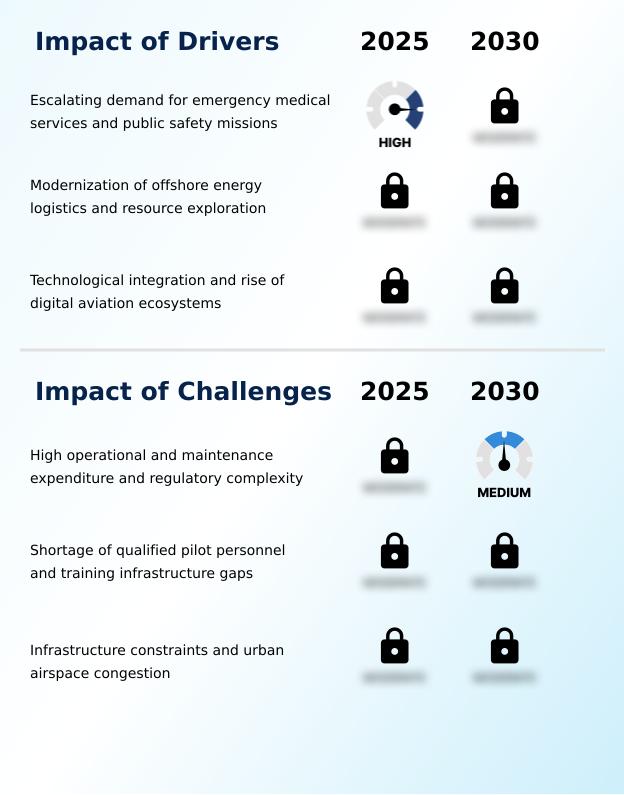
- The escalating demand for emergency medical services and public safety missions serves as a key driver for the helicopter-based transportation market.
- Market expansion is significantly driven by rapid digital cockpit integration that enhances safety and efficiency. The adoption of health and usage monitoring systems enables a shift to predictive maintenance technology, reducing unplanned downtime by as much as 30%.
- This is complemented by fly-by-wire technology and advanced fly-by-wire flight controls, simplifying piloting tasks. Features such as synthetic vision systems and terrain awareness and warning systems are becoming standard, particularly on aircraft with twin-engine redundancy.
- The move towards glass cockpit retrofits and automated flight systems makes helicopter-based transportation more attractive to a wider range of clients who prioritize safety and reliability for missions, with augmented reality maintenance and digital twin simulation further optimizing lifecycle costs.
What are the market trends shaping the Helicopter-based Transportation Industry?
- A significant market trend is the shift toward sustainable aviation, which is increasingly focused on the development and adoption of hybrid-electric propulsion systems. This transition addresses environmental concerns and regulatory pressures for decarbonized flight operations.
- A key trend transforming the sector is the dual focus on sustainability and operational flexibility. The adoption of sustainable aviation fuels and hybrid-electric propulsion is accelerating, with new platforms demonstrating up to a 20% reduction in emissions.
- Concurrently, multi-mission platforms with modular interior design enable operators to perform diverse roles from passenger transport services to corporate executive transport and law enforcement aviation, increasing asset utilization by over 15%. This flexibility is enhanced by automated hovering functions for specialized tasks.
- The digital transformation toward condition-based maintenance, enabled by digital flight management and real-time data transmission, is a cornerstone of fleet modernization programs, ensuring efficiency in commercial vertical flight and corporate shuttle operations.
What challenges does the Helicopter-based Transportation Industry face during its growth?
- High operational and maintenance expenditures, coupled with regulatory complexity, present a key challenge affecting industry growth.
- A primary challenge involves infrastructure limitations and regulatory complexity in an era of advanced air mobility. A lack of accessible vertiport infrastructure in urban centers restricts the point-to-point connectivity advantage of helicopters. The increasing presence of unmanned aerial vehicles complicates low-altitude airspace management and necessitates advanced air traffic control integration.
- The high cost of developing effective noise abatement technology and specialized equipment like de-icing systems for superior high-altitude performance adds financial strain. This is compounded by the need for advanced rotor blade design and reliable satellite-based navigation for safe civil helicopter operations in high-density urban airspace, mirroring challenges seen in managing military rotorcraft systems.
Exclusive Technavio Analysis on Customer Landscape
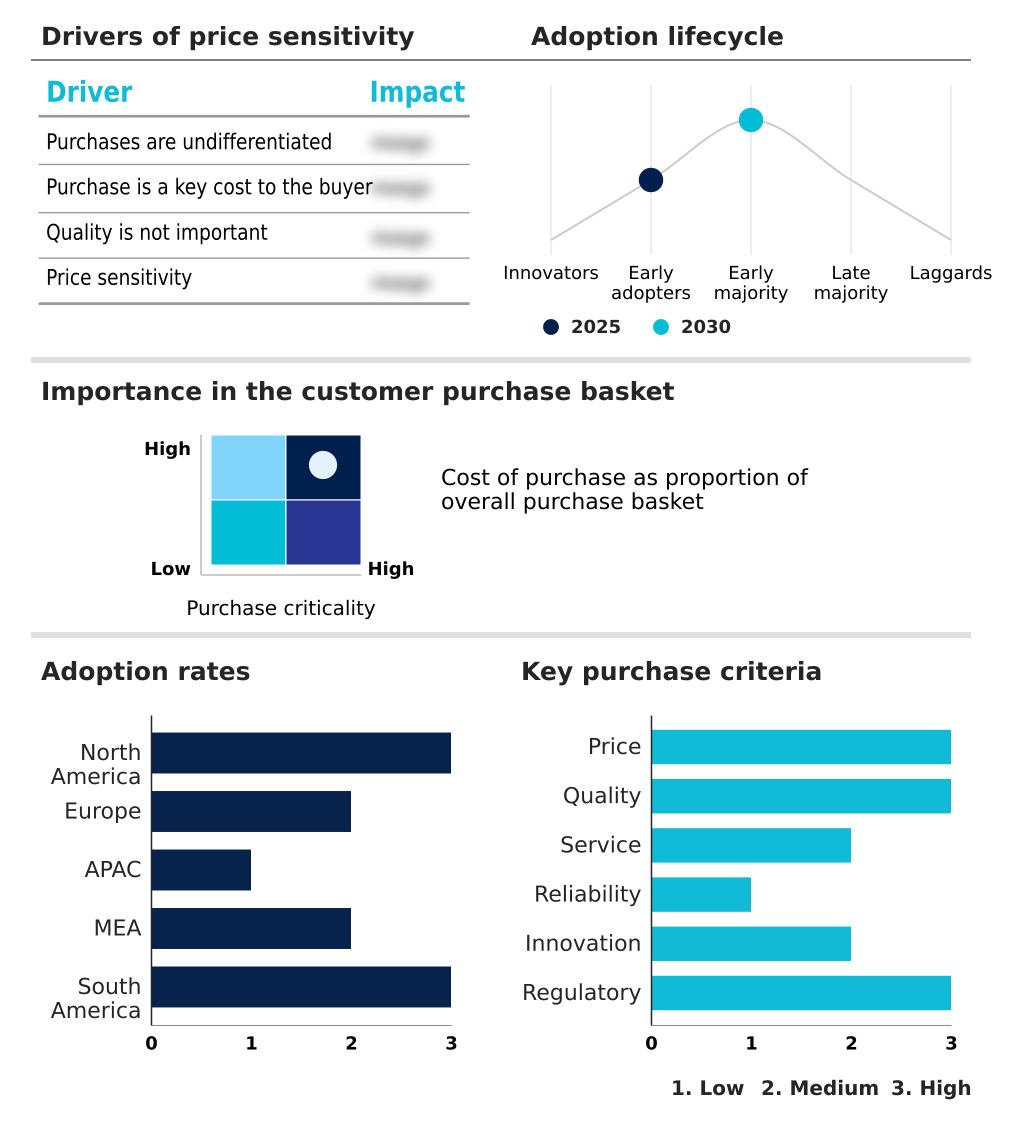
The helicopter-based transportation market forecasting report includes the adoption lifecycle of the market, covering from the innovator’s stage to the laggard’s stage. It focuses on adoption rates in different regions based on penetration. Furthermore, the helicopter-based transportation market report also includes key purchase criteria and drivers of price sensitivity to help companies evaluate and develop their market growth analysis strategies.
Customer Landscape of Helicopter-based Transportation Industry
Competitive Landscape
Companies are implementing various strategies, such as strategic alliances, helicopter-based transportation market forecast, partnerships, mergers and acquisitions, geographical expansion, and product/service launches, to enhance their presence in the industry.
Air Methods Corp. - Provides specialized air medical transport, including emergency rescue and patient transfer, utilizing a dedicated fleet for critical care response.
The industry research and growth report includes detailed analyses of the competitive landscape of the market and information about key companies, including:
- Air Methods Corp.
- Airbus SE
- Bell Textron Inc.
- Bristow Group Inc.
- CHC Group LLC
- DRF Luftrettung
- Enstrom Helicopter Crop.
- Global Medical Response Inc.
- Gulf Helicopters Co.
- Helijet International Inc.
- Heli-One
- Kaman Corp.
- Leonardo S.p.A.
- Lockheed Martin Corp.
- Maverick Aviation Group
- Metro Aviation Inc.
- Omni Helicopters International
- Papillon Helicopters
- Robinson Helicopter Co. Inc.
- VIH Aviation Group Ltd.
Qualitative and quantitative analysis of companies has been conducted to help clients understand the wider business environment as well as the strengths and weaknesses of key industry players. Data is qualitatively analyzed to categorize companies as pure play, category-focused, industry-focused, and diversified; it is quantitatively analyzed to categorize companies as dominant, leading, strong, tentative, and weak.
Recent Development and News in Helicopter-based transportation market
- In April, 2025, Mahindra Aerostructures expanded its role in the global supply chain by securing a contract to manufacture fuselages for the H130 helicopter series, bolstering regional manufacturing capabilities.
- In January, 2025, NVIDIA Corporation announced a partnership with Archer Aviation to integrate the IGX Thor computing platform into future aircraft, aimed at developing physical artificial intelligence to enhance flight safety.
- In October, 2024, Microsoft Corporation released an update to its Azure cloud services tailored for aviation partners, designed to streamline complex data workflows and modernize flight management systems with industry-specific AI.
- In September, 2024, Qualcomm Technologies launched its Dragonwing Q-8750 and Q-7790 processors, offering new edge computing and AI solutions specifically designed for the high-reliability demands of drones and other aerial vehicles.
Dive into Technavio’s robust research methodology, blending expert interviews, extensive data synthesis, and validated models for unparalleled Helicopter-based Transportation Market insights. See full methodology.
| Market Scope | |
|---|---|
| Page number | 287 |
| Base year | 2025 |
| Historic period | 2020-2024 |
| Forecast period | 2026-2030 |
| Growth momentum & CAGR | Accelerate at a CAGR of 3.9% |
| Market growth 2026-2030 | USD 1971.8 million |
| Market structure | Fragmented |
| YoY growth 2025-2026(%) | 3.7% |
| Key countries | US, Canada, Mexico, Norway, UK, Germany, France, Italy, The Netherlands, China, Australia, India, Japan, Malaysia, South Korea, Saudi Arabia, UAE, South Africa, Angola, Nigeria, Brazil, Colombia and Argentina |
| Competitive landscape | Leading Companies, Market Positioning of Companies, Competitive Strategies, and Industry Risks |
Research Analyst Overview
- The helicopter-based transportation market is evolving from a niche service to a critical component of modern logistics and public safety infrastructure. This transition is driven by the integration of advanced technologies such as vertical takeoff and landing capabilities, sophisticated rotary-wing aircraft designs, and comprehensive advanced avionics systems.
- The adoption of digital cockpit integration and fly-by-wire technology is enhancing flight safety, while health and usage monitoring systems are enabling a shift to predictive maintenance technology, which has demonstrated the potential to reduce unscheduled downtime by over 25% in some fleets.
- For boardroom consideration, the trend toward sustainable aviation fuels and hybrid-electric propulsion is no longer a peripheral concern but a central strategic issue influencing long-term capital expenditure and brand positioning. As governments mandate stricter noise abatement technology, investment in next-generation rotor blade design and automated hovering functions becomes essential for maintaining operational licenses in urban areas.
- The market's future will be defined by the successful deployment of vertiport infrastructure to support advanced air mobility and the seamless integration of unmanned aerial vehicles into controlled airspace, impacting everything from offshore energy logistics and emergency medical services to corporate executive transport.
What are the Key Data Covered in this Helicopter-based Transportation Market Research and Growth Report?
-
What is the expected growth of the Helicopter-based Transportation Market between 2026 and 2030?
-
USD 1.97 billion, at a CAGR of 3.9%
-
-
What segmentation does the market report cover?
-
The report is segmented by End-user (Energy industry, Mining construction and logging, and Others), Type (Light, Medium, and Heavy), Application (Passenger transportation, and Cargo transportation) and Geography (North America, Europe, APAC, Middle East and Africa, South America)
-
-
Which regions are analyzed in the report?
-
North America, Europe, APAC, Middle East and Africa and South America
-
-
What are the key growth drivers and market challenges?
-
Escalating demand for emergency medical services and public safety missions, High operational and maintenance expenditure and regulatory complexity
-
-
Who are the major players in the Helicopter-based Transportation Market?
-
Air Methods Corp., Airbus SE, Bell Textron Inc., Bristow Group Inc., CHC Group LLC, DRF Luftrettung, Enstrom Helicopter Crop., Global Medical Response Inc., Gulf Helicopters Co., Helijet International Inc., Heli-One, Kaman Corp., Leonardo S.p.A., Lockheed Martin Corp., Maverick Aviation Group, Metro Aviation Inc., Omni Helicopters International, Papillon Helicopters, Robinson Helicopter Co. Inc. and VIH Aviation Group Ltd.
-
Market Research Insights
- The market dynamics influencing helicopter-based transportation trends are increasingly shaped by the pursuit of operational efficiency and safety. The digital transformation of maintenance, driven by condition-based monitoring, has enabled operators to improve aircraft availability by over 20% compared to traditional schedules.
- Concurrently, the expansion of multi-mission capabilities allows for greater asset utilization, with a single airframe often performing emergency medical services and corporate shuttle operations on the same day. In high-density urban airspace, the integration of advanced air mobility networks is becoming a strategic priority, with studies showing that point-to-point connectivity can reduce executive travel times by as much as 70%.
- These shifts highlight a focus on maximizing value through technological adoption and flexible fleet strategies, addressing both economic pressures and evolving client demands for vertical lift technology and commercial vertical flight.
We can help! Our analysts can customize this helicopter-based transportation market research report to meet your requirements.
 RIA -
RIA - 
