



Heptanoic Acid Market Size 2024-2028
The heptanoic acid market size is forecast to increase by USD 731.6 million at a CAGR of 4.5% between 2023 and 2028.
- Heptanoic acid, a six-carbon fatty acid, finds extensive applications in various industries, including flavors and fragrances, lubricants, fuel additives, and cosmetics. The market is witnessing significant growth due to the increasing demand from end-user industries. In the cosmetics sector, heptanoic acid is used as a fragrance ingredient in perfumes and as a preservative in cosmetic products.
- In the food industry, it is used as a flavoring agent in tea, apple, and ginger-flavored food and beverages. Moreover, the rising usage of heptanoic acid in industrial lubricants, metalworking fluids, and plasticizers is expected to fuel market growth. However, the potential harmful effects of heptanoic acid on human health and the environment pose a significant challenge to the market.
- The increasing popularity of e-commerce platforms and the convenience they offer to consumers is also expected to boost market growth. In the US and North America, the market for heptanoic acid is expected to witness steady growth due to the increasing demand from various end-user industries and the growing awareness of its benefits.
What will be the Size of the Heptanoic Acid Market During the Forecast Period?

- The market encompasses the production, sale, and application of this seven-carbon saturated carboxylic acid in various industries. Heptanoic acid is a versatile chemical intermediate, finding significant use In the production of esters for industrial lubricants, neopolyol esters for car motor oils and metalworking fluids, plasticizers, and as a raw material In the synthesis of enanthic acid for the fragrances and perfumes industry. Its thermal stability and resistance to oxidation make it an attractive choice for high-performance lubricants and chemical intermediates. In the flavors & fragrances sector, heptanoic acid is used In the production of violet leaf oil and other essential oils.
- In the pharmaceutical and food industries, heptanoic acid is available in various grades, including pharmaceutical and food grade, for specific applications. The market's growth is driven by the increasing demand for high-performance lubricants, synthetic lubricants, and chemical intermediates in various industries. However, competition from alternative raw materials and the regulatory landscape pose challenges to the market's growth. Chemical industry regulations and environmental concerns continue to shape the market dynamics. Despite these challenges, the market for heptanoic acid is expected to maintain a steady growth trajectory due to its wide range of applications and its role as a key building block In the production of various industrial and consumer products.
How is this Heptanoic Acid Industry segmented and which is the largest segment?
The heptanoic acid industry research report provides comprehensive data (region-wise segment analysis), with forecasts and estimates in "USD million" for the period 2024-2028, as well as historical data from 2018-2022 for the following segments.
- End-user
- Automotive
- Aerospace
- Food and Beverage
- Pharmaceuticals
- Others
- Geography
- APAC
- China
- Japan
- North America
- US
- Europe
- UK
- France
- South America
- Middle East and Africa
- APAC
By End-user Insights
- The automotive segment is estimated to witness significant growth during the forecast period.
The market is experiencing significant growth due to its increasing applications In the automotive sector. Heptanoic acid is extensively used in manufacturing lubricants for automobile industry applications, particularly In the production of specialized brake fluids and automotive motor oils, where it functions as a synthetic flavoring component. The expanding automotive industry, with manufacturers focusing on increasing global production, is driving the demand for heptanoic acid. Additionally, this acid is utilized in various industries such as cosmetics, food and beverages, and chemicals, further expanding its market potential. Heptanoic acid's thermal stability, resistance to oxidation, and viscosity properties make it an ideal choice for various applications.
The market is expected to grow steadily during the forecast period due to its increasing usage in diverse industries.
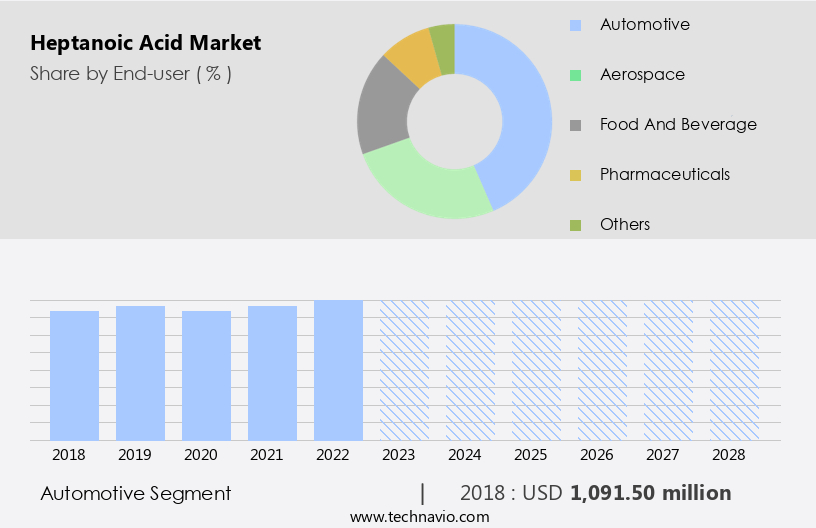
Get a glance at the Heptanoic Acid Industry report of share of various segments Request Free Sample
The Automotive segment was valued at USD 1.09 billion in 2018 and showed a gradual increase during the forecast period.
Regional Analysis
- APAC is estimated to contribute 38% to the growth of the global market during the forecast period.
Technavio's analysts have elaborately explained the regional trends and drivers that shape the market during the forecast period.

For more insights on the market share of various regions, Request Free Sample
Heptanoic acid is a valuable organic compound with significant applications in various industries, including automotive, cosmetics and personal care, and food and beverage. The Asia Pacific (APAC) region is a major consumer of heptanoic acid, driven by the expanding automotive industry and the growing population in countries like China, India, and Japan. The region's industrialization and business sector expansion have led to a well-diversified market. Heptanoic acid is used as a chemical intermediate In the production of esters, neopolyol esters, and synthetic lubricants. In the automotive sector, it is used in car motor oils and metalworking fluids for its thermal stability and resistance to oxidation.
In the cosmetics industry, it serves as a perfume ingredient and a plasticizer. The food and beverage industry uses heptanoic acid as a flavoring agent in various food items, including violet leaf oil, coconut oil, apples, feijoa seeds, strawberry jam, clove buds, ginger, tea, sour cherries, grapes, rice bran, and many others. The market for heptanoic acid in APAC is expected to continue growing due to increasing demand from these industries and the region's large consumer base.
Market Dynamics
Our researchers analyzed the data with 2023 as the base year, along with the key drivers, trends, and challenges. A holistic analysis of drivers will help companies refine their marketing strategies to gain a competitive advantage.
What are the key market drivers leading to the rise In the adoption of Heptanoic Acid Industry?
Rise in number of cosmetic products is the key driver of the market.
- Heptanoic acid, a bio-based chemical intermediate, plays a significant role In the cosmetics and personal care industry. With the growing consciousness towards external beauty and increasing usage of cosmetics by men and women alike, the demand for heptanoic acid has demand. This compound is extensively used In the production of organic, skin conditioning and viscosity-controlling substances due to its superior thermal stability and bio-based nature. Heptanoic acid is also a valuable raw material In the manufacture of various cosmetic and personal care products. In the perfumes and fragrances industry, it is used as an ester In the production of neopolyol esters, which are used in car motor oils, metalworking fluids, and plasticizers.
- In the beauty industry, it is employed in cosmetic applications such as anti-corrosion agents, chemical intermediates, and fragrance industry. Furthermore, heptanoic acid is used as an intermediate In the production of enanthic acid, which is used in synthetic lubricants. Its bio-based nature and excellent thermal stability make it a preferred choice over other alternatives. However, the chemical industry regulations impose strict guidelines on the usage and production of heptanoic acid, which may impact its market growth. Heptanoic acid is derived from various natural sources such as violet leaf oil, coconut oil, apples, feijoa seeds, strawberry jam, clove buds, ginger, tea, sour cherries, grapes, rice bran, and more.
- The food and beverage industry also utilizes heptanoic acid as a flavoring agent in various food products. With the increasing demand for organic and bio-based products, the market for heptanoic acid is expected to grow steadily In the coming years. The global market for heptanoic acid is driven by the increasing demand for cosmetics and personal care products, the growing awareness towards health and wellness, and the preference for organic and bio-based ingredients. The market is also influenced by the strict chemical industry regulations, which may impact the market growth. Despite the competition from alternatives, heptanoic acid's unique properties make it a preferred choice for various industries, including automobiles, aerospace, and food and beverage.
What are the market trends shaping the Heptanoic Acid Industry?
Rising use of heptanoic acid in various end-user industries is the upcoming market trend.
- Heptanoic acid, known for its low viscosity at low temperatures and stability at high temperatures, is a valuable industrial compound with diverse applications. In the lubricants sector, it is utilized in industrial lubricants, including car motor oils and metalworking fluids, due to its excellent corrosion resistance and resistance to oxidation. Furthermore, it is increasingly used In the production of neopolyol esters, which are essential raw materials for synthetic lubricants. The market is experiencing growth due to the increasing demand for lubricants in various industries. The automotive sector's expansion, driven by international automobile manufacturers and e-commerce players, is a significant factor fueling market growth.
- Additionally, heptanoic acid's applications extend beyond lubricants. It is used as a plasticizer In the food and beverage industry, particularly In the production of violet leaf oil, coconut oil, strawberry jam, and various essential oils derived from plants such as clove buds, ginger, tea, sour cherries, grapes, rice bran, and others. The beauty industry also utilizes heptanoic acid for cosmetic applications, including anti-corrosion and chemical intermediate uses. The aerospace industry benefits from its thermal stability and resistance to oxidation. In the chemical industry, heptanoic acid is used as a chemical intermediate for the production of enanthic acid and fragrances In the perfumes and fragrances industry.
- Despite competition from alternatives, the market for heptanoic acid is expected to continue expanding due to its versatility and wide range of applications. However, chemical industry regulations must be adhered to in its production and usage.
What challenges does the Heptanoic Acid Industry face during its growth?
Harmful effects of heptanoic acid is a key challenge affecting the industry growth.
- Heptanoic acid, a significant chemical intermediate, holds a crucial role in various industries, including industrial lubricants, food and beverage, perfumes and fragrances, and the beauty industry. In industrial applications, heptanoic acid is used to produce esters, such as neopolyol esters, which are essential components of car motor oils and metalworking fluids. In the perfumes and fragrances industry, heptanoic acid is used as a raw material for producing flavors and fragrances in various products, including essential oils derived from violet leaf, coconut, apples, feijoa seeds, strawberry jam, clove buds, ginger, tea, sour cherries, grapes, and rice bran. Despite its widespread usage, the market for heptanoic acid faces several challenges.
- Exposure to heptanoic acid can cause irritation to the respiratory system, leading regulatory bodies to establish guidelines and norms for its usage. For instance, the European Union (EU) recommended rules for the efficient use of heptanoic acid in December 2019. In the European regulatory act REGULATION (EC) No 1272/2008, heptanoic acid is classified as acutely hazardous and dangerous if inhaled. Moreover, the competition from alternatives, such as synthetic lubricants and other chemical intermediates, may impact the demand for heptanoic acid. Chemical industry regulations also pose challenges for the market's growth. Despite these challenges, heptanoic acid continues to be an essential raw material in various industries due to its unique properties, including thermal stability, resistance to oxidation, and viscosity.
Exclusive Customer Landscape
The heptanoic acid market forecasting report includes the adoption lifecycle of the market, covering from the innovator's stage to the laggard's stage. It focuses on adoption rates in different regions based on penetration. Furthermore, the heptanoic acid market report also includes key purchase criteria and drivers of price sensitivity to help companies evaluate and develop their market growth analysis strategies.
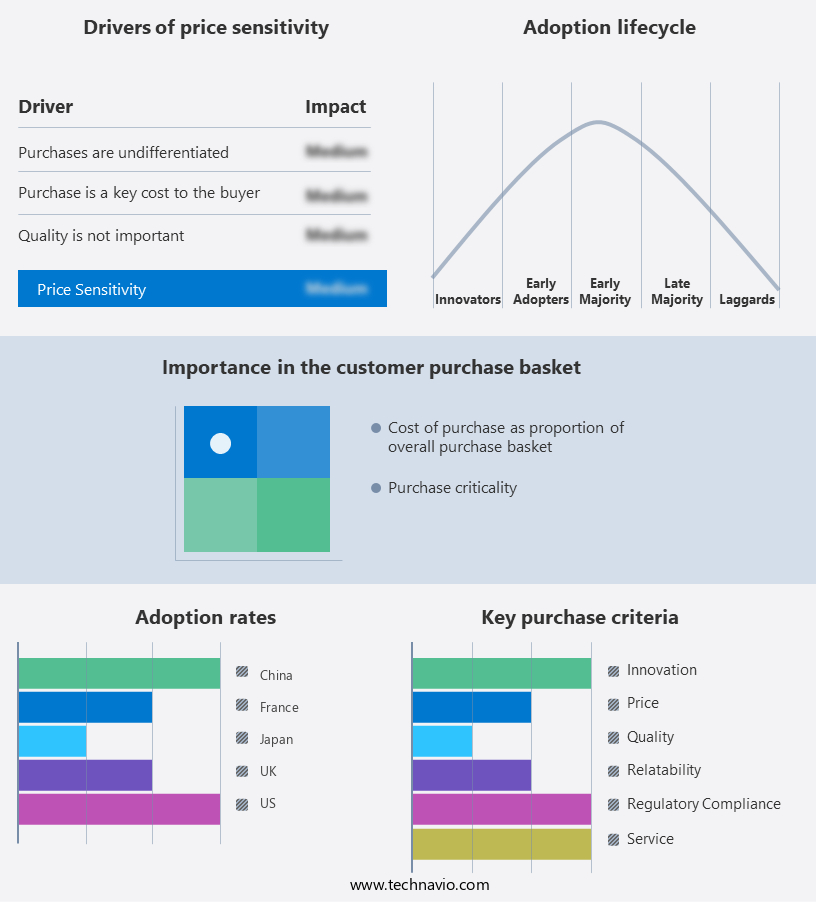
Customer Landscape
Key Companies & Market Insights
Companies are implementing various strategies, such as strategic alliances, heptanoic acid market forecast, partnerships, mergers and acquisitions, geographical expansion, and product/service launches, to enhance their presence In the industry.
The industry research and growth report includes detailed analyses of the competitive landscape of the market and information about key companies, including:
- Acme synthetic chemicals
- Akshay Chemicals
- Arkema SA
- Cayman Chemical
- Central Drug House Pvt. Ltd.
- Cole Parmer
- Intellichemie Industries
- Kalpsutra Chemicals Pvt. Ltd.
- KUNSHAN ODOWELL CO. LTD.
- Merck KGaA
- National Analytical Corp.
- Neogen Chemicals Ltd.
- Neuchatel Chemie Specialties
- OQ SAOC
- Spectrum Laboratory Products Inc.
- Synerzine Inc.
- Thermo Fisher Scientific Inc.
- Tokyo Chemical Industry Co. Ltd.
- Wujiang New Sanlian Chemical Co. Ltd.
- Yancheng Hongtai Bioengineering Co. Ltd.
Qualitative and quantitative analysis of companies has been conducted to help clients understand the wider business environment as well as the strengths and weaknesses of key industry players. Data is qualitatively analyzed to categorize companies as pure play, category-focused, industry-focused, and diversified; it is quantitatively analyzed to categorize companies as dominant, leading, strong, tentative, and weak.
Research Analyst Overview
Heptanoic acid, a versatile organic compound, plays a significant role in various industries due to its unique chemical properties. This eight-carbon saturated fatty acid is a valuable component In the production of industrial lubricants, particularly esters. Esters, derived from the reaction of heptanoic acid with alcohols, exhibit excellent thermal stability and resistance to oxidation. These properties make them ideal for use in car motor oils and metalworking fluids. In the automotive sector, these lubricants ensure optimal engine performance and prolonged machinery life. Heptanoic acid also finds applications In the production of neopolyol esters, which are widely used as plasticizers In the plastics industry.
The chemical's compatibility with a broad range of polymers makes it an essential raw material in this sector. Beyond industrial applications, heptanoic acid is also used In the perfumes and fragrances industry. It contributes to the creation of complex fragrance compounds, enhancing the overall scent profile. Essential oils derived from various sources, such as violet leaf oil, coconut oil, and fruits like apples, feijoa seeds, strawberry jam, clove buds, ginger, tea, sour cherries, grapes, and rice bran, often contain trace amounts of heptanoic acid, adding to their unique aromas. In the beauty industry, heptanoic acid is used in cosmetic applications due to its excellent viscosity control properties.
It aids In the formulation of various cosmetic products, ensuring a smooth and consistent texture. The chemical industry's diverse range of applications for heptanoic acid extends to the aerospace sector, where it is used as a chemical intermediate in the production of synthetic lubricants. These lubricants are essential for maintaining the functionality of aerospace machinery under extreme conditions. Heptanoic acid is also used In the food and beverage industry, primarily as a flavoring agent. Its subtle aroma contributes to the overall taste profile of various food products. The market is driven by the increasing demand for high-performance lubricants and plasticizers across various industries.
The chemical's versatility and unique properties make it an indispensable raw material in numerous applications. Competition from alternative raw materials and stringent chemical industry regulations challenge the market's growth. However, continuous research and development efforts to improve the production processes and expand the applications of heptanoic acid are expected to drive market growth. Heptanoic acid is a vital organic compound with a wide range of applications across various industries. Its unique properties, such as thermal stability, resistance to oxidation, and excellent viscosity control, make it an essential raw material in the production of industrial lubricants, plasticizers, and fragrances. The market is expected to grow, driven by the increasing demand for high-performance products and continuous research and development efforts.
|
Market Scope |
|
|
Report Coverage |
Details |
|
Page number |
142 |
|
Base year |
2023 |
|
Historic period |
2018-2022 |
|
Forecast period |
2024-2028 |
|
Growth momentum & CAGR |
Accelerate at a CAGR of 4.5% |
|
Market growth 2024-2028 |
USD 731.6 million |
|
Market structure |
Fragmented |
|
YoY growth 2023-2024(%) |
4.23 |
|
Key countries |
US, China, Japan, France, and UK |
|
Competitive landscape |
Leading Companies, Market Positioning of Companies, Competitive Strategies, and Industry Risks |
What are the Key Data Covered in this Heptanoic Acid Market Research and Growth Report?
- CAGR of the Heptanoic Acid industry during the forecast period
- Detailed information on factors that will drive the growth and forecasting between 2024 and 2028
- Precise estimation of the size of the market and its contribution of the industry in focus to the parent market
- Accurate predictions about upcoming growth and trends and changes in consumer behaviour
- Growth of the market across APAC, North America, Europe, South America, and Middle East and Africa
- Thorough analysis of the market's competitive landscape and detailed information about companies
- Comprehensive analysis of factors that will challenge the heptanoic acid market growth of industry companies
We can help! Our analysts can customize this heptanoic acid market research report to meet your requirements.
 RIA -
RIA - 
