
Cosmetic Products Market Size 2025-2029
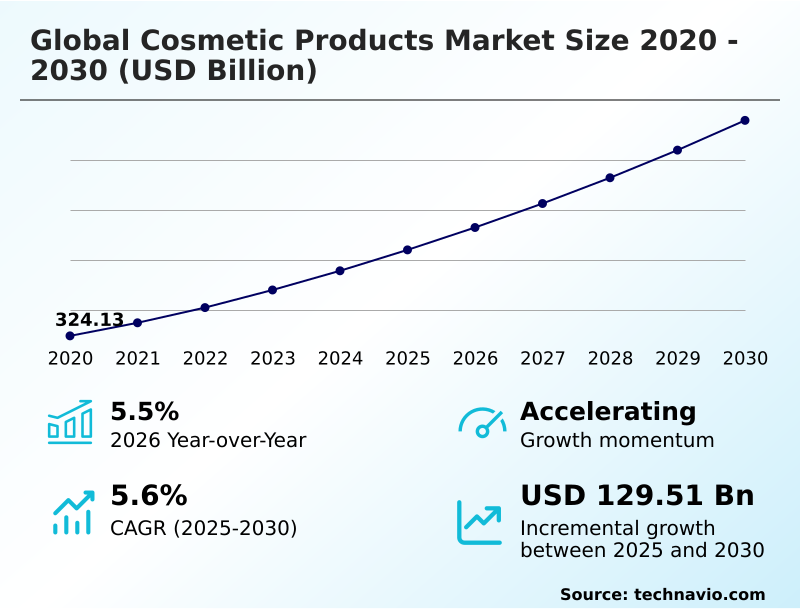
The cosmetic products market size is valued to increase USD 126.4 billion, at a CAGR of 5.8% from 2024 to 2029. Rise in aging population will drive the cosmetic products market.
Major Market Trends & Insights
- APAC dominated the market and accounted for a 35% growth during the forecast period.
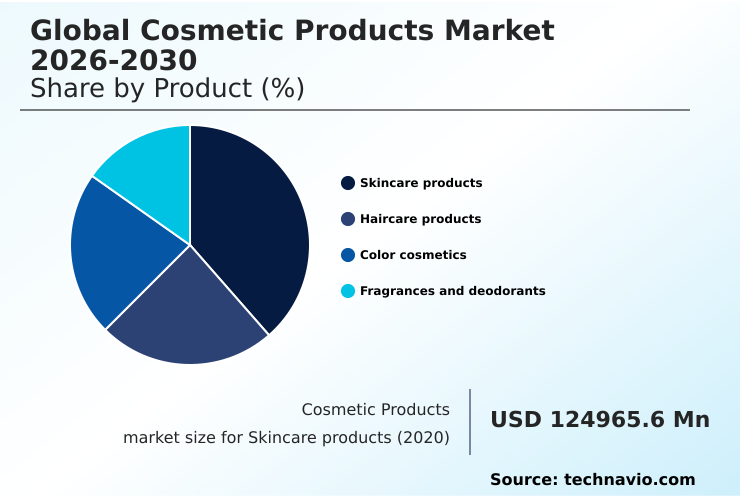
- By Product - Skincare products segment was valued at USD 134.70 billion in 2023
- By Distribution Channel - Offline segment accounted for the largest market revenue share in 2023
Market Size & Forecast
- Market Opportunities: USD 47.95 billion
- Market Future Opportunities: USD 126.40 billion
- CAGR : 5.8%
- APAC: Largest market in 2023
Market Summary
- The market encompasses a dynamic and ever-evolving industry, driven by advancements in core technologies and applications, service types, and product categories. With the increasing preference for organic cosmetics and cosmeceuticals, market players are focusing on natural ingredients and sustainable production methods. According to a study, the organic cosmetics market is projected to reach a 20% market share by 2025. However, the industry faces challenges such as the rise of counterfeit products and stringent regulations. For instance, the European Union's REACH regulations have set strict guidelines for cosmetic product safety.
- Despite these challenges, opportunities abound, particularly in emerging markets like Asia-Pacific, where the aging population's demand for anti-aging products continues to grow. By staying informed of these trends and market activities, businesses can position themselves for success in the evolving the market.
What will be the Size of the Cosmetic Products Market during the forecast period?
Get Key Insights on Market Forecast (PDF) Request Free Sample
How is the Cosmetic Products Market Segmented and what are the key trends of market segmentation?
The cosmetic products industry research report provides comprehensive data (region-wise segment analysis), with forecasts and estimates in "USD billion" for the period 2025-2029, as well as historical data from 2019-2023 for the following segments.
- Product
- Skincare products
- Haircare products
- Color cosmetics
- Fragrances and deodorants
- Distribution Channel
- End-user
- Category
- Conventional
- Natural/Organic
- Vegan
- Price Range
- Mass/Economy
- Mid-Range
- Premium/Luxury
- Geography
- North America
- Europe
- Middle East and Africa
- APAC
- South America
- Rest of World (ROW)
By Product Insights
The skincare products segment is estimated to witness significant growth during the forecast period.
In the dynamic and evolving market, skincare cosmetics hold a significant share due to the increasing demand for products that enhance and maintain healthy-looking skin. According to recent studies, the global skincare cosmetics market is projected to expand by 15% in the next two years, as more consumers, both men and women, prioritize personal grooming and wellness. To cater to this growing demand, companies are investing in research and development, focusing on various aspects such as dermal absorption studies, emulsion stability testing, and skin permeation enhancement. Additionally, rheological properties measurement, in-vitro skin models, and antioxidant capacity assessment are crucial in creating cosmeceutical formulations that effectively address skin concerns.
Regulatory compliance testing is another essential factor, as companies aim to ensure their products meet industry standards and consumer expectations. Skin irritation potential, ingredient compatibility testing, and microencapsulation technology are some of the areas under rigorous examination to minimize adverse reactions and improve overall product quality. Furthermore, companies are exploring advanced delivery systems, such as transdermal drug delivery, nanoparticle delivery systems, and liposomal encapsulation, to enhance the efficacy of active ingredients. These innovations aim to address various skin concerns, including sebum production regulation, collagen synthesis stimulation, anti-aging ingredient delivery, and inflammation reduction methods. In terms of consumer preferences, sensory evaluation methods and in-vivo clinical trials play a vital role in determining product formulation design and consumer acceptance testing.

Request Free Sample
The Skincare products segment was valued at USD 134.70 billion in 2019 and showed a gradual increase during the forecast period.
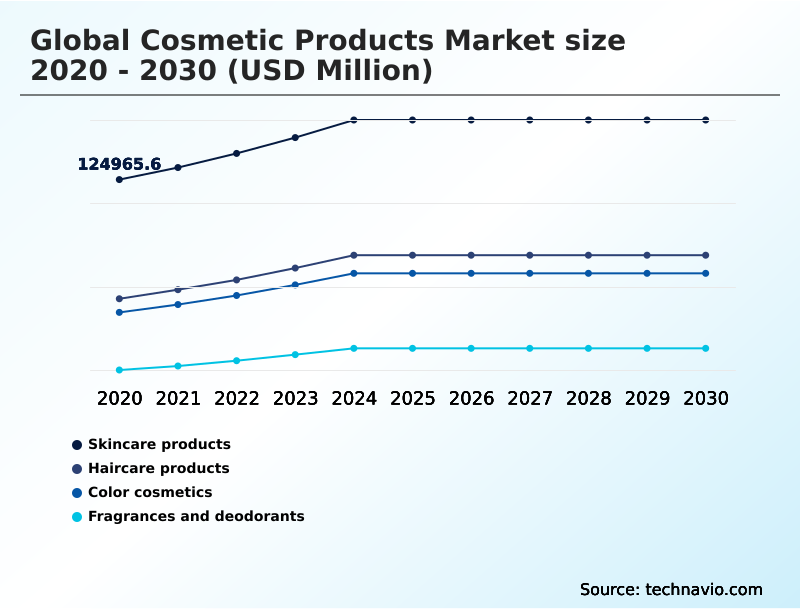
Additionally, melanogenesis inhibition and cosmetic ingredient efficacy are key areas of focus for companies seeking to develop effective anti-aging products. The market for cosmetic products is continuously unfolding, with ongoing research and development efforts aimed at addressing various skin concerns and enhancing overall product performance. By staying informed about the latest trends and advancements, businesses can position themselves to capitalize on the growing demand for innovative and effective skincare cosmetics. According to recent market data, the market is currently valued at approximately 500 billion USD.
This growth is driven by increasing consumer awareness, changing demographics, and the introduction of technologically advanced products.

Request Free Sample
Regional Analysis
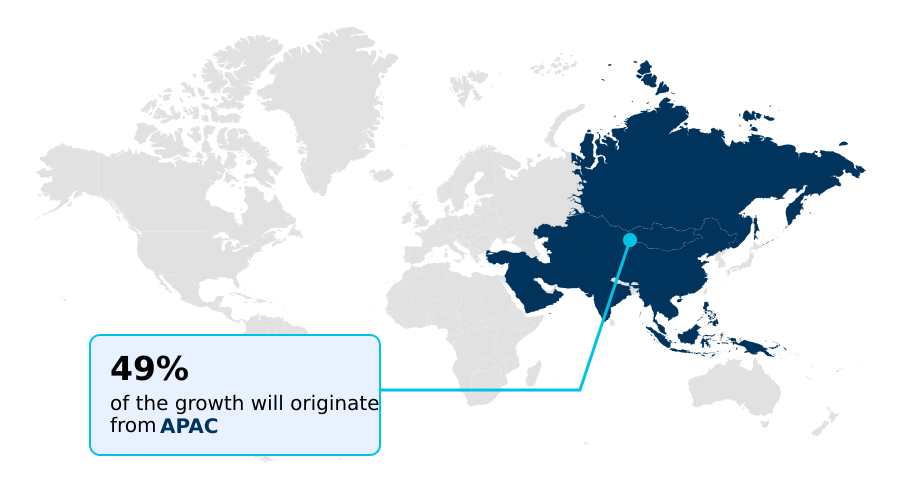
APAC is estimated to contribute 35% to the growth of the global market during the forecast period.Technavio's analysts have elaborately explained the regional trends and drivers that shape the market during the forecast period.
See How Cosmetic Products Market Demand is Rising in APAC Request Free Sample
The market in Asia Pacific (APAC) is experiencing significant growth, with Japan, China, India, and South Korea leading the charge. Companies in this region, such as Amorepacific from South Korea and Bio Veda Action Research from India, are driving market expansion through innovative offerings. Amorepacific's TIME RESPONSE Skin Renewal Creme and Serum, and Bio Veda's BIO MORNING NECTAR face lotion, BIO SANDALWOOD face cream, and BIO CARROT face cream, are popular choices catering to the increasing demand for skincare cosmetics.
According to recent studies, the APAC cosmetic market is projected to account for approximately 40% of the global cosmetics market by 2025. Additionally, the market's value is expected to reach USD 123.5 billion by 2027, growing at a steady pace. This growth can be attributed to factors like rising disposable income, increasing consumer awareness, and the popularity of e-commerce platforms.
Market Dynamics
Our researchers analyzed the data with 2024 as the base year, along with the key drivers, trends, and challenges. A holistic analysis of drivers will help companies refine their marketing strategies to gain a competitive advantage.
The market encompasses a diverse range of offerings, from skincare and makeup to sunscreens and fragrances. To ensure the quality and efficacy of these products, rigorous testing and analysis are essential. This report delves into the intricacies of the cosmetic industry, providing insights into various testing methodologies and regulatory compliance. Key assessments include liposome size and zeta potential analysis, which determine the stability and effectiveness of encapsulated ingredients. In-vitro skin permeation assessments using Franz cells evaluate the penetration of active ingredients into the skin. Stability studies under accelerated conditions ensure product longevity, while sensory evaluation of texture and fragrance caters to consumer preferences.
UV protection provided by sunscreen formulations is evaluated using advanced techniques, and skin irritation is assessed using in-vitro models. The impact of cosmetic ingredients on skin hydration is measured, and the shelf-life of cosmetic products is determined to maintain consumer trust. Regulatory compliance for cosmetic products is a critical aspect, with the development of a stable cosmetic emulsion and testing for microbial contamination ensuring safety. Optimization of particle size for enhanced delivery and evaluation of skin sensitization potential are also crucial. Analytical methods for cosmetic ingredients are developed and validated, and active ingredient release kinetics are determined to optimize product performance.
In-vivo assessment of cosmetic product efficacy and ingredient interaction studies provide valuable insights into consumer satisfaction and market trends. Product stability under various storage conditions is evaluated, with a focus on maintaining the integrity of sensitive ingredients. Comparatively, more than 70% of new product developments focus on addressing the unique needs of consumers in the Asia Pacific region, reflecting its significant market share. This data underscores the importance of catering to regional preferences and trends to succeed in the dynamic market.

What are the key market drivers leading to the rise in the adoption of Cosmetic Products Industry?
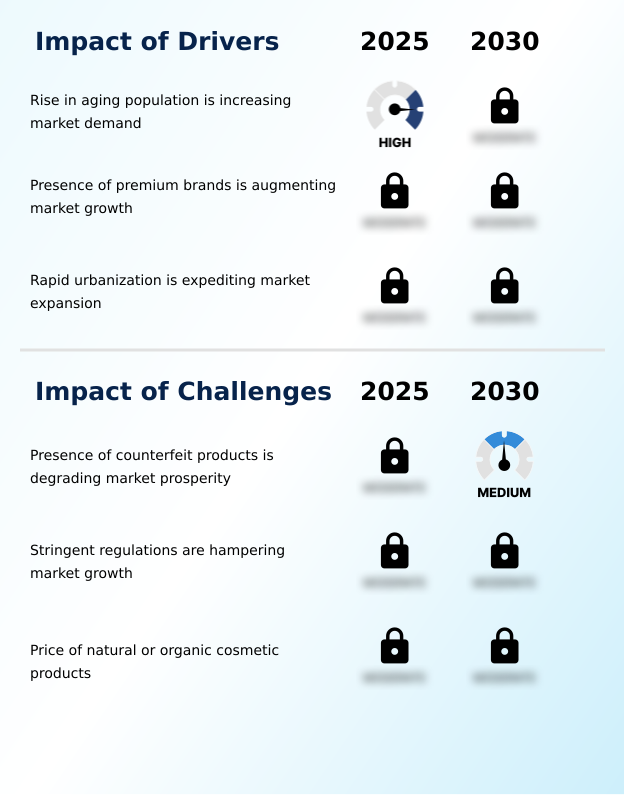
- The aging population represents the primary driving force behind market growth. With an increasing number of older adults, there is a heightened demand for products and services catering to their unique needs, thereby fueling market expansion.
- The global aging population is on the rise, with the number of individuals aged 65 years and above projected to double from 761 million in 2023 to 1.6 billion by 2050. This demographic shift has significant implications for various industries, particularly those catering to the health and wellness sector. One such area experiencing notable growth is the anti-aging market. As the population ages, the skin undergoes various changes, including thinning, loss of fat, and decreased firmness and texture. These alterations can lead to increased visibility of veins and prolonged healing times for injuries. Consequently, anti-aging products have gained popularity as a response to these age-related skin concerns.
- The anti-aging market encompasses a diverse range of offerings, including skincare products, cosmetic procedures, and medical treatments. These solutions aim to address various signs of aging, such as wrinkles, fine lines, age spots, and sagging skin. The market's continuous evolution reflects the ongoing efforts to develop more effective and innovative anti-aging solutions tailored to the needs of the aging population. In summary, the growing aging population and the resulting skin concerns have fueled the demand for anti-aging products and services. The market's ongoing growth is a testament to the importance of addressing the unique needs of this demographic and the relentless pursuit of advanced solutions to combat the effects of aging.
What are the market trends shaping the Cosmetic Products Industry?
- The increasing demand for organic cosmetics and cosmeceuticals represents a notable market trend. Organic cosmetics and cosmeceuticals are gaining popularity among consumers.
- Consumers are progressively favoring organic or chemical-free cosmetics and cosmeceuticals over traditional chemical-based alternatives. The preference for these products stems from their natural active compounds, which offer medicinal benefits to the skin and lack harsh, toxic components that can irritate sensitive skin or cause health concerns. Parabens and phthalates, commonly used in chemical cosmetics, have been linked to cancer and Type II diabetes. In response, manufacturers are increasingly incorporating natural raw materials, such as neem extracts, soybean, fish oil, aloe vera, and guar gum, into the production of organic skin care products and cosmeceuticals.
- This shift reflects a growing trend towards healthier, more sustainable beauty solutions. Organic cosmetics and cosmeceuticals represent a significant portion of the evolving cosmetics market, with numerous businesses and innovations contributing to its continuous development.
What challenges does the Cosmetic Products Industry face during its growth?
- The proliferation of counterfeit products poses a significant challenge to the industry, hindering its growth and undermining consumer trust.
- The global cosmetics market faces a significant challenge from counterfeit products, which pose a threat to both sales and brand reputation. According to estimates, up to 10% of all cosmetics sold worldwide are counterfeit, causing a loss of billions in revenue for original brands. These duplicate products, often made with subpar raw materials and produced at low costs, can easily deceive consumers with their lower prices. However, the damage extends beyond financial losses. Counterfeit cosmetics can lead to potential health risks and harm the reputation of legitimate brands.
- As a result, major companies in the cosmetics industry must invest in robust anti-counterfeiting measures to protect their products and maintain consumer trust. The ongoing efforts to combat counterfeiting and ensure product authenticity are crucial for the continued growth and success of the global cosmetics market.
Exclusive Customer Landscape
The cosmetic products market forecasting report includes the adoption lifecycle of the market, covering from the innovator's stage to the laggard's stage. It focuses on adoption rates in different regions based on penetration. Furthermore, the cosmetic products market report also includes key purchase criteria and drivers of price sensitivity to help companies evaluate and develop their market growth analysis strategies.
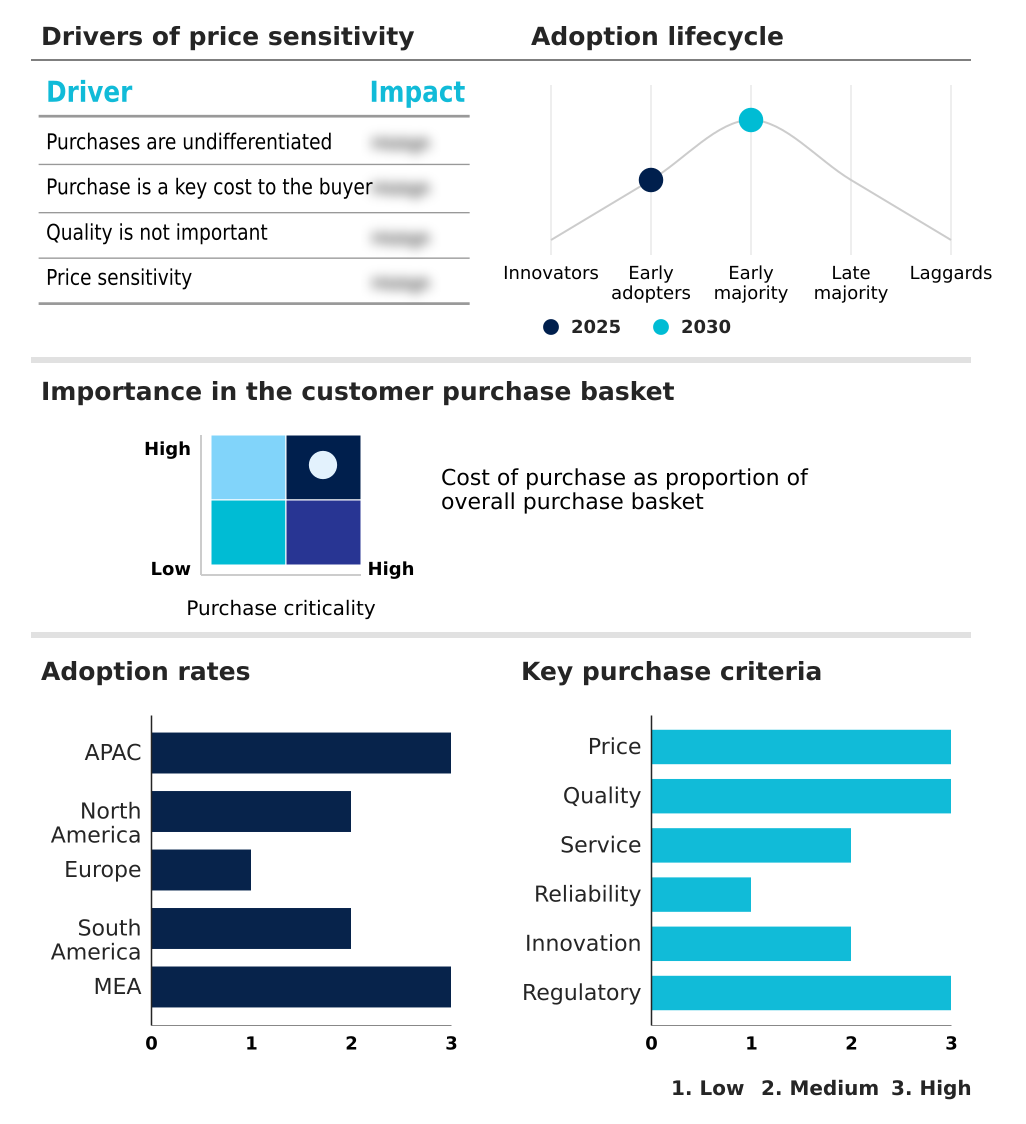
Customer Landscape of Cosmetic Products Industry
Competitive Landscape & Market Insights
Companies are implementing various strategies, such as strategic alliances, cosmetic products market forecast, partnerships, mergers and acquisitions, geographical expansion, and product/service launches, to enhance their presence in the industry.
Amway Corporation - The South Korean beauty brand conglomerate, renowned for its innovative and high-quality cosmetics lines, includes Sulwhasoo, Laneige, and Mamonde.
The industry research and growth report includes detailed analyses of the competitive landscape of the market and information about key companies, including:
- Amway Corporation
- Avon Products Inc.
- Beiersdorf AG
- Chanel S.A.
- Coty Inc.
- Estée Lauder Companies Inc.
- Johnson & Johnson
- Kao Corporation
- L'Oréal S.A.
- LVMH Moët Hennessy Louis Vuitton
- Mary Kay Inc.
- Natura & Co.
- Oriflame Cosmetics AG
- Procter & Gamble Co.
- Revlon Inc.
- Shiseido Company, Limited
- The Body Shop International Limited
- Unilever PLC
- Yves Rocher
- Lush Cosmetics
Qualitative and quantitative analysis of companies has been conducted to help clients understand the wider business environment as well as the strengths and weaknesses of key industry players. Data is qualitatively analyzed to categorize companies as pure play, category-focused, industry-focused, and diversified; it is quantitatively analyzed to categorize companies as dominant, leading, strong, tentative, and weak.
Recent Development and News in Cosmetic Products Market
- In January 2024, L'Oréal, the world's leading cosmetics company, announced the launch of its new skincare line, "Revitalift Derm," featuring advanced hyaluronic acid technology. This innovative product line targets mature skin, aiming to improve elasticity and reduce wrinkles (L'Oréal press release, 2024).
- In March 2024, Estée Lauder Companies entered into a strategic partnership with Deciem, a Canadian skincare brand, to expand its portfolio and reach a younger demographic. The deal included an upfront payment of USD 2.2 billion, with potential future payments based on Deciem's performance (Bloomberg, 2024).
- In May 2024, Unilever, the Anglo-Dutch consumer goods company, acquired Paula's Choice, a US-based skincare brand known for its scientific approach to skincare. The acquisition was valued at approximately USD 1.1 billion, strengthening Unilever's position in the premium skincare market (Reuters, 2024).
- In January 2025, the European Union approved the use of microbeads in cosmetics, reversing a previous ban due to new scientific evidence. The decision sparked controversy, with environmental groups expressing concerns over the potential harm to aquatic life (European Commission press release, 2025).
- These developments highlight significant new product launches, strategic partnerships, and acquisitions shaping the market between January 2024 and May 2025.
Dive into Technavio's robust research methodology, blending expert interviews, extensive data synthesis, and validated models for unparalleled Cosmetic Products Market insights. See full methodology.
|
Market Scope
|
|
Report Coverage
|
Details
|
|
Page number
|
206
|
|
Base year
|
2024
|
|
Historic period
|
2019-2023 |
|
Forecast period
|
2025-2029
|
|
Growth momentum & CAGR
|
Accelerate at a CAGR of 5.8%
|
|
Market growth 2025-2029
|
USD 126.4 billion
|
|
Market structure
|
Fragmented
|
|
YoY growth 2024-2025(%)
|
5.4
|
|
Key countries
|
US, Canada, Germany, UK, Italy, France, China, India, Japan, Brazil, Egypt, UAE, Oman, Argentina, KSA, UAE, Brazil, and Rest of World (ROW)
|
|
Competitive landscape
|
Leading Companies, Market Positioning of Companies, Competitive Strategies, and Industry Risks
|
Request Free Sample
Research Analyst Overview
- The market is a dynamic and evolving industry, with continuous advancements in technology and consumer preferences shaping market activities. Dermal absorption studies play a crucial role in understanding the efficacy of cosmetic ingredients, while emulsion stability testing ensures product consistency and longevity. Skin permeation enhancement techniques enable better penetration of active ingredients, and rheological properties measurement helps optimize product texture and application. In-vitro skin models are essential for assessing antioxidant capacity and regulatory compliance, as they mimic human skin behavior. Cosmeceutical formulations focus on the delivery of active ingredients, with sebum production regulation and active ingredient release being key considerations.
- Packaging material selection, ex-vivo skin testing, and allergy assessment methods are essential for ensuring product safety and consumer acceptance. Transdermal drug delivery and sensory evaluation methods are also gaining popularity in the cosmetic industry, with nanoparticle delivery systems and microencapsulation technology offering innovative solutions for anti-aging ingredient delivery. Skin irritation potential and ingredient compatibility testing are crucial aspects of quality control procedures, while collagen synthesis stimulation and melanogenesis inhibition are essential for anti-aging formulations. In the realm of wrinkle reduction, inflammation reduction methods and wrinkle reduction efficacy assessments are paramount. Stability indicator testing is another critical aspect, ensuring product quality and longevity.
- Overall, the market is a vibrant and ever-evolving industry, with a focus on innovation, safety, and consumer satisfaction.
What are the Key Data Covered in this Cosmetic Products Market Research and Growth Report?
-
What is the expected growth of the Cosmetic Products Market between 2025 and 2029?
-
What segmentation does the market report cover?
-
The report segmented by Product (Skincare products, Haircare products, Color cosmetics, and Fragrances and deodorants), Distribution Channel (Offline and Online), Geography (APAC, North America, Europe, South America, and Middle East and Africa), End-user (Men and Women), Category (Conventional, Natural/Organic, and Vegan), and Price Range (Mass/Economy, Mid-Range, and Premium/Luxury)
-
Which regions are analyzed in the report?
-
APAC, North America, Europe, South America, and Middle East and Africa
-
What are the key growth drivers and market challenges?
-
Who are the major players in the Cosmetic Products Market?
-
Key Companies Amway Corporation, Avon Products Inc., Beiersdorf AG, Chanel S.A., Coty Inc., Estée Lauder Companies Inc., Johnson & Johnson, Kao Corporation, L'Oréal S.A., LVMH Moët Hennessy Louis Vuitton, Mary Kay Inc., Natura & Co., Oriflame Cosmetics AG, Procter & Gamble Co., Revlon Inc., Shiseido Company, Limited, The Body Shop International Limited, Unilever PLC, Yves Rocher, and Lush Cosmetics
Market Research Insights
- The market is a dynamic and intricate industry, characterized by continuous innovation and evolution. With a global value projected to reach USD 862.5 billion by 2026, it represents a significant sector in the consumer goods industry This growth is driven by consumer demand for high-quality, effective, and safe cosmetic solutions. To meet these demands, companies invest in various research and development initiatives. For instance, they employ advanced label claim substantiation techniques, texture analysis methods, and quality assurance programs to ensure product authenticity and consistency. Moreover, the integration of drug delivery vehicles, particle size distribution analysis, and manufacturing process validation enhances the efficacy and performance of cosmetic formulations.
- However, regulatory guidelines compliance is a crucial aspect of the market. Stringent safety testing protocols, efficacy biomarkers evaluation, and microbial contamination limits are essential to maintain consumer trust and regulatory approval. Additionally, companies explore novel cosmetic ingredients, dermal delivery systems, and skin barrier function enhancers to cater to diverse consumer preferences and needs. The market's future trajectory is shaped by ongoing research in areas like controlled release formulations, in-vitro skin models, and clinical trial endpoints.
We can help! Our analysts can customize this cosmetic products market research report to meet your requirements.
Get in touch
1 Executive Summary
- 1.1 Market overview
- Executive Summary - Chart on Market Overview
- Executive Summary - Data Table on Market Overview
- Executive Summary - Chart on Global Market Characteristics
- Executive Summary - Chart on Market by Geography
- Executive Summary - Chart on Market Segmentation by Product
- Executive Summary - Chart on Market Segmentation by Distribution Channel
- Executive Summary - Chart on Incremental Growth
- Executive Summary - Data Table on Incremental Growth
- Executive Summary - Chart on Company Market Positioning
2 Technavio Analysis
- 2.1 Analysis of price sensitivity, lifecycle, customer purchase basket, adoption rates, and purchase criteria
- Analysis of price sensitivity, lifecycle, customer purchase basket, adoption rates, and purchase criteria
- 2.2 Criticality of inputs and Factors of differentiation
- Overview on criticality of inputs and factors of differentiation
- 2.3 Factors of disruption
- Overview on factors of disruption
- 2.4 Impact of drivers and challenges
- Impact of drivers and challenges in 2024 and 2029
3 Market Landscape
- 3.1 Market ecosystem
- Parent Market
- Data Table on - Parent Market
- 3.2 Market characteristics
- Market characteristics analysis
4 Market Sizing
- 4.1 Market definition
- Offerings of companies included in the market definition
- 4.2 Market segment analysis
- 4.4 Market outlook: Forecast for 2024-2029
- Chart on Global - Market size and forecast 2024-2029 ($ billion)
- Data Table on Global - Market size and forecast 2024-2029 ($ billion)
- Chart on Global Market: Year-over-year growth 2024-2029 (%)
- Data Table on Global Market: Year-over-year growth 2024-2029 (%)
5 Historic Market Size
- 5.1 Global Cosmetic Products Market 2019 - 2023
- Historic Market Size - Data Table on Global Cosmetic Products Market 2019 - 2023 ($ billion)
- 5.2 Product segment analysis 2019 - 2023
- Historic Market Size - Product Segment 2019 - 2023 ($ billion)
- 5.3 Distribution Channel segment analysis 2019 - 2023
- Historic Market Size - Distribution Channel Segment 2019 - 2023 ($ billion)
- 5.4 Geography segment analysis 2019 - 2023
- Historic Market Size - Geography Segment 2019 - 2023 ($ billion)
- 5.5 Country segment analysis 2019 - 2023
- Historic Market Size - Country Segment 2019 - 2023 ($ billion)
6 Qualitative Analysis
- 6.1 Impact of AI on Global Cosmetic Products Market
7 Five Forces Analysis
- 7.1 Five forces summary
- Five forces analysis - Comparison between 2024 and 2029
- 7.2 Bargaining power of buyers
- Bargaining power of buyers - Impact of key factors 2024 and 2029
- 7.3 Bargaining power of suppliers
- Bargaining power of suppliers - Impact of key factors in 2024 and 2029
- 7.4 Threat of new entrants
- Threat of new entrants - Impact of key factors in 2024 and 2029
- 7.5 Threat of substitutes
- Threat of substitutes - Impact of key factors in 2024 and 2029
- 7.6 Threat of rivalry
- Threat of rivalry - Impact of key factors in 2024 and 2029
- 7.7 Market condition
- Chart on Market condition - Five forces 2024 and 2029
8 Market Segmentation by Product
- 8.1 Market segments
- Chart on Product - Market share (2024-2029) (%)
- Data Table on Product - Market share (2024-2029) (%)
- 8.2 Comparison by Product
- Chart on Comparison by Product
- Data Table on Comparison by Product
- 8.3 Skincare products - Market size and forecast (2024-2029)
- Chart on Skincare products - Market size and forecast (2024-2029) ($ billion)
- Data Table on Skincare products - Market size and forecast (2024-2029) ($ billion)
- Chart on Skincare products - Year-over-year growth (2024-2029) (%)
- Data Table on Skincare products - Year-over-year growth (2024-2029) (%)
- 8.4 Haircare products - Market size and forecast (2024-2029)
- Chart on Haircare products - Market size and forecast (2024-2029) ($ billion)
- Data Table on Haircare products - Market size and forecast (2024-2029) ($ billion)
- Chart on Haircare products - Year-over-year growth (2024-2029) (%)
- Data Table on Haircare products - Year-over-year growth (2024-2029) (%)
- 8.5 Color cosmetics - Market size and forecast (2024-2029)
- Chart on Color cosmetics - Market size and forecast (2024-2029) ($ billion)
- Data Table on Color cosmetics - Market size and forecast (2024-2029) ($ billion)
- Chart on Color cosmetics - Year-over-year growth (2024-2029) (%)
- Data Table on Color cosmetics - Year-over-year growth (2024-2029) (%)
- 8.6 Fragrances and deodorants - Market size and forecast (2024-2029)
- Chart on Fragrances and deodorants - Market size and forecast (2024-2029) ($ billion)
- Data Table on Fragrances and deodorants - Market size and forecast (2024-2029) ($ billion)
- Chart on Fragrances and deodorants - Year-over-year growth (2024-2029) (%)
- Data Table on Fragrances and deodorants - Year-over-year growth (2024-2029) (%)
- 8.7 Market opportunity by Product
- Market opportunity by Product ($ billion)
- Data Table on Market opportunity by Product ($ billion)
9 Market Segmentation by Distribution Channel
- 9.1 Market segments
- Chart on Distribution Channel - Market share (2024-2029) (%)
- Data Table on Distribution Channel - Market share (2024-2029) (%)
- 9.2 Comparison by Distribution Channel
- Chart on Comparison by Distribution Channel
- Data Table on Comparison by Distribution Channel
- 9.3 Offline - Market size and forecast (2024-2029)
- Chart on Offline - Market size and forecast (2024-2029) ($ billion)
- Data Table on Offline - Market size and forecast (2024-2029) ($ billion)
- Chart on Offline - Year-over-year growth (2024-2029) (%)
- Data Table on Offline - Year-over-year growth (2024-2029) (%)
- 9.4 Online - Market size and forecast (2024-2029)
- Chart on Online - Market size and forecast (2024-2029) ($ billion)
- Data Table on Online - Market size and forecast (2024-2029) ($ billion)
- Chart on Online - Year-over-year growth (2024-2029) (%)
- Data Table on Online - Year-over-year growth (2024-2029) (%)
- 9.5 Market opportunity by Distribution Channel
- Market opportunity by Distribution Channel ($ billion)
- Data Table on Market opportunity by Distribution Channel ($ billion)
10 Market Segmentation by End-user
- 10.1 Market segments
- Chart on End-user - Market share (2024-2029) (%)
- Data Table on End-user - Market share (2024-2029) (%)
- 10.2 Comparison by End-user
- Chart on Comparison by End-user
- Data Table on Comparison by End-user
- 10.3 Men - Market size and forecast (2024-2029)
- Chart on Men - Market size and forecast (2024-2029) ($ billion)
- Data Table on Men - Market size and forecast (2024-2029) ($ billion)
- Chart on Men - Year-over-year growth (2024-2029) (%)
- Data Table on Men - Year-over-year growth (2024-2029) (%)
- 10.4 Women - Market size and forecast (2024-2029)
- Chart on Women - Market size and forecast (2024-2029) ($ billion)
- Data Table on Women - Market size and forecast (2024-2029) ($ billion)
- Chart on Women - Year-over-year growth (2024-2029) (%)
- Data Table on Women - Year-over-year growth (2024-2029) (%)
- 10.5 Market opportunity by End-user
- Market opportunity by End-user ($ billion)
- Data Table on Market opportunity by End-user ($ billion)
11 Market Segmentation by Category
- 11.1 Market segments
- Chart on Category - Market share (2024-2029) (%)
- Data Table on Category - Market share (2024-2029) (%)
- 11.2 Comparison by Category
- Chart on Comparison by Category
- Data Table on Comparison by Category
- 11.3 Conventional - Market size and forecast (2024-2029)
- Chart on Conventional - Market size and forecast (2024-2029) ($ billion)
- Data Table on Conventional - Market size and forecast (2024-2029) ($ billion)
- Chart on Conventional - Year-over-year growth (2024-2029) (%)
- Data Table on Conventional - Year-over-year growth (2024-2029) (%)
- 11.4 Natural/Organic - Market size and forecast (2024-2029)
- Chart on Natural/Organic - Market size and forecast (2024-2029) ($ billion)
- Data Table on Natural/Organic - Market size and forecast (2024-2029) ($ billion)
- Chart on Natural/Organic - Year-over-year growth (2024-2029) (%)
- Data Table on Natural/Organic - Year-over-year growth (2024-2029) (%)
- 11.5 Vegan - Market size and forecast (2024-2029)
- Chart on Vegan - Market size and forecast (2024-2029) ($ billion)
- Data Table on Vegan - Market size and forecast (2024-2029) ($ billion)
- Chart on Vegan - Year-over-year growth (2024-2029) (%)
- Data Table on Vegan - Year-over-year growth (2024-2029) (%)
- 11.6 Market opportunity by Category
- Market opportunity by Category ($ billion)
- Data Table on Market opportunity by Category ($ billion)
12 Market Segmentation by Price Range
- 12.1 Market segments
- Chart on Price Range - Market share (2024-2029) (%)
- Data Table on Price Range - Market share (2024-2029) (%)
- 12.2 Comparison by Price Range
- Chart on Comparison by Price Range
- Data Table on Comparison by Price Range
- 12.3 Mass/Economy - Market size and forecast (2024-2029)
- Chart on Mass/Economy - Market size and forecast (2024-2029) ($ billion)
- Data Table on Mass/Economy - Market size and forecast (2024-2029) ($ billion)
- Chart on Mass/Economy - Year-over-year growth (2024-2029) (%)
- Data Table on Mass/Economy - Year-over-year growth (2024-2029) (%)
- 12.4 Mid-Range - Market size and forecast (2024-2029)
- Chart on Mid-Range - Market size and forecast (2024-2029) ($ billion)
- Data Table on Mid-Range - Market size and forecast (2024-2029) ($ billion)
- Chart on Mid-Range - Year-over-year growth (2024-2029) (%)
- Data Table on Mid-Range - Year-over-year growth (2024-2029) (%)
- 12.5 Premium/Luxury - Market size and forecast (2024-2029)
- Chart on Premium/Luxury - Market size and forecast (2024-2029) ($ billion)
- Data Table on Premium/Luxury - Market size and forecast (2024-2029) ($ billion)
- Chart on Premium/Luxury - Year-over-year growth (2024-2029) (%)
- Data Table on Premium/Luxury - Year-over-year growth (2024-2029) (%)
- 12.6 Market opportunity by Price Range
- Market opportunity by Price Range ($ billion)
- Data Table on Market opportunity by Price Range ($ billion)
13 Customer Landscape
- 13.1 Customer landscape overview
- Analysis of price sensitivity, lifecycle, customer purchase basket, adoption rates, and purchase criteria
14 Geographic Landscape
- 14.1 Geographic segmentation
- Chart on Market share by geography 2024-2029 (%)
- Data Table on Market share by geography 2024-2029 (%)
- 14.2 Geographic comparison
- Chart on Geographic comparison
- Data Table on Geographic comparison
- 14.3 APAC - Market size and forecast 2024-2029
- Chart on APAC - Market size and forecast 2024-2029 ($ billion)
- Data Table on APAC - Market size and forecast 2024-2029 ($ billion)
- Chart on APAC - Year-over-year growth 2024-2029 (%)
- Data Table on APAC - Year-over-year growth 2024-2029 (%)
- 14.4 North America - Market size and forecast 2024-2029
- Chart on North America - Market size and forecast 2024-2029 ($ billion)
- Data Table on North America - Market size and forecast 2024-2029 ($ billion)
- Chart on North America - Year-over-year growth 2024-2029 (%)
- Data Table on North America - Year-over-year growth 2024-2029 (%)
- 14.5 Europe - Market size and forecast 2024-2029
- Chart on Europe - Market size and forecast 2024-2029 ($ billion)
- Data Table on Europe - Market size and forecast 2024-2029 ($ billion)
- Chart on Europe - Year-over-year growth 2024-2029 (%)
- Data Table on Europe - Year-over-year growth 2024-2029 (%)
- 14.6 South America - Market size and forecast 2024-2029
- Chart on South America - Market size and forecast 2024-2029 ($ billion)
- Data Table on South America - Market size and forecast 2024-2029 ($ billion)
- Chart on South America - Year-over-year growth 2024-2029 (%)
- Data Table on South America - Year-over-year growth 2024-2029 (%)
- 14.7 Middle East and Africa - Market size and forecast 2024-2029
- Chart on Middle East and Africa - Market size and forecast 2024-2029 ($ billion)
- Data Table on Middle East and Africa - Market size and forecast 2024-2029 ($ billion)
- Chart on Middle East and Africa - Year-over-year growth 2024-2029 (%)
- Data Table on Middle East and Africa - Year-over-year growth 2024-2029 (%)
- 14.8 US - Market size and forecast 2024-2029
- Chart on US - Market size and forecast 2024-2029 ($ billion)
- Data Table on US - Market size and forecast 2024-2029 ($ billion)
- Chart on US - Year-over-year growth 2024-2029 (%)
- Data Table on US - Year-over-year growth 2024-2029 (%)
- 14.9 China - Market size and forecast 2024-2029
- Chart on China - Market size and forecast 2024-2029 ($ billion)
- Data Table on China - Market size and forecast 2024-2029 ($ billion)
- Chart on China - Year-over-year growth 2024-2029 (%)
- Data Table on China - Year-over-year growth 2024-2029 (%)
- 14.10 South Korea - Market size and forecast 2024-2029
- Chart on South Korea - Market size and forecast 2024-2029 ($ billion)
- Data Table on South Korea - Market size and forecast 2024-2029 ($ billion)
- Chart on South Korea - Year-over-year growth 2024-2029 (%)
- Data Table on South Korea - Year-over-year growth 2024-2029 (%)
- 14.11 India - Market size and forecast 2024-2029
- Chart on India - Market size and forecast 2024-2029 ($ billion)
- Data Table on India - Market size and forecast 2024-2029 ($ billion)
- Chart on India - Year-over-year growth 2024-2029 (%)
- Data Table on India - Year-over-year growth 2024-2029 (%)
- 14.12 Japan - Market size and forecast 2024-2029
- Chart on Japan - Market size and forecast 2024-2029 ($ billion)
- Data Table on Japan - Market size and forecast 2024-2029 ($ billion)
- Chart on Japan - Year-over-year growth 2024-2029 (%)
- Data Table on Japan - Year-over-year growth 2024-2029 (%)
- 14.13 Canada - Market size and forecast 2024-2029
- Chart on Canada - Market size and forecast 2024-2029 ($ billion)
- Data Table on Canada - Market size and forecast 2024-2029 ($ billion)
- Chart on Canada - Year-over-year growth 2024-2029 (%)
- Data Table on Canada - Year-over-year growth 2024-2029 (%)
- 14.14 Australia - Market size and forecast 2024-2029
- Chart on Australia - Market size and forecast 2024-2029 ($ billion)
- Data Table on Australia - Market size and forecast 2024-2029 ($ billion)
- Chart on Australia - Year-over-year growth 2024-2029 (%)
- Data Table on Australia - Year-over-year growth 2024-2029 (%)
- 14.15 Germany - Market size and forecast 2024-2029
- Chart on Germany - Market size and forecast 2024-2029 ($ billion)
- Data Table on Germany - Market size and forecast 2024-2029 ($ billion)
- Chart on Germany - Year-over-year growth 2024-2029 (%)
- Data Table on Germany - Year-over-year growth 2024-2029 (%)
- 14.16 UK - Market size and forecast 2024-2029
- Chart on UK - Market size and forecast 2024-2029 ($ billion)
- Data Table on UK - Market size and forecast 2024-2029 ($ billion)
- Chart on UK - Year-over-year growth 2024-2029 (%)
- Data Table on UK - Year-over-year growth 2024-2029 (%)
- 14.17 Brazil - Market size and forecast 2024-2029
- Chart on Brazil - Market size and forecast 2024-2029 ($ billion)
- Data Table on Brazil - Market size and forecast 2024-2029 ($ billion)
- Chart on Brazil - Year-over-year growth 2024-2029 (%)
- Data Table on Brazil - Year-over-year growth 2024-2029 (%)
- 14.18 Market opportunity by geography
- Market opportunity by geography ($ billion)
- Data Tables on Market opportunity by geography ($ billion)
- 14.19 Italy - Market size and forecast (2024-2029)
- Chart on Italy - Market size and forecast (2024-2029) ($ billion)
- Data Table on Italy - Market size and forecast (2024-2029) ($ billion)
- Chart on Italy - Year-over-year growth (2024-2029) (%)
- Data Table on Italy - Year-over-year growth (2024-2029) (%)
- 14.20 France - Market size and forecast (2024-2029)
- Chart on France - Market size and forecast (2024-2029) ($ billion)
- Data Table on France - Market size and forecast (2024-2029) ($ billion)
- Chart on France - Year-over-year growth (2024-2029) (%)
- Data Table on France - Year-over-year growth (2024-2029) (%)
- 14.21 Egypt - Market size and forecast (2024-2029)
- Chart on Egypt - Market size and forecast (2024-2029) ($ billion)
- Data Table on Egypt - Market size and forecast (2024-2029) ($ billion)
- Chart on Egypt - Year-over-year growth (2024-2029) (%)
- Data Table on Egypt - Year-over-year growth (2024-2029) (%)
- 14.22 UAE - Market size and forecast (2024-2029)
- Chart on UAE - Market size and forecast (2024-2029) ($ billion)
- Data Table on UAE - Market size and forecast (2024-2029) ($ billion)
- Chart on UAE - Year-over-year growth (2024-2029) (%)
- Data Table on UAE - Year-over-year growth (2024-2029) (%)
- 14.23 Oman - Market size and forecast (2024-2029)
- Chart on Oman - Market size and forecast (2024-2029) ($ billion)
- Data Table on Oman - Market size and forecast (2024-2029) ($ billion)
- Chart on Oman - Year-over-year growth (2024-2029) (%)
- Data Table on Oman - Year-over-year growth (2024-2029) (%)
- 14.24 Argentina - Market size and forecast (2024-2029)
- Chart on Argentina - Market size and forecast (2024-2029) ($ billion)
- Data Table on Argentina - Market size and forecast (2024-2029) ($ billion)
- Chart on Argentina - Year-over-year growth (2024-2029) (%)
- Data Table on Argentina - Year-over-year growth (2024-2029) (%)
- 14.25 KSA - Market size and forecast (2024-2029)
- Chart on KSA - Market size and forecast (2024-2029) ($ billion)
- Data Table on KSA - Market size and forecast (2024-2029) ($ billion)
- Chart on KSA - Year-over-year growth (2024-2029) (%)
- Data Table on KSA - Year-over-year growth (2024-2029) (%)
- 14.26 Rest of World (ROW) - Market size and forecast (2024-2029)
- Chart on Rest of World (ROW) - Market size and forecast (2024-2029) ($ billion)
- Data Table on Rest of World (ROW) - Market size and forecast (2024-2029) ($ billion)
- Chart on Rest of World (ROW) - Year-over-year growth (2024-2029) (%)
- Data Table on Rest of World (ROW) - Year-over-year growth (2024-2029) (%)
15 Drivers, Challenges, and Opportunity/Restraints
- 15.3 Impact of drivers and challenges
- Impact of drivers and challenges in 2024 and 2029
- 15.4 Market opportunities/restraints
16 Competitive Landscape
- 16.2 Competitive Landscape
- Overview on criticality of inputs and factors of differentiation
- 16.3 Landscape disruption
- Overview on factors of disruption
- 16.4 Industry risks
- Impact of key risks on business
17 Competitive Analysis
- 17.2 Market positioning of companies
- Matrix on companies position and classification
- 17.3 Amway Corporation
- Amway Corporation - Overview
- Amway Corporation - Product / Service
- Amway Corporation - Key offerings
- 17.4 Avon Products Inc.
- Avon Products Inc. - Overview
- Avon Products Inc. - Product / Service
- Avon Products Inc. - Key offerings
- 17.5 Beiersdorf AG
- Beiersdorf AG - Overview
- Beiersdorf AG - Product / Service
- Beiersdorf AG - Key offerings
- 17.6 Chanel S.A.
- Chanel S.A. - Overview
- Chanel S.A. - Product / Service
- Chanel S.A. - Key offerings
- 17.7 Coty Inc.
- Coty Inc. - Overview
- Coty Inc. - Product / Service
- Coty Inc. - Key offerings
- 17.8 Estée Lauder Companies Inc.
- Estée Lauder Companies Inc. - Overview
- Estée Lauder Companies Inc. - Product / Service
- Estée Lauder Companies Inc. - Key offerings
- 17.9 Johnson & Johnson
- Johnson & Johnson - Overview
- Johnson & Johnson - Product / Service
- Johnson & Johnson - Key offerings
- 17.10 Kao Corporation
- Kao Corporation - Overview
- Kao Corporation - Product / Service
- Kao Corporation - Key offerings
- 17.11 L'Oréal S.A.
- L'Oréal S.A. - Overview
- L'Oréal S.A. - Product / Service
- L'Oréal S.A. - Key offerings
- 17.12 LVMH Moët Hennessy Louis Vuitton
- LVMH Moët Hennessy Louis Vuitton - Overview
- LVMH Moët Hennessy Louis Vuitton - Product / Service
- LVMH Moët Hennessy Louis Vuitton - Key offerings
- 17.13 Mary Kay Inc.
- Mary Kay Inc. - Overview
- Mary Kay Inc. - Product / Service
- Mary Kay Inc. - Key offerings
- 17.14 Natura & Co.
- Natura & Co. - Overview
- Natura & Co. - Product / Service
- Natura & Co. - Key offerings
- 17.15 Oriflame Cosmetics AG
- Oriflame Cosmetics AG - Overview
- Oriflame Cosmetics AG - Product / Service
- Oriflame Cosmetics AG - Key offerings
- 17.16 Procter & Gamble Co.
- Procter & Gamble Co. - Overview
- Procter & Gamble Co. - Product / Service
- Procter & Gamble Co. - Key offerings
- 17.17 Revlon Inc.
- Revlon Inc. - Overview
- Revlon Inc. - Product / Service
- Revlon Inc. - Key offerings
- 17.18 Shiseido Company, Limited
- Shiseido Company, Limited - Overview
- Shiseido Company, Limited - Product / Service
- Shiseido Company, Limited - Key offerings
- 17.19 The Body Shop International Limited
- The Body Shop International Limited - Overview
- The Body Shop International Limited - Product / Service
- The Body Shop International Limited - Key offerings
- 17.20 Unilever PLC
- Unilever PLC - Overview
- Unilever PLC - Product / Service
- Unilever PLC - Key offerings
- 17.21 Yves Rocher
- Yves Rocher - Overview
- Yves Rocher - Product / Service
- Yves Rocher - Key offerings
- 17.22 Lush Cosmetics
- Lush Cosmetics - Overview
- Lush Cosmetics - Product / Service
- Lush Cosmetics - Key offerings
- 17.23 Amorepacific Corp.
- Amorepacific Corp. - Overview
- Amorepacific Corp. - Product / Service
- Amorepacific Corp. - Key offerings
- 17.24 Avon Products Inc.
- Avon Products Inc. - Overview
- Avon Products Inc. - Product / Service
- Avon Products Inc. - Key offerings
- 17.25 Beiersdorf AG
- Beiersdorf AG - Overview
- Beiersdorf AG - Product / Service
- Beiersdorf AG - Key offerings
- 17.26 Chanel Ltd.
- Chanel Ltd. - Overview
- Chanel Ltd. - Product / Service
- Chanel Ltd. - Key offerings
- 17.27 Coty Inc.
- Coty Inc. - Overview
- Coty Inc. - Product / Service
- Coty Inc. - Key offerings
- 17.28 Johnson and Johnson Inc.
- Johnson and Johnson Inc. - Overview
- Johnson and Johnson Inc. - Product / Service
- Johnson and Johnson Inc. - Key offerings
- 17.29 Kao Corp.
- Kao Corp. - Overview
- Kao Corp. - Product / Service
- Kao Corp. - Key offerings
- 17.30 Kjaer Weis
- Kjaer Weis - Overview
- Kjaer Weis - Product / Service
- Kjaer Weis - Key offerings
- 17.31 Kose Corp.
- Kose Corp. - Overview
- Kose Corp. - Product / Service
- Kose Corp. - Key offerings
- 17.32 LOreal SA
- LOreal SA - Overview
- LOreal SA - Product / Service
- LOreal SA - Key offerings
- 17.33 LVMH Moet Hennessy Louis Vuitton SE
- LVMH Moet Hennessy Louis Vuitton SE - Overview
- LVMH Moet Hennessy Louis Vuitton SE - Product / Service
- LVMH Moet Hennessy Louis Vuitton SE - Key offerings
- 17.34 Mary Kay Inc.
- Mary Kay Inc. - Overview
- Mary Kay Inc. - Product / Service
- Mary Kay Inc. - Key offerings
- 17.35 Natura and Co Holding SA
- Natura and Co Holding SA - Overview
- Natura and Co Holding SA - Product / Service
- Natura and Co Holding SA - Key offerings
- 17.36 Nu Skin Enterprises Inc.
- Nu Skin Enterprises Inc. - Overview
- Nu Skin Enterprises Inc. - Product / Service
- Nu Skin Enterprises Inc. - Key offerings
- 17.37 Oriflame Cosmetics S.A.
- Oriflame Cosmetics S.A. - Overview
- Oriflame Cosmetics S.A. - Product / Service
- Oriflame Cosmetics S.A. - Key offerings
- 17.38 Revlon Inc.
- Revlon Inc. - Overview
- Revlon Inc. - Product / Service
- Revlon Inc. - Key offerings
- 17.39 Shiseido Co. Ltd.
- Shiseido Co. Ltd. - Overview
- Shiseido Co. Ltd. - Product / Service
- Shiseido Co. Ltd. - Key offerings
- 17.40 The Estee Lauder Co. Inc.
- The Estee Lauder Co. Inc. - Overview
- The Estee Lauder Co. Inc. - Product / Service
- The Estee Lauder Co. Inc. - Key offerings
- 17.41 The Procter and Gamble Co.
- The Procter and Gamble Co. - Overview
- The Procter and Gamble Co. - Product / Service
- The Procter and Gamble Co. - Key offerings
- 17.42 Unilever PLC
- Unilever PLC - Overview
- Unilever PLC - Product / Service
- Unilever PLC - Key offerings
18 Appendix
- 18.2 Inclusions and exclusions checklist
- Inclusions checklist
- Exclusions checklist
- 18.3 Currency conversion rates for US$
- Currency conversion rates for US$
- 18.4 Research methodology
- 18.7 Validation techniques employed for market sizing
- Validation techniques employed for market sizing
- 18.9 360 degree market analysis
- 360 degree market analysis
- 18.10 List of abbreviations