


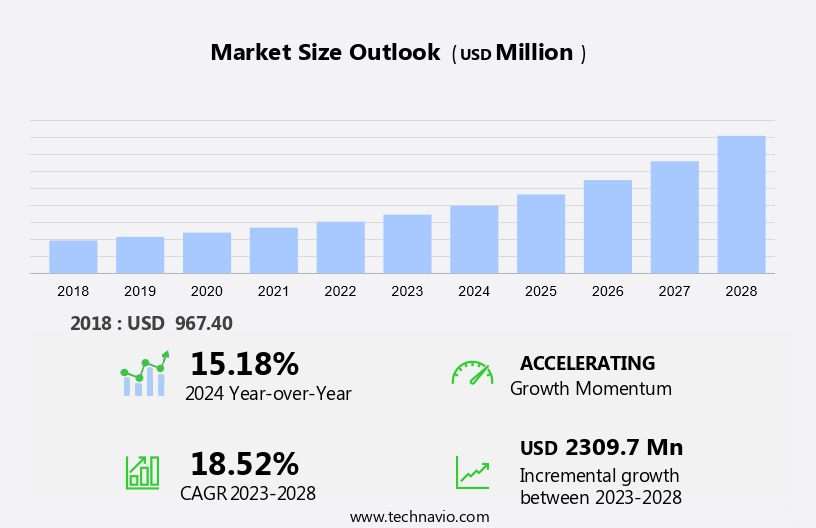
Homecare Oxygen Concentrators Market Size 2024-2028
The homecare oxygen concentrators market size is forecast to increase by USD 2.31 billion at a CAGR of 18.52% between 2023 and 2028.
- The market is experiencing significant growth due to the increasing prevalence of respiratory diseases. According to the American Lung Association, approximately 35 million Americans have asthma or chronic obstructive pulmonary disease (COPD), conditions that require the use of oxygen concentrators.
- The market is also driven by continuous product innovation, as manufacturers introduce new features to improve the portability and efficiency of these devices. However, the high cost of portable oxygen concentrators remains a challenge for some patients, limiting their access to this essential medical equipment. Despite this, the market is expected to continue growing as the demand for home-based respiratory care solutions increases.
What will be the Size of the Homecare Oxygen Concentrators Market During the Forecast Period?
- The homecare oxygen concentrator market encompasses the production and distribution of devices that convert ambient air into medical-grade oxygen for use in homecare settings. These concentrators, available in continuous flow and portable models, cater to various patient needs, including those with respiratory conditions such as asthma, sleep apnea, and chronic obstructive pulmonary disease. The market's growth is driven by increasing prevalence of respiratory diseases, advancements in technology like precision medical and Servotech power systems, and the rising demand for cost-effective, portable solutions. Continuous flow concentrators are commonly used in homecare settings, while portable oxygen concentrators cater to travelers and those requiring oxygen on-the-go.
- Investment funding and partnerships between industry players and healthcare institutions continue to fuel innovation and expansion in this market. Medicare claims data indicates a significant number of beneficiaries rely on oxygen therapy, further emphasizing the market's importance. Skin care concerns related to long-term oxygen therapy usage are also being addressed through advancements in mask technology. Overall, the homecare oxygen concentrator market is poised for continued growth, driven by demographic trends, technological advancements, and evolving patient needs.
How is this Homecare Oxygen Concentrators Industry segmented and which is the largest segment?
The homecare oxygen concentrators industry research report provides comprehensive data (region-wise segment analysis), with forecasts and estimates in "USD million" for the period 2024-2028, as well as historical data from 2018-2022 for the following segments.
- Product
- Portable
- Stationary
- Technology
- Continuous flow
- Pulse flow
- Geography
- North America
- US
- Europe
- Germany
- UK
- Asia
- China
- India
- Rest of World (ROW)
- North America
By Product Insights
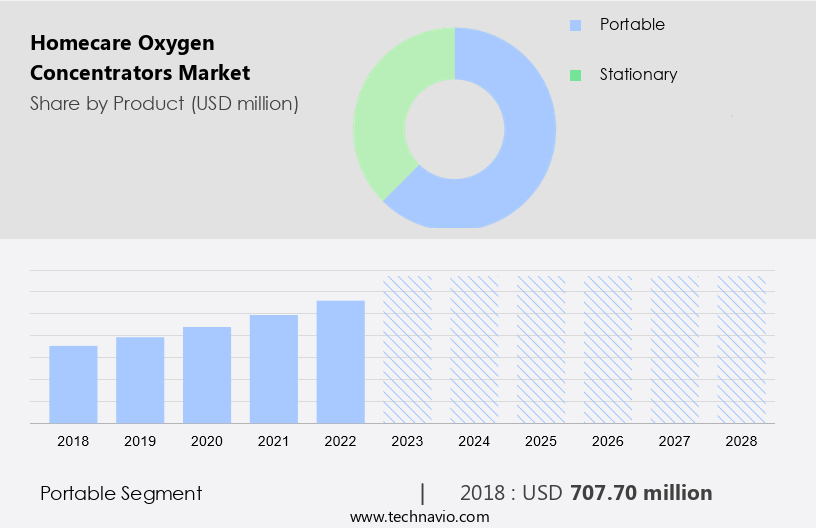
The portable segment is estimated to witness significant growth during the forecast period. The market is experiencing steady growth, with a particular focus on portable concentrators. These devices offer numerous advantages, making them popular among patients with respiratory disorders such as asthma, sleep apnea, and chronic obstructive pulmonary disease (COPD). Portable oxygen concentrators are compact, often weighing less than 10 pounds, and are easily transported in backpacks or shoulder bags. Their small size allows users to move freely in home care settings, hospitals, ambulatory surgical centers, and even during travel. Advanced technologies like precision medical's pulse flow technology and continuous flow technology have enhanced the product's efficiency and user experience. The geriatric population's increasing need for oxygen therapy and reimbursement policies' favorable stance towards homecare settings have boosted sales. The market is projected to reach a significant value by 2027, driven by the rising number of deaths due to respiratory diseases and unhealthy lifestyles. The glass blowing industry and non-pressurized aircraft are potential applications for this technology, further expanding its market reach.
Get a glance at the market report of various segments Request Free Sample
The Portable segment was valued at USD 707.70 billion in 2018 and showed a gradual increase during the forecast period.
Regional Analysis
North America is estimated to contribute 40% to the growth of the global market during the forecast period. Technavio's analysts have elaborately explained the regional trends and drivers that shape the market during the forecast period.
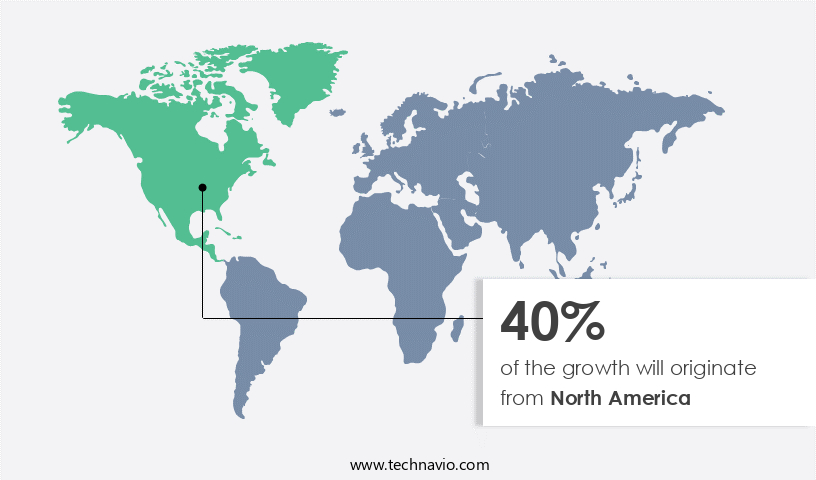
For more insights on the market size of various regions, Request Free Sample
The North American market for oxygen concentrators is poised for significant expansion, driven by substantial healthcare investments and advanced healthcare infrastructure within the region. Projections from the Centers for Medicare and Medicaid Services (CMS) indicate U.S. healthcare spending will approach USD 6.0 trillion by 2027. This investment fosters the availability of advanced medical devices, including oxygen concentrators. The growing geriatric population, with its increased prevalence of respiratory disorders such as asthma and sleep apnea, further fuels market growth. Advanced technologies, including continuous flow and pulse flow, are enhancing product adoption across home healthcare settings, ambulatory surgical centers, and hospitals.
Oxygen concentrators are also increasingly utilized by travelers and individuals with lifestyle-related health concerns. Key market players, including Inogen, OMRON Healthcare, Servotech Power Systems, and Precision Medical, are driving innovation and market penetration. Reimbursement policies and Medicare claims data provide additional support for market growth. Furthermore, the glass blowing industry and non-home care settings, including non-pressurized aircraft, contribute to the diversified applications of oxygen concentrators.
Market Dynamics
Our researchers analyzed the data with 2023 as the base year, along with the key drivers, trends, and challenges. A holistic analysis of drivers will help companies refine their marketing strategies to gain a competitive advantage.
What are the key market drivers leading to the rise In the adoption of Homecare Oxygen Concentrators Industry?
- Increasing prevalence of respiratory diseases is the key driver of the market.Respiratory disorders, including asthma and sleep apnea, as well as respiratory diseases caused by allergies, pollution, and smoking, are on the rise, leading to an increased demand for oxygen therapy in home care settings. According to the National Heart, Lung, and Blood Institute, approximately 65 million people worldwide were diagnosed with chronic obstructive pulmonary disease (COPD) in 2021. Shortness of breath, a common symptom of respiratory diseases, can significantly impact patients' quality of life and mobility. Advanced technologies, such as portable oxygen concentrators with continuous flow and pulse flow technology, enable patients to receive oxygen therapy at home, making it a preferred option over non-home care settings.
- These devices are popular among geriatric populations, hospitals, ambulatory surgical centers, travelers, and individuals with unhealthy lifestyles. The home care oxygen concentrator market is projected to reach significant project value due to increasing reimbursement policies, product popularity, and investment funding. Companies such as Inogen, OMRON Healthcare, Servotech Power Systems, and Precision Medical are leading innovators in this space, offering lightweight, efficient, and user-friendly solutions. Oxygen therapy is essential for patients with respiratory diseases, and the use of masks ensures proper delivery, while skin care is crucial to prevent irritation. Additionally, the glass blowing industry and non-pressurized aircraft industries utilize oxygen for various purposes, further driving market growth.
What are the market trends shaping the Homecare Oxygen Concentrators market?
- Continuous product innovation is the upcoming market trend.The market is witnessing significant innovation due to the rising prevalence of respiratory diseases, including asthma and sleep apnea, among the geriatric population and those suffering from unhealthy lifestyles. Advanced technologies, such as continuous flow and pulse flow, are driving the popularity of homecare oxygen concentrators in home health care settings and hospitals. One groundbreaking development is the single solution oxygen concentrator, which offers a three-in-one feature for stationary, ambulatory, and travel use. Notable examples include the Inogen One System and OMRON's portable concentrators. Lightweight stationary concentrators are also gaining traction, catering to patients' need for independence and mobility. The market's projected value is expected to grow substantially due to reimbursement policies, Medicare claims data, and the increasing investment funding In the oxygen therapy industry.
- Additionally, the glass blowing industry and Mask manufacturers are collaborating to improve oxygen delivery systems, enhancing user experience. Non-home care settings, such as ambulatory surgical centers and non-pressurized aircraft, are also adopting these technologies for patient care. Sales of these devices are increasing due to the convenience they offer to patients with respiratory disorders, including chronic obstructive pulmonary disease and pneumonia. Furthermore, the growing number of deaths related to respiratory diseases is fueling the demand for oxygen concentrators. The market's growth is also influenced by the increasing prevalence of skin care issues due to long-term oxygen therapy use. Overall, the market is a dynamic and evolving industry, with companies continually striving to provide innovative solutions for patients with oxygen therapy needs.
What challenges does the Homecare Oxygen Concentrators Industry face during its growth?
- The high cost of portable oxygen concentrators remains a major challenge for industry growth. While the market is expanding due to the rising prevalence of respiratory conditions such as asthma, sleep apnea, and chronic obstructive pulmonary disease (COPD), affordability remains a key concern. Medicare claims data indicate that approximately 15 million Americans rely on home oxygen therapy. Advanced technologies, including continuous and pulse flow systems, enhance the functionality of home oxygen concentrators, allowing patients to receive therapy in home settings, ambulatory surgical centers, and while traveling.
- Despite these benefits, the high price of these devices limits accessibility. Features such as extended battery life, compact design, and oxygen purification capabilities contribute to higher costs, making ownership difficult for many patients. As a result, some individuals opt for rental solutions rather than purchasing a concentrator outright. The geriatric population, a key demographic for home oxygen therapy, faces financial barriers that may slow the adoption of advanced products, potentially impacting manufacturers' revenue.
- Investment in research and development is essential to addressing cost concerns. Companies such as Inogen, OMRON Healthcare, Precision Medical, and Servotech Power Systems are working to develop more affordable solutions. Additionally, reimbursement policies, particularly those set by Medicare, play a crucial role in market expansion. Manufacturers and providers must align with these policies to improve accessibility and drive adoption.
Exclusive Customer Landscape
The homecare oxygen concentrators market forecasting report includes the adoption lifecycle of the market, covering from the innovator's stage to the laggard's stage. It focuses on adoption rates in different regions based on penetration. Furthermore, the homecare oxygen concentrators market report also includes key purchase criteria and drivers of price sensitivity to help companies evaluate and develop their market growth analysis strategies.
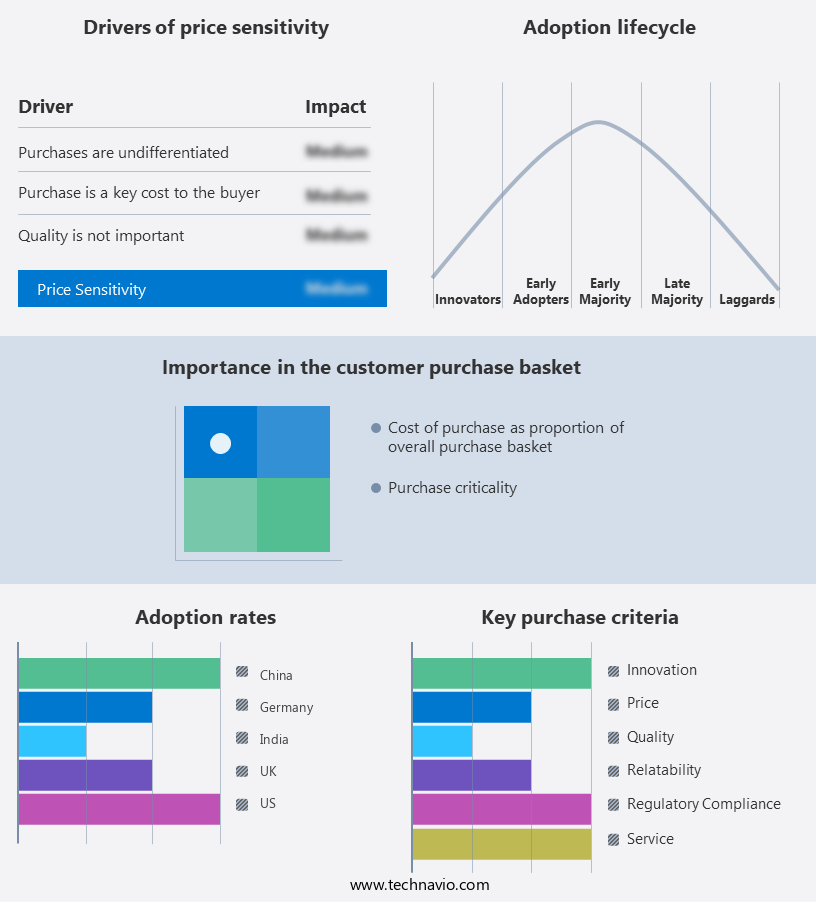
Customer Landscape
Key Companies & Market Insights
Companies are implementing various strategies, such as strategic alliances, homecare oxygen concentrators market forecast, partnerships, mergers and acquisitions, geographical expansion, and product/service launches, to enhance their presence In the industry.
Besco Medical Ltd. - The company specializes in providing homecare oxygen solutions, including portable oxygen concentrators such as the BES OC07 model and 5L dual flow concentrator. These devices deliver medical-grade oxygen to patients In the comfort of their homes, ensuring consistent and reliable supply.
The industry research and growth report includes detailed analyses of the competitive landscape of the market and information about key companies, including:
- Besco Medical Ltd.
- BPL MEDICAL TECHNOLOGIES Pvt. Ltd.
- Chart Industries Inc.
- Enovis Corp.
- Contec Medical Systems Co. Ltd.
- Medical Depot Inc.
- Inogen Inc.
- Invacare Corp.
- Kare Medical and Analytical Devices Ltd. Co.
- Koninklijke Philips N.V.
- Longfian Scitech Co. Ltd.
- Niterra Co. Ltd.
- Nidek Medical Products Inc.
- O2 Concepts LLC
- Precision Medical Inc.
- ResMed Inc.
- SCALEO Medical
- Teijin Ltd.
- Yuwell Jiangsu Yuyue medical equipment and supply Co. Ltd.
- Zhengzhou Olive Electronic Technology Co. Ltd.
Qualitative and quantitative analysis of companies has been conducted to help clients understand the wider business environment as well as the strengths and weaknesses of key industry players. Data is qualitatively analyzed to categorize companies as pure play, category-focused, industry-focused, and diversified; it is quantitatively analyzed to categorize companies as dominant, leading, strong, tentative, and weak.
Research Analyst Overview
The homecare oxygen concentrator market encompasses a range of advanced technologies designed to deliver medical-grade oxygen to patients in home care settings. These devices, which utilize various oxygen generation techniques such as continuous flow and pulse flow technology, have gained significant popularity among individuals with respiratory disorders, including asthma and chronic obstructive pulmonary disease (COPD). The geriatric population, a demographic group with an increased prevalence of respiratory diseases, has driven the demand for homecare oxygen concentrators. According to market research, the global homecare oxygen concentrator market is projected to reach substantial value by 2027, growing at a steady rate due to the rising number of patients requiring oxygen therapy and the increasing adoption of these devices in home health care and ambulatory surgical centers.
Homecare oxygen concentrators offer several advantages over traditional oxygen sources, such as non-pressurized cylinders and liquid oxygen tanks. They are more portable and convenient, allowing patients to move around freely while receiving oxygen therapy. Portable oxygen concentrators have become essential for travelers, enabling them to maintaIn their oxygen therapy regimen during trips. Investment funding and reimbursement policies have played a crucial role In the growth of the homecare oxygen concentrator market. Medicare claims data indicates a steady increase In the number of claims for oxygen therapy equipment, demonstrating the growing acceptance and utilization of these devices. Manufacturers continue to innovate and improve the design and functionality of homecare oxygen concentrators.
For instance, some devices incorporate precision medical technologies, ensuring consistent oxygen flow rates and improved patient comfort. Additionally, some models are designed with sleek and lightweight features, making them more appealing to patients. The homecare oxygen concentrator market is highly competitive, with several key players offering a range of products catering to various customer segments. Companies such as Inogen, Omron Healthcare, Servotech Power Systems, and Precision Medical have gained significant market share due to their innovative products and strong brand reputation. The glass blowing industry has also been impacted by the growing popularity of homecare oxygen concentrators, as these devices have reduced the demand for glass oxygen cylinders.
However, the glass blowing industry continues to find opportunities in producing oxygen cylinders for non-home care applications, such as hospitals and non-pressurized aircraft. The use of homecare oxygen concentrators is not limited to respiratory disorders; they are also used In the treatment of skin care conditions and sleep apnea. As the global population ages and the prevalence of unhealthy lifestyles continues to rise, the demand for homecare oxygen concentrators is expected to remain strong. In conclusion, the homecare oxygen concentrator market is a dynamic and growing industry, driven by the increasing number of patients requiring oxygen therapy and the adoption of these devices in various healthcare settings.
The market is highly competitive, with several key players offering innovative products to cater to the evolving needs of patients. The future of the homecare oxygen concentrator market looks promising, with continued investment and innovation expected to drive growth.
|
Market Scope |
|
|
Report Coverage |
Details |
|
Page number |
165 |
|
Base year |
2023 |
|
Historic period |
2018-2022 |
|
Forecast period |
2024-2028 |
|
Growth momentum & CAGR |
Accelerate at a CAGR of 18.52% |
|
Market growth 2024-2028 |
USD 2309.7 million |
|
Market structure |
Fragmented |
|
YoY growth 2023-2024(%) |
15.18 |
|
Key countries |
US, UK, China, India, and Germany |
|
Competitive landscape |
Leading Companies, Market Positioning of Companies, Competitive Strategies, and Industry Risks |
What are the Key Data Covered in this Homecare Oxygen Concentrators Market Research and Growth Report?
- CAGR of the Homecare Oxygen Concentrators industry during the forecast period
- Detailed information on factors that will drive the growth and forecasting between 2024 and 2028
- Precise estimation of the size of the market and its contribution of the industry in focus to the parent market
- Accurate predictions about upcoming growth and trends and changes in consumer behaviour
- Growth of the market across North America, Europe, Asia, and Rest of World (ROW)
- Thorough analysis of the market's competitive landscape and detailed information about companies
- Comprehensive analysis of factors that will challenge the homecare oxygen concentrators market growth of industry companies
We can help! Our analysts can customize this homecare oxygen concentrators market research report to meet your requirements.
 RIA -
RIA - 
