
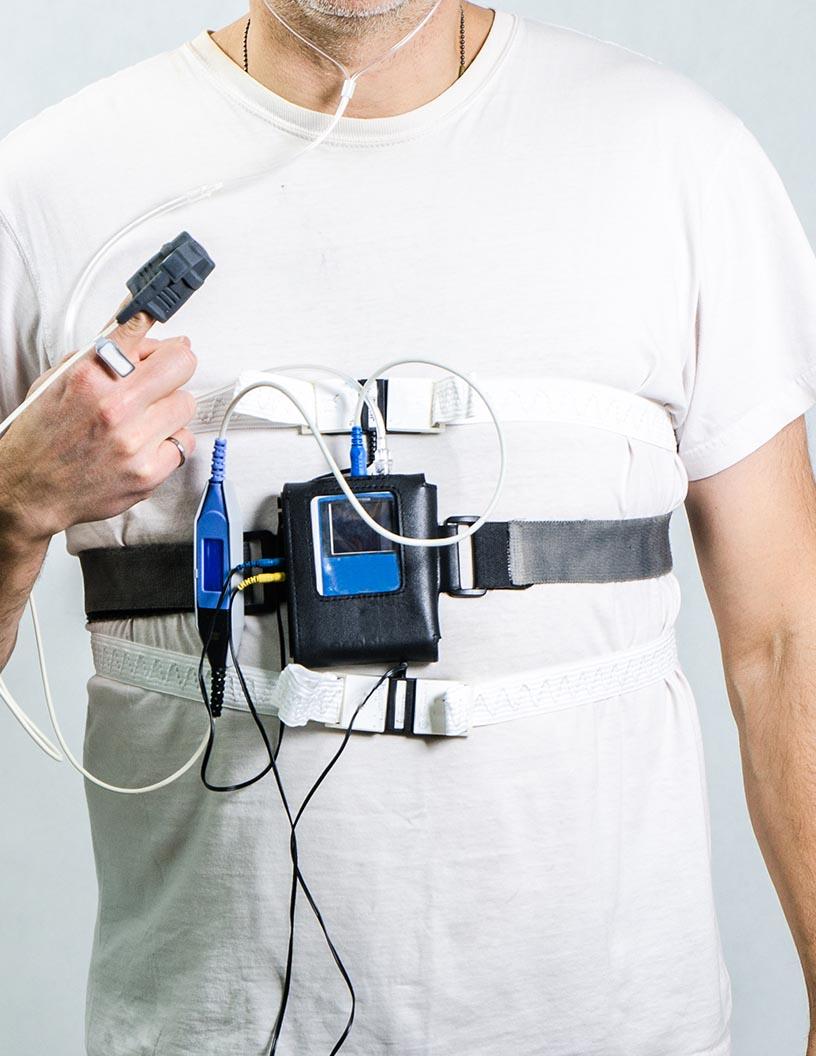


Sleep Apnea Diagnostic And Therapeutic Devices Market Size 2025-2029
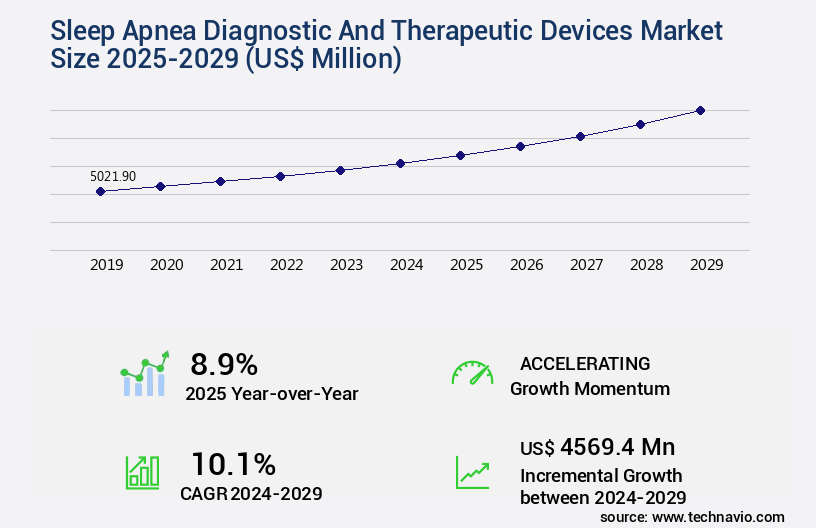
The sleep apnea diagnostic and therapeutic devices market size is valued to increase USD 4.57 billion, at a CAGR of 10.1% from 2024 to 2029. The increasing prevalence of sleep apnea disorders will drive the sleep apnea diagnostic and therapeutic devices market.
Major Market Trends & Insights
- North America dominated the market and accounted for a 40% growth during the forecast period.
- By Type - Therapeutic devices segment was valued at USD 3.22 billion in 2023
- By End-user - Sleep laboratories and hospitals segment accounted for the largest market revenue share in 2023
Market Size & Forecast
- Market Opportunities: 138.89 million
- Market Future Opportunities: USD 4.57 billion
- CAGR : 10.1%
- North America: Largest market in 2023
Market Summary
- The market represents a significant and continually evolving sector, driven by the increasing prevalence of sleep apnea disorders and technological advances in sleep apnea devices. Core technologies, such as positive airway pressure (PAP) devices and oral appliances, dominate the market, accounting for over 70% of the total revenue share. Applications include the diagnosis and treatment of obstructive sleep apnea and central sleep apnea. Service types, including device rental, repair, and maintenance, are essential components of the market. Regulatory bodies, such as the US Food and Drug Administration (FDA), play a crucial role in ensuring the safety and efficacy of these devices. The market is experiencing growth due to favorable reimbursement policies and the link between sleep apnea and allied health conditions such as Type 2 diabetes, hypertension, and obesity.
- The market faces challenges, including the high cost of sleep apnea devices, which can limit accessibility for some patients. Looking forward, the market is expected to witness continued growth, with major opportunities arising from the development of wearable, non-invasive devices and advancements in telemedicine. As of 2021, an estimated 1 billion people worldwide suffer from sleep apnea, making it a significant public health concern.
What will be the Size of the Sleep Apnea Diagnostic And Therapeutic Devices Market during the forecast period?
Get Key Insights on Market Forecast (PDF) Request Free Sample
How is the Sleep Apnea Diagnostic And Therapeutic Devices Market Segmented and what are the key trends of market segmentation?
The sleep apnea diagnostic and therapeutic devices industry research report provides comprehensive data (region-wise segment analysis), with forecasts and estimates in "USD million" for the period 2025-2029, as well as historical data from 2019-2023 for the following segments.
- Type
- Therapeutic devices
- Diagnostic devices
- End-user
- Sleep laboratories and hospitals
- Home care settings
- Geography
- North America
- US
- Canada
- Europe
- France
- Germany
- Italy
- UK
- APAC
- China
- India
- Japan
- South Korea
- Rest of World (ROW)
- North America
By Type Insights
The therapeutic devices segment is estimated to witness significant growth during the forecast period.
In the dynamic and evolving market of sleep apnea diagnostic and therapeutic devices, the therapeutic devices segment holds a significant position, accounting for a substantial market share in 2024. This dominance can be attributed to several factors, including the increasing number of product launches, strategic business moves by leading companies, and favorable reimbursement policies for Continuous Positive Airway Pressure (CPAP) devices. The therapeutic devices segment encompasses Positive Airway Pressure (PAP) devices, facial interfaces, and other types. PAP devices are extensively used in healthcare settings like hospitals, operating rooms, and emergency wards. These devices are available in three primary types: CPAP, Bi-Level Positive Airway Pressure (BiPAP), and Auto-Adjusting Positive Airway Pressure (Auto-PAP).
Facial interfaces consist of nasal pillows, oral appliances, and full-face masks. CPAP therapy, a primary treatment for sleep apnea, is expected to witness continuous growth during the forecast period. This growth can be attributed to the increasing prevalence of sleep disordered breathing, improved treatment adherence monitoring, and advancements in CPAP mask types. For instance, the introduction of quieter and more comfortable CPAP masks has led to higher patient acceptance and adherence rates. BiPAP ventilation settings and positional therapy have also shown promising results in the treatment of sleep apnea. These therapies cater to patients with more complex sleep disorders, such as Cheyne-Stokes respiration and obstructive sleep apnea with significant positional dependency.
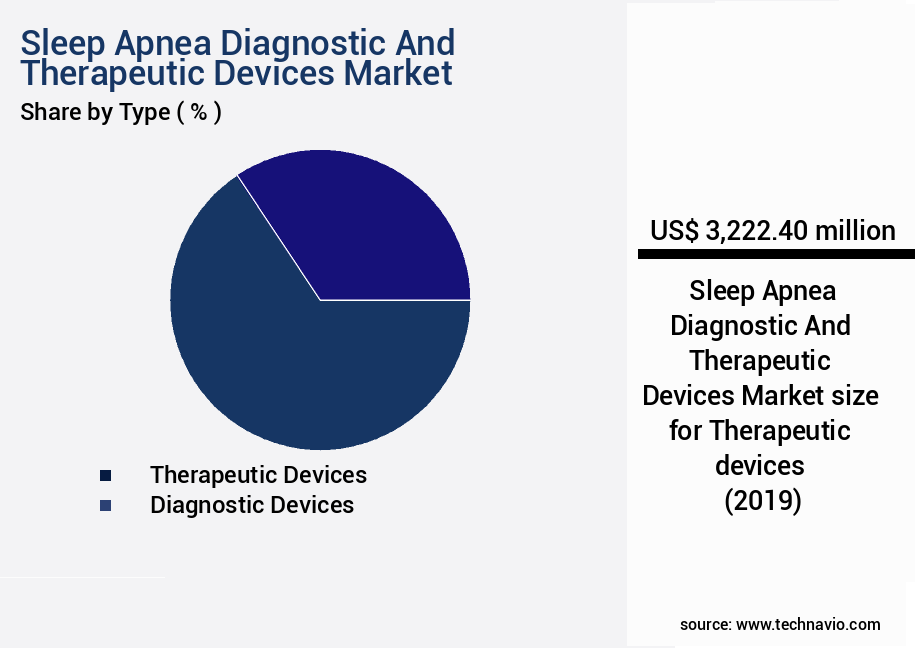
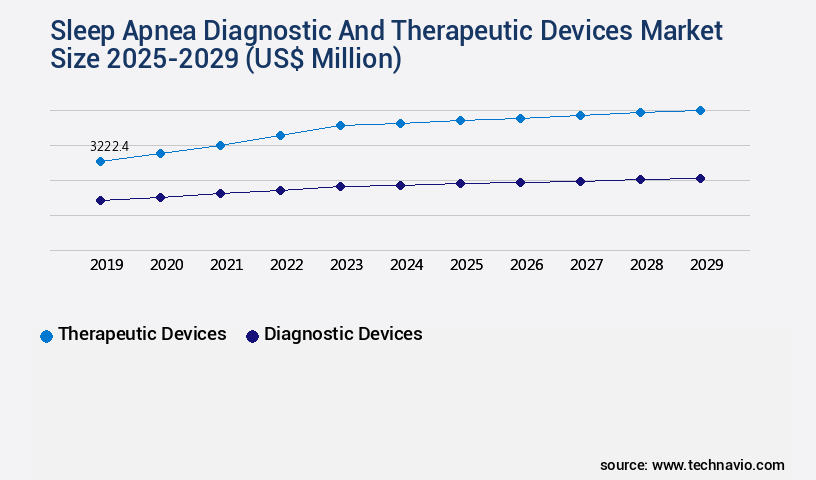
The Therapeutic devices segment was valued at USD 3.22 billion in 2019 and showed a gradual increase during the forecast period.
Furthermore, the integration of data analysis software, oxygen saturation monitoring, and respiratory event monitoring in these devices enhances their diagnostic accuracy and sleep study interpretation capabilities. The market for sleep apnea diagnostic and therapeutic devices is also witnessing the emergence of portable monitoring devices and advanced technologies like hypoglossal nerve stimulation. These innovations aim to address the challenges associated with traditional polysomnography (PSG) metrics, such as cost, accessibility, and patient comfort. Moreover, the adoption of remote patient monitoring and cardiac rhythm monitoring is expected to further boost market growth. In summary, the market is undergoing significant changes, driven by advancements in technology, increasing awareness, and evolving patient needs.
The therapeutic devices segment, with its diverse product offerings and continuous innovation, is poised to maintain its leading position in the market.
Regional Analysis
North America is estimated to contribute 40% to the growth of the global market during the forecast period. Technavio's analysts have elaborately explained the regional trends and drivers that shape the market during the forecast period.
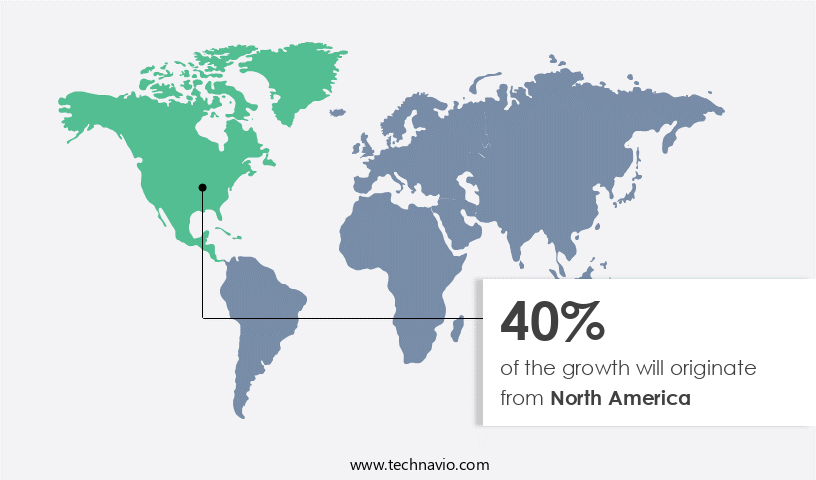
See How Sleep Apnea Diagnostic And Therapeutic Devices Market Demand is Rising in North America Request Free Sample
The North American market is projected to expand due to rising sleep apnea prevalence, product launches, and favorable reimbursement policies. The region's market growth is driven by increasing insurance coverage for high-quality treatment, such as CPAP therapy, which is covered by Medicare for obstructive sleep apnea patients undergoing a 3-month trial. This coverage extension is granted if the patient's medical record demonstrates the device's effectiveness in the treatment process. With approximately 22 million Americans suffering from sleep apnea, the market's growth is further fueled by the presence of numerous players and the ongoing launch of advanced devices.
According to recent studies, over 40% of the US population experiences insufficient sleep at least one night a week, and sleep apnea affects around 25 million adults, highlighting the market's potential for growth. Additionally, the market's expansion is expected to be influenced by the increasing awareness and diagnosis rates of sleep apnea, as well as the development of innovative technologies, such as auto-adjusting CPAP devices and oral appliances.
Market Dynamics
Our researchers analyzed the data with 2024 as the base year, along with the key drivers, trends, and challenges. A holistic analysis of drivers will help companies refine their marketing strategies to gain a competitive advantage.
The market is witnessing significant growth due to the increasing prevalence of sleep apnea and the need for effective treatment solutions. The effectiveness of Continuous Positive Airway Pressure (CPAP) therapy, the most common treatment for obstructive sleep apnea, in improving sleep quality and reducing the risk of cardiovascular complications is well-established. However, the choice of CPAP mask types plays a crucial role in ensuring patient compliance, with full face masks being more effective for those with nasal congestion or a high AHI score, while nasal masks are preferred by those with mild to moderate sleep apnea.
Home sleep apnea testing devices have gained popularity due to their accuracy and convenience, allowing for early diagnosis and treatment. The relationship between sleep quality and AHI score is well-documented, with higher AHI scores indicating more severe sleep apnea and poorer sleep quality. Obesity is a significant factor influencing sleep apnea severity, making effective weight management an essential component of treatment. Oral appliances are an alternative treatment option for mild to moderate sleep apnea, with effectiveness comparable to CPAP therapy in some cases. The comparison of treatment modalities reveals that CPAP therapy reduces AHI by an average of 50%, while oral appliances reduce it by approximately 30%.
Factors influencing CPAP compliance include mask fit, pressure settings, and patient comfort. Polysomnography remains the gold standard for sleep apnea diagnosis, with diagnostic criteria for central sleep apnea and mixed sleep apnea well-defined. The development of new diagnostic tools, such as advanced technology sleep apnea management systems and data analysis techniques, is ensuring improved diagnostic accuracy and minimizing side effects of CPAP therapy. The latest research on sleep apnea treatment explores innovative technology for sleep apnea detection and management, including machine learning algorithms and wearable devices. The long-term effects of sleep apnea treatment on quality of life are significant, with improved cognitive function, reduced daytime sleepiness, and enhanced overall well-being.
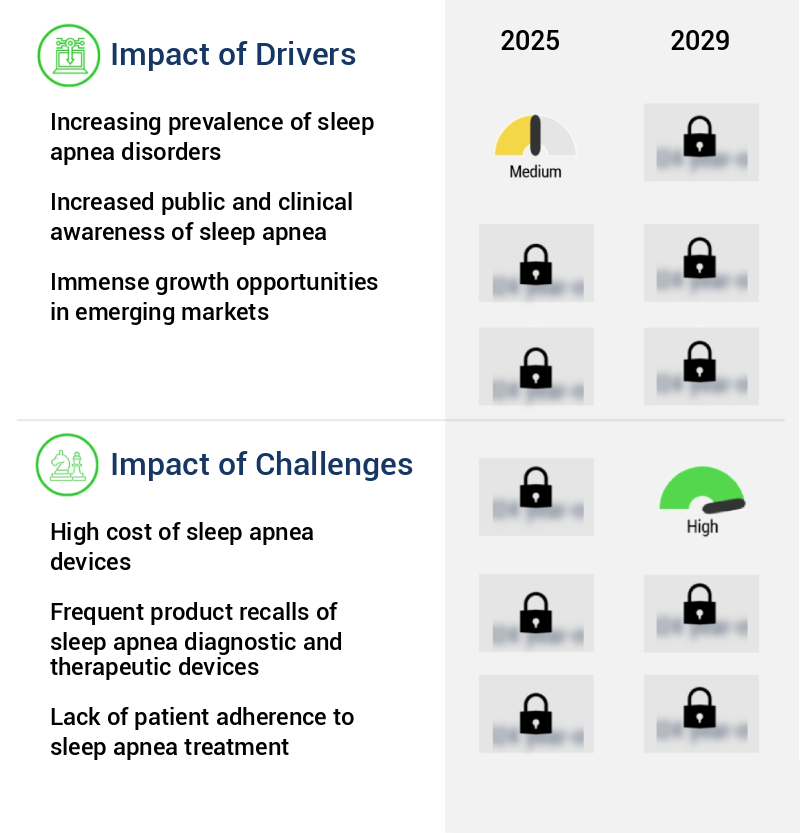
What are the key market drivers leading to the rise in the adoption of Sleep Apnea Diagnostic And Therapeutic Devices Industry?
- The rising prevalence of sleep apnea disorders serves as the primary market driver. Sleep apnea, a common sleep disorder characterized by repeated pauses in breathing during sleep, is becoming increasingly prevalent, leading to a significant growth in demand for related treatments and diagnostic tools. This trend is expected to continue, fueling market expansion in the healthcare industry.
- The market is experiencing significant growth due to the increasing prevalence of sleep apnea disorders. Sleep apnea is characterized by the repeated obstruction of the upper airway during sleep, leading to the interruption of normal breathing. This condition, also known as obstructive sleep apnea, can result in various complications if left untreated, including heart disease, diabetes, glaucoma, cancer, and cognitive and behavioral disorders. In the United States, sleep apnea affects a substantial portion of the population, with estimates suggesting that 25-30% of men and 9-17% of women are affected. Central sleep apnea, another type of sleep apnea, occurs when the brain fails to send proper breathing signals during sleep.
- The consequences of undiagnosed or untreated sleep apnea can be severe, making early detection and treatment crucial. The advancements in diagnostic and therapeutic devices, such as continuous positive airway pressure (CPAP) machines, automatic positive airway pressure (APAP) devices, and oral appliances, have significantly improved the management of sleep apnea. These devices help maintain an open airway during sleep, ensuring uninterrupted breathing and preventing the associated health risks. The market for sleep apnea diagnostic and therapeutic devices is expected to continue evolving, with ongoing research and development efforts aimed at improving the efficacy, comfort, and accessibility of these devices.
- This dynamic market landscape presents numerous opportunities for businesses and investors in the healthcare sector.
What are the market trends shaping the Sleep Apnea Diagnostic And Therapeutic Devices Industry?
- The trend in the market involves advancements in technology for sleep apnea devices. Technological innovations are driving the future of sleep apnea device development.
- Sleep apnea devices have seen significant advancements due to technological innovations, leading to more reliable and effective tools for diagnosing and treating sleep apnea disorders. Companies are investing heavily in research and development to create advanced devices, such as wearable sleep apnea devices and lightweight interface masks with soft sealing flanges and fewer accessories. These improvements cater to various facial shapes and enhance user experience. Moreover, the integration of informatics and software systems with Continuous Positive Airway Pressure (CPAP) and associated monitoring devices is transforming sleep disorder therapy.
- This integration reduces costs and saves time by providing real-time data analysis and customized therapy plans. The market for sleep apnea devices continues to evolve, offering new possibilities for better patient care and improved diagnostic accuracy.
What challenges does the Sleep Apnea Diagnostic And Therapeutic Devices Industry face during its growth?
- The escalating costs of sleep apnea devices pose a significant challenge to the industry's growth trajectory.
- The market faces a significant challenge due to the high cost of equipment, which includes CPAP machines, masks, and associated accessories. These devices, essential for diagnosing and treating sleep disorders, can cost new patients between USD 1,000 and USD 4,000 on average. The expense varies depending on the brand, technology, and features of the machine. Despite this challenge, the market continues to evolve, with advancements in technology driving innovation and improving patient outcomes. Sleep apnea diagnostic and therapeutic devices, such as Positive Airway Pressure (PAP) machines, masks, and Continuous Positive Airway Pressure (CPAP) systems, remain in high demand due to their effectiveness in managing sleep apnea and related conditions.
- As the prevalence of sleep disorders continues to rise, so too does the need for affordable and accessible diagnostic and therapeutic solutions.
Exclusive Customer Landscape
The sleep apnea diagnostic and therapeutic devices market forecasting report includes the adoption lifecycle of the market, covering from the innovator's stage to the laggard's stage. It focuses on adoption rates in different regions based on penetration. Furthermore, the sleep apnea diagnostic and therapeutic devices market report also includes key purchase criteria and drivers of price sensitivity to help companies evaluate and develop their market growth analysis strategies.
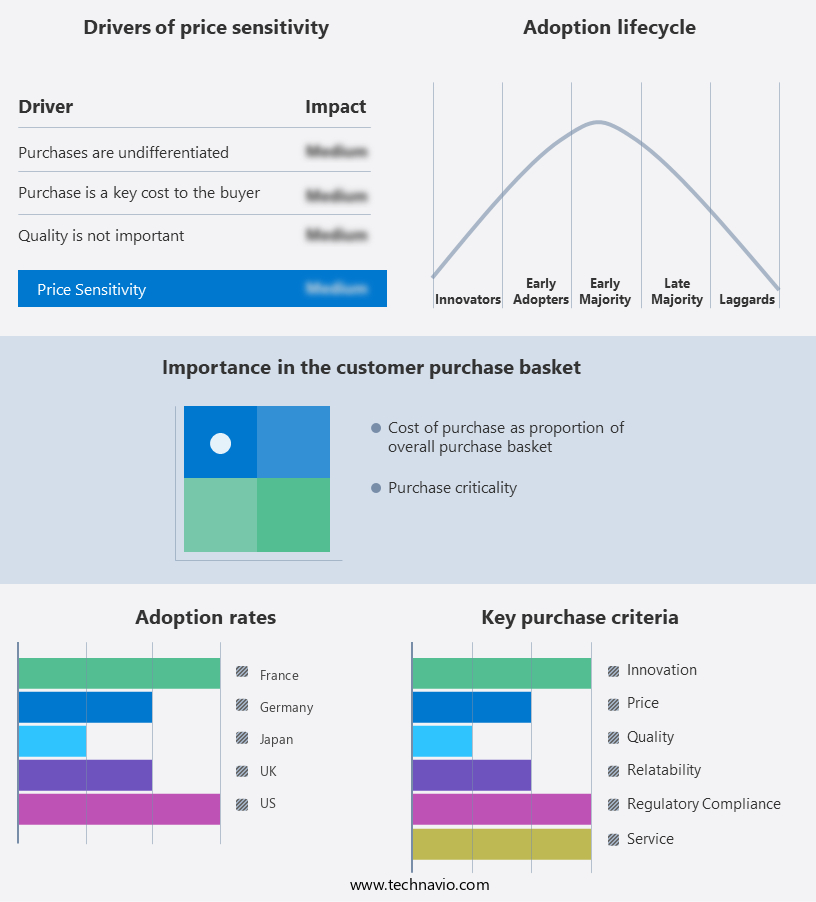
Customer Landscape of Sleep Apnea Diagnostic And Therapeutic Devices Industry
Competitive Landscape & Market Insights
Companies are implementing various strategies, such as strategic alliances, sleep apnea diagnostic and therapeutic devices market forecast, partnerships, mergers and acquisitions, geographical expansion, and product/service launches, to enhance their presence in the industry.
APEX Medical Corp. - The Israeli firm Itamar Medical, a subsidiary specializing in sleep apnea diagnosis and treatment, employs innovative technology.
The industry research and growth report includes detailed analyses of the competitive landscape of the market and information about key companies, including:
- APEX Medical Corp.
- Asahi Kasei Corp.
- BMC MEDICAL CO. LTD.
- Braebon Medical Corp.
- Cadwell Industries Inc.
- Circadiance LLC
- Cleveland Medical Devices Inc.
- Compumedics Ltd.
- DeVilbiss Healthcare GmbH
- Fisher and Paykel Healthcare Corp. Ltd.
- Koninklijke Philips NV
- Lowenstein Medical Technology GmbH and Co. KG
- Mallinckrodt Plc
- Natus Medical Inc.
- Nihon Kohden Corp.
- React Health
- ResMed Inc.
- Sefam
- SOMNOmedics GmbH
- Teleflex Inc.
Qualitative and quantitative analysis of companies has been conducted to help clients understand the wider business environment as well as the strengths and weaknesses of key industry players. Data is qualitatively analyzed to categorize companies as pure play, category-focused, industry-focused, and diversified; it is quantitatively analyzed to categorize companies as dominant, leading, strong, tentative, and weak.
Recent Development and News in Sleep Apnea Diagnostic And Therapeutic Devices Market
- In January 2024, ResMed, a leading medical device company, announced the launch of its new AirMini Autoset Travel CPAP Machine, a compact and lightweight sleep apnea therapy device, designed for users who travel frequently (ResMed Press Release, 2024).
- In March 2024, Philips Respiratory Care and Royal Philips signed a strategic partnership with the American Sleep Apnea Association (ASAA) to improve sleep apnea awareness and access to diagnostic tools and therapies (Philips Press Release, 2024).
- In April 2025, Fisher & Paykel Healthcare Corporation, a global medical device manufacturer, completed the acquisition of Compusult, a leading Canadian sleep diagnostics technology company, to expand its diagnostic capabilities and offerings (Fisher & Paykel Healthcare Press Release, 2025).
- In May 2025, the U.S. Food and Drug Administration (FDA) granted clearance to ResMed for its new Adaptive Servo-Ventilator, a sleep apnea therapeutic device designed for patients with complex respiratory needs, marking a significant technological advancement in the market (ResMed Press Release, 2025).
Dive into Technavio's robust research methodology, blending expert interviews, extensive data synthesis, and validated models for unparalleled Sleep Apnea Diagnostic And Therapeutic Devices Market insights. See full methodology.
|
Market Scope |
|
|
Report Coverage |
Details |
|
Page number |
197 |
|
Base year |
2024 |
|
Historic period |
2019-2023 |
|
Forecast period |
2025-2029 |
|
Growth momentum & CAGR |
Accelerate at a CAGR of 10.1% |
|
Market growth 2025-2029 |
USD 4,569.4 million |
|
Market structure |
Fragmented |
|
YoY growth 2024-2025(%) |
8.9 |
|
Key countries |
US, Germany, Canada, UK, France, China, Japan, Italy, India, and South Korea |
|
Competitive landscape |
Leading Companies, Market Positioning of Companies, Competitive Strategies, and Industry Risks |
Research Analyst Overview
- The market is characterized by continuous innovation and evolution, driven by advancements in technology and growing awareness of sleep disorders. Arousal index calculation and upper airway resistance measurements are increasingly utilized in diagnostic tools to enhance OSA (Obstructive Sleep Apnea) diagnostic accuracy. OSA diagnosis criteria have expanded beyond traditional Apnea-Hypopnea Index (AHI) assessment, with a focus on sleep architecture disruption and Cheyne-Stokes respiration. Auto-CPAP titration and data analysis software enable personalized therapy, improving CPAP therapy efficacy and addressing positional therapy efficacy concerns. Respiratory event monitoring and oxygen saturation monitoring are integral components of sleep study interpretation, ensuring effective treatment and enhancing patient safety.
- CPAP mask types continue to evolve, addressing comfort and adherence concerns, while remote patient monitoring facilitates ongoing treatment management. Bipap ventilation settings cater to patients with complex respiratory needs, and positional therapy efficacy is assessed through sleep fragmentation index evaluation. Hypoglossal nerve stimulation is an emerging therapeutic approach, offering an alternative to traditional CPAP therapy. Polysomnography (PSG) metrics, such as sleep stage classification and cardiac rhythm monitoring, provide comprehensive diagnostic insights. Circadian rhythm disruption assessment is gaining importance, as it contributes to a more holistic understanding of sleep disorders. Portable monitoring devices enable diagnosis and therapy outside of traditional sleep labs, expanding accessibility and convenience for patients.
- Oral appliance therapy and oxygen therapy complement CPAP therapy, offering additional treatment options. In summary, the market is marked by ongoing innovation and expansion, with a focus on enhancing diagnostic accuracy, improving therapy efficacy, and addressing patient comfort and adherence concerns.
What are the Key Data Covered in this Sleep Apnea Diagnostic And Therapeutic Devices Market Research and Growth Report?
-
What is the expected growth of the Sleep Apnea Diagnostic And Therapeutic Devices Market between 2025 and 2029?
-
USD 4.57 billion, at a CAGR of 10.1%
-
-
What segmentation does the market report cover?
-
The report segmented by Type (Therapeutic devices and Diagnostic devices), End-user (Sleep laboratories and hospitals and Home care settings), and Geography (North America, Europe, Asia, and Rest of World (ROW))
-
-
Which regions are analyzed in the report?
-
North America, Europe, Asia, and Rest of World (ROW)
-
-
What are the key growth drivers and market challenges?
-
Increasing prevalence of sleep apnea disorders, High cost of sleep apnea devices
-
-
Who are the major players in the Sleep Apnea Diagnostic And Therapeutic Devices Market?
-
Key Companies APEX Medical Corp., Asahi Kasei Corp., BMC MEDICAL CO. LTD., Braebon Medical Corp., Cadwell Industries Inc., Circadiance LLC, Cleveland Medical Devices Inc., Compumedics Ltd., DeVilbiss Healthcare GmbH, Fisher and Paykel Healthcare Corp. Ltd., Koninklijke Philips NV, Lowenstein Medical Technology GmbH and Co. KG, Mallinckrodt Plc, Natus Medical Inc., Nihon Kohden Corp., React Health, ResMed Inc., Sefam, SOMNOmedics GmbH, and Teleflex Inc.
-
Market Research Insights
- The market encompasses a range of technologies designed to identify and manage obstructive sleep apnea (OSA) and related conditions. Two key areas of innovation include remote monitoring technology and patient education materials. According to industry estimates, the global market for sleep apnea diagnostic devices is projected to reach USD 6.3 billion by 2025, growing at a compound annual growth rate (CAGR) of 6.5%. In contrast, the therapeutic devices market is anticipated to reach USD 10.5 billion by the same year, expanding at a CAGR of 7.2%. Advancements in apnea duration measurement, nocturnal oxygen desaturation, and hypopnea duration measurement enable more accurate diagnosis and personalized treatment plans.
- CPAP device compliance is enhanced through features such as PAP pressure adjustments, sleep latency measurement, and OSA comorbidity assessment. Furthermore, algorithm development and sensor technology advancements facilitate Cheyne-Stokes respiration diagnosis, periodic limb movement detection, and sleep efficiency measurement. Data security protocols and telemedicine platforms ensure effective data transmission and interpretation, while device interface design and data transmission protocols streamline usage and improve patient experience. HST data validation and PSG data acquisition tools ensure reliable and accurate diagnosis and treatment, driving market growth in this sector.
We can help! Our analysts can customize this sleep apnea diagnostic and therapeutic devices market research report to meet your requirements.
 RIA -
RIA - 
