
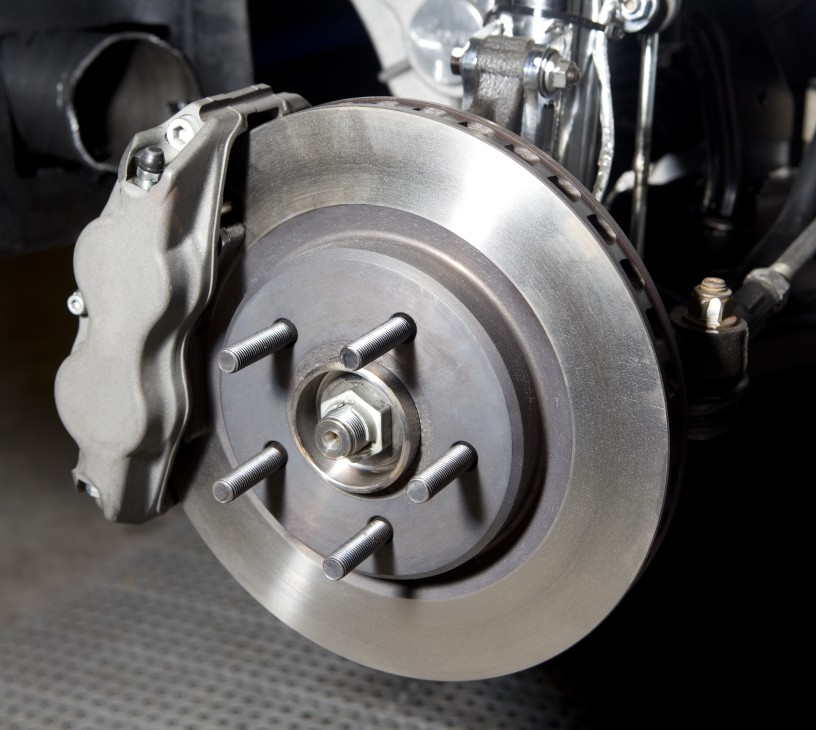


Hydraulic Brakes Market Size 2026-2030
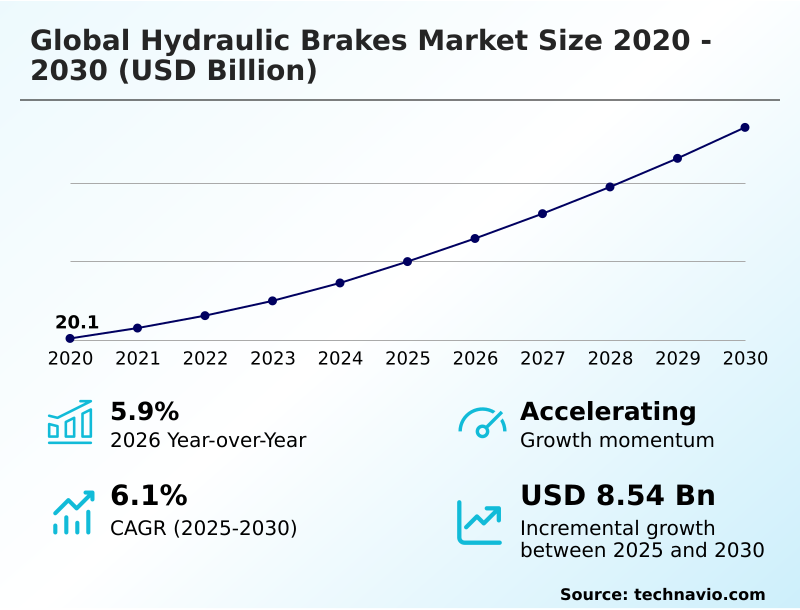
The hydraulic brakes market size is valued to increase by USD 8.54 billion, at a CAGR of 6.1% from 2025 to 2030. Stringent global safety regulations and mandatory braking standards will drive the hydraulic brakes market.
Major Market Trends & Insights
- APAC dominated the market and accounted for a 46.3% growth during the forecast period.
- By Type - Friction type segment was valued at USD 14.40 billion in 2024
- By Application - Automotive segment accounted for the largest market revenue share in 2024
Market Size & Forecast
- Market Opportunities: USD 13.43 billion
- Market Future Opportunities: USD 8.54 billion
- CAGR from 2025 to 2030 : 6.1%
Market Summary
- The hydraulic brakes market is defined by its foundational role in safety across automotive and industrial sectors, where the principles of fluid mechanics are leveraged to provide reliable stopping power. The core technology, operating on Pascal's law, uses pressurized fluid within a system comprising a master cylinder, calipers, and hydraulic actuators to convert kinetic energy into thermal energy.
- Market dynamics are increasingly shaped by the push for enhanced vehicle safety, leading to the mandatory inclusion of anti-lock braking systems and electronic stability control. For instance, in heavy-duty logistics, fleet operators are prioritizing systems with high-boiling-point fluids to ensure consistent performance under heavy thermal loads, a critical factor for compliance and operational safety.
- Simultaneously, the market is adapting to the rise of electric vehicles, where electro-hydraulic braking is essential for integrating regenerative capabilities while retaining a fail-safe mechanical system. This evolution presents both challenges and opportunities, as manufacturers balance traditional reliability with the demand for lightweight, electronically controlled components like composite plastics and high-strength aluminum alloys.
What will be the Size of the Hydraulic Brakes Market during the forecast period?
Get Key Insights on Market Forecast (PDF) Request Free Sample
How is the Hydraulic Brakes Market Segmented?
The hydraulic brakes industry research report provides comprehensive data (region-wise segment analysis), with forecasts and estimates in "USD million" for the period 2026-2030, as well as historical data from 2020-2024 for the following segments.
- Type
- Friction type
- Non friction type
- Elevator
- Others
- Application
- Automotive
- Industrial machinery
- Construction equipment
- Marine applications
- End-user
- OEMs
- Aftermarket
- Maintenance and repair services
- Geography
- APAC
- China
- India
- Japan
- North America
- US
- Canada
- Mexico
- Europe
- Germany
- France
- UK
- South America
- Brazil
- Argentina
- Colombia
- Middle East and Africa
- South Africa
- Saudi Arabia
- UAE
- Rest of World (ROW)
- APAC
By Type Insights
The friction type segment is estimated to witness significant growth during the forecast period.
The global hydraulic brakes market is segmented by type, application, and geography, reflecting its diverse utility. The automotive sector, including OEM and aftermarket channels, represents a primary application, driven by the need for reliable braking force distribution.
In industrial machinery and construction equipment, systems are engineered for high-torque holding capacity. A key focus is on friction-based braking using specialized hydraulic fluid properties. Geographically, APAC leads due to its expansive manufacturing and infrastructure projects.
The transition towards lightweight materials for hydraulic calipers is a notable trend, improving efficiency across all segments.
This focus on material science demonstrates a market-wide push for performance optimization and durability, with firms reporting up to a 15% improvement in component lifespan through advanced alloys.
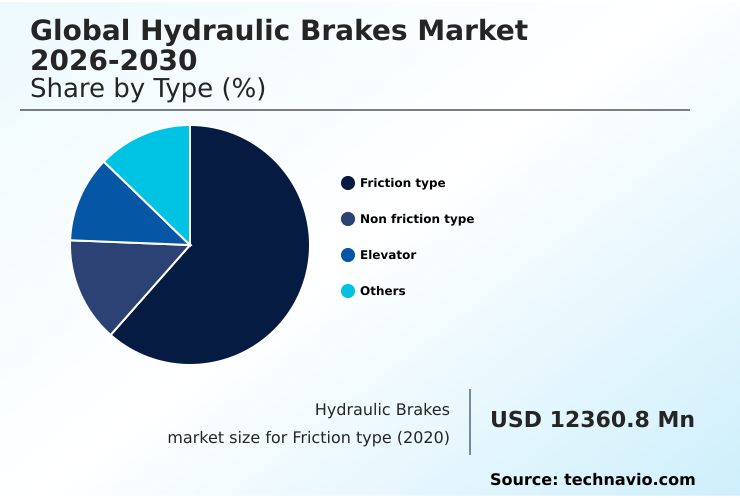
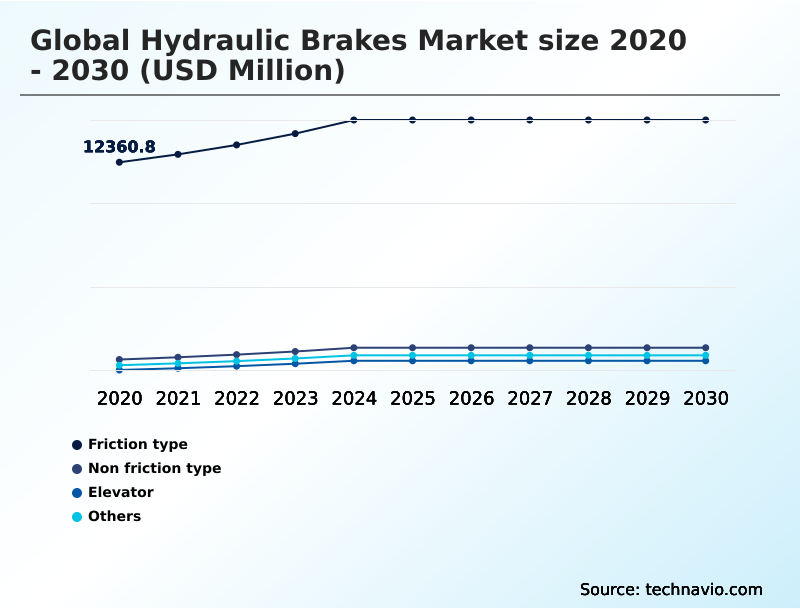
The Friction type segment was valued at USD 14.40 billion in 2024 and showed a gradual increase during the forecast period.
Regional Analysis
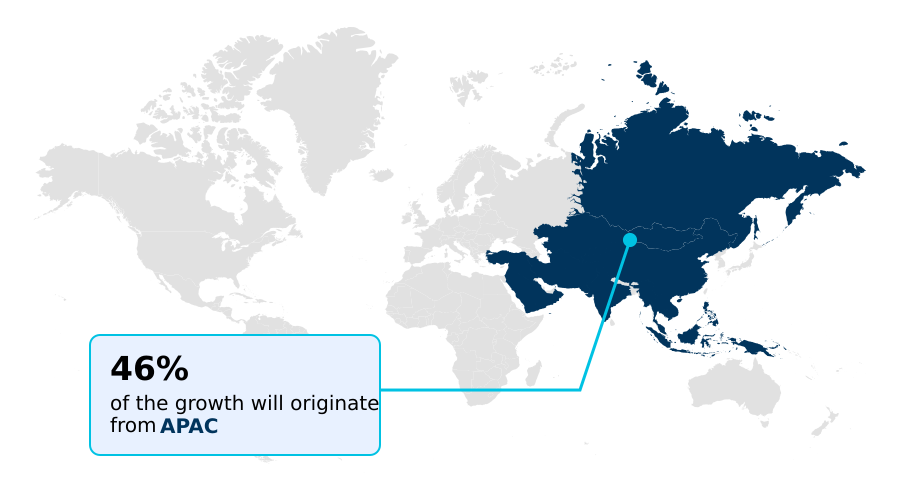
APAC is estimated to contribute 46.3% to the growth of the global market during the forecast period.Technavio’s analysts have elaborately explained the regional trends and drivers that shape the market during the forecast period.
See How Hydraulic Brakes Market Demand is Rising in APAC Request Free Sample
The geographic landscape of the market is led by APAC, which accounts for 46.3% of the market's incremental growth, driven by massive infrastructure development and a burgeoning automotive sector in countries like China and India.
This region's demand for high-pressure hydraulic braking systems is pronounced in heavy construction and industrial machinery. North America follows, with a market driven by stringent safety standards for commercial vehicles and a robust aerospace sector requiring high-performance hydraulic actuators.
Europe is a hub for innovation, particularly in electro-hydraulic braking and the development of eco-friendly hydraulic fluids to meet environmental regulations.
South America and the Middle East and Africa are growing markets, fueled by mining, agriculture, and large-scale construction projects requiring durable hydraulic technology.
Market Dynamics
Our researchers analyzed the data with 2025 as the base year, along with the key drivers, trends, and challenges. A holistic analysis of drivers will help companies refine their marketing strategies to gain a competitive advantage.
- The evolution of the hydraulic brakes market is marked by key technological advancements aimed at enhancing safety, efficiency, and environmental compliance. A central focus is on electro-hydraulic braking system efficiency, which is critical for the performance of modern electric and autonomous vehicles. The design of high-pressure hydraulic actuators is being refined to deliver more precise control and faster response times.
- Concurrently, there is a significant push for reducing non-exhaust brake emissions, leading to innovations in materials and system design. Research into copper-free friction material performance is driven by regulations aimed at minimizing environmental impact. Similarly, advancements in eco-friendly hydraulic fluids are becoming a priority for manufacturers seeking to offer sustainable solutions.
- The development of hydraulic brake systems for electric vehicles involves integrating regenerative braking with traditional friction-based mechanisms to optimize energy recovery. For industrial settings, oil-shear industrial hydraulic brakes offer superior durability and thermal management in high-cycle applications. The trend towards lightweighting has spurred the use of advanced materials for hydraulic calipers, which helps improve overall vehicle dynamics.
- Furthermore, effective thermal management in hydraulic brakes is crucial for preventing brake fade in high-performance and heavy-duty scenarios. Integrating digital controls with hydraulic systems presents ongoing challenges that drive innovation in software and hardware. The impact of raw material volatility on brake manufacturing costs remains a significant concern, influencing supply chain strategies.
- Finally, the development of durable hydraulic brake hoses and advanced brake fluid for high-performance cars underscores the market's commitment to reliability and safety across all segments. As a result, the market's growth is more than double that of related mechanical component sectors.
What are the key market drivers leading to the rise in the adoption of Hydraulic Brakes Industry?
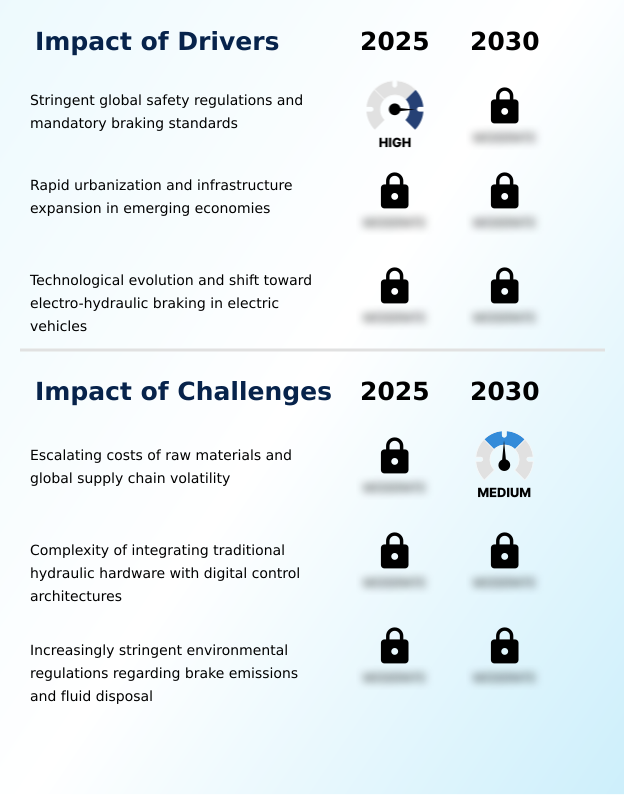
- Stringent global safety regulations and mandatory braking standards are the key drivers for the global hydraulic brakes market.
- Growth is primarily driven by stringent global safety regulations that mandate the use of advanced systems like anti-lock braking and electronic stability control, both of which rely on precise hydraulic pressure modulation.
- The rapid urbanization and infrastructure expansion in emerging economies are fueling demand for heavy machinery, which exclusively uses high-pressure hydraulic braking systems for safety and control.
- Furthermore, the technological shift toward electric vehicles is a critical driver, as these vehicles still require hydraulic brakes for high-intensity stopping and as a primary safety fallback.
- The integration of electro-hydraulic systems in modern vehicles has improved emergency braking response times by over 25%, showcasing how traditional technology adapts to digital platforms.
What are the market trends shaping the Hydraulic Brakes Industry?
- The market is trending toward the integration of electro-hydraulic braking with brake-by-wire systems. This shift is driven by the rise of electric vehicles and the need for advanced autonomous driving functionalities.
- Market trends are centered on the fusion of electronics and fluid mechanics, with electro-hydraulic braking becoming a key enabler for electric and autonomous vehicles. This trend allows for sophisticated regenerative braking systems while retaining the proven reliability of hydraulic force.
- The adoption of advanced lightweight materials, such as carbon ceramics and high-strength aluminum alloys, is critical for reducing unsprung mass, which has been shown to improve vehicle range by up to 5%. Another significant trend is the focus on sustainability, driving the development of eco-friendly hydraulic fluids and copper-free friction materials to comply with tightening environmental regulations.
- Innovations in thermal management, including ventilated calipers, are also crucial for preventing brake fade in high-performance applications, enhancing safety and durability.
What challenges does the Hydraulic Brakes Industry face during its growth?
- Escalating raw material costs and global supply chain volatility present a key challenge to the growth of the global hydraulic brakes market.
- A primary challenge is the escalating cost and volatility of raw materials like high-grade aluminum and specialized steel alloys, which directly impact manufacturing costs and profit margins. Supply chain disruptions can cause significant production delays, as highlighted by incidents affecting the availability of critical components.
- Another major challenge is the technical complexity of integrating traditional hydraulic hardware with digital control architectures, such as brake-by-wire systems. This requires cross-disciplinary expertise and extensive testing, increasing R&D costs by as much as 15% for new system development.
- Additionally, increasingly stringent environmental regulations regarding brake emissions and fluid disposal compel manufacturers to invest heavily in developing sustainable but equally effective friction materials and biodegradable fluids.
Exclusive Technavio Analysis on Customer Landscape
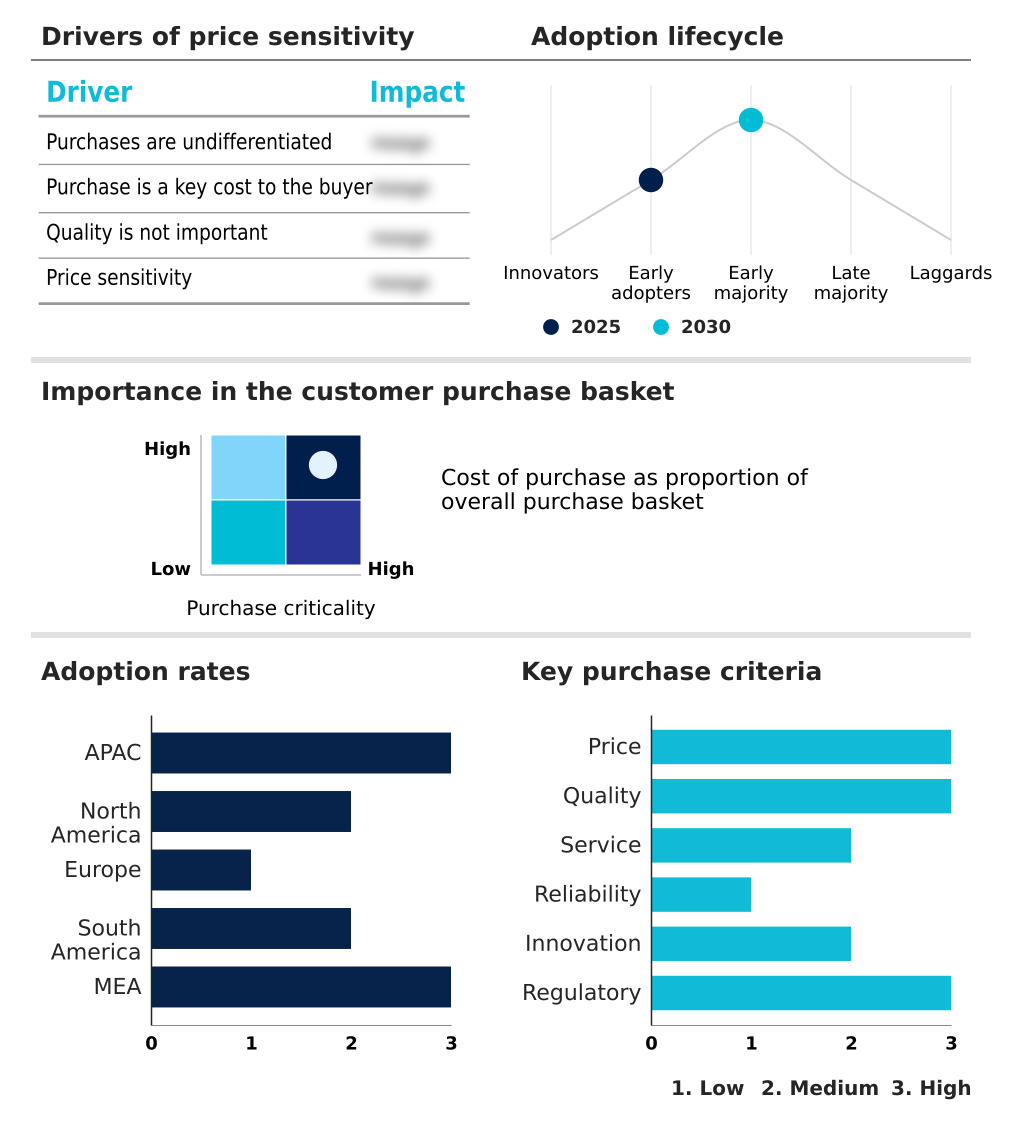
The hydraulic brakes market forecasting report includes the adoption lifecycle of the market, covering from the innovator’s stage to the laggard’s stage. It focuses on adoption rates in different regions based on penetration. Furthermore, the hydraulic brakes market report also includes key purchase criteria and drivers of price sensitivity to help companies evaluate and develop their market growth analysis strategies.
Customer Landscape of Hydraulic Brakes Industry
Competitive Landscape
Companies are implementing various strategies, such as strategic alliances, hydraulic brakes market forecast, partnerships, mergers and acquisitions, geographical expansion, and product/service launches, to enhance their presence in the industry.
AISIN Corp. - Suppliers deliver integrated hydraulic brake systems and components, including advanced friction materials and calipers, designed for OEM and aftermarket applications across multiple vehicle sectors.
The industry research and growth report includes detailed analyses of the competitive landscape of the market and information about key companies, including:
- AISIN Corp.
- Akebono Brake Industry Co.
- AP Racing Ltd
- Brembo SpA
- Continental AG
- Dana Inc.
- Dorman Products Inc.
- Haldex AB
- Hitachi Astemo Ltd.
- HL Mando Co. Ltd.
- Knorr Bremse AG
- Robert Bosch GmbH
- Shimano Inc.
- SRAM LLC
- Valeo SA
- Wabtec Corp.
- Wilwood Engineering Inc.
- ZF Friedrichshafen AG
Qualitative and quantitative analysis of companies has been conducted to help clients understand the wider business environment as well as the strengths and weaknesses of key industry players. Data is qualitatively analyzed to categorize companies as pure play, category-focused, industry-focused, and diversified; it is quantitatively analyzed to categorize companies as dominant, leading, strong, tentative, and weak.
Recent Development and News in Hydraulic brakes market
- In May 2025, Continental AG finalized the integration of its high-pressure hydraulic actuator into a new Level 4 autonomous shuttle fleet operating in Singapore.
- In August 2025, Brembo S.p.A. introduced its Greenance hydraulic kit for light commercial vehicles, which features a specialized coating on the discs and updated friction material to drastically reduce wear and particulate emissions.
- In October 2025, General Motors announced the implementation of a refined electro-hydraulic braking architecture for its latest series of electric heavy-duty pickup trucks.
- In June 2025, Tata Motors in India introduced a new series of medium-duty construction vehicles that feature an integrated hydraulic braking system with a revised fluid cooling architecture designed specifically for high-temperature tropical climates.
Dive into Technavio’s robust research methodology, blending expert interviews, extensive data synthesis, and validated models for unparalleled Hydraulic Brakes Market insights. See full methodology.
| Market Scope | |
|---|---|
| Page number | 309 |
| Base year | 2025 |
| Historic period | 2020-2024 |
| Forecast period | 2026-2030 |
| Growth momentum & CAGR | Accelerate at a CAGR of 6.1% |
| Market growth 2026-2030 | USD 8535.1 million |
| Market structure | Fragmented |
| YoY growth 2025-2026(%) | 5.9% |
| Key countries | China, India, Japan, South Korea, Indonesia, Australia, US, Canada, Mexico, Germany, France, UK, Italy, Spain, The Netherlands, Brazil, Argentina, Colombia, South Africa, Saudi Arabia, UAE, Egypt and Nigeria |
| Competitive landscape | Leading Companies, Market Positioning of Companies, Competitive Strategies, and Industry Risks |
Research Analyst Overview
- The hydraulic brakes market is undergoing a significant transformation, driven by the convergence of mechanical reliability and digital precision. Core components such as the master cylinder, wheel cylinders, and calipers are being re-engineered with high-strength aluminum alloys and composite plastics to reduce unsprung mass, a critical factor in electric vehicle efficiency.
- The integration of electro-hydraulic braking and brake-by-wire systems, supported by advanced electronic sensors and control units, is becoming standard. These systems rely on high-pressure hydraulic fluid to provide the final stopping force, ensuring a reliable hydraulic fallback system.
- For boardroom consideration, the shift towards sustainable components, such as copper-free friction materials and eco-friendly hydraulic fluids, is no longer optional but a strategic imperative driven by global regulations. The development of ventilated calipers and other thermal management solutions addresses the challenge of brake fade under heavy thermal loads from high-performance applications.
- With firms reporting a 30% improvement in braking consistency, investment in these advanced hydraulic actuators and high-boiling-point fluids is critical for maintaining a competitive edge.
What are the Key Data Covered in this Hydraulic Brakes Market Research and Growth Report?
-
What is the expected growth of the Hydraulic Brakes Market between 2026 and 2030?
-
USD 8.54 billion, at a CAGR of 6.1%
-
-
What segmentation does the market report cover?
-
The report is segmented by Type (Friction type, Non friction type, Elevator, and Others), Application (Automotive, Industrial machinery, Construction equipment, and Marine applications), End-user (OEMs, Aftermarket, and Maintenance and repair services) and Geography (APAC, North America, Europe, South America, Middle East and Africa)
-
-
Which regions are analyzed in the report?
-
APAC, North America, Europe, South America and Middle East and Africa
-
-
What are the key growth drivers and market challenges?
-
Stringent global safety regulations and mandatory braking standards, Escalating costs of raw materials and global supply chain volatility
-
-
Who are the major players in the Hydraulic Brakes Market?
-
AISIN Corp., Akebono Brake Industry Co., AP Racing Ltd, Brembo SpA, Continental AG, Dana Inc., Dorman Products Inc., Haldex AB, Hitachi Astemo Ltd., HL Mando Co. Ltd., Knorr Bremse AG, Robert Bosch GmbH, Shimano Inc., SRAM LLC, Valeo SA, Wabtec Corp., Wilwood Engineering Inc. and ZF Friedrichshafen AG
-
Market Research Insights
- The market's dynamics are shaped by a confluence of technological evolution and stringent regulatory pressures. The integration of electronic controls with traditional fluid power mechanics is central, enabling advanced safety features and accommodating electric vehicle architectures. This synergy allows for precise hydraulic pressure modulation and brake fade prevention.
- As a result, systems that combine hydraulic system maintenance with digital diagnostics are gaining traction, with some integrated platforms reducing unsprung mass by 20%. Furthermore, the push for sustainability has led to advancements in eco-friendly hydraulic fluids and corrosion-resistant materials, extending component life by up to 30%.
- The emphasis on force multiplication and reliable braking force distribution ensures that hydraulic technology remains critical, even as brake-by-wire systems become more prevalent.
We can help! Our analysts can customize this hydraulic brakes market research report to meet your requirements.
 RIA -
RIA - 
