


Hydraulic Excavator Market Analysis, Size, and Forecast 2024-2028: North America (US), Europe (France and Germany), APAC (China and India), and Rest of World (ROW)

Hydraulic Excavator Market Analysis, Size, and Forecast 2024-2028:
North America (US), Europe (France and Germany), APAC (China and India), and Rest of World (ROW)

Published: Jun 2024 167 Pages SKU: IRTNTR71993

Market Overview at a Glance

$4.78 B
Market Opportunity
2.12%
CAGR
2.06
YoY growth 2023-2024(%)

Hydraulic Excavator Market Size 2024-2028

The hydraulic excavator market size is forecast to increase by USD 4.78 billion, at a CAGR of 2.12% between 2023 and 2028.

  • The market is witnessing significant growth, driven by the increasing demand for large-scale project management in various industries such as construction and mining. This trend is attributed to the need for efficient and powerful machinery to handle complex projects, leading to increased adoption of hydraulic excavators. Another key driver is the growing construction of green buildings, which necessitates the use of advanced machinery to meet sustainability standards and regulations. However, the market faces challenges as well. Stringent emission regulations for construction machinery pose a significant obstacle, requiring manufacturers to invest in research and development to produce eco-friendly hydraulic excavators.
  • Additionally, the high initial investment and maintenance costs of these machines can act as a barrier to entry for smaller players in the market. Companies seeking to capitalize on market opportunities must focus on innovation and sustainability while navigating these challenges to remain competitive.

What will be the Size of the Hydraulic Excavator Market during the forecast period?
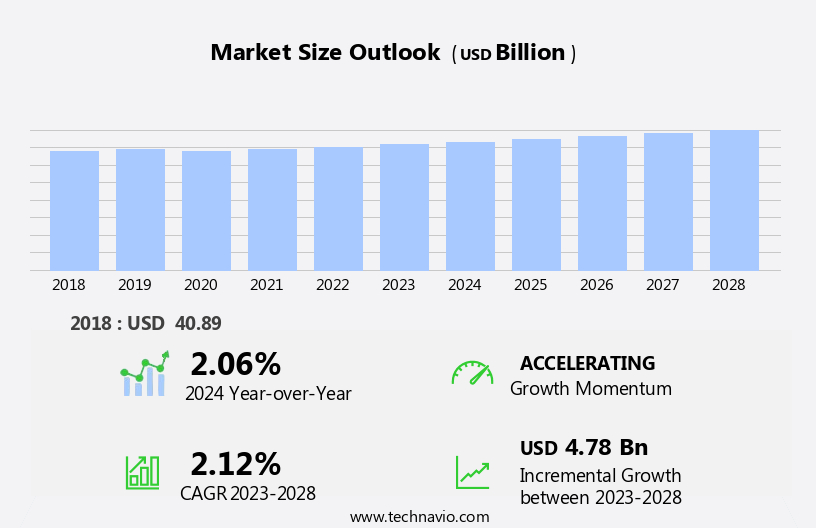
Hydraulic Excavator Market Size

Explore in-depth regional segment analysis with market size data - historical 2018-2022 and forecasts 2024-2028 - in the full report.  
Request Free Sample

The market continues to evolve, driven by advancements in technology and shifting market dynamics. Swing speed and material handling capabilities are increasingly important factors, with manufacturers focusing on improving efficiency and productivity. Hydraulic breakers and waste management solutions are also gaining traction, as infrastructure development and construction projects prioritize sustainability and cost savings. Control systems are a key area of innovation, with developments in machine learning and artificial intelligence enabling autonomous operation and remote control capabilities. Lifting capacity and emission standards, such as Stage V, are also critical considerations, as regulatory requirements evolve and operators seek to minimize their environmental footprint.

Fuel efficiency is a persistent concern, with manufacturers exploring alternatives to diesel engines, such as electric motors and battery packs. Hydraulic pumps and hydraulic oil technology are also undergoing significant advancements, aiming to reduce energy consumption and improve performance. Safety regulations continue to shape the market, with a focus on worksite safety, operator training, and quick coupler systems. Innovations in hydraulic cylinders and hydraulic hammers are also contributing to increased safety and productivity. The market is characterized by ongoing innovation and adaptation, as market demands and regulatory requirements shift. From land clearing to civil engineering and site preparation, these machines are essential tools for a wide range of industries, and their continued evolution is crucial for meeting the demands of a dynamic market.

How is this Hydraulic Excavator Industry segmented?

The hydraulic excavator industry research report provides comprehensive data (region-wise segment analysis), with forecasts and estimates in "USD billion" for the period 2024-2028, as well as historical data from 2018-2022 for the following segments.

  • Application
    • Mining
    • Construction
    • Utility
  • Technology
    • Crawler excavators
    • Mini excavators
    • Wheeled excavators
  • Product Type
    • Mini Excavators
    • Medium Excavators
    • Large Excavators
  • Fuel Type
    • Diesel
    • Electric
    • Hybrid
  • Geography
    • North America
      • US
    • Europe
      • France
      • Germany
    • APAC
      • China
      • India
    • Rest of World (ROW)

By Application Insights

The mining segment is estimated to witness significant growth during the forecast period.

Hydraulic excavators, a vital component in the mining industry, are renowned for their versatility in tasks such as trenching, loading, and lifting heavy materials. Equipped with attachments like grapples, breakers, and shears, these machines facilitate rock handling at mining sites. Among all mining equipment, hydraulic excavators lead in terms of value sales. Tracked excavators, a type of hydraulic excavator, are recognized for their stability during aggressive digging due to their large footprint and weight. Besides digging, these machines can perform other functions like demolition and quarrying when fitted with a hammer or a shear. However, their mobility is limited due to their bulky size and travel speed of 4-6 miles/hour.

Operator training is crucial for efficient and safe excavator operation. Remote control functionality enhances productivity by enabling operators to manage excavation from a distance. Fuel efficiency is another essential factor, with Tier 4 Final emission standards and diesel engines driving advancements in this area. Artificial intelligence and machine learning technologies are transforming excavators, improving control systems, material handling, and autonomous operation. 

Safety regulations mandate the use of hydraulic hammers, hydraulic cylinders, and swing systems to minimize risks. Civil engineering projects benefit from the excavator's ability to clear land and prepare sites for construction. The market is witnessing advancements in hydraulic oil technology, electric motors, and autonomous operation, further enhancing the excavator's utility.
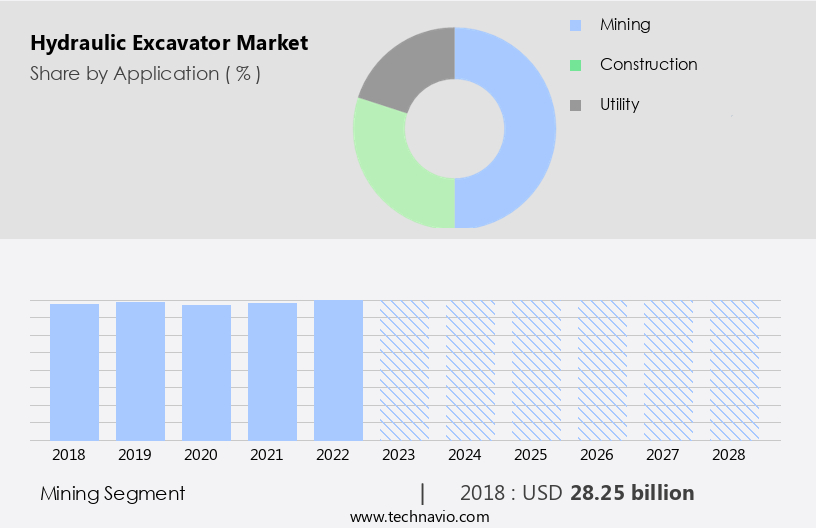
Hydraulic Excavator Market Size

Request Free Sample

The Mining segment was valued at USD 28.25 billion in 2018 and showed a gradual increase during the forecast period.

Regional Analysis

APAC is estimated to contribute 54% to the growth of the global market during the forecast period.Technavio's analysts have elaborately explained the regional trends and drivers that shape the market during the forecast period.
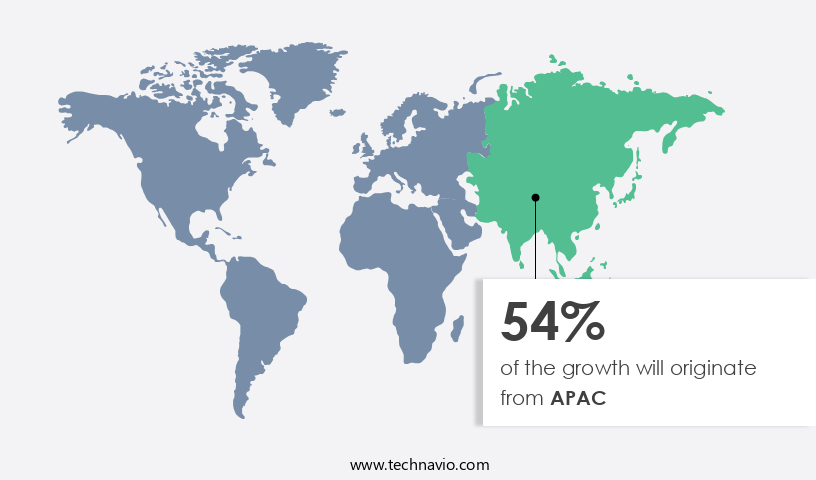
Hydraulic Excavator Market Share by Geography

 Request Free Sample

The market experiences significant growth due to the increasing construction activities, particularly in Asia Pacific (APAC), where countries like China and India are leading the way with substantial investments in commercial and industrial building projects. This trend is further boosted by the outsourcing of engineering equipment to APAC, expanding the market potential. In Japan, the excavator industry faces uncertainty due to potential government investments in infrastructure, influenced by the aging population and declining tax base. Operating efficiency is a crucial factor in the market, with an emphasis on fuel efficiency and remote control technology. Tier 4 final emission standards and the integration of diesel engines with advanced technologies, such as artificial intelligence and machine learning, are essential in meeting these regulations.

Hydraulic pumps, cylinders, and hammers play a significant role in the excavator's performance, while safety regulations and lifting capacity requirements continue to evolve. Material handling, waste management, and land clearing applications are also driving market growth. Innovations in electric motors, battery packs, and quick couplers are enhancing the versatility and sustainability of hydraulic excavators. Infrastructure development and civil engineering projects continue to be major markets for excavators, with a focus on autonomous operation, swing system, and travel speed for increased productivity. Safety remains a top priority, with ongoing advancements in control systems and hydraulic oil technology. Swing speed and digging force are critical factors in excavator performance, while compliance with safety regulations is essential.

The market is also witnessing the integration of hydraulic breakers, track systems, and hydraulic cylinders to improve overall efficiency and productivity. In conclusion, the market is witnessing substantial growth, driven by construction activities in APAC, the integration of advanced technologies, and the evolving needs of various industries, including infrastructure development and civil engineering. The focus on safety, efficiency, and productivity, along with the integration of innovative technologies, is shaping the future of the market.

Market Dynamics

Our researchers analyzed the data with 2023 as the base year, along with the key drivers, trends, and challenges. A holistic analysis of drivers will help companies refine their marketing strategies to gain a competitive advantage.

What are the key market drivers leading to the rise in the adoption of Hydraulic Excavator Industry?

  • The escalating demand for managing large-scale projects effectively and efficiently is the primary market driver. Hydraulic excavators are increasingly being adopted by organizations for large-scale project management due to the growing demand for efficient solutions. These machines automate processes to optimize resource management and ensure maximum outputs. One of the primary benefits of hydraulic excavators is their ability to streamline project management processes. Automation reduces response time, enabling organizations to handle tasks effectively and efficiently.
  • Additionally, hydraulic excavators offer other advantages, such as operator training ease through remote control, improved fuel efficiency with Tier 4 Final diesel engines, and enhanced worksite safety features. Furthermore, the integration of artificial intelligence and advanced hydraulic pumps enhances machine performance and productivity. Organizations can leverage these benefits to manage resources effectively, maintain regular follow-up, and ensure project success.

What are the market trends shaping the Hydraulic Excavator Industry?

  • The construction industry is witnessing a significant trend towards the development of green buildings. This eco-friendly approach to architecture is not only mandatory for sustainability but also a growing market preference.
  • The market is experiencing significant growth due to the increasing demand for material handling and infrastructure development. Swing speed and lifting capacity are crucial factors driving market expansion. Hydraulic breakers, integrated into hydraulic excavators, have become essential tools in waste management, enhancing efficiency and productivity. Control systems have become more advanced, ensuring precise operation and reducing human error. Infrastructure development projects, such as road construction and utility installation, are major contributors to market growth. Emission standards, particularly Stage V, are becoming increasingly stringent, necessitating the adoption of eco-friendly technologies.
  • Energy efficiency is a key consideration in the construction industry, with green buildings gaining popularity. These structures minimize energy consumption and optimize the use of available energy. The recycling of by-products from green buildings further contributes to environmental sustainability. Overall, the market is poised for continued growth, driven by these market dynamics.

What challenges does the Hydraulic Excavator Industry face during its growth?

  • The construction machinery industry faces significant growth constraints due to stringent emission regulations. These regulations mandate rigorous compliance, posing a substantial challenge for industry players. 
  • The market is experiencing significant changes due to increasing environmental regulations aimed at reducing emissions. Strict exhaust emission norms, such as the EU's Stage V regulation and US standards, are compelling manufacturers to incorporate advanced technologies like machine learning, electric motors, and battery packs into their hydraulic excavators. These innovations enable reduced reliance on hydraulic oil, lower emissions, and improved energy efficiency. Moreover, the adoption of quick couplers, swing systems, and autonomous operation enhances productivity and safety in land clearing projects. Electric motors and battery packs are becoming increasingly popular in hydraulic excavators due to their ability to provide immersive and harmonious operation while reducing the carbon footprint.
  • The integration of these technologies also emphasizes the importance of sustainability and compliance with environmental regulations. The market is witnessing a shift towards cleaner and greener machinery, with electric motors and advanced technologies playing a crucial role in meeting the evolving emission norms. This transformation not only benefits the environment but also enhances the overall performance and productivity of hydraulic excavators.

Exclusive Customer Landscape

The hydraulic excavator market forecasting report includes the adoption lifecycle of the market, covering from the innovator's stage to the laggard's stage. It focuses on adoption rates in different regions based on penetration. Furthermore, the hydraulic excavator market report also includes key purchase criteria and drivers of price sensitivity to help companies evaluate and develop their market growth analysis strategies.
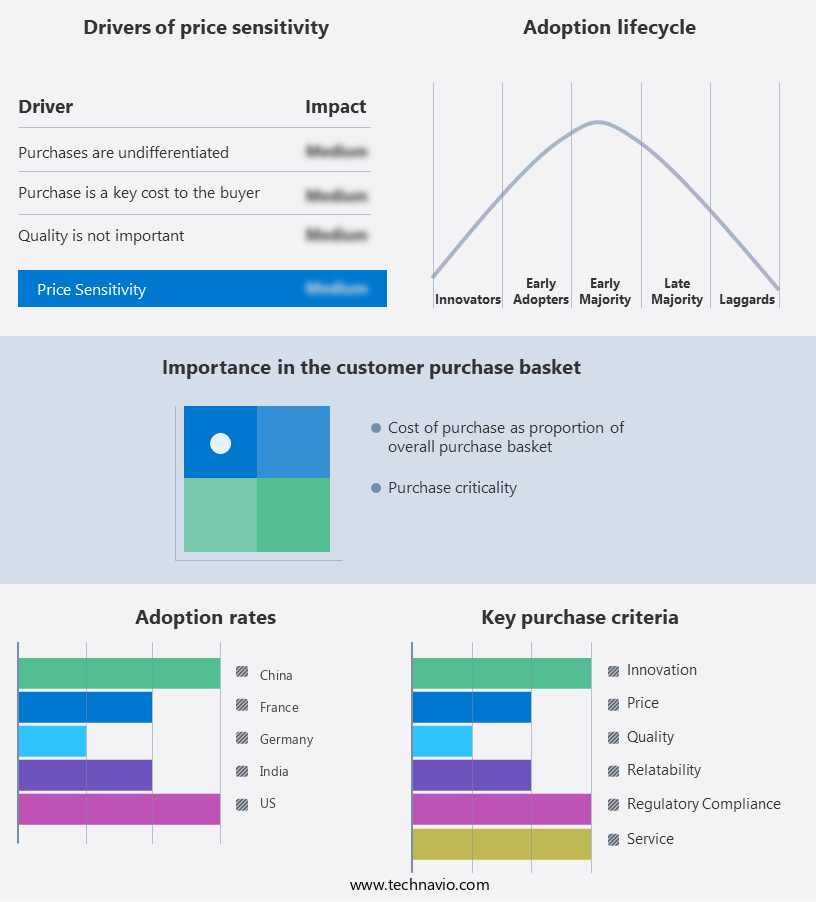
Hydraulic Excavator Market Share by Geography

 Customer Landscape

Key Companies & Market Insights

Companies are implementing various strategies, such as strategic alliances, hydraulic excavator market forecast, partnerships, mergers and acquisitions, geographical expansion, and product/service launches, to enhance their presence in the industry.

AB Volvo - This company specializes in manufacturing and supplying hydraulic excavators, featuring a range of models including jaw crushers, cone crushers, and impactors, catering to diverse industries and applications. These innovative excavators deliver superior performance and durability, enhancing productivity and efficiency in material processing.

The industry research and growth report includes detailed analyses of the competitive landscape of the market and information about key companies, including:

  • AB Volvo
  • Astec Industries Inc
  • BEML Ltd.
  • Caterpillar Inc.
  • CNH Industrial NV
  • Deere and Co.
  • Doosan Infracore Co. Ltd.
  • FAYAT SAS
  • Gradall Industries Inc.
  • Guangxi Liugong Machinery Co. Ltd.
  • Hitachi Construction Machinery Co. Ltd.
  • J C Bamford Excavators Ltd.
  • KATO WORKS CO. LTD.
  • Lonking Holdings Ltd.
  • Sany Group
  • Shantui Construction Machinery co. Ltd
  • Sumitomo Heavy Industries Ltd.
  • Takeuchi Mfg. Co. Ltd
  • Wacker Neuson SE
  • Xuzhou Construction Machinery Group Co. Ltd.

Qualitative and quantitative analysis of companies has been conducted to help clients understand the wider business environment as well as the strengths and weaknesses of key industry players. Data is qualitatively analyzed to categorize companies as pure play, category-focused, industry-focused, and diversified; it is quantitatively analyzed to categorize companies as dominant, leading, strong, tentative, and weak.

Recent Development and News in Hydraulic Excavator Market

  • In January 2024, Caterpillar Inc. Introduced the new 336 GC model hydraulic excavator, featuring enhanced fuel efficiency and improved operator comfort (Caterpillar Press Release).
  • In March 2024, Volvo Construction Equipment and Hitachi Construction Machinery established a strategic partnership to develop electric and hydrogen-powered hydraulic excavators, aiming to reduce carbon emissions in the industry (Volvo Construction Equipment Press Release).
  • In April 2025, Doosan Infracore announced the acquisition of Terex Corporation's Material Handling & Port Solutions segment, expanding its reach in the market and enhancing its product portfolio (Doosan Infracore Press Release).
  • In May 2025, the European Union passed the revised Machinery Directive 2020/745, introducing stricter safety and environmental regulations for hydraulic excavators, effective from 2026 (European Parliament & Council of the European Union Press Release).

Research Analyst Overview

  • The market experiences dynamic growth, driven by advancements in technology and evolving customer needs. Operator comfort plays a significant role, with innovations in cab design and ergonomics enhancing productivity and reducing fatigue. Hydraulic filters ensure optimal performance and longevity, while recycling applications reduce environmental impact. Safety features, such as emergency shutdown systems, fuel systems with data analytics, and tire pressure monitoring, are increasingly important. Preventive maintenance, including regular maintenance intervals, tire pressure checks, and wear part replacements, minimizes downtime. Cooling systems and engine power management improve efficiency, while noise reduction and vibration dampening enhance operator experience.
  • Ground pressure control and payload capacity optimization cater to various application requirements. Hydraulic valves, including pressure compensators, proportional valves, and waste handling systems, enable versatility. Environmental concerns drive the adoption of exhaust systems with reduced emissions and engine oil filtration. Telematics data and safety features, such as operating hours monitoring and digging and swing radius limitations, ensure machine performance and worker protection. Demolition attachments and load sensing technology expand application possibilities.

Dive into Technavio's robust research methodology, blending expert interviews, extensive data synthesis, and validated models for unparalleled Hydraulic Excavator Market insights. See full methodology.

Market Scope

Report Coverage

Details

Page number

167

Base year

2023

Historic period

2018-2022

Forecast period

2024-2028

Growth momentum & CAGR

Accelerate at a CAGR of 2.12%

Market growth 2024-2028

USD 4.78 billion

Market structure

Fragmented

YoY growth 2023-2024(%)

2.06

Key countries

US, China, India, Germany, and France

Competitive landscape

Leading Companies, Market Positioning of Companies, Competitive Strategies, and Industry Risks

Request Free Sample

What are the Key Data Covered in this Hydraulic Excavator Market Research and Growth Report?

  • CAGR of the Hydraulic Excavator industry during the forecast period
  • Detailed information on factors that will drive the growth and forecasting between 2024 and 2028
  • Precise estimation of the size of the market and its contribution of the industry in focus to the parent market
  • Accurate predictions about upcoming growth and trends and changes in consumer behaviour
  • Growth of the market across APAC, North America, Europe, South America, and Middle East and Africa
  • Thorough analysis of the market's competitive landscape and detailed information about companies
  • Comprehensive analysis of factors that will challenge the hydraulic excavator market growth of industry companies

We can help! Our analysts can customize this hydraulic excavator market research report to meet your requirements.

Get in touch

1 Executive Summary

  • 1.1 Market overview
    • Executive Summary - Chart on Market Overview
    • Executive Summary - Data Table on Market Overview
    • Executive Summary - Chart on Global Market Characteristics
    • Executive Summary - Chart on Market by Geography
    • Executive Summary - Chart on Market Segmentation by Application
    • Executive Summary - Chart on Market Segmentation by Technology
    • Executive Summary - Chart on Incremental Growth
    • Executive Summary - Data Table on Incremental Growth
    • Executive Summary - Chart on Company Market Positioning

2 Market Landscape

  • 2.1 Market ecosystem
    • Parent Market
    • Data Table on - Parent Market
  • 2.2 Market characteristics
    • Market characteristics analysis
  • 2.3 Value chain analysis
    • Value Chain Analysis

3 Market Sizing

  • 3.1 Market definition
    • Offerings of companies included in the market definition
  • 3.2 Market segment analysis
    • Market segments
  • 3.3 Market size 2023
    • 3.4 Market outlook: Forecast for 2023-2028
      • Chart on Global - Market size and forecast 2023-2028 ($ million)
      • Data Table on Global - Market size and forecast 2023-2028 ($ million)
      • Chart on Global Market: Year-over-year growth 2023-2028 (%)
      • Data Table on Global Market: Year-over-year growth 2023-2028 (%)

    4 Historic Market Size

    • 4.1 Global Hydraulic Excavator Market 2018 - 2022
      • Historic Market Size - Data Table on Global Hydraulic Excavator Market 2018 - 2022 ($ million)
    • 4.2 Application segment analysis 2018 - 2022
      • Historic Market Size - Application Segment 2018 - 2022 ($ million)
    • 4.3 Technology segment analysis 2018 - 2022
      • Historic Market Size - Technology Segment 2018 - 2022 ($ million)
    • 4.4 Geography segment analysis 2018 - 2022
      • Historic Market Size - Geography Segment 2018 - 2022 ($ million)
    • 4.5 Country segment analysis 2018 - 2022
      • Historic Market Size - Country Segment 2018 - 2022 ($ million)

    5 Five Forces Analysis

    • 5.1 Five forces summary
      • Five forces analysis - Comparison between 2023 and 2028
    • 5.2 Bargaining power of buyers
      • Bargaining power of buyers - Impact of key factors 2023 and 2028
    • 5.3 Bargaining power of suppliers
      • Bargaining power of suppliers - Impact of key factors in 2023 and 2028
    • 5.4 Threat of new entrants
      • Threat of new entrants - Impact of key factors in 2023 and 2028
    • 5.5 Threat of substitutes
      • Threat of substitutes - Impact of key factors in 2023 and 2028
    • 5.6 Threat of rivalry
      • Threat of rivalry - Impact of key factors in 2023 and 2028
    • 5.7 Market condition
      • Chart on Market condition - Five forces 2023 and 2028

    6 Market Segmentation by Application

    • 6.1 Market segments
      • Chart on Application - Market share (2023-2028) (%)
      • Data Table on Application - Market share (2023-2028) (%)
    • 6.2 Comparison by Application
      • Chart on Comparison by Application
      • Data Table on Comparison by Application
    • 6.3 Mining - Market size and forecast (2023-2028)
      • Chart on Mining - Market size and forecast (2023-2028) ($ million)
      • Data Table on Mining - Market size and forecast (2023-2028) ($ million)
      • Chart on Mining - Year-over-year growth (2023-2028) (%)
      • Data Table on Mining - Year-over-year growth (2023-2028) (%)
    • 6.4 Construction - Market size and forecast (2023-2028)
      • Chart on Construction - Market size and forecast (2023-2028) ($ million)
      • Data Table on Construction - Market size and forecast (2023-2028) ($ million)
      • Chart on Construction - Year-over-year growth (2023-2028) (%)
      • Data Table on Construction - Year-over-year growth (2023-2028) (%)
    • 6.5 Utility - Market size and forecast (2023-2028)
      • Chart on Utility - Market size and forecast (2023-2028) ($ million)
      • Data Table on Utility - Market size and forecast (2023-2028) ($ million)
      • Chart on Utility - Year-over-year growth (2023-2028) (%)
      • Data Table on Utility - Year-over-year growth (2023-2028) (%)
    • 6.6 Market opportunity by Application
      • Market opportunity by Application ($ million)
      • Data Table on Market opportunity by Application ($ million)

    7 Market Segmentation by Technology

    • 7.1 Market segments
      • Chart on Technology - Market share (2023-2028) (%)
      • Data Table on Technology - Market share (2023-2028) (%)
    • 7.2 Comparison by Technology
      • Chart on Comparison by Technology
      • Data Table on Comparison by Technology
    • 7.3 Crawler excavators - Market size and forecast (2023-2028)
      • Chart on Crawler excavators - Market size and forecast (2023-2028) ($ million)
      • Data Table on Crawler excavators - Market size and forecast (2023-2028) ($ million)
      • Chart on Crawler excavators - Year-over-year growth (2023-2028) (%)
      • Data Table on Crawler excavators - Year-over-year growth (2023-2028) (%)
    • 7.4 Mini excavators - Market size and forecast (2023-2028)
      • Chart on Mini excavators - Market size and forecast (2023-2028) ($ million)
      • Data Table on Mini excavators - Market size and forecast (2023-2028) ($ million)
      • Chart on Mini excavators - Year-over-year growth (2023-2028) (%)
      • Data Table on Mini excavators - Year-over-year growth (2023-2028) (%)
    • 7.5 Wheeled excavators - Market size and forecast (2023-2028)
      • Chart on Wheeled excavators - Market size and forecast (2023-2028) ($ million)
      • Data Table on Wheeled excavators - Market size and forecast (2023-2028) ($ million)
      • Chart on Wheeled excavators - Year-over-year growth (2023-2028) (%)
      • Data Table on Wheeled excavators - Year-over-year growth (2023-2028) (%)
    • 7.6 Market opportunity by Technology
      • Market opportunity by Technology ($ million)
      • Data Table on Market opportunity by Technology ($ million)

    8 Market Segmentation by Product Type

    • 8.1 Market segments
      • Chart on Product Type - Market share (2023-2028) (%)
      • Data Table on Product Type - Market share (2023-2028) (%)
    • 8.2 Comparison by Product Type
      • Chart on Comparison by Product Type
      • Data Table on Comparison by Product Type
    • 8.3 Mini Excavators - Market size and forecast (2023-2028)
      • Chart on Mini Excavators - Market size and forecast (2023-2028) ($ million)
      • Data Table on Mini Excavators - Market size and forecast (2023-2028) ($ million)
      • Chart on Mini Excavators - Year-over-year growth (2023-2028) (%)
      • Data Table on Mini Excavators - Year-over-year growth (2023-2028) (%)
    • 8.4 Medium Excavators - Market size and forecast (2023-2028)
      • Chart on Medium Excavators - Market size and forecast (2023-2028) ($ million)
      • Data Table on Medium Excavators - Market size and forecast (2023-2028) ($ million)
      • Chart on Medium Excavators - Year-over-year growth (2023-2028) (%)
      • Data Table on Medium Excavators - Year-over-year growth (2023-2028) (%)
    • 8.5 Large Excavators - Market size and forecast (2023-2028)
      • Chart on Large Excavators - Market size and forecast (2023-2028) ($ million)
      • Data Table on Large Excavators - Market size and forecast (2023-2028) ($ million)
      • Chart on Large Excavators - Year-over-year growth (2023-2028) (%)
      • Data Table on Large Excavators - Year-over-year growth (2023-2028) (%)
    • 8.6 Market opportunity by Product Type
      • Market opportunity by Product Type ($ million)
      • Data Table on Market opportunity by Product Type ($ million)

    9 Market Segmentation by Fuel Type

    • 9.1 Market segments
      • Chart on Fuel Type - Market share (2023-2028) (%)
      • Data Table on Fuel Type - Market share (2023-2028) (%)
    • 9.2 Comparison by Fuel Type
      • Chart on Comparison by Fuel Type
      • Data Table on Comparison by Fuel Type
    • 9.3 Diesel - Market size and forecast (2023-2028)
      • Chart on Diesel - Market size and forecast (2023-2028) ($ million)
      • Data Table on Diesel - Market size and forecast (2023-2028) ($ million)
      • Chart on Diesel - Year-over-year growth (2023-2028) (%)
      • Data Table on Diesel - Year-over-year growth (2023-2028) (%)
    • 9.4 Electric - Market size and forecast (2023-2028)
      • Chart on Electric - Market size and forecast (2023-2028) ($ million)
      • Data Table on Electric - Market size and forecast (2023-2028) ($ million)
      • Chart on Electric - Year-over-year growth (2023-2028) (%)
      • Data Table on Electric - Year-over-year growth (2023-2028) (%)
    • 9.5 Hybrid - Market size and forecast (2023-2028)
      • Chart on Hybrid - Market size and forecast (2023-2028) ($ million)
      • Data Table on Hybrid - Market size and forecast (2023-2028) ($ million)
      • Chart on Hybrid - Year-over-year growth (2023-2028) (%)
      • Data Table on Hybrid - Year-over-year growth (2023-2028) (%)
    • 9.6 Market opportunity by Fuel Type
      • Market opportunity by Fuel Type ($ million)
      • Data Table on Market opportunity by Fuel Type ($ million)

    10 Customer Landscape

    • 10.1 Customer landscape overview
      • Analysis of price sensitivity, lifecycle, customer purchase basket, adoption rates, and purchase criteria

    11 Geographic Landscape

    • 11.1 Geographic segmentation
      • Chart on Market share by geography 2023-2028 (%)
      • Data Table on Market share by geography 2023-2028 (%)
    • 11.2 Geographic comparison
      • Chart on Geographic comparison
      • Data Table on Geographic comparison
    • 11.3 APAC - Market size and forecast 2023-2028
      • Chart on APAC - Market size and forecast 2023-2028 ($ million)
      • Data Table on APAC - Market size and forecast 2023-2028 ($ million)
      • Chart on APAC - Year-over-year growth 2023-2028 (%)
      • Data Table on APAC - Year-over-year growth 2023-2028 (%)
    • 11.4 North America - Market size and forecast 2023-2028
      • Chart on North America - Market size and forecast 2023-2028 ($ million)
      • Data Table on North America - Market size and forecast 2023-2028 ($ million)
      • Chart on North America - Year-over-year growth 2023-2028 (%)
      • Data Table on North America - Year-over-year growth 2023-2028 (%)
    • 11.5 Europe - Market size and forecast 2023-2028
      • Chart on Europe - Market size and forecast 2023-2028 ($ million)
      • Data Table on Europe - Market size and forecast 2023-2028 ($ million)
      • Chart on Europe - Year-over-year growth 2023-2028 (%)
      • Data Table on Europe - Year-over-year growth 2023-2028 (%)
    • 11.6 South America - Market size and forecast 2023-2028
      • Chart on South America - Market size and forecast 2023-2028 ($ million)
      • Data Table on South America - Market size and forecast 2023-2028 ($ million)
      • Chart on South America - Year-over-year growth 2023-2028 (%)
      • Data Table on South America - Year-over-year growth 2023-2028 (%)
    • 11.7 Middle East and Africa - Market size and forecast 2023-2028
      • Chart on Middle East and Africa - Market size and forecast 2023-2028 ($ million)
      • Data Table on Middle East and Africa - Market size and forecast 2023-2028 ($ million)
      • Chart on Middle East and Africa - Year-over-year growth 2023-2028 (%)
      • Data Table on Middle East and Africa - Year-over-year growth 2023-2028 (%)
    • 11.8 US - Market size and forecast 2023-2028
      • Chart on US - Market size and forecast 2023-2028 ($ million)
      • Data Table on US - Market size and forecast 2023-2028 ($ million)
      • Chart on US - Year-over-year growth 2023-2028 (%)
      • Data Table on US - Year-over-year growth 2023-2028 (%)
    • 11.9 China - Market size and forecast 2023-2028
      • Chart on China - Market size and forecast 2023-2028 ($ million)
      • Data Table on China - Market size and forecast 2023-2028 ($ million)
      • Chart on China - Year-over-year growth 2023-2028 (%)
      • Data Table on China - Year-over-year growth 2023-2028 (%)
    • 11.10 India - Market size and forecast 2023-2028
      • Chart on India - Market size and forecast 2023-2028 ($ million)
      • Data Table on India - Market size and forecast 2023-2028 ($ million)
      • Chart on India - Year-over-year growth 2023-2028 (%)
      • Data Table on India - Year-over-year growth 2023-2028 (%)
    • 11.11 Germany - Market size and forecast 2023-2028
      • Chart on Germany - Market size and forecast 2023-2028 ($ million)
      • Data Table on Germany - Market size and forecast 2023-2028 ($ million)
      • Chart on Germany - Year-over-year growth 2023-2028 (%)
      • Data Table on Germany - Year-over-year growth 2023-2028 (%)
    • 11.12 France - Market size and forecast 2023-2028
      • Chart on France - Market size and forecast 2023-2028 ($ million)
      • Data Table on France - Market size and forecast 2023-2028 ($ million)
      • Chart on France - Year-over-year growth 2023-2028 (%)
      • Data Table on France - Year-over-year growth 2023-2028 (%)
    • 11.13 Market opportunity by geography
      • Market opportunity by geography ($ million)
      • Data Tables on Market opportunity by geography ($ million)
    • 11.14 Rest of World (ROW) - Market size and forecast (2023-2028)
      • Chart on Rest of World (ROW) - Market size and forecast (2023-2028) ($ million)
      • Data Table on Rest of World (ROW) - Market size and forecast (2023-2028) ($ million)
      • Chart on Rest of World (ROW) - Year-over-year growth (2023-2028) (%)
      • Data Table on Rest of World (ROW) - Year-over-year growth (2023-2028) (%)

    12 Drivers, Challenges, and Opportunity/Restraints

    • 12.1 Market drivers
      • 12.2 Market challenges
        • 12.3 Impact of drivers and challenges
          • Impact of drivers and challenges in 2023 and 2028
        • 12.4 Market opportunities/restraints

          13 Competitive Landscape

          • 13.1 Overview
            • 13.2 Competitive Landscape
              • Overview on criticality of inputs and factors of differentiation
            • 13.3 Landscape disruption
              • Overview on factors of disruption
            • 13.4 Industry risks
              • Impact of key risks on business

            14 Competitive Analysis

            • 14.1 Companies profiled
              • Companies covered
            • 14.2 Market positioning of companies
              • Matrix on companies position and classification
            • 14.3 Astec Industries Inc
              • Astec Industries Inc - Overview
              • Astec Industries Inc - Business segments
              • Astec Industries Inc - Key news
              • Astec Industries Inc - Key offerings
              • Astec Industries Inc - Segment focus
            • 14.4 BEML Ltd.
              • BEML Ltd. - Overview
              • BEML Ltd. - Business segments
              • BEML Ltd. - Key offerings
              • BEML Ltd. - Segment focus
            • 14.5 Caterpillar Inc.
              • Caterpillar Inc. - Overview
              • Caterpillar Inc. - Business segments
              • Caterpillar Inc. - Key news
              • Caterpillar Inc. - Key offerings
              • Caterpillar Inc. - Segment focus
            • 14.6 CNH Industrial NV
              • CNH Industrial NV - Overview
              • CNH Industrial NV - Business segments
              • CNH Industrial NV - Key news
              • CNH Industrial NV - Key offerings
              • CNH Industrial NV - Segment focus
            • 14.7 Deere and Co.
              • Deere and Co. - Overview
              • Deere and Co. - Business segments
              • Deere and Co. - Key news
              • Deere and Co. - Key offerings
              • Deere and Co. - Segment focus
            • 14.8 Doosan Infracore Co. Ltd.
              • Doosan Infracore Co. Ltd. - Overview
              • Doosan Infracore Co. Ltd. - Product / Service
              • Doosan Infracore Co. Ltd. - Key offerings
            • 14.9 FAYAT SAS
              • FAYAT SAS - Overview
              • FAYAT SAS - Product / Service
              • FAYAT SAS - Key offerings
            • 14.10 Gradall Industries Inc.
              • Gradall Industries Inc. - Overview
              • Gradall Industries Inc. - Product / Service
              • Gradall Industries Inc. - Key offerings
            • 14.11 Hitachi Construction Machinery Co. Ltd.
              • Hitachi Construction Machinery Co. Ltd. - Overview
              • Hitachi Construction Machinery Co. Ltd. - Product / Service
              • Hitachi Construction Machinery Co. Ltd. - Key offerings
            • 14.12 J C Bamford Excavators Ltd.
              • J C Bamford Excavators Ltd. - Overview
              • J C Bamford Excavators Ltd. - Product / Service
              • J C Bamford Excavators Ltd. - Key offerings

            15 Appendix

            • 15.1 Scope of the report
              • 15.2 Inclusions and exclusions checklist
                • Inclusions checklist
                • Exclusions checklist
              • 15.3 Currency conversion rates for US$
                • Currency conversion rates for US$
              • 15.4 Research methodology
                • Research methodology
              • 15.5 Data procurement
                • Information sources
              • 15.6 Data validation
                • Data validation
              • 15.7 Validation techniques employed for market sizing
                • Validation techniques employed for market sizing
              • 15.8 Data synthesis
                • Data synthesis
              • 15.9 360 degree market analysis
                • 360 degree market analysis
              • 15.10 List of abbreviations
                • List of abbreviations

              Research Methodology

              Technavio presents a detailed picture of the market by way of study, synthesis, and summation of data from multiple sources. The analysts have presented the various facets of the market with a particular focus on identifying the key industry influencers. The data thus presented is comprehensive, reliable, and the result of extensive research, both primary and secondary.

              INFORMATION SOURCES

              Primary sources

              • Manufacturers and suppliers
              • Channel partners
              • Industry experts
              • Strategic decision makers

              Secondary sources

              • Industry journals and periodicals
              • Government data
              • Financial reports of key industry players
              • Historical data
              • Press releases

              DATA ANALYSIS

              Data Synthesis

              • Collation of data
              • Estimation of key figures
              • Analysis of derived insights

              Data Validation

              • Triangulation with data models
              • Reference against proprietary databases
              • Corroboration with industry experts

              REPORT WRITING

              Qualitative

              • Market drivers
              • Market challenges
              • Market trends
              • Five forces analysis

              Quantitative

              • Market size and forecast
              • Market segmentation
              • Geographical insights
              • Competitive landscape

              Interested in this report?

              Get your sample now to see our research methodology and insights!

              Download Now

              Frequently Asked Questions

              Hydraulic Excavator market growth will increase by $ 4.78 bn during 2024-2028.

              The Hydraulic Excavator market is expected to grow at a CAGR of 2.12% during 2024-2028.

              Hydraulic Excavator market is segmented by Application( Mining, Construction, Utility) Technology( Crawler excavators, Mini excavators, Wheeled excavators)

              AB Volvo, Astec Industries Inc, BEML Ltd., Caterpillar Inc., CNH Industrial NV, Deere and Co., Doosan Infracore Co. Ltd., FAYAT SAS, Gradall Industries Inc., Guangxi Liugong Machinery Co. Ltd., Hitachi Construction Machinery Co. Ltd., J C Bamford Excavators Ltd., KATO WORKS CO. LTD., Lonking Holdings Ltd., Sany Group, Shantui Construction Machinery co. Ltd, Sumitomo Heavy Industries Ltd., Takeuchi Mfg. Co. Ltd, Wacker Neuson SE, Xuzhou Construction Machinery Group Co. Ltd. are a few of the key vendors in the Hydraulic Excavator market.

              APAC will register the highest growth rate of 54% among the other regions. Therefore, the Hydraulic Excavator market in APAC is expected to garner significant business opportunities for the vendors during the forecast period.

              US, China, India, Germany, France

              • Increasing requirement for large-scale project managementOne of the main factors that drive the adoption of hydraulic excavators is the rising demand for large-scale project management. Currently is the driving factor this market.
              • organizations are focusing on cultivating and managing the resources necessary for efficient product outputs is the driving factor this market.
              • which increases the requirements for efficient solutions for large-scale construction project management. The primary purpose of the hydraulic excavator is to automate processes to ensure maximum outputs by managing resources and maintaining a regular follow-up. The main benefits of employing hydraulic excavators in large-scale project management are as follows:Process managementAutomated services increase connectivity so that organizations can handle the project-related process easily and effectively. Also is the driving factor this market.
              • automation decreases the response time that ensures efficient process management.Projecting profitabilityRevenue possibilities can be rapidly increased by calculating conversion ratios and running time by using hydraulic excavators to track the metrics detailed as per the duration of the project and demand from operations. These features decrease the operating time.Automation is the driving factor this market.
              • sans-serif;font-size:11.0pt;">By automating the construction process (removing hand-driven excavating and other processes) is the driving factor this market.
              • notifying the project manager becomes an easy task is the driving factor this market.
              • which leads to lower workloads. Hence is the driving factor this market.
              • automation increases the overall productivity by deploying machine-driven processes which will positively impact the growth of global hydraulic excavator market during forecast period. is the driving factor this market.

              The Hydraulic Excavator market vendors should focus on grabbing business opportunities from the Mining segment as it accounted for the largest market share in the base year.
