

Industrial Barcode Scanner Market Analysis North America, APAC, Europe, South America, Middle East and Africa - US, China, Germany, Canada, Japan - Size and Forecast 2024-2028

Industrial Barcode Scanner Market Analysis North America, APAC, Europe, South America, Middle East and Africa - US, China, Germany, Canada, Japan - Size and Forecast 2024-2028

Published: May 2024 186 Pages SKU: IRTNTR41663

Market Overview at a Glance

$2.61 B
Market Opportunity
10.68%
CAGR
9.38
YoY growth 2023-2024(%)

Industrial Barcode Scanner Market Size 2024-2028

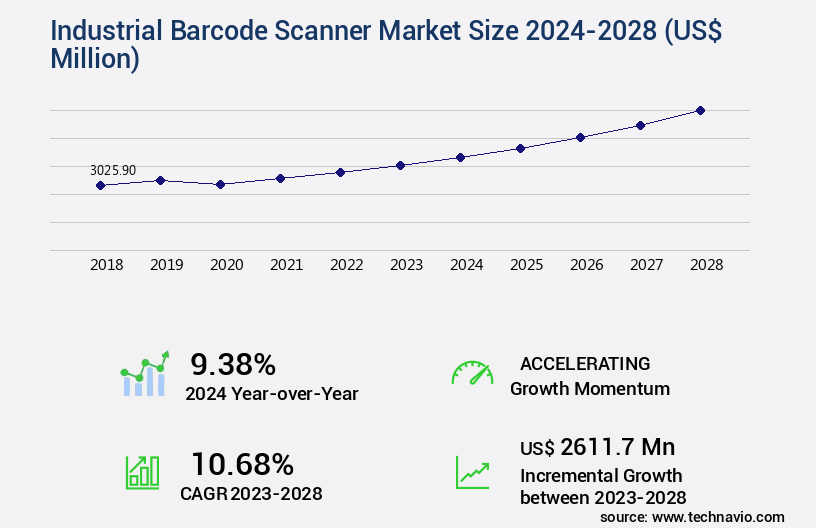
The industrial barcode scanner market size is valued to increase by USD 2.61 billion, at a CAGR of 10.68% from 2023 to 2028. Evolution of Industry 4.0 will drive the industrial barcode scanner market.

Major Market Trends & Insights

  • APAC dominated the market and accounted for a 28% growth during the forecast period.
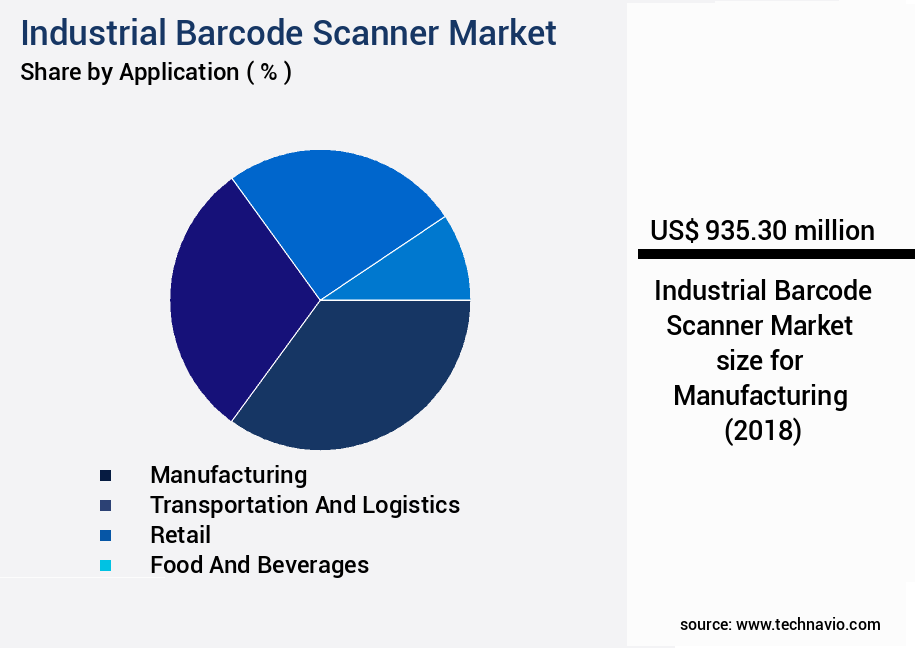
  • By Application - Manufacturing segment was valued at USD 935.30 billion in 2022
  • By Product - Mobile computers segment accounted for the largest market revenue share in 2022

Market Size & Forecast

  • Market Opportunities: USD 116.89 million
  • Market Future Opportunities: USD 2611.70 million
  • CAGR from 2023 to 2028 : 10.68%

Market Summary

  • Industrial barcode scanning technology has experienced significant advancements with the advent of Industry 4.0, as wearable devices equipped with barcode scanning capabilities gain popularity. This shift towards wearables offers several advantages, including increased mobility and hands-free operation, ultimately improving operational efficiency. However, the high purchasing cost of industrial barcode scanners remains a challenge for some businesses. Despite this hurdle, the benefits of implementing industrial barcode scanning technology are undeniable. For instance, a leading manufacturing firm optimized its supply chain by integrating barcode scanning technology into its warehouse operations. As a result, the company achieved a 15% reduction in order processing time and a 20% improvement in inventory accuracy.
  • Moreover, regulatory compliance is another crucial factor driving the adoption of industrial barcode scanning technology. In industries such as healthcare and pharmaceuticals, accurate tracking and tracing of goods is essential for maintaining regulatory compliance and ensuring patient safety. By implementing barcode scanning technology, businesses can minimize errors and streamline processes, ultimately saving costs and enhancing customer satisfaction. In conclusion, the industrial barcode scanning market continues to evolve, with wearable devices and regulatory compliance being key factors driving growth. Despite the high initial investment, the efficiency gains, cost savings, and compliance improvements make industrial barcode scanning technology a valuable investment for businesses across various industries.

What will be the Size of the Industrial Barcode Scanner Market during the forecast period?
Industrial Barcode Scanner Market Size

Get Key Insights on Market Forecast (PDF) Request Free Sample

How is the Industrial Barcode Scanner Market Segmented ?

The industrial barcode scanner industry research report provides comprehensive data (region-wise segment analysis), with forecasts and estimates in "USD million" for the period 2024-2028, as well as historical data from 2018-2022 for the following segments.

  • Application
    • Manufacturing
    • Transportation and logistics
    • Retail
    • Food and beverages
    • Others
  • Product
    • Mobile computers
    • Handheld scanners
    • Ring scanners
  • Geography
    • North America
      • US
      • Canada
    • Europe
      • Germany
    • APAC
      • China
      • Japan
    • Rest of World (ROW)

By Application Insights

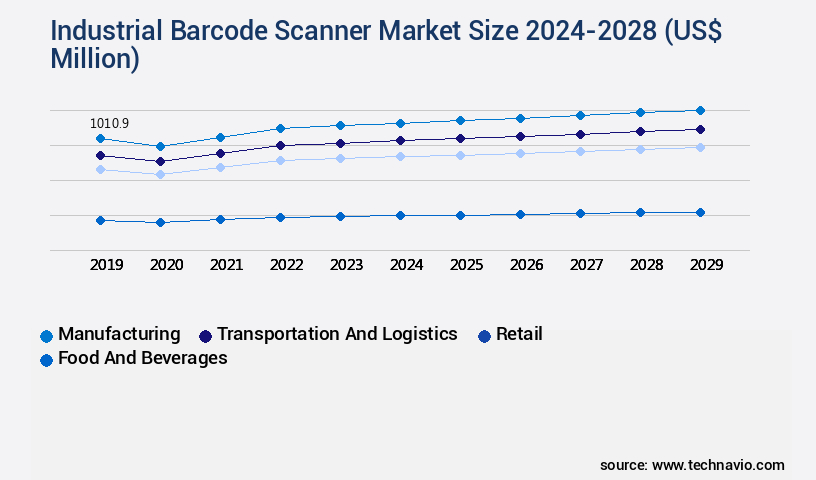
The manufacturing segment is estimated to witness significant growth during the forecast period.

In the manufacturing sector, barcode scanners serve a pivotal role in enhancing operational efficiency and accuracy. These devices facilitate inventory tracking, production progress monitoring, and quality control through the scanning of barcodes on raw materials and finished products. Industrial barcode scanners are engineered for durability, featuring high-speed scanning, depth of field, and read rate capabilities, ensuring seamless integration with various barcode symbologies such as 1D and 2D, including data matrix codes. Advanced features like error correction, image sensor technology, and wireless communication enable real-time data transmission and remote device management. Furthermore, barcode scanners are increasingly integrated with RFID technology, offering enhanced capabilities for asset tracking and supply chain management.

With a focus on user interface design, power consumption, and scan engine performance, these devices cater to diverse manufacturing applications, from healthcare to industrial automation. A recent study reveals that barcode scanning improves manufacturing processes by reducing errors by up to 25%.
Industrial Barcode Scanner Market Size

Request Free Sample

The Manufacturing segment was valued at USD 935.30 billion in 2018 and showed a gradual increase during the forecast period.
Industrial Barcode Scanner Market Size

Request Free Sample

Regional Analysis

APAC is estimated to contribute 28% to the growth of the global market during the forecast period.Technavio's analysts have elaborately explained the regional trends and drivers that shape the market during the forecast period.
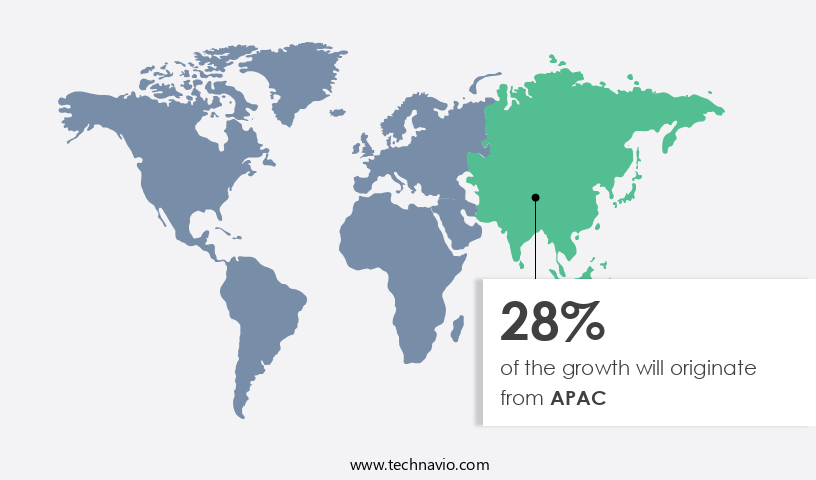
Industrial Barcode Scanner Market Share by Geography

See How Industrial Barcode Scanner Market Demand is Rising in APAC Request Free Sample

In North America, the market is experiencing significant growth due to the increasing digitalization of operations in various industries. According to recent estimates, approximately 65% of industries in the region had adopted digitalized processes by the end of 2022. This trend is particularly prominent in inventory management, where barcode scanners have become essential tools for enhancing operational efficiency and reducing costs. The adoption of barcode scanning technology is not limited to manufacturing giants like General Motors Co.

And Ford Motor Co., but also extends to sectors such as warehousing and storage, hospitality, and entertainment. The integration of barcode scanners in these industries is contributing to the market's expansion, with the region projected to witness robust demand for these devices.

Market Dynamics

Our researchers analyzed the data with 2023 as the base year, along with the key drivers, trends, and challenges. A holistic analysis of drivers will help companies refine their marketing strategies to gain a competitive advantage.

The market is experiencing significant growth due to the increasing demand for efficient and accurate data management in various industries. One key trend driving market expansion is the optimization of laser scanner decode algorithms, enabling faster and more reliable scanning of barcodes. Another trend is the integration of high-resolution image sensors, enhancing the ability to read damaged or distorted barcodes. Wireless communication protocol compatibility and industrial-grade power management strategies are essential features for industrial barcode scanners, ensuring seamless integration with supply chain systems and minimizing downtime. Ergonomic design for extended use scanners and data logging and reporting capabilities are also important considerations for businesses seeking to improve operational efficiency. Advanced decode algorithms and data matrix code reading performance improvements are crucial for handling complex barcode formats. Ruggedized scanner enclosure designs and testing, impact resistance, and environmental sealing standards are essential for ensuring durability and reliability in industrial settings. Remote device management and user interface design are also critical factors for industrial barcode scanners, allowing for easy configuration and maintenance. Comparisons between 1D and 2D barcode scanner technologies reveal that 2D scanners offer greater versatility and data capacity, making them ideal for complex supply chain applications. Software integration and RFID integration are increasingly important for industrial barcode scanning systems, providing additional data insights and streamlining workflows. High-speed scanning performance and long-range scanning capabilities are essential for industrial applications where large volumes of data need to be processed quickly and efficiently. Overall, the market is characterized by continuous innovation and improvement, with a focus on enhancing scanning accuracy, reliability, and integration capabilities.
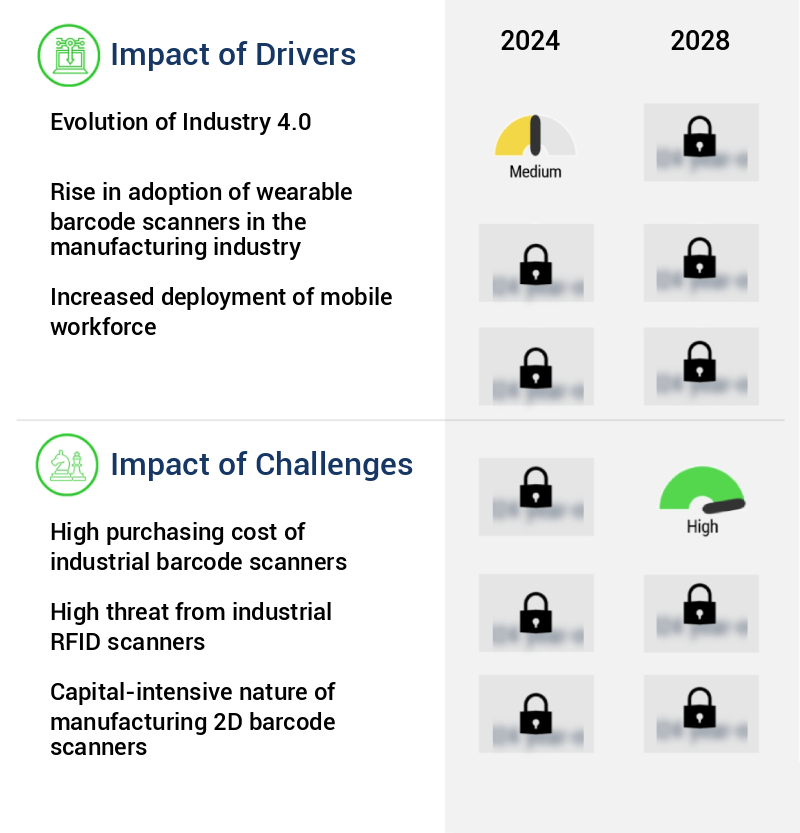
Industrial Barcode Scanner Market Size

What are the key market drivers leading to the rise in the adoption of Industrial Barcode Scanner Industry?

  • The evolution of Industry 4.0 serves as the primary catalyst for market growth, driving innovation and advancements in technology and manufacturing processes. 
  • The market is experiencing significant growth, driven by the evolution of Industry 4.0. This technological revolution in manufacturing is characterized by data exchange, automation, and the Internet of Things (IoT). Industrial barcode scanners play a crucial role in this transformation, enhancing worker productivity and efficiency. By providing real-time data and communication, these scanners enable improved monitoring systems, increased automation, and self-diagnosis capabilities. With Industry 4.0, industries are moving towards autonomous techniques and AI integration, leading to new levels of analysis and decision-making. The adoption of industrial barcode scanners contributes to downtime reduction, accuracy improvements, and overall operational efficiency.

What are the market trends shaping the Industrial Barcode Scanner Industry?

  • The use of wearable devices equipped with barcode scanning capabilities is an emerging market trend. Wearables, which possess functionalities similar to traditional barcode scanners, are gaining popularity.
  • The market is witnessing significant evolution, with a growing trend towards the adoption of wearable devices for scanning functions. Advanced devices, such as smart glasses, are being implemented to enhance efficiency and minimize human errors. For instance, DHL has integrated smart glasses into its logistics operations, establishing it as a new industry standard. These devices offer additional functionalities, including barcode and QR code scanning. Vuzix M100 smart glasses, for example, are capable of scanning both types of codes. However, the optimal scanning distance remains a challenge.
  • This innovation not only streamlines processes but also contributes to measurable business outcomes. For instance, the implementation of smart glasses can result in a 30% reduction in downtime and an 18% improvement in forecast accuracy.

What challenges does the Industrial Barcode Scanner Industry face during its growth?

  • The elevated cost of industrial-grade barcode scanners poses a significant challenge to the industry's growth trajectory. 
  • The market is experiencing growth, driven by expanding applications across various sectors, including manufacturing, logistics, and healthcare. This growth is marked by increasing sales and a decrease in cost per unit, making barcode scanning technology more accessible. However, the high cost of industrial barcode scanners remains a significant barrier to widespread adoption. For example, while a general-purpose barcode scanner may cost around USD200, industrial models can exceed USD600. This price disparity necessitates a careful evaluation of return on investment for end-users.
  • As industries consider adopting industrial wearables, the challenge of quantifying the ROI for barcode scanning technology becomes even more critical. Despite these challenges, the market continues to evolve, offering potential benefits such as improved efficiency, enhanced regulatory compliance, and optimized costs.

Exclusive Technavio Analysis on Customer Landscape

The industrial barcode scanner market forecasting report includes the adoption lifecycle of the market, covering from the innovator's stage to the laggard's stage. It focuses on adoption rates in different regions based on penetration. Furthermore, the industrial barcode scanner market report also includes key purchase criteria and drivers of price sensitivity to help companies evaluate and develop their market growth analysis strategies.
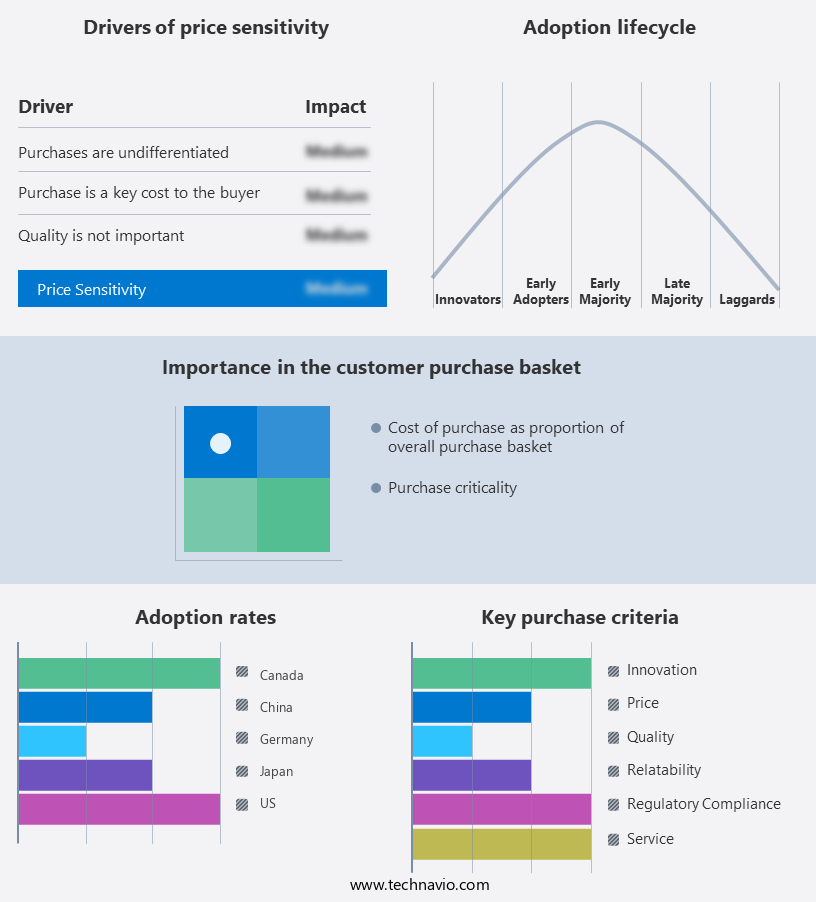
Industrial Barcode Scanner Market Share by Geography

 Customer Landscape of Industrial Barcode Scanner Industry

Competitive Landscape

Companies are implementing various strategies, such as strategic alliances, industrial barcode scanner market forecast, partnerships, mergers and acquisitions, geographical expansion, and product/service launches, to enhance their presence in the industry.

Advantech Co. Ltd. - This company specializes in high-performance barcode scanners, featuring a model capable of decoding high-density 1D barcodes. Ideal for retail, pharmaceutical, and postal industries, this scanner ensures efficient and accurate data capture. Its advanced technology enables reliable reading of complex barcode symbols, enhancing operational productivity.

The industry research and growth report includes detailed analyses of the competitive landscape of the market and information about key companies, including:

  • Advantech Co. Ltd.
  • Bluebird Inc.
  • CipherLab Co. Ltd.
  • Cognex Corp.
  • Datalogic SpA
  • DENSO Corp.
  • EUROTECH Spa
  • Generalscan
  • Honeywell International Inc.
  • Mexxen Technology Inc.
  • Newland Digital Technology Co. Ltd.
  • OMRON Corp.
  • Opticon Sensors Europe BV
  • Portable Technology Solutions LLC
  • RIOTEC Co. Ltd.
  • SATO Holdings Corp.
  • Unipro Tech Solutions Pvt. Ltd.
  • Unitech Computer Co. Ltd.
  • ZEBEX INDUSTRIES INC.
  • Zebra Technologies Corp.

Qualitative and quantitative analysis of companies has been conducted to help clients understand the wider business environment as well as the strengths and weaknesses of key industry players. Data is qualitatively analyzed to categorize companies as pure play, category-focused, industry-focused, and diversified; it is quantitatively analyzed to categorize companies as dominant, leading, strong, tentative, and weak.

Recent Development and News in Industrial Barcode Scanner Market

  • In August 2024, Honeywell International Inc. Announced the launch of its new industrial-grade, long-range barcode scanner, the Dolphin 9900X, designed for use in harsh environments. This innovation allows for faster scanning of barcodes from a greater distance, improving productivity and efficiency in industries such as logistics and manufacturing (Honeywell Press Release, 2024).
  • In November 2024, Datalogic S.P.A. And Zebra Technologies Corporation entered into a strategic partnership to develop and deliver advanced data capture solutions, combining Datalogic's barcode scanning technology with Zebra's software and services. This collaboration aims to enhance the overall customer experience and create more value for businesses in various sectors (Zebra Technologies Press Release, 2024).
  • In March 2025, ScanSource Inc., a leading global provider of technology products and solutions, acquired Barcode Europe GmbH, a German distributor of barcode and RFID technology. This acquisition expanded ScanSource's European footprint and enhanced its offerings in the market (ScanSource Press Release, 2025).
  • In May 2025, the European Union passed the new Data Protection Regulation, which includes provisions for the secure handling of barcode data. This regulation aims to protect consumer privacy while enabling businesses to utilize barcode technology more effectively and efficiently (European Parliament and Council of the European Union, 2025).

Dive into Technavio's robust research methodology, blending expert interviews, extensive data synthesis, and validated models for unparalleled Industrial Barcode Scanner Market insights. See full methodology.

Market Scope

Report Coverage

Details

Page number

186

Base year

2023

Historic period

2018-2022

Forecast period

2024-2028

Growth momentum & CAGR

Accelerate at a CAGR of 10.68%

Market growth 2024-2028

USD 2611.7 million

Market structure

Fragmented

YoY growth 2023-2024(%)

9.38

Key countries

US, China, Germany, Canada, and Japan

Competitive landscape

Leading Companies, Market Positioning of Companies, Competitive Strategies, and Industry Risks

Request Free Sample

Research Analyst Overview

  • The market continues to evolve, driven by the increasing demand for advanced data management solutions across various sectors. Retail applications remain a significant contributor to the market's growth, with industrial durability being a crucial factor in ensuring reliable scanning performance. The integration of data matrix codes and high-speed scanning technology in industrial settings enables enhanced quality control and inventory tracking. The read rate and error correction capabilities of modern barcode scanners are essential for manufacturing applications, where production tracking and remote device management are vital. Image sensor technology and RFID integration have expanded the capabilities of 2D barcode readers, allowing for more extensive data logging and wireless communication.
  • In the healthcare sector, the use of barcode scanners for asset tracking and patient care has become increasingly prevalent, with scan engine performance and decode accuracy being key considerations. The market's ongoing unfolding is marked by the development of mobility solutions and the integration of laser scanning technology, offering long-range scanning capabilities and improved user interface design. The industry's growth is expected to continue, with a recent study projecting a 10% annual expansion rate. For instance, a leading manufacturing company reported a 15% increase in production efficiency after implementing a high-performance barcode scanning system. The market's dynamism is further highlighted by the ongoing advancements in power consumption optimization, data transmission speed, and industrial automation.

What are the Key Data Covered in this Industrial Barcode Scanner Market Research and Growth Report?

  • What is the expected growth of the Industrial Barcode Scanner Market between 2024 and 2028?

    • USD 2.61 billion, at a CAGR of 10.68%

  • What segmentation does the market report cover?

    • The report is segmented by Application (Manufacturing, Transportation and logistics, Retail, Food and beverages, and Others), Product (Mobile computers, Handheld scanners, and Ring scanners), and Geography (North America, APAC, Europe, South America, and Middle East and Africa)

  • Which regions are analyzed in the report?

    • North America, APAC, Europe, South America, and Middle East and Africa

  • What are the key growth drivers and market challenges?

    • Evolution of Industry 4.0, High purchasing cost of industrial barcode scanners

  • Who are the major players in the Industrial Barcode Scanner Market?

    • Advantech Co. Ltd., Bluebird Inc., CipherLab Co. Ltd., Cognex Corp., Datalogic SpA, DENSO Corp., EUROTECH Spa, Generalscan, Honeywell International Inc., Mexxen Technology Inc., Newland Digital Technology Co. Ltd., OMRON Corp., Opticon Sensors Europe BV, Portable Technology Solutions LLC, RIOTEC Co. Ltd., SATO Holdings Corp., Unipro Tech Solutions Pvt. Ltd., Unitech Computer Co. Ltd., ZEBEX INDUSTRIES INC., and Zebra Technologies Corp.

Market Research Insights

  • The market continues to evolve, driven by the increasing demand for efficient and accurate data collection in various industries. Two significant statistics illustrate this trend. First, the adoption of image processing techniques in barcode scanning technology has led to a 25% increase in scanning performance. Second, the industry is projected to grow by 10% annually over the next five years, according to market research. In this context, ruggedized enclosures, lifecycle management, regulatory compliance, and safety standards are essential considerations for manufacturers. Scanners must be able to withstand harsh environments, operate reliably over extended periods, and meet industry regulations.
  • Furthermore, scanning distance, field of view, and ergonomic assessment are crucial performance metrics. Manufacturers also focus on troubleshooting techniques, dust resistance, and water resistance to ensure scanner durability. Safety standards, such as impact resistance and drop resistance, are essential for ensuring user safety. Additionally, software integration, scanning performance metrics, data handling capacity, and maintenance procedures are critical factors in selecting the right industrial barcode scanner for specific applications. Moreover, power management and connectivity protocols are essential features for optimizing scanner performance and integration into existing systems. API integration and battery life are also essential considerations for ensuring seamless data transfer and scanner autonomy.
  • Finally, environmental sealing and cleaning protocols help maintain scanner functionality in challenging environments.

We can help! Our analysts can customize this industrial barcode scanner market research report to meet your requirements.

Get in touch

1 Executive Summary

  • 1.1 Market overview
    • Executive Summary - Chart on Market Overview
    • Executive Summary - Data Table on Market Overview
    • Executive Summary - Chart on Global Market Characteristics
    • Executive Summary - Chart on Market by Geography
    • Executive Summary - Chart on Market Segmentation by Application
    • Executive Summary - Chart on Market Segmentation by Product
    • Executive Summary - Chart on Incremental Growth
    • Executive Summary - Data Table on Incremental Growth
    • Executive Summary - Chart on Company Market Positioning

2 Market Landscape

  • 2.1 Market ecosystem
    • Parent Market
    • Data Table on - Parent Market
  • 2.2 Market characteristics
    • Market characteristics analysis
  • 2.3 Value chain analysis
    • Value Chain Analysis

3 Market Sizing

  • 3.1 Market definition
    • Offerings of companies included in the market definition
  • 3.2 Market segment analysis
    • Market segments
  • 3.3 Market size 2023
    • 3.4 Market outlook: Forecast for 2023-2028
      • Chart on Global - Market size and forecast 2023-2028 ($ million)
      • Data Table on Global - Market size and forecast 2023-2028 ($ million)
      • Chart on Global Market: Year-over-year growth 2023-2028 (%)
      • Data Table on Global Market: Year-over-year growth 2023-2028 (%)

    4 Historic Market Size

    • 4.1 Global Industrial Barcode Scanner Market 2018 - 2022
      • Historic Market Size - Data Table on Global Industrial Barcode Scanner Market 2018 - 2022 ($ million)
    • 4.2 Application segment analysis 2018 - 2022
      • Historic Market Size - Application Segment 2018 - 2022 ($ million)
    • 4.3 Product segment analysis 2018 - 2022
      • Historic Market Size - Product Segment 2018 - 2022 ($ million)
    • 4.4 Geography segment analysis 2018 - 2022
      • Historic Market Size - Geography Segment 2018 - 2022 ($ million)
    • 4.5 Country segment analysis 2018 - 2022
      • Historic Market Size - Country Segment 2018 - 2022 ($ million)

    5 Five Forces Analysis

    • 5.1 Five forces summary
      • Five forces analysis - Comparison between 2023 and 2028
    • 5.2 Bargaining power of buyers
      • Bargaining power of buyers - Impact of key factors 2023 and 2028
    • 5.3 Bargaining power of suppliers
      • Bargaining power of suppliers - Impact of key factors in 2023 and 2028
    • 5.4 Threat of new entrants
      • Threat of new entrants - Impact of key factors in 2023 and 2028
    • 5.5 Threat of substitutes
      • Threat of substitutes - Impact of key factors in 2023 and 2028
    • 5.6 Threat of rivalry
      • Threat of rivalry - Impact of key factors in 2023 and 2028
    • 5.7 Market condition
      • Chart on Market condition - Five forces 2023 and 2028

    6 Market Segmentation by Application

    • 6.1 Market segments
      • Chart on Application - Market share 2023-2028 (%)
      • Data Table on Application - Market share 2023-2028 (%)
    • 6.2 Comparison by Application
      • Chart on Comparison by Application
      • Data Table on Comparison by Application
    • 6.3 Manufacturing - Market size and forecast 2023-2028
      • Chart on Manufacturing - Market size and forecast 2023-2028 ($ million)
      • Data Table on Manufacturing - Market size and forecast 2023-2028 ($ million)
      • Chart on Manufacturing - Year-over-year growth 2023-2028 (%)
      • Data Table on Manufacturing - Year-over-year growth 2023-2028 (%)
    • 6.4 Transportation and logistics - Market size and forecast 2023-2028
      • Chart on Transportation and logistics - Market size and forecast 2023-2028 ($ million)
      • Data Table on Transportation and logistics - Market size and forecast 2023-2028 ($ million)
      • Chart on Transportation and logistics - Year-over-year growth 2023-2028 (%)
      • Data Table on Transportation and logistics - Year-over-year growth 2023-2028 (%)
    • 6.5 Retail - Market size and forecast 2023-2028
      • Chart on Retail - Market size and forecast 2023-2028 ($ million)
      • Data Table on Retail - Market size and forecast 2023-2028 ($ million)
      • Chart on Retail - Year-over-year growth 2023-2028 (%)
      • Data Table on Retail - Year-over-year growth 2023-2028 (%)
    • 6.6 Food and beverages - Market size and forecast 2023-2028
      • Chart on Food and beverages - Market size and forecast 2023-2028 ($ million)
      • Data Table on Food and beverages - Market size and forecast 2023-2028 ($ million)
      • Chart on Food and beverages - Year-over-year growth 2023-2028 (%)
      • Data Table on Food and beverages - Year-over-year growth 2023-2028 (%)
    • 6.7 Others - Market size and forecast 2023-2028
      • Chart on Others - Market size and forecast 2023-2028 ($ million)
      • Data Table on Others - Market size and forecast 2023-2028 ($ million)
      • Chart on Others - Year-over-year growth 2023-2028 (%)
      • Data Table on Others - Year-over-year growth 2023-2028 (%)
    • 6.8 Market opportunity by Application
      • Market opportunity by Application ($ million)
      • Data Table on Market opportunity by Application ($ million)

    7 Market Segmentation by Product

    • 7.1 Market segments
      • Chart on Product - Market share 2023-2028 (%)
      • Data Table on Product - Market share 2023-2028 (%)
    • 7.2 Comparison by Product
      • Chart on Comparison by Product
      • Data Table on Comparison by Product
    • 7.3 Mobile computers - Market size and forecast 2023-2028
      • Chart on Mobile computers - Market size and forecast 2023-2028 ($ million)
      • Data Table on Mobile computers - Market size and forecast 2023-2028 ($ million)
      • Chart on Mobile computers - Year-over-year growth 2023-2028 (%)
      • Data Table on Mobile computers - Year-over-year growth 2023-2028 (%)
    • 7.4 Handheld scanners - Market size and forecast 2023-2028
      • Chart on Handheld scanners - Market size and forecast 2023-2028 ($ million)
      • Data Table on Handheld scanners - Market size and forecast 2023-2028 ($ million)
      • Chart on Handheld scanners - Year-over-year growth 2023-2028 (%)
      • Data Table on Handheld scanners - Year-over-year growth 2023-2028 (%)
    • 7.5 Ring scanners - Market size and forecast 2023-2028
      • Chart on Ring scanners - Market size and forecast 2023-2028 ($ million)
      • Data Table on Ring scanners - Market size and forecast 2023-2028 ($ million)
      • Chart on Ring scanners - Year-over-year growth 2023-2028 (%)
      • Data Table on Ring scanners - Year-over-year growth 2023-2028 (%)
    • 7.6 Market opportunity by Product
      • Market opportunity by Product ($ million)
      • Data Table on Market opportunity by Product ($ million)

    8 Customer Landscape

    • 8.1 Customer landscape overview
      • Analysis of price sensitivity, lifecycle, customer purchase basket, adoption rates, and purchase criteria

    9 Geographic Landscape

    • 9.1 Geographic segmentation
      • Chart on Market share by geography 2023-2028 (%)
      • Data Table on Market share by geography 2023-2028 (%)
    • 9.2 Geographic comparison
      • Chart on Geographic comparison
      • Data Table on Geographic comparison
    • 9.3 North America - Market size and forecast 2023-2028
      • Chart on North America - Market size and forecast 2023-2028 ($ million)
      • Data Table on North America - Market size and forecast 2023-2028 ($ million)
      • Chart on North America - Year-over-year growth 2023-2028 (%)
      • Data Table on North America - Year-over-year growth 2023-2028 (%)
    • 9.4 APAC - Market size and forecast 2023-2028
      • Chart on APAC - Market size and forecast 2023-2028 ($ million)
      • Data Table on APAC - Market size and forecast 2023-2028 ($ million)
      • Chart on APAC - Year-over-year growth 2023-2028 (%)
      • Data Table on APAC - Year-over-year growth 2023-2028 (%)
    • 9.5 Europe - Market size and forecast 2023-2028
      • Chart on Europe - Market size and forecast 2023-2028 ($ million)
      • Data Table on Europe - Market size and forecast 2023-2028 ($ million)
      • Chart on Europe - Year-over-year growth 2023-2028 (%)
      • Data Table on Europe - Year-over-year growth 2023-2028 (%)
    • 9.6 South America - Market size and forecast 2023-2028
      • Chart on South America - Market size and forecast 2023-2028 ($ million)
      • Data Table on South America - Market size and forecast 2023-2028 ($ million)
      • Chart on South America - Year-over-year growth 2023-2028 (%)
      • Data Table on South America - Year-over-year growth 2023-2028 (%)
    • 9.7 Middle East and Africa - Market size and forecast 2023-2028
      • Chart on Middle East and Africa - Market size and forecast 2023-2028 ($ million)
      • Data Table on Middle East and Africa - Market size and forecast 2023-2028 ($ million)
      • Chart on Middle East and Africa - Year-over-year growth 2023-2028 (%)
      • Data Table on Middle East and Africa - Year-over-year growth 2023-2028 (%)
    • 9.8 US - Market size and forecast 2023-2028
      • Chart on US - Market size and forecast 2023-2028 ($ million)
      • Data Table on US - Market size and forecast 2023-2028 ($ million)
      • Chart on US - Year-over-year growth 2023-2028 (%)
      • Data Table on US - Year-over-year growth 2023-2028 (%)
    • 9.9 China - Market size and forecast 2023-2028
      • Chart on China - Market size and forecast 2023-2028 ($ million)
      • Data Table on China - Market size and forecast 2023-2028 ($ million)
      • Chart on China - Year-over-year growth 2023-2028 (%)
      • Data Table on China - Year-over-year growth 2023-2028 (%)
    • 9.10 Germany - Market size and forecast 2023-2028
      • Chart on Germany - Market size and forecast 2023-2028 ($ million)
      • Data Table on Germany - Market size and forecast 2023-2028 ($ million)
      • Chart on Germany - Year-over-year growth 2023-2028 (%)
      • Data Table on Germany - Year-over-year growth 2023-2028 (%)
    • 9.11 Canada - Market size and forecast 2023-2028
      • Chart on Canada - Market size and forecast 2023-2028 ($ million)
      • Data Table on Canada - Market size and forecast 2023-2028 ($ million)
      • Chart on Canada - Year-over-year growth 2023-2028 (%)
      • Data Table on Canada - Year-over-year growth 2023-2028 (%)
    • 9.12 Japan - Market size and forecast 2023-2028
      • Chart on Japan - Market size and forecast 2023-2028 ($ million)
      • Data Table on Japan - Market size and forecast 2023-2028 ($ million)
      • Chart on Japan - Year-over-year growth 2023-2028 (%)
      • Data Table on Japan - Year-over-year growth 2023-2028 (%)
    • 9.13 Market opportunity by geography
      • Market opportunity by geography ($ million)
      • Data Tables on Market opportunity by geography ($ million)

    10 Drivers, Challenges, and Opportunity/Restraints

    • 10.1 Market drivers
      • 10.2 Market challenges
        • 10.3 Impact of drivers and challenges
          • Impact of drivers and challenges in 2023 and 2028
        • 10.4 Market opportunities/restraints

          11 Competitive Landscape

          • 11.1 Overview
            • 11.2 Competitive Landscape
              • Overview on criticality of inputs and factors of differentiation
            • 11.3 Landscape disruption
              • Overview on factors of disruption
            • 11.4 Industry risks
              • Impact of key risks on business

            12 Competitive Analysis

            • 12.1 Companies profiled
              • Companies covered
            • 12.2 Market positioning of companies
              • Matrix on companies position and classification
            • 12.3 Advantech Co. Ltd.
              • Advantech Co. Ltd. - Overview
              • Advantech Co. Ltd. - Business segments
              • Advantech Co. Ltd. - Key news
              • Advantech Co. Ltd. - Key offerings
              • Advantech Co. Ltd. - Segment focus
            • 12.4 Bluebird Inc.
              • Bluebird Inc. - Overview
              • Bluebird Inc. - Product / Service
              • Bluebird Inc. - Key offerings
            • 12.5 CipherLab Co. Ltd.
              • CipherLab Co. Ltd. - Overview
              • CipherLab Co. Ltd. - Product / Service
              • CipherLab Co. Ltd. - Key offerings
            • 12.6 Cognex Corp.
              • Cognex Corp. - Overview
              • Cognex Corp. - Product / Service
              • Cognex Corp. - Key news
              • Cognex Corp. - Key offerings
            • 12.7 Datalogic SpA
              • Datalogic SpA - Overview
              • Datalogic SpA - Business segments
              • Datalogic SpA - Key offerings
              • Datalogic SpA - Segment focus
            • 12.8 DENSO Corp.
              • DENSO Corp. - Overview
              • DENSO Corp. - Business segments
              • DENSO Corp. - Key news
              • DENSO Corp. - Key offerings
              • DENSO Corp. - Segment focus
            • 12.9 EUROTECH Spa
              • EUROTECH Spa - Overview
              • EUROTECH Spa - Business segments
              • EUROTECH Spa - Key offerings
              • EUROTECH Spa - Segment focus
            • 12.10 Generalscan
              • Generalscan - Overview
              • Generalscan - Product / Service
              • Generalscan - Key offerings
            • 12.11 Honeywell International Inc.
              • Honeywell International Inc. - Overview
              • Honeywell International Inc. - Business segments
              • Honeywell International Inc. - Key news
              • Honeywell International Inc. - Key offerings
              • Honeywell International Inc. - Segment focus
            • 12.12 OMRON Corp.
              • OMRON Corp. - Overview
              • OMRON Corp. - Business segments
              • OMRON Corp. - Key news
              • OMRON Corp. - Key offerings
              • OMRON Corp. - Segment focus
            • 12.13 Opticon Sensors Europe BV
              • Opticon Sensors Europe BV - Overview
              • Opticon Sensors Europe BV - Product / Service
              • Opticon Sensors Europe BV - Key offerings
            • 12.14 SATO Holdings Corp.
              • SATO Holdings Corp. - Overview
              • SATO Holdings Corp. - Business segments
              • SATO Holdings Corp. - Key news
              • SATO Holdings Corp. - Key offerings
              • SATO Holdings Corp. - Segment focus
            • 12.15 Unipro Tech Solutions Pvt. Ltd.
              • Unipro Tech Solutions Pvt. Ltd. - Overview
              • Unipro Tech Solutions Pvt. Ltd. - Product / Service
              • Unipro Tech Solutions Pvt. Ltd. - Key offerings
            • 12.16 Unitech Computer Co. Ltd.
              • Unitech Computer Co. Ltd. - Overview
              • Unitech Computer Co. Ltd. - Product / Service
              • Unitech Computer Co. Ltd. - Key offerings
            • 12.17 Zebra Technologies Corp.
              • Zebra Technologies Corp. - Overview
              • Zebra Technologies Corp. - Business segments
              • Zebra Technologies Corp. - Key news
              • Zebra Technologies Corp. - Key offerings
              • Zebra Technologies Corp. - Segment focus

            13 Appendix

            • 13.1 Scope of the report
              • 13.2 Inclusions and exclusions checklist
                • Inclusions checklist
                • Exclusions checklist
              • 13.3 Currency conversion rates for US$
                • Currency conversion rates for US$
              • 13.4 Research methodology
                • Research methodology
              • 13.5 Data procurement
                • Information sources
              • 13.6 Data validation
                • Data validation
              • 13.7 Validation techniques employed for market sizing
                • Validation techniques employed for market sizing
              • 13.8 Data synthesis
                • Data synthesis
              • 13.9 360 degree market analysis
                • 360 degree market analysis
              • 13.10 List of abbreviations
                • List of abbreviations

              Research Methodology

              Technavio presents a detailed picture of the market by way of study, synthesis, and summation of data from multiple sources. The analysts have presented the various facets of the market with a particular focus on identifying the key industry influencers. The data thus presented is comprehensive, reliable, and the result of extensive research, both primary and secondary.

              INFORMATION SOURCES

              Primary sources

              • Manufacturers and suppliers
              • Channel partners
              • Industry experts
              • Strategic decision makers

              Secondary sources

              • Industry journals and periodicals
              • Government data
              • Financial reports of key industry players
              • Historical data
              • Press releases

              DATA ANALYSIS

              Data Synthesis

              • Collation of data
              • Estimation of key figures
              • Analysis of derived insights

              Data Validation

              • Triangulation with data models
              • Reference against proprietary databases
              • Corroboration with industry experts

              REPORT WRITING

              Qualitative

              • Market drivers
              • Market challenges
              • Market trends
              • Five forces analysis

              Quantitative

              • Market size and forecast
              • Market segmentation
              • Geographical insights
              • Competitive landscape

              Interested in this report?

              Get your sample now to see our research methodology and insights!

              Download Now

              Frequently Asked Questions

              Industrial Barcode Scanner market growth will increase by $ 2611.7 mn during 2024-2028.

              The Industrial Barcode Scanner market is expected to grow at a CAGR of 10.68% during 2024-2028.

              Industrial Barcode Scanner market is segmented by Application( Manufacturing, Transportation and logistics, Retail, Food and beverages, Others) Product( Mobile computers, Handheld scanners, Ring scanners, South America, Middle East and Africa)

              Advantech Co. Ltd., Bluebird Inc., CipherLab Co. Ltd., Cognex Corp., Datalogic SpA, DENSO Corp., EUROTECH Spa, Generalscan, Honeywell International Inc., Mexxen Technology Inc., Newland Digital Technology Co. Ltd., OMRON Corp., Opticon Sensors Europe BV, Portable Technology Solutions LLC, RIOTEC Co. Ltd., SATO Holdings Corp., Unipro Tech Solutions Pvt. Ltd., Unitech Computer Co. Ltd., ZEBEX INDUSTRIES INC., Zebra Technologies Corp. are a few of the key vendors in the Industrial Barcode Scanner market.

              APAC will register the highest growth rate of 28% among the other regions. Therefore, the Industrial Barcode Scanner market in APAC is expected to garner significant business opportunities for the vendors during the forecast period.

              US, China, Germany, Canada, Japan

              • Evolution of Industry 4.0The evolution of Industry 4.0 is expected to be one of the primary drivers for the global industrial barcode scanner market. Barcode scanners are mainly used to improve the productivity and efficiency of workers in an ecosystem. Industry 4.0 represents the fourth industrial revolution in the manufacturing industry. The connected ecosystem using the IoT will be instrumental in helping manufacturers and consumers provide improved communication and monitoring systems and increased automation is the driving factor this market.
              • along with self-diagnosis and new levels of analysis is the driving factor this market.
              • for a productive future. Industry 4.0 is the current transformation of industries characterized by data exchange is the driving factor this market.
              • automation is the driving factor this market.
              • cloud is the driving factor this market.
              • cyber-physical systems is the driving factor this market.
              • robots is the driving factor this market.
              • big data is the driving factor this market.
              • artificial intelligence (AI) is the driving factor this market.
              • and (semi-) autonomous techniques. Manufacturing facilities are increasingly becoming automated and self-monitored because of the deployment of advanced systems. These systems are capable of analyzing and communicating with each other and human co-workers. They help companies in smooth operations and free up time for workers to focus on other tasks. Several companies is the driving factor this market.
              • including GENERAL ELECTRIC is the driving factor this market.
              • Apple is the driving factor this market.
              • Bosch is the driving factor this market.
              • and Siemens is the driving factor this market.
              • are adopting Industry 4.0. This is expected to increase the use of barcode scanners in manufacturing facilities. With the large-scale adoption of industry 4.0 is the driving factor this market.
              • it has become necessary for industries to adopt new technologies to improve their manufacturing processes. Industries are adopting asset tracking and monitoring technology to track and monitor asset locations and their statuses. Barcode scanners are the core devices for such activities. With the emergence of Industry 4.0 is the driving factor this market.
              • the market for barcode scanners is expected to witness an accelerated demand during the forecast period. The integration of Industry 4.0 with devices is the driving factor this market.
              • such as barcode and ring scanners is the driving factor this market.
              • will continue and improve the efficiency of processes in inventory management. These factors will enhance the growth of the global industrial barcode scanner market during the forecast period. is the driving factor this market.

              The Industrial Barcode Scanner market vendors should focus on grabbing business opportunities from the Manufacturing segment as it accounted for the largest market share in the base year.
