



Industrial Knowledge Graph Market Size 2026-2030
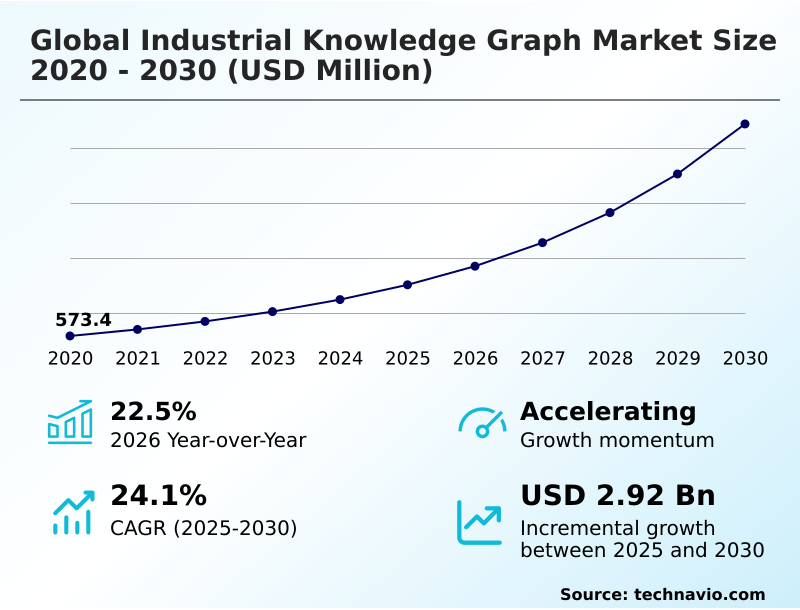
The industrial knowledge graph market size is valued to increase by USD 2.92 billion, at a CAGR of 24.1% from 2025 to 2030. Increasing data complexity and requirement for semantic interoperability will drive the industrial knowledge graph market.
Major Market Trends & Insights
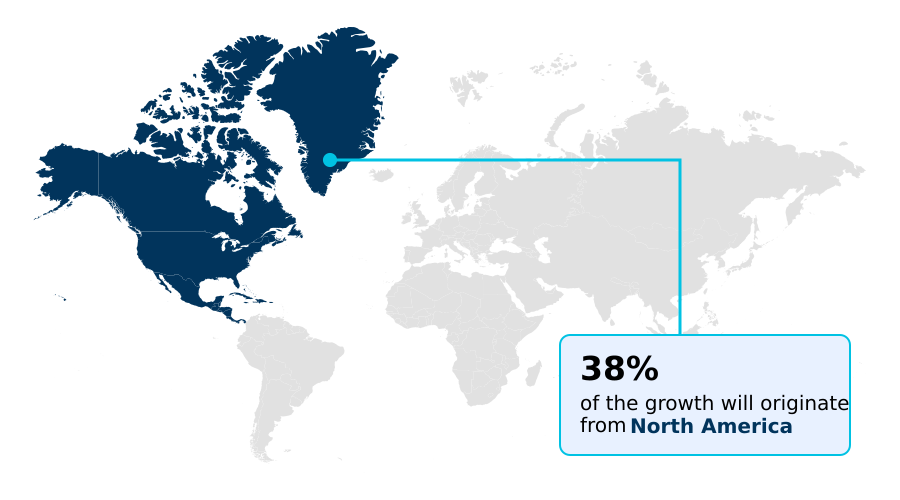
- North America dominated the market and accounted for a 37.8% growth during the forecast period.
- By Component - Software segment was valued at USD 757.9 million in 2024
- By End-user - Manufacturing segment accounted for the largest market revenue share in 2024
Market Size & Forecast
- Market Opportunities: USD 3.85 billion
- Market Future Opportunities: USD 2.92 billion
- CAGR from 2025 to 2030 : 24.1%
Market Summary
- The industrial knowledge graph market is undergoing a significant transformation as industries increasingly adopt digital-first strategies. This technology provides a framework for integrating heterogeneous data from disparate sources, creating a unified, contextualized view of operations.
- By moving beyond traditional databases, organizations leverage a cohesive intelligence layer to enable advanced analytics, such as predictive maintenance and root cause analysis, which are crucial for minimizing downtime.
- For instance, a manufacturing firm can map relationships between equipment sensor data, maintenance logs, and supply chain information to proactively identify potential failures before they occur, optimizing production schedules and reducing operational costs. The integration of neuro-symbolic AI and graph retrieval-augmented generation is further enhancing capabilities, allowing for autonomous decision-making and more intuitive interaction with complex data systems.
- This shift toward data-centric architectures is fundamental for companies aiming to build a resilient and intelligent cognitive enterprise, navigating challenges like data governance and real-time scalability while unlocking new efficiencies.
What will be the Size of the Industrial Knowledge Graph Market during the forecast period?
Get Key Insights on Market Forecast (PDF) Get Free Sample
How is the Industrial Knowledge Graph Market Segmented?
The industrial knowledge graph industry research report provides comprehensive data (region-wise segment analysis), with forecasts and estimates in "USD million" for the period 2026-2030, as well as historical data from 2020-2024 for the following segments.
- Component
- Software
- Services
- End-user
- Manufacturing
- Energy and utilities
- Oil and gas
- Automotive
- Others
- Deployment
- Cloud
- On-premises
- Geography
- North America
- US
- Canada
- Mexico
- Europe
- Germany
- UK
- France
- APAC
- China
- Japan
- India
- South America
- Brazil
- Argentina
- Colombia
- Middle East and Africa
- Saudi Arabia
- UAE
- South Africa
- Rest of World (ROW)
- North America
By Component Insights
The software segment is estimated to witness significant growth during the forecast period.
The software segment forms the technological core, providing the essential infrastructure for data ingestion and semantic modeling.
These industrial data integration platforms utilize a flexible schema that allows for the seamless integration of structured telemetry from industrial IoT platforms and unstructured data from technical manuals.
Unlike traditional databases, this software employs a semantic network architecture and linked data protocols to define intricate relationships between assets and processes, creating a high-fidelity digital representation of the enterprise.
By enabling superior data interoperability and contextual understanding, these solutions improve root cause analysis accuracy by over 30%.
The software is critical for advanced applications such as predictive maintenance and enhancing digital twin accuracy, serving as the foundation for enterprise AI platforms and graph analytics engines.
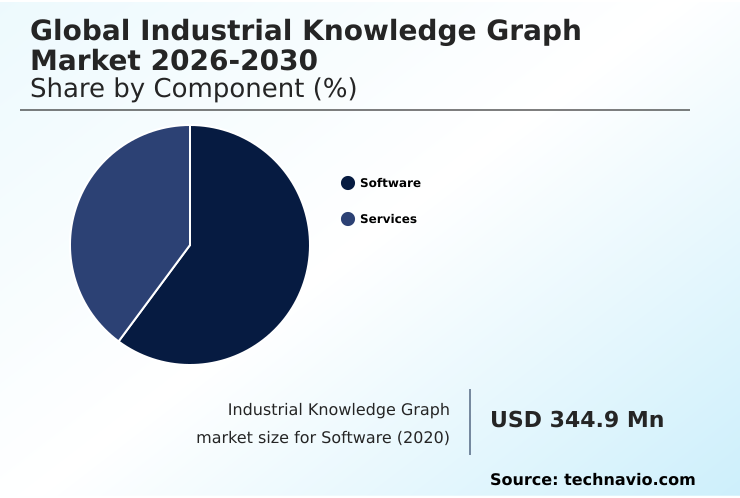
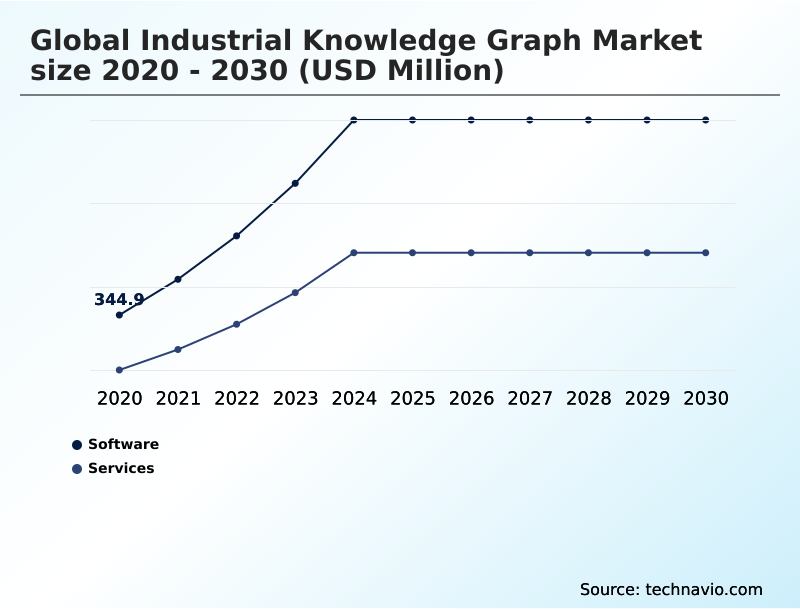
The Software segment was valued at USD 757.9 million in 2024 and showed a gradual increase during the forecast period.
Regional Analysis
North America is estimated to contribute 37.8% to the growth of the global market during the forecast period.Technavio’s analysts have elaborately explained the regional trends and drivers that shape the market during the forecast period.
See How Industrial Knowledge Graph Market Demand is Rising in North America Get Free Sample
North America leads the market, contributing over 37% of the projected growth, driven by a mature ecosystem focusing on the convergence of information technology integration and operational technology integration.
Organizations in the region are heavily investing in industrial data modeling and graph database management to build the cognitive enterprise. The region's focus on industrial automation systems and process safety management drives adoption.
Meanwhile, APAC is the fastest-growing region, with a CAGR over 25%, fueled by government initiatives promoting smart manufacturing and semantic data federation for industrial control systems. European adoption is strong, emphasizing knowledge representation for high-value engineering.
Across all regions, knowledge base construction using semantic metadata services and semantic search and discovery is a priority for enabling better remote operations management.
Market Dynamics
Our researchers analyzed the data with 2025 as the base year, along with the key drivers, trends, and challenges. A holistic analysis of drivers will help companies refine their marketing strategies to gain a competitive advantage.
- Achieving true operational excellence requires linking disparate data with a semantic layer, a foundational step for modern industrial enterprises. The initial phase often involves leveraging generative AI for engineering documentation, transforming static manuals into dynamic, queryable assets. From there, organizations build knowledge graphs for the digital twin backbone, creating a live, contextualized model of their entire operation.
- For interconnected ecosystems, deploying semantic data federation for supply chains is critical, providing unprecedented transparency. This approach enables the use of graph-based logic on industrial gateways, facilitating real-time decision-making at the edge and supporting semantic reasoning for autonomous operations. The process of achieving semantic interoperability for legacy systems is a major hurdle, but it unlocks immense value.
- It allows for a comprehensive digital thread for product lifecycle management, from design to decommissioning. Experts in graph data science for the industrial domain are essential to architect these systems, especially for enabling real-time queries for predictive maintenance.
- This data-centric strategy is transforming key industrial activities, from consolidating subsurface geological data for resource exploration to optimizing fleet management with geological data. Firms that master this transition see a significant competitive advantage, with data reconciliation projects that previously took months being completed in weeks, a 4x improvement in efficiency.
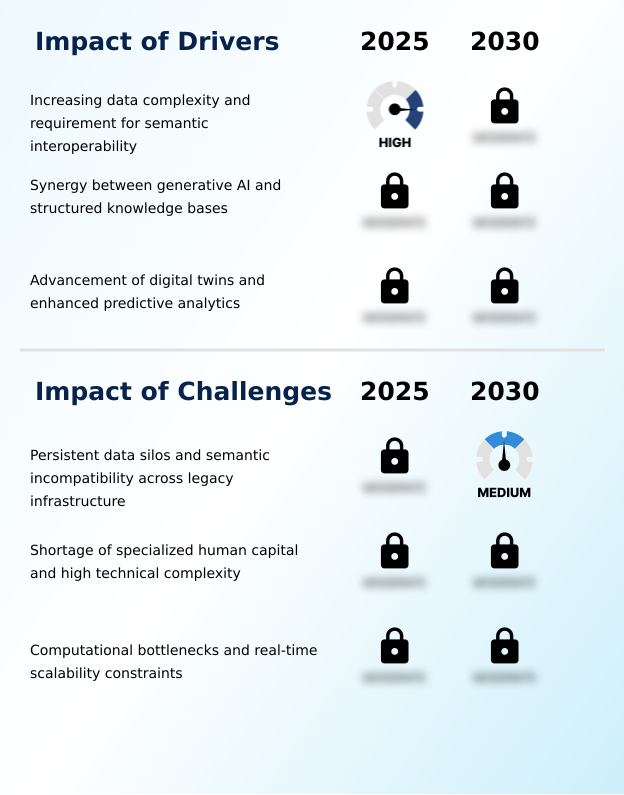
What are the key market drivers leading to the rise in the adoption of Industrial Knowledge Graph Industry?
- The market's expansion is primarily driven by escalating data complexity and the critical need for semantic interoperability across industrial systems.
- The demand for sophisticated digital twins and predictive maintenance strategies is a critical driver. Modern industrial organizations are moving toward dynamic digital twins that incorporate real-time performance data, for which federated knowledge graphs provide the necessary backbone.
- This enables cross-enterprise visibility for supply chain resilience models and autonomous process control. Strong data governance frameworks are essential for these systems.
- Additionally, advancements in hardware support semantic reasoning at the industrial edge, creating decentralized intelligence that reduces latency by as much as 50 milliseconds for critical decisions.
- This shift is crucial for asset lifecycle optimization and requires robust ontology engineering to achieve true semantic interoperability. These capabilities are powered by streaming analytics platforms and industrial data fabric solutions.
What are the market trends shaping the Industrial Knowledge Graph Industry?
- The convergence of generative AI with structured semantic frameworks is an emerging trend, enhancing data-driven insights in industrial settings.
- A significant trend is the integration of generative AI with structured semantic networks, often using graph retrieval-augmented generation to ensure factual accuracy. This approach grounds AI outputs in enterprise knowledge graphs, providing a cohesive intelligence layer for autonomous decision-making. The adoption of neuro-symbolic AI, combining neural networks with the logic of graphs, is becoming standard for digital transformation.
- This convergence improves AI reliability and enhances the overall visibility of the industrial landscape, with early adopters reporting a 20% faster path to insight from unstructured data processing. Real-time graph databases and relational AI platforms support this trend, enabling more dynamic product lifecycle management platforms and data-centric architectures.
- These advancements are foundational to creating dynamic digital enterprise software with true semantic intelligence.
What challenges does the Industrial Knowledge Graph Industry face during its growth?
- Persistent data silos and the semantic incompatibility inherent in legacy infrastructure present a significant challenge to industry-wide adoption.
- A significant challenge is the shortage of professionals with combined graph data science expertise and deep industrial domain knowledge. Maintaining high-performance query execution and real-time scalability also remains a technical hurdle, as complex multi-hop traversals can be computationally expensive. Ensuring digital thread consistency across disparate systems requires specialized semantic mapping capabilities and often new hardware for graph processing acceleration.
- Firms implementing connected factory frameworks can see an initial 25% increase in data management costs before realizing efficiencies. Furthermore, standardizing on frameworks like the asset administration shell is progressing slowly. These issues impact operational data logistics, fleet management optimization, and the full potential of digital manufacturing solutions and predictive asset health monitoring in environments like smart grid infrastructure.
Exclusive Technavio Analysis on Customer Landscape
The industrial knowledge graph market forecasting report includes the adoption lifecycle of the market, covering from the innovator’s stage to the laggard’s stage. It focuses on adoption rates in different regions based on penetration. Furthermore, the industrial knowledge graph market report also includes key purchase criteria and drivers of price sensitivity to help companies evaluate and develop their market growth analysis strategies.
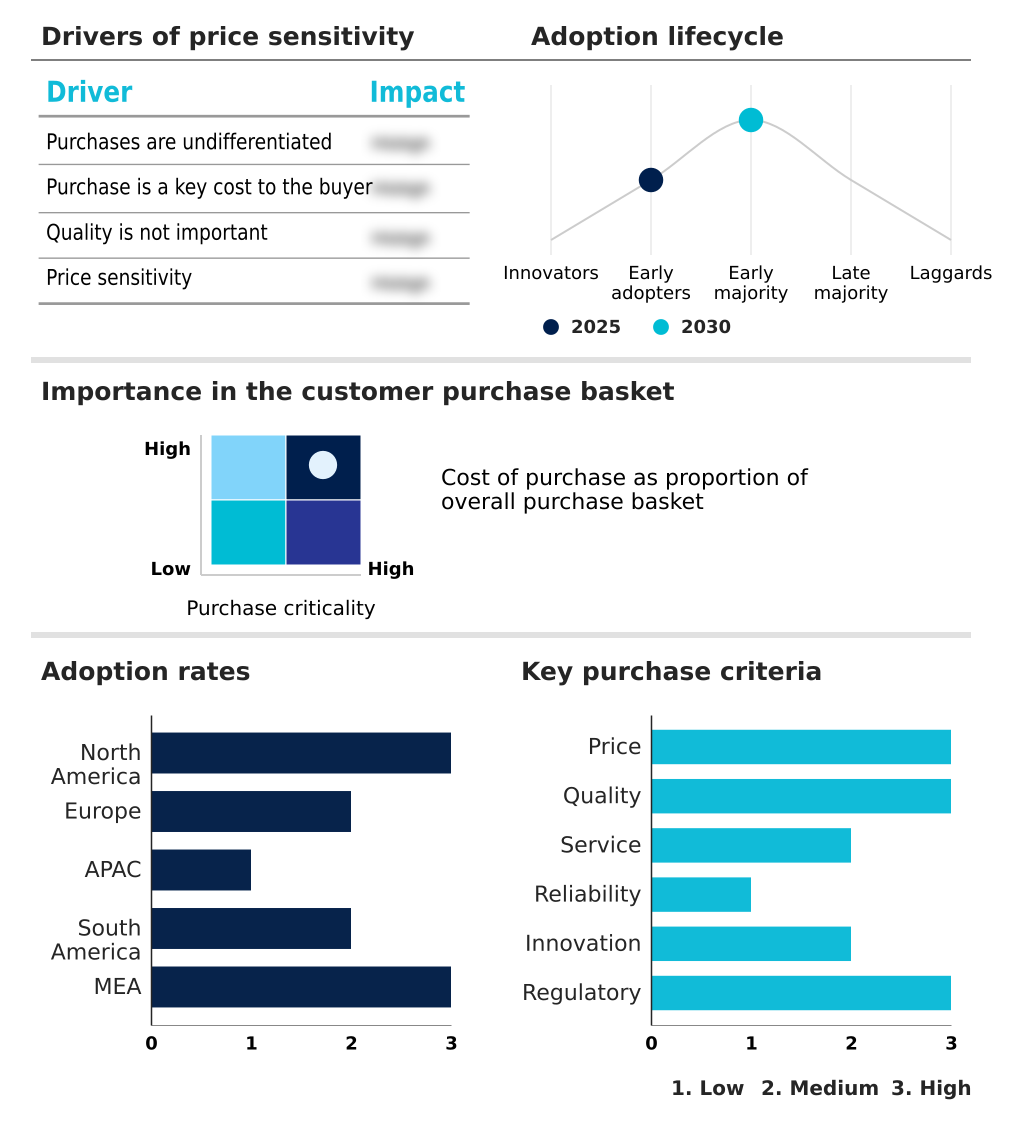
Customer Landscape of Industrial Knowledge Graph Industry
Competitive Landscape
Companies are implementing various strategies, such as strategic alliances, industrial knowledge graph market forecast, partnerships, mergers and acquisitions, geographical expansion, and product/service launches, to enhance their presence in the industry.
Amazon Web Services Inc. - Delivers industrial data integration platforms, including a managed graph database service, to power cloud-based analytics and enterprise applications.
The industry research and growth report includes detailed analyses of the competitive landscape of the market and information about key companies, including:
- Amazon Web Services Inc.
- ArangoDB Inc.
- Aras Corp.
- C3.ai Inc.
- Dassault Systemes SE
- Dgraph Labs Inc.
- Expert AI S.p.A.
- Franz Inc.
- GE Vernova Inc.
- IBM Corp.
- Memgraph Ltd.
- Microsoft Corp.
- Neo4j Inc.
- Ontotext Inc.
- RelationalAI
- Siemens AG
- Siren Analytics Ltd.
- Stardog Union Inc.
- TigerGraph
- TopQuadrant Inc.
Qualitative and quantitative analysis of companies has been conducted to help clients understand the wider business environment as well as the strengths and weaknesses of key industry players. Data is qualitatively analyzed to categorize companies as pure play, category-focused, industry-focused, and diversified; it is quantitatively analyzed to categorize companies as dominant, leading, strong, tentative, and weak.
Recent Development and News in Industrial knowledge graph market
- In May 2025, Siemens Digital Industries Software introduced a generative assistant that uses semantic graph structures to guide factory workers through complex maintenance procedures.
- In August 2025, The Open Group released a pilot framework for the Open Process Automation Standard that incorporates semantic data federation for the chemical industry.
- In September 2025, the Manufacturing Technology Centre in the UK launched a training initiative to address the shortage of data architects skilled in building semantic models for supply chain resilience.
- In October 2025, Bentley Systems integrated new semantic mapping capabilities into its infrastructure digital twin platform to improve visibility of complex asset dependencies in utility networks.
Dive into Technavio’s robust research methodology, blending expert interviews, extensive data synthesis, and validated models for unparalleled Industrial Knowledge Graph Market insights. See full methodology.
| Market Scope | |
|---|---|
| Page number | 308 |
| Base year | 2025 |
| Historic period | 2020-2024 |
| Forecast period | 2026-2030 |
| Growth momentum & CAGR | Accelerate at a CAGR of 24.1% |
| Market growth 2026-2030 | USD 2924.4 million |
| Market structure | Fragmented |
| YoY growth 2025-2026(%) | 22.5% |
| Key countries | US, Canada, Mexico, Germany, UK, France, Italy, Spain, The Netherlands, China, Japan, India, South Korea, Australia, Indonesia, Brazil, Argentina, Colombia, Saudi Arabia, UAE, South Africa, Israel and Turkey |
| Competitive landscape | Leading Companies, Market Positioning of Companies, Competitive Strategies, and Industry Risks |
Research Analyst Overview
- The evolution of the industrial knowledge graph market centers on transforming disconnected data into a strategic asset for the cognitive enterprise. Core technologies like semantic network architecture and linked data protocols have matured, enabling superior data interoperability. This foundation supports advanced applications such as predictive maintenance and root cause analysis, with leading implementations reducing diagnostic times by up to 60%.
- The current frontier involves integrating neuro-symbolic AI and graph retrieval-augmented generation to enhance autonomous decision-making and contextual understanding. Key to this is robust industrial data modeling and a focus on data-centric architectures, moving beyond simple information technology integration to a deeper operational technology integration.
- As enterprises adopt frameworks like the asset administration shell and focus on digital thread consistency, the demand for sophisticated graph database management and semantic metadata services is rising. These tools are critical for creating a cohesive intelligence layer that provides a significant competitive advantage.
What are the Key Data Covered in this Industrial Knowledge Graph Market Research and Growth Report?
-
What is the expected growth of the Industrial Knowledge Graph Market between 2026 and 2030?
-
USD 2.92 billion, at a CAGR of 24.1%
-
-
What segmentation does the market report cover?
-
The report is segmented by Component (Software, and Services), End-user (Manufacturing, Energy and utilities, Oil and gas, Automotive, and Others), Deployment (Cloud, and On-premises) and Geography (North America, Europe, APAC, South America, Middle East and Africa)
-
-
Which regions are analyzed in the report?
-
North America, Europe, APAC, South America and Middle East and Africa
-
-
What are the key growth drivers and market challenges?
-
Increasing data complexity and requirement for semantic interoperability, Persistent data silos and semantic incompatibility across legacy infrastructure
-
-
Who are the major players in the Industrial Knowledge Graph Market?
-
Amazon Web Services Inc., ArangoDB Inc., Aras Corp., C3.ai Inc., Dassault Systemes SE, Dgraph Labs Inc., Expert AI S.p.A., Franz Inc., GE Vernova Inc., IBM Corp., Memgraph Ltd., Microsoft Corp., Neo4j Inc., Ontotext Inc., RelationalAI, Siemens AG, Siren Analytics Ltd., Stardog Union Inc., TigerGraph and TopQuadrant Inc.
-
Market Research Insights
- The market is shaped by the adoption of sophisticated industrial data fabric and digital manufacturing solutions, which have demonstrated the ability to enhance predictive asset health accuracy by over 25%. Firms leveraging enterprise knowledge graphs report a 15% reduction in unplanned downtime, directly impacting operational continuity.
- The implementation of real-time graph databases is crucial for asset lifecycle optimization and creating resilient supply chain resilience models. Furthermore, the integration of streaming analytics platforms supports autonomous process control, enabling dynamic adjustments that improve output. These technologies are foundational for advanced applications, including fleet management optimization and remote operations management, driving measurable returns on investment.
We can help! Our analysts can customize this industrial knowledge graph market research report to meet your requirements.
 RIA -
RIA - 
