
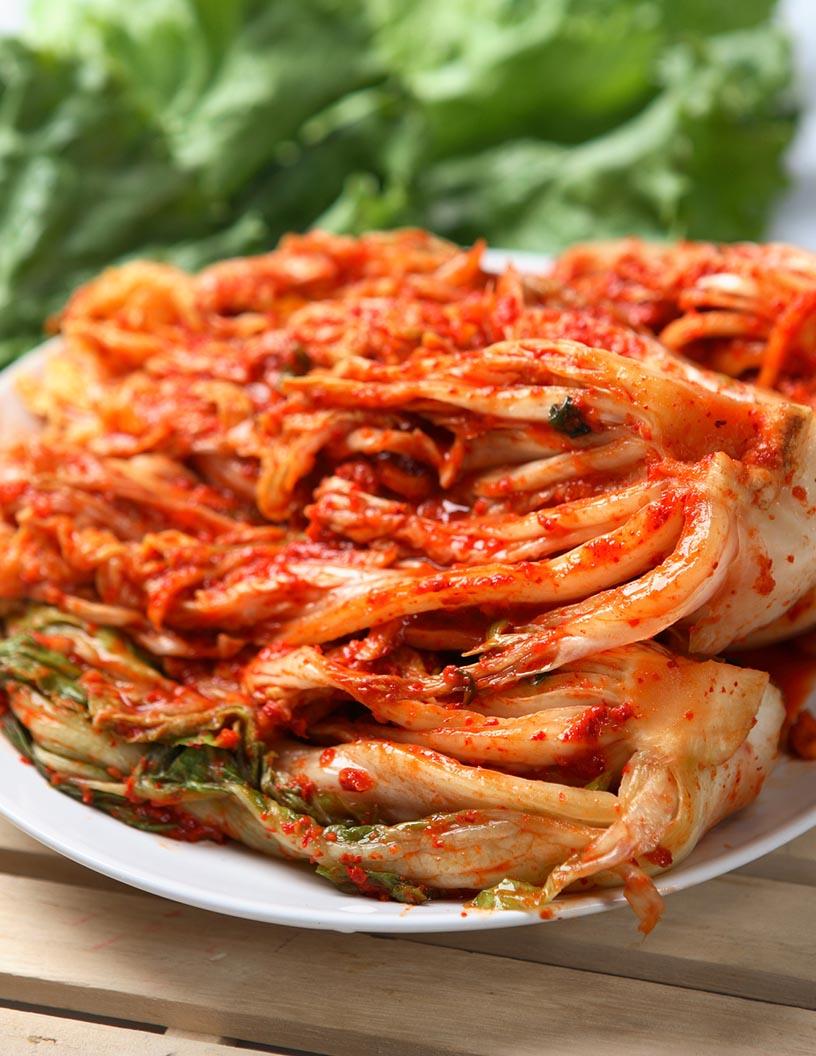


Kimchi Market Size 2025-2029
The kimchi market size is forecast to increase by USD 1.24 billion, at a CAGR of 5.1% between 2024 and 2029.
- The market is experiencing significant growth due to the increasing popularity of Korean cuisine in the US and North America. Consumers are drawn to the health benefits of ginger and garlic, key spices in kimchi, which provide antioxidants and dietary fiber. Packaging innovation and e-commerce platforms are driving the market's expansion, making it more convenient for consumers to access these traditional dishes. Kimchi's versatility extends beyond traditional Korean cuisine, with applications in various food categories, including rice cakes and seafood. The market's trends include product launches, expansion of retail channels, and data analytics to improve consumer insights. However, challenges persist, such as product recalls due to contamination concerns and maintaining the authenticity and freshness of kimchi. The market's future growth will depend on addressing these challenges and catering to the evolving preferences of consumers seeking healthy, convenient, and culturally diverse food options.
What will be the Size of the Kimchi Market During the Forecast Period?

- The market encompasses the production, distribution, and consumption of this traditional Korean side dish, renowned for its spicy, tangy, and complex flavors. Kimchi, a staple in the Korean pantry, has gained significant traction in global food trends due to its cultural exchange with various culinary influencers and food bloggers. With a diverse range of varieties, including vegan and sustainable options, kimchi caters to various dietary preferences and food enthusiasts. The market's size is substantial, driven by the growing popularity of Asian food and healthy eating. Kimchi's unique fermentation process, which enhances its probiotic properties, further bolsters its appeal as a nutritious and flavorful food option.
- Consumers are increasingly drawn to the authentic Korean experience offered by kimchi, with its rich history and diverse flavors inspiring food photography, food styling, and culinary innovation. Kimchi's versatility extends beyond the Korean table, making it a sought-after ingredient in various international cuisines. The market's direction is positive, with online channels and subscription services making kimchi more accessible to consumers worldwide. Kimchi's health benefits, including its role in gut health and its contribution to a balanced diet, continue to fuel its popularity as a probiotic food and a healthy fermented option.
How is this Kimchi Industry segmented and which is the largest segment?
The kimchi industry research report provides comprehensive data (region-wise segment analysis), with forecasts and estimates in "USD billion" for the period 2025-2029, as well as historical data from 2019-2023 for the following segments.
- Distribution Channel
- Offline
- Online
- Product
- Conventional kimchi
- Organic kimchi
- Type
- Baechu
- Kkakdugi
- Chonggak
- End-user
- Households or retail
- Food service
- Geography
- APAC
- China
- India
- Japan
- South Korea
- North America
- Canada
- US
- Europe
- Germany
- UK
- France
- Italy
- Middle East and Africa
- South America
- APAC
By Distribution Channel Insights
- The offline segment is estimated to witness significant growth during the forecast period. Kimchi, a traditional Korean fermented vegetable dish, is renowned for its unique taste profile and crunchy texture. The market for kimchi encompasses various types, including napa cabbage kimchi and kkakdugi kimchi, which showcase the versatility of this probiotic food. Kimchi's refreshing flavor and probiotic properties have led to its rising popularity, making it a healthy option for everyday meals and fusion dishes. Offline distribution channels, such as supermarkets, hypermarkets, convenience stores, and specialty stores, dominate the market due to the perishable nature of the product and consumers' preference for inspecting the product before purchasing. Authenticity and quality are crucial factors for many consumers, particularly those with a cultural connection to Korea.
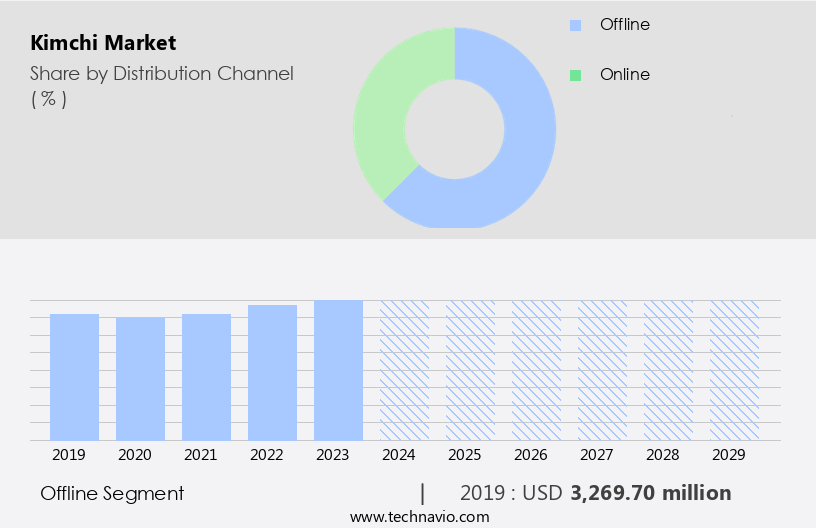
Get a glance at the market report of share of various segments Request Free Sample
The offline segment was valued at USD 3.27 billion in 2019 and showed a gradual increase during the forecast period.
Regional Analysis
- APAC is estimated to contribute 81% to the growth of the global market during the forecast period. Technavio's analysts have elaborately explained the regional trends and drivers that shape the market during the forecast period.
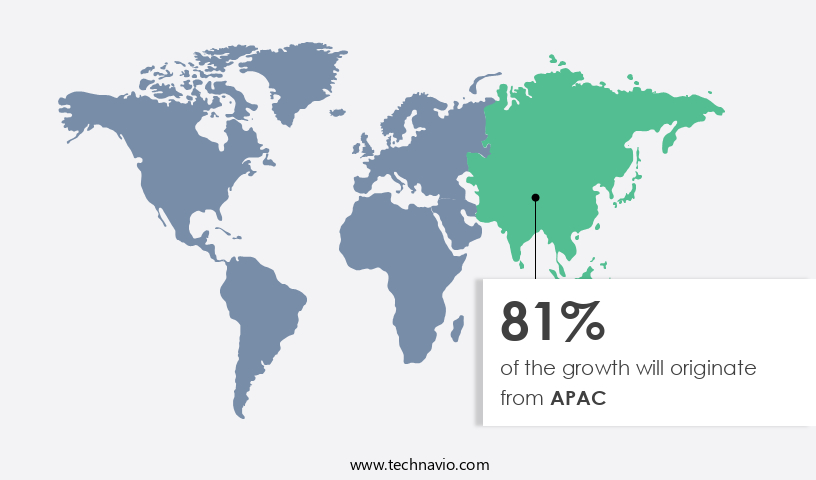
For more insights on the market size of various regions, Request Free Sample
The APAC region holds a substantial market for kimchi, rooted in its cultural connection to Korea and escalating popularity as a nutritious and savory food. South Korea leads as the largest producer and exporter of kimchi globally, with significant domestic consumption. Other APAC countries, including Japan, China, and Taiwan, also exhibit a strong demand for this probiotic dish. Key players in the region's the market include CJ CheilJedang, Daesang, Dongwon F&B, Elaia Holdings, and Pulmuone. Factors fueling the market growth include health benefits, as kimchi is rich in fiber, vitamins, and antioxidants. Its versatility extends to various culinary applications, from traditional Korean dishes like bibimbap and kimchi-making to fusion creations and convenient packaging for the food service industry.
Market Dynamics
Our researchers analyzed the data with 2024 as the base year, along with the key drivers, trends, and challenges. A holistic analysis of drivers will help companies refine their marketing strategies to gain a competitive advantage.
What are the key market drivers leading to the rise in the adoption of Kimchi Industry?
- Product launches is the key driver of the market. The market is witnessing growth due to the introduction of new variants and innovative culinary applications. Kimchi, a traditional Korean dish made from fermented napa cabbage, ginger, chili powder, and other ingredients, offers a unique taste profile with refreshing flavors and a crunchy texture. Companies are expanding their product lines by producing kkakdugi kimchi from radish and baechu kimji from napa cabbage, among other varieties. These new offerings cater to diverse dining experiences and increasing demand for probiotic-rich, functional foods. Kimchi's versatility extends beyond traditional Korean cuisine, with applications in everyday meals, fusion dishes, and even snacks.
- Its nutritional profile includes high fiber, antioxidant properties, and various vitamins and minerals, making it a healthy option for consumers. The fermented food's savory flavor pairs well with various dishes, such as bibimbap, bulgogi, and noodles. The market's growth is further driven by the rising popularity of Korean entertainment, food tourism, and the convenience of premium packaging for food service industries. Kimchi's health benefits, including improved digestion, cardiovascular health, and skin aging, also contribute to its increasing domestic consumption and status as a staple in Korean households. Innovative chefs and food manufacturers are exploring new ways to incorporate kimchi into their offerings, from kimchi-making techniques to kimchi-based dressings and sauces.
What are the market trends shaping the Kimchi Industry?
- Expansion of retail channels is the upcoming market trend. Kimchi, a traditional Korean dish made from fermented napa cabbage and various other ingredients like ginger, chili powder, and radish, is gaining popularity in the US market. This probiotic-rich food offers a unique taste profile with a refreshing flavor and crunchy texture. The versatility of kimchi extends to various culinary applications, including pairing with rice, noodles, and salads, or using it as a topping for sandwiches and bibimbap. The k-culture influence has led to the production of various kimchi types, such as baechu kimchi, nabak kimchi, and kkakdugi kimchi. These fermented vegetables offer health benefits, including high fiber, antioxidant properties, and cardiovascular health benefits.
- Kimchi's nutritional profile includes essential vitamins and minerals like iron and vitamin C. Retail channels, including supermarkets, hypermarkets, and grocery stores, are expanding their offerings to include kimchi. This expansion allows for greater accessibility and convenience for consumers, making kimchi a staple in everyday meals. Kimchi's unique taste and health benefits have led to its use in fusion dishes, such as kimchi-based sauerkraut and vegan kimchi. Food manufacturers are also incorporating kimchi into their product lines, offering convenient packaging for food service industry use and retail sales. Kimchi's popularity has also extended to Korean entertainment and food blogs, increasing its reach and influence in the culinary world.
What challenges does the Kimchi Industry face during its growth?
- Product recalls is a key challenge affecting the industry growth. Kimchi, a traditional Korean dish made from fermented vegetables, has gained rising popularity worldwide due to its unique taste profile and diverse culinary applications. The primary ingredients include napa cabbage, radish, and ginger, which are sourced from third-party suppliers. Proper handling of these raw materials is crucial to maintain the quality of kimchi, as improper handling can negatively impact the final product. Regulatory bodies and compliance authorities play a significant role in ensuring the safety and authenticity of kimchi products. Product recalls due to allergens, non-compliant ingredients, or other reasons can damage a company's reputation and discourage consumers from purchasing kimchi.
- Various flavors of kimchi, such as baechu kimchi (made from napa cabbage), kkakdugi kimchi (cubed radish), and nabak kimchi (made from cucumber), offer versatility in home cooking and diverse dining experiences. Kimchi's probiotic properties make it a healthy option for everyday meals. Its nutritional profile includes high fiber, vitamins, iron, and antioxidant properties, which contribute to cardiovascular health and skin aging. The fermented food is also rich in lactobacillus, a beneficial bacteria that aids digestion and has cholesterol-lowering properties. Kimchi's savory flavor and crunchy texture make it a popular ingredient in fusion dishes, such as sandwiches, salads, and noodles.
Exclusive Customer Landscape
The kimchi market forecasting report includes the adoption lifecycle of the market, covering from the innovator's stage to the laggard's stage. It focuses on adoption rates in different regions based on penetration. Furthermore, the kimchi market report also includes key purchase criteria and drivers of price sensitivity to help companies evaluate and develop their market growth analysis strategies.

Customer Landscape
Key Companies & Market Insights
Companies are implementing various strategies, such as strategic alliances, market forecast, partnerships, mergers and acquisitions, geographical expansion, and product/service launches, to enhance their presence in the industry.
Chois Kimchi LLC - The company offers kimchi solutions such as canned kimchi tuna, kimchi ramyun noodle soup, oolongmen kimchi cup.
The industry research and growth report includes detailed analyses of the competitive landscape of the market and information about key companies, including:
- Bombucha
- CJ CheilJedang Corp.
- Cosmos Food Co. Inc.
- Daesang Corp.
- Dongwon Group
- Eden Foods Inc.
- Gold Mine Natural Food Co.
- Kehoes Kitchen Pty Ltd.
- Kimchi Club Pty Ltd.
- Kings Asian Gourmet
- Lucky Foods
- MILKimchi Inc.
- Pulmuone Foods USA
- Real Pickles
- Sinto Gourmet LLC
- Sunjas Oriental Foods Inc.
- T BROTHERS FOOD and TRADING LTD.
- Tazaki Foods Ltd.
- VOLCANO KIMCHI
Qualitative and quantitative analysis of companies has been conducted to help clients understand the wider business environment as well as the strengths and weaknesses of key industry players. Data is qualitatively analyzed to categorize companies as pure play, category-focused, industry-focused, and diversified; it is quantitatively analyzed to categorize companies as dominant, leading, strong, tentative, and weak.
Research Analyst Overview
Kimchi, a traditional Korean fermented vegetable dish, has gained significant attention in the global food market due to its unique taste profile and various culinary applications. This probiotic-rich food, known for its refreshing flavor and crunchy texture, offers a diverse range of options beyond the commonly known napa cabbage kimchi. The versatility of kimchi extends to various types, such as kkakdugi (cubed radish kimchi) and Baechu kimchi (cabbage kimchi). These dishes showcase the cultural influence of Korean cuisine, providing consumers with an exotic and refreshing alternative to conventional fermented vegetables like sauerkraut. Kimchi's popularity is on the rise, not only in traditional Korean settings but also in everyday meals and fusion dishes.
In addition, its unique taste and nutritional profile make it a desirable choice for health-conscious consumers seeking convenient, nutritious options. Probiotic-rich foods, such as kimchi, have gained significant attention in the functional food industry. These foods, which offer various health benefits, have been linked to improved digestive properties, reduced cardiovascular risks, and enhanced antioxidant properties. The food service industry has embraced kimchi as a key ingredient, with chefs experimenting with its savory flavor in a range of dishes, from bibimbap to sandwiches and dressings. Kimchi's versatility extends to various culinary customs, including pairing it with rice, noodles, and even vegan options.
Furthermore, the convenience of kimchi's availability in various forms, including retail and non-store based offerings, has contributed to its rising popularity. Kimchi can be found in traditional Korean eateries, as well as on the menus of trendy restaurants and even in food blogs. Kimchi's unique taste and cultural influence have made it a staple in Korean cuisine, with traditional kimchi-making techniques being passed down through generations. Its popularity extends beyond the Korean community, with tourists seeking out authentic kimchi experiences as part of their culinary tourism adventures. The nutritional benefits of kimchi are numerous, with its high fiber content and various vitamins and minerals, including iron, vitamins C and K, and selenium.
Moreover, its fermented nature also provides probiotics, which contribute to gut health and overall wellness. The future of kimchi looks bright, with continued innovation in its production and culinary applications. From traditional techniques to modern twists, kimchi is poised to remain a popular and desirable choice for consumers seeking unique and healthy food options. Kimchi, a staple in Korean cuisine, is a traditional, spicy, and fermented side dish made primarily from cabbage and radishes. Kimchi making is an essential part of Korean culture, passed down through generations. This culinary inspiration offers various recipes, each with unique flavors and health benefits. Key Korean pantry staples include garlic, ginger, and gochugaru (red pepper flakes), essential for creating authentic kimchi flavors.
Further, food influencers showcase kimchi varieties, from classic cabbage kimchi to exotic options like radish, cucumber, and even fruit kimchi. Kimchi history dates back over 2,000 years, playing a crucial role in Korean food culture and food preservation. Vegetarian options are available, making it an excellent addition to a vegetarian diet. Kimchi benefits include probiotic properties, supporting a healthy microbiome, anti-aging, and various health advantages. For those who enjoy spicy food, kimchi offers a sustainable food choice, as it reduces food waste by using every part of the vegetable. Kimchi and health risks are minimal, but proper food safety measures are essential during the fermentation process.
|
Market Scope |
|
|
Report Coverage |
Details |
|
Page number |
227 |
|
Base year |
2024 |
|
Historic period |
2019-2023 |
|
Forecast period |
2025-2029 |
|
Growth momentum & CAGR |
Accelerate at a CAGR of 5.1% |
|
Market growth 2025-2029 |
USD 1.26 billion |
|
Market structure |
Fragmented |
|
YoY growth 2024-2025(%) |
4.8 |
|
Key countries |
South Korea, China, US, Japan, India, Canada, Germany, UK, France, and Italy |
|
Competitive landscape |
Leading Companies, market growth and forecasting, Market Positioning of Companies, Competitive Strategies, and Industry Risks |
What are the Key Data Covered in this Kimchi Market Research and Growth Report?
- CAGR of the Kimchi industry during the forecast period
- Detailed information on factors that will drive the market growth and forecasting between 2025 and 2029
- Precise estimation of the size of the market and its contribution of the industry in focus to the parent market
- Accurate predictions about upcoming growth and trends and changes in consumer behaviour
- Growth of the market across APAC, North America, Europe, Middle East and Africa, and South America
- Thorough analysis of the market's competitive landscape and detailed information about companies
- Comprehensive analysis of factors that will challenge the kimchi market growth of industry companies
We can help! Our analysts can customize this kimchi market research report to meet your requirements.
 RIA -
RIA - 
