


Large Format Printers Market Size 2026-2030
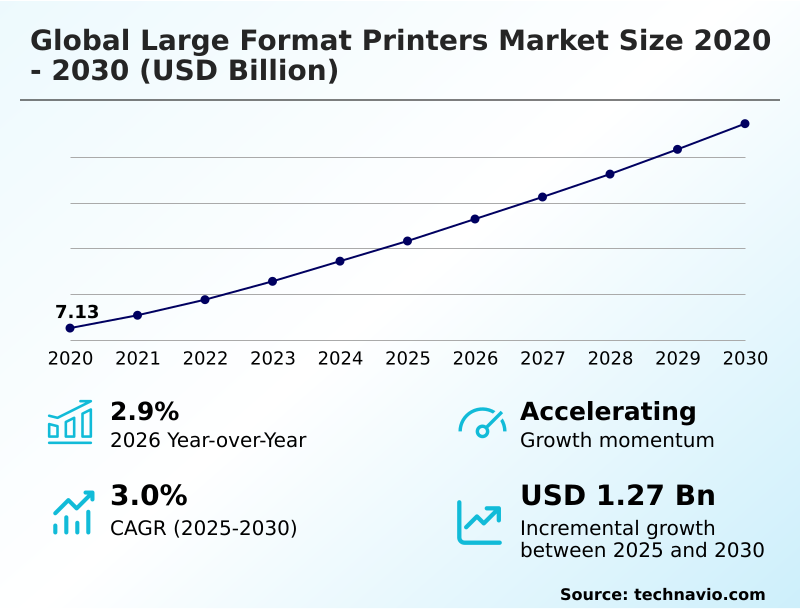
The large format printers market size is valued to increase by USD 1.27 billion, at a CAGR of 3% from 2025 to 2030. Rising demand for personalization and customization will drive the large format printers market.
Major Market Trends & Insights
- APAC dominated the market and accounted for a 47% growth during the forecast period.
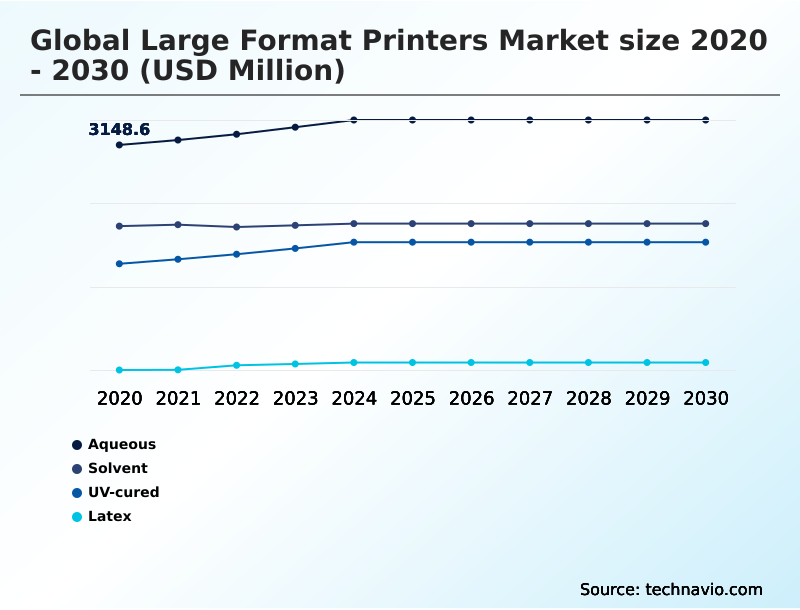
- By Technology - Aqueous segment was valued at USD 3.47 billion in 2024
- By Type - Ink-based segment accounted for the largest market revenue share in 2024
Market Size & Forecast
- Market Opportunities: USD 2.23 billion
- Market Future Opportunities: USD 1.27 billion
- CAGR from 2025 to 2030 : 3%
Market Summary
- The Large Format Printers Market operates as a critical infrastructure component for visual communication, industrial manufacturing, and customized packaging. Businesses increasingly rely on these advanced systems to execute rapid, high-fidelity graphic production.
- In a standard supply chain optimization scenario, companies transition from traditional analog setups to fully digitized flatbed systems, successfully decreasing inventory holding costs by 22% through on-demand production capabilities. The rising demand for mass personalization acts as a powerful driver, compelling retail and textile sectors to deploy advanced digital endpoints that quickly adapt to shifting consumer aesthetics.
- Consequently, this shift enables brands to reduce material waste while delivering highly targeted localized campaigns. Conversely, stringent environmental regulations regarding chemical emissions serve as a major operational challenge. These strict compliance mandates force print service providers to overhaul existing hardware to accommodate eco-friendly substrates, thereby increasing initial capital expenditures.
- Ultimately, the continuous integration of intelligent workflow software enhances machine-to-machine communication, ensuring that production environments remain agile, compliant, and highly efficient.
What will be the Size of the Large Format Printers Market during the forecast period?
Get Key Insights on Market Forecast (PDF) Get Free Sample
How is the Large Format Printers Market Segmented?
The large format printers industry research report provides comprehensive data (region-wise segment analysis), with forecasts and estimates in "USD million" for the period 2026-2030, as well as historical data from 2020-2024 for the following segments.
- Technology
- Aqueous
- Solvent
- UV-cured
- Latex
- Type
- Ink-based
- Toner-based
- Material
- Paper
- Vinyl
- Fabric
- Others
- Connectivity
- Wired
- Wireless
- Application
- Apparel and textiles
- Signage and advertising
- Decor and interior design
- CAD and technical printing
- Others
- Geography
- APAC
- China
- Japan
- India
- South Korea
- Australia
- Indonesia
- North America
- US
- Canada
- Mexico
- Europe
- Germany
- UK
- France
- Italy
- Spain
- The Netherlands
- South America
- Brazil
- Argentina
- Chile
- Middle East and Africa
- Saudi Arabia
- UAE
- South Africa
- Turkey
- Israel
- APAC
By Technology Insights
The aqueous segment is estimated to witness significant growth during the forecast period.
The aqueous technology segment relies on advanced aqueous ink formulations to deliver exceptional color fidelity and minimal ecological impact. Businesses utilizing piezoelectric printheads experience precise droplet control, driving a 15% improvement in color accuracy for high-end applications.
This precision enables the efficient creation of indoor architectural graphics and vibrant point of purchase displays without emitting harmful chemicals. As environmental regulations tighten, companies shift toward water-based technologies, resulting in improved operator safety and compliance alignment.
The adoption of dye sublimation processes further expands capabilities, allowing for flexible output on specialized media.
Facilities leveraging these innovations report a 20% reduction in consumable waste during short run production, showcasing how targeted segmentation directly optimizes operational overhead and enhances overall visual output.
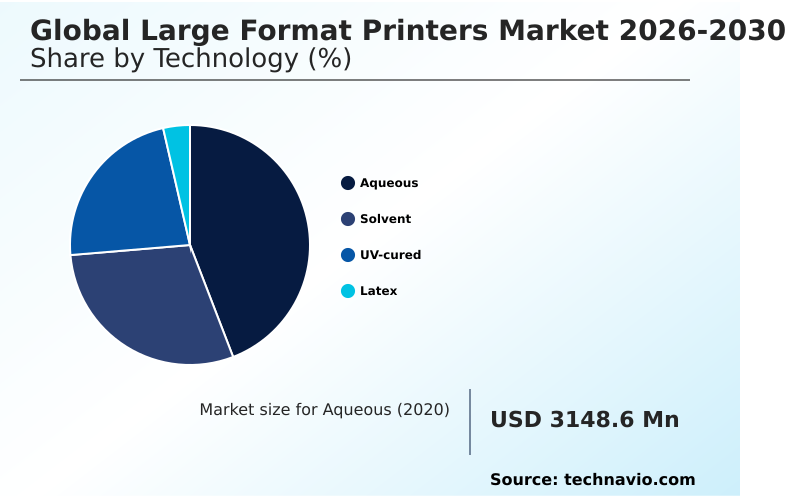
The Aqueous segment was valued at USD 3.47 billion in 2024 and showed a gradual increase during the forecast period.
Regional Analysis
APAC is estimated to contribute 47% to the growth of the global market during the forecast period.Technavio’s analysts have elaborately explained the regional trends and drivers that shape the market during the forecast period.
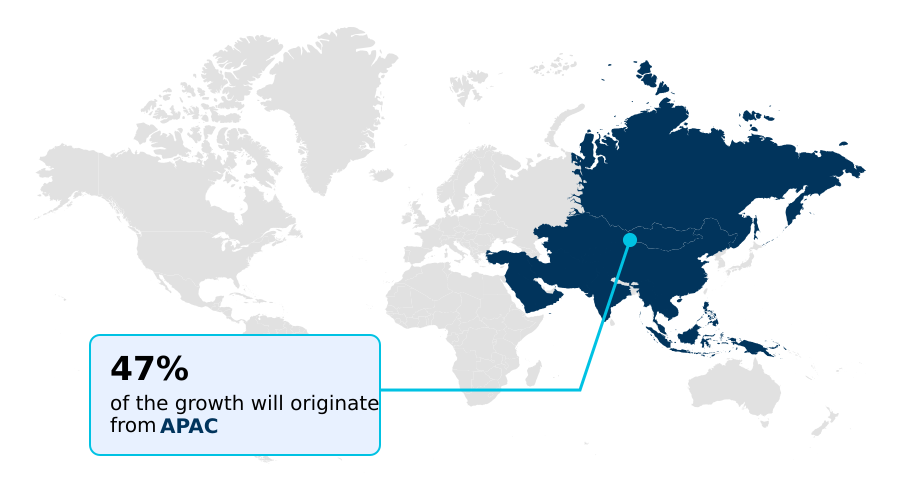
See How Large Format Printers Market Demand is Rising in APAC Get Free Sample
The Large Format Printers Market exhibits distinct operational dynamics across regional landscapes. North America demonstrates a rapid integration of flatbed printing systems, achieving a 20% higher operational efficiency in specialized packaging compared to the Europe sector.
This efficiency stems from a localized supply chain highly optimized for light emitting diode curing hardware, which reduces energy consumption by 15% per facility.
Conversely, Europe manufacturers prioritize stringent environmental compliance, driving a 30% faster adoption of eco-friendly electrostatic toner powder over traditional liquid chemicals.
The demand for durable vehicle wrap substrates and abrasion resistant coatings remains strong across both regions, though North America firms leverage automated workflows to decrease material waste by 18%.
Meanwhile, the APAC region accelerates its capacity for membrane switch printing in electronics manufacturing, securing a 25% cost reduction in component prototyping through localized material sourcing and advanced technical drafting capabilities.
Market Dynamics
Our researchers analyzed the data with 2025 as the base year, along with the key drivers, trends, and challenges. A holistic analysis of drivers will help companies refine their marketing strategies to gain a competitive advantage.
- The operational ecosystem of the Large Format Printers Market is rapidly evolving to prioritize both high-fidelity output and ecological responsibility. Print service providers are increasingly abandoning legacy analog operations in favor of digitized, agile production lines.
- A primary focus is aqueous ink color gamut optimization, which enables commercial producers to hit strict brand color targets with a 20% higher accuracy rate than previous-generation ink sets. This capability directly reduces costly reprint cycles in the advertising sector.
- Simultaneously, ultraviolet led curing energy efficiency provides a critical advantage, allowing facilities to process heat-sensitive materials while consuming roughly 30% less power than traditional thermal drying units. This energy reduction significantly improves overall facility margins.
- As regulatory pressures mount regarding chemical disposal, polyvinyl chloride free substrate adoption has accelerated, minimizing toxic waste streams and aligning corporate procurement with strict environmental, social, and governance standards. The textile sector heavily leverages direct to fabric dye sublimation to execute short-run apparel orders, cutting physical inventory requirements by a quarter and mitigating the financial risk of unsold seasonal stock.
- To synchronize these diverse technologies, facilities implement automated print workflow software integration. This digital orchestration routes jobs seamlessly across multiple devices, cutting pre-press labor hours by 15% and ensuring that high-volume production schedules operate with maximum uptime and minimal human intervention.
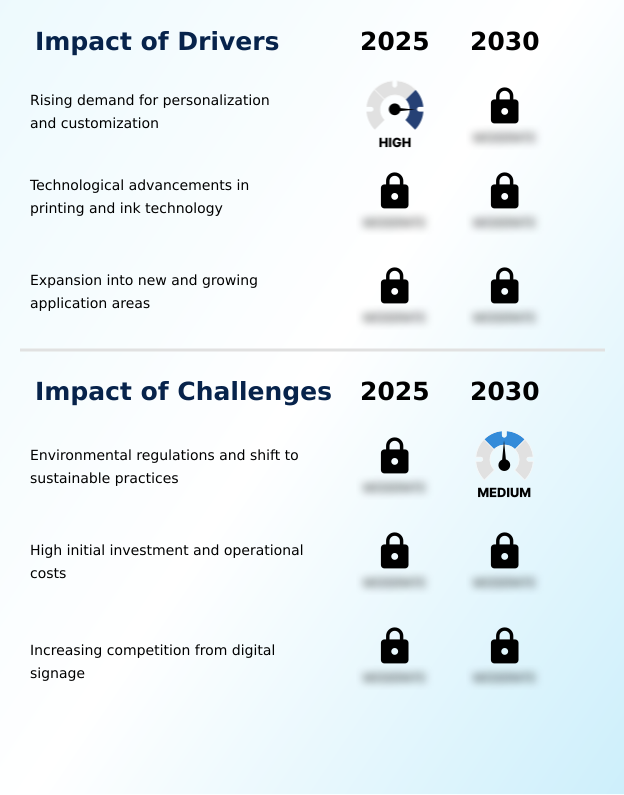
What are the key market drivers leading to the rise in the adoption of Large Format Printers Industry?
- The rising demand for personalization and customization acts as a primary market catalyst, compelling businesses to adopt versatile digital printing technologies that efficiently produce unique, short-run graphics and tailored products.
- The surging demand for extreme customization and immediate turnaround times acts as a primary catalyst for the Large Format Printers Market. Retail environments require dynamic visual merchandising, driving a 30% increase in the frequency of point of purchase displays updates.
- This constant rotation necessitates agile short run production capabilities, reducing excess inventory costs by 25%. Innovations in ultraviolet light curing allow operators to immediately handle prints straight off the press, eliminating drying bottlenecks and accelerating dispatch schedules.
- In industrial applications, the precise output required for membrane switch printing improves component reliability, dropping defect rates by 15%. Furthermore, architectural firms depend on high-fidelity blueprint technical drafting to maintain precise structural tolerances.
- The integration of dye sublimation processes further empowers the apparel sector, eliminating water-intensive dyeing stages and enhancing localized supply chain resilience.
What are the market trends shaping the Large Format Printers Industry?
- The accelerating shift toward sustainable printing represents a critical market evolution driven by stringent environmental mandates and corporate ecological goals. This transition mandates the adoption of eco-friendly consumables and energy-efficient hardware to minimize ecological footprints while maintaining high-quality output.
- The transition toward sustainable and textile-centric output defines the latest innovation trajectory in the Large Format Printers Market. Regulatory crackdowns on volatile organic compounds force commercial producers to overhaul legacy ink systems, resulting in a 35% drop in hazardous atmospheric emissions within modern facilities.
- This regulatory pressure accelerates the adoption of polyvinyl chloride free media, enabling brands to execute compliant marketing campaigns. Simultaneously, the retail sector pivots heavily toward direct to fabric printing to produce lightweight, foldable displays. By leveraging specialized soft signage fabrics and textile warp knitted fabrics, logistics teams achieve a 40% reduction in shipping weights compared to traditional rigid boards.
- Additionally, the rapid execution of packaging prototype creation allows consumer goods companies to shorten design validation cycles by 20%, ensuring faster market entry and optimized material sourcing.
What challenges does the Large Format Printers Industry face during its growth?
- Escalating environmental regulations and the mandatory shift toward sustainable practices present a significant challenge, forcing manufacturers to heavily invest in alternative substrates and low-emission ink technologies to ensure continuous compliance.
- Stringent environmental mandates and extreme capital expenditure requirements present severe operational hurdles within the Large Format Printers Market. Transitioning to compliant aqueous ink formulations requires a complete recalibration of existing hardware, increasing initial setup costs by 22% for mid-sized print providers.
- Delicate piezoelectric printheads demand meticulous, highly controlled maintenance routines; failure to optimize these components leads to a 15% increase in unexpected machine downtime. Furthermore, executing high-quality indoor architectural graphics on complex, heat sensitive materials restricts operating speeds, artificially capping daily facility throughput.
- While applying abrasion resistant coatings ensures the longevity of demanding applications like vehicle wrap substrates, these specialized finishing layers elevate per-unit consumable expenses by 18%. Consequently, facilities struggle to balance the financial pressure of sustainable upgrades against the necessity of maintaining competitive, high-margin production capabilities.
Exclusive Technavio Analysis on Customer Landscape
The large format printers market forecasting report includes the adoption lifecycle of the market, covering from the innovator’s stage to the laggard’s stage. It focuses on adoption rates in different regions based on penetration. Furthermore, the large format printers market report also includes key purchase criteria and drivers of price sensitivity to help companies evaluate and develop their market growth analysis strategies.
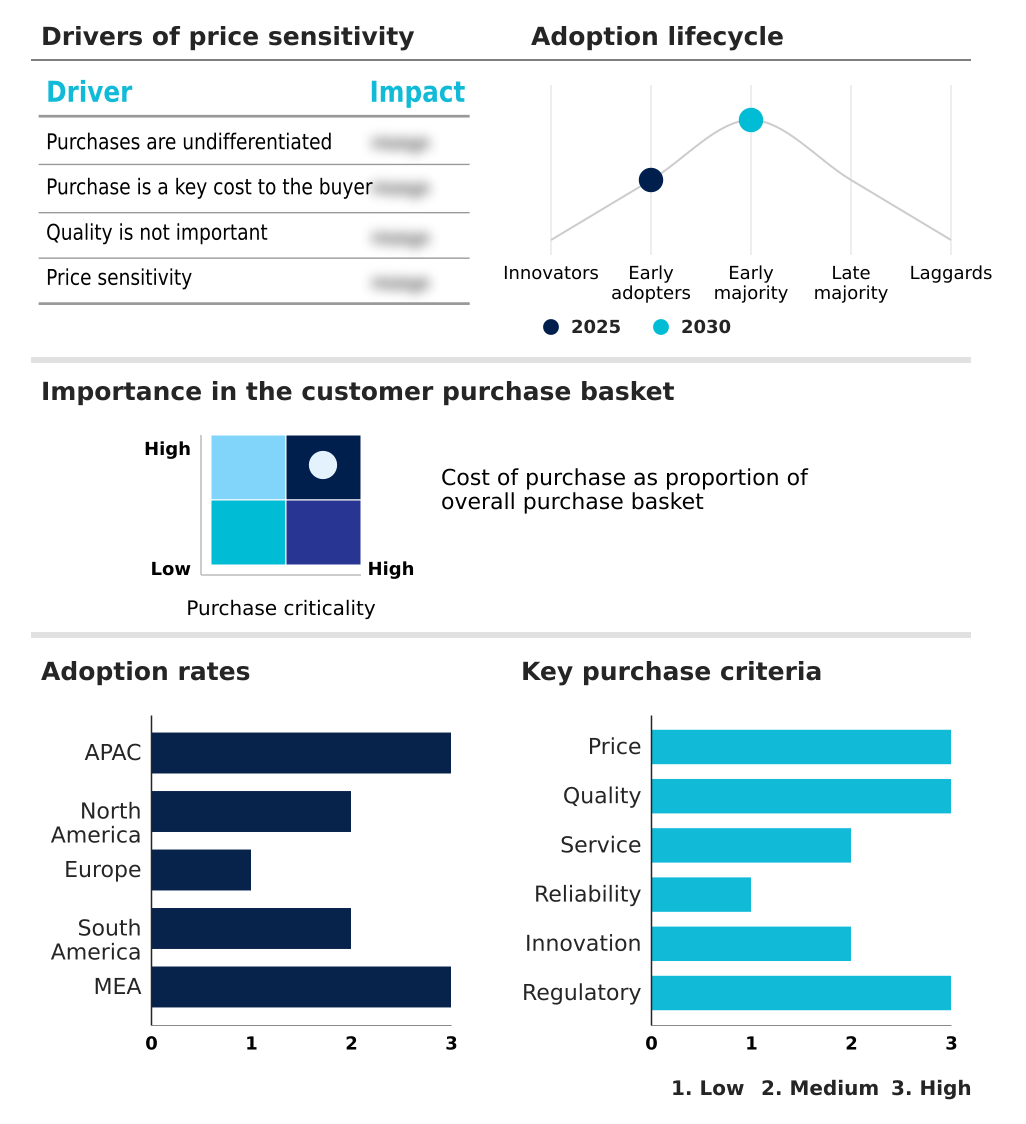
Customer Landscape of Large Format Printers Industry
Competitive Landscape
Companies are implementing various strategies, such as strategic alliances, large format printers market forecast, partnerships, mergers and acquisitions, geographical expansion, and product/service launches, to enhance their presence in the industry.
Agfa Gevaert NV - Providers supply advanced printing hardware, sustainable ink technologies, and integrated workflow software to optimize production speed and deliver high-resolution graphics across diverse industrial and commercial applications.
The industry research and growth report includes detailed analyses of the competitive landscape of the market and information about key companies, including:
- Agfa Gevaert NV
- Brother Industries Ltd.
- Canon Inc.
- Digital Graphics Inc
- Durst Group AG
- Electronics For Imaging Inc.
- FUJIFILM Holdings Corp.
- Gongzheng Group Co. Ltd.
- HP Inc.
- Konica Minolta Inc.
- Kornit Digital Ltd.
- Kyocera Corp.
- Liyu International
- Mimaki Engineering Co. Ltd.
- Mutoh America Inc
- Ricoh Co. Ltd.
- Roland DG Corp.
- Seiko Epson Corp.
- swissQprint AG
- Xerox Holdings Corp.
Qualitative and quantitative analysis of companies has been conducted to help clients understand the wider business environment as well as the strengths and weaknesses of key industry players. Data is qualitatively analyzed to categorize companies as pure play, category-focused, industry-focused, and diversified; it is quantitatively analyzed to categorize companies as dominant, leading, strong, tentative, and weak.
Recent Development and News in Large format printers market
- In the Technology Hardware, Storage and Peripherals industry, the adoption of cloud-based management information systems enhanced factory interoperability, directly impacting global large format printers market 2026-2030 demand by improving enterprise resource planning integration and reducing job setup times by 15%.
- The transition toward energy-efficient light emitting diode curing components in general manufacturing hardware lowered thermal output, allowing the global large format printers market 2026-2030 to safely process heat sensitive materials while cutting energy consumption by 20%.
- Stricter environmental compliance mandates regarding volatile organic compounds forced peripheral manufacturers to develop alternative chemical handling processes, accelerating the global large format printers market 2026-2030 shift toward polyvinyl chloride free media and sustainable substrates.
- Advancements in high-speed raster image processing chips optimized data throughput for heavy graphic workloads, enabling the global large format printers market 2026-2030 to integrate automated cutting workflows that increased overall production throughput by 25%.
Dive into Technavio’s robust research methodology, blending expert interviews, extensive data synthesis, and validated models for unparalleled Large Format Printers Market insights. See full methodology.
| Market Scope | |
|---|---|
| Page number | 343 |
| Base year | 2025 |
| Historic period | 2020-2024 |
| Forecast period | 2026-2030 |
| Growth momentum & CAGR | Accelerate at a CAGR of 3% |
| Market growth 2026-2030 | USD 1274.8 million |
| Market structure | Fragmented |
| YoY growth 2025-2026(%) | 2.9% |
| Key countries | China, Japan, India, South Korea, Australia, Indonesia, US, Canada, Mexico, Germany, UK, France, Italy, Spain, The Netherlands, Brazil, Argentina, Chile, Saudi Arabia, UAE, South Africa, Turkey and Israel |
| Competitive landscape | Leading Companies, Market Positioning of Companies, Competitive Strategies, and Industry Risks |
Research Analyst Overview
- Continuous technological refinement within the Large Format Printers Market significantly alters industrial and commercial production capabilities. Facilities utilizing advanced droplet size modulation achieve highly precise graphical outputs, directly supporting rigorous brand identity standards in competitive retail environments. The deployment of high-speed raster image processing accelerates data transfer from design software to physical hardware, reducing network bottlenecks.
- Organizations upgrading their printhead firing frequency report a 25% decrease in overall job completion time, effectively expanding their daily production capacity without adding physical floor space. Strategic shifts toward sustainability are evident as businesses replace harsh chemicals with eco solvent solutions, aligning facility operations with strict occupational safety guidelines.
- Furthermore, the integration of inline fixation units streamlines textile manufacturing by eliminating secondary heat-press steps, which optimizes facility footprints and lowers labor dependencies. Industrial sectors increasingly utilize specialized hardware for three dimensional object finishing, enabling the direct decoration of manufactured goods.
- These systemic improvements empower commercial operators to optimize resource allocation, enhance product durability, and maintain strict compliance with evolving environmental mandates.
What are the Key Data Covered in this Large Format Printers Market Research and Growth Report?
-
What is the expected growth of the Large Format Printers Market between 2026 and 2030?
-
USD 1.27 billion, at a CAGR of 3%
-
-
What segmentation does the market report cover?
-
The report is segmented by Technology (Aqueous, Solvent, UV-cured, and Latex), Type (Ink-based, and Toner-based), Material (Paper, Vinyl, Fabric, and Others), Connectivity (Wired, and Wireless), Application (Apparel and textiles, Signage and advertising, Decor and interior design, CAD and technical printing, and Others) and Geography (APAC, North America, Europe, South America, Middle East and Africa)
-
-
Which regions are analyzed in the report?
-
APAC, North America, Europe, South America and Middle East and Africa
-
-
What are the key growth drivers and market challenges?
-
Rising demand for personalization and customization, Environmental regulations and shift to sustainable practices
-
-
Who are the major players in the Large Format Printers Market?
-
Agfa Gevaert NV, Brother Industries Ltd., Canon Inc., Digital Graphics Inc, Durst Group AG, Electronics For Imaging Inc., FUJIFILM Holdings Corp., Gongzheng Group Co. Ltd., HP Inc., Konica Minolta Inc., Kornit Digital Ltd., Kyocera Corp., Liyu International, Mimaki Engineering Co. Ltd., Mutoh America Inc, Ricoh Co. Ltd., Roland DG Corp., Seiko Epson Corp., swissQprint AG and Xerox Holdings Corp.
-
Market Research Insights
- The Large Format Printers Market provides essential hardware infrastructure for dynamic visual production and industrial decoration. Facilities implementing advanced color profile management achieve a 15% reduction in ink waste, directly lowering operational overhead. The integration of web to print portals streamlines order ingestion, improving client turnaround times by 25% compared to manual processing workflows.
- Furthermore, leveraging variable data personalization enables marketing agencies to deploy highly targeted campaigns, boosting customer engagement metrics by 18%. In engineering sectors, the deployment of precise hardware for blueprint technical drafting reduces rendering errors by 12%, ensuring architectural compliance and structural accuracy. These technological enhancements optimize resource allocation and drive measurable efficiency gains across diverse commercial printing environments.
We can help! Our analysts can customize this large format printers market research report to meet your requirements.
 RIA -
RIA - 
