


LED Lighting Market Size 2026-2030
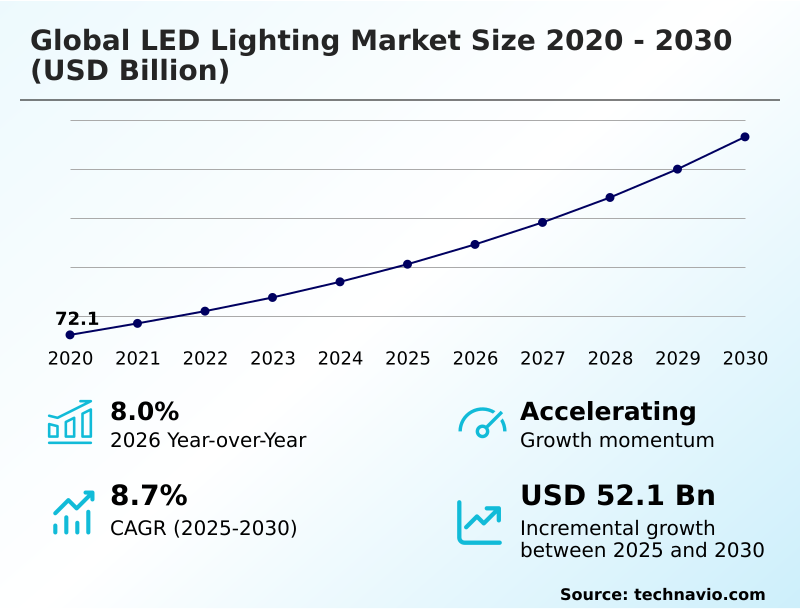
The led lighting market size is valued to increase by USD 52.1 billion, at a CAGR of 8.7% from 2025 to 2030. Declining manufacturing cost of LED lights will drive the led lighting market.
Major Market Trends & Insights
- APAC dominated the market and accounted for a 42.6% growth during the forecast period.
- By Application - Residential segment was valued at USD 38.1 billion in 2024
- By Product - Luminaries segment accounted for the largest market revenue share in 2024
Market Size & Forecast
- Market Opportunities: USD 81 billion
- Market Future Opportunities: USD 52.1 billion
- CAGR from 2025 to 2030 : 8.7%
Market Summary
- The LED lighting market is undergoing a structural transformation, shifting from basic illumination toward intelligent, networked systems that form the foundation of smart infrastructure. This evolution is propelled by advancements in semiconductor technology and a global push for energy sustainability. Key industry drivers include the continuous reduction in manufacturing costs and government mandates phasing out less efficient lighting technologies.
- The integration of IoT and AI enables sophisticated applications, such as adaptive lighting that adjusts based on real-time environmental data, which is a key trend. For instance, a commercial facility can leverage a connected lighting system to optimize energy consumption, reducing operational expenses by over 30% through predictive maintenance alerts and dynamic adjustments based on occupancy patterns.
- However, the market faces challenges related to thermal management in harsh industrial environments and the need for interoperability standards across different control platforms. Success in this landscape requires a focus on technological innovation, supply chain resilience, and the development of value-added, data-driven services.
What will be the Size of the LED Lighting Market during the forecast period?
Get Key Insights on Market Forecast (PDF) Get Free Sample
How is the LED Lighting Market Segmented?
The led lighting industry research report provides comprehensive data (region-wise segment analysis), with forecasts and estimates in "USD billion" for the period 2026-2030, as well as historical data from 2020-2024 for the following segments.
- Application
- Residential
- Commercial
- Outdoor
- Industrial
- Others
- Product
- Luminaries
- Lamps
- Distribution channel
- Offline
- Online
- Geography
- APAC
- China
- Japan
- India
- Europe
- Germany
- UK
- France
- North America
- US
- Canada
- Mexico
- Middle East and Africa
- Saudi Arabia
- UAE
- South Africa
- South America
- Brazil
- Argentina
- Rest of World (ROW)
- APAC
By Application Insights
The residential segment is estimated to witness significant growth during the forecast period.
The residential sector is rapidly adopting advanced solid-state lighting, with year-over-year growth accelerating at 8.0%. Homeowners are prioritizing solutions that offer superior color rendering index and support well-being through human-centric lighting and circadian rhythm alignment.
The integration of smart home ecosystems drives demand for tunable white systems and features like motion sensing and app-based control.
Ensuring driver compatibility is essential for both new builds and the extensive market for retrofit installations, where consumers are replacing legacy bulbs with high-brightness components that deliver both aesthetic versatility and significant energy savings.
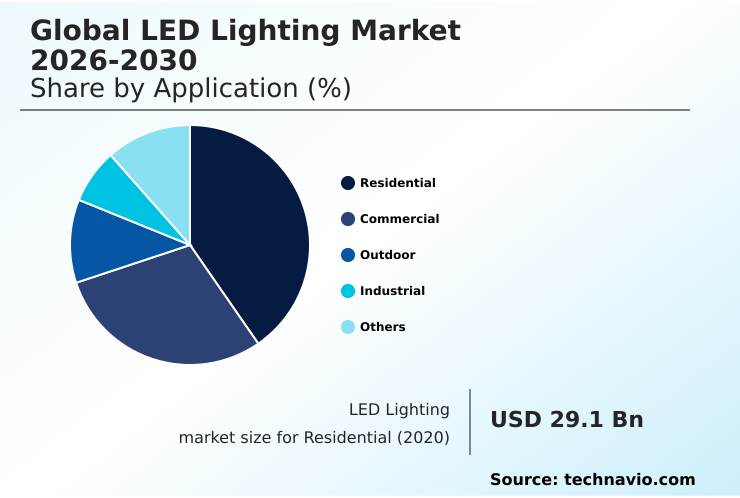
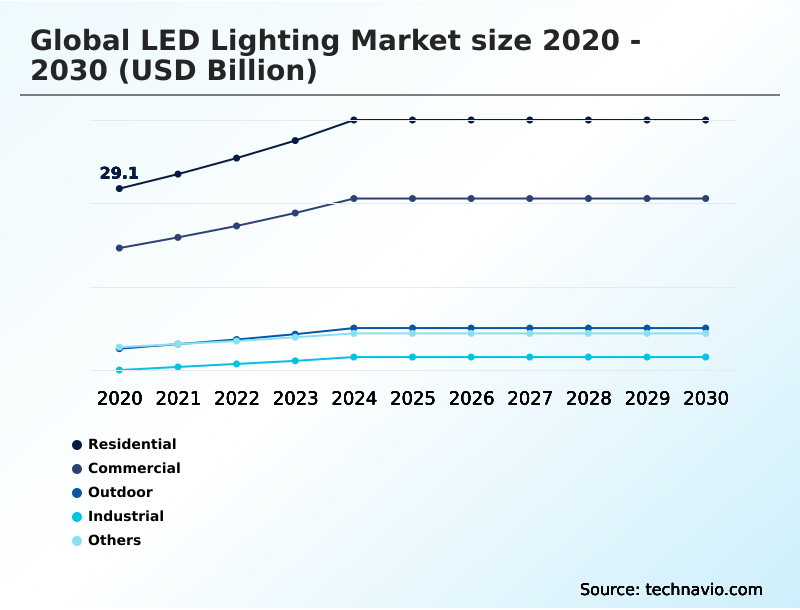
The Residential segment was valued at USD 38.1 billion in 2024 and showed a gradual increase during the forecast period.
Regional Analysis
APAC is estimated to contribute 42.6% to the growth of the global market during the forecast period.Technavio’s analysts have elaborately explained the regional trends and drivers that shape the market during the forecast period.
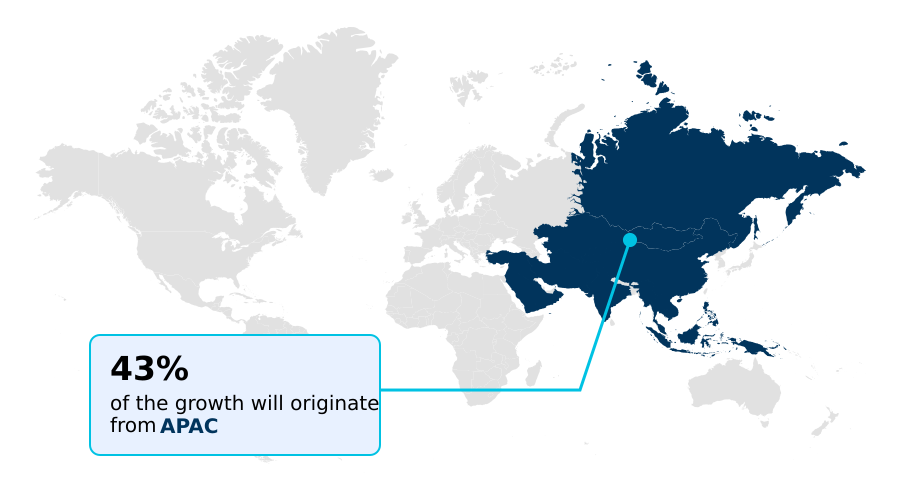
See How LED Lighting Market Demand is Rising in APAC Get Free Sample
The APAC region is the primary engine for market expansion, contributing 42.6% of the incremental growth. This dominance is anchored by massive infrastructure modernization and smart city initiatives that integrate advanced lighting.
These projects demand sophisticated optical components and effective heat sink design in luminaires for architectural illumination. The integration with building management systems is becoming standard, requiring advanced infrared components and optoelectronic components.
The development of adaptive urban illumination systems, including smart solar street light networks and solutions for smart parking integration, is a key focus.
Furthermore, a push toward specialty applications is driving innovation in areas such as ultraviolet led technology for sterilization, reflecting the region's role as a hub for both high-volume manufacturing and technological advancement.
Market Dynamics
Our researchers analyzed the data with 2025 as the base year, along with the key drivers, trends, and challenges. A holistic analysis of drivers will help companies refine their marketing strategies to gain a competitive advantage.
- Strategic decision-making in the LED lighting sector now hinges on a nuanced understanding of technical specifications. The high-efficiency LED driver design is central to reducing operational costs, while precise LED thermal resistance measurement is crucial for product longevity. For specialized applications, the impact of led lighting on circadian rhythm informs human-centric lighting system implementation.
- In urban development, smart lighting controls for commercial buildings and IoT integration in smart city lighting are becoming standard. Manufacturers must adhere to photobiological safety standards for LEDs and employ rigorous LED component reliability testing methods. A primary goal is optimizing luminous efficacy in led fixtures, supported by advanced thermal management solutions for industrial leds.
- The industry is also exploring LED spectrum tuning for horticulture applications and pursuing cost per lumen reduction strategies. To ensure quality, firms use LED failure analysis and prevention techniques and address connected lighting security vulnerabilities. Key technical considerations include wireless control protocols for led systems and LED driver and power supply compatibility.
- Moreover, color rendering index improvement techniques, modular design for led luminaire maintenance, and semiconductor material for led production are areas of intense R&D. Innovations in LED packaging and assembly automation help reduce color shift in led products. For harsh environments, ingress protection ratings for outdoor lighting and specific LED fixture design for hazardous locations are vital.
- The use of adaptive lighting for energy efficiency delivers tangible benefits, outperforming older systems in energy savings by a factor of two.
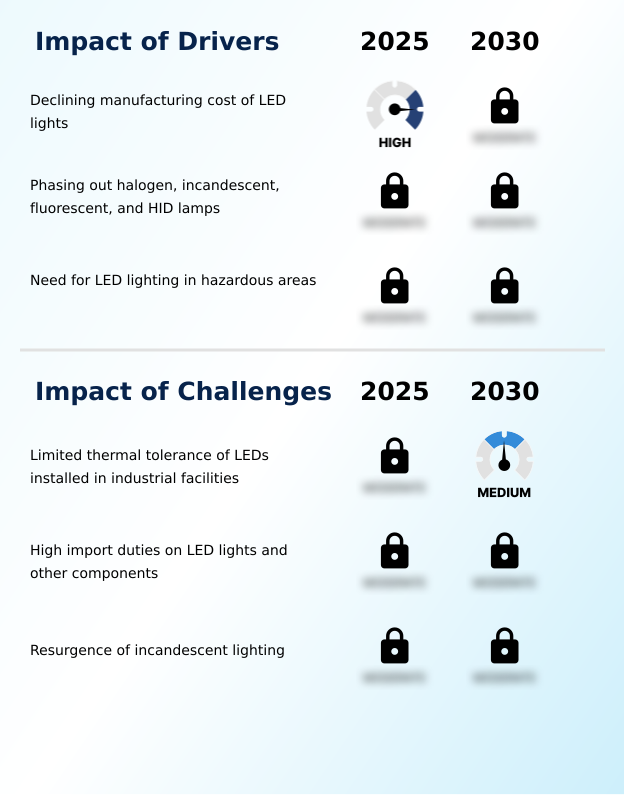
What are the key market drivers leading to the rise in the adoption of LED Lighting Industry?
- The declining manufacturing cost of LED lights serves as a key driver for the market's expansion and widespread adoption.
- Market expansion is significantly driven by technological advancements that enhance performance and open new application areas. Improvements in semiconductor fabrication and epitaxial growth have steadily increased luminous efficacy, allowing some high-performance fixtures to achieve over 200 lumens per watt.
- This efficiency is critical for specialized sectors like horticulture lighting, where precise spectral control can increase crop yields by up to 25%.
- Concurrently, a focus on sustainability is promoting circular economy principles, leading to modular luminaire design that minimizes waste and simplifies maintenance.
- Better management of lumen depreciation through advanced materials enables longer lifecycles, supported by energy use diagnostics that facilitate proactive environmental monitoring and resource management.
What are the market trends shaping the LED Lighting Industry?
- The emergence of smart cities is a significant upcoming trend. This development is shaping the long-term direction of the market by integrating LED lighting into intelligent urban infrastructure.
- Key trends are reshaping the market as it transitions toward an intelligent lighting ecosystem. The adoption of connected lighting systems with smart lighting controls is accelerating, with commercial building retrofits showing a 35% improvement in energy efficiency. These networked lighting platforms are fundamental to IoT-enabled smart lighting, enabling adaptive brightness control and supporting urban safety systems.
- Innovations in wireless communication protocols facilitate seamless data-driven management. This integration extends beyond illumination, with some smart streetlights now reducing incident response times by 15% through real-time alerts. As these systems become more prevalent, adherence to standards for photobiological safety is becoming a critical differentiator for manufacturers.
What challenges does the LED Lighting Industry face during its growth?
- A key challenge affecting industry growth is the limited thermal tolerance of LEDs when installed in demanding industrial facilities.
- The primary challenge resides in ensuring reliability in harsh operating conditions, where effective thermal management is critical. Failures in power electronics due to high junction temperature can lead to premature color shift and system failure, with unplanned downtime in industrial settings costing facilities over 10% in lost productivity. For high-bay lighting applications, fixtures must maintain performance despite elevated ambient temperatures.
- The need for robust ingress protection in outdoor and industrial luminaires is often at odds with thermal dissipation requirements. This necessitates advanced solutions like explosion-proof housings with integrated cooling. Consequently, capabilities in predictive maintenance, enabled by remote monitoring of thermal performance and light distribution, are becoming essential for mitigating these risks.
Exclusive Technavio Analysis on Customer Landscape
The led lighting market forecasting report includes the adoption lifecycle of the market, covering from the innovator’s stage to the laggard’s stage. It focuses on adoption rates in different regions based on penetration. Furthermore, the led lighting market report also includes key purchase criteria and drivers of price sensitivity to help companies evaluate and develop their market growth analysis strategies.
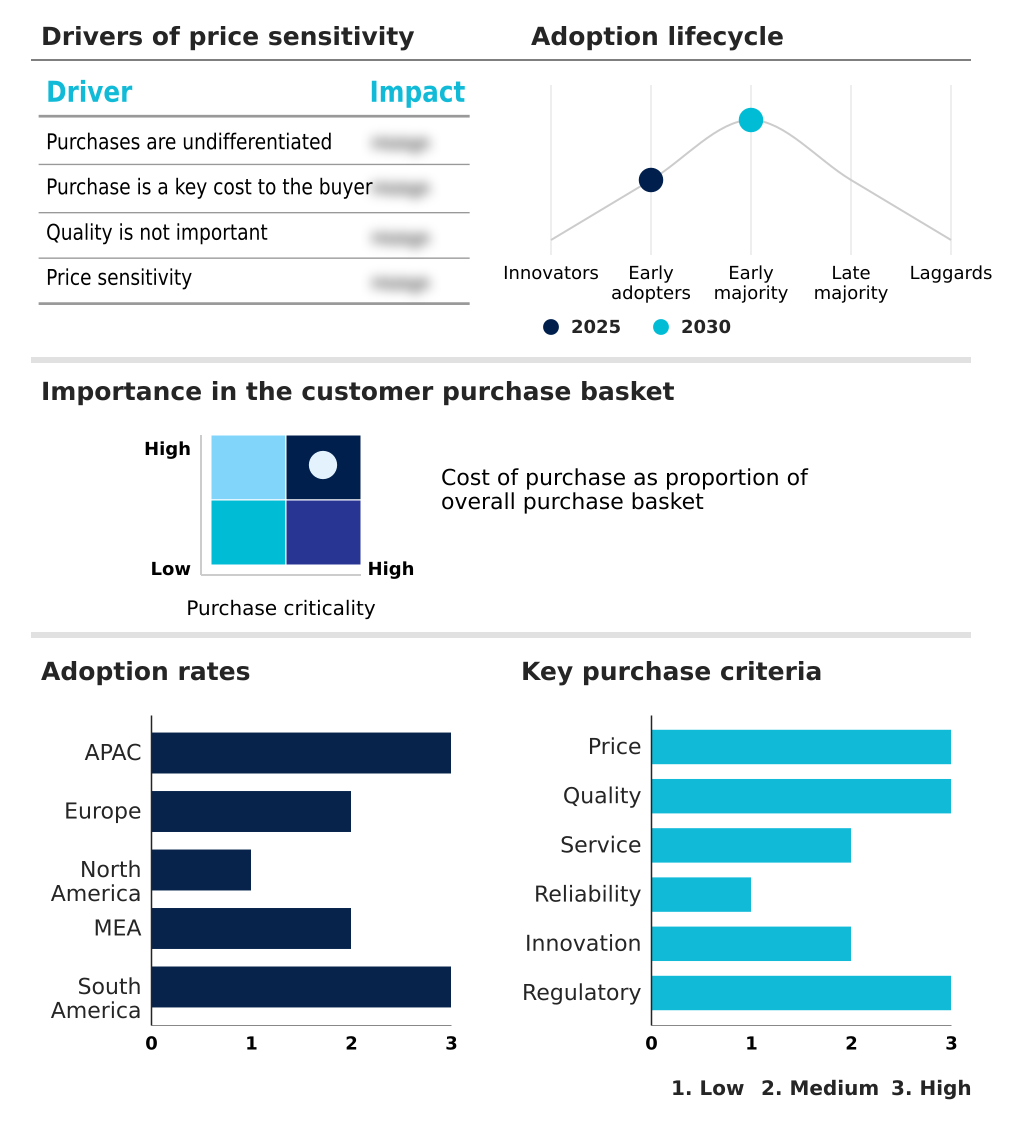
Customer Landscape of LED Lighting Industry
Competitive Landscape
Companies are implementing various strategies, such as strategic alliances, led lighting market forecast, partnerships, mergers and acquisitions, geographical expansion, and product/service launches, to enhance their presence in the industry.
Acuity Brands Inc. - Key offerings have evolved from simple illumination to integrated systems featuring intelligent controls, high-efficiency components, and specialized, application-specific luminaires for diverse sectors.
The industry research and growth report includes detailed analyses of the competitive landscape of the market and information about key companies, including:
- Acuity Brands Inc.
- ams OSRAM AG
- Cree Lighting
- Dialight PLC
- Eaton Corp. Plc
- Everlight Electronics Co. Ltd.
- GE Lighting
- Havells India Ltd.
- Hubbell Inc.
- LSI Industries Inc.
- Lumileds Holding BV
- Lutron Electronics Co. Inc.
- Nichia Corp.
- Panasonic Holdings Corp.
- Seoul Semiconductor Co. Ltd.
- Signify NV
- Siteco GmbH
- Toshiba Lighting and Tech.
- WAC Lighting
- Zumtobel Group AG
Qualitative and quantitative analysis of companies has been conducted to help clients understand the wider business environment as well as the strengths and weaknesses of key industry players. Data is qualitatively analyzed to categorize companies as pure play, category-focused, industry-focused, and diversified; it is quantitatively analyzed to categorize companies as dominant, leading, strong, tentative, and weak.
Recent Development and News in Led lighting market
- In August 2025, Luminus Devices introduced its MP-5050 Series of high-power LEDs, engineered specifically to enhance the durability and performance of outdoor and commercial luminaires.
- In May 2025, the Chinese government advanced its regulatory framework by issuing the new Minimum Energy Performance Standard GB 37478-2025 for road and tunnel luminaires, raising minimum efficiency requirements by approximately 25%.
- In March 2025, Signify and Dixon Technologies initiated a landmark collaboration, forming a large-scale joint venture to bolster high-efficiency lighting manufacturing within the Indian subcontinent.
- In January 2025, Ledvance strategically acquired Loblicht, signaling a significant industry pivot toward the high-end decorative luminaire sector where aesthetic value is becoming critical.
Dive into Technavio’s robust research methodology, blending expert interviews, extensive data synthesis, and validated models for unparalleled LED Lighting Market insights. See full methodology.
| Market Scope | |
|---|---|
| Page number | 289 |
| Base year | 2025 |
| Historic period | 2020-2024 |
| Forecast period | 2026-2030 |
| Growth momentum & CAGR | Accelerate at a CAGR of 8.7% |
| Market growth 2026-2030 | USD 52.1 billion |
| Market structure | Fragmented |
| YoY growth 2025-2026(%) | 8.0% |
| Key countries | China, Japan, India, South Korea, Australia, Indonesia, Germany, UK, France, Italy, Spain, The Netherlands, US, Canada, Mexico, Saudi Arabia, UAE, South Africa, Israel, Turkey, Brazil, Argentina and Chile |
| Competitive landscape | Leading Companies, Market Positioning of Companies, Competitive Strategies, and Industry Risks |
Research Analyst Overview
- The LED lighting market is defined by continuous innovation in solid-state lighting, where managing lumen depreciation and color shift is critical. Effective thermal management and controlling junction temperature are paramount for performance, with advancements in semiconductor fabrication and epitaxial growth driving down costs. Key components include advanced power electronics, optical components, and specialized infrared components and optoelectronic components.
- The focus has shifted to connected lighting systems featuring smart lighting controls for applications like human-centric lighting and horticulture lighting, demanding precise circadian rhythm alignment. Ensuring driver compatibility and high luminous efficacy are standard, while adherence to photobiological safety standards is non-negotiable. The industry is pushing ultraviolet LED technology for new applications.
- Design innovations in heat sink design and adaptive brightness control address reliability. This directly influences boardroom decisions, where a verified 15% reduction in facility energy costs through lighting upgrades justifies significant capital expenditure.
What are the Key Data Covered in this LED Lighting Market Research and Growth Report?
-
What is the expected growth of the LED Lighting Market between 2026 and 2030?
-
USD 52.1 billion, at a CAGR of 8.7%
-
-
What segmentation does the market report cover?
-
The report is segmented by Application (Residential, Commercial, Outdoor, Industrial, and Others), Product (Luminaries, and Lamps), Distribution Channel (Offline, and Online) and Geography (APAC, Europe, North America, Middle East and Africa, South America)
-
-
Which regions are analyzed in the report?
-
APAC, Europe, North America, Middle East and Africa and South America
-
-
What are the key growth drivers and market challenges?
-
Declining manufacturing cost of LED lights, Limited thermal tolerance of LEDs installed in industrial facilities
-
-
Who are the major players in the LED Lighting Market?
-
Acuity Brands Inc., ams OSRAM AG, Cree Lighting, Dialight PLC, Eaton Corp. Plc, Everlight Electronics Co. Ltd., GE Lighting, Havells India Ltd., Hubbell Inc., LSI Industries Inc., Lumileds Holding BV, Lutron Electronics Co. Inc., Nichia Corp., Panasonic Holdings Corp., Seoul Semiconductor Co. Ltd., Signify NV, Siteco GmbH, Toshiba Lighting and Tech., WAC Lighting and Zumtobel Group AG
-
Market Research Insights
- The market's dynamism is rooted in the shift toward networked lighting platforms and an intelligent lighting ecosystem, which supports architectural illumination and advanced urban safety systems. IoT-enabled smart lighting allows for environmental monitoring and smart parking integration, while data-driven management facilitates tunable white systems and adaptive urban illumination.
- Innovations like the smart solar street light are critical for retrofit installations, with adoption in some municipalities reducing energy use for street lighting by over 40%. Building management systems now demand high-brightness components with precise spectral control. The market for high-bay lighting and explosion-proof housings is growing, supported by predictive maintenance enabled by energy use diagnostics.
- This aligns with circular economy principles promoting modular luminaire design, as remote monitoring and enhanced light distribution become standard.
We can help! Our analysts can customize this led lighting market research report to meet your requirements.
 RIA -
RIA - 
