


Linear Low-Density Polyethylene (Lldpe) Market Size 2026-2030
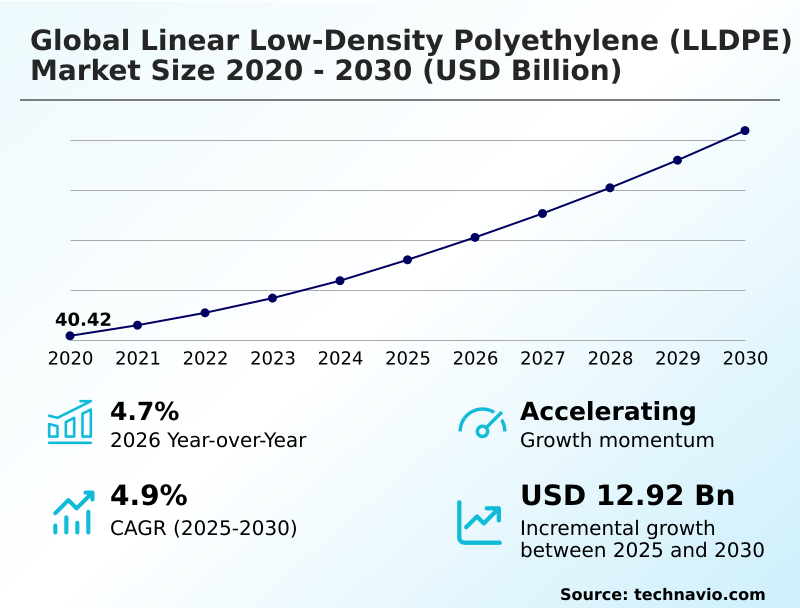
The linear low-density polyethylene (lldpe) market size is valued to increase by USD 12.92 billion, at a CAGR of 4.9% from 2025 to 2030. Surging global demand for flexible food packaging will drive the linear low-density polyethylene (lldpe) market.
Major Market Trends & Insights
- APAC dominated the market and accounted for a 57.7% growth during the forecast period.
- By Type - C4-LLDPE segment was valued at USD 15.91 billion in 2024
- By End-user - Packaging segment accounted for the largest market revenue share in 2024
Market Size & Forecast
- Market Opportunities: USD 20.52 billion
- Market Future Opportunities: USD 12.92 billion
- CAGR from 2025 to 2030 : 4.9%
Market Summary
- The Linear Low-density Polyethylene (LLDPE) Market exhibits robust structural expansion driven by the persistent requirement for high-performance polymer resins across flexible packaging and agricultural sectors. Businesses operating high-speed automated form-fill-seal machinery utilize these advanced copolymers to achieve a 15% reduction in packaging weight through aggressive downgauging without compromising structural integrity.
- Surging demand for flexible food packaging serves as a primary driver, as changing consumer dietary habits and retail supply chains require lightweight, moisture-resistant containment solutions that preserve perishable goods. Conversely, structural feedstock disparities present a significant challenge, as naphtha-reliant manufacturing basins face compressed operating margins compared to ethane-advantaged regions, disrupting supply chain predictability.
- Integrating machine direction orientation within multi-layer blown film extrusion lines allows converters to enhance barrier performance while supporting mono-material recyclability. The adoption of metallocene catalyst architecture fundamentally improves dart drop impact resistance and puncture toughness. Consequently, film fabricators achieve stable bubble formation and expanded processing windows, ensuring reliable fulfillment for downstream converters managing strict production timetables.
What will be the Size of the Linear Low-Density Polyethylene (Lldpe) Market during the forecast period?
Get Key Insights on Market Forecast (PDF) Get Free Sample
How is the Linear Low-Density Polyethylene (Lldpe) Market Segmented?
The linear low-density polyethylene (lldpe) industry research report provides comprehensive data (region-wise segment analysis), with forecasts and estimates in "USD million" for the period 2026-2030, as well as historical data from 2020-2024 for the following segments.
- Type
- C4-LLDPE
- C6-LLDPE
- mLLDPE
- C8-LLDPE
- End-user
- Packaging
- Agriculture
- Construction
- Automotive
- Others
- Distribution channel
- Direct sale
- Indirect sale
- Geography
- APAC
- China
- India
- Japan
- South Korea
- Indonesia
- Australia
- North America
- US
- Mexico
- Canada
- Europe
- Germany
- Italy
- France
- Spain
- UK
- The Netherlands
- Middle East and Africa
- Turkey
- Saudi Arabia
- UAE
- South Africa
- Israel
- South America
- Brazil
- Argentina
- Colombia
- APAC
By Type Insights
The c4-lldpe segment is estimated to witness significant growth during the forecast period.
The deployment of specific comonomer formulations fundamentally dictates the operational performance of flexible packaging applications. Resins engineered for high-capacity blown film extrusion utilizing standard alpha-olefin comonomer inputs deliver an optimal balance of affordability and processability.
By transitioning to a bimodal polyethylene grade featuring a multimodal molecular architecture, converters reduce processing energy consumption by 15% while maintaining critical mechanical strength.
This structural refinement significantly lowers the seal initiation temperature, allowing extrusion facilities to accelerate automated line speeds and increase overall throughput. Furthermore, these specific polymer architectures facilitate the creation of a durable mono-material flexible structure through a multi-layer co-extrusion die.
Precise tie layer encapsulation ensures reliable dielectric strength insulation and consistent flex-crack mitigation, empowering industrial fabricators to meet strict containment specifications without incurring the premium costs associated with higher-tier octene copolymers.
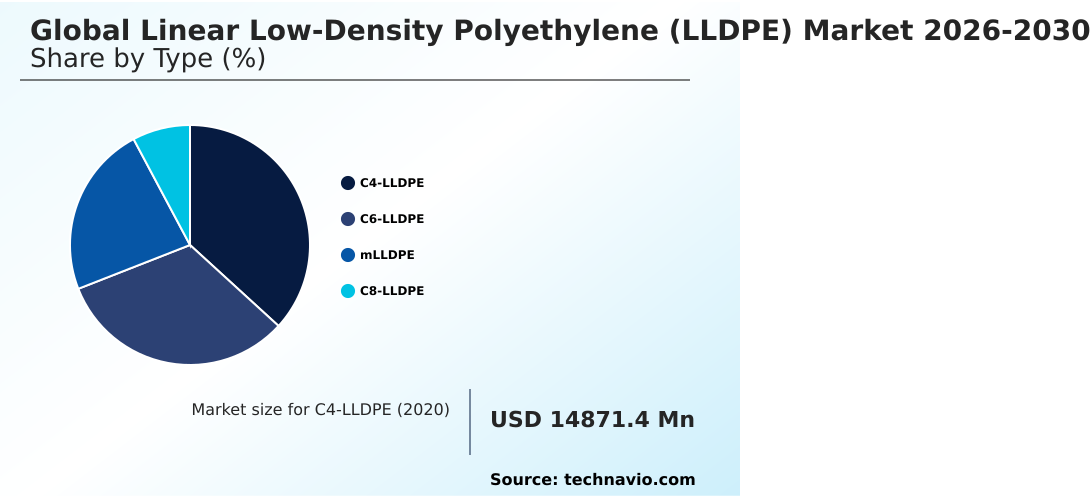
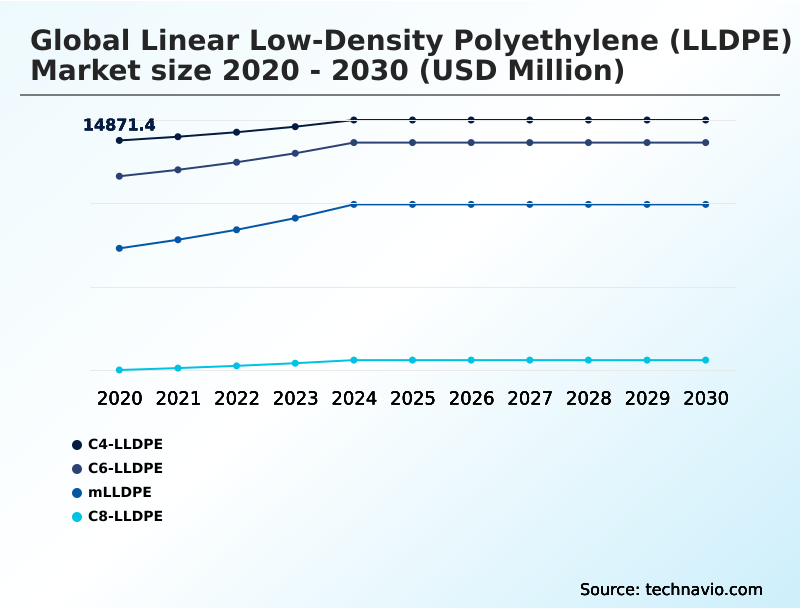
The C4-LLDPE segment was valued at USD 15.91 billion in 2024 and showed a gradual increase during the forecast period.
Regional Analysis
APAC is estimated to contribute 57.7% to the growth of the global market during the forecast period.Technavio’s analysts have elaborately explained the regional trends and drivers that shape the market during the forecast period.
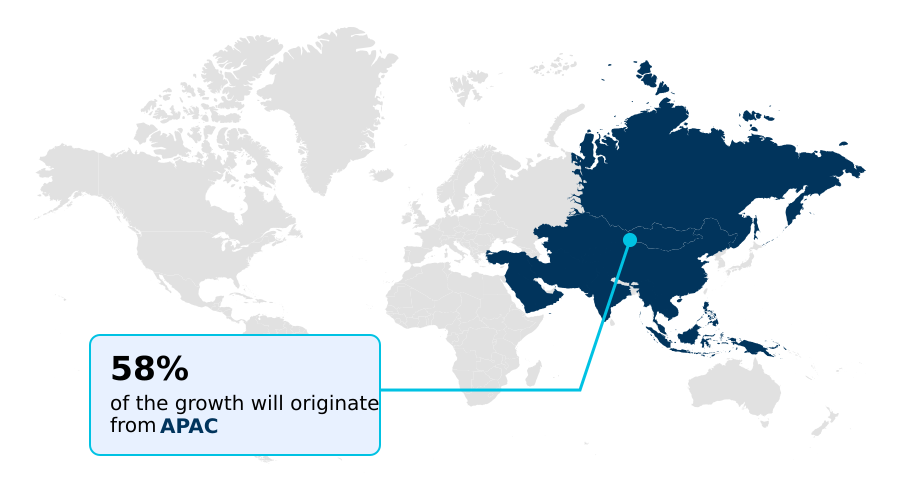
See How Linear Low-Density Polyethylene (Lldpe) Market Demand is Rising in APAC Get Free Sample
The regional dynamics of the Linear Low-density Polyethylene (LLDPE) sector highlight a stark operational divergence between ethane-advantaged basins and naphtha-reliant manufacturing hubs.
Facilities in North America operating integrated petrochemical complexes achieve a 25% reduction in baseline conversion costs compared to legacy steam crackers in Europe.
This cost advantage accelerates the deployment of advanced metallocene catalyst architecture and Ziegler-Natta catalysis systems, enabling the high-volume production of resins with highly uniform short-chain branching.
Consequently, North American converters enhance dart drop impact resistance and puncture toughness, lowering material failure rates by 18% in heavy-duty shipping sack applications.
In contrast, European manufacturers heavily utilize advanced process telemetry to optimize energy efficiency by 15% across collation shrink packaging and industrial pallet hood extrusion lines.
The adoption of automated form-fill-seal machinery further mitigates high regional labor costs, illustrating how distinct geographic feedstock economies drive divergent technological investments.
Market Dynamics
Our researchers analyzed the data with 2025 as the base year, along with the key drivers, trends, and challenges. A holistic analysis of drivers will help companies refine their marketing strategies to gain a competitive advantage.
- The transition toward sustainable and high-efficiency packaging continues to reshape the operational strategies of plastics converters globally. A primary focus involves the deployment of multi-layer blown film extrusion machinery, which enables extruders to engineer complex barrier profiles while optimizing raw material consumption.
- By utilizing a metallocene catalyzed high-performance film, manufacturers achieve a remarkable 20% improvement in load retention stability compared to legacy monolayer configurations. This structural enhancement is particularly critical for logistics and supply chain managers seeking to minimize cargo damage during extensive intermodal transit.
- Furthermore, as regulatory frameworks increasingly mandate circular economy practices, the mechanical recycling of secondary packaging has become a central compliance objective. To counteract the inherent loss of tensile strength associated with recycled content, fabricators are incorporating a specialized bimodal linear low-density resin into the core layers of their flexible structures.
- This strategic blending restores essential tear resistance and prevents premature material fatigue under stress. Simultaneously, the consumer goods sector demands pristine optical clarity and rapid processing capabilities, driving the formulation of resins specifically optimized for low-temperature hermetic sealing applications.
- By lowering the thermal threshold required to achieve a secure closure, packaging facilities can accelerate line speeds and reduce energy expenditure without compromising package integrity. These advanced polymer architectures ensure that businesses can simultaneously meet aggressive sustainability targets, optimize procurement costs, and maintain the rigorous performance standards demanded by modern automated distribution networks.
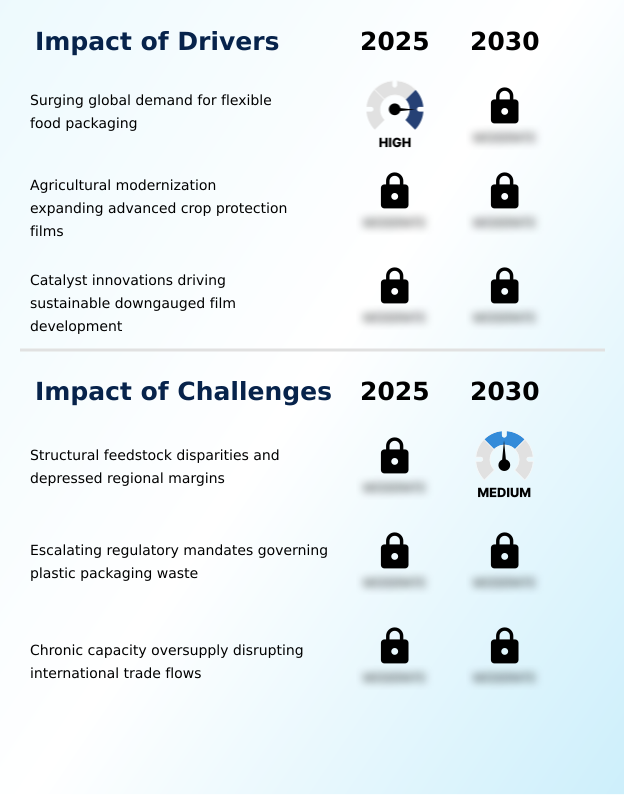
What are the key market drivers leading to the rise in the adoption of Linear Low-Density Polyethylene (Lldpe) Industry?
- Surging global demand for flexible food packaging serves as the primary driver propelling expansion within the market.
- The widespread adoption of modern plasticulture techniques serves as a powerful demand trigger for advanced Linear Low-density Polyethylene (LLDPE) formulations.
- By utilizing precisely synthesized alpha-olefin comonomer blends in gas-phase fluidized bed and solution polymerization reactors, producers achieve a 35% improvement in tear propagation resistance.
- This enhanced mechanical durability directly lowers crop spoilage rates by 18% for agribusinesses utilizing high-performance silage wrap and agricultural mulch sheet materials.
- The superior environmental stress crack resistance of these polymers ensures the long-term viability of greenhouse cover membrane installations, reducing replacement frequency and lowering maintenance costs by 22%.
- Furthermore, superior anaerobic fermentation preservation capabilities allow livestock operations to optimize feed quality over extended storage periods. The deployment of specialized cast stretch film secures bulk agricultural shipments, minimizing transit losses and driving continuous reliance on high-grade polyolefin solutions.
What are the market trends shaping the Linear Low-Density Polyethylene (Lldpe) Industry?
- Acceleration of circular polyethylene mechanical recycling streams represents a prominent upcoming market trend. This development underscores the industry shift toward sustainable material management and closed-loop manufacturing systems.
- The Linear Low-density Polyethylene (LLDPE) landscape is undergoing a structural shift driven by the acceleration of thermal pyrolysis recycling and the commercialization of mass-balance circular polymer feedstocks. This transition directly supports corporate sustainability mandates, enabling a 25% reduction in virgin material consumption across packaging portfolios.
- Manufacturers leveraging machine direction orientation technology have improved film tensile modulus, resulting in a 20% decrease in material deformation during high-speed processing. The integration of advanced hexene copolymer resin and octene copolymer resin formulations significantly enhances the durability of downgauging film formulation applications.
- Furthermore, the application of ultraviolet light stabilizer and thermal barrier additive compounds extends the operational lifespan of a geomembrane containment liner by 30% under intense solar radiation. These material innovations ensure superior flex-crack mitigation, allowing industrial converters to maximize operational yield while meeting aggressive environmental compliance targets.
What challenges does the Linear Low-Density Polyethylene (Lldpe) Industry face during its growth?
- Structural feedstock disparities and depressed regional margins represent a critical challenge impeding long-term industry growth.
- Escalating regulatory mandates governing plastic packaging waste present profound operational challenges for Linear Low-density Polyethylene (LLDPE) converters. Incorporating high proportions of secondary materials through post-consumer recyclate integration frequently induces severe rheological instability and melt fracture during thin-gauge extrusion. These processing defects cause a 40% variance in the melt flow index, drastically lowering production line efficiency.
- Consequently, converters experience a 15% increase in material scrap rates due to compromised heat seal integrity and diminished hermetic barrier performance. Managing precise chain-transfer agent dosing and optimizing the comonomer injection ratio become increasingly complex when balancing virgin and recycled feedstocks.
- This variability threatens the structural reliability of demanding applications, including the rotomolded fluid container and materials required for intermodal transit stabilization, forcing extruders to absorb elevated quality control overhead to maintain compliance.
Exclusive Technavio Analysis on Customer Landscape
The linear low-density polyethylene (lldpe) market forecasting report includes the adoption lifecycle of the market, covering from the innovator’s stage to the laggard’s stage. It focuses on adoption rates in different regions based on penetration. Furthermore, the linear low-density polyethylene (lldpe) market report also includes key purchase criteria and drivers of price sensitivity to help companies evaluate and develop their market growth analysis strategies.
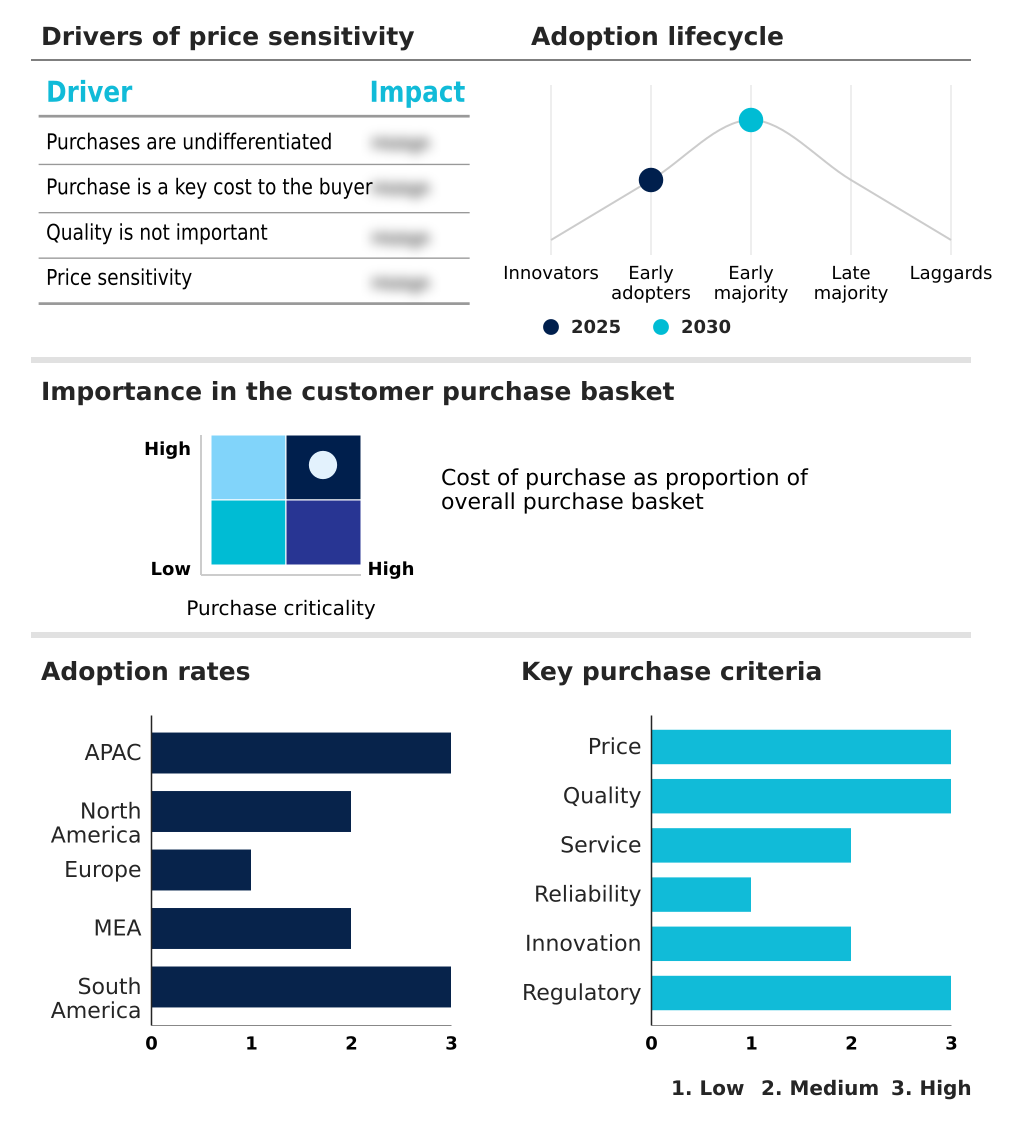
Customer Landscape of Linear Low-Density Polyethylene (Lldpe) Industry
Competitive Landscape
Companies are implementing various strategies, such as strategic alliances, linear low-density polyethylene (lldpe) market forecast, partnerships, mergers and acquisitions, geographical expansion, and product/service launches, to enhance their presence in the industry.
Borealis AG - Advanced polymer formulations including specialized resins are provided to enhance durability and performance across demanding agricultural, packaging, and infrastructure applications.
The industry research and growth report includes detailed analyses of the competitive landscape of the market and information about key companies, including:
- Borealis AG
- Borouge PLC
- Chevron Phillips Chemical Co.
- Dow Chemical Co.
- Exxon Mobil Corp.
- Formosa Plastics Corp.
- Hanwha Group
- INEOS Group Holdings S.A.
- LG Chem Ltd.
- Lotte Chemical Corp.
- LyondellBasell Industries N.V.
- Mitsui Chemicals Inc.
- NOVA Chemicals Corp.
- PTT Global Chemical Public Co.
- Reliance Industries Ltd.
- Sasol Ltd.
- Saudi Basic Industries
- Sumitomo Chemical Co. Ltd.
- TotalEnergies SE
- Westlake Corp.
Qualitative and quantitative analysis of companies has been conducted to help clients understand the wider business environment as well as the strengths and weaknesses of key industry players. Data is qualitatively analyzed to categorize companies as pure play, category-focused, industry-focused, and diversified; it is quantitatively analyzed to categorize companies as dominant, leading, strong, tentative, and weak.
Recent Development and News in Linear low-density polyethylene (lldpe) market
- In the Commodity Chemicals industry, the shift toward sustainable resource management has accelerated thermal pyrolysis recycling, directly impacting Linear Low-density Polyethylene (LLDPE) demand by enabling the production of mass-balance circular polymer for mono-material flexible structure and food-grade collation shrink packaging.
- Stringent plastic waste mandates have spurred investments in post-consumer recyclate integration capabilities, forcing extruders to utilize high-performance silage wrap and heavy-duty shipping sack formulations blended with compatibilizers to maintain heat seal integrity and flex-crack mitigation.
- Operational transformations driven by advanced process telemetry and automated form-fill-seal machinery optimization have improved chain-transfer agent dosing efficiency, boosting the production yield of agricultural mulch sheet and greenhouse cover membrane materials.
- The transition toward high-barrier protection in transit logistics has escalated the adoption of multi-layer co-extrusion die technology, increasing the consumption of specialized resins for industrial pallet hood applications and rotomolded fluid container systems while ensuring intermodal transit stabilization.
Dive into Technavio’s robust research methodology, blending expert interviews, extensive data synthesis, and validated models for unparalleled Linear Low-Density Polyethylene (Lldpe) Market insights. See full methodology.
| Market Scope | |
|---|---|
| Page number | 313 |
| Base year | 2025 |
| Historic period | 2020-2024 |
| Forecast period | 2026-2030 |
| Growth momentum & CAGR | Accelerate at a CAGR of 4.9% |
| Market growth 2026-2030 | USD 12920.1 million |
| Market structure | Fragmented |
| YoY growth 2025-2026(%) | 4.7% |
| Key countries | China, India, Japan, South Korea, Indonesia, Australia, US, Mexico, Canada, Germany, Italy, France, Spain, UK, The Netherlands, Turkey, Saudi Arabia, UAE, South Africa, Israel, Brazil, Argentina and Colombia |
| Competitive landscape | Leading Companies, Market Positioning of Companies, Competitive Strategies, and Industry Risks |
Research Analyst Overview
- The continuous evolution of the Linear Low-density Polyethylene (LLDPE) landscape highlights a decisive shift toward precision-engineered polymer architectures designed to support aggressive package downgauging and mono-material recyclability. Advancements in metallocene catalyst architecture impart precise control over molecular structures, producing narrow molecular weight distributions and highly uniform short-chain branching.
- This chemical consistency translates directly into a 30% improvement in dart drop impact resistance and puncture toughness compared to legacy resin formulations. Converters increasingly utilize these multimodal molecular architecture resins to mitigate rheological instability and melt fracture during high-throughput blown film extrusion.
- In boardroom strategy, transitioning to these high-performance bimodal polyethylene grade materials allows manufacturers to comply with stringent statutory circularity criteria while preserving essential heat seal integrity. Furthermore, optimizing the melt flow index and seal initiation temperature enables faster processing speeds on automated packaging lines, lowering overall operational energy expenditure.
- This strategic alignment of advanced Ziegler-Natta catalysis and environmental stress crack resistance ensures robust material performance across demanding industrial and consumer flexible packaging applications.
What are the Key Data Covered in this Linear Low-Density Polyethylene (Lldpe) Market Research and Growth Report?
-
What is the expected growth of the Linear Low-Density Polyethylene (Lldpe) Market between 2026 and 2030?
-
USD 12.92 billion, at a CAGR of 4.9%
-
-
What segmentation does the market report cover?
-
The report is segmented by Type (C4-LLDPE, C6-LLDPE, mLLDPE, and C8-LLDPE), End-user (Packaging, Agriculture, Construction, Automotive, and Others), Distribution Channel (Direct sale, and Indirect sale) and Geography (APAC, North America, Europe, Middle East and Africa, South America)
-
-
Which regions are analyzed in the report?
-
APAC, North America, Europe, Middle East and Africa and South America
-
-
What are the key growth drivers and market challenges?
-
Surging global demand for flexible food packaging, Structural feedstock disparities and depressed regional margins
-
-
Who are the major players in the Linear Low-Density Polyethylene (Lldpe) Market?
-
Borealis AG, Borouge PLC, Chevron Phillips Chemical Co., Dow Chemical Co., Exxon Mobil Corp., Formosa Plastics Corp., Hanwha Group, INEOS Group Holdings S.A., LG Chem Ltd., Lotte Chemical Corp., LyondellBasell Industries N.V., Mitsui Chemicals Inc., NOVA Chemicals Corp., PTT Global Chemical Public Co., Reliance Industries Ltd., Sasol Ltd., Saudi Basic Industries, Sumitomo Chemical Co. Ltd., TotalEnergies SE and Westlake Corp.
-
Market Research Insights
- The Linear Low-density Polyethylene (LLDPE) Market demonstrates resilient operational expansion as converters transition toward high-performance mono-material flexible structure designs. Manufacturers deploying advanced process telemetry achieve a 20% improvement in reactor thermodynamic stability, minimizing unreacted monomer waste. Furthermore, incorporating post-consumer recyclate integration within heavy-duty shipping sack production has lowered raw material carbon footprints by 25% while maintaining critical tear resistance.
- Upgrading to multi-layer co-extrusion die configurations allows industrial packaging facilities to reduce tie layer encapsulation thickness by 15%, directly lowering variable costs. This systemic optimization enables fabricators to produce superior collation shrink packaging and industrial pallet hood films that satisfy stringent circular economy mandates without sacrificing essential mechanical strength.
We can help! Our analysts can customize this linear low-density polyethylene (lldpe) market research report to meet your requirements.
 RIA -

