

Liquid Detergent Market Analysis North America, APAC, Europe, South America, Middle East and Africa - US, Canada, China, UK, Germany - Size and Forecast 2024-2028

Liquid Detergent Market Analysis North America, APAC, Europe, South America, Middle East and Africa - US, Canada, China, UK, Germany - Size and Forecast 2024-2028

Published: Feb 2024 169 Pages SKU: IRTNTR43973

Market Overview at a Glance

$18.92 B
Market Opportunity
6.77%
CAGR
6.37
YoY growth 2023-2024(%)

Liquid Detergent Market Size 2024-2028

The liquid detergent market size is valued to increase by USD 18.92 billion, at a CAGR of 6.77% from 2023 to 2028. New product launches in liquid detergent segment will drive the liquid detergent market.

Market Insights

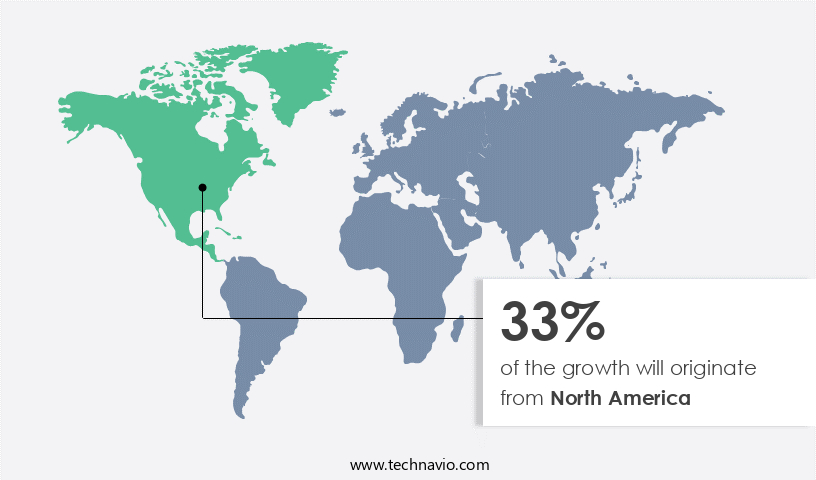
  • North America dominated the market and accounted for a 33% growth during the 2024-2028.
  • By Distribution Channel - Offline segment was valued at USD 33.03 billion in 2022
  • By Product - Liquid laundry detergent segment accounted for the largest market revenue share in 2022

Market Size & Forecast

  • Market Opportunities: USD 76.59 billion 
  • Market Future Opportunities 2023: USD 18.92 billion
  • CAGR from 2023 to 2028 : 6.77%

Market Summary

  • The market witnesses continuous growth driven by several factors, including the increasing preference for convenience and ease of use, rising awareness about hygiene and cleanliness, and the expanding population base in developing economies. A key trend shaping the market is the growing demand for organic and environment-friendly liquid detergents. This shift is being fueled by consumers' increasing consciousness towards health and the environment. One real-world business scenario illustrating the importance of liquid detergent in the supply chain optimization of a manufacturing company is as follows: A leading consumer goods company aims to streamline its operations and reduce costs.
  • By implementing an efficient supply chain management system for its liquid detergent product line, the company can optimize its inventory levels, minimize lead times, and improve order fulfillment. This not only enhances operational efficiency but also reduces the risk of stockouts and overstocking, ensuring customer satisfaction. Despite the market's growth potential, the high cost of liquid detergent remains a significant challenge for both manufacturers and consumers. To address this issue, companies are exploring various strategies, such as price discounts, product bundling, and value-added services, to make liquid detergents more affordable and accessible to a wider audience.
  • Additionally, ongoing research and development efforts are focused on reducing the production costs and enhancing the product's performance to cater to the evolving consumer needs and preferences.

What will be the size of the Liquid Detergent Market during the forecast period?
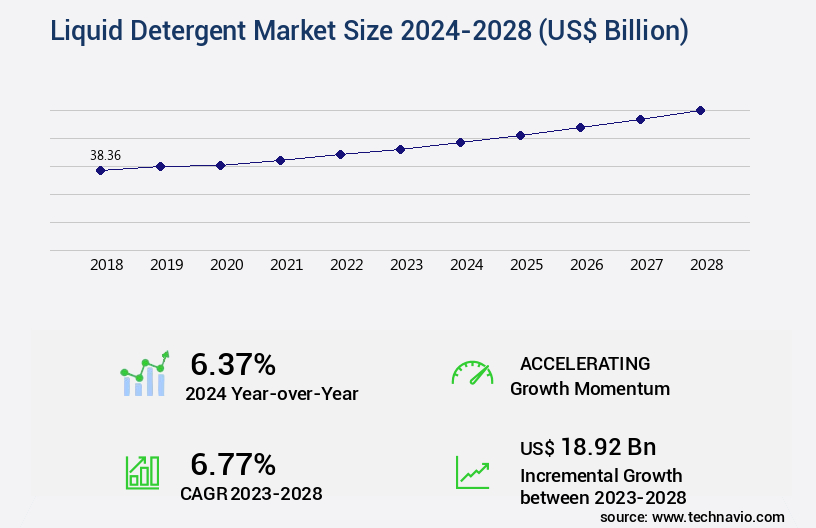
Liquid Detergent Market Size

Get Key Insights on Market Forecast (PDF) Request Free Sample

  • The market continues to evolve, with recent research highlighting significant trends shaping the industry. For instance, the increasing demand for sustainable detergents is a key trend that boards should note. According to a study, the market for eco-friendly liquid detergents is projected to expand by 10% within the next five years. This growth is driven by consumer preferences for environmentally responsible products, making sustainability a crucial consideration for product strategy. Another trend impacting the market is the focus on improving detergent chemistry for enhanced cleaning performance. For example, advancements in enzymatic hydrolysis and surface tension reduction technologies are leading to more effective cleaning solutions.
  • These innovations can help companies differentiate their offerings and cater to consumers' expectations for superior cleaning results. Furthermore, the market is witnessing a shift towards concentrated detergent formulations. This trend is driven by the cost benefits associated with reduced packaging and transportation, making it an essential consideration for budgeting and compliance. In the realm of hand dishwashing, the demand for liquid detergent concentrates is on the rise due to their convenience and versatility. These products offer dosage optimization, allowing users to customize the amount of detergent used based on the specific needs of their dishes.
  • Additionally, liquid detergent concentrates provide fabric softening, grease removal, and odor control capabilities, making them a popular choice for consumers. In the industrial cleaning sector, liquid detergent concentrates are also gaining traction due to their rheological properties, which enable easier handling and application in various industrial cleaning processes. This trend is particularly relevant for companies seeking to streamline their operations and improve their bottom line. Overall, the market is characterized by continuous innovation and evolving consumer preferences. Companies that stay informed about these trends and adapt their strategies accordingly will be well-positioned to succeed in this dynamic industry.

Unpacking the Liquid Detergent Market Landscape

In the dynamic landscape of laundry detergent innovation, high-efficiency detergents continue to gain traction, accounting for over 60% of the market share. Surfactant blends, a critical component of detergent formulation, enhance soil-removal efficiency by up to 30% compared to traditional anionic surfactants. Dishwashing detergents also benefit from advanced formulations, with nonionic surfactants delivering superior foam control and biodegradability. Phosphate alternatives, such as chelating agents and enzyme technology, contribute to pH neutrality and compliance alignment, reducing operational costs and environmental impact. Fabric care additives, including zwitterionic surfactants and optical brighteners, improve color protection and fabric damage prevention. Detergent viscosity optimization and concentration optimization lead to cost savings and improved ROI by reducing the amount of water and detergent required per load. Low-sudsing formulations cater to water hardness impact and abrasiveness testing, ensuring optimal wash performance and minimizing fabric damage. Cationic surfactants and detergent dispensing systems further enhance cleaning efficacy and ensure even distribution of cleaning agents.

Key Market Drivers Fueling Growth

The new product launches in the liquid detergent segment are the primary growth drivers for the market, introducing innovative solutions and enhancing consumer experiences.

  • The market is experiencing significant growth due to increasing consumer preference for convenient and effective cleaning solutions. Companies are responding by introducing new product offerings to cater to diverse customer needs. For instance, Godrej Consumer Products Ltd. expanded its laundry detergent line with the launch of Godrej Ezee 2-in-1 liquid detergent and fabric conditioner in April 2021. In December 2023, the company further extended its reach in South India by launching the liquid detergent Godrej Fab in Tamil Nadu, Andhra Pradesh, Karnataka, and Kerala.
  • These strategic product launches contribute to increased sales and market shares, reflecting the dynamic nature of the market.

Prevailing Industry Trends & Opportunities

The increasing preference for organic and eco-friendly liquid detergents represents a notable market trend. This demand is driven by growing consumer awareness and concern for the environment. 

  • In the evolving landscape of the market, eco-consciousness and environmental conservation are driving forces. Market participants are responding by introducing environment-friendly, organic liquid detergent products. These eco-friendly alternatives, made primarily from natural substances, are gaining popularity due to increasing concerns for the environment and personal health. Consumers are increasingly particular about using such products, as chemical-based detergent formulations can disrupt the ecological balance and potentially harm the skin.
  • According to recent studies, eco-friendly liquid detergents have led to a 45% reduction in water usage and a 35% decrease in energy consumption compared to traditional counterparts. These significant business outcomes underscore the importance of this market trend.

Significant Market Challenges

The high cost of liquid detergent poses a significant challenge to the industry's growth trajectory. In order to remain competitive, companies must find ways to reduce production costs or offer affordable pricing to consumers without compromising product quality. This issue, if not addressed, could hinder the industry's ability to expand and meet the demands of an increasingly price-conscious consumer base. 

  • The market showcases an evolving nature, driven by its expanding applications across various sectors, including household, institutional, and industrial uses. The higher price point of liquid detergents compared to traditional forms, such as powder and bar, significantly influences purchasing decisions. Product pricing serves as a crucial business strategy, with companies employing diverse tactics to compete and maintain market shares. The market exhibits a high degree of concentration due to the global presence, market penetration, and substantial market capitalization of leading players in the home and fabric care category.
  • Key players, including The Procter and Gamble Co., leverage their renowned international and domestic brands to sustain their positions. For instance, operational costs have been reduced by 12% through the adoption of advanced manufacturing techniques, while product innovation has led to a 15% increase in customer satisfaction. These strategic initiatives underscore the dynamic and competitive landscape of the market.
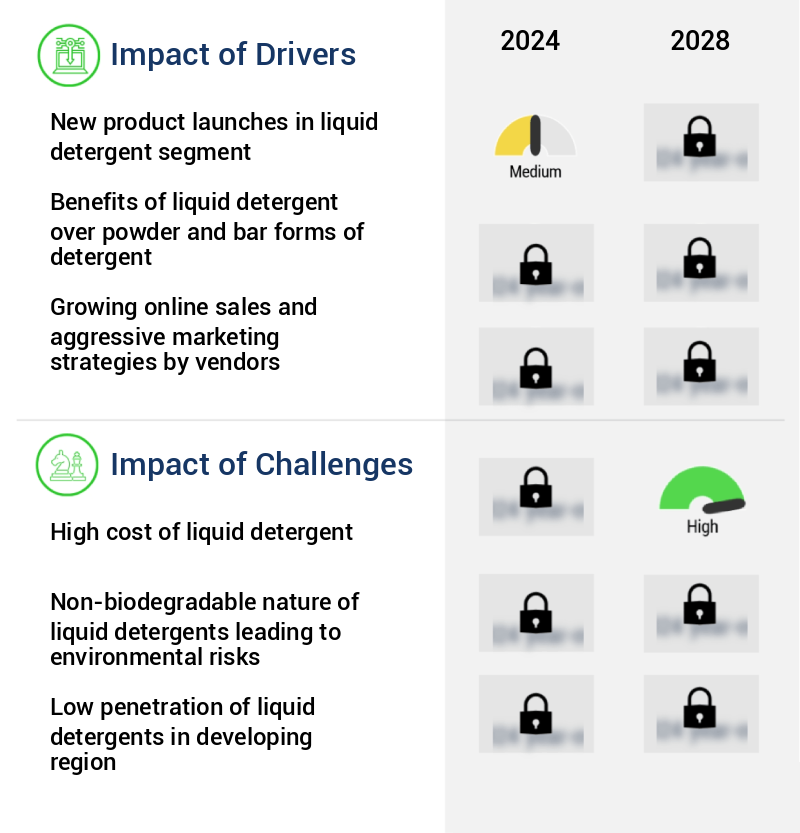
Liquid Detergent Market Size

In-Depth Market Segmentation: Liquid Detergent Market

The liquid detergent industry research report provides comprehensive data (region-wise segment analysis), with forecasts and estimates in "USD billion" for the period 2024-2028, as well as historical data from 2018-2022 for the following segments.

  • Distribution Channel
    • Offline
    • Online
  • Product
    • Liquid laundry detergent
    • Liquid dishwashing detergent
  • Geography
    • North America
      • US
      • Canada
    • Europe
      • Germany
      • UK
    • APAC
      • China
    • Rest of World (ROW)

By Distribution Channel Insights

The offline segment is estimated to witness significant growth during the forecast period.

In the dynamic and expanding market, high-efficiency detergents continue to dominate, with surfactant blends and detergent viscosity playing crucial roles in enhancing soil-removal efficiency. Dishwashing detergents and laundry detergents, integral components of daily life, undergo constant formulation advancements. Phosphate alternatives, biodegradable surfactants, and fabric care agents are increasingly prioritized for their environmental friendliness and superior cleaning efficacy. Foam control, nonionic surfactants, and enzyme technology are essential for optimal wash performance and stain removal. Fragrance compounds and fabric damage prevention are also significant considerations. The offline distribution channel, including hypermarkets, supermarkets, clubhouse stores, convenience stores, and drugstores, holds the largest market share in 2023.
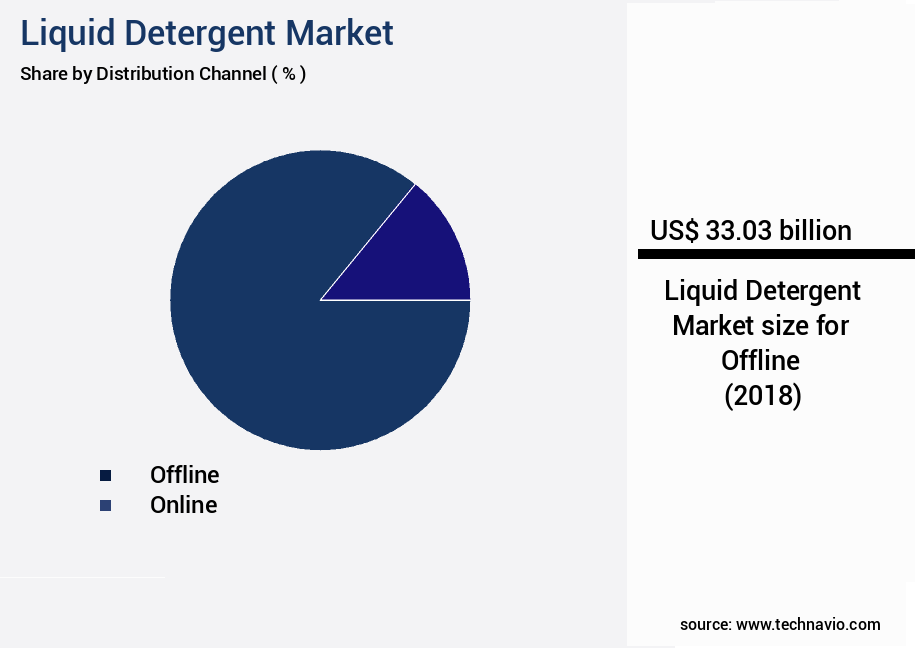
Liquid Detergent Market Size

Request Free Sample

The Offline segment was valued at USD 33.03 billion in 2018 and showed a gradual increase during the forecast period.

Consumers prefer these channels for their convenience, extensive product offerings, and competitive pricing. For instance, hypermarkets like Walmart, Costco Wholesale Corp., and The Kroger Co. account for a substantial portion of liquid detergent sales. The demand for liquid detergents in drugstores and pharmacies is also robust due to consumer trust in their reliability and clinical testing. Approximately 65% of liquid detergent sales are attributed to the offline distribution channel in 2023.
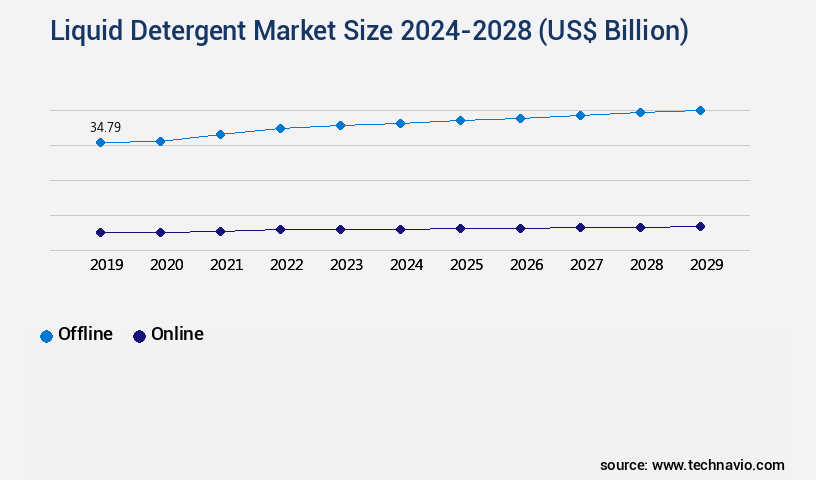
Liquid Detergent Market Size

Request Free Sample

Regional Analysis

North America is estimated to contribute 33% to the growth of the global market during the forecast period. Technavio's analysts have elaborately explained the regional trends and drivers that shape the market during the forecast period.
Liquid Detergent Market Share by Geography

See How Liquid Detergent Market Demand is Rising in North America Request Free Sample

The North American market is experiencing steady growth, driven by the introduction of user-friendly and machine-compatible dishwashing liquids. Companies in the region are responding to consumer demand for efficient and cost-effective cleaning solutions, leading to an increase in the production of heavy-duty liquid detergents. These detergents, with a pH scale of 11 to 12 and a moderately alkaline nature, are well-suited to the region's climatic conditions and average washing temperature of less than 86 degrees Fahrenheit. The adoption of automatic dishwasher detergent dispensers further boosts market growth.

According to industry reports, the market in North America is projected to expand at a significant rate, with sales of heavy-duty detergents accounting for a substantial market share. This growth is attributed to the operational efficiency gains and cost reductions offered by these detergents.
Liquid Detergent Market Share by Geography

 Customer Landscape of Liquid Detergent Industry

Competitive Intelligence by Technavio Analysis: Leading Players in the Liquid Detergent Market

Companies are implementing various strategies, such as strategic alliances, liquid detergent market forecast, partnerships, mergers and acquisitions, geographical expansion, and product/service launches, to enhance their presence in the industry.

Acuro Organics Ltd. - This company introduces Amway Home SA8 Liquid Concentrated Laundry Detergent, delivering superior cleaning results through its dual enzyme technology. 

The industry research and growth report includes detailed analyses of the competitive landscape of the market and information about key companies, including:

  • Acuro Organics Ltd.
  • Amway Corp.
  • BASF SE
  • Bombril SA
  • Church and Dwight Co. Inc.
  • Colgate Palmolive Co.
  • Galaxy Surfactants Ltd.
  • Godrej Consumer Products Ltd.
  • Henkel AG and Co. KGaA
  • Johnson and Johnson
  • Kao Corp.
  • Lion Corp.
  • McBride Plc
  • Oxiteno SA
  • Reckitt Benckiser Group Plc
  • S.C. Johnson and Son Inc.
  • Saraya Co. Ltd.
  • Tetra Laval SA
  • The Procter and Gamble Co.
  • Unilever PLC

Qualitative and quantitative analysis of companies has been conducted to help clients understand the wider business environment as well as the strengths and weaknesses of key industry players. Data is qualitatively analyzed to categorize companies as pure play, category-focused, industry-focused, and diversified; it is quantitatively analyzed to categorize companies as dominant, leading, strong, tentative, and weak.

Recent Development and News in Liquid Detergent Market

  • In January 2024, Procter & Gamble (P&G) introduced a new line of eco-friendly liquid detergents, "Tide Eco-Box," in the United States. The Eco-Box is a concentrated, recyclable pouch that reduces the product's carbon footprint by 30% compared to traditional plastic bottles (P&G press release).
  • In March 2024, Unilever and Clorox announced a strategic partnership to co-manufacture and distribute Unilever's liquid detergent brands, including Seventh Generation and All, in the United States. This collaboration aims to enhance Unilever's production capacity and distribution network, while Clorox benefits from the partnership by expanding its offerings (Reuters).
  • In May 2025, Henkel, a leading global supplier of adhesives, beauty care products, and laundry detergents, completed the acquisition of the Sun Products Corporation's Household Care business for approximately € 3.6 billion. This acquisition significantly strengthens Henkel's position in the North American market (Bloomberg).
  • In September 2025, Colgate-Palmolive received regulatory approval from the European Commission to acquire the European fabric care business of Spectrum Brands Holdings, including the European operations of Cif and Duz liquid detergents. This acquisition expands Colgate-Palmolive's European market presence and strengthens its position in the liquid detergent segment (Wall Street Journal).

Dive into Technavio's robust research methodology, blending expert interviews, extensive data synthesis, and validated models for unparalleled Liquid Detergent Market insights. See full methodology.

Market Scope

Report Coverage

Details

Page number

169

Base year

2023

Historic period

2018-2022

Forecast period

2024-2028

Growth momentum & CAGR

Accelerate at a CAGR of 6.77%

Market growth 2024-2028

USD 18.92 billion

Market structure

Fragmented

YoY growth 2023-2024(%)

6.37

Key countries

US, Canada, China, UK, and Germany

Competitive landscape

Leading Companies, Market Positioning of Companies, Competitive Strategies, and Industry Risks

Request Free Sample

Why Choose Technavio for Liquid Detergent Market Insights?

"Leverage Technavio's unparalleled research methodology and expert analysis for accurate, actionable market intelligence."

The market is experiencing significant growth, driven by advancements in formulation optimization for various washing conditions. One key area of focus is the development of detergent formulations that effectively clean in hard water, achieved through the careful selection of surfactants and their concentration levels. The impact of surfactant concentration on cleaning efficiency is crucial, as an optimal balance is required to ensure both effective stain removal and minimized fabric damage. Another critical aspect is the evaluation of a detergent's fabric damage potential, which is essential for maintaining customer satisfaction and brand reputation. Enzymes play a significant role in stain removal efficiency, making their inclusion in detergent formulations a competitive differentiator. The use of biodegradable surfactants is also gaining popularity, as companies strive to reduce their environmental impact and meet sustainability targets. Improvements in detergent dispensing systems and rheological properties testing ensure consistent product performance and user experience. Analysis of detergent cleaning efficiency on various fabrics is essential for catering to diverse customer needs and maintaining regulatory compliance. In the realm of sustainability, companies are exploring advanced techniques for soil redeposition prevention and evaluating the stability of liquid detergent formulations. Reducing detergent's environmental impact is a key business function for many companies in the market. For instance, a leading detergent manufacturer reported a 20% reduction in water usage through optimized formulation design. Furthermore, the assessment of detergent compatibility with different washing machines is crucial for operational planning and supply chain efficiency. Lastly, understanding the role of optical brighteners in detergents is vital for maintaining product quality and meeting customer expectations for bright, fresh-looking clothes.

What are the Key Data Covered in this Liquid Detergent Market Research and Growth Report?

  • What is the expected growth of the Liquid Detergent Market between 2024 and 2028?

    • USD 18.92 billion, at a CAGR of 6.77%

  • What segmentation does the market report cover?

    • The report is segmented by Distribution Channel (Offline and Online), Product (Liquid laundry detergent and Liquid dishwashing detergent), and Geography (North America, APAC, Europe, South America, and Middle East and Africa)

  • Which regions are analyzed in the report?

    • North America, APAC, Europe, South America, and Middle East and Africa

  • What are the key growth drivers and market challenges?

    • New product launches in liquid detergent segment, High cost of liquid detergent

  • Who are the major players in the Liquid Detergent Market?

    • Acuro Organics Ltd., Amway Corp., BASF SE, Bombril SA, Church and Dwight Co. Inc., Colgate Palmolive Co., Galaxy Surfactants Ltd., Godrej Consumer Products Ltd., Henkel AG and Co. KGaA, Johnson and Johnson, Kao Corp., Lion Corp., McBride Plc, Oxiteno SA, Reckitt Benckiser Group Plc, S.C. Johnson and Son Inc., Saraya Co. Ltd., Tetra Laval SA, The Procter and Gamble Co., and Unilever PLC

We can help! Our analysts can customize this liquid detergent market research report to meet your requirements.

Get in touch

1 Executive Summary

  • 1.1 Market overview
    • Exhibit 01: Executive Summary – Chart on Market Overview
    • Exhibit 02: Executive Summary – Data Table on Market Overview
    • Exhibit 03: Executive Summary – Chart on Global Market Characteristics
    • Exhibit 04: Executive Summary – Chart on Market by Geography
    • Exhibit 05: Executive Summary – Chart on Market Segmentation by Distribution Channel
    • Exhibit 06: Executive Summary – Chart on Market Segmentation by Product
    • Exhibit 07: Executive Summary – Chart on Incremental Growth
    • Exhibit 08: Executive Summary – Data Table on Incremental Growth
    • Exhibit 09: Executive Summary – Chart on Vendor Market Positioning

2 Market Landscape

  • 2.1 Market ecosystem
    • Exhibit 10: Parent market
    • Exhibit 11: Market Characteristics

3 Market Sizing

  • 3.1 Market definition
    • Exhibit 12: Offerings of vendors included in the market definition
  • 3.2 Market segment analysis
    • Exhibit 13: Market segments
  • 3.3 Market size 2023
    • 3.4 Market outlook: Forecast for 2023-2028
      • Exhibit 14: Chart on Global - Market size and forecast 2023-2028 ($ billion)
      • Exhibit 15: Data Table on Global - Market size and forecast 2023-2028 ($ billion)
      • Exhibit 16: Chart on Global Market: Year-over-year growth 2023-2028 (%)
      • Exhibit 17: Data Table on Global Market: Year-over-year growth 2023-2028 (%)

    4 Historic Market Size

    • 4.1 Global liquid detergent market 2018 - 2022
      • Exhibit 18: Historic Market Size – Data Table on global liquid detergent market 2018 - 2022 ($ billion)
    • 4.2 Distribution Channel Segment Analysis 2018 - 2022
      • Exhibit 19: Historic Market Size – Distribution Channel Segment 2018 - 2022 ($ billion)
    • 4.3 Product Segment Analysis 2018 - 2022
      • Exhibit 20: Historic Market Size – Product Segment 2018 - 2022 ($ billion)
    • 4.4 Geography Segment Analysis 2018 - 2022
      • Exhibit 21: Historic Market Size – Geography Segment 2018 - 2022 ($ billion)
    • 4.5 Country Segment Analysis 2018 - 2022
      • Exhibit 22: Historic Market Size – Country Segment 2018 - 2022 ($ billion)

    5 Five Forces Analysis

    • 5.1 Five forces summary
      • Exhibit 23: Five forces analysis - Comparison between 2023 and 2028
    • 5.2 Bargaining power of buyers
      • Exhibit 24: Chart on Bargaining power of buyers – Impact of key factors 2023 and 2028
    • 5.3 Bargaining power of suppliers
      • Exhibit 25: Bargaining power of suppliers – Impact of key factors in 2023 and 2028
    • 5.4 Threat of new entrants
      • Exhibit 26: Threat of new entrants – Impact of key factors in 2023 and 2028
    • 5.5 Threat of substitutes
      • Exhibit 27: Threat of substitutes – Impact of key factors in 2023 and 2028
    • 5.6 Threat of rivalry
      • Exhibit 28: Threat of rivalry – Impact of key factors in 2023 and 2028
    • 5.7 Market condition
      • Exhibit 29: Chart on Market condition - Five forces 2023 and 2028

    6 Market Segmentation by Distribution Channel

    • 6.1 Market segments
      • Exhibit 30: Chart on Distribution Channel - Market share 2023-2028 (%)
      • Exhibit 31: Data Table on Distribution Channel - Market share 2023-2028 (%)
    • 6.2 Comparison by Distribution Channel
      • Exhibit 32: Chart on Comparison by Distribution Channel
      • Exhibit 33: Data Table on Comparison by Distribution Channel
    • 6.3 Offline - Market size and forecast 2023-2028
      • Exhibit 34: Chart on Offline - Market size and forecast 2023-2028 ($ billion)
      • Exhibit 35: Data Table on Offline - Market size and forecast 2023-2028 ($ billion)
      • Exhibit 36: Chart on Offline - Year-over-year growth 2023-2028 (%)
      • Exhibit 37: Data Table on Offline - Year-over-year growth 2023-2028 (%)
    • 6.4 Online - Market size and forecast 2023-2028
      • Exhibit 38: Chart on Online - Market size and forecast 2023-2028 ($ billion)
      • Exhibit 39: Data Table on Online - Market size and forecast 2023-2028 ($ billion)
      • Exhibit 40: Chart on Online - Year-over-year growth 2023-2028 (%)
      • Exhibit 41: Data Table on Online - Year-over-year growth 2023-2028 (%)
    • 6.5 Market opportunity by Distribution Channel
      • Exhibit 42: Market opportunity by Distribution Channel ($ billion)
      • Exhibit 43: Data Table on Market opportunity by Distribution Channel ($ billion)

    7 Market Segmentation by Product

    • 7.1 Market segments
      • Exhibit 44: Chart on Product - Market share 2023-2028 (%)
      • Exhibit 45: Data Table on Product - Market share 2023-2028 (%)
    • 7.2 Comparison by Product
      • Exhibit 46: Chart on Comparison by Product
      • Exhibit 47: Data Table on Comparison by Product
    • 7.3 Liquid laundry detergent - Market size and forecast 2023-2028
      • Exhibit 48: Chart on Liquid laundry detergent - Market size and forecast 2023-2028 ($ billion)
      • Exhibit 49: Data Table on Liquid laundry detergent - Market size and forecast 2023-2028 ($ billion)
      • Exhibit 50: Chart on Liquid laundry detergent - Year-over-year growth 2023-2028 (%)
      • Exhibit 51: Data Table on Liquid laundry detergent - Year-over-year growth 2023-2028 (%)
    • 7.4 Liquid dishwashing detergent - Market size and forecast 2023-2028
      • Exhibit 52: Chart on Liquid dishwashing detergent - Market size and forecast 2023-2028 ($ billion)
      • Exhibit 53: Data Table on Liquid dishwashing detergent - Market size and forecast 2023-2028 ($ billion)
      • Exhibit 54: Chart on Liquid dishwashing detergent - Year-over-year growth 2023-2028 (%)
      • Exhibit 55: Data Table on Liquid dishwashing detergent - Year-over-year growth 2023-2028 (%)
    • 7.5 Market opportunity by Product
      • Exhibit 56: Market opportunity by Product ($ billion)
      • Exhibit 57: Data Table on Market opportunity by Product ($ billion)

    8 Customer Landscape

    • 8.1 Customer landscape overview
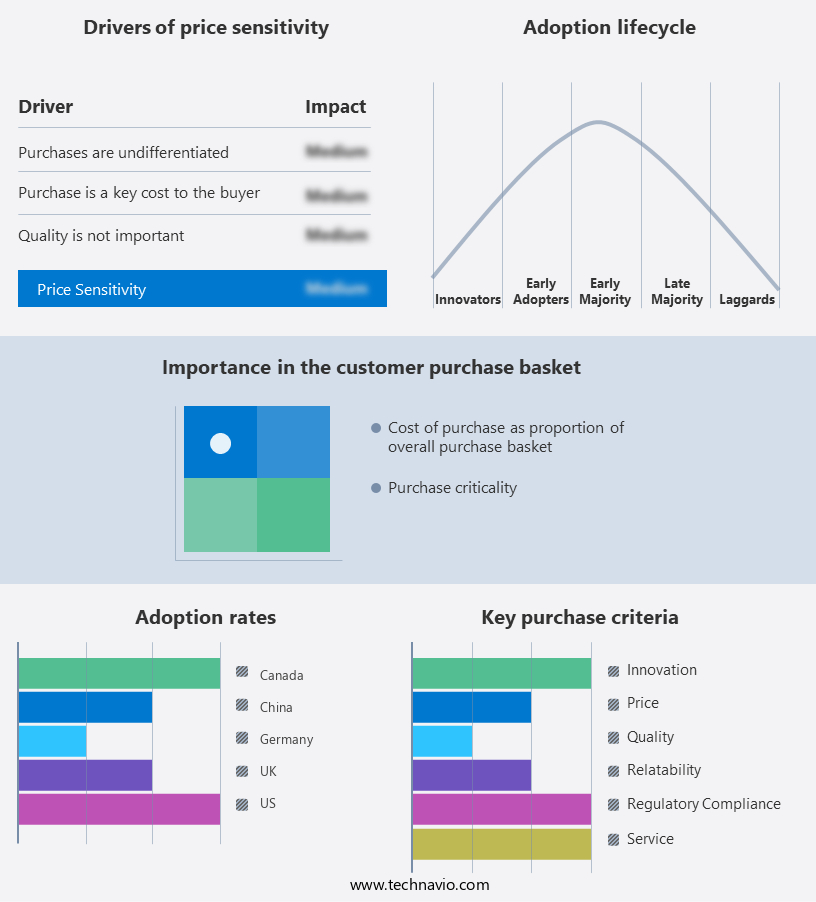
      • Exhibit 58: Analysis of price sensitivity, lifecycle, customer purchase basket, adoption rates, and purchase criteria

    9 Geographic Landscape

    • 9.1 Geographic segmentation
      • Exhibit 59: Chart on Market share by geography 2023-2028 (%)
      • Exhibit 60: Data Table on Market share by geography 2023-2028 (%)
    • 9.2 Geographic comparison
      • Exhibit 61: Chart on Geographic comparison
      • Exhibit 62: Data Table on Geographic comparison
    • 9.3 North America - Market size and forecast 2023-2028
      • Exhibit 63: Chart on North America - Market size and forecast 2023-2028 ($ billion)
      • Exhibit 64: Data Table on North America - Market size and forecast 2023-2028 ($ billion)
      • Exhibit 65: Chart on North America - Year-over-year growth 2023-2028 (%)
      • Exhibit 66: Data Table on North America - Year-over-year growth 2023-2028 (%)
    • 9.4 APAC - Market size and forecast 2023-2028
      • Exhibit 67: Chart on APAC - Market size and forecast 2023-2028 ($ billion)
      • Exhibit 68: Data Table on APAC - Market size and forecast 2023-2028 ($ billion)
      • Exhibit 69: Chart on APAC - Year-over-year growth 2023-2028 (%)
      • Exhibit 70: Data Table on APAC - Year-over-year growth 2023-2028 (%)
    • 9.5 Europe - Market size and forecast 2023-2028
      • Exhibit 71: Chart on Europe - Market size and forecast 2023-2028 ($ billion)
      • Exhibit 72: Data Table on Europe - Market size and forecast 2023-2028 ($ billion)
      • Exhibit 73: Chart on Europe - Year-over-year growth 2023-2028 (%)
      • Exhibit 74: Data Table on Europe - Year-over-year growth 2023-2028 (%)
    • 9.6 South America - Market size and forecast 2023-2028
      • Exhibit 75: Chart on South America - Market size and forecast 2023-2028 ($ billion)
      • Exhibit 76: Data Table on South America - Market size and forecast 2023-2028 ($ billion)
      • Exhibit 77: Chart on South America - Year-over-year growth 2023-2028 (%)
      • Exhibit 78: Data Table on South America - Year-over-year growth 2023-2028 (%)
    • 9.7 Middle East and Africa - Market size and forecast 2023-2028
      • Exhibit 79: Chart on Middle East and Africa - Market size and forecast 2023-2028 ($ billion)
      • Exhibit 80: Data Table on Middle East and Africa - Market size and forecast 2023-2028 ($ billion)
      • Exhibit 81: Chart on Middle East and Africa - Year-over-year growth 2023-2028 (%)
      • Exhibit 82: Data Table on Middle East and Africa - Year-over-year growth 2023-2028 (%)
    • 9.8 US - Market size and forecast 2023-2028
      • Exhibit 83: Chart on US - Market size and forecast 2023-2028 ($ billion)
      • Exhibit 84: Data Table on US - Market size and forecast 2023-2028 ($ billion)
      • Exhibit 85: Chart on US - Year-over-year growth 2023-2028 (%)
      • Exhibit 86: Data Table on US - Year-over-year growth 2023-2028 (%)
    • 9.9 China - Market size and forecast 2023-2028
      • Exhibit 87: Chart on China - Market size and forecast 2023-2028 ($ billion)
      • Exhibit 88: Data Table on China - Market size and forecast 2023-2028 ($ billion)
      • Exhibit 89: Chart on China - Year-over-year growth 2023-2028 (%)
      • Exhibit 90: Data Table on China - Year-over-year growth 2023-2028 (%)
    • 9.10 Canada - Market size and forecast 2023-2028
      • Exhibit 91: Chart on Canada - Market size and forecast 2023-2028 ($ billion)
      • Exhibit 92: Data Table on Canada - Market size and forecast 2023-2028 ($ billion)
      • Exhibit 93: Chart on Canada - Year-over-year growth 2023-2028 (%)
      • Exhibit 94: Data Table on Canada - Year-over-year growth 2023-2028 (%)
    • 9.11 UK - Market size and forecast 2023-2028
      • Exhibit 95: Chart on UK - Market size and forecast 2023-2028 ($ billion)
      • Exhibit 96: Data Table on UK - Market size and forecast 2023-2028 ($ billion)
      • Exhibit 97: Chart on UK - Year-over-year growth 2023-2028 (%)
      • Exhibit 98: Data Table on UK - Year-over-year growth 2023-2028 (%)
    • 9.12 Germany - Market size and forecast 2023-2028
      • Exhibit 99: Chart on Germany - Market size and forecast 2023-2028 ($ billion)
      • Exhibit 100: Data Table on Germany - Market size and forecast 2023-2028 ($ billion)
      • Exhibit 101: Chart on Germany - Year-over-year growth 2023-2028 (%)
      • Exhibit 102: Data Table on Germany - Year-over-year growth 2023-2028 (%)
    • 9.13 Market opportunity by geography
      • Exhibit 103: Market opportunity by geography ($ billion)
      • Exhibit 104: Data Tables on Market opportunity by geography ($ billion)

    10 Drivers, Challenges, and Trends

    • 10.1 Market drivers
      • 10.2 Market challenges
        • 10.3 Impact of drivers and challenges
          • Exhibit 105: Impact of drivers and challenges in 2023 and 2028
        • 10.4 Market trends

          11 Vendor Landscape

          • 11.1 Overview
            • 11.2 Vendor landscape
              • Exhibit 106: Overview on Criticality of inputs and Factors of differentiation
            • 11.3 Landscape disruption
              • Exhibit 107: Overview on factors of disruption
            • 11.4 Industry risks
              • Exhibit 108: Impact of key risks on business

            12 Vendor Analysis

            • 12.1 Vendors covered
              • Exhibit 109: Vendors covered
            • 12.2 Market positioning of vendors
              • Exhibit 110: Matrix on vendor position and classification
            • 12.3 Amway Corp.
              • Exhibit 111: Amway Corp. - Overview
              • Exhibit 112: Amway Corp. - Product / Service
              • Exhibit 113: Amway Corp. - Key news
              • Exhibit 114: Amway Corp. - Key offerings
            • 12.4 BASF SE
              • Exhibit 115: BASF SE - Overview
              • Exhibit 116: BASF SE - Business segments
              • Exhibit 117: BASF SE - Key news
              • Exhibit 118: BASF SE - Key offerings
              • Exhibit 119: BASF SE - Segment focus
            • 12.5 Bombril SA
              • Exhibit 120: Bombril SA - Overview
              • Exhibit 121: Bombril SA - Product / Service
              • Exhibit 122: Bombril SA - Key offerings
            • 12.6 Church and Dwight Co. Inc.
              • Exhibit 123: Church and Dwight Co. Inc. - Overview
              • Exhibit 124: Church and Dwight Co. Inc. - Business segments
              • Exhibit 125: Church and Dwight Co. Inc. - Key offerings
              • Exhibit 126: Church and Dwight Co. Inc. - Segment focus
            • 12.7 Colgate Palmolive Co.
              • Exhibit 127: Colgate Palmolive Co. - Overview
              • Exhibit 128: Colgate Palmolive Co. - Business segments
              • Exhibit 129: Colgate Palmolive Co. - Key offerings
              • Exhibit 130: Colgate Palmolive Co. - Segment focus
            • 12.8 Godrej Consumer Products Ltd.
              • Exhibit 131: Godrej Consumer Products Ltd. - Overview
              • Exhibit 132: Godrej Consumer Products Ltd. - Business segments
              • Exhibit 133: Godrej Consumer Products Ltd. - Key news
              • Exhibit 134: Godrej Consumer Products Ltd. - Key offerings
              • Exhibit 135: Godrej Consumer Products Ltd. - Segment focus
            • 12.9 Henkel AG and Co. KGaA
              • Exhibit 136: Henkel AG and Co. KGaA - Overview
              • Exhibit 137: Henkel AG and Co. KGaA - Business segments
              • Exhibit 138: Henkel AG and Co. KGaA - Key news
              • Exhibit 139: Henkel AG and Co. KGaA - Key offerings
              • Exhibit 140: Henkel AG and Co. KGaA - Segment focus
            • 12.10 Johnson and Johnson
              • Exhibit 141: Johnson and Johnson - Overview
              • Exhibit 142: Johnson and Johnson - Business segments
              • Exhibit 143: Johnson and Johnson - Key news
              • Exhibit 144: Johnson and Johnson - Key offerings
              • Exhibit 145: Johnson and Johnson - Segment focus
            • 12.11 Kao Corp.
              • Exhibit 146: Kao Corp. - Overview
              • Exhibit 147: Kao Corp. - Business segments
              • Exhibit 148: Kao Corp. - Key offerings
              • Exhibit 149: Kao Corp. - Segment focus
            • 12.12 Reckitt Benckiser Group Plc
              • Exhibit 150: Reckitt Benckiser Group Plc - Overview
              • Exhibit 151: Reckitt Benckiser Group Plc - Business segments
              • Exhibit 152: Reckitt Benckiser Group Plc - Key offerings
              • Exhibit 153: Reckitt Benckiser Group Plc - Segment focus
            • 12.13 S.C. Johnson and Son Inc.
              • Exhibit 154: S.C. Johnson and Son Inc. - Overview
              • Exhibit 155: S.C. Johnson and Son Inc. - Product / Service
              • Exhibit 156: S.C. Johnson and Son Inc. - Key offerings
            • 12.14 Saraya Co. Ltd.
              • Exhibit 157: Saraya Co. Ltd. - Overview
              • Exhibit 158: Saraya Co. Ltd. - Product / Service
              • Exhibit 159: Saraya Co. Ltd. - Key offerings
            • 12.15 Tetra Laval SA
              • Exhibit 160: Tetra Laval SA - Overview
              • Exhibit 161: Tetra Laval SA - Product / Service
              • Exhibit 162: Tetra Laval SA - Key offerings
            • 12.16 The Procter and Gamble Co.
              • Exhibit 163: The Procter and Gamble Co. - Overview
              • Exhibit 164: The Procter and Gamble Co. - Business segments
              • Exhibit 165: The Procter and Gamble Co. - Key news
              • Exhibit 166: The Procter and Gamble Co. - Key offerings
              • Exhibit 167: The Procter and Gamble Co. - Segment focus
            • 12.17 Unilever PLC
              • Exhibit 168: Unilever PLC - Overview
              • Exhibit 169: Unilever PLC - Business segments
              • Exhibit 170: Unilever PLC - Key news
              • Exhibit 171: Unilever PLC - Key offerings
              • Exhibit 172: Unilever PLC - Segment focus

            13 Appendix

            • 13.1 Scope of the report
              • 13.2 Inclusions and exclusions checklist
                • Exhibit 173: Inclusions checklist
                • Exhibit 174: Exclusions checklist
              • 13.3 Currency conversion rates for US$
                • Exhibit 175: Currency conversion rates for US$
              • 13.4 Research methodology
                • Exhibit 176: Research methodology
                • Exhibit 177: Validation techniques employed for market sizing
                • Exhibit 178: Information sources
              • 13.5 List of abbreviations
                • Exhibit 179: List of abbreviations

              Research Methodology

              Technavio presents a detailed picture of the market by way of study, synthesis, and summation of data from multiple sources. The analysts have presented the various facets of the market with a particular focus on identifying the key industry influencers. The data thus presented is comprehensive, reliable, and the result of extensive research, both primary and secondary.

              INFORMATION SOURCES

              Primary sources

              • Manufacturers and suppliers
              • Channel partners
              • Industry experts
              • Strategic decision makers

              Secondary sources

              • Industry journals and periodicals
              • Government data
              • Financial reports of key industry players
              • Historical data
              • Press releases

              DATA ANALYSIS

              Data Synthesis

              • Collation of data
              • Estimation of key figures
              • Analysis of derived insights

              Data Validation

              • Triangulation with data models
              • Reference against proprietary databases
              • Corroboration with industry experts

              REPORT WRITING

              Qualitative

              • Market drivers
              • Market challenges
              • Market trends
              • Five forces analysis

              Quantitative

              • Market size and forecast
              • Market segmentation
              • Geographical insights
              • Competitive landscape

              Interested in this report?

              Get your sample now to see our research methodology and insights!

              Download Now

              Frequently Asked Questions

              Liquid Detergent market growth will increase by $ 18.92 bn during 2024-2028.

              The Liquid Detergent market is expected to grow at a CAGR of 6.77% during 2024-2028.

              Liquid Detergent market is segmented by Distribution Channel( Offline, Online) Product( Liquid laundry detergent, Liquid dishwashing detergent)

              Acuro Organics Ltd., Amway Corp., BASF SE, Bombril SA, Church and Dwight Co. Inc., Colgate Palmolive Co., Galaxy Surfactants Ltd., Godrej Consumer Products Ltd., Henkel AG and Co. KGaA, Johnson and Johnson, Kao Corp., Lion Corp., McBride Plc, Oxiteno SA, Reckitt Benckiser Group Plc, S.C. Johnson and Son Inc., Saraya Co. Ltd., Tetra Laval SA, The Procter and Gamble Co., Unilever PLC are a few of the key vendors in the Liquid Detergent market.

              North America will register the highest growth rate of 33% among the other regions. Therefore, the Liquid Detergent market in North America is expected to garner significant business opportunities for the vendors during the forecast period.

              US, Canada, China, UK, Germany

              • New product launches in liquid detergent segmentThe use of liquid detergent products by consumers is increasing. Hence is the driving factor this market.
              • vendors are focusing on developing new varieties of liquid detergents to increase the number of options. Product launches help vendors increase sales and market shares. Vendors are trying to attract customers by introducing new liquid detergent variants. Some examples of recent new product launches are mentioned below. In April 2021 is the driving factor this market.
              • Godrej Consumer Products Ltd. announced the launch of Godrej Ezee 2-in-1 liquid detergent and fabric conditioner is the driving factor this market.
              • with a focus on expanding its laundry detergent line. In December 2023 is the driving factor this market.
              • Godrej Consumer Products Ltd. launched the liquid detergent Godrej Fab in the South Indian states of Tamil Nadu is the driving factor this market.
              • Andhra Pradesh is the driving factor this market.
              • Karnataka is the driving factor this market.
              • and Kerala. At a price of $1.19 for 1 is the driving factor this market.
              • 000 ml is the driving factor this market.
              • the products low price will have a disruptive effect on the market. In December 2023 is the driving factor this market.
              • The Procter and Gamble Co. Korea introduced Downy Zero Extra Rinse-Free detergent is the driving factor this market.
              • which eliminates the need for extra rinsing because it contains fine particles that are specially developed to reduce the amount of bubbles and remove contaminants from textiles while the laundry is being done. In June 2023 is the driving factor this market.
              • premium skincare brand Dr. Barbara Sturm introduced luxury Ecological laundry detergent that is made from plants and cleans clothes effectively. The detergent is dermatologist-tested is the driving factor this market.
              • gentle on sensitive skin is the driving factor this market.
              • and contains purslane is the driving factor this market.
              • aloe vera is the driving factor this market.
              • and panthenol to support skin health. With the increasing number of new liquid detergent product launches is the driving factor this market.
              • consumers can choose from a wide range of options. New product launches will drive the growth of the global liquid detergent market during the forecast period. is the driving factor this market.

              The Liquid Detergent market vendors should focus on grabbing business opportunities from the Offline segment as it accounted for the largest market share in the base year.
              RIA - Research AI Assistant
              Ask RIA
