


Low Foam Surfactants Market Size 2024-2028
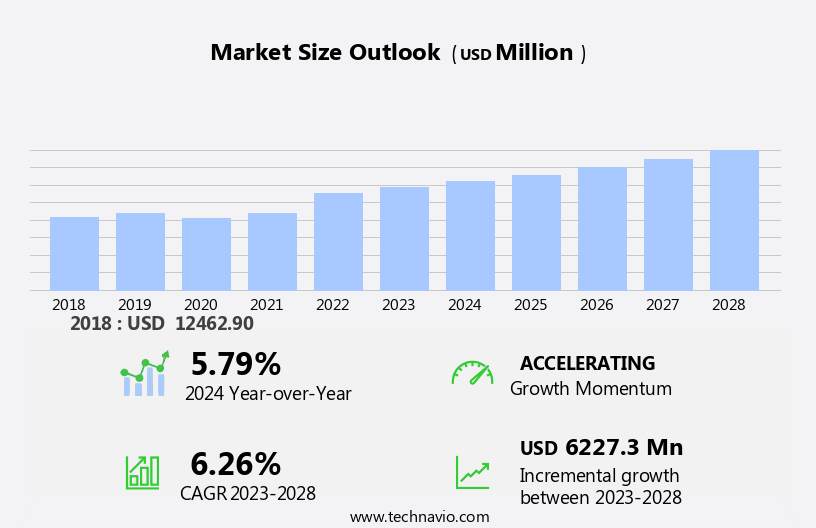
The low foam surfactants market size is forecast to increase by USD 6.23 billion at a CAGR of 6.26% between 2023 and 2028.
- The global market for low foam surfactants is experiencing significant growth due to the rising demand for personal care products and increasing usage in detergents and cleaning agents, particularly in developing economies. These surfactants, along with amphoteric surfactants such as betaines, are excellent viscosity builders. Low foam surfactants offer numerous benefits, including improved rinsing, reduced water usage, and enhanced product performance. These factors have led to a surge in demand for low foam surfactants in various industries, including household care, industrial and institutional cleaning, and personal care. As a result, major manufacturers are investing heavily in research and development to meet the growing demand for these high-performance ingredients.
What will be the Size of the Market during the forecast period?
- The market for low foaming surfactants has gained significant traction in various industries due to their unique properties that offer advantages in applications where minimal foam generation is essential. Surfactants, also known as surface active agents, are compounds that reduce the surface tension between two liquids or between a liquid and a solid. They are widely used in industries such as industrial cleaning, household detergents, agriculture, and environmental applications. Low foaming surfactants are specifically engineered to minimize the production of foam during use. This characteristic is crucial in industries where excessive foam can lead to operational inefficiencies, increased water usage, and potential environmental concerns.
- The alkoxylation process is a common method used to produce low foaming surfactants. This process involves reacting an alcohol with an alkylating agent, such as an alkyl halide, to form alkoxylated alcohols. The industrial cleaning sector relies heavily on low foaming surfactants for applications like metal cleaning and pulp and paper processing. In metal cleaning, these surfactants aid In the removal of contaminants without generating excessive foam. In the pulp and paper industry, low foaming surfactants are used to enhance the wetting properties of cleaning solutions, improving the efficiency of the cleaning process. In the household detergents sector, low foaming surfactants are gaining popularity due to their eco-friendly and sustainable attributes.
How is this Low Foam Surfactants Industry segmented?
The low foam surfactants industry research report provides comprehensive data (region-wise segment analysis), with forecasts and estimates in "USD billion" for the period 2024-2028, as well as historical data from 2018-2022 for the following segments.
- Application
- Home and personal care
- Industrial and institutional cleaning
- Food and dairy cleaning
- Others
- Type
- Non-ionic
- Cationic
- Amphoteric
- Geography
- APAC
- China
- Japan
- Europe
- Germany
- Russia
- North America
- US
- Middle East and Africa
- South America
- APAC
By Application Insights
The home and personal care segment is estimated to witness significant growth during the forecast period. The use of low foam surfactants in various industries, particularly In the food processing sector and home and personal care applications, is on the rise due to their effectiveness in reducing water surface tension and improving cleaning performance. These surfactants, which include non-ionic, anionic, cationic, and amphoteric types, function as surface active agents in detergents and other cleaning formulations. Their ability to enhance the wetting and spreading properties of water makes them indispensable in dishwashing, floor and wall cleaning, and laundering formulations. The increasing consumer preference for eco-friendly and environmentally responsible products is also fueling the demand for low foam surfactants, as they offer superior cleaning performance with minimal environmental impact.
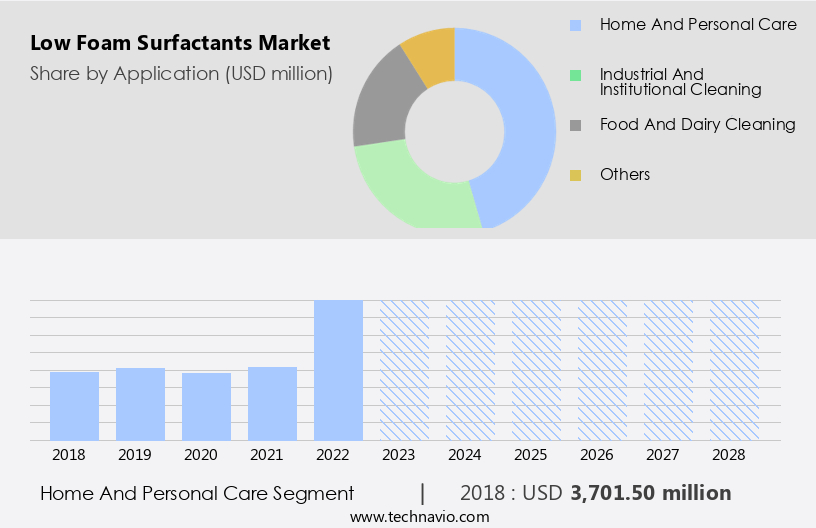
Get a glance at the market report of share of various segments Request Free Sample
The home and personal care segment was valued at USD 3.7 billion in 2018 and showed a gradual increase during the forecast period.
Regional Analysis
APAC is estimated to contribute 39% to the growth of the global market during the forecast period. Technavio's analysts have elaborately explained the regional trends and drivers that shape the market during the forecast period.

For more insights on the market size of various regions, Request Free Sample
The Asia Pacific region is projected to witness substantial expansion In the market over the coming years. This growth can be attributed to the rising demand for surfactants in various industries, including personal care, textiles, detergents, and food processing. Countries such as India, China, Thailand, Indonesia, Australia, Japan, Malaysia, the Philippines, and South Korea are key contributors to this market's growth. The increasing urbanization and the escalating consumption of laundry cleaners in households are significant factors fueling the demand for detergents in countries like China and India. Consequently, the market In the Asia Pacific region is anticipated to experience strong growth during the forecast period.
Market Dynamics
Our researchers analyzed the data with 2023 as the base year, along with the key drivers, trends, and challenges. A holistic analysis of drivers will help companies refine their marketing strategies to gain a competitive advantage.
What are the key market drivers leading to the rise In the adoption of Low Foam Surfactants Industry?
- Rising demand for personal care products is the key driver of the market. The development of a wide range of personal care products is expected to drive the growth of the global market during the forecast period. The high consumption of low foam surfactants in personal care applications is contributed to the growing use of cosmetics and personal care products, such as hair care, skincare, and baby care products.
- Low foam surfactants help in cleaning the dirt and producing foam in shower gels, shampoos, and hair conditioners. These surfactants, along with amphoteric surfactants such as betaines, are excellent viscosity builders. Hence, they are highly used in mild shampoos, facial creams, shaving creams, soaps, and conditioners.
What are the market trends shaping the Low Foam Surfactants Industry?
- Increasing R and D activities is the upcoming market trend. Major companies present in the global market have increased their R and D expenditure to reduce manufacturing costs and provide products with enhanced properties and applications. In recent years, the global market has witnessed a significant increase in R and D spending.
- Hence, to maintain a competitive edge and gain market shares, manufacturers are highly focusing on a new range of product development and innovations. Clariant International Plc (Clariant International) offers low foaming surfactants such as Genapol EP 0244, Genapol PN 30, and Genapol EP 2564, which are mainly used as metal surface cleaners. The strong wetting property of these products has increased their adoption among end-users for the formulation of metal cleaners, crop-protecting agents, and home care and industrial cleaning products.
What challenges does the Low Foam Surfactants Industry face during its growth?
- High cost of low foam surfactants is a key challenge affecting the industry growth. The high cost of low foam surfactants limits their use in various applications, such as personal care, laundry, and other industrial cleaning applications.
- The high cost of raw materials, such as fatty alcohol ethoxylates, amine oxides, sulfoxides, cocamide monoethanolamine, and cocamide diethanolamine, can increase the overall production cost of low foam surfactants, which can impede the growth of the market. Moreover, low foam surfactants are priced higher than conventional anionic surfactants. Raw material prices and economies of scale of low foam surfactants are the two major factors contributing to the high cost of production.
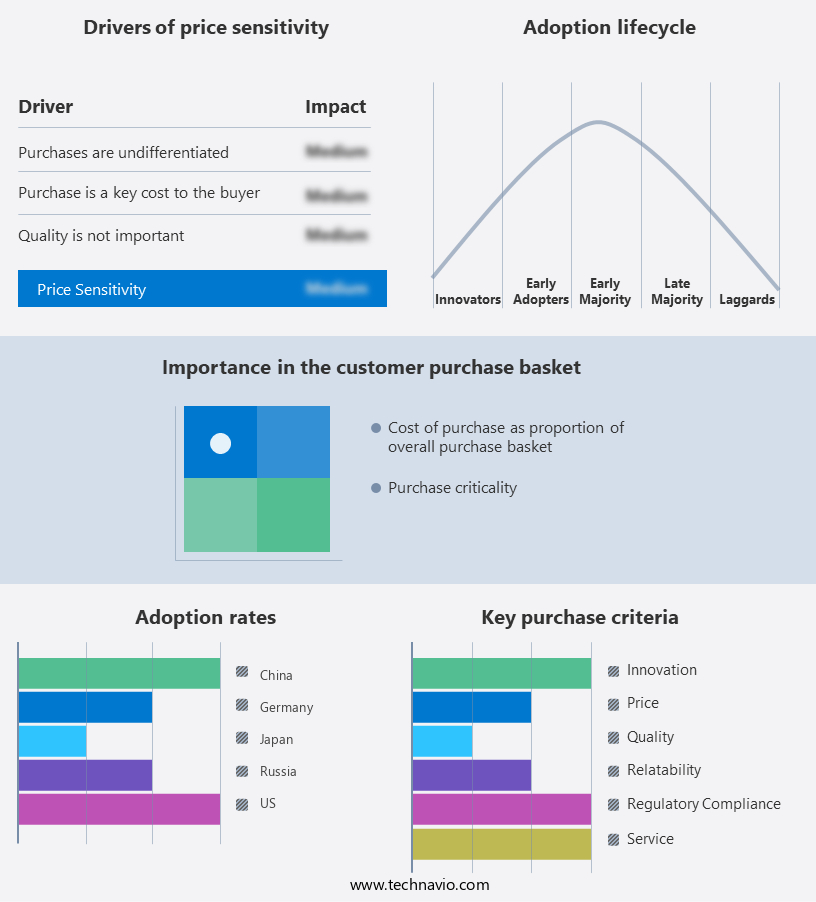
Exclusive Customer Landscape
The market forecasting report includes the adoption lifecycle of the market, covering from the innovator's stage to the laggard's stage. It focuses on adoption rates in different regions based on penetration. Furthermore, the market report also includes key purchase criteria and drivers of price sensitivity to help companies evaluate and develop their market growth analysis strategies.
Customer Landscape
Key Companies & Market Insights
Companies are implementing various strategies, such as strategic alliances, market forecast, partnerships, mergers and acquisitions, geographical expansion, and product/service launches, to enhance their presence in the industry.
The industry research and growth report includes detailed analyses of the competitive landscape of the market and information about key companies, including:
- Air Products and Chemicals Inc.
- Akzo Nobel NV
- Arkema SA
- Ashland Inc.
- BASF SE
- Clariant International Ltd.
- Croda International Plc
- Dow Inc.
- Enaspol A.S.
- EOC Group
- Galaxy Surfactants Ltd.
- Huntsman Corp
- Innospec Inc.
- Kao Corp.
- KLK Oleo
- Marubeni Corp.
- Nufarm Ltd.
- RAG Stiftung
- Solvay SA
- Stepan Co.
- The Lubrizol Corp.
Qualitative and quantitative analysis of companies has been conducted to help clients understand the wider business environment as well as the strengths and weaknesses of key industry players. Data is qualitatively analyzed to categorize companies as pure play, category-focused, industry-focused, and diversified; it is quantitatively analyzed to categorize companies as dominant, leading, strong, tentative, and weak.
Research Analyst Overview
The market is witnessing significant growth due to the increasing demand from various industries such as industrial cleaning, household detergents, agriculture, and wastewater treatment. Surfactants, also known as surface active agents, are essential in reducing surface tension and improving wetting properties. In the context of this market, low foaming surfactants have gained popularity due to their environmental benefits. The production of low foaming surfactants involves the alkoxylation process, which utilizes alcohols and alkoxylated alcohols. This process results in synthetic surfactants that offer excellent detergency and dynamic surface tension reduction. Both industrial and household applications benefit from these properties.
In addition, the industrial sector, including pulp and paper, metal cleaning, metal working fluids, oilfield chemicals, and the personal care industry, is a significant consumer of surfactants. The personal care industry, in particular, is driven by the demand for eco-friendly and sustainable products. Environmental regulations have been a key factor In the growth of the low foaming surfactant market. These regulations aim to minimize environmental risks associated with surfactants, such as toxicity and pollution control. As a result, there is a growing trend towards the use of bio-based surfactants derived from renewable sources like vegetable oils and animal fats.
Moreover, the agriculture sector also utilizes surfactants for various applications, including agrochemicals and wastewater treatment facilities. The use of low foaming surfactants In these applications helps to minimize environmental impact and improve overall efficiency. In summary, the low foaming surfactant market is driven by the increasing demand from various industries, environmental regulations, and the shift towards eco-friendly and sustainable products. The production of low foaming surfactants involves the alkoxylation process, and their applications span across industrial and household sectors, agriculture, and personal care.
|
Market Scope |
|
|
Report Coverage |
Details |
|
Page number |
191 |
|
Base year |
2023 |
|
Historic period |
2018-2022 |
|
Forecast period |
2024-2028 |
|
Growth momentum & CAGR |
Accelerate at a CAGR of 6.26% |
|
Market growth 2024-2028 |
USD 6.23 billion |
|
Market structure |
Fragmented |
|
YoY growth 2023-2024(%) |
5.79 |
|
Key countries |
China, US, Germany, Russia, Japan, |
|
Competitive landscape |
Leading Companies, market growth and forecasting, Market Positioning of Companies, Competitive Strategies, and Industry Risks |
What are the Key Data Covered in this Market Research and Growth Report?
- CAGR of the Low Foam Surfactants industry during the forecast period
- Detailed information on factors that will drive the growth and forecasting between 2024 and 2028
- Precise estimation of the size of the market and its contribution of the industry in focus to the parent market
- Accurate predictions about upcoming growth and trends and changes in consumer behaviour
- Growth of the market across APAC, Europe, North America, Middle East and Africa, South America,
- Thorough analysis of the market's competitive landscape and detailed information about companies
- Comprehensive analysis of factors that will challenge the market growth of industry companies
We can help! Our analysts can customize this market research report to meet your requirements.
 RIA -
RIA - 
