
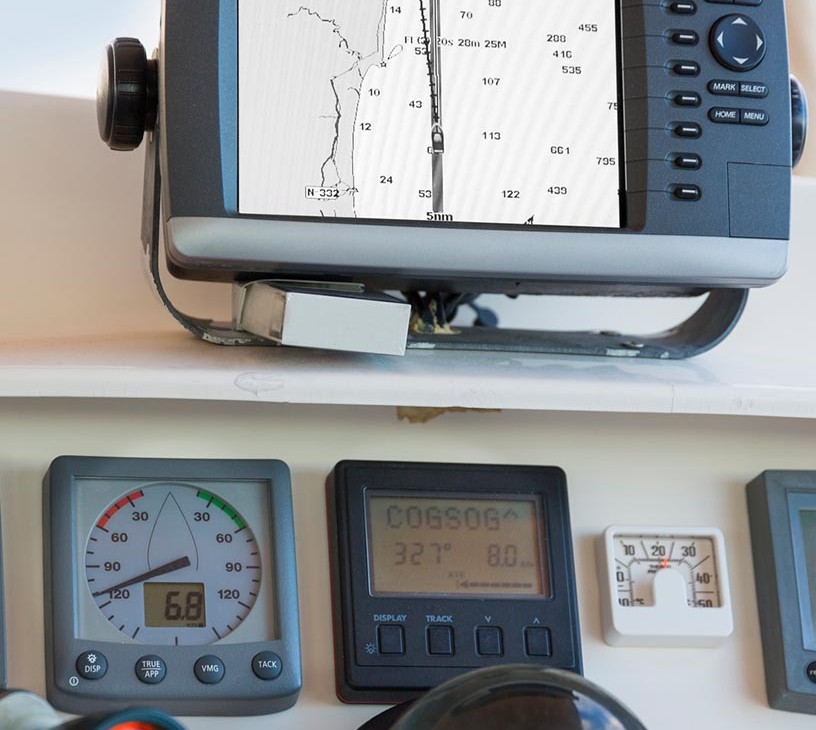


Maritime Information Market Size 2026-2030
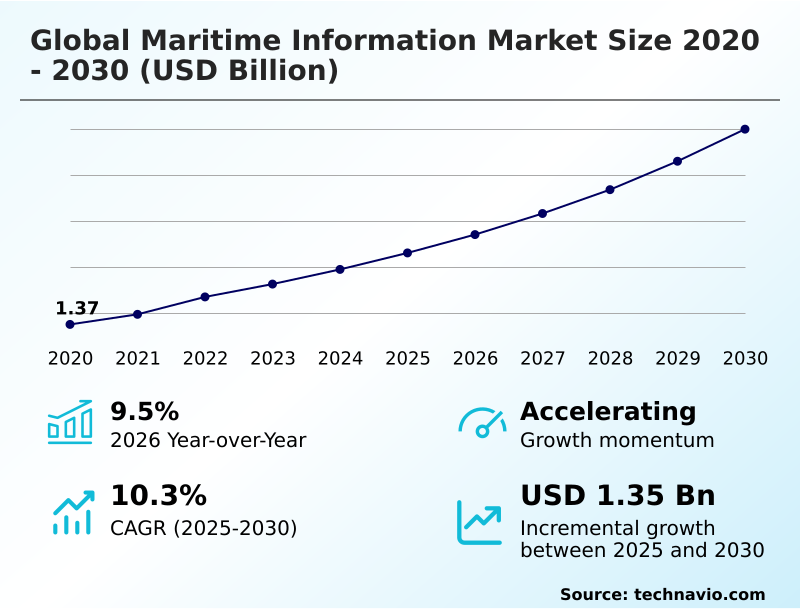
The maritime information market size is valued to increase by USD 1.35 billion, at a CAGR of 10.3% from 2025 to 2030. Accelerated digital transformation and integration of advanced technologies will drive the maritime information market.
Major Market Trends & Insights
- Europe dominated the market and accounted for a 41.2% growth during the forecast period.
- By End-user - Commercial segment was valued at USD 1.12 billion in 2024
- By Application - MIA segment accounted for the largest market revenue share in 2024
Market Size & Forecast
- Market Opportunities: USD 2.12 billion
- Market Future Opportunities: USD 1.35 billion
- CAGR from 2025 to 2030 : 10.3%
Market Summary
- The maritime information market is undergoing a significant transformation, driven by the imperative for enhanced operational efficiency, safety, and regulatory compliance. The integration of technologies such as the automatic identification system, maritime iot sensors, and advanced weather analytics provides unprecedented levels of data, enabling a shift from reactive to predictive operations.
- For instance, a global logistics operator can now use a supply chain visibility platform integrating satellite ais data and ai-powered predictive maintenance schedules to reroute vessels around developing storms while simultaneously arranging for preemptive engine servicing at the next port of call, significantly reducing unplanned downtime and ensuring cargo delivery timelines.
- This data-driven approach, which also supports sanctions compliance screening and illegal fishing detection, is becoming essential for maintaining a competitive edge. However, the industry grapples with challenges like ensuring maritime cybersecurity for these interconnected systems and achieving port community system integration for seamless data exchange across the value chain.
What will be the Size of the Maritime Information Market during the forecast period?
Get Key Insights on Market Forecast (PDF) Get Free Sample
How is the Maritime Information Market Segmented?
The maritime information industry research report provides comprehensive data (region-wise segment analysis), with forecasts and estimates in "USD million" for the period 2026-2030, as well as historical data from 2020-2024 for the following segments.
- End-user
- Commercial
- Government
- Application
- MIA
- MIP
- VT
- AIS
- Deployment
- Cloud
- On-premises
- Geography
- Europe
- Germany
- UK
- The Netherlands
- North America
- US
- Canada
- Mexico
- APAC
- China
- Japan
- South Korea
- Middle East and Africa
- UAE
- Saudi Arabia
- South Africa
- South America
- Brazil
- Argentina
- Rest of World (ROW)
- Europe
By End-user Insights
The commercial segment is estimated to witness significant growth during the forecast period.
The commercial segment is defined by a strong focus on operational efficiency. Shipping companies leverage predictive fleet analytics and voyage optimization algorithms for fleet performance optimization and advanced route planning.
Maritime IoT solutions enable real-time cargo monitoring, which, combined with real-time vessel tracking, forms the backbone of modern supply chain visibility platform architecture.
The establishment of a unified data platform and smart container network can improve schedule reliability by up to 90%.
Secure satellite communications ensure data integrity for critical systems like collision avoidance systems and platforms used for port call data analysis, driving down operational risks.
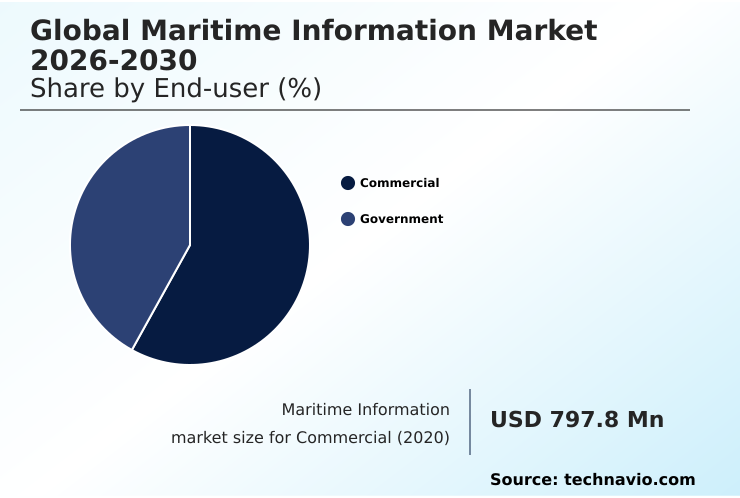
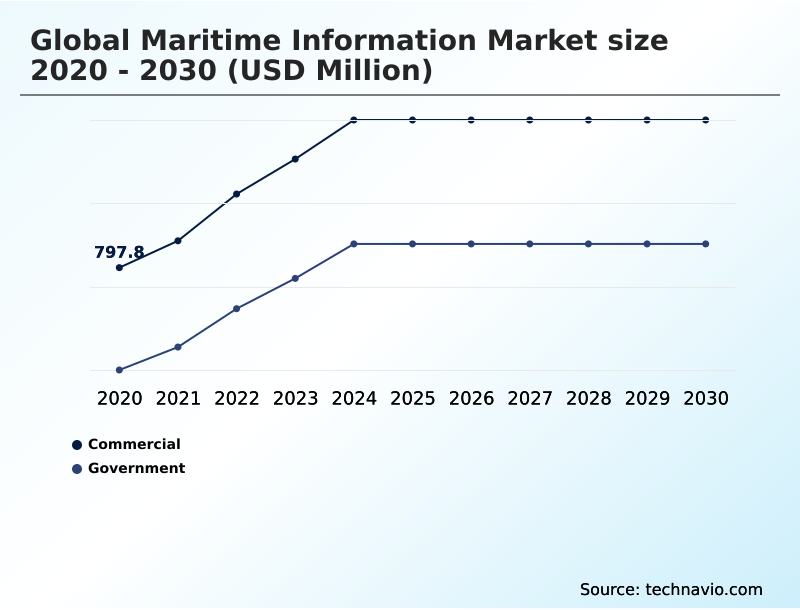
The Commercial segment was valued at USD 1.12 billion in 2024 and showed a gradual increase during the forecast period.
Regional Analysis
Europe is estimated to contribute 41.2% to the growth of the global market during the forecast period.Technavio’s analysts have elaborately explained the regional trends and drivers that shape the market during the forecast period.
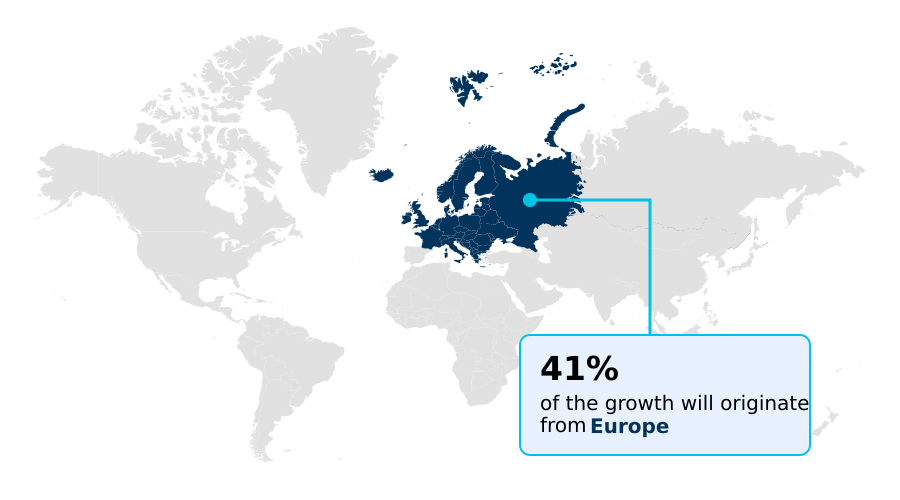
See How Maritime Information Market Demand is Rising in Europe Get Free Sample
The global landscape for maritime information is led by North America and Europe, which together account for over 74% of market opportunities.
However, APAC is the fastest-growing region, with a projected CAGR of 10.8%, fueled by massive investments in smart port infrastructure. In Europe, the focus is on e-navigation systems and sustainable shipping initiatives.
North America prioritizes maritime domain awareness, leveraging drone-based surveillance and maritime data fusion from coastal surveillance systems. In APAC, the rapid adoption of port community systems is critical for managing the world's busiest shipping lanes.
Across all regions, maritime IoT sensors providing data to the automatic identification system are fundamental for everything from marine GPS navigation to climate risk scoring and dynamic routing advice.
Market Dynamics
Our researchers analyzed the data with 2025 as the base year, along with the key drivers, trends, and challenges. A holistic analysis of drivers will help companies refine their marketing strategies to gain a competitive advantage.
- The evolution of the global maritime information market 2026-2030 is increasingly shaped by specific technological applications and their strategic implications. Understanding the impact of 5G on smart port operations is crucial, as it enables the real-time data flow necessary for automated systems and role of digital twins in port optimization.
- The cost-benefit of LEO vs GEO satellites is a central debate, with LEO constellations offering lower latency for services like integrating IoT for real-time cargo tracking, while GEO systems provide broad, stable coverage.
- A key growth area is the global maritime information market 2026-2030 for autonomous shipping, which relies heavily on using AI for predictive vessel maintenance and advanced ais data for commodity trading insights. However, this raises significant cybersecurity risks in digitized maritime logistics. Consequently, improving GNSS resilience against spoofing and securing satellite communications for naval fleets are paramount.
- Blockchain applications in maritime supply chain promise enhanced transparency, which complements regulatory technology for maritime compliance. The challenges of data standardization in shipping persist, hindering seamless data flow.
- For security and environmental protection, analytics for IU-fishing pattern detection, enhancing maritime domain awareness with drones, using synthetic aperture radar for ice navigation, and systems for environmental compliance with emission tracking systems are becoming indispensable tools.
- Predictive weather routing for fuel efficiency, the impact of AI on maritime law enforcement, and the use of maritime information portfolios for risk assessment are now core business functions, with integrated platforms demonstrating more than double the analytical capability of siloed systems.
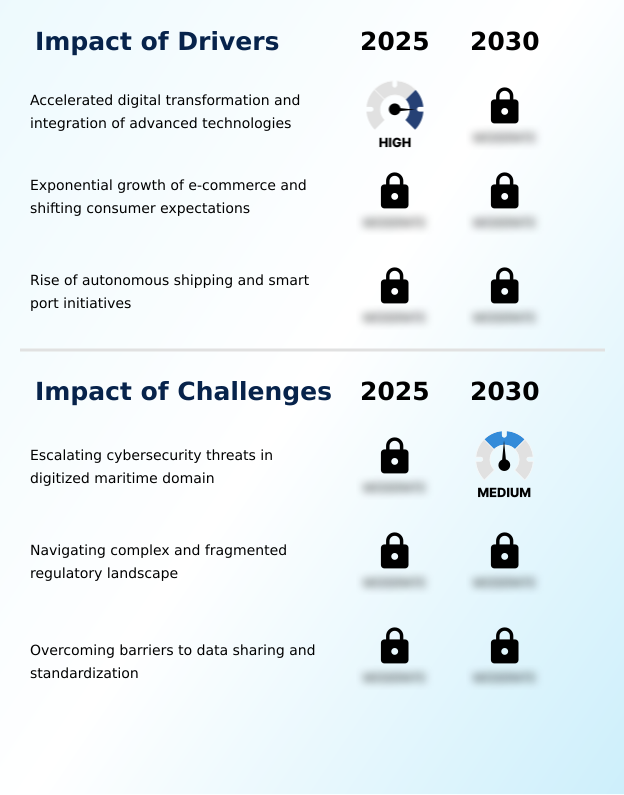
What are the key market drivers leading to the rise in the adoption of Maritime Information Industry?
- The industry-wide digital transformation, marked by the integration of advanced technologies like AI and IoT, is the primary driver of market growth.
- Digitalization is a primary driver, with companies using maritime data analytics for maritime logistics optimization and improved fleet performance management.
- The growth of e-commerce necessitates enhanced port logistics efficiency, pushing adoption of advanced onboard navigation systems that use satellite ais data. Regulatory pressures are also significant, compelling investment in real-time emissions tracking for environmental compliance monitoring.
- The development of smart port infrastructure and autonomous shipping technology relies on a connected maritime ecosystem with robust maritime supply chain security measures, supported by satellite communication services.
- This integration has shown to improve cargo handling speeds by up to 30% in automated terminals.
What are the market trends shaping the Maritime Information Industry?
- The accelerated adoption of artificial intelligence and autonomous systems is a transformative trend, enhancing operational efficiency and redefining maritime logistics.
- A key trend is the fusion of advanced weather analytics with AI in maritime operations to provide dynamic routing advice, which can reduce voyage times by up to 10%. The shift towards autonomous vessel navigation is accelerating, supported by high-frequency data services from low earth orbit satellites.
- This enables new digital maritime services, including the creation of a digital twin for ports and enhanced port community system integration. Vessel performance characteristics are monitored in real-time for port call optimization and to enable remote diagnostics for ships, while improved crew welfare connectivity is becoming standard.
- AI-powered predictive maintenance is also gaining traction, with some systems reducing critical equipment failures by 20%.
What challenges does the Maritime Information Industry face during its growth?
- Escalating cybersecurity threats within the digitized maritime domain present a formidable challenge to operational integrity and security.
- Maritime cybersecurity and cybersecurity for ot systems remain significant challenges, as platforms like vessel traffic management and remote crane operations expand the attack surface. The lack of data standardization hinders maritime big data platforms, complicating sanctions compliance screening and collaborative maritime risk management.
- Ensuring GNSS resilience against spoofing is vital; while encrypted ais transponders help, they do not address all vulnerabilities. The industry also faces hurdles in iu-fishing prevention and illegal fishing detection, which requires sophisticated analysis of tools like maritime surveillance radar and synthetic aperture radar imagery to counter ais data manipulation detection.
Exclusive Technavio Analysis on Customer Landscape
The maritime information market forecasting report includes the adoption lifecycle of the market, covering from the innovator’s stage to the laggard’s stage. It focuses on adoption rates in different regions based on penetration. Furthermore, the maritime information market report also includes key purchase criteria and drivers of price sensitivity to help companies evaluate and develop their market growth analysis strategies.
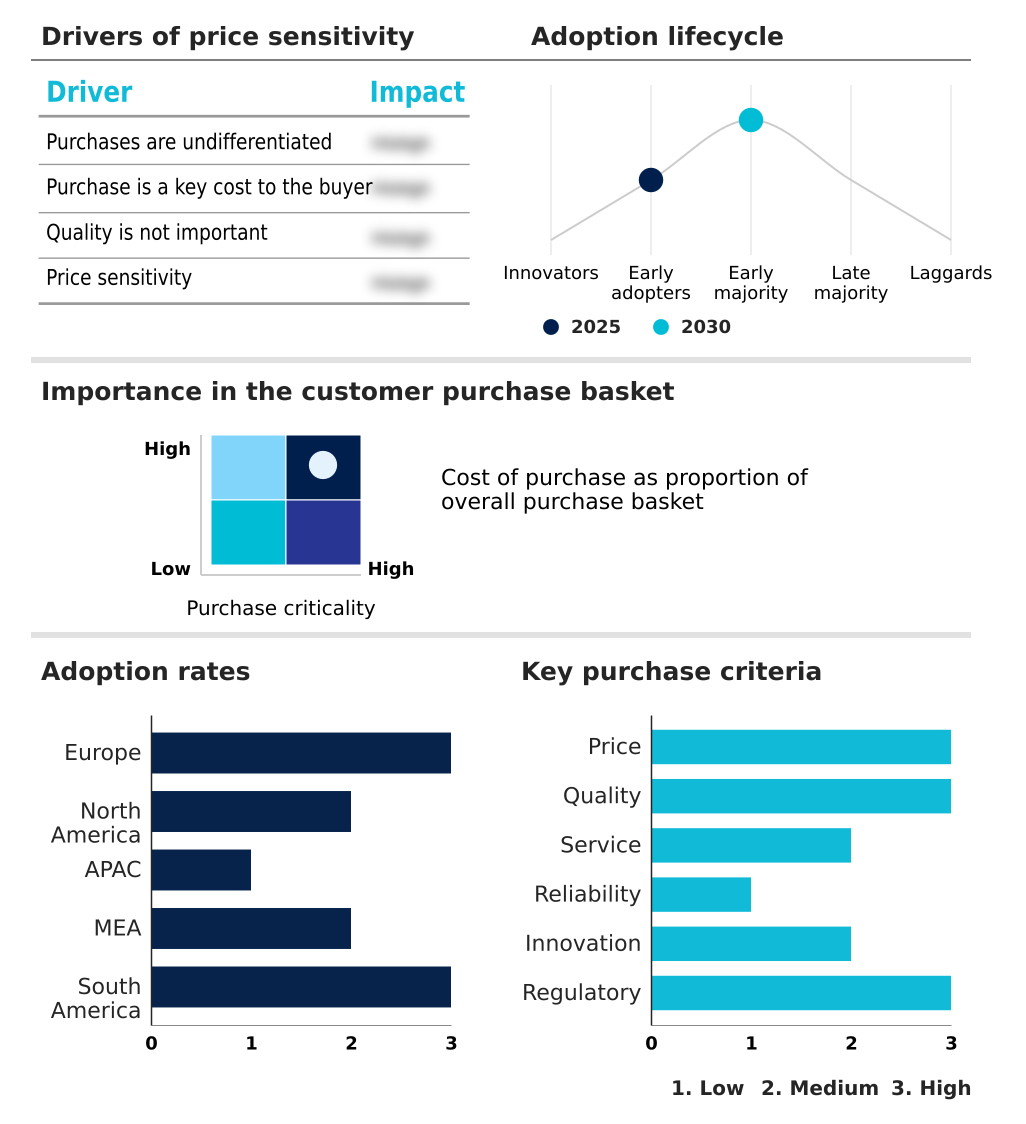
Customer Landscape of Maritime Information Industry
Competitive Landscape
Companies are implementing various strategies, such as strategic alliances, maritime information market forecast, partnerships, mergers and acquisitions, geographical expansion, and product/service launches, to enhance their presence in the industry.
BAE Systems Plc - Delivering integrated naval command, control, and surveillance systems that provide enhanced situational awareness and defense capabilities for maritime operations.
The industry research and growth report includes detailed analyses of the competitive landscape of the market and information about key companies, including:
- BAE Systems Plc
- Elbit Systems Ltd.
- Garmin Ltd.
- Inmarsat Global Ltd.
- Intelsat US LLC
- Kongsberg Gruppen ASA
- L3Harris Technologies Inc.
- Lockheed Martin Corp.
- Northrop Grumman Corp.
- ORBCOMM Inc.
- RTX Corp.
- Saab AB
- Singapore Telecom Ltd.
- Spire Global Inc.
- Thales Group
- Windward Ltd.
Qualitative and quantitative analysis of companies has been conducted to help clients understand the wider business environment as well as the strengths and weaknesses of key industry players. Data is qualitatively analyzed to categorize companies as pure play, category-focused, industry-focused, and diversified; it is quantitatively analyzed to categorize companies as dominant, leading, strong, tentative, and weak.
Recent Development and News in Maritime information market
- In May 2025, the European Commission began enforcing new Corporate Sustainability Reporting Directive (CSRD) disclosure requirements, mandating detailed emissions tracking for maritime logistics providers in EU jurisdictions.
- In April 2025, S&P Global finalized its acquisition of ORBCOMM's Automatic Identification System (AIS) business, integrating raw data sources with analytics platforms.
- In March 2025, a partnership between Lloyd’s Register and Microsoft was announced to leverage generative AI for advancing the application of nuclear technology in the maritime sector.
- In February 2025, the Gemini Cooperation, a new alliance between two major container shipping lines, officially launched its operations to enhance schedule reliability through improved data sharing.
Dive into Technavio’s robust research methodology, blending expert interviews, extensive data synthesis, and validated models for unparalleled Maritime Information Market insights. See full methodology.
| Market Scope | |
|---|---|
| Page number | 299 |
| Base year | 2025 |
| Historic period | 2020-2024 |
| Forecast period | 2026-2030 |
| Growth momentum & CAGR | Accelerate at a CAGR of 10.3% |
| Market growth 2026-2030 | USD 1350.5 million |
| Market structure | Fragmented |
| YoY growth 2025-2026(%) | 9.5% |
| Key countries | Germany, UK, Norway, The Netherlands, France, Italy, US, Canada, Mexico, China, Japan, South Korea, Singapore, India, Australia, UAE, Saudi Arabia, South Africa, Egypt, Qatar, Brazil, Chile and Argentina |
| Competitive landscape | Leading Companies, Market Positioning of Companies, Competitive Strategies, and Industry Risks |
Research Analyst Overview
- The maritime information market is advancing beyond simple tracking, creating a complex digital ecosystem centered on maritime data fusion. The proliferation of low earth orbit satellites is delivering high-frequency data services, enabling superior remote vessel monitoring and real-time cargo monitoring. This data feeds into port call optimization models and unified data platforms, which are crucial for efficient logistics.
- Onboard, e-navigation systems and collision avoidance systems are standard, while AI-powered predictive maintenance is reducing vessel downtime by over 25%. The development of autonomous shipping technology, including remote crane operations, is heavily reliant on secure satellite communications and robust maritime cybersecurity.
- For security, maritime surveillance radar, synthetic aperture radar imagery, and drone-based surveillance enhance maritime domain awareness, helping to counter threats identified through ais data manipulation detection. From a strategic perspective, boardroom decisions are now heavily influenced by the capabilities of these systems, especially in deploying digital twin for ports and smart container network infrastructure.
- Technologies like encrypted ais transponders, onboard navigation systems, and GNSS resilience are no longer just operational tools but core components of risk management and competitive strategy, essential for maritime logistics optimization and fleet performance management.
What are the Key Data Covered in this Maritime Information Market Research and Growth Report?
-
What is the expected growth of the Maritime Information Market between 2026 and 2030?
-
USD 1.35 billion, at a CAGR of 10.3%
-
-
What segmentation does the market report cover?
-
The report is segmented by End-user (Commercial, and Government), Application (MIA, MIP, VT, and AIS), Deployment (Cloud, and On-premises) and Geography (Europe, North America, APAC, Middle East and Africa, South America)
-
-
Which regions are analyzed in the report?
-
Europe, North America, APAC, Middle East and Africa and South America
-
-
What are the key growth drivers and market challenges?
-
Accelerated digital transformation and integration of advanced technologies, Escalating cybersecurity threats in digitized maritime domain
-
-
Who are the major players in the Maritime Information Market?
-
BAE Systems Plc, Elbit Systems Ltd., Garmin Ltd., Inmarsat Global Ltd., Intelsat US LLC, Kongsberg Gruppen ASA, L3Harris Technologies Inc., Lockheed Martin Corp., Northrop Grumman Corp., ORBCOMM Inc., RTX Corp., Saab AB, Singapore Telecom Ltd., Spire Global Inc., Thales Group and Windward Ltd.
-
Market Research Insights
- The adoption of maritime big data platforms is enabling significant gains, with some operators achieving a 15% reduction in fuel consumption through advanced route planning and fleet performance optimization. The use of AI in maritime operations for port call data analysis has cut vessel turnaround times by up to 20% in smart port infrastructure projects.
- These digital maritime services are crucial for managing maritime risk management and ensuring maritime supply chain security. Enhanced crew welfare connectivity via new satellite communication services has also shown to improve crew retention rates by over 10%.
- As the connected maritime ecosystem matures, the focus on sustainable shipping initiatives and cybersecurity for ot systems becomes paramount for long-term viability and operational resilience.
We can help! Our analysts can customize this maritime information market research report to meet your requirements.
 RIA -
RIA - 
