
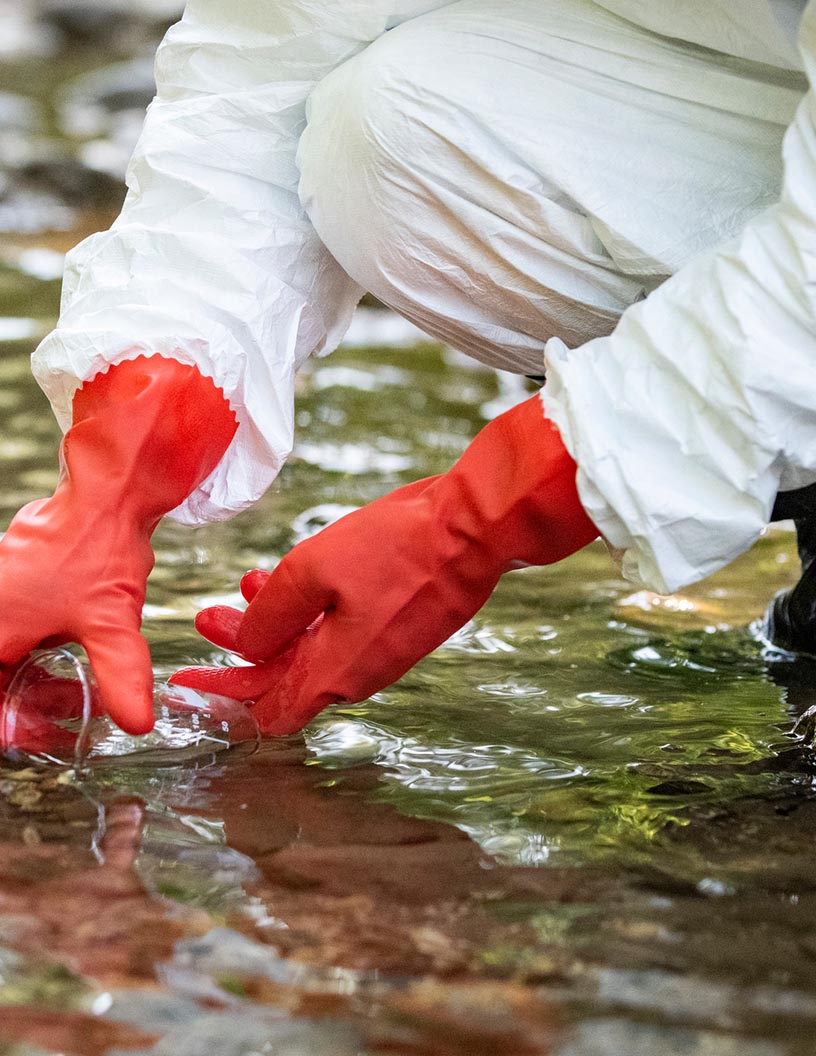


Microbiological Testing of Water Market Size 2024-2028
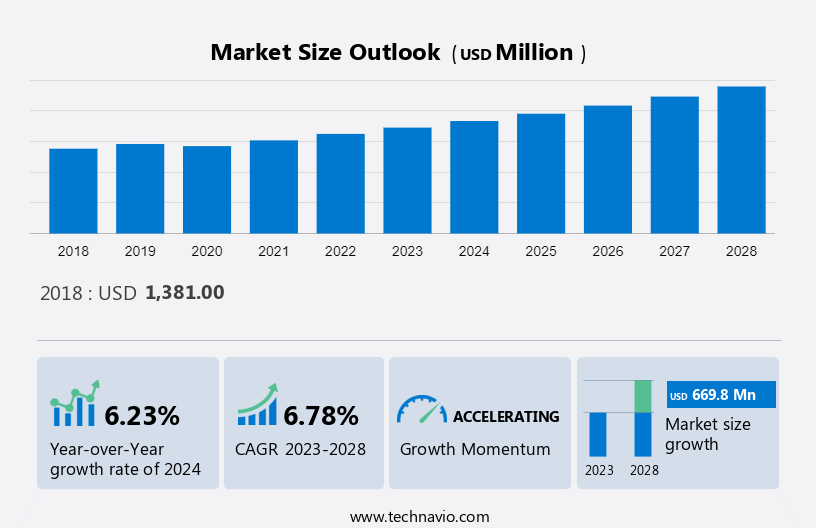
The microbiological testing of water market size is estimated to grow by USD 669.8 million at a CAGR of 6.78% between 2023 and 2028. The market is experiencing significant growth due to the rising incidence of waterborne diseases and increasing awareness of water quality. Automation in microbiological testing is another key trend driving market growth, as it enhances testing accuracy and efficiency. In the biopharmaceutical and pharmaceutical industries, microbiological testing is crucial for ensuring the purity of water used in manufacturing processes. However, the presence of difficult-to-culture organisms poses a challenge to the industry, requiring the development of advanced testing technologies and methods. The market is further expected to be influenced by stringent regulations and growing demand for real-time water quality monitoring systems and infectious disease diagnostics. Overall, the market is poised for steady growth, driven by these factors and the need to ensure safe and clean water supplies.
What will be the Size of the Market During the Forecast Period?
To learn more about this report, Download Report Sample
Market Segmentation
By Type
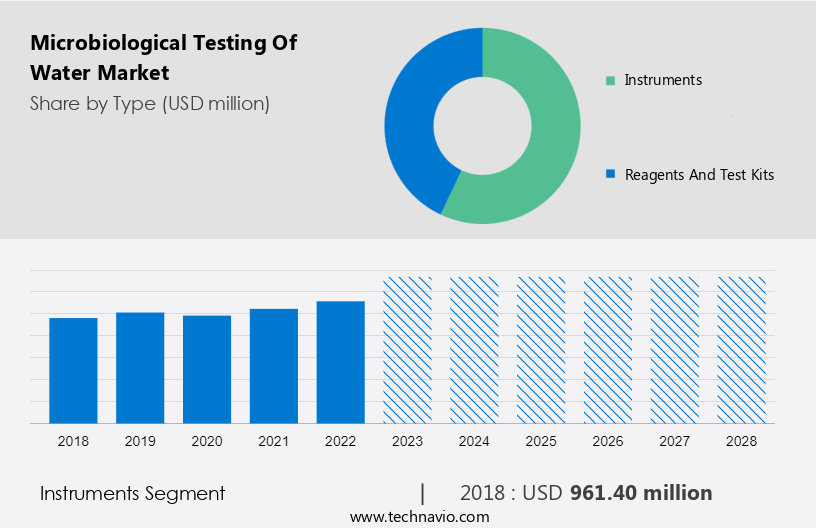
The market share growth of the instruments segment will be significant during the forecast period. This segment, which is a part of the global market, primarily includes multiparameter meters such as pH meters, benchtop conductivity meters, and Dissolved oxygen meters. A pH meter is a tool used in science to evaluate the activity of hydrogen ions in water.
Get a glance at the market contribution of various segments Request a PDF Sample
The instruments segment was valued at 961.40 million in 2018. The rising number of cases of waterborne disease is boosting the demand. An instrument capable of detecting different biomarkers for different types of infectious diseases enables rapid analysis and high accuracy. Water testing can increase the efficiency of industrial processes to produce better products at lower costs and is essential for maintaining a safe public drinking water supply and healthy ecosystems.
Market Dynamic and Customer Landscape
Microbiological testing is an essential process to ensure the safety and quality of water. With the increasing concern over water contamination and water-borne diseases, the demand for microbiological testing of water is on the rise. Water contamination can lead to various health hazards such as Typhoid, Dysentery, Cholera, and others, caused by microorganisms like bacteria, protozoa, cysts, and Giardia, Cryptosporidium. These microorganisms can be present in various sources of water including public water supplies, marine water, and even in the food sector. Microbiological testing solutions help ensure compliance with water quality standards and maintain water hygiene. Environmental laboratories play a crucial role in providing these testing services. Safe drinking water is a fundamental requirement for public health, and water testing is an essential component of ensuring its safety. Water treatment plants also employ microbiological testing to monitor the effectiveness of their treatment processes. Chlorine resistance is a significant concern in microbiological testing, as some microorganisms can survive in chlorinated water, making regular testing necessary. Overall, microbiological testing is a vital aspect of maintaining water quality and public health. Our researchers analyzed the data with 2023 as the base year, along with the key drivers, trends, and challenges. A holistic analysis of drivers will help companies refine their marketing strategies to gain a competitive advantage.
Key Market Driver
Increasing cases of waterborne diseases are the key driver shaping the microbiological water quality test market growth. Increasing waste from urban sewers is one of the most serious quality problems in the world, which increases the demand. The wastewater contains human feces, and water contaminated with this wastewater may contain pathogens that are dangerous to human health. This contaminated water should be periodically verified by microbiological analysis. This has increased the market demand. Microbiological analysis helps analyze the presence of harmful organisms, elements, and compounds.
Furthermore, children are the most vulnerable segment of the waterborne problem. Several children in developing and underdeveloped countries die due to water-based microbiological organisms. Many of these diseases can be prevented through one simple measure, by testing the water and ensuring its quality and suitability for human consumption. The healthcare cost is increasing, which is a major concern for people around the world which makes the testing process important. The rising number of health diseases caused due to contamination is a significant factor surging the demand globally.
Significant Market Trend
Rising concern for clean water is the key trend in the global market. People worldwide are seeking clean water due to the rising number of waterborne diseases. Clean water is mandatory for various businesses, including cosmetic, pharmaceutical, and food and beverage. Smart water technology is gaining importance as water resources shrink around the world and sanitation costs are increasing. The global water crisis has increased the importance of water conservation and the collection and treatment of wastewater to replenish water resources. This, in turn, has led to the replacement of older technologies with newer devices and sensors that offer wider connectivity and real-time water quality monitoring.
Furthermore, the global crisis has increased the importance of water conservation and the collection and treatment of wastewater to replenish resources. This, in turn, has led to the replacement of older technologies with newer devices and sensors that offer wider connectivity and real-time water quality monitoring. The new devices and sensors also help utilities to manage and detect contamination, thus avoiding quality issues even before customers get affected. Governments of various countries are taking the initiative to provide clean to the citizens. According to WHO, approximately 2 billion population in the world are using water that is contaminated with fecal material. There has been technological advancement in the testing process of water, which makes the process easy and faster. Many companies in the market invest in research and development to advance the process of water testing.
Major Market Challenge
Lack of funds may hamper the growth of the market. The cost of monitoring laboratory equipment is high. In most countries around the world, this is funded by government agencies. Thus, the lack of funds from the government may have a negative impact on market growth. The growing demand for a real-time network requires optical and connected water quality sensors, which are costly compared to traditional electrochemical sensors.
Furthermore, the deployment of such sensors by national water supply companies requires government assistance. One of the major challenges in adopting this is the high dependence on government agencies for the sale of equipment. Due to the high price of the device, companies depend on the government for funds, which is the major factor hindering growth.
Key Market Customer Landscape
The market report includes the adoption lifecycle of the market, covering from the innovator's stage to the laggard's stage. It focuses on adoption rates in different regions based on penetration. Furthermore, the report also includes key purchase criteria and drivers of price sensitivity to help companies evaluate and develop their growth strategies.
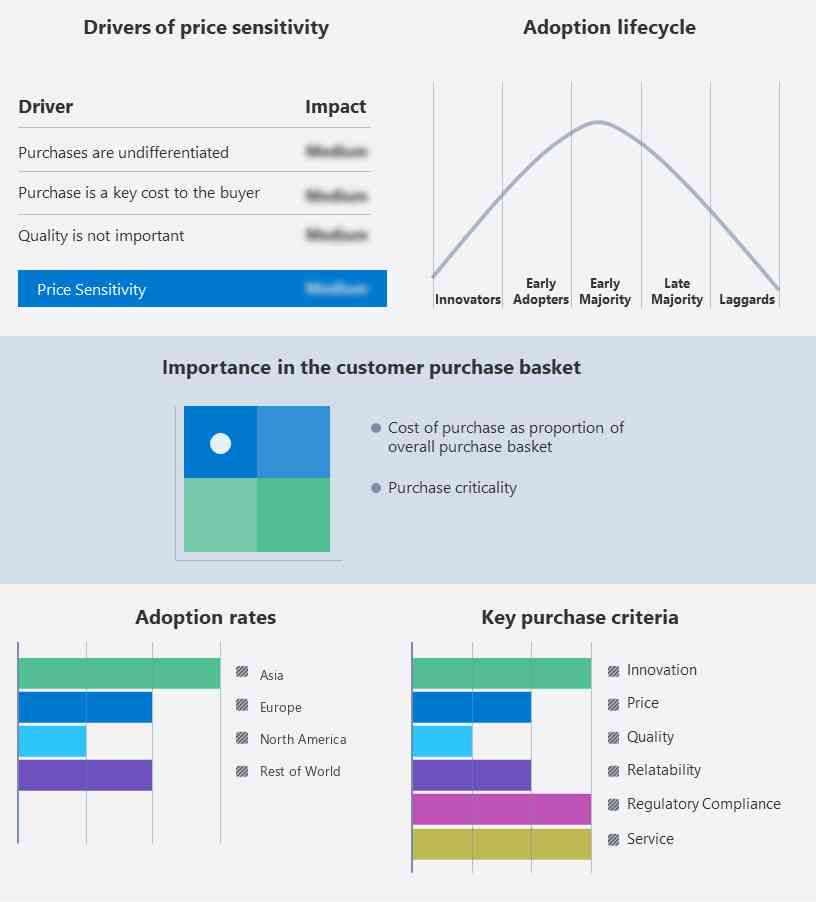
Global Market Customer Landscape
Who are the Major Market Companies?
Companies are implementing various strategies, such as strategic alliances, partnerships, mergers and acquisitions, geographical expansion, and product/service launches, to enhance their presence in the market.
3M Co.: The company offers a Microbiological contamination testing equipment called 3M Microbial Luminescence System MLSII.
Dohler GmbH: The company offers tailor-made all-in-one systems for perfect, multi-sensory taste sensations. Also, the company offers a wide range of natural ingredients which can be used in the foods and beverage industry.
The report also includes detailed analyses of the competitive landscape of the market and information about 15 market companies, including:
- Accepta Ltd.
- Agilent Technologies Inc.
- ALS Ltd.
- Avantor Inc.
- Bio Rad Laboratories Inc.
- Danaher Corp.
- Eurofins Scientific SE
- Hardy Diagnostics
- IDEXX Laboratories Inc.
- Intertek Group Plc
- LaMotte Co.
- Merck KGaA
- Merieux NutriSciences Corp.
- Perkin Elmer Inc.
- SGS SA
Qualitative and quantitative analysis of companies has been conducted to help clients understand the wider business environment as well as the strengths and weaknesses of key market players. Data is qualitatively analyzed to categorize companies as pure play, category-focused, industry-focused, and diversified; it is quantitatively analyzed to categorize companies as dominant, leading, strong, tentative, and weak.
By Region
For more insights on the market share of various regions Request PDF Sample now!
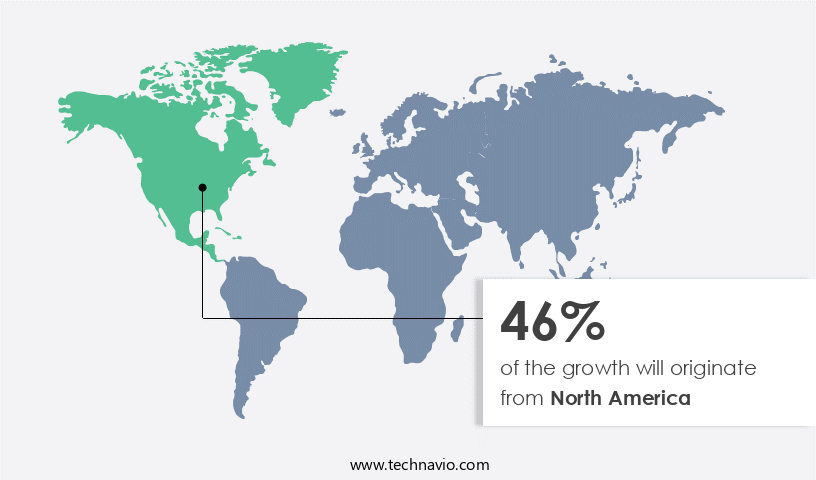
North America is estimated to contribute 46% to the growth of the global market during the forecast period. Technavio's analysts have elaborately explained the regional market growth and trends that shape the market during the forecast period. Due to the stringent food norms and strict legislation for the industrial usage of water, the market is witnessing high growth in North America. The growing demand from the industrial segment and strict environmental guidelines have made wastewater treatment popular in countries like the US and Canada.
Segment Overview
The market research report provides comprehensive data (region-wise segment analysis), with forecasts and estimates in "USD million " for the period 2024-2028, as well as historical data from 2018-2022 for the following segments.
- Type Outlook
- Instruments
- Reagent
- Test kit
- End-user Outlook
- Pharmaceutical
- Clinical
- Food
- Energy
- Others
- Region Outlook
- North America
- The U.S.
- Canada
- Europe
- The U.K.
- Germany
- France
- Rest of Europe
- Asia
- China
- India
- Rest of World
- South Africa
- Rest of the Middle East & Africa
- North America
Market Analyst Overview
.Microbiological testing plays a crucial role in ensuring the safety and quality of water. Water contamination can lead to various waterborne diseases such as typhoid, dysentery, cholera, and others caused by pathogenic organisms including bacteria, viruses, fungi, and parasites. To mitigate health hazards, chemicals, stringent water hygiene standards have been established by regulatory bodies like the FDA. The food safety sector, including food and beverage industries, heavily relies on microbiological testing to maintain quality and prevent contamination outbreaks. Testing laboratories provide testing solutions for water quality assessment, employing techniques such as polymerase chain reaction (PCR) and flow cytometry.
Furthermore, the Food and beverage industries, biopharmaceutical and pharmaceutical sectors, and public health organizations all require regular water testing tools like oxygen meter to adhere to Good Manufacturing Practices (GMP) and ensure safe drinking water. Calibration and maintenance of testing equipment are essential for accurate results. Microbiological testing for water is not only important for human health but also for environmental concerns. Testing laboratories are crucial in combating water-borne diseases by adhering to FDA regulations and implementing rigorous quality assurance measures to detect harmful bacteria like total coliforms, E. coli, legionella, clostridium, and salmonella in water samples. E. coli testing is a common practice to monitor water quality and prevent potential contamination incidents. Water testing services are integral to maintaining water quality, protecting public health, and ensuring compliance with regulatory standards.
|
Market Scope |
|
|
Report Coverage |
Details |
|
Page number |
190 |
|
Base year |
2023 |
|
Historic period |
2018 - 2022 |
|
Forecast period |
2024-2028 |
|
Growth momentum & CAGR |
Accelerate at a CAGR of 6.78% |
|
Market growth 2024-2028 |
USD 669.8 million |
|
Market structure |
Fragmented |
|
YoY growth 2023-2024(%) |
6.23 |
|
Regional analysis |
North America, Europe, Asia, and Rest of World (ROW) |
|
Performing market contribution |
North America at 46% |
|
Key countries |
US, China, Canada, Germany, and UK |
|
Competitive landscape |
Leading Companies, Market Positioning of Companies, Competitive Strategies, and Industry Risks |
|
Key companies profiled |
3M Co., Accepta Water Treatment, Agilent Technologies Inc., ALS Ltd., Avantor Inc., Bio Rad Laboratories Inc., Danaher Corp., Dohler GmbH, Eurofins Scientific SE, Hardy Diagnostics, IDEXX LABORATORIES INC., Intertek Group Plc, LaMotte Co., Merck KGaA, Merieux NutriSciences Corp., Perkin Elmer Inc., SGS SA, Shimadzu Corp., Thermo Fisher Scientific Inc., and TUV SUD AG |
|
Market dynamics |
Parent market analysis, Market growth inducers and obstacles, Fast-growing and slow-growing segment analysis, Market growth and Market Forecasting, COVID 19 impact and recovery analysis and future consumer dynamics, Market condition analysis for Market forecast period |
|
Customization purview |
If our report has not included the data that you are looking for, you can reach out to our analysts and get segments customized. |
What are the Key Data Covered in this Market Report?
- CAGR of the market during the forecast period
- Detailed information on factors that will drive the market growth and forecasting of the market between 2024 and 2028
- Precise estimation of the size of the market size and its contribution to the parent market
- Accurate predictions about upcoming market trends and analysis and changes in consumer behavior
- Growth of the market industry across Europe, North America, APAC, South America, and Middle East and Africa
- Thorough market growth analysis of the market's competitive landscape and detailed information about companies
- Comprehensive market analysis and report on the factors that will challenge the market research and growth of market companies
We can help! Our analysts can customize this report to meet your requirements. Get in touch
 RIA -
RIA - 
