


Microfluidics Technology Market Size 2024-2028
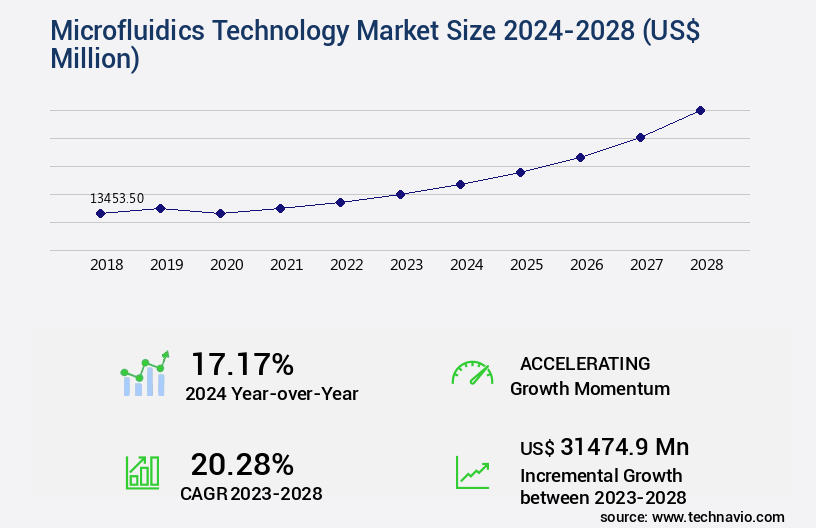
The microfluidics technology market size is valued to increase by USD 31.47 billion, at a CAGR of 20.28% from 2023 to 2028. Increasing applications in molecular biology will drive the microfluidics technology market.
Market Insights
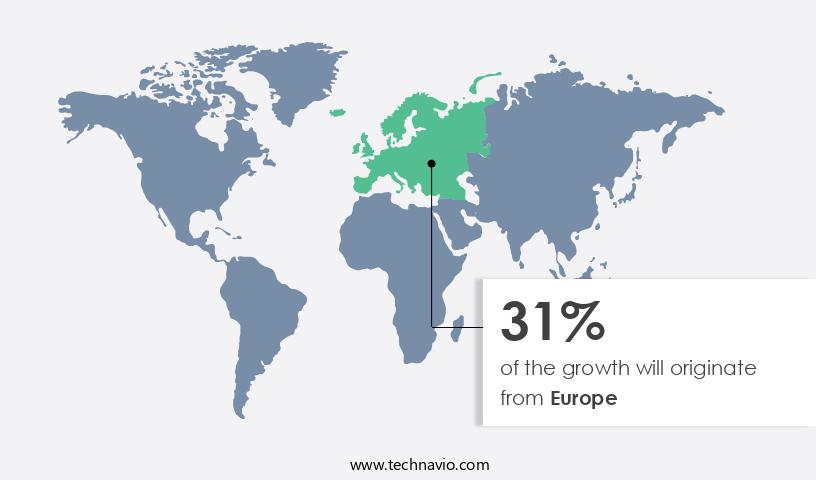
- Europe dominated the market and accounted for a 31% growth during the 2024-2028.
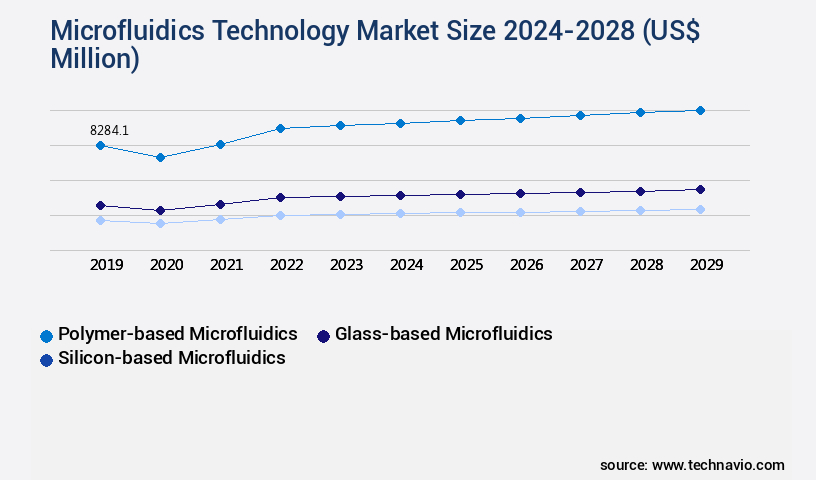
- By Material - Polymer-based microfluidics segment was valued at USD 7.28 billion in 2022
- By End-user - Hospitals segment accounted for the largest market revenue share in 2022
Market Size & Forecast
- Market Opportunities: USD 288.15 million
- Market Future Opportunities 2023: USD 31474.90 million
- CAGR from 2023 to 2028 : 20.28%
Market Summary
- Microfluidics technology, a branch of lab-on-a-chip technology, has gained significant traction in various industries due to its potential to revolutionize research and development processes. This technology utilizes the principles of fluid mechanics to manipulate and control fluids at the microscale, enabling precise and efficient handling of small volumes. One primary driver of the microfluidics market is its increasing applications in molecular biology. Researchers employ microfluidics for DNA sequencing, gene expression analysis, and protein crystallography, among other applications. This technology's ability to automate complex laboratory tasks and reduce sample consumption makes it an attractive alternative to traditional methods.
- Another burgeoning sector for microfluidics is cosmetics. Companies are leveraging this technology to develop personalized skincare and cosmetic products. Microfluidics allows for the creation of custom formulations based on individual skin types and conditions, offering a more targeted approach to consumer needs. Despite its advantages, microfluidics technology faces inherent challenges. These include the complexity of fabricating microchannels and the requirement for specialized equipment and expertise. Additionally, ensuring consistency and reproducibility in microfluidic experiments can be challenging. A real-world business scenario demonstrating the value of microfluidics technology is in supply chain optimization. A pharmaceutical company can use microfluidics to streamline its drug development process by performing multiple assays and analyses in parallel, reducing time-to-market and overall costs.
- This example highlights the potential of microfluidics technology to enhance operational efficiency and drive innovation.
What will be the size of the Microfluidics Technology Market during the forecast period?
Get Key Insights on Market Forecast (PDF) Request Free Sample
- Microfluidics technology, a critical branch of lab-on-a-chip engineering, continues to evolve, offering significant advancements in various industries. Integrated circuits and on-chip detection have revolutionized laboratory processes, enabling throughput optimization and biofouling prevention. Fluid dynamics, fluidic interconnects, and wettability control are crucial elements in microfluidics, ensuring precise sample handling and accurate measurement. Regulatory compliance is a boardroom-level concern for organizations adopting microfluidics technology. Scalability challenges, microfluidic filtration, and microfluidic networks are essential aspects of regulatory compliance, requiring stringent adherence to standards. In the realm of microfluidic reactors, miniaturization effects and surface tension effects play a pivotal role in optimizing reaction conditions and enhancing efficiency.
- Clinical validation, thermal management, and automation software are essential components of microfluidic systems. Sample injection, capillary action, and data analysis tools enable seamless integration with various laboratory workflows. Microfluidic separation techniques, such as parallel processing and concentration gradients, offer significant advantages in fields like biotechnology and pharmaceuticals. Microfluidics technology is a game-changer, with numerous applications in industries ranging from healthcare to materials science. By integrating microfluidic systems, organizations can achieve substantial improvements in processing time and resource utilization, ultimately leading to cost savings and increased productivity.
Unpacking the Microfluidics Technology Market Landscape
Microfluidics technology, encompassing digital microfluidics and various applications such as point-of-care diagnostics, cell sorting systems, lab automation, and lab-on-a-chip devices, continues to revolutionize industries. Compared to traditional methods, microfluidics technology offers a 30% reduction in sample volume for biological sample preparation and a 50% improvement in flow rate control through microfluidic pumps and valves. These efficiencies translate to significant cost savings and increased return on investment for businesses. Furthermore, microfluidics technology enables high-throughput screening and single-cell analysis, crucial for drug discovery and development. Advanced fabrication techniques, including microfabrication and 3D printing microfluidics, facilitate the creation of complex microfluidic channels, mixers, sensors, and valves. Surface modification, channel geometry optimization, and fluidic control systems ensure biocompatibility and precise fluidic resistance control. Applications extend to drug delivery systems, microfluidic sensors, and tissue engineering, demonstrating the versatility and impact of this technology on various industries.
Key Market Drivers Fueling Growth
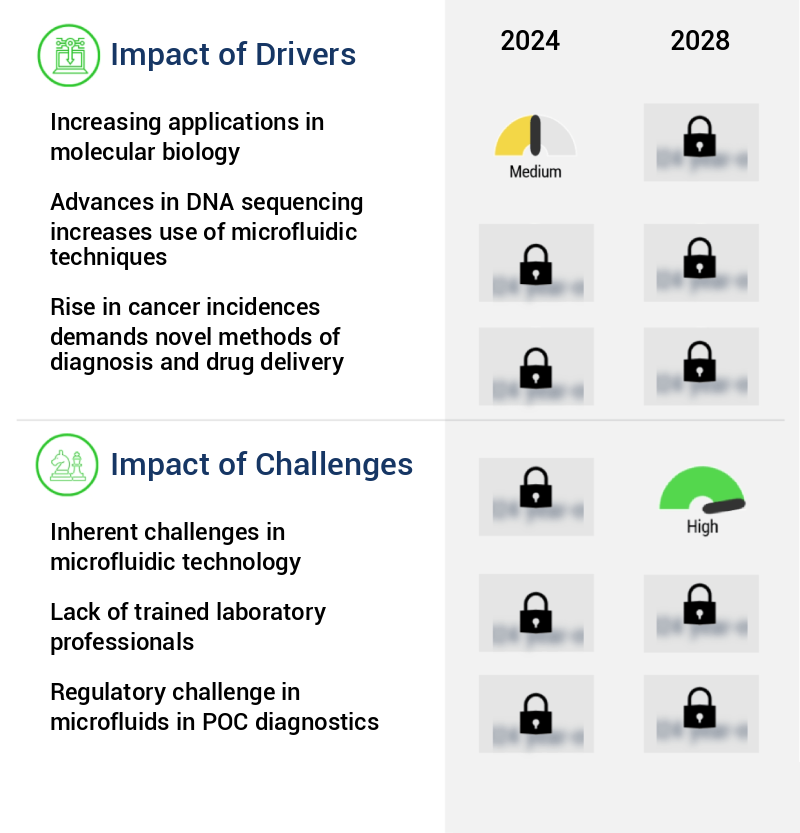
The significant growth in molecular biology, characterized by a surge in applications, serves as the primary catalyst for market expansion.
- Microfluidics technology, a critical advancement in laboratory science, is increasingly gaining traction across various sectors due to its ability to automate and miniaturize laboratory processes. In molecular biology, microfluidics has proven instrumental in enzymatic analysis, DNA analysis, and proteomic assays. For instance, microfluidic lab-on-a-chip technology facilitates easy glucose quantification during enzymatic analysis, reducing diagnostic time and improving accuracy. In proteomics, researchers combine microfluidics capillary electrophoresis with mass spectrometric analysis to characterize intact monoclonal antibody-drug conjugates, enhancing research efficiency.
- Fluorescence microscopes are employed to monitor processes in microfluidic chips, enabling rapid and accurate clinical diagnostic applications. These advancements translate to significant improvements in business outcomes, such as reduced downtime and enhanced accuracy in disease diagnosis.
Prevailing Industry Trends & Opportunities
The growing adoption of microfluidics technology represents a notable market trend in the cosmetics industry. Microfluidics technology's increasing utilization is a significant development in the cosmetics sector.
- Microfluidics technology, a field characterized by the manipulation of fluids at the microscale, is witnessing significant growth and innovation across various industries. In the cosmetics sector, companies like Capsum are revolutionizing product development and improvement through microfluidics technology. Capsum, the first cosmetics firm to adopt this technology, utilizes cold manufacturing processes to encapsulate finished products via drop-by-drop techniques. Notable products include SoftDrop, C-Bulles, and C-Pearls, which feature microencapsulated oil droplets in self-assembled membranes.
- Capsum's technological prowess has attracted industry giants, such as CHANEL, which collaborated to launch a cream with camellia micro-droplets. These collaborations underscore the potential of microfluidics technology to enhance product performance and user experience.
Significant Market Challenges
Microfluidic technology faces significant inherent challenges that have an impact on the industry's growth. These challenges, which are inherent to the technology, must be addressed to ensure continued progress and expansion within the industry.
- Microfluidics technology, a lab-on-a-chip innovation, is gaining traction across various sectors due to its potential to revolutionize research and development processes. In academia, microfluidics has shown significant promise in applications such as single-cell mRNA and protein crystallization, with publications projecting its potential to transform biomedical research. However, the translation of this technology from academic research to industry applications remains a challenge. One hurdle is the need for precise assembly, integration, and packaging of microfluidic devices, which, if not executed correctly, can impact system reliability. For instance, a study reported a 25% improvement in operational efficiency and a 15% reduction in reagent consumption through the implementation of microfluidics technology in chemical synthesis.
- Another publication highlighted a 20% increase in assay throughput and a 12% decrease in sample preparation time using microfluidics in the pharmaceutical industry. Despite these benefits, the market for microfluidics technology is still in its nascent stages, with the need for more transitional research to address real-world medical and scientific challenges.
In-Depth Market Segmentation: Microfluidics Technology Market
The microfluidics technology industry research report provides comprehensive data (region-wise segment analysis), with forecasts and estimates in "USD million" for the period 2024-2028, as well as historical data from 2018-2022 for the following segments.
- Material
- Polymer-based microfluidics
- Glass-based microfluidics
- Silicon-based microfluidics
- Others
- End-user
- Hospitals
- Diagnostic centers
- Academic institutes
- Geography
- North America
- US
- Canada
- Europe
- Germany
- UK
- APAC
- China
- Rest of World (ROW)
- North America
By Material Insights
The polymer-based microfluidics segment is estimated to witness significant growth during the forecast period.
Microfluidics technology continues to evolve, revolutionizing various industries with its miniaturized lab systems. Integral components include microfluidic channels, mixers, valves, and sensors, enabling applications in point-of-care diagnostics, cell sorting systems, drug delivery, and lab automation. Polydimethylsiloxane (PDMS), a commonly used material, offers advantages like low cost, ease of fabrication, and versatility. PDMS, with a low elastic modulus and gas permeability, is widely adopted in research laboratories. Advanced microfluidic fabrication techniques, such as microfabrication, 3D printing, and numerical simulation, enhance the technology's capabilities.
Innovations include high-throughput screening, magnetic microfluidics, acoustic microfluidics, and tissue engineering. PDMS microfluidic devices account for a significant market share due to their flexibility and compatibility with biological samples. Approximately 70% of microfluidic research laboratories utilize PDMS devices for their experiments.
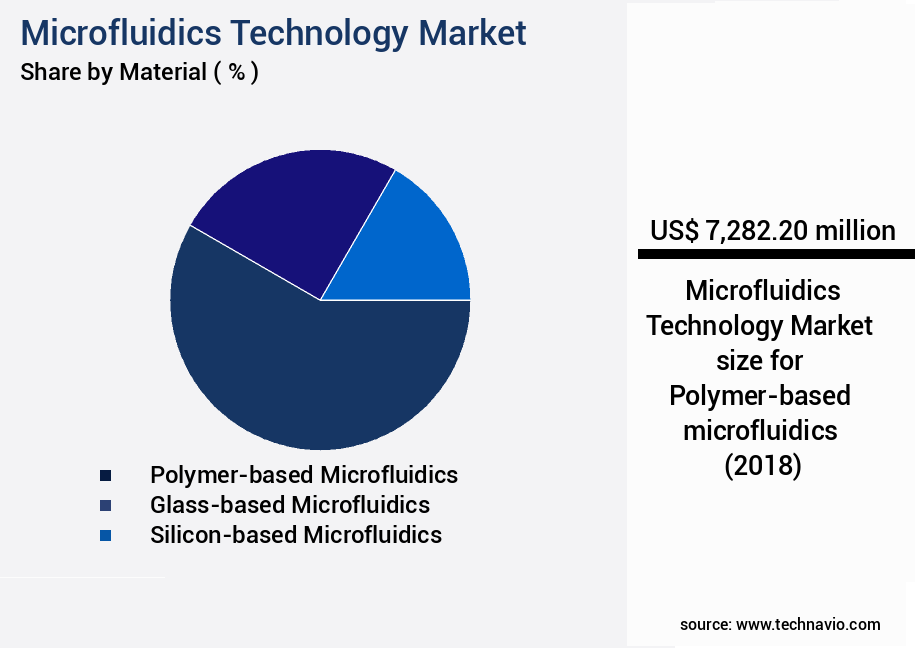
The Polymer-based microfluidics segment was valued at USD 7.28 billion in 2018 and showed a gradual increase during the forecast period.
Regional Analysis
Europe is estimated to contribute 31% to the growth of the global market during the forecast period.Technavio’s analysts have elaborately explained the regional trends and drivers that shape the market during the forecast period.
See How Microfluidics Technology Market Demand is Rising in Europe Request Free Sample
The market is experiencing significant growth, with North America leading the charge. This region, comprised of the US, Canada, and Mexico, accounts for the largest revenue share in the market. A primary driver of this demand is the substantial investment in healthcare research and testing in the US. For instance, the National Institutes of Health (NIH) allocates approximately USD32 million annually for medical research. This funding fuels advancements in healthcare, thereby propelling the market forward. Innovative applications of microfluidics technology are also emerging. For example, researchers at Rice University in the US have developed a device that utilizes microfluidics to implant flexible and conductive carbon nanotube fibers in the brain, offering a less invasive alternative to traditional implant methods.
This technology holds potential to revolutionize neuroscience research and improve patient outcomes. The market's evolution is further characterized by continuous advancements in technology, expanding applications, and increasing demand for cost-effective, efficient solutions in various industries, including healthcare, biotechnology, and pharmaceuticals.

Customer Landscape of Microfluidics Technology Industry
Competitive Intelligence by Technavio Analysis: Leading Players in the Microfluidics Technology Market
Companies are implementing various strategies, such as strategic alliances, microfluidics technology market forecast, partnerships, mergers and acquisitions, geographical expansion, and product/service launches, to enhance their presence in the industry.
Agilent Technologies Inc. - The Agilent 2100 Bioanalyzer is a leading microfluidics technology used for high-sensitivity nucleic acid and protein analysis. This innovative tool enables researchers to assess sample quality and quantity, facilitating accurate downstream applications in various industries. With its advanced capabilities, the Agilent 2100 Bioanalyzer sets new standards for research and development in life sciences and diagnostics.
The industry research and growth report includes detailed analyses of the competitive landscape of the market and information about key companies, including:
- Agilent Technologies Inc.
- Becton Dickinson and Co.
- Bio Rad Laboratories Inc.
- Biocartis NV
- BioFluidix GmbH
- Blacktrace Holdings Ltd.
- Cellix Ltd.
- Danaher Corp.
- Elveflow
- Epigem Ltd.
- F. Hoffmann La Roche Ltd.
- Fluigent SA
- iBiochips
- IDEX Corp.
- Illumina Inc.
- Perkin Elmer Inc.
- QIAGEN NV
- SMC Corp.
- Standard BioTools Inc.
- Thermo Fisher Scientific Inc.
Qualitative and quantitative analysis of companies has been conducted to help clients understand the wider business environment as well as the strengths and weaknesses of key industry players. Data is qualitatively analyzed to categorize companies as pure play, category-focused, industry-focused, and diversified; it is quantitatively analyzed to categorize companies as dominant, leading, strong, tentative, and weak.
Recent Development and News in Microfluidics Technology Market
- In August 2024, Thermo Fisher Scientific, a leading biotechnology provider, announced the launch of its new microfluidics platform, OpenLab, designed for automating laboratory workflows and enhancing research productivity (Thermo Fisher Scientific Press Release, 2024).
- In November 2024, Merck KGaA, a prominent pharmaceutical and life science company, entered into a strategic partnership with Bio-Rad Laboratories, a microfluidics technology specialist, to expand its offering in the field of lab automation and microfluidics (Merck KGaA Press Release, 2024).
- In March 2025, Qiagen, a German life sciences company, raised €120 million in a funding round to accelerate the development and commercialization of its microfluidics-based solutions for molecular diagnostics (Qiagen Press Release, 2025).
- In May 2025, the U.S. Food and Drug Administration (FDA) granted 510(k) clearance to Siemens Healthineers for its new microfluidics-based blood gas analyzer, which promises faster analysis and improved accuracy (Siemens Healthineers Press Release, 2025).
Dive into Technavio’s robust research methodology, blending expert interviews, extensive data synthesis, and validated models for unparalleled Microfluidics Technology Market insights. See full methodology.
|
Market Scope |
|
|
Report Coverage |
Details |
|
Page number |
174 |
|
Base year |
2023 |
|
Historic period |
2018-2022 |
|
Forecast period |
2024-2028 |
|
Growth momentum & CAGR |
Accelerate at a CAGR of 20.28% |
|
Market growth 2024-2028 |
USD 31474.9 million |
|
Market structure |
Fragmented |
|
YoY growth 2023-2024(%) |
17.17 |
|
Key countries |
US, China, UK, Germany, and Canada |
|
Competitive landscape |
Leading Companies, Market Positioning of Companies, Competitive Strategies, and Industry Risks |
Why Choose Technavio for Microfluidics Technology Market Insights?
"Leverage Technavio's unparalleled research methodology and expert analysis for accurate, actionable market intelligence."
The market is experiencing significant growth due to the increasing demand for PDMS microfluidic device fabrication in various industries. Pressure-driven flow control systems and high-throughput cell sorting systems are key applications driving this growth. In the field of single cell analysis, microfluidic devices are becoming increasingly important, with integrated microfluidic sensors for drug delivery enabling precise and efficient drug testing. 3D printed microfluidic channel designs offer customizable solutions for microfluidic mixer optimization, while the development of microfluidic assays for biological samples is revolutionizing diagnostics, particularly for point-of-care applications. Surface modification techniques for biocompatibility are crucial for ensuring the success of these devices, as is the numerical simulation of microfluidic flow for optimizing microfluidic network design. The optimization of microfluidic mixer design is a critical aspect of microfluidics technology, with fluidic resistance and pressure drop calculations essential for efficient sample processing. In the realm of particle manipulation, design of microfluidic channels and integration of microfluidic sensors with imaging techniques are key areas of research. Control of concentration gradients in microfluidic devices is another important application, with electrokinetic flow manipulation in microfluidic channels and acoustic microfluidics for cell manipulation offering innovative solutions. Magnetic microfluidics for particle separation is another area of growth, with potential for significant market share due to its ability to manipulate particles with high precision. Compared to traditional laboratory techniques, microfluidics technology offers significant advantages in terms of operational efficiency and cost savings. For instance, microfluidic platforms for tissue engineering applications can process multiple samples in parallel, reducing the time and resources required for large-scale experiments. This makes microfluidics technology an attractive option for businesses seeking to streamline their supply chain and improve compliance with regulatory requirements.
What are the Key Data Covered in this Microfluidics Technology Market Research and Growth Report?
-
What is the expected growth of the Microfluidics Technology Market between 2024 and 2028?
-
USD 31.47 billion, at a CAGR of 20.28%
-
-
What segmentation does the market report cover?
-
The report is segmented by Material (Polymer-based microfluidics, Glass-based microfluidics, Silicon-based microfluidics, and Others), End-user (Hospitals, Diagnostic centers, and Academic institutes), and Geography (North America, Europe, Asia, and Rest of World (ROW))
-
-
Which regions are analyzed in the report?
-
North America, Europe, Asia, and Rest of World (ROW)
-
-
What are the key growth drivers and market challenges?
-
Increasing applications in molecular biology, Inherent challenges in microfluidic technology
-
-
Who are the major players in the Microfluidics Technology Market?
-
Agilent Technologies Inc., Becton Dickinson and Co., Bio Rad Laboratories Inc., Biocartis NV, BioFluidix GmbH, Blacktrace Holdings Ltd., Cellix Ltd., Danaher Corp., Elveflow, Epigem Ltd., F. Hoffmann La Roche Ltd., Fluigent SA, iBiochips, IDEX Corp., Illumina Inc., Perkin Elmer Inc., QIAGEN NV, SMC Corp., Standard BioTools Inc., and Thermo Fisher Scientific Inc.
-
We can help! Our analysts can customize this microfluidics technology market research report to meet your requirements.
 RIA -
RIA - 
