
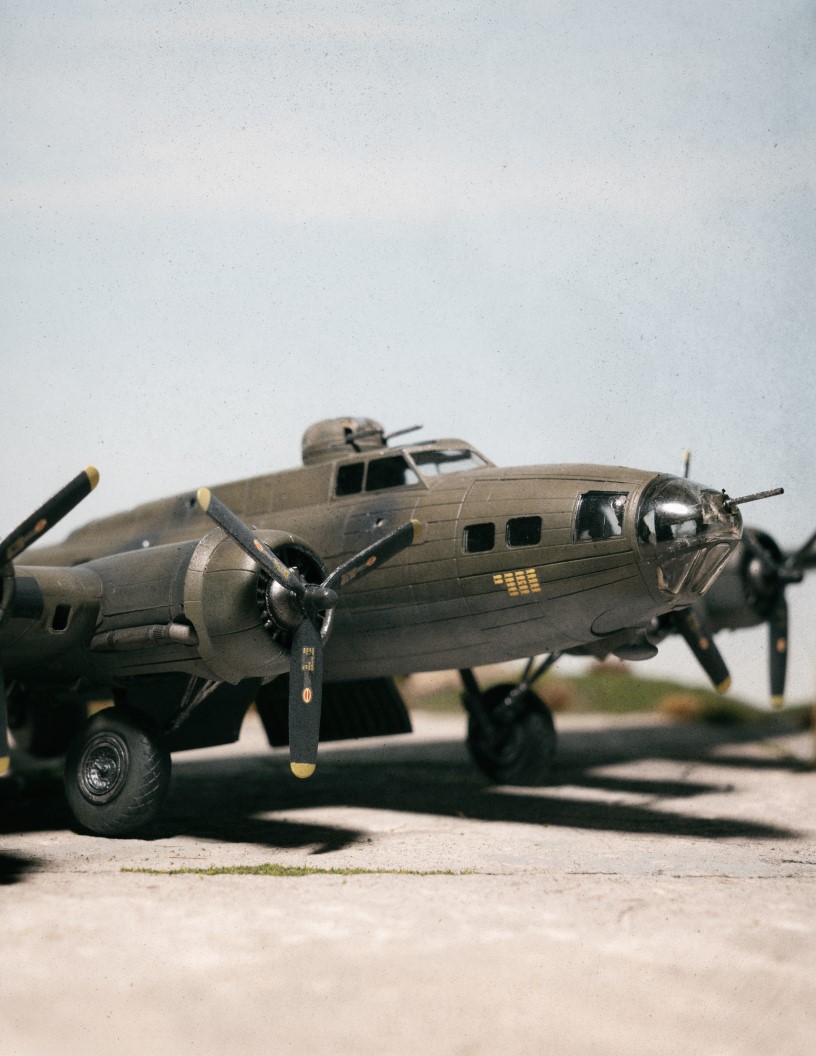


Military Multirole Aircraft Market Size 2024-2028
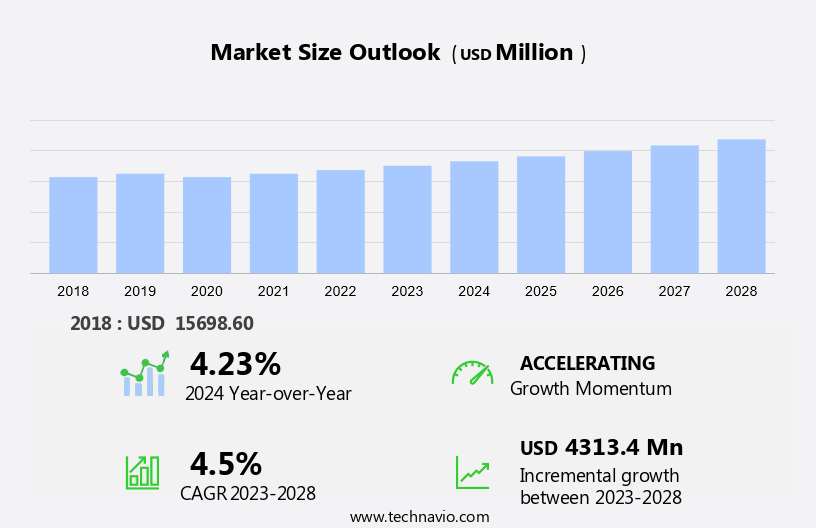
The military multirole aircraft market size is forecast to increase by USD 4.31 billion at a CAGR of 4.5% between 2023 and 2028.
- The market is experiencing significant growth due to several key trends. One notable trend is the increasing focus on minimizing environmental effects, leading military forces to invest in advanced multirole aircraft that offer improved fuel efficiency and reduced emissions. The market is expanding as advanced helicopters are increasingly integrated into multirole operations, offering versatility for combat, reconnaissance, and logistical support missions. Another trend driving market growth is the rising arms race among countries, resulting in a rise in demand for military multirole aircraft that can perform various missions effectively. Furthermore, the adoption of unmanned aerial vehicles (UAVs) is also contributing to the growth of the market, as they offer advantages such as increased operational capabilities and reduced risk to human lives. These trends are expected to continue shaping the market In the coming years.
What will be the Size of the Military Multirole Aircraft Market During the Forecast Period?
- The market encompasses a diverse range of fixed-wing and rotary wing aircraft used by defense forces for various missions, including air support, aerial bombing, reconnaissance, electronic warfare, and troop transportation. These aircraft play a crucial role in national defense, providing air superiority, interception capabilities, and ground attack functions. The market is characterized by continuous innovation and growth, driven by the need for advanced aerial combat capabilities against hostile aircraft and the increasing demand for surveillance and reconnaissance in coastal boundaries and remote regions. The military aircraft fleet includes both combat and non-combat aircraft, with multirole helicopters (M Rh) such as the Mi-35 and Tupolev T-160 gaining popularity for their versatility in various missions.
- Military budgets remain a significant factor in market dynamics, with ongoing investments in modernizing and expanding military aircraft fleets. Additionally, the market is influenced by military exercises, anti-piracy operations, and other mission requirements, underscoring the essential role of military multirole aircraft in maintaining national security. The Multirole Combat Aircraft (MRCA) are crucial for air-to-air combat and suppression of air defenses, while air superiority aircraft provide dominance in the skies; meanwhile, the Multi-Role Helicopter (MRH) plays a key role in search and rescue operations and light troop transport aircraft missions. The ongoing Joint Multi-Role (JMR) program aims to integrate these capabilities, influencing the military budget and future defense strategies, with advanced models like the Tupolev T-160 aircraft setting benchmarks for versatility and power.
How is this Military Multirole Aircraft Industry segmented and which is the largest segment?
The industry research report provides comprehensive data (region-wise segment analysis), with forecasts and estimates in "USD billion" for the period 2024-2028, as well as historical data from 2018-2022 for the following segments.
- Type
- Rotorcraft
- Fixed-wing
- Geography
- North America
- US
- APAC
- China
- India
- Europe
- France
- South America
- Middle East and Africa
- North America
By Type Insights
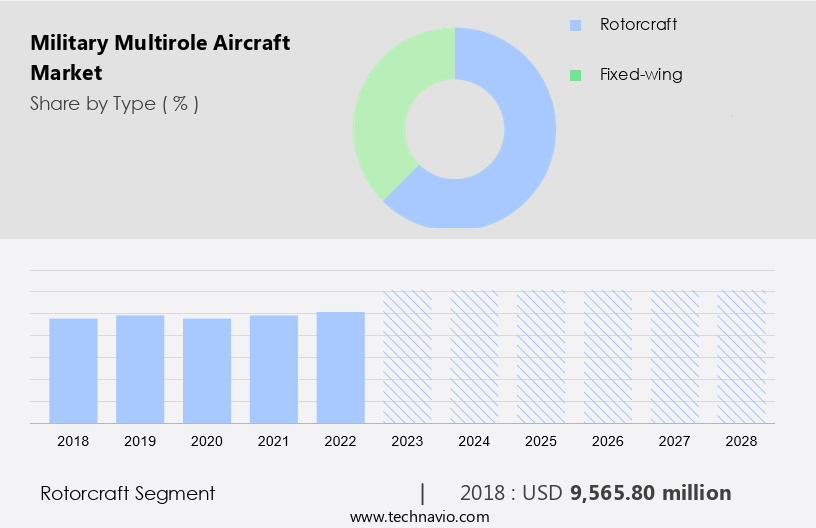
- The rotorcraft segment is estimated to witness significant growth during the forecast period.
Military multirole aircraft, comprising rotorcraft and fixed-wing aircraft, play a pivotal role in national defense by offering versatility and flexibility in various military operations. Rotorcraft, including helicopters and tiltrotor aircraft, provide vertical take-off and landing (VTOL) capabilities, enabling them to operate in challenging terrains and perform tasks such as troop transportation, medical evacuation, reconnaissance, search and rescue, and special operations support. These aircraft are outfitted with advanced avionics, powerful engines, and often incorporate stealth technology and defensive measures to ensure survivability in hostile environments.
Fixed-wing multirole aircraft contribute to air superiority, aerial bombing, electronic warfare, reconnaissance, military exercises, interception, anti-piracy operations, and surveillance and reconnaissance. Military budgets continue to invest in these aircraft to maintain a strong and diverse military aircraft fleet.
Get a glance at the market report of share of various segments Request Free Sample
The Rotorcraft segment was valued at USD 9.57 billion in 2018 and showed a gradual increase during the forecast period.
Regional Analysis
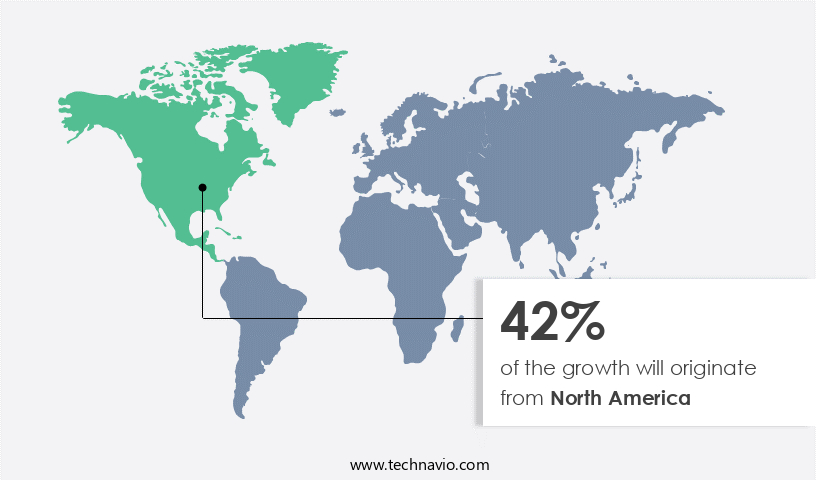
- North America is estimated to contribute 42% to the growth of the global market during the forecast period.
Technavio's analysts have elaborately explained the regional trends and drivers that shape the market during the forecast period.
For more insights on the market size of various regions, Request Free Sample
The North American region dominated the market in 2023, with the United States and Canada being significant contributors. Defense forces in this region prioritize the acquisition of multirole aircraft due to increasing global conflicts and threats to civilian safety. These aircraft are essential for interception, elimination of hostile aircraft, and troop transportation. The market is experiencing growth due to the increasing demand for versatile aircraft that enhance defense logistics by providing rapid transport, supply drops, and support for military operations in diverse environments. Key market participants have established a strong presence in the region with their offerings, which include combat aircraft, multi-role helicopters, and non-combat aircraft. The market expansion is further driven by the need for air superiority, coastal boundary protection, aerial bombing, reconnaissance, electronic warfare, military exercises, and anti-piracy operations. The market is expected to continue growing due to the increasing demand for advanced surveillance and reconnaissance capabilities.
Market Dynamics
Our researchers analyzed the data with 2023 as the base year, along with the key drivers, trends, and challenges. A holistic analysis of drivers will help companies refine their marketing strategies to gain a competitive advantage.
What are the key market drivers leading to the rise in the adoption of Military Multirole Aircraft Industry?
Focus on minimizing environmental effects is the key driver of the market.
- Military multirole aircraft play a crucial role in national defense, providing air support through aerial bombing, reconnaissance, electronic warfare, and interception. These aircraft are essential for combat readiness and military exercises, requiring advanced aerial combat capabilities and air superiority. However, their operation comes with environmental concerns. Two primary issues are fuel consumption and noise reduction. Given the significant carbon footprint of military forces, there is a growing emphasis on fuel-efficient engines, generators, and auxiliary power units (APUs) in military multirole aircraft. For instance, fighter jets consume roughly double the fuel of commercial aircraft, such as a Boeing 737-800, which consumes 1,605 pounds of fuel per hour.
- Defense ministries worldwide are under budgetary constraints, making fuel-efficient APUs a cost-effective solution for reducing aviation fuel consumption. Additionally, noise reduction is a significant concern for communities living near military bases. Manufacturers are investing in quieter engines and technologies to minimize noise pollution. Military multirole aircraft, including fighter jets, transport helicopters, and multi-role helicopters (MRH) like the Tupolev T-160 and Mi-35, are integral to military fleets. The market for military multirole aircraft is driven by the need for advanced capabilities in reconnaissance, troop transportation, ground attack, anti-piracy operations, and surveillance and reconnaissance. The market is expected to grow due to the increasing demand for multi-role aircraft that can perform various missions efficiently and cost-effectively.
What are the market trends shaping the Military Multirole Aircraft Industry?
Rising arms race among countries leading to a rise in demand for military multirole aircraft is the upcoming market trend.
- The market is experiencing significant growth due to escalating conflicts and the subsequent need for advanced defense capabilities. Countries such as China, India, and South Korea are investing heavily in their defense budgets to modernize and expand their aircraft fleets. A key focus of these investments is enhancing aerial firepower, which is driving market expansion. Military forces are seeking multirole aircraft for various applications, including air support, aerial bombing, reconnaissance, electronic warfare, and troop transportation. These aircraft are essential for ground attack missions, air superiority, and coastal boundary defense. Combat aircraft, such as fighter jets, are being upgraded with advanced interception and aerial combat capabilities to counter hostile aircraft.
- Non-combat aircraft, like multi-role helicopters, are used for tasks like troop transportation, anti-piracy operations, and surveillance and reconnaissance. The Tupolev T-160 and Mi-35 are notable examples of multirole aircraft that cater to both combat and non-combat roles. The military aircraft fleet continues to evolve as technology advances, and these aircraft are expected to play a crucial role in maintaining air superiority and ensuring national defense. The market is poised for continued growth as defense forces worldwide invest in advanced, versatile aircraft to secure their interests and maintain peace and stability.
What challenges does the Military Multirole Aircraft Industry face during its growth?
Adoption of unmanned aerial vehicles (UAVs) is a key challenge affecting the industry growth.
- The market encompasses various types of aircraft, including combat and non-combat airframes, utilized for diverse applications such as air support, aerial bombing, reconnaissance, electronic warfare, military exercises, and more. Combat aircraft are integral for securing air superiority, interception, and aerial combat capabilities against hostile aircraft. Meanwhile, non-combat aircraft are essential for tasks like troop transportation, ground attack, and multi-role helicopter operations, including coastal boundaries, surveillance, and reconnaissance.
- The defense forces' growing reliance on advanced aircraft technology to bolster national defense and execute missions effectively is driving market expansion. However, the increasing adoption of unmanned aerial vehicles (UAVs) for reconnaissance, surveillance, and target acquisition may slightly hinder the market's growth during the forecast period. Military aircraft fleet modernization, anti-piracy operations, and the integration of advanced technologies are other significant market trends.
Exclusive Customer Landscape
The market forecasting report includes the adoption lifecycle of the market, covering from the innovator's stage to the laggard's stage. It focuses on adoption rates in different regions based on penetration. Furthermore, the market report also includes key purchase criteria and drivers of price sensitivity to help companies evaluate and develop their market growth analysis strategies.
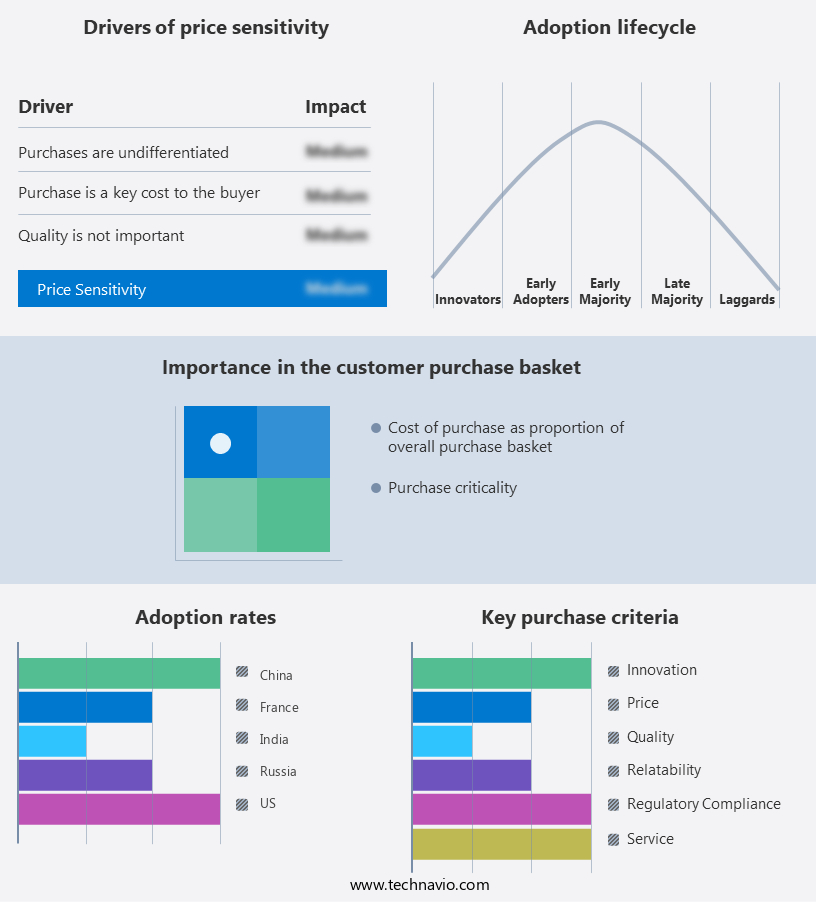
Customer Landscape
Key Companies & Market Insights
Companies are implementing various strategies, such as strategic alliances, market forecast, partnerships, mergers and acquisitions, geographical expansion, and product/service launches, to enhance their presence in the industry
The industry research and growth report includes detailed analyses of the competitive landscape of the market and information about key companies, including:
- Airbus SE
- Aviation Industry Corp. of China Co. Ltd.
- Bombardier Inc.
- Dassault Aviation SA
- Eaton Corp. Plc
- Elbit Systems Ltd.
- Eurofighter GmbH
- Israel Aerospace Industries Ltd.
- Leonardo Spa
- Lockheed Martin Corp.
- Bandak Aviation Inc.
- Protankgrup
- RTX Corp.
- Saab AB
- The Boeing Co.
- United Aircraft Corp.
Qualitative and quantitative analysis of companies has been conducted to help clients understand the wider business environment as well as the strengths and weaknesses of key industry players. Data is qualitatively analyzed to categorize companies as pure play, category-focused, industry-focused, and diversified; it is quantitatively analyzed to categorize companies as dominant, leading, strong, tentative, and weak.
Research Analyst Overview
The market encompasses a diverse range of aircraft that cater to various military applications, including air support, aerial bombing, reconnaissance, electronic warfare, and national defense. These aircraft serve a crucial role in enhancing the capabilities of defense forces, enabling them to effectively respond to threats and maintain air superiority. Multirole aircraft offer versatility, as they can be utilized for both combat and non-combat missions. Combat missions may include aerial combat capabilities against hostile aircraft, air superiority, interception, and ground attack. Non-combat missions may involve troop transportation, coastal boundary patrol, and surveillance and reconnaissance. The military multirole helicopter segment is an essential component of this market, offering agility and flexibility in various operational scenarios.
Moreover, multi-role helicopters (MRH) can be deployed for troop transportation, search and rescue, medical evacuation, and ground attack missions. The Tupolev T-160 and MI-35 are notable examples of multirole helicopters that have gained popularity in military circles due to their versatility and reliability. The military aircraft fleet continues to evolve, with defense forces investing in advanced technologies to maintain a competitive edge. The military budgets of various countries allocate significant resources towards the acquisition and maintenance of multirole aircraft. Fighter aircraft, for instance, are a key focus area for many defense forces, as they offer superior aerial combat capabilities and air superiority.
Furthermore, anti-piracy operations represent another application of military multirole aircraft, particularly in regions with high maritime traffic and piracy threats. These aircraft can provide surveillance and reconnaissance capabilities, enabling quick response to potential threats and ensuring the safety of commercial vessels and their crews.
|
Market Scope |
|
|
Report Coverage |
Details |
|
Page number |
139 |
|
Base year |
2023 |
|
Historic period |
2018-2022 |
|
Forecast period |
2024-2028 |
|
Growth momentum & CAGR |
Accelerate at a CAGR of 4.5% |
|
Market growth 2024-2028 |
USD 4.31 billion |
|
Market structure |
Fragmented |
|
YoY growth 2023-2024(%) |
4.23 |
|
Key countries |
US, China, Russia, India, and France |
|
Competitive landscape |
Leading Companies, Market Positioning of Companies, Competitive Strategies, and Industry Risks |
What are the Key Data Covered in this Military Multirole Aircraft Market Research and Growth Report?
- CAGR of the Military Multirole Aircraft industry during the forecast period
- Detailed information on factors that will drive the market growth and forecasting between 2024 and 2028
- Precise estimation of the size of the market and its contribution of the industry in focus to the parent market
- Accurate predictions about upcoming growth and trends and changes in consumer behaviour
- Growth of the market across North America, APAC, Europe, South America, and Middle East and Africa
- Thorough analysis of the market's competitive landscape and detailed information about companies
- Comprehensive analysis of factors that will challenge the military multirole aircraft market growth of industry companies
We can help! Our analysts can customize this military multirole aircraft market research report to meet your requirements.
 RIA -
RIA - 
