


Neurologic Disorders Therapeutics Market Size 2024-2028
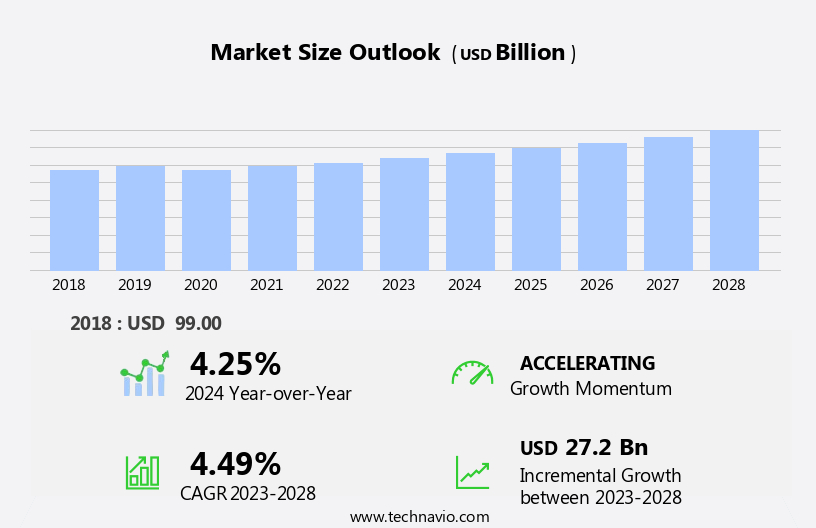
The neurologic disorders therapeutics market size is forecast to increase by USD 27.2 billion at a CAGR of 4.49% between 2023 and 2028.
- The market is experiencing significant growth, driven by the approval of novel drugs and the advent of regenerative medicines. These advancements offer new treatment options for various neurological conditions, including Parkinson's disease, Alzheimer's disease, and epilepsy. However, regulatory hurdles impact adoption, as stringent regulatory requirements and lengthy approval processes can delay market entry for new therapies. Additionally, supply chain inconsistencies temper growth potential due to the complexities involved in producing and distributing these specialized treatments. The advent of neurostimulation devices, such as deep brain stimulators and transcranial magnetic stimulators, presents both opportunities and challenges. While these devices offer non-invasive treatment options and improved patient outcomes, they face competition from traditional pharmaceutical therapies and require significant investment in research and development.
- To capitalize on market opportunities and navigate challenges effectively, companies must focus on regulatory compliance, supply chain optimization, and strategic partnerships. By addressing these key issues, they can successfully penetrate the market and contribute to the ongoing advancements in neurological disorders therapeutics.
What will be the Size of the Neurologic Disorders Therapeutics Market during the forecast period?
- The neurological disorders therapeutics market encompasses a range of innovations aimed at addressing neurological dysfunctions and conditions. Neurological organizations and professionals collaborate to advance neurological medicine, driving progress in neurological education, assessment, and rehabilitation. Neurological advancements in cognitive impairment treatments and neurological surgery offer new hope for those suffering from neurological deficits and complications. Neurological specialists provide expertise in neurological assessment and treatment, while neurological advocacy groups raise awareness for neurological conditions and their impact on the neurological community. Neurological research continues to uncover neurological breakthroughs, leading to the development of neurological therapies and neurological recovery methods.
- Neurological care is a critical aspect of managing neurological conditions, with neurological support essential for neurological patients during their journey towards neurological recovery. Neurological neurology encompasses a vast field, requiring continuous neurological training and neurological science advancements to address the diverse needs of those affected by neurological disorders.
How is this Neurologic Disorders Therapeutics Industry segmented?
The neurologic disorders therapeutics industry research report provides comprehensive data (region-wise segment analysis), with forecasts and estimates in "USD billion" for the period 2024-2028, as well as historical data from 2018-2022 for the following segments.
- Application
- CNS
- PNS
- Geography
- North America
- US
- Canada
- Europe
- UK
- APAC
- China
- India
- Rest of World (ROW)
- North America
By Application Insights
The cns segment is estimated to witness significant growth during the forecast period.
The market encompasses a range of indications affecting the central nervous system (CNS), including functional disorders and neurodegenerative diseases. Functional disorders, such as migraine, epilepsy, depression, and anxiety, impact various aspects of the nervous system and are the most common type of CNS disorders. Neurodegenerative disorders, on the other hand, involve the decline of neurons in the brain and include conditions like Alzheimer's disease, Parkinson's disease, Huntington's disease, and multiple sclerosis. Healthcare costs associated with neurologic disorders are substantial, driving the need for innovative therapeutic approaches. Stem cell therapy and gene therapy are emerging areas of interest, with clinical trials underway for various neurological conditions.
Neuroimaging technologies, such as pet scans and cognitive testing, play a crucial role in diagnosing and monitoring disease progression. Drug development for neurological disorders is a complex process, requiring extensive clinical trials and regulatory approval. Neurological assessment tools and diagnostic devices are essential for accurate diagnosis and effective disease management. The medical device industry and biotechnology industry collaborate to develop innovative solutions for symptom management and improving patient outcomes. Neurodegenerative diseases place a significant burden on healthcare systems, necessitating policy changes and reforms. Patient education and advocacy are essential for increasing access to care and improving quality of life.
Rehabilitation therapists and non-opioid analgesics are essential components of disease management strategies. Healthcare providers must navigate the challenges of drug pricing and access to care while delivering personalized medicine for optimal patient outcomes. Drug discovery and monoclonal antibodies are key areas of focus for pharmaceutical companies. Neuropathic pain and brain tumors are other significant indications within the market. The market is dynamic, with ongoing research and innovation in areas like imaging technologies, disease management, and therapeutic approaches.
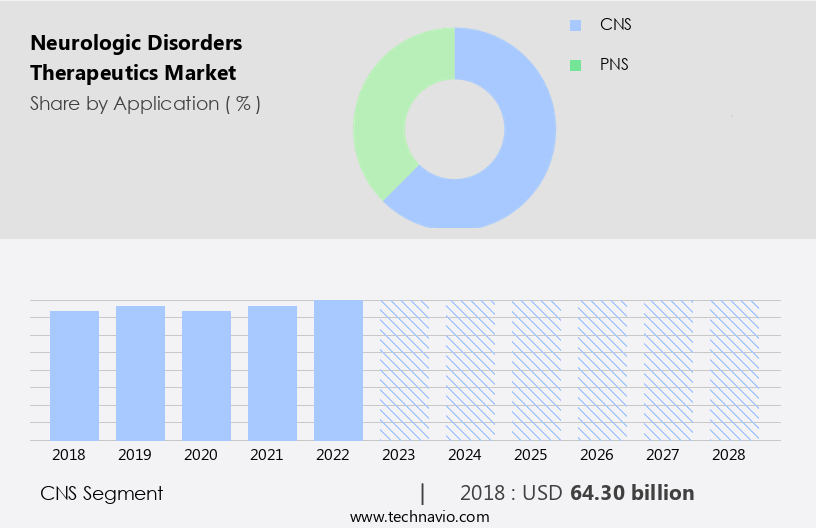
The CNS segment was valued at USD 64.30 billion in 2018 and showed a gradual increase during the forecast period.
Regional Analysis
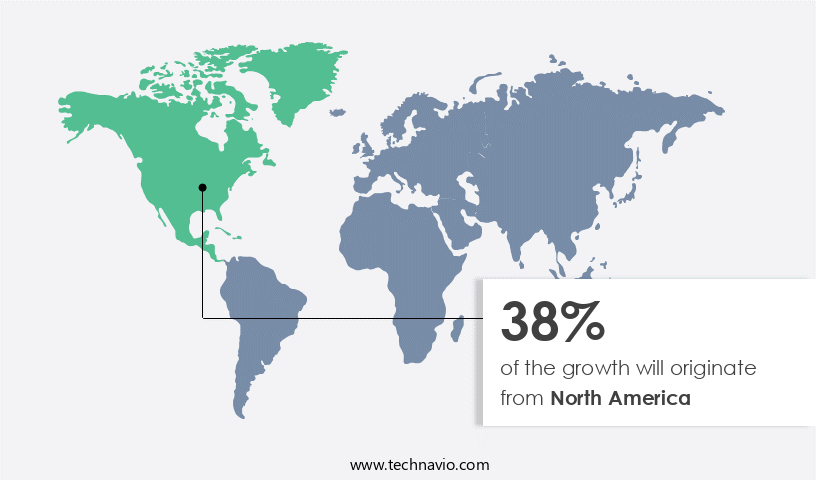
North America is estimated to contribute 38% to the growth of the global market during the forecast period.Technavio’s analysts have elaborately explained the regional trends and drivers that shape the market during the forecast period.
The market in North America is experiencing steady growth due to the high prevalence of neurodegenerative diseases, such as Alzheimer's and Parkinson's, cerebral palsy, multiple sclerosis, and spinal cord injuries. According to recent research, the US alone has an estimated 5.8 million people living with Alzheimer's disease, making it the sixth leading cause of death in the country. This number is projected to nearly triple by 2060. Healthcare reforms aim to improve access to care, including innovative therapies like stem cell treatment and gene therapy, which are currently undergoing clinical trials for various neurological conditions.
Neurological assessment tools, such as pet scans and cognitive testing, play a crucial role in disease management and patient outcomes. Healthcare systems invest in imaging technologies and diagnostic tools to facilitate early detection and personalized medicine. The biotechnology and medical device industries are collaborating to develop monoclonal antibodies, drug discovery, and non-opioid analgesics for symptom management. Patient education and advocacy are essential in raising awareness and reducing the stigma surrounding neurological disorders. Rehabilitation therapists and healthcare providers are working together to improve quality of life for patients, while healthcare policy focuses on drug pricing and affordability.
Neuromuscular disorders, brain tumors, and neuropathic pain are also significant areas of focus in this market. Overall, the market in North America is witnessing dynamic growth, driven by the increasing burden of neurological disorders and the ongoing advancements in research and technology.
Market Dynamics
Our researchers analyzed the data with 2023 as the base year, along with the key drivers, trends, and challenges. A holistic analysis of drivers will help companies refine their marketing strategies to gain a competitive advantage.
What are the Neurologic Disorders Therapeutics market drivers leading to the rise in the adoption of Industry?
- The approval of novel drugs serves as the primary catalyst for market growth.
- The market is experiencing significant growth due to the recent approvals of novel drugs for major indications. In 2021, Janssen Pharmaceuticals, Inc. Received FDA approval for PONVORY (ponesimod), an oral S1P1 modulator for adults with relapsing forms of MS. PONVORY demonstrates superior efficacy in reducing annualized relapse rates compared to established oral therapy. Likewise, in 2020, Novartis AG gained approval for Kesimpta (ofatumumab), a subcutaneous injection for relapsing MS patients.
- Kesimpta, a targeted B-cell therapy, offers superior efficacy with a similar safety profile compared to teriflunomide. These approvals underscore the ongoing innovation in neurologic disorders therapeutics, providing new treatment options for patients.
What are the Neurologic Disorders Therapeutics market trends shaping the Industry?
- The emergence of regenerative medicines signifies a significant market trend. Regenerative medicines, which include therapies such as stem cell treatment and tissue engineering, are poised to revolutionize healthcare by offering potential cures for various diseases and injuries.
- The market is currently focused on providing symptomatic relief and disease modification for indications like Alzheimer's disease, Parkinson's disease, and cerebral palsy. However, the absence of curative therapies remains a significant challenge. In response, research institutions and pharmaceutical companies are pursuing innovative regenerative therapies, such as stem cell therapy, to address this unmet need. Stem cell therapy involves using mesenchymal stromal cells and embryonic stem cells to treat severe neurological conditions. Clinical trials for these therapies are ongoing, offering potential solutions for neurodegenerative diseases.
- Healthcare costs and healthcare reform continue to influence the market dynamics, necessitating the development of cost-effective and efficient therapeutic approaches. Despite these challenges, the pursuit of curative therapies for neurological disorders remains a priority in the global healthcare system.
How does Neurologic Disorders Therapeutics market faces challenges face during its growth?
- The emergence of neurostimulation devices poses a significant challenge to the industry's growth trajectory.
- The market is currently dominated by traditional antidepressant drugs, including dopamine agonists, acetylcholinesterase inhibitors, tricyclic antidepressants (TCAs), and selective serotonin reuptake inhibitors (SSRIs), for treating various neurological conditions. While these drugs offer therapeutic benefits, they come with potential side effects such as weight gain, muscle spasms, blurred vision, dry mouth, and drowsiness. Moreover, their frequent administration and long treatment durations increase the financial burden on patients. In response to these challenges, there is growing interest in non-invasive neuromodulation devices, driven by advancements in neuroscience. These devices, which include transcranial magnetic stimulation, transcranial direct current stimulation, and vagus nerve stimulation, offer promising alternatives to traditional pharmacological treatments.
- Neurological assessment tools, such as pet scans and imaging technologies, play a crucial role in disease management by enabling accurate diagnosis and monitoring of patient outcomes. Patient education and personalized medicine approaches are also gaining importance in neurological care, aiming to improve access to care and enhance overall patient experiences.
Exclusive Customer Landscape
The neurologic disorders therapeutics market forecasting report includes the adoption lifecycle of the market, covering from the innovator’s stage to the laggard’s stage. It focuses on adoption rates in different regions based on penetration. Furthermore, the neurologic disorders therapeutics market report also includes key purchase criteria and drivers of price sensitivity to help companies evaluate and develop their market growth analysis strategies.
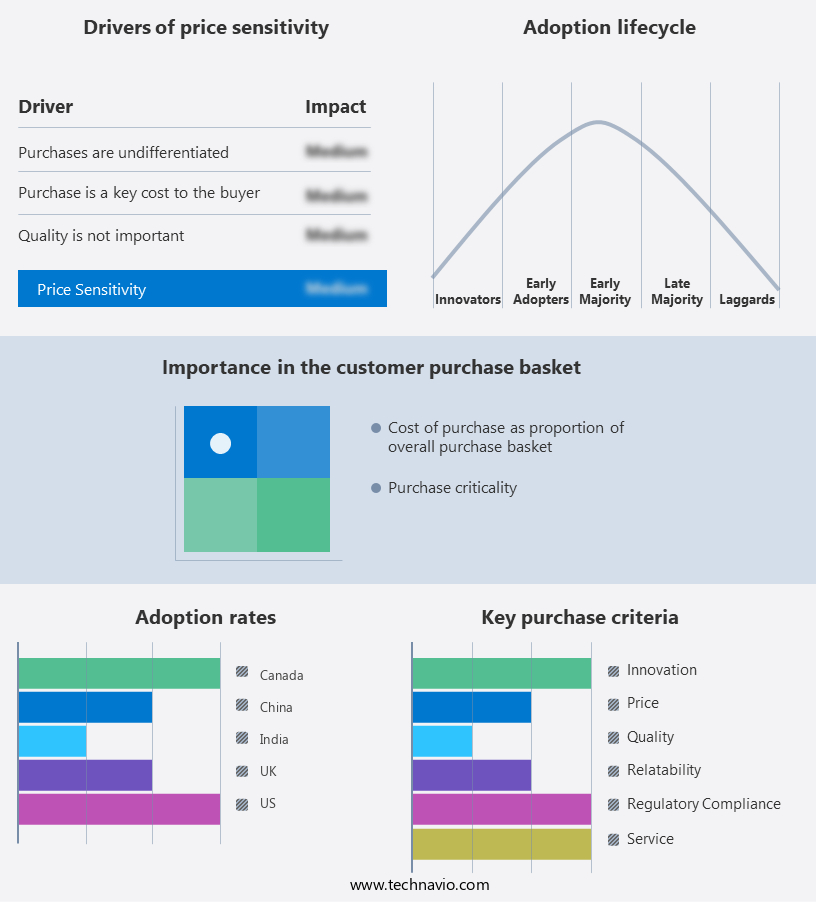
Customer Landscape
Key Companies & Market Insights
Companies are implementing various strategies, such as strategic alliances, neurologic disorders therapeutics market forecast, partnerships, mergers and acquisitions, geographical expansion, and product/service launches, to enhance their presence in the industry.
AbbVie Inc. - The company specializes in developing neurologic disorder therapeutics, dedicated to enhancing the overall health and well-being of individuals. Through innovative research and scientific advancements, we provide effective solutions for various neurological conditions. Our offerings aim to address the underlying causes of these disorders, offering hope and improvement for those affected. By leveraging cutting-edge technology and a team of experienced researchers, we strive to make a significant impact in the field of neurology. Our commitment to excellence and continuous advancement ensures that we remain at the forefront of neurologic disorder treatments.
The industry research and growth report includes detailed analyses of the competitive landscape of the market and information about key companies, including:
- AbbVie Inc.
- Acadia Pharmaceuticals Inc.
- Acorda Therapeutics Inc.
- Bayer AG
- Biogen Inc.
- Eisai Co. Ltd.
- F. Hoffmann La Roche Ltd.
- GlaxoSmithKline Plc
- H Lundbeck AS
- Johnson and Johnson Services Inc.
- Merck KGaA
- Novartis AG
- Otsuka Holdings Co. Ltd.
- Pfizer Inc.
- Sanofi SA
- Takeda Pharmaceutical Co. Ltd.
- Teva Pharmaceutical Industries Ltd.
- UCB SA
- USWM LLC
- Viatris Inc.
Qualitative and quantitative analysis of companies has been conducted to help clients understand the wider business environment as well as the strengths and weaknesses of key industry players. Data is qualitatively analyzed to categorize companies as pure play, category-focused, industry-focused, and diversified; it is quantitatively analyzed to categorize companies as dominant, leading, strong, tentative, and weak.
Recent Development and News in Neurologic Disorders Therapeutics Market
- In February 2024, Biogen Inc. Announced the US Food and Drug Administration (FDA) approval of Aduhelm (aducanumab), a first-of-its-kind treatment for Alzheimer's disease. This breakthrough therapy, which targets beta-amyloid plaques, marks a significant advancement in the market (Biogen, 2024).
- In June 2025, Roche Holding AG and Genentech, its US subsidiary, entered into a collaboration with the University of California, San Francisco (UCSF) to research and develop new therapies for Parkinson's disease. This strategic partnership combines Roche's expertise in drug development with UCSF's research capabilities, aiming to bring innovative treatments to patients (Roche, 2025).
- In August 2024, Teva Pharmaceutical Industries Ltd. Completed the acquisition of Auspex Pharmaceuticals Inc., a US-based biotech company specializing in neurological disorders. This deal expanded Teva's portfolio in the market and strengthened its presence in the Huntington's disease and dystonia treatments (Teva, 2024).
- In October 2025, the European Medicines Agency (EMA) granted a positive opinion for Novartis AG's Zolgensma, an one-time gene therapy for spinal muscular atrophy (SMA). This approval follows the US FDA's approval in May 2019 and marks a significant expansion of the therapy's market reach (Novartis, 2025).
Research Analyst Overview
The market continues to evolve, driven by advancements in drug development, neurological assessment, and imaging technologies. Neurological disorders, including neurodegenerative diseases such as Alzheimer's and Parkinson's, cerebral palsy, and neuromuscular disorders, pose significant challenges to healthcare systems and patients. The ongoing unfolding of market activities includes clinical trials for novel treatments, such as gene therapy and monoclonal antibodies, for various neurological conditions. Neurological assessment tools, like pet scans and cognitive testing, enable more accurate diagnosis and personalized treatment plans. Access to care remains a critical issue, with healthcare reform and policy changes impacting patient outcomes and quality of life.
Patient education plays a crucial role in managing symptoms and improving overall health. Rehabilitation therapists and palliative care providers contribute to disease management and enhancing patient well-being. Imaging technologies, such as pet scans and diagnostic tools, facilitate early detection and intervention. Neuromuscular disorders, brain tumors, and neuropathic pain are among the conditions benefiting from these advancements. The healthcare industry, including medical device manufacturers and biotechnology companies, collaborate to develop innovative solutions for neurological disorders. Personalized medicine and non-opioid analgesics offer promising alternatives to traditional symptom management strategies. The dynamic nature of the market necessitates continuous adaptation and innovation to meet the evolving needs of patients, healthcare providers, and payers.
Dive into Technavio’s robust research methodology, blending expert interviews, extensive data synthesis, and validated models for unparalleled Neurologic Disorders Therapeutics Market insights. See full methodology.
|
Market Scope |
|
|
Report Coverage |
Details |
|
Page number |
150 |
|
Base year |
2023 |
|
Historic period |
2018-2022 |
|
Forecast period |
2024-2028 |
|
Growth momentum & CAGR |
Accelerate at a CAGR of 4.49% |
|
Market growth 2024-2028 |
USD 27.2 billion |
|
Market structure |
Fragmented |
|
YoY growth 2023-2024(%) |
4.25 |
|
Key countries |
US, UK, China, Canada, and India |
|
Competitive landscape |
Leading Companies, Market Positioning of Companies, Competitive Strategies, and Industry Risks |
What are the Key Data Covered in this Neurologic Disorders Therapeutics Market Research and Growth Report?
- CAGR of the Neurologic Disorders Therapeutics industry during the forecast period
- Detailed information on factors that will drive the growth and forecasting between 2024 and 2028
- Precise estimation of the size of the market and its contribution of the industry in focus to the parent market
- Accurate predictions about upcoming growth and trends and changes in consumer behaviour
- Growth of the market across North America, Europe, Asia, and Rest of World (ROW)
- Thorough analysis of the market’s competitive landscape and detailed information about companies
- Comprehensive analysis of factors that will challenge the neurologic disorders therapeutics market growth of industry companies
We can help! Our analysts can customize this neurologic disorders therapeutics market research report to meet your requirements.
 RIA -
RIA - 
