



Offshore Oil And Gas Communications Market Size 2026-2030
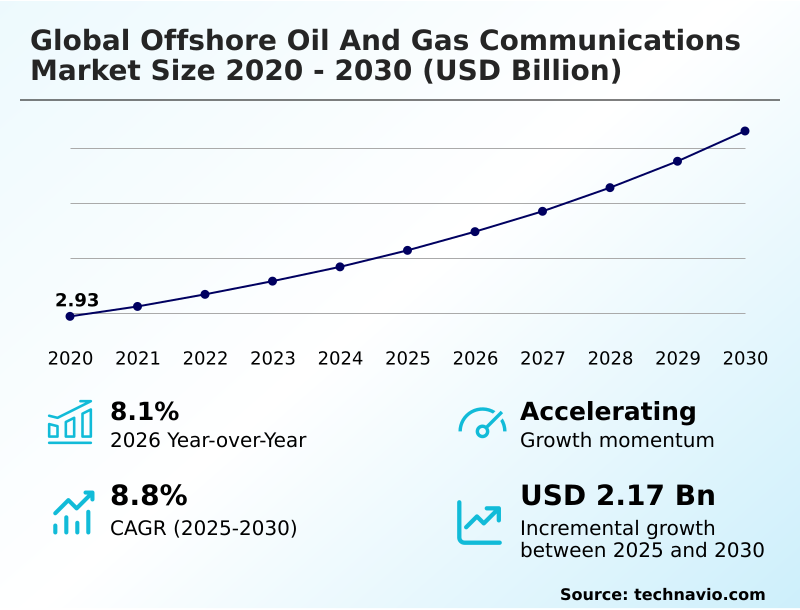
The offshore oil and gas communications market size is valued to increase by USD 2.17 billion, at a CAGR of 8.8% from 2025 to 2030. Increasing investments in enhancing network infrastructure will drive the offshore oil and gas communications market.
Major Market Trends & Insights
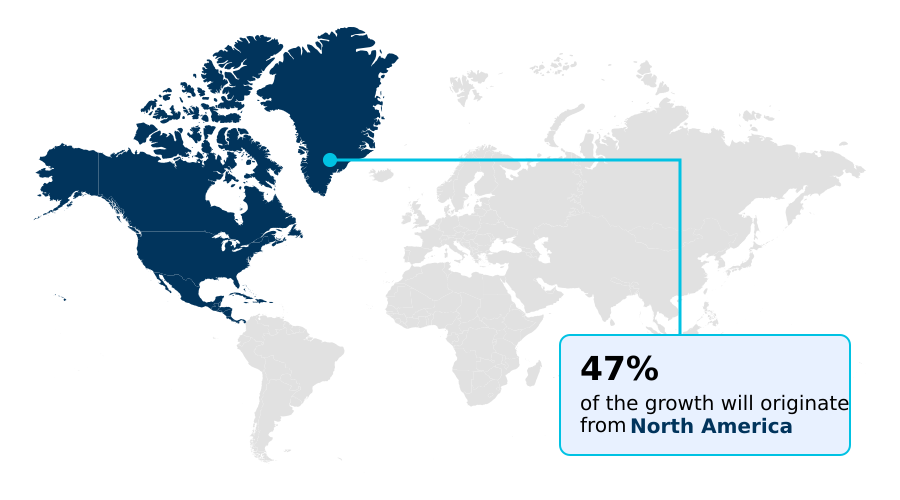
- North America dominated the market and accounted for a 47.3% growth during the forecast period.
- By Application - Upstream segment was valued at USD 2.51 billion in 2024
- By Technology - VSAT communication network segment accounted for the largest market revenue share in 2024
Market Size & Forecast
- Market Opportunities: USD 3.38 billion
- Market Future Opportunities: USD 2.17 billion
- CAGR from 2025 to 2030 : 8.8%
Market Summary
- The Offshore Oil And Gas Communications Market centers on providing advanced, reliable connectivity solutions engineered for harsh and remote operational environments. The industry is evolving beyond basic voice services to support high-bandwidth, real-time data transmission essential for remote asset monitoring and predictive maintenance analytics.
- A primary driver is the pursuit of operational efficiency and heightened safety standards, which accelerates the adoption of the Industrial Internet of Things (IIoT) and digital twin integration.
- Consequently, a key trend is the deployment of hybrid network solutions that combine low earth orbit constellations with traditional geostationary earth orbit satellites and private LTE networks to create a resilient network architecture. However, this increased connectivity introduces significant challenges related to operational technology (OT) security.
- For instance, a unified offshore platform connectivity solution enables an operator to analyze data from subsea equipment in real-time, preventing costly failures and scheduling maintenance proactively, but it also requires robust cybersecurity protocols to protect critical control systems from external threats.
What will be the Size of the Offshore Oil And Gas Communications Market during the forecast period?
Get Key Insights on Market Forecast (PDF) Get Free Sample
How is the Offshore Oil And Gas Communications Market Segmented?
The offshore oil and gas communications industry research report provides comprehensive data (region-wise segment analysis), with forecasts and estimates in "USD million" for the period 2026-2030, as well as historical data from 2020-2024 for the following segments.
- Application
- Upstream
- Midstream
- Downstream
- Technology
- VSAT communication network
- Fiber optic-based communication network
- Cellular communication network
- Microwave communication network
- Type
- Antennas
- Transmitters
- Receivers
- Modems
- Routers
- Geography
- North America
- US
- Canada
- Mexico
- Middle East and Africa
- Saudi Arabia
- UAE
- South Africa
- APAC
- China
- Australia
- Japan
- South America
- Brazil
- Argentina
- Europe
- UK
- France
- The Netherlands
- Rest of World (ROW)
- North America
By Application Insights
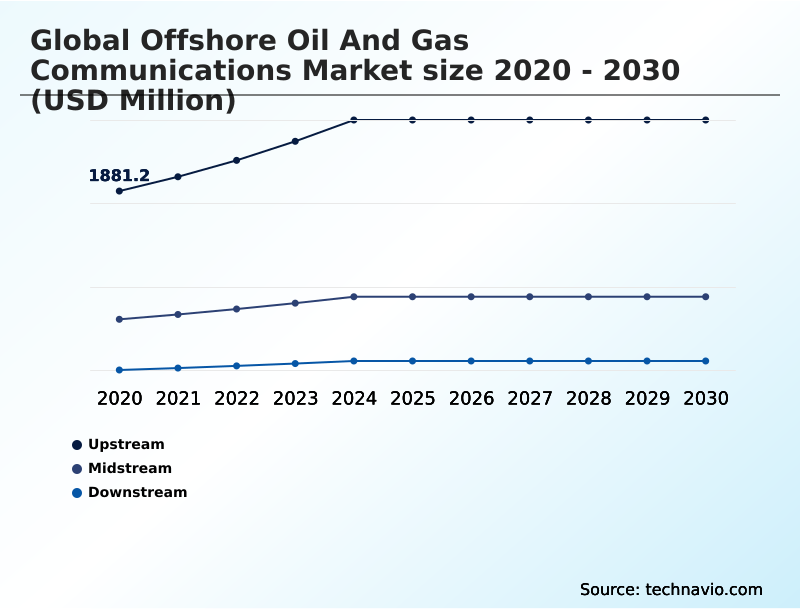
The upstream segment is estimated to witness significant growth during the forecast period.
The upstream segment, encompassing exploration and production, is fundamentally reliant on high-performance communications. Activities in this segment depend on robust subsea communication systems for real-time data transmission and telemetry and control systems to manage complex drilling rig data links.
The integration of the industrial internet of things and smart field technologies facilitates data-driven decision making, especially with the high-bandwidth data transfer required for seismic data transmission.
Effective operational continuity planning is essential, with modern networks enabling a reduction in non-productive time by over 15% through enhanced monitoring and analytics.
This capability underscores the shift toward highly digitized upstream operations where connectivity directly influences efficiency and safety outcomes in harsh offshore environments.
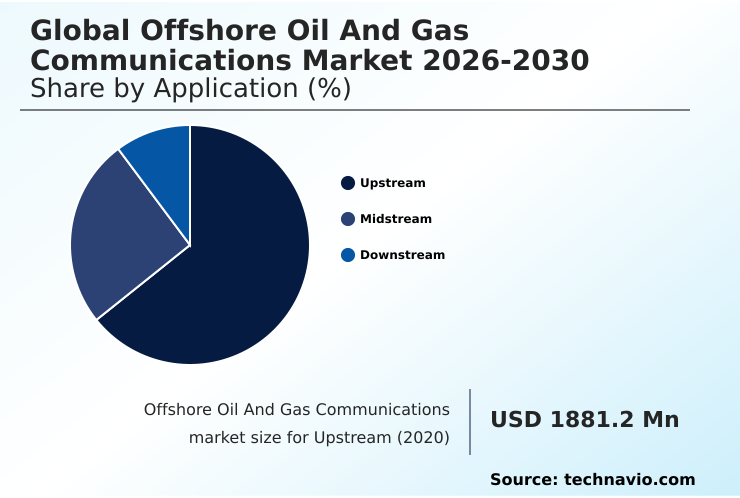
The Upstream segment was valued at USD 2.51 billion in 2024 and showed a gradual increase during the forecast period.
Regional Analysis
North America is estimated to contribute 47.3% to the growth of the global market during the forecast period.Technavio’s analysts have elaborately explained the regional trends and drivers that shape the market during the forecast period.
See How Offshore Oil And Gas Communications Market Demand is Rising in North America Get Free Sample
The market's geographic landscape is led by North America, which is poised to contribute nearly half of the global incremental growth, driven by mature offshore energy communications in the Gulf of Mexico.
The region's rapid adoption of private 5G networks for offshore platform connectivity has reduced latency for remote diagnostics and support by up to 70% compared to legacy systems.
High-throughput satellite services are expanding, although access varies globally, with low earth orbit constellations beginning to augment traditional geostationary earth orbit satellites.
The Middle East and Africa represent a significant growth area, while the deployment of maritime broadband solutions and cellular communication networks in APAC supports new asset development.
Remote operations centers increasingly rely on these advanced networks for functions like video surveillance over satellite, centralizing control and improving response times.
Market Dynamics
Our researchers analyzed the data with 2025 as the base year, along with the key drivers, trends, and challenges. A holistic analysis of drivers will help companies refine their marketing strategies to gain a competitive advantage.
- Strategic decisions in the offshore sector are increasingly influenced by the total cost of satellite bandwidth for offshore rigs, spurring interest in private 5G network deployment for oil platforms. This technological shift elevates the importance of cybersecurity for offshore operational technology.
- A key strategy involves integrating LEO and GEO satellite services to balance cost and performance, supporting the demand for real-time drilling data communication solutions and comprehensive IIoT connectivity for remote offshore assets. These networks are also vital for improving crew welfare with high-speed internet.
- The technical debate over VSAT vs fiber for offshore platform backhaul continues, particularly as the need for low latency communication for autonomous drilling grows. Ensuring secure communication protocols for subsea equipment and efficiently managing data from multiple offshore sensors are critical operational tasks.
- A well-defined remote operation center communication architecture is proven to resolve critical issues twice as fast as siloed systems. These architectures must incorporate robust emergency communication systems for offshore facilities and accommodate future digital twin communication requirements for rigs, with an expanding scope that now includes offshore wind farm communication infrastructure.
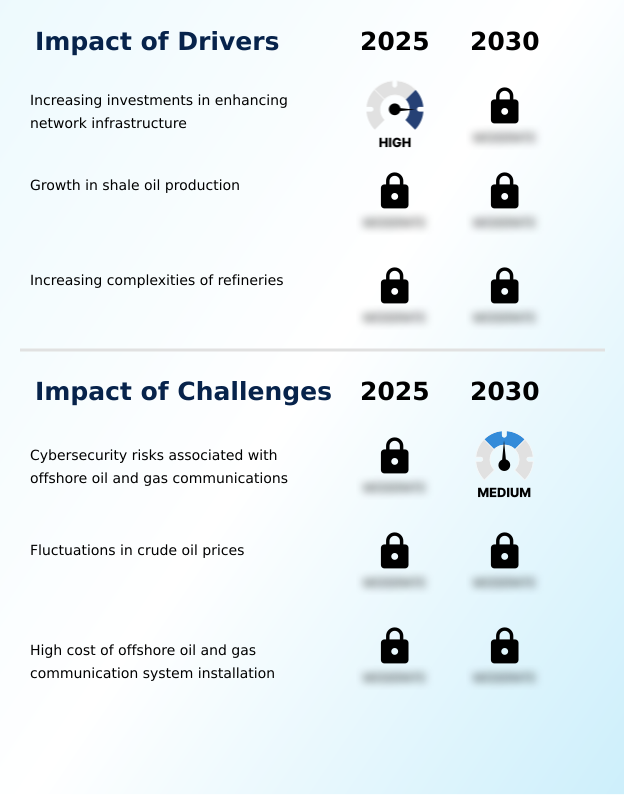
What are the key market drivers leading to the rise in the adoption of Offshore Oil And Gas Communications Industry?
- Sustained increases in investments aimed at enhancing network infrastructure to support faster, more reliable, and secure connectivity across offshore assets is a key driver for market growth.
- Market growth is driven by investments in building a resilient network architecture capable of supporting data-intensive applications.
- The expansion of IoT sensor networks and the deployment of fiber optic-based communication network and microwave communication network infrastructure are crucial for enabling automated operational reporting and environmental monitoring data collection.
- Modernizing to include network redundancy protocols and software-defined networking can increase data capacity by over 300%. These upgrades also enhance mission-critical voice services and public safety communications, while network function virtualization helps streamline asset tracking and management.
- Adopting such infrastructure has been shown to automate up to 40% of manual compliance reporting tasks.
What are the market trends shaping the Offshore Oil And Gas Communications Industry?
- The digitalization of oilfield communications is a prominent trend reshaping the market, driven by the need for real-time data exchange and improved operational safety in remote environments.
- Key market trends are centered on the digital oilfield framework, where digital twin integration and IIoT connectivity are paramount. This shift enables advanced predictive maintenance analytics and supports autonomous vessel communication by leveraging low-latency connectivity and edge computing solutions for real-time operational data analytics. The adoption of ultra-reliable low-latency communication has reduced remote intervention times by over 50%.
- Furthermore, hybrid network solutions are improving the performance of FPSO communication systems, with some deployments increasing data throughput for connected worker solutions by over 200%. This move toward massive machine-type communications creates intelligent ecosystems that enhance safety and efficiency across offshore operations.
What challenges does the Offshore Oil And Gas Communications Industry face during its growth?
- Cybersecurity risks associated with the rapid digitalization of offshore operational systems present a critical challenge to the industry's growth and operational integrity.
- The primary challenge is ensuring operational technology security in an increasingly connected environment, where cyber-physical systems security is critical. The integration of previously isolated systems, such as SCADA system integration with corporate networks, expands the attack surface for the entire VSAT communication network. Establishing secure remote access and protecting secure industrial control systems from threats are major concerns.
- A breach can disrupt not only remote asset monitoring but also vital emergency response systems and secure voice communication. Advanced maritime VSAT antennas and unified communications platforms must incorporate robust security, as a single cyber incident can halt operations, with downtime costs exceeding several million dollars per day.
Exclusive Technavio Analysis on Customer Landscape
The offshore oil and gas communications market forecasting report includes the adoption lifecycle of the market, covering from the innovator’s stage to the laggard’s stage. It focuses on adoption rates in different regions based on penetration. Furthermore, the offshore oil and gas communications market report also includes key purchase criteria and drivers of price sensitivity to help companies evaluate and develop their market growth analysis strategies.
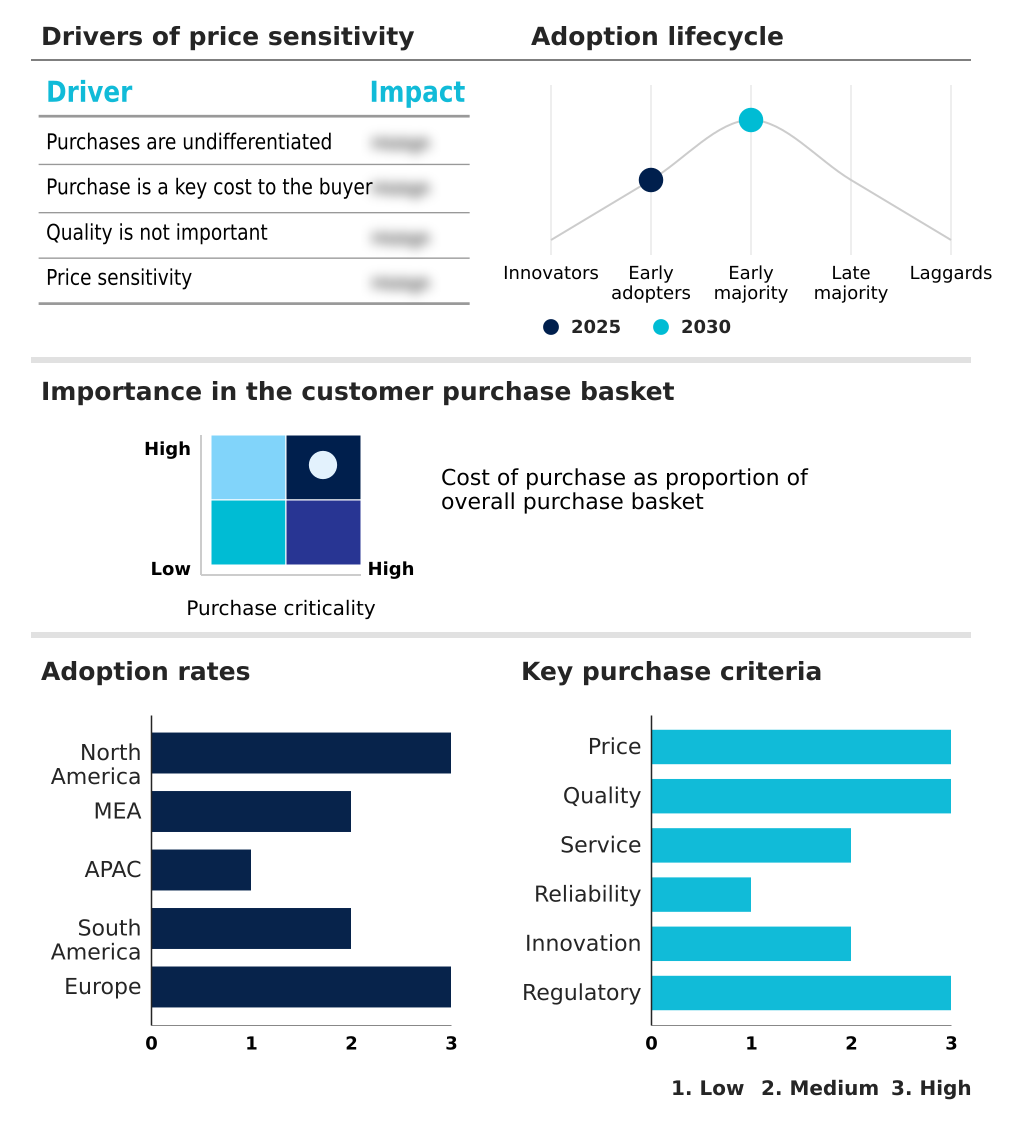
Customer Landscape of Offshore Oil And Gas Communications Industry
Competitive Landscape
Companies are implementing various strategies, such as strategic alliances, offshore oil and gas communications market forecast, partnerships, mergers and acquisitions, geographical expansion, and product/service launches, to enhance their presence in the industry.
ABB Ltd. - Key offerings focus on integrated communication systems that enhance operational safety and data throughput for remote, high-stakes offshore energy exploration and production activities.
The industry research and growth report includes detailed analyses of the competitive landscape of the market and information about key companies, including:
- ABB Ltd.
- AT and T Inc.
- Aviat Networks Inc.
- Baker Hughes Co.
- Ceragon Networks Ltd.
- CommScope Inc.
- EchoStar Corp.
- GE Vernova Inc.
- Hitachi Ltd.
- Honeywell International Inc.
- Huawei Technologies Co. Ltd.
- Iridium Communications Inc.
- PTC Inc.
- Siemens AG
- Speedcast
- Viasat Inc.
Qualitative and quantitative analysis of companies has been conducted to help clients understand the wider business environment as well as the strengths and weaknesses of key industry players. Data is qualitatively analyzed to categorize companies as pure play, category-focused, industry-focused, and diversified; it is quantitatively analyzed to categorize companies as dominant, leading, strong, tentative, and weak.
Recent Development and News in Offshore oil and gas communications market
- In March, 2025, SES company announced a partnership with Lynk Global to advance direct-to-device satellite connectivity, integrating Low Earth Orbit satellite services to support devices in remote regions without traditional terrestrial coverage.
- In March, 2025, Taara company, which spun out from Alphabet X labs, began to commercialize free-space optical communication systems capable of delivering multi-gigabit per second throughput for line-of-sight applications.
- In April, 2025, SK Telecom, a major South Korean telecommunications provider, experienced a cyberattack and data breach that compromised sensitive USIM data, highlighting the vulnerability of network providers supplying critical connectivity to industrial operations.
- In July, 2025, SES company completed its acquisition of Intelsat, consolidating satellite capacity to create a broader multi-orbit communications platform for next-generation IoT and broadband requirements in the energy and maritime sectors.
Dive into Technavio’s robust research methodology, blending expert interviews, extensive data synthesis, and validated models for unparalleled Offshore Oil And Gas Communications Market insights. See full methodology.
| Market Scope | |
|---|---|
| Page number | 309 |
| Base year | 2025 |
| Historic period | 2020-2024 |
| Forecast period | 2026-2030 |
| Growth momentum & CAGR | Accelerate at a CAGR of 8.8% |
| Market growth 2026-2030 | USD 2169.4 million |
| Market structure | Fragmented |
| YoY growth 2025-2026(%) | 8.1% |
| Key countries | US, Canada, Mexico, Saudi Arabia, UAE, South Africa, Turkey, Israel, China, Australia, Japan, India, South Korea, Indonesia, Brazil, Argentina, Chile, UK, France, The Netherlands, Germany, Italy and Spain |
| Competitive landscape | Leading Companies, Market Positioning of Companies, Competitive Strategies, and Industry Risks |
Research Analyst Overview
- The offshore oil and gas communications market is defined by its role in delivering mission-critical connectivity through a mix of VSAT communication network, fiber optic-based communication network, and emerging private 5G networks.
- The convergence of IT with operational technology, driven by digital twin integration and the industrial internet of things (IIoT), is forcing boardroom-level reassessments of cybersecurity investments to protect vital operational technology security. Firms implementing software-defined networking for their resilient network architecture have achieved network provisioning times over 50% faster than with legacy hardware.
- This evolution supports sophisticated applications ranging from real-time data transmission for predictive maintenance analytics to secure voice communication for crew welfare broadband. Systems are becoming more complex, integrating everything from drilling rig data links and FPSO communication systems to subsea communication systems, all managed through unified platforms to ensure seamless offshore platform connectivity and operational integrity.
What are the Key Data Covered in this Offshore Oil And Gas Communications Market Research and Growth Report?
-
What is the expected growth of the Offshore Oil And Gas Communications Market between 2026 and 2030?
-
USD 2.17 billion, at a CAGR of 8.8%
-
-
What segmentation does the market report cover?
-
The report is segmented by Application (Upstream, Midstream, and Downstream), Technology (VSAT communication network, Fiber optic-based communication network, Cellular communication network, and Microwave communication network), Type (Antennas, Transmitters, Receivers, Modems, and Routers) and Geography (North America, Middle East and Africa, APAC, South America, Europe)
-
-
Which regions are analyzed in the report?
-
North America, Middle East and Africa, APAC, South America and Europe
-
-
What are the key growth drivers and market challenges?
-
Increasing investments in enhancing network infrastructure, Cybersecurity risks associated with offshore oil and gas communications
-
-
Who are the major players in the Offshore Oil And Gas Communications Market?
-
ABB Ltd., AT and T Inc., Aviat Networks Inc., Baker Hughes Co., Ceragon Networks Ltd., CommScope Inc., EchoStar Corp., GE Vernova Inc., Hitachi Ltd., Honeywell International Inc., Huawei Technologies Co. Ltd., Iridium Communications Inc., PTC Inc., Siemens AG, Speedcast and Viasat Inc.
-
Market Research Insights
- Market dynamics are shaped by the strategic imperative for high-bandwidth data transfer to power operational data analytics and enable data-driven decision making. Unified communications platforms are becoming standard for integrated marine communication, enhancing collaboration and enabling services like telemedicine for offshore crew, which has been shown to reduce unnecessary medical evacuations by over 20%.
- The implementation of industrial wireless networking for asset tracking and management can improve equipment utilization by up to 15%. This pivot towards sophisticated connectivity supports advanced remote diagnostics and support, reinforcing the link between modern communication infrastructure and measurable improvements in operational efficiency and safety across maritime and energy assets.
We can help! Our analysts can customize this offshore oil and gas communications market research report to meet your requirements.
 RIA -
RIA - 
