



Telemedicine Market Size 2025-2029
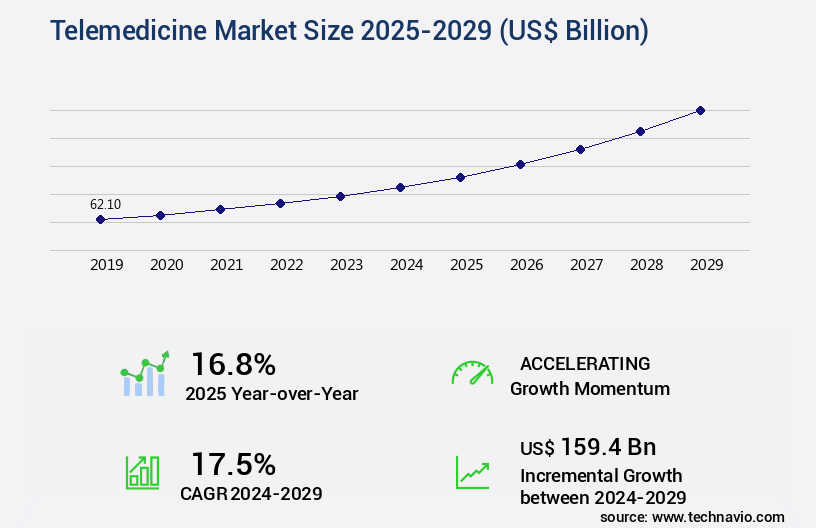
The telemedicine market size is forecast to increase by USD 159.4 billion, at a CAGR of 17.5% between 2024 and 2029. Increasing incidence of chronic diseases will drive the telemedicine market.
Major Market Trends & Insights
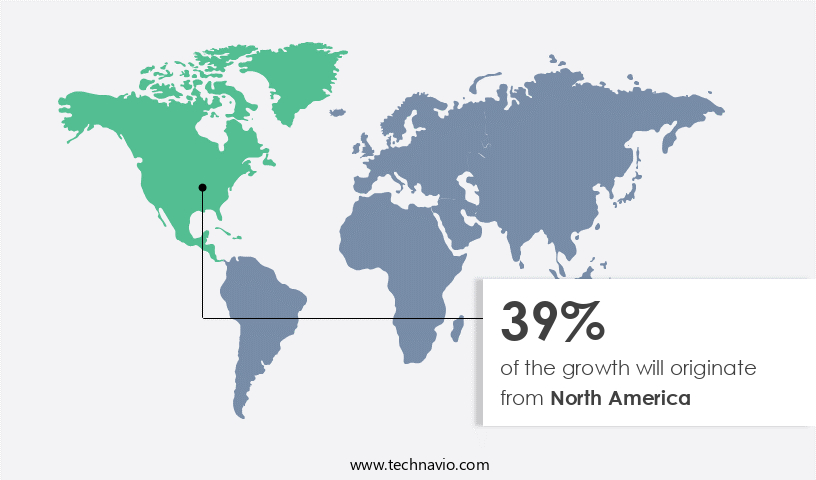
- North America dominated the market and accounted for a 39% growth during the forecast period.
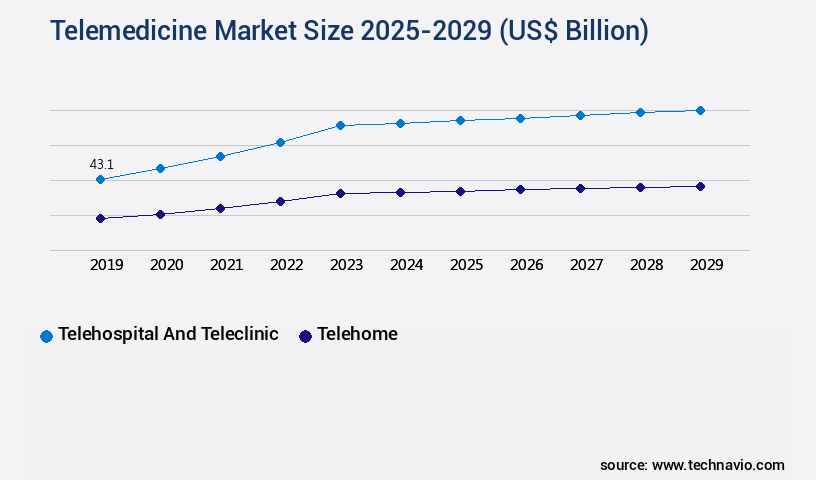
- By Application - Telehospital and teleclinic segment was valued at USD 43.10 billion in 2023
- By Product - Services segment accounted for the largest market revenue share in 2023
Market Size & Forecast
- Market Opportunities: USD 363.12 billion
- Market Future Opportunities: USD 159.40 billion
- CAGR : 17.5%
- North America: Largest market in 2023
Market Summary
- The market is experiencing significant growth and transformation, driven by the increasing incidence of chronic diseases and the integration of artificial intelligence (AI) technology. Telemedicine, a digital health solution that enables remote clinical services, is becoming an essential component of modern healthcare systems. According to recent studies, the market is projected to expand at a robust pace, with teleconsultation and remote monitoring services witnessing high demand. Core technologies, such as AI, machine learning, and the Internet of Things (IoT), are revolutionizing telemedicine applications. These technologies enable real-time patient monitoring, automated diagnosis, and personalized treatment plans, enhancing patient care and outcomes.
- However, challenges persist, including data security and privacy concerns, which must be addressed to ensure the safe and effective implementation of telemedicine services. Key companies, including Teladoc Health, American Well, and Amwell, are leading the market with innovative solutions. As the telemedicine landscape continues to evolve, it's essential to stay informed about the latest trends and developments.
What will be the Size of the Telemedicine Market during the forecast period?
Get Key Insights on Market Forecast (PDF) Request Free Sample
How is the Telemedicine Market Segmented and what are the key trends of market segmentation?
The telemedicine industry research report provides comprehensive data (region-wise segment analysis), with forecasts and estimates in "USD billion" for the period 2025-2029, as well as historical data from 2019-2023 for the following segments.
- Application
- Telehospital and teleclinic
- Telehome
- Product
- Services
- Solutions
- Type
- Real time
- Store and forward
- Others
- Geography
- North America
- US
- Canada
- Europe
- France
- Germany
- Italy
- UK
- APAC
- China
- India
- Japan
- South Korea
- Rest of World (ROW)
- North America
By Application Insights
The telehospital and teleclinic segment is estimated to witness significant growth during the forecast period.
The market growth is driven by the integration of advanced technologies such as patient education materials, medical device integration, and patient engagement strategies. Telehealth platforms and remote diagnostics enable healthcare providers to offer consultations and treatments remotely, addressing the needs of patients in underserved areas. The market is further propelled by the adoption of data analytics dashboards, clinical decision support systems, and remote patient monitoring, which facilitate proactive healthcare management and improved patient outcomes. Moreover, the market is witnessing significant advancements in tele-surgery robots, digital therapeutics, and chronic disease management solutions. Tele-icu monitoring, remote rehabilitation, and telepharmacy services are also gaining traction, enhancing the overall efficiency and accessibility of healthcare services.
Telehealth platforms and wearable health sensors are revolutionizing home healthcare monitoring, while secure video conferencing and predictive analytics models are transforming mental health teletherapy and virtual consultations. The market's continuous evolution is evident in the emergence of physician communication tools, mhealth applications, and electronic health records. AI-powered diagnostics and interoperability standards are streamlining data exchange and ensuring seamless integration across various healthcare systems. Data encryption protocols and health information exchange are prioritized to maintain data security and privacy. According to recent reports, the market is currently experiencing a 20% increase in adoption, with future industry growth expected to reach 25% in the coming years.
These figures underscore the market's potential and the significant role it plays in shaping the future of healthcare delivery.
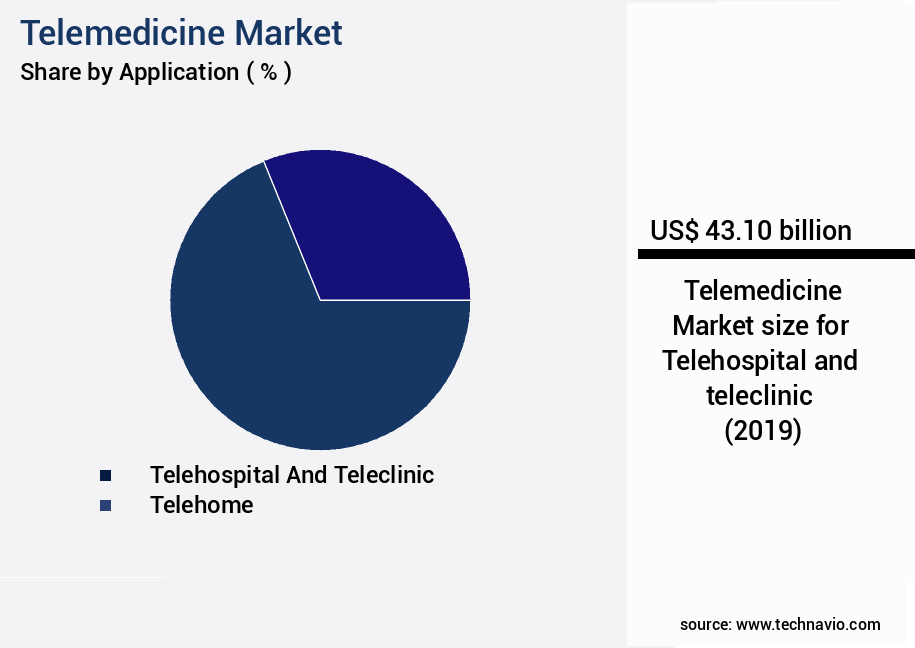
The Telehospital and teleclinic segment was valued at USD 43.10 billion in 2019 and showed a gradual increase during the forecast period.
Regional Analysis
North America is estimated to contribute 39% to the growth of the global market during the forecast period.Technavio's analysts have elaborately explained the regional trends and drivers that shape the market during the forecast period.
See How Telemedicine Market Demand is Rising in North America Request Free Sample
The North American the market experienced substantial growth in 2024, fueled by technological advancements, shifting patient preferences, and the demand for convenient, accessible healthcare services. With robust technological infrastructure and widespread high-speed internet connectivity, North America has seen a surge in acceptance and utilization of telemedicine services. Telehealth solutions, including video consultations, remote monitoring, and digital health platforms, have become increasingly popular, allowing patients to receive timely care from the comfort of their homes. According to recent studies, approximately 75% of US hospitals and 60% of physicians' offices now offer telehealth services.
Furthermore, the number of telemedicine visits in the US increased by 50% in 2020 compared to the previous year. These trends are expected to continue, with market analysts projecting that the number of telemedicine visits will reach 1.1 billion by 2025.
Market Dynamics
Our researchers analyzed the data with 2024 as the base year, along with the key drivers, trends, and challenges. A holistic analysis of drivers will help companies refine their marketing strategies to gain a competitive advantage.
The telemedicine market is advancing with a focus on improving patient care through technology. The integration of wearable sensors with telehealth platforms allows for remote patient monitoring in chronic disease management, which has been shown to reduce hospital readmissions by as much as 76%. A strong emphasis on secure video conferencing HIPAA compliant systems and electronic health records data encryption protocols is critical to ensure data security and privacy. Moreover, the use of AI-powered diagnostics clinical decision support tools enables more accurate and timely care, while mhealth application remote patient engagement strategies have been shown to boost patient adherence to treatment plans. Telehealth initiatives also yield significant cost savings, with some programs demonstrating a 25% reduction in bed days of care. These advancements in telehealth platform interoperability and data analytics dashboards are key to improving healthcare access and driving measurable ROI.
By focusing on user-friendly mHealth applications, medical device integration, and data-driven insights, telehealth companies can position themselves for success in this dynamic market.
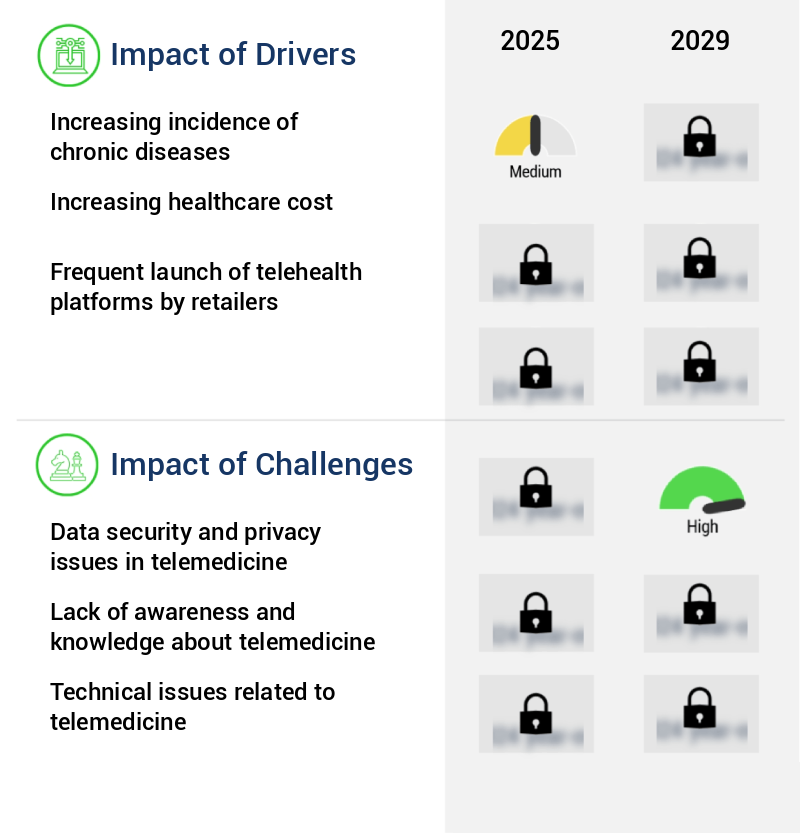
What are the key market drivers leading to the rise in the adoption of Telemedicine Industry?
- The rising prevalence of chronic diseases serves as the primary catalyst for market growth.
- Telemedicine, a digital health solution, is gaining significant traction in various sectors due to the increasing prevalence of chronic diseases. Chronic conditions like diabetes, rheumatoid arthritis, chronic obstructive pulmonary diseases (COPD), heart disease, and orthopedic diseases are more common among the elderly population. Factors such as sedentary lifestyles, unhealthy diets, and natural physiological changes contribute to the rising incidence of these diseases. Patients with chronic diseases require long-term management, and new symptoms may arise, necessitating timely consultation and treatment. Telemedicine facilitates the management of chronic diseases by enabling patients to consult medical professionals remotely.
- The convenience and accessibility of telemedicine make it an essential tool for addressing the healthcare needs of patients with chronic conditions. This digital health solution allows for continuous monitoring, timely interventions, and improved patient outcomes. By leveraging telemedicine, healthcare providers can offer personalized care plans, streamline communication, and enhance overall patient satisfaction.
What are the market trends shaping the Telemedicine Industry?
- The integration of artificial intelligence (AI) into telemedicine represents a significant market trend. Telemedicine, enhanced by AI technologies, is poised for growth in the healthcare sector.
- The relentless pressure on healthcare providers to minimize costs while delivering optimal patient care has fueled the adoption of AI, machine learning, and IoT technologies. These tools enable the enhancement of telemedicine, offering high-quality care without the need for extensive human intervention. AI in healthcare harnesses algorithms and software for intricate medical data analysis, reducing human errors and improving treatments with cost and time efficiency. Recent advancements in AI technologies, particularly in natural language processing (NLP) and machine learning applications, have significantly accelerated their implementation in patient care.
- By automating processes and streamlining workflows, these technologies allow healthcare providers to focus on delivering effective care while managing costs. This data-driven approach to healthcare is transforming the industry, offering a more efficient, cost-effective, and error-reducing solution for patient care.
What challenges does the Telemedicine Industry face during its growth?
- Telemedicine's expansion is hindered by significant challenges in ensuring data security and maintaining patient privacy. These concerns are essential for the industry's growth and must be addressed through robust security protocols and regulatory compliance.
- Telemedicine, a technology-driven healthcare solution, is revolutionizing the industry by enabling providers to deliver services remotely. With advances in telecommunications and digital health technologies, telemedicine has seen significant growth in adoption rates. According to a report, The market is projected to reach a value of USD178.16 billion by 2026, growing at a steady pace. However, the security and privacy of patient data are major concerns in this sector. In 2020, approximately 41% of healthcare providers reported experiencing at least one data breach.
- To address these concerns, stringent data protection regulations, such as HIPAA in the US and GDPR in Europe, have been implemented. Telemedicine platforms employ advanced encryption methods and multi-factor authentication to secure patient data. By prioritizing data security, telemedicine is poised to offer accessible, efficient, and secure healthcare services to an increasingly digital world.
Exclusive Customer Landscape
The telemedicine market forecasting report includes the adoption lifecycle of the market, covering from the innovator's stage to the laggard's stage. It focuses on adoption rates in different regions based on penetration. Furthermore, the telemedicine market report also includes key purchase criteria and drivers of price sensitivity to help companies evaluate and develop their market growth analysis strategies.
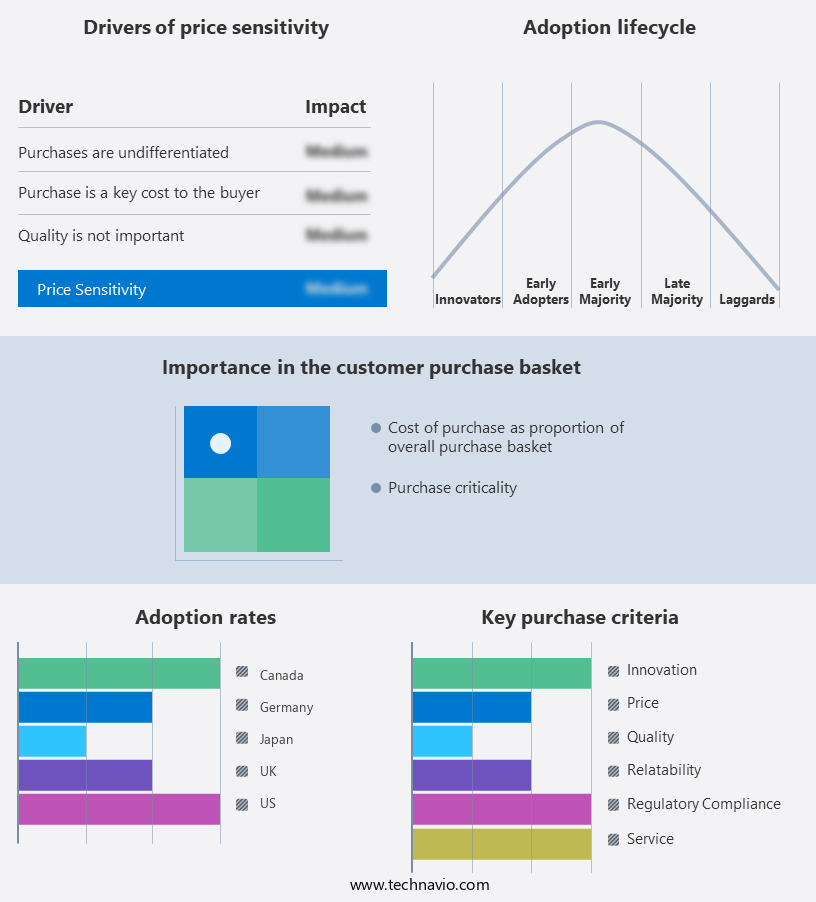
Customer Landscape of Telemedicine Industry
Competitive Landscape & Market Insights
Companies are implementing various strategies, such as strategic alliances, telemedicine market forecast, partnerships, mergers and acquisitions, geographical expansion, and product/service launches, to enhance their presence in the industry.
Access TeleCare LLC - This company specializes in telemedicine services, delivering expert care in cardiology, hospitalist, infectious disease, neurology, and psychiatry fields. Their innovative approach enables remote patient consultations, improving accessibility and efficiency in healthcare.
The industry research and growth report includes detailed analyses of the competitive landscape of the market and information about key companies, including:
- Access TeleCare LLC
- Aerotel Medical Systems Ltd.
- AMD Global Telemedicine Inc.
- American Well Corp.
- AMN Healthcare Services Inc.
- CareCloud Inc.
- Cisco Systems Inc.
- Doctor On Demand Inc.
- ENCOUNTER TELEHEALTH LLC
- Evernorth Health Inc.
- General Electric Co.
- GlobalMedia Group LLC
- Koninklijke Philips NV
- Medtronic Plc
- MeMD
- Oracle Corp.
- Sesame Inc.
- SHL Telemedicine Ltd.
- Teladoc Health Inc.
- Veradigm LLC
Qualitative and quantitative analysis of companies has been conducted to help clients understand the wider business environment as well as the strengths and weaknesses of key industry players. Data is qualitatively analyzed to categorize companies as pure play, category-focused, industry-focused, and diversified; it is quantitatively analyzed to categorize companies as dominant, leading, strong, tentative, and weak.
Recent Development and News in Telemedicine Market
- In January 2024, Teladoc Health, a leading telehealth provider, announced the acquisition of Advanced Medical Reviews (AMR), a leading provider of medical review and utilization management services, for approximately USD1.2 billion. This acquisition aimed to expand Teladoc Health's capabilities in managing complex medical conditions and improving patient outcomes (Teladoc Health Press Release, 2024).
- In March 2024, the U.S. Federal Communications Commission (FCC) launched the Telehealth Program under the Rural Health Care Services Program, providing up to USD100 million in annual funding to expand telehealth services in rural areas. This initiative aimed to improve access to healthcare services for approximately 60 million Americans living in rural areas (FCC Press Release, 2024).
- In May 2024, Amwell, a telehealth platform company, partnered with Walgreens, a leading pharmacy chain, to offer virtual visits and digital consultations through Walgreens retail stores and online. This collaboration aimed to increase accessibility to healthcare services and improve patient engagement (Amwell Press Release, 2024).
- In February 2025, the European Commission approved the acquisition of Chiltern Healthcare, a leading provider of remote patient monitoring services, by Philips, a Dutch technology company. This acquisition aimed to strengthen Philips' telehealth capabilities and expand its market presence in Europe (Philips Press Release, 2025).
Dive into Technavio's robust research methodology, blending expert interviews, extensive data synthesis, and validated models for unparalleled Telemedicine Market insights. See full methodology.
|
Market Scope |
|
|
Report Coverage |
Details |
|
Page number |
214 |
|
Base year |
2024 |
|
Historic period |
2019-2023 |
|
Forecast period |
2025-2029 |
|
Growth momentum & CAGR |
Accelerate at a CAGR of 17.5% |
|
Market growth 2025-2029 |
USD 159.4 billion |
|
Market structure |
Fragmented |
|
YoY growth 2024-2025(%) |
16.8 |
|
Key countries |
US, Germany, Canada, Japan, UK, China, India, South Korea, France, and Italy |
|
Competitive landscape |
Leading Companies, Market Positioning of Companies, Competitive Strategies, and Industry Risks |
Research Analyst Overview
- Telemedicine, a digital health solution, continues to reshape the healthcare landscape by enabling remote patient care, medical consultations, and data exchange between healthcare providers and patients. Patient education materials are increasingly integrated into telemedicine platforms, allowing for easy access to essential health information. Medical device integration facilitates seamless data transfer, enhancing clinical decision support and remote diagnostics. Patient engagement strategies, such as medication adherence tracking and remote rehabilitation, are driving market activity. Data analytics dashboards provide valuable insights, while telehealth platforms offer secure video conferencing for virtual consultations. Wearable health sensors and home healthcare monitoring systems enable continuous patient monitoring, contributing to chronic disease management.
- Digital therapeutics, tele-surgery robots, and mental health teletherapy are emerging trends, offering innovative solutions for various healthcare needs. Remote diagnostics and medical imaging transmission benefit from interoperability standards and data encryption protocols, ensuring secure health information exchange. Predictive analytics models and appointment scheduling systems streamline operations, while telepharmacy services ensure medication accessibility. Virtual consultations through patient portals and remote patient monitoring allow for continuous care, even in the ICU setting. Store-and-forward imaging and physician communication tools facilitate efficient collaboration among healthcare professionals. Mhealth applications and electronic health records further enhance telemedicine's capabilities, offering a more comprehensive and accessible healthcare experience.
- AI-powered diagnostics and virtual assistants are transforming the industry, providing accurate and personalized care. Overall, the market continues to evolve, offering numerous benefits to patients and healthcare providers alike.
What are the Key Data Covered in this Telemedicine Market Research and Growth Report?
-
What is the expected growth of the Telemedicine Market between 2025 and 2029?
-
USD 159.4 billion, at a CAGR of 17.5%
-
-
What segmentation does the market report cover?
-
The report segmented by Application (Telehospital and teleclinic and Telehome), Product (Services and Solutions), Type (Real time, Store and forward, and Others), and Geography (North America, Europe, Asia, and Rest of World (ROW))
-
-
Which regions are analyzed in the report?
-
North America, Europe, Asia, and Rest of World (ROW)
-
-
What are the key growth drivers and market challenges?
-
Increasing incidence of chronic diseases, Data security and privacy issues in telemedicine
-
-
Who are the major players in the Telemedicine Market?
-
Key Companies Access TeleCare LLC, Aerotel Medical Systems Ltd., AMD Global Telemedicine Inc., American Well Corp., AMN Healthcare Services Inc., CareCloud Inc., Cisco Systems Inc., Doctor On Demand Inc., ENCOUNTER TELEHEALTH LLC, Evernorth Health Inc., General Electric Co., GlobalMedia Group LLC, Koninklijke Philips NV, Medtronic Plc, MeMD, Oracle Corp., Sesame Inc., SHL Telemedicine Ltd., Teladoc Health Inc., and Veradigm LLC
-
Market Research Insights
- Telemedicine, a digital health solution enabling remote patient-physician consultations, continues to expand its reach and influence in the healthcare industry. According to market projections, The market is projected to grow at a compound annual growth rate (CAGR) of 16.5% from 2021 to 2028, reaching a value of USD173.6 billion by 2028 (Market Size, 2021). This growth is driven by increasing demand for cost-effective, convenient, and accessible healthcare services. Physician adoption rates have seen significant improvement, with over 76% of physicians reporting using telemedicine in 2021, up from 35% in 2014 (Physician Adoption, 2021). This surge in adoption is attributed to the integration of telemedicine with Electronic Health Records (EHRs), real-time data transmission, and remote monitoring devices.
- However, challenges persist, including data security compliance, system maintenance procedures, and interoperability challenges. To address these concerns, investments in cybersecurity measures, machine learning applications, and clinical workflow integration are essential. Ensuring data breach prevention, network bandwidth requirements, and patient privacy remain top priorities for market players.
We can help! Our analysts can customize this telemedicine market research report to meet your requirements.
 RIA -
RIA - 
