



Latin America Oil And Gas Automation Market Size 2024-2028
The Latin America oil and gas automation market size is forecast to increase by USD 147.3 million at a CAGR of 3% between 2023 and 2028.
- The market is experiencing significant growth due to several key factors. One of the primary drivers is the increase in shale oil production, which has led to a higher demand for automation technologies to optimize operations and enhance efficiency. Another trend influencing the market is the growing importance of big data analytics and the Internet of Things (IoT) In the oil and gas industry. There is a focus on cybersecurity to mitigate risks and ensure regulatory compliance, as well as the implementation of Industry 4.0 technologies such as digital twin, flexible platforms, and human-machine interface for improved process control and industrial automation. These technologies enable real-time monitoring and predictive maintenance, resulting in improved productivity and cost savings. However, the market also faces challenges, including the increasing cybersecurity concerns In the oil and gas sector. As the industry becomes more digitized, the risk of cyber attacks and data breaches increases, necessitating strong security measures to protect critical infrastructure and sensitive information. Overall, the market is expected to witness steady growth In the coming years, driven by these market dynamics.
What will be the size of the Latin America Oil And Gas Automation Market during the forecast period?

- The market is experiencing significant growth due to the increasing adoption of operational technology (OT) solutions to enhance operational efficiency, ensure worker safety, and promote sustainability In the region's upstream and midstream oil operations. Key trends include the integration of data from sensor technology and IoT solutions for real-time monitoring and predictive maintenance, the implementation of cloud computing and edge computing for data processing and storage, and the use of artificial intelligence (AI) and machine learning for problem diagnosis and process optimization.
- Additionally, with the global oil sector undergoing digital transformation, cost reduction, and energy transition, Latin American oil and gas companies are prioritizing operational excellence, smart manufacturing, and data-driven decisions to remain competitive In the industry. Sustainability initiatives, such as environmental monitoring and compliance reporting, are also becoming increasingly important In the region.
How is this market segmented and which is the largest segment?
The market research report provides comprehensive data (region-wise segment analysis), with forecasts and estimates in "USD million" for the period 2024-2028, as well as historical data from 2018-2022 for the following segments.
- Product
- SCADA
- DCS
- PLC
- MES
- Geography
- Latin America
By Product Insights
- The SCADA segment is estimated to witness significant growth during the forecast period.
In the oil and gas industry, Supervisory Control and Data Acquisition (SCADA) systems play a crucial role in monitoring and controlling remote operations. These systems enable the acquisition of data from field devices such as transmitters, pumps, and valves, and facilitate remote control of actuators, valves, and electrical equipment. SCADA platforms offer functionalities like trending, graphic displays, and historical data storage. With many oil and gas rigs located in remote areas, real-time personal monitoring is not feasible. Consequently, SCADA systems are essential for managing and monitoring offsite well sites, storage tanks, pumping stations, and pipelines. Key features include process optimization, safety concerns, flexible scheduling, maintenance plans, problem identification, decision-making, productivity enhancement, communication technologies, and data management. Scalable platforms ensure efficient and cost-effective solutions for the industry.

Get a glance at the market share of various segments Request Free Sample
The SCADA segment was valued at USD 358.30 million in 2018 and showed a gradual increase during the forecast period.
Market Dynamics
Our researchers analyzed the data with 2023 as the base year, along with the key drivers, trends, and challenges. A holistic analysis of drivers will help companies refine their marketing strategies to gain a competitive advantage.
What are the key market drivers leading to the rise in adoption of Latin America Oil And Gas Automation Market?
Growth in shale oil production is the key driver of the market.
- The market is experiencing significant growth due to the increasing focus on environmental compliance, operational efficiency, and safety concerns In the industry. Digitalization and automation technologies are playing a crucial role in addressing these challenges. Cloud-based automation solutions are becoming increasingly popular for real-time data analytics and decision-making, enabling companies to optimize production processes, reduce costs, and improve worker experience. Automated systems are being implemented for the monitoring and control of hazardous materials, emissions, and energy usage. These systems are also being used for process optimization, maintenance schedules, and troubleshooting in confined spaces. Digital platforms and the Internet of Things (IoT) are being used to enhance communication technologies, providing real-time information to engineering teams for project requirements and system integration.
- Moreover, the adoption of automation technologies is also crucial for safety concerns, particularly in gas operations, motor control, and downhole monitors. Advanced analytics services are being used to analyze data from pressure drop, sand content, and shelf life, providing valuable insights for production optimization and energy savings. The oil and gas industry is undergoing industrial innovation, with a shift towards Industry 4.0 and cyber-physical systems. This is leading to the development of scalable platforms for enterprise-wide monitoring and comprehensive surveillance. The focus on labor safety and reservoir analysis is also driving the adoption of process analytical tools and method development for oil & gas exploration.
What are the market trends shaping the Latin America Oil And Gas Automation Market?
Growing importance of big data analytics and IoT is the upcoming trend In the market.
- In the oil and gas industry of Latin America, digitalization and automation technologies are increasingly being adopted to enhance operational efficiency, ensure environmental compliance, and improve safety. Real-time data analytics plays a crucial role in this process, enabling companies to monitor and optimize production processes, identify bottlenecks, and make data-driven decisions. Cloud-based automation solutions offer flexibility and scalability, allowing for enterprise-wide monitoring of hazardous materials and emissions, as well as energy savings. Automated systems are being implemented for dangerous tasks, such as motor control and pressure drop analysis, reducing the risk of accidents and improving productivity. Advanced analytics services help in optimizing maintenance schedules and troubleshooting problems in real-time, leading to cost savings and improved safety.
- Furthermore, communication technologies and digital platforms facilitate collaboration between engineering teams and enable remote monitoring and control of gas operations. The integration of Industry 4.0 technologies, such as the Internet of Things (IoT), machine monitoring, and downhole monitors, provides valuable insights into production processes and helps in process optimization. Digitalization also enhances the worker experience by providing a virtual workspace and real-time information, allowing for more effective decision-making and problem-solving. The oil and gas industry in Latin America is facing challenges such as aging reservoirs and pressure to reduce production costs. Automation and digitalization offer solutions to these challenges by improving process optimization, increasing energy savings, and reducing labor safety concerns.
What challenges does Latin America Oil And Gas Automation Market face during the growth?
Growing cybersecurity concerns is a key challenge affecting the market growth.
- The market is witnessing significant growth due to the increasing focus on environmental compliance and operational efficiency. Digitalization and automation technologies are being adopted to optimize production processes, reduce costs, and enhance safety. Real-time data analytics and cloud-based automation solutions are becoming increasingly popular for monitoring and managing hazardous materials and emissions. Automation systems are being implemented for motor control, surface-control valves, and downhole monitors to improve efficiency and productivity. Advanced analytics services are being utilized to identify bottlenecks and optimize energy usage. The integration of digital platforms and the Internet of Things (IoT) is enabling real-time information sharing and remote troubleshooting.
- Environmental concerns and safety are major priorities In the oil and gas industry. Flexible and scalable automation solutions are being adopted to ensure compliance with regulations and improve labor safety. Process optimization and maintenance schedules are being streamlined to minimize downtime and reduce accidents. Communication technologies are being utilized to enhance internal communication between engineering teams and improve decision-making. Energy savings and cost savings are significant drivers for automation investments. The adoption of Industry 4.0 and cyber-physical systems is enabling comprehensive surveillance and analysis of production processes. The challenges of aging reservoirs and pressure drop are being addressed through advanced engineering methodologies and process analytical tools.
Exclusive Latin America Oil And Gas Automation Market Customer Landscape
The market forecasting report includes the adoption lifecycle of the market, covering from the innovator's stage to the laggard's stage. It focuses on adoption rates in different regions based on penetration. Furthermore, the report also includes key purchase criteria and drivers of price sensitivity to help companies evaluate and develop their market growth analysis strategies.
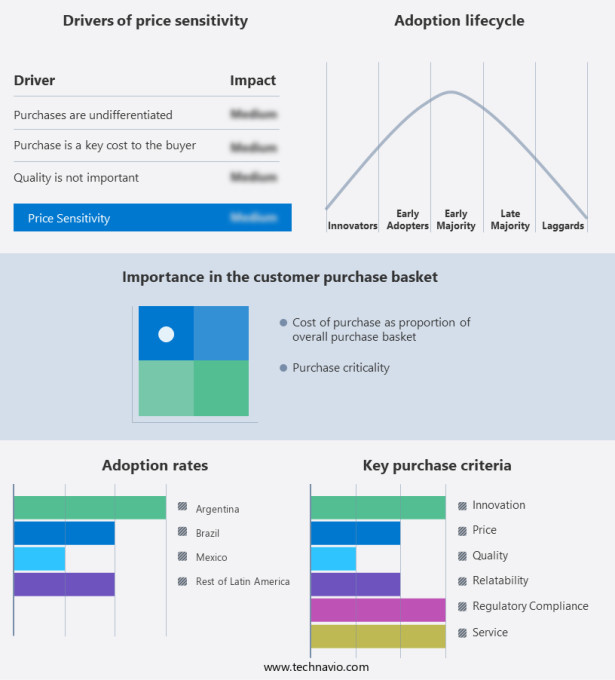
Customer Landscape
Key Companies & Market Insights
Companies are implementing various strategies, such as strategic alliances, market forecast partnerships, mergers and acquisitions, geographical expansion, and product/service launches, to enhance their presence In the market.
The market research and growth report includes detailed analyses of the competitive landscape of the market and information about key companies, including:
- ABB Ltd.
- Andritz AG
- Atos SE
- Bizagi Group Ltd.
- Cisco Systems Inc.
- Cognizant Technology Solutions Corp.
- Emerson Electric Co.
- FURUKAWA Co. Ltd.
- General Electric Co.
- HCL Technologies Ltd.
- Honeywell International Inc.
- Johnson Controls International Plc
- Rockwell Automation Inc.
- Schneider Electric SE
- Siemens AG
- Valmet Corp.
- WEG S.A
- Wipro Ltd.
- Yokogawa Electric Corp.
Qualitative and quantitative analysis of companies has been conducted to help clients understand the wider business environment as well as the strengths and weaknesses of key market players. Data is qualitatively analyzed to categorize companies as pure play, category-focused, industry-focused, and diversified; it is quantitatively analyzed to categorize companies as dominant, leading, strong, tentative, and weak.
Research Analyst Overview
The oil and gas industry in Latin America is undergoing a significant transformation as automation technologies take center stage. This shift is driven by the need for operational efficiency, cost savings, and enhanced safety in an industry that faces numerous challenges. Digitalization is a key catalyst for change, with cloud-based automation solutions becoming increasingly popular. These platforms offer real-time data analytics, enabling companies to make informed decisions and optimize their processes. Automated systems are being employed to manage hazardous materials and ensure environmental compliance, addressing growing concerns regarding emissions and safety.
In addition, operational efficiency is a primary focus for companies In the region. Automation technologies are being used to streamline production processes, optimize maintenance schedules, and improve communication between teams. Flexible, scalable platforms are essential for managing complex operations, providing visibility into energy usage and identifying bottlenecks. Safety concerns are a major priority In the oil and gas sector, particularly when it comes to dangerous tasks and confined spaces. Automation technologies are being used to minimize human intervention In these areas, reducing the risk of accidents and improving overall safety. Advanced analytics services are also being employed to monitor and analyze real-time data, enabling proactive problem-solving and troubleshooting.
Furthermore, cost savings are a significant driver for automation In the oil and gas industry. Automated systems can help reduce labor costs, optimize energy usage, and minimize downtime. Additionally, automation can help extend the shelf life of aging reservoirs and improve the efficiency of production processes. Industrial innovation companies are at the forefront of this transformation, providing advanced automation technologies and services to help oil and gas companies meet their business objectives. These companies are working closely with engineering teams to develop customized solutions that meet the unique requirements of each project. The implementation of automation technologies also brings challenges, particularly in terms of systems integration and cybersecurity.
In addition, companies must ensure that their digital platforms are secure and can seamlessly integrate with existing systems. Additionally, there is a need for effective internal communication and training to ensure that workers are comfortable using the new technologies. The oil and gas industry in Latin America is undergoing a significant digital transformation, with automation technologies playing a key role in improving operational efficiency, enhancing safety, and reducing costs. As the industry continues to evolve, we can expect to see further adoption of advanced analytics services, motor control systems, and real-time information monitoring. The future of the industry lies In the ability to harness the power of Industry 4.0 and embrace the benefits of automation.
|
Market Scope |
|
|
Report Coverage |
Details |
|
Page number |
145 |
|
Base year |
2023 |
|
Historic period |
2018-2022 |
|
Forecast period |
2024-2028 |
|
Growth momentum & CAGR |
Accelerate at a CAGR of 3% |
|
Market growth 2024-2028 |
USD 147.3 million |
|
Market structure |
Fragmented |
|
YoY growth 2023-2024(%) |
2.9 |
|
Competitive landscape |
Leading Companies, Market Positioning of Companies, Competitive Strategies, and Industry Risks |
What are the Key Data Covered in this Market Research Report?
- CAGR of the market during the forecast period
- Detailed information on factors that will drive the market growth and forecasting between 2024 and 2028
- Precise estimation of the size of the market and its contribution of the market in focus to the parent market
- Accurate predictions about upcoming market growth and trends and changes in consumer behaviour
- Growth of the market across Latin America
- Thorough analysis of the market's competitive landscape and detailed information about companies
- Comprehensive analysis of factors that will challenge the growth of market companies
We can help! Our analysts can customize this market research report to meet your requirements Get in touch