


Oil Mist Collector Market Analysis APAC, Europe, North America, South America, Middle East and Africa - US, China, Japan, South Korea, Germany - Size and Forecast 2024-2028

Oil Mist Collector Market Analysis APAC, Europe, North America, South America, Middle East and Africa - US, China, Japan, South Korea, Germany - Size and Forecast 2024-2028

Published: Dec 2023 166 Pages SKU: IRTNTR45619

Market Overview at a Glance

$310.77 Mn
Market Opportunity
5.11%
CAGR
4.67
YoY growth 2023-2024(%)

Oil Mist Collector Market Size 2024-2028

The oil mist collector market size is forecast to increase by USD 310.77 million at a CAGR of 5.11% between 2023 and 2028.

  • The market is experiencing significant growth, driven by the increasing production of light vehicles and government initiatives to promote the machine tools industry. The rise in automotive manufacturing leads to an increased demand for machine tools, which in turn fuels the need for effective oil mist collection systems. Additionally, the growth of the second-hand machine market is expanding the potential customer base for oil mist collectors. However, regulatory hurdles impact adoption, as stringent emissions regulations necessitate the use of advanced oil mist collection technologies.
  • Furthermore, supply chain inconsistencies temper growth potential due to the reliance on raw materials and components from various sources. Companies seeking to capitalize on market opportunities must focus on innovation, regulatory compliance, and supply chain resilience to navigate these challenges effectively. By addressing these issues, players can establish a strong market position and capitalize on the expanding demand for oil mist collectors.

What will be the Size of the Oil Mist Collector Market during the forecast period?
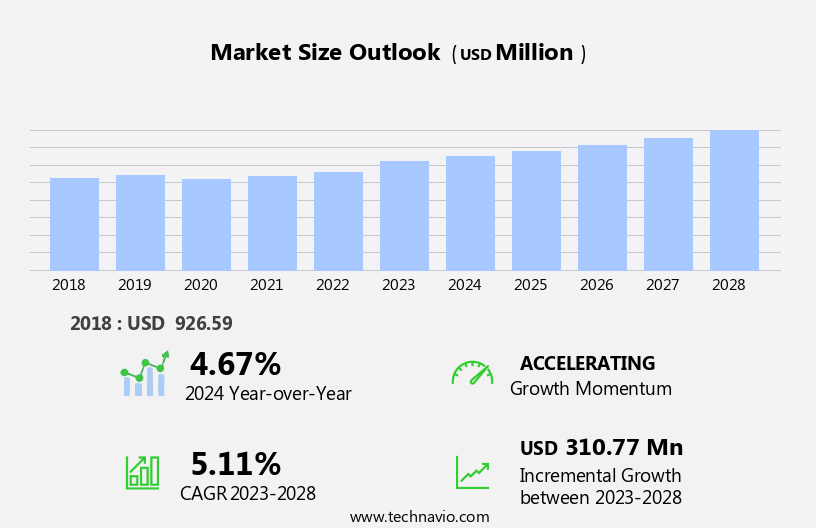
Oil Mist Collector Market Size

 Request Free Sample

  • The market in the US is driven by the increasing demand for safety and efficiency in various industries, particularly those utilizing compressor systems and scuba diving equipment. Compressor systems, including those used in diving tanks, require effective oil mist collection to ensure the safety of operators and maintain equipment performance. In the scuba diving sector, enriched breathing gases such as nitrox and trimix are gaining popularity, leading to an increased demand for oil mist collectors that are compatible with these gases. Scuba gear, including cylinders, dive computers, regulators, masks, snorkels, fins, wetsuits, and drysuits, all benefit from the use of oil mist collectors to maintain optimal performance and ensure safety for divers.
  • Safety is a primary concern in both industries, with weight belts and integrated weights used to ensure buoyancy control and exposure protection for divers. Cold water diving and marine life exploration also contribute to the market's growth, as divers require reliable and efficient equipment to navigate underwater environments. The market for oil mist collectors is expected to grow as industries and consumers prioritize safety, efficiency, and regulatory compliance. Submersible pressure gauges, alternate second stages, and dive planning tools are essential components of the oil mist collector system, ensuring the safe and efficient operation of compressor systems and scuba diving equipment.

How is this Oil Mist Collector Industry segmented?

The oil mist collector industry research report provides comprehensive data (region-wise segment analysis), with forecasts and estimates in "USD million" for the period 2024-2028, as well as historical data from 2018-2022 for the following segments.

  • Type
    • With filter
    • Without filter
  • Product
    • Lathe machines
    • EDMs
    • SPMs
    • Machining centers
    • Grinding machines
  • Geography
    • North America
      • US
    • Europe
      • Germany
    • APAC
      • China
      • Japan
      • South Korea
    • Rest of World (ROW)

By Type Insights

The with filter segment is estimated to witness significant growth during the forecast period.

Filter oil mist collectors are essential devices in air pollution control and environmental monitoring applications. These collectors extract oil mist from gas streams and restore it to its original form, subsequently returning it to the oil tank in the pump. The most effective filter for oil mist collection is the packed-bed, or coalescing, filter. This type of filter draws oil out of the air, allowing it to drain off. Filter oil mist collectors offer versatility in various industries, including chemical waste treatment, detection of soil and water contamination, medical waste management, and fire investigation and prevention.

The oil mist collected can be reused or disposed of properly, reducing environmental hazards. The use of filter oil mist collectors is increasingly popular due to their ability to improve air quality, ensure regulatory compliance, and promote sustainable practices.
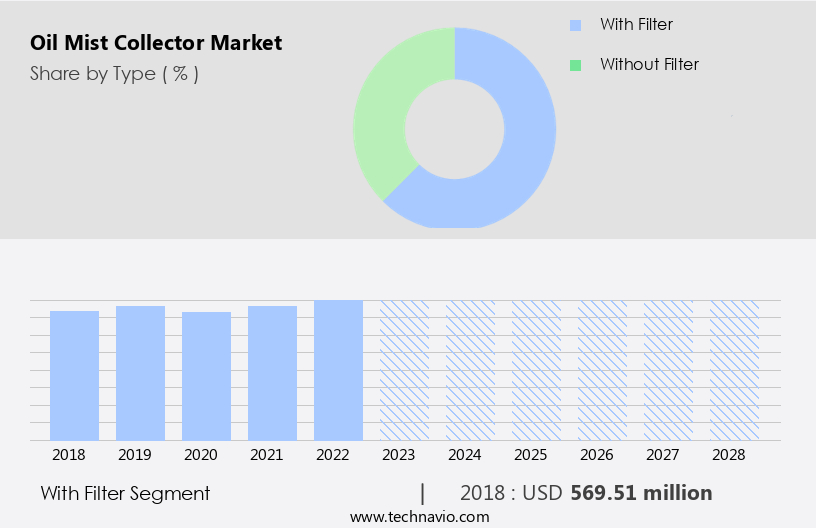
Oil Mist Collector Market Size

 Download Free Sample Report

The With filter segment was valued at USD 569.51 million in 2018 and showed a gradual increase during the forecast period.

Regional Analysis

APAC is estimated to contribute 57% to the growth of the global market during the forecast period.Technavio's analysts have elaborately explained the regional trends and drivers that shape the market during the forecast period.
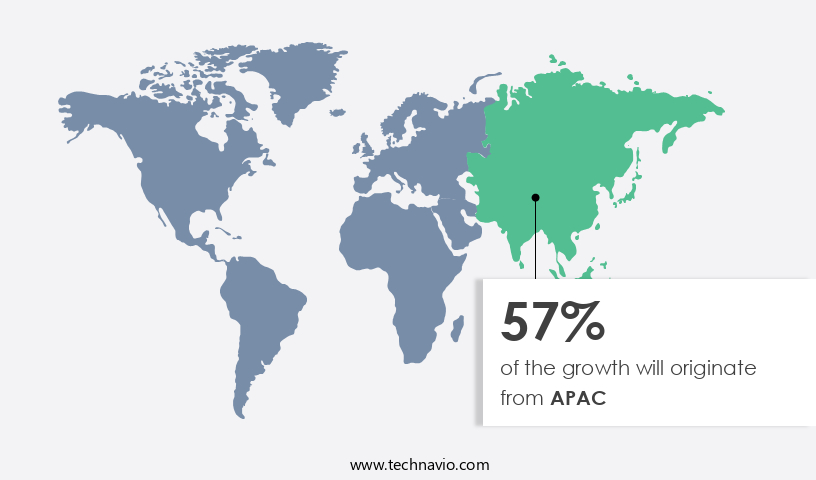
Oil Mist Collector Market Share by Geography

View Free PDF Sample

The market is experiencing significant growth, particularly in the Asia Pacific (APAC) region. The increasing adoption of machine tools in countries like China, Japan, India, Taiwan, and South Korea, driven by their robust manufacturing industries, is fueling this expansion. China, in particular, is a major contributor due to the high concentration of manufacturing facilities. The demand for oil mist collectors in APAC is projected to surpass that of developed regions, such as North America and Europe, due to the establishment of new manufacturing sites in the former.

Oil mist collectors are essential for ensuring safety and maintaining the efficiency of machine tools by collecting oil mists generated during the machining process. This market trend is expected to persist as manufacturing continues to expand in APAC.

Market Dynamics

Our researchers analyzed the data with 2023 as the base year, along with the key drivers, trends, and challenges. A holistic analysis of drivers will help companies refine their marketing strategies to gain a competitive advantage.

What are the Oil Mist Collector market drivers leading to the rise in the adoption of Industry?

  • The significant increase in light vehicle production serves as the primary market catalyst. 
  • The market is driven by the increasing production of light vehicles, particularly in Asia Pacific. Major automotive manufacturers in this region, including those in Japan, export a significant portion of their output to the US and Europe. The demand for light vehicles is anticipated to rise, leading to an increase in the need for efficient manufacturing processes. This includes the use of Electronic Discharge Machining (EDM) for producing precision parts. Oil mist collectors play a crucial role in EDM machines by filtering and collecting oil mist generated during the cutting process, ensuring effective cooling and maintaining optimal machine performance.
  • Additionally, safety regulations mandate the use of oil mist collectors for ensuring diver safety during underwater operations. The market growth is further fueled by the adoption of advanced technologies such as open-heeled fins, alternate second stages, weights and belts, reels, and various diving equipment, including compasses, flashlights, snorkels, submersible pressure gauges, regulators, and buoyancy compensators in the diving industry. Pressure regulation is a critical aspect of these applications, and oil mist collectors help maintain optimal pressure levels for these devices. Dive shops and other related businesses are significant consumers of these products, making the market promising during the forecast period.

What are the Oil Mist Collector market trends shaping the Industry?

  • Government initiatives are increasingly focusing on the promotion of the machine tools industry, making it a noteworthy market trend. This sector is poised for significant growth due to the support and investment from government bodies.
  • The market is experiencing significant growth due to various initiatives taken by governments to promote the machine tools industry. In Japan, the Ministry of International Trade and Industry has implemented strategic mergers and acquisitions (M&A) and offers depreciation allowances to companies purchasing machine tools. Additionally, state and nation-owned laboratories help Small and Medium Enterprises (SMEs) adopt numerical control technology. In South Korea, the Korea Institute of Science and Technology (KIST) played a crucial role in developing the first Computer Numerical Control (CNC) machine. These efforts are expected to drive the demand for oil mist collectors in the manufacturing sector.
  • Temperature control is essential for various applications, including dive equipment such as SCUBA regulators and dive computers. Oil mist collectors help maintain optimal water temperature, ensuring the proper functioning of these devices. Furthermore, safety gear like diving suits, integrated weights, dive knives, depth gauges, DSMBs, and dive computers used by both technical divers and non-divers also require temperature control. Oil mist collectors play a vital role in protecting marine life by reducing the emission of oil mist into the environment, making them an essential component in various industries.

How does Oil Mist Collector market faces challenges face during its growth?

  • The expansion of the secondary market for used machinery poses a significant challenge to the industry's growth trajectory. 
  • The market faces a significant challenge due to the expanding second-hand machine tools market. The closure of manufacturing industries in the US and Europe, driven by high labor costs and stringent pollution regulations, has led to an increased supply of used machinery. Asian countries, including China, India, and Pakistan, are importing these second-hand machines from Europe and the US, as they offer cost advantages. European machines, in particular, are popular among Asian manufacturers due to their lower prices. This trend poses a challenge to the new the market, as many of these used machines may not be equipped with the latest technology for effective oil mist collection.
  • Despite this hurdle, the market continues to grow, driven by the increasing importance of equipment maintenance in various industries. Cold water oil mist collectors, with their closed-heel fins and positive buoyancy design, are gaining popularity for their efficiency and safety features. Additionally, wing-style oil mist collectors are increasingly being used as dive planning tools for recreational and decompression diving, ensuring safety for newbie and experienced divers alike. Enriched air compatibility is another key feature that is becoming increasingly important in the market.

Exclusive Customer Landscape

The oil mist collector market forecasting report includes the adoption lifecycle of the market, covering from the innovator's stage to the laggard's stage. It focuses on adoption rates in different regions based on penetration. Furthermore, the oil mist collector market report also includes key purchase criteria and drivers of price sensitivity to help companies evaluate and develop their market growth analysis strategies.
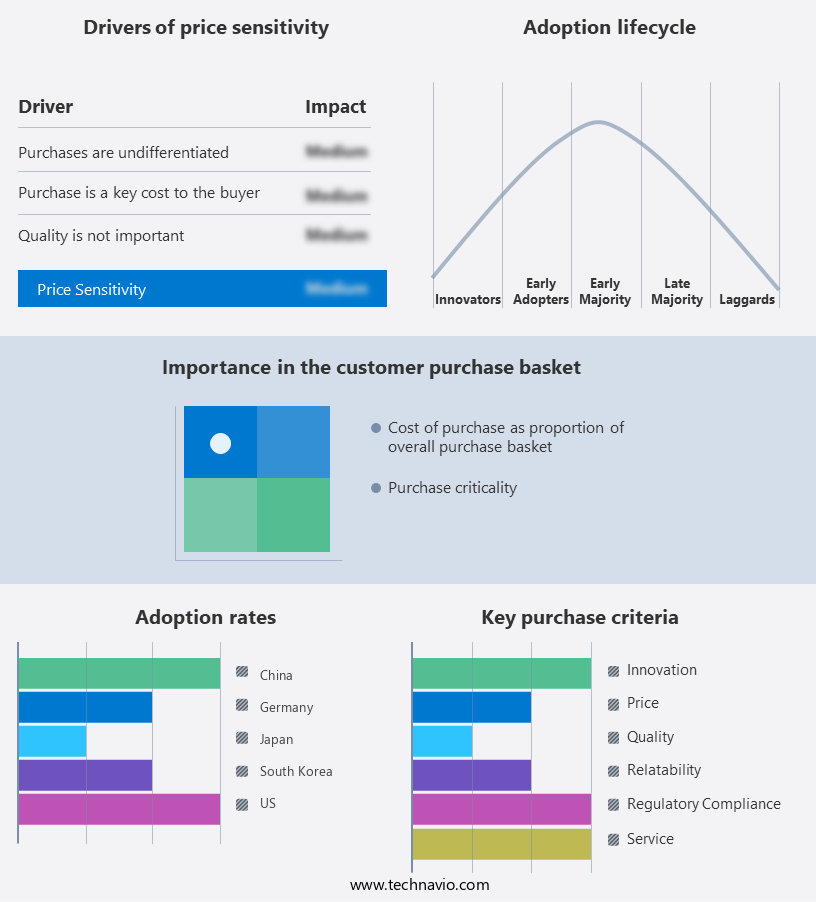
Oil Mist Collector Market Share by Geography

 Customer Landscape

Key Companies & Market Insights

Companies are implementing various strategies, such as strategic alliances, oil mist collector market forecast, partnerships, mergers and acquisitions, geographical expansion, and product/service launches, to enhance their presence in the industry.

Absolent Group AB - The company specializes in providing advanced oil mist collection solutions through its subsidiary, Filtermist.

The industry research and growth report includes detailed analyses of the competitive landscape of the market and information about key companies, including:

  • Absolent Group AB
  • AGET Manufacturing Co.
  • Air Quality Engineering Inc.
  • Airflow Systems Inc.
  • AIRMAX International
  • Apiste Corp.
  • Camfil AB
  • CLEANTEK
  • Curran Manufacturing Corp
  • Donaldson Co. Inc.
  • Engineered filtration Inc.
  • Filtra Systems Co
  • GECO Group of Companies
  • KLEAN Environmental Technology Co. Ltd.
  • Losma S.p.A.
  • Nederman Holding AB
  • Powertech Pollution Controls Pvt. Ltd.
  • SCHAKO Ltd.
  • Tanis Technologies
  • Tri-Mer Corp.

Qualitative and quantitative analysis of companies has been conducted to help clients understand the wider business environment as well as the strengths and weaknesses of key industry players. Data is qualitatively analyzed to categorize companies as pure play, category-focused, industry-focused, and diversified; it is quantitatively analyzed to categorize companies as dominant, leading, strong, tentative, and weak.

Recent Development and News in Oil Mist Collector Market

  • In February 2024, Parker Hannifin Corporation, a leading global provider of motion and control technologies, announced the launch of its new Oil Mist Eliminator model, the CLEARguard FX2. This advanced oil mist collector features a compact design and improved filtration efficiency, addressing the growing demand for smaller, more efficient solutions in the metalworking industry (Parker Hannifin Corporation, 2024).
  • In October 2025, Pall Corporation, a global leader in filtration, separation, and purification solutions, entered into a strategic partnership with Siemens Energy to integrate Pall's oil mist filtration technology into Siemens Energy's gas turbine systems. This collaboration aims to enhance the reliability and performance of gas turbines by reducing oil mist emissions, a significant contributor to maintenance costs and downtime (Pall Corporation, 2025).
  • In December 2024, Camfil Group, a world leader in air filtration solutions, completed the acquisition of Ultraweb Filtration, a leading manufacturer of oil mist filters. This acquisition strengthens Camfil's position in the market by expanding its product portfolio and enhancing its ability to cater to various industries, including power generation, oil & gas, and manufacturing (Camfil Group, 2024).
  • In March 2025, the European Union passed the revised Industrial Emissions Directive (IED), which includes stricter regulations on oil mist emissions from industrial processes. This policy change is expected to drive the adoption of advanced oil mist filtration systems in European industries, creating significant growth opportunities for market participants (European Commission, 2025).

Research Analyst Overview

The market exhibits a dynamic and evolving landscape, shaped by ongoing advancements in technology and the ever-changing needs of various industries. One significant trend in this market is the increasing adoption of alternate second stages in oil mist collectors. These devices offer enhanced performance and versatility, allowing for improved efficiency and reduced emissions. Another noteworthy development is the integration of weights and belts into oil mist collector designs. This innovation offers divers and non-divers alike the convenience of having essential safety gear combined with their equipment. The reel, a crucial component of the oil mist collector system, has also seen advancements, with improvements in pressure regulation ensuring optimal performance under various water temperatures.

Dive safety remains a top priority in the market. Jackets, drysuits, wetsuits, and other exposure protection gear are essential components of the diving ensemble, and oil mist collectors play a crucial role in maintaining a safe diving environment. Compasses, flashlights, snorkels, submersible pressure gauges, regulators, and other diving equipment are all enhanced by the integration of oil mist collectors, which help ensure the longevity and effectiveness of these essential tools. Buoyancy control is another critical aspect of diving, and oil mist collectors play a role in maintaining positive buoyancy, preventing the risk of "tank banging" or other potential safety hazards.

Dive shops and other equipment providers recognize the importance of oil mist collectors in their offerings, offering a range of options for recreational and technical divers alike. The market is also influenced by the needs of various diving conditions. Cold water diving requires specific considerations, such as enriched air compatibility and the use of closed-heel fins. Ambient pressure and buoyancy control are essential factors in deep-sea diving, where the risk of decompression sickness is higher. Equipment maintenance is another essential consideration in the market. Wing-style designs and dive planning tools help ensure that oil mist collectors are properly maintained and functioning optimally.

Safety remains a top priority, with DSMBs, dive computers, and other safety gear all enhanced by the integration of oil mist collectors. The market is a continuously evolving landscape, shaped by ongoing advancements in technology and the ever-changing needs of various industries. From open-heeled fins to closed-heel designs, and from recreational diving to deep-sea exploration, oil mist collectors play a crucial role in ensuring the safety and effectiveness of a diverse range of diving equipment. Whether used in the manufacture of compressed air, scuba tanks, or other essential diving gear, oil mist collectors help maintain optimal performance and extend the life of these valuable tools.

Dive into Technavio's robust research methodology, blending expert interviews, extensive data synthesis, and validated models for unparalleled Oil Mist Collector Market insights. See full methodology.

Market Scope

Report Coverage

Details

Page number

166

Base year

2023

Historic period

2018-2022

Forecast period

2024-2028

Growth momentum & CAGR

Accelerate at a CAGR of 5.11%

Market growth 2024-2028

USD 310.77 million

Market structure

Fragmented

YoY growth 2023-2024(%)

4.67

Key countries

US, China, Japan, South Korea, and Germany

Competitive landscape

Leading Companies, Market Positioning of Companies, Competitive Strategies, and Industry Risks

Request Free Sample

What are the Key Data Covered in this Oil Mist Collector Market Research and Growth Report?

  • CAGR of the Oil Mist Collector industry during the forecast period
  • Detailed information on factors that will drive the growth and forecasting between 2024 and 2028
  • Precise estimation of the size of the market and its contribution of the industry in focus to the parent market
  • Accurate predictions about upcoming growth and trends and changes in consumer behaviour
  • Growth of the market across APAC, Europe, North America, South America, and Middle East and Africa
  • Thorough analysis of the market's competitive landscape and detailed information about companies
  • Comprehensive analysis of factors that will challenge the oil mist collector market growth of industry companies

We can help! Our analysts can customize this oil mist collector market research report to meet your requirements.

Get in touch

1 Executive Summary

  • 1.1 Market overview
    • Exhibit 01: Executive Summary – Chart on Market Overview
    • Exhibit 02: Executive Summary – Data Table on Market Overview
    • Exhibit 03: Executive Summary – Chart on Global Market Characteristics
    • Exhibit 04: Executive Summary – Chart on Market by Geography
    • Exhibit 05: Executive Summary – Chart on Market Segmentation by Type
    • Exhibit 06: Executive Summary – Chart on Market Segmentation by Product
    • Exhibit 07: Executive Summary – Chart on Incremental Growth
    • Exhibit 08: Executive Summary – Data Table on Incremental Growth
    • Exhibit 09: Executive Summary – Chart on Vendor Market Positioning

2 Market Landscape

  • 2.1 Market ecosystem
    • Exhibit 10: Parent market
    • Exhibit 11: Market Characteristics

3 Market Sizing

  • 3.1 Market definition
    • Exhibit 12: Offerings of vendors included in the market definition
  • 3.2 Market segment analysis
    • Exhibit 13: Market segments
  • 3.3 Market size 2023
    • 3.4 Market outlook: Forecast for 2023-2028
      • Exhibit 14: Chart on Global - Market size and forecast 2023-2028 ($ million)
      • Exhibit 15: Data Table on Global - Market size and forecast 2023-2028 ($ million)
      • Exhibit 16: Chart on Global Market: Year-over-year growth 2023-2028 (%)
      • Exhibit 17: Data Table on Global Market: Year-over-year growth 2023-2028 (%)

    4 Historic Market Size

    • 4.1 Global oil mist collector market 2018 - 2022
      • Exhibit 18: Historic Market Size – Data Table on global oil mist collector market 2018 - 2022 ($ million)
    • 4.2 Type Segment Analysis 2018 - 2022
      • Exhibit 19: Historic Market Size – Type Segment 2018 - 2022 ($ million)
    • 4.3 Product Segment Analysis 2018 - 2022
      • Exhibit 20: Historic Market Size – Product Segment 2018 - 2022 ($ million)
    • 4.4 Geography Segment Analysis 2018 - 2022
      • Exhibit 21: Historic Market Size – Geography Segment 2018 - 2022 ($ million)
    • 4.5 Country Segment Analysis 2018 - 2022
      • Exhibit 22: Historic Market Size – Country Segment 2018 - 2022 ($ million)

    5 Five Forces Analysis

    • 5.1 Five forces summary
      • Exhibit 23: Five forces analysis - Comparison between 2023 and 2028
    • 5.2 Bargaining power of buyers
      • Exhibit 24: Chart on Bargaining power of buyers – Impact of key factors 2023 and 2028
    • 5.3 Bargaining power of suppliers
      • Exhibit 25: Bargaining power of suppliers – Impact of key factors in 2023 and 2028
    • 5.4 Threat of new entrants
      • Exhibit 26: Threat of new entrants – Impact of key factors in 2023 and 2028
    • 5.5 Threat of substitutes
      • Exhibit 27: Threat of substitutes – Impact of key factors in 2023 and 2028
    • 5.6 Threat of rivalry
      • Exhibit 28: Threat of rivalry – Impact of key factors in 2023 and 2028
    • 5.7 Market condition
      • Exhibit 29: Chart on Market condition - Five forces 2023 and 2028

    6 Market Segmentation by Type

    • 6.1 Market segments
      • Exhibit 30: Chart on Type - Market share 2023-2028 (%)
      • Exhibit 31: Data Table on Type - Market share 2023-2028 (%)
    • 6.2 Comparison by Type
      • Exhibit 32: Chart on Comparison by Type
      • Exhibit 33: Data Table on Comparison by Type
    • 6.3 With filter - Market size and forecast 2023-2028
      • Exhibit 34: Chart on With filter - Market size and forecast 2023-2028 ($ million)
      • Exhibit 35: Data Table on With filter - Market size and forecast 2023-2028 ($ million)
      • Exhibit 36: Chart on With filter - Year-over-year growth 2023-2028 (%)
      • Exhibit 37: Data Table on With filter - Year-over-year growth 2023-2028 (%)
    • 6.4 Without filter - Market size and forecast 2023-2028
      • Exhibit 38: Chart on Without filter - Market size and forecast 2023-2028 ($ million)
      • Exhibit 39: Data Table on Without filter - Market size and forecast 2023-2028 ($ million)
      • Exhibit 40: Chart on Without filter - Year-over-year growth 2023-2028 (%)
      • Exhibit 41: Data Table on Without filter - Year-over-year growth 2023-2028 (%)
    • 6.5 Market opportunity by Type
      • Exhibit 42: Market opportunity by Type ($ million)
      • Exhibit 43: Data Table on Market opportunity by Type ($ million)

    7 Market Segmentation by Product

    • 7.1 Market segments
      • Exhibit 44: Chart on Product - Market share 2023-2028 (%)
      • Exhibit 45: Data Table on Product - Market share 2023-2028 (%)
    • 7.2 Comparison by Product
      • Exhibit 46: Chart on Comparison by Product
      • Exhibit 47: Data Table on Comparison by Product
    • 7.3 Lathe machines - Market size and forecast 2023-2028
      • Exhibit 48: Chart on Lathe machines - Market size and forecast 2023-2028 ($ million)
      • Exhibit 49: Data Table on Lathe machines - Market size and forecast 2023-2028 ($ million)
      • Exhibit 50: Chart on Lathe machines - Year-over-year growth 2023-2028 (%)
      • Exhibit 51: Data Table on Lathe machines - Year-over-year growth 2023-2028 (%)
    • 7.4 EDMs - Market size and forecast 2023-2028
      • Exhibit 52: Chart on EDMs - Market size and forecast 2023-2028 ($ million)
      • Exhibit 53: Data Table on EDMs - Market size and forecast 2023-2028 ($ million)
      • Exhibit 54: Chart on EDMs - Year-over-year growth 2023-2028 (%)
      • Exhibit 55: Data Table on EDMs - Year-over-year growth 2023-2028 (%)
    • 7.5 SPMs - Market size and forecast 2023-2028
      • Exhibit 56: Chart on SPMs - Market size and forecast 2023-2028 ($ million)
      • Exhibit 57: Data Table on SPMs - Market size and forecast 2023-2028 ($ million)
      • Exhibit 58: Chart on SPMs - Year-over-year growth 2023-2028 (%)
      • Exhibit 59: Data Table on SPMs - Year-over-year growth 2023-2028 (%)
    • 7.6 Machining centers - Market size and forecast 2023-2028
      • Exhibit 60: Chart on Machining centers - Market size and forecast 2023-2028 ($ million)
      • Exhibit 61: Data Table on Machining centers - Market size and forecast 2023-2028 ($ million)
      • Exhibit 62: Chart on Machining centers - Year-over-year growth 2023-2028 (%)
      • Exhibit 63: Data Table on Machining centers - Year-over-year growth 2023-2028 (%)
    • 7.7 Grinding machines - Market size and forecast 2023-2028
      • Exhibit 64: Chart on Grinding machines - Market size and forecast 2023-2028 ($ million)
      • Exhibit 65: Data Table on Grinding machines - Market size and forecast 2023-2028 ($ million)
      • Exhibit 66: Chart on Grinding machines - Year-over-year growth 2023-2028 (%)
      • Exhibit 67: Data Table on Grinding machines - Year-over-year growth 2023-2028 (%)
    • 7.8 Market opportunity by Product
      • Exhibit 68: Market opportunity by Product ($ million)
      • Exhibit 69: Data Table on Market opportunity by Product ($ million)

    8 Customer Landscape

    • 8.1 Customer landscape overview
      • Exhibit 70: Analysis of price sensitivity, lifecycle, customer purchase basket, adoption rates, and purchase criteria

    9 Geographic Landscape

    • 9.1 Geographic segmentation
      • Exhibit 71: Chart on Market share by geography 2023-2028 (%)
      • Exhibit 72: Data Table on Market share by geography 2023-2028 (%)
    • 9.2 Geographic comparison
      • Exhibit 73: Chart on Geographic comparison
      • Exhibit 74: Data Table on Geographic comparison
    • 9.3 APAC - Market size and forecast 2023-2028
      • Exhibit 75: Chart on APAC - Market size and forecast 2023-2028 ($ million)
      • Exhibit 76: Data Table on APAC - Market size and forecast 2023-2028 ($ million)
      • Exhibit 77: Chart on APAC - Year-over-year growth 2023-2028 (%)
      • Exhibit 78: Data Table on APAC - Year-over-year growth 2023-2028 (%)
    • 9.4 Europe - Market size and forecast 2023-2028
      • Exhibit 79: Chart on Europe - Market size and forecast 2023-2028 ($ million)
      • Exhibit 80: Data Table on Europe - Market size and forecast 2023-2028 ($ million)
      • Exhibit 81: Chart on Europe - Year-over-year growth 2023-2028 (%)
      • Exhibit 82: Data Table on Europe - Year-over-year growth 2023-2028 (%)
    • 9.5 North America - Market size and forecast 2023-2028
      • Exhibit 83: Chart on North America - Market size and forecast 2023-2028 ($ million)
      • Exhibit 84: Data Table on North America - Market size and forecast 2023-2028 ($ million)
      • Exhibit 85: Chart on North America - Year-over-year growth 2023-2028 (%)
      • Exhibit 86: Data Table on North America - Year-over-year growth 2023-2028 (%)
    • 9.6 South America - Market size and forecast 2023-2028
      • Exhibit 87: Chart on South America - Market size and forecast 2023-2028 ($ million)
      • Exhibit 88: Data Table on South America - Market size and forecast 2023-2028 ($ million)
      • Exhibit 89: Chart on South America - Year-over-year growth 2023-2028 (%)
      • Exhibit 90: Data Table on South America - Year-over-year growth 2023-2028 (%)
    • 9.7 Middle East and Africa - Market size and forecast 2023-2028
      • Exhibit 91: Chart on Middle East and Africa - Market size and forecast 2023-2028 ($ million)
      • Exhibit 92: Data Table on Middle East and Africa - Market size and forecast 2023-2028 ($ million)
      • Exhibit 93: Chart on Middle East and Africa - Year-over-year growth 2023-2028 (%)
      • Exhibit 94: Data Table on Middle East and Africa - Year-over-year growth 2023-2028 (%)
    • 9.8 China - Market size and forecast 2023-2028
      • Exhibit 95: Chart on China - Market size and forecast 2023-2028 ($ million)
      • Exhibit 96: Data Table on China - Market size and forecast 2023-2028 ($ million)
      • Exhibit 97: Chart on China - Year-over-year growth 2023-2028 (%)
      • Exhibit 98: Data Table on China - Year-over-year growth 2023-2028 (%)
    • 9.9 US - Market size and forecast 2023-2028
      • Exhibit 99: Chart on US - Market size and forecast 2023-2028 ($ million)
      • Exhibit 100: Data Table on US - Market size and forecast 2023-2028 ($ million)
      • Exhibit 101: Chart on US - Year-over-year growth 2023-2028 (%)
      • Exhibit 102: Data Table on US - Year-over-year growth 2023-2028 (%)
    • 9.10 Germany - Market size and forecast 2023-2028
      • Exhibit 103: Chart on Germany - Market size and forecast 2023-2028 ($ million)
      • Exhibit 104: Data Table on Germany - Market size and forecast 2023-2028 ($ million)
      • Exhibit 105: Chart on Germany - Year-over-year growth 2023-2028 (%)
      • Exhibit 106: Data Table on Germany - Year-over-year growth 2023-2028 (%)
    • 9.11 Japan - Market size and forecast 2023-2028
      • Exhibit 107: Chart on Japan - Market size and forecast 2023-2028 ($ million)
      • Exhibit 108: Data Table on Japan - Market size and forecast 2023-2028 ($ million)
      • Exhibit 109: Chart on Japan - Year-over-year growth 2023-2028 (%)
      • Exhibit 110: Data Table on Japan - Year-over-year growth 2023-2028 (%)
    • 9.12 South Korea - Market size and forecast 2023-2028
      • Exhibit 111: Chart on South Korea - Market size and forecast 2023-2028 ($ million)
      • Exhibit 112: Data Table on South Korea - Market size and forecast 2023-2028 ($ million)
      • Exhibit 113: Chart on South Korea - Year-over-year growth 2023-2028 (%)
      • Exhibit 114: Data Table on South Korea - Year-over-year growth 2023-2028 (%)
    • 9.13 Market opportunity by geography
      • Exhibit 115: Market opportunity by geography ($ million)
      • Exhibit 116: Data Tables on Market opportunity by geography ($ million)

    10 Drivers, Challenges, and Trends

    • 10.1 Market drivers
      • 10.2 Market challenges
        • 10.3 Impact of drivers and challenges
          • Exhibit 117: Impact of drivers and challenges in 2023 and 2028
        • 10.4 Market trends

          11 Vendor Landscape

          • 11.1 Overview
            • 11.2 Vendor landscape
              • Exhibit 118: Overview on Criticality of inputs and Factors of differentiation
            • 11.3 Landscape disruption
              • Exhibit 119: Overview on factors of disruption
            • 11.4 Industry risks
              • Exhibit 120: Impact of key risks on business

            12 Vendor Analysis

            • 12.1 Vendors covered
              • Exhibit 121: Vendors covered
            • 12.2 Market positioning of vendors
              • Exhibit 122: Matrix on vendor position and classification
            • 12.3 Absolent Group AB
              • Exhibit 123: Absolent Group AB - Overview
              • Exhibit 124: Absolent Group AB - Product / Service
              • Exhibit 125: Absolent Group AB - Key offerings
            • 12.4 AGET Manufacturing Co.
              • Exhibit 126: AGET Manufacturing Co. - Overview
              • Exhibit 127: AGET Manufacturing Co. - Product / Service
              • Exhibit 128: AGET Manufacturing Co. - Key offerings
            • 12.5 Air Quality Engineering Inc.
              • Exhibit 129: Air Quality Engineering Inc. - Overview
              • Exhibit 130: Air Quality Engineering Inc. - Product / Service
              • Exhibit 131: Air Quality Engineering Inc. - Key offerings
            • 12.6 Airflow Systems Inc.
              • Exhibit 132: Airflow Systems Inc. - Overview
              • Exhibit 133: Airflow Systems Inc. - Product / Service
              • Exhibit 134: Airflow Systems Inc. - Key offerings
            • 12.7 AIRMAX International
              • Exhibit 135: AIRMAX International - Overview
              • Exhibit 136: AIRMAX International - Product / Service
              • Exhibit 137: AIRMAX International - Key offerings
            • 12.8 Apiste Corp.
              • Exhibit 138: Apiste Corp. - Overview
              • Exhibit 139: Apiste Corp. - Product / Service
              • Exhibit 140: Apiste Corp. - Key offerings
            • 12.9 Camfil AB
              • Exhibit 141: Camfil AB - Overview
              • Exhibit 142: Camfil AB - Product / Service
              • Exhibit 143: Camfil AB - Key offerings
            • 12.10 Donaldson Co. Inc.
              • Exhibit 144: Donaldson Co. Inc. - Overview
              • Exhibit 145: Donaldson Co. Inc. - Business segments
              • Exhibit 146: Donaldson Co. Inc. - Key news
              • Exhibit 147: Donaldson Co. Inc. - Key offerings
              • Exhibit 148: Donaldson Co. Inc. - Segment focus
            • 12.11 Engineered filtration Inc.
              • Exhibit 149: Engineered filtration Inc. - Overview
              • Exhibit 150: Engineered filtration Inc. - Product / Service
              • Exhibit 151: Engineered filtration Inc. - Key offerings
            • 12.12 Filtra Systems Co
              • Exhibit 152: Filtra Systems Co - Overview
              • Exhibit 153: Filtra Systems Co - Product / Service
              • Exhibit 154: Filtra Systems Co - Key offerings
            • 12.13 KLEAN Environmental Technology Co. Ltd.
              • Exhibit 155: KLEAN Environmental Technology Co. Ltd. - Overview
              • Exhibit 156: KLEAN Environmental Technology Co. Ltd. - Product / Service
              • Exhibit 157: KLEAN Environmental Technology Co. Ltd. - Key offerings
            • 12.14 Losma S.p.A.
              • Exhibit 158: Losma S.p.A. - Overview
              • Exhibit 159: Losma S.p.A. - Product / Service
              • Exhibit 160: Losma S.p.A. - Key offerings
            • 12.15 Nederman Holding AB
              • Exhibit 161: Nederman Holding AB - Overview
              • Exhibit 162: Nederman Holding AB - Business segments
              • Exhibit 163: Nederman Holding AB - Key offerings
              • Exhibit 164: Nederman Holding AB - Segment focus
            • 12.16 Powertech Pollution Controls Pvt. Ltd.
              • Exhibit 165: Powertech Pollution Controls Pvt. Ltd. - Overview
              • Exhibit 166: Powertech Pollution Controls Pvt. Ltd. - Product / Service
              • Exhibit 167: Powertech Pollution Controls Pvt. Ltd. - Key offerings
            • 12.17 SCHAKO Ltd.
              • Exhibit 168: SCHAKO Ltd. - Overview
              • Exhibit 169: SCHAKO Ltd. - Product / Service
              • Exhibit 170: SCHAKO Ltd. - Key offerings

            13 Appendix

            • 13.1 Scope of the report
              • 13.2 Inclusions and exclusions checklist
                • Exhibit 171: Inclusions checklist
                • Exhibit 172: Exclusions checklist
              • 13.3 Currency conversion rates for US$
                • Exhibit 173: Currency conversion rates for US$
              • 13.4 Research methodology
                • Exhibit 174: Research methodology
                • Exhibit 175: Validation techniques employed for market sizing
                • Exhibit 176: Information sources
              • 13.5 List of abbreviations
                • Exhibit 177: List of abbreviations

              Research Methodology

              Technavio presents a detailed picture of the market by way of study, synthesis, and summation of data from multiple sources. The analysts have presented the various facets of the market with a particular focus on identifying the key industry influencers. The data thus presented is comprehensive, reliable, and the result of extensive research, both primary and secondary.

              INFORMATION SOURCES

              Primary sources

              • Manufacturers and suppliers
              • Channel partners
              • Industry experts
              • Strategic decision makers

              Secondary sources

              • Industry journals and periodicals
              • Government data
              • Financial reports of key industry players
              • Historical data
              • Press releases

              DATA ANALYSIS

              Data Synthesis

              • Collation of data
              • Estimation of key figures
              • Analysis of derived insights

              Data Validation

              • Triangulation with data models
              • Reference against proprietary databases
              • Corroboration with industry experts

              REPORT WRITING

              Qualitative

              • Market drivers
              • Market challenges
              • Market trends
              • Five forces analysis

              Quantitative

              • Market size and forecast
              • Market segmentation
              • Geographical insights
              • Competitive landscape

              Interested in this report?

              Get your sample now to see our research methodology and insights!

              Download Now

              Frequently Asked Questions

              Oil Mist Collector market growth will increase by $ 310.77 mn during 2024-2028.

              The Oil Mist Collector market is expected to grow at a CAGR of 5.11% during 2024-2028.

              Oil Mist Collector market is segmented by Type( With filter, Without filter, SPMs, Machining centers, Grinding machines) Product( Lathe machines, EDMs, SPMs, Machining centers, Grinding machines)

              Absolent Group AB, AGET Manufacturing Co., Air Quality Engineering Inc., Airflow Systems Inc., AIRMAX International, Apiste Corp., Camfil AB, CLEANTEK, Curran Manufacturing Corp, Donaldson Co. Inc., Engineered filtration Inc., Filtra Systems Co, GECO Group of Companies, KLEAN Environmental Technology Co. Ltd., Losma S.p.A., Nederman Holding AB, Powertech Pollution Controls Pvt. Ltd., SCHAKO Ltd., Tanis Technologies, Tri-Mer Corp. are a few of the key vendors in the Oil Mist Collector market.

              APAC will register the highest growth rate of 57% among the other regions. Therefore, the Oil Mist Collector market in APAC is expected to garner significant business opportunities for the vendors during the forecast period.

              US, China, Japan, South Korea, Germany

              • Rise in the production of light vehiclesThe demand for light vehicles is anticipated to rise. The major automotive manufacturers in APAC is the driving factor this market.
              • such as those in Japan is the driving factor this market.
              • primarily export to American and European countries. Also is the driving factor this market.
              • the country has the most innovative and technologically advanced products. However is the driving factor this market.
              • these advantages will not be sufficient to overcome the new competition from European automobile manufacturers. The factors that are expected to affect the Japanese automobile sector include the following: High domestic cost Strengthening of the Japanese yen Need to be near local markets is the driving factor this market.
              • which involves various risks such as changes in manufacturing and processes and policies. The growth in the production of light vehicles is expected to create demand for new and replacement machines is the driving factor this market.
              • especially highly efficient EDMs is the driving factor this market.
              • which is expected to boost the demand for oil mist collectors during the forecast period. The factors that are driving the demand for light vehicles worldwide are safer and cleaner transportation and shifting mobility needs. Governments in both developing and developed countries are focusing more on factors such as the preservation of natural resources is the driving factor this market.
              • environmental sustainability is the driving factor this market.
              • and safety. In response is the driving factor this market.
              • automobile makers are beginning to build safer is the driving factor this market.
              • cleaner is the driving factor this market.
              • and wider ranges of cars is the driving factor this market.
              • such as zero-emission vehicles. Further is the driving factor this market.
              • the continuous urbanization in developed economies such as the Americas is the driving factor this market.
              • Japan is the driving factor this market.
              • and Europe is likely to encourage consumers to seek alternatives to car ownership. Therefore is the driving factor this market.
              • automotive makers should concentrate on diversifying their portfolios to alternatives such as car-sharing schemes to cater to the demand of consumers. However is the driving factor this market.
              • in emerging economies is the driving factor this market.
              • people still buy cars owing to inadequate transport infrastructure development. These two factors are expected to create demand for new technological advances in the sector is the driving factor this market.
              • thereby increasing the demand for EDM machines and oil mist collectors from the automobile industry. In the automobile industry is the driving factor this market.
              • EDM machines are used for cutting metal alloys is the driving factor this market.
              • graphite is the driving factor this market.
              • and carbide. The increasingly stringent regulations on vehicular emissions and energy efficiency will spur the production of lightweight vehicles in the next 20 years. For instance is the driving factor this market.
              • the Mitsubishi Concept XR-PHEV 2 is a lightweight SUV concept vehicle. The new plug-in hybrid electric vehicle (PHEV) is lightweight is the driving factor this market.
              • compact is the driving factor this market.
              • and highly fuel-efficient. In reducing the weight of the vehicle is the driving factor this market.
              • the biggest loser will be conventional steel. It is expected that by the end of 2050 is the driving factor this market.
              • only one-fifth of the total materials used to manufacture a car will be conventional steel. High-tensile steel and light metals such as aluminum and magnesium will gain importance. This factor will influence the demand for EDM machines in the automobile industry for cutting and shaping metals such as aluminum and high-tensile steel. The constant growth of the automobile industry and new investments is the driving factor this market.
              • coupled with the increasing application of oil mist collectors is the driving factor this market.
              • are expected to have a positive impact on the growth of the global oil mist collector market during the forecast period. is the driving factor this market.

              The Oil Mist Collector market vendors should focus on grabbing business opportunities from the With filter segment as it accounted for the largest market share in the base year.
