


Machine Tools Market Analysis, Size, and Forecast 2025-2029: APAC (China, India, Japan, South Korea), Europe (France, Germany, Italy, Spain, UK), North America (US, Canada, and Mexico), Middle East and Africa (UAE), and South America (Brazil)

Machine Tools Market Analysis, Size, and Forecast 2025-2029:
APAC (China, India, Japan, South Korea), Europe (France, Germany, Italy, Spain, UK), North America (US, Canada, and Mexico), Middle East and Africa (UAE), and South America (Brazil)

Published: Mar 2025 210 Pages SKU: IRTNTR40760

Market Overview at a Glance

$11.1 B
Market Opportunity
2.1%
CAGR
2.1
YoY growth 2024-2025(%)

Machine Tools Market Size 2025-2029

The machine tools market size is forecast to increase by USD 11.1 billion at a CAGR of 2.1% between 2024 and 2029.

  • The market is experiencing significant growth, driven primarily by the rising industrialization in developing countries. This trend is leading to increased demand for machine tools as these economies expand their manufacturing sectors. Another key driver is the adoption of 3D printing technology, which is revolutionizing the production process for certain machine tools and enabling the creation of complex parts that were previously difficult or impossible to manufacture. However, the market also faces challenges, most notably the high initial investment and operational costs associated with the production of machine tools. These expenses can make it difficult for smaller companies to enter the market and may limit the growth potential for some existing players.
  • To capitalize on market opportunities and navigate these challenges effectively, companies should focus on cost reduction strategies, such as optimizing production processes and exploring partnerships with suppliers and customers. Additionally, investing in research and development to stay abreast of technological advancements and market trends is essential for long-term success.

What will be the Size of the Machine Tools Market during the forecast period?
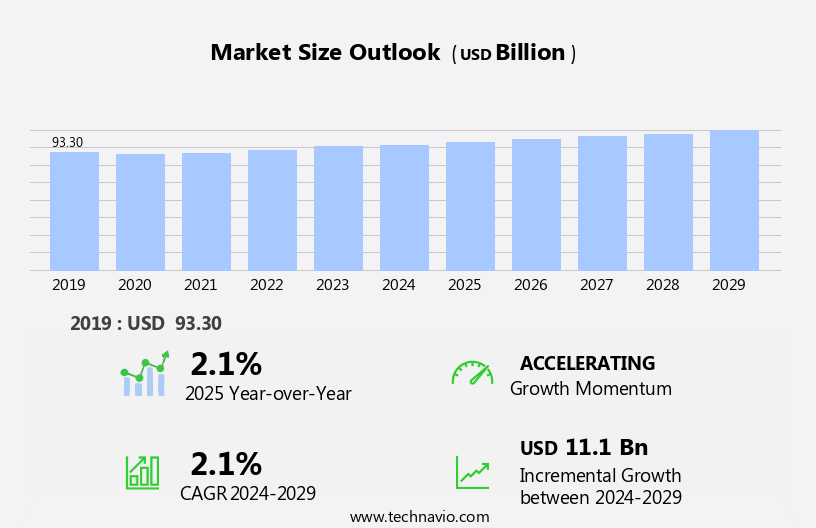
Machine Tools Market Size

 Request Free Sample

  • The market continues to evolve, driven by advancements in technology and its applications across various sectors. Computer-aided manufacturing (CAM) software streamlines the manufacturing process, enabling efficient process planning and optimizing feed rates. Tool wear is mitigated through predictive maintenance and advanced tooling materials. CNC machining benefits from high-speed cutting and cutting fluids, while smart manufacturing integrates machine monitoring and machine vision for enhanced quality control. Tooling materials, such as ceramics and advanced alloys, improve part accuracy and surface finish in precision machining. Machining centers and turning centers leverage digital twins and virtual machining for improved efficiency and reduced power consumption.
  • Machine control systems and CAD software facilitate multi-axis machining and 3D printing. Advanced manufacturing techniques, including additive manufacturing and high-speed machining, expand the capabilities of machine tools. Chip removal and material handling are optimized through machining software and human-machine interface (HMI) design. Spindle speed and machine control systems ensure precise machining and process optimization. The ongoing dynamism of the market is reflected in the integration of machine tools with advanced technologies, such as machine vision, predictive maintenance, and digital twins. The evolving nature of manufacturing continues to drive innovation and growth in this sector.

How is this Machine Tools Industry segmented?

The machine tools industry research report provides comprehensive data (region-wise segment analysis), with forecasts and estimates in "USD billion" for the period 2025-2029, as well as historical data from 2019-2023 for the following segments.

  • End-user
    • Automotive
    • Industrial machinery
    • Precision engineering
    • Transportation
    • Others
  • Application
    • High-volume production
    • Precision and custom machining
    • Multi-axis and complex machining
    • Prototyping and low-volume production
  • Product Types
    • CNC Machines
    • Lathes
    • Milling Machines
    • Grinding Machines
  • Tool Type
    • Metal Cutting
    • Metal Forming
    • Accessories
  • Geography
    • North America
      • US
      • Canada
      • Mexico
    • Europe
      • France
      • Germany
      • Italy
      • Spain
      • UK
    • Middle East and Africa
      • UAE
    • APAC
      • China
      • India
      • Japan
      • South Korea
    • South America
      • Brazil
    • Rest of World (ROW)

By End-user Insights

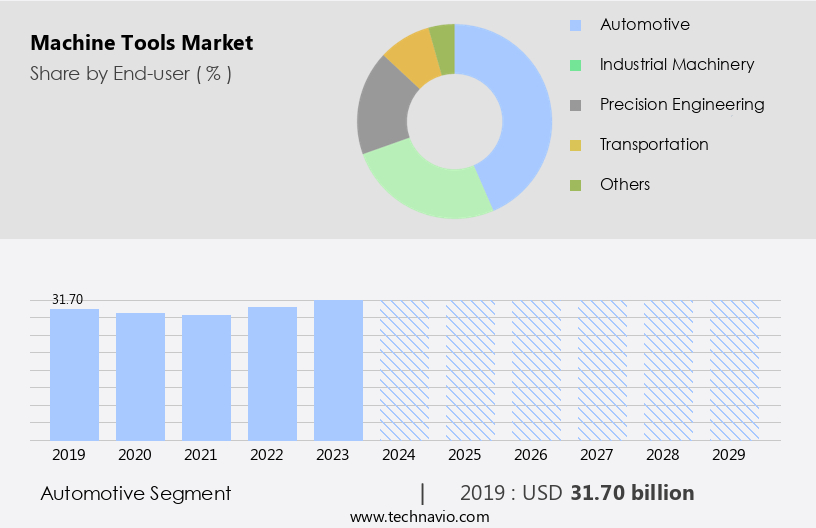
The automotive segment is estimated to witness significant growth during the forecast period.

The market experiences significant activity, particularly in the automotive sector, which holds the largest revenue share. The increasing adoption of advanced machine tools is driven by the growing complexity of automobile manufacturing, necessitating high-precision solutions for producing intricate vehicle components. CNC milling machines and cutting tools are extensively utilized in this segment for manufacturing components such as transmission cases, engine cylinder heads, flywheels, wheels, pistons, and gearboxes. Machine monitoring, predictive maintenance, and smart manufacturing are key trends shaping the market. Machine monitoring systems enable real-time analysis of machine performance, optimizing production efficiency and reducing downtime. Predictive maintenance, utilizing machine learning algorithms and data analytics, allows for the identification and resolution of potential issues before they cause significant damage.

Smart manufacturing integrates machine tools with advanced technologies such as computer-aided design (CAD), computer-aided manufacturing (CAM), and machining software, streamlining production processes and enhancing part accuracy. Additive manufacturing, machine vision, and digital twins are emerging technologies gaining traction in the market. Additive manufacturing, or 3D printing, enables the production of complex geometries and customized components, reducing material waste and production time. Machine vision systems provide real-time inspection and measurement capabilities, ensuring part quality and reducing errors. Digital twins, virtual replicas of physical machines, facilitate predictive maintenance and process optimization. Machine shops rely on various machine tools for metal fabrication, including drilling machines, turning centers, and multi-axis machining centers.

Tooling materials, cutting speed, feed rate, and cutting fluids are essential factors influencing tool life and overall production efficiency. Precision machining and surface finish are critical considerations for industries such as aerospace and defense, where high-quality components are essential. Power consumption is a significant concern for machine tool manufacturers and users, with high-speed machining and advanced manufacturing processes requiring substantial energy inputs. Human-machine interface (HMI) systems improve operator experience and productivity, while spindle speed and tool wear management are essential for maintaining optimal machine performance. In conclusion, the market is witnessing dynamic growth, driven by advancements in technology and increasing demand for high-precision manufacturing solutions across various industries.
Machine Tools Market Size

Request Free Sample

The Automotive segment was valued at USD 31.70 billion in 2019 and showed a gradual increase during the forecast period.

Regional Analysis

North America is estimated to contribute 28% to the growth of the global market during the forecast period.Technavio's analysts have elaborately explained the regional trends and drivers that shape the market during the forecast period.

Machine Tools Market Share by Geography

 Request Free Sample

The market is witnessing significant growth, particularly in the Asia Pacific region. This trend is driven by the expanding manufacturing industries in countries like China, Japan, India, Taiwan, and South Korea. Hybrid machining for medical device manufacturing and digital twins for shipbuilding enhance customization, driving efficiency in Asia-Pacific and North America.Machine tools, which operate using numerical control, are increasingly being adopted for cutting hard substances into precise shapes and sizes. These tools minimize the effort required for various operations, including cutting, forming, drilling, grinding, and abrading, while ensuring uniformity and eliminating unwanted variations. Machine monitoring, cam software, feed rate, tool life, predictive maintenance, power consumption, and process optimization are essential features that enhance machine tool efficiency.

Advanced manufacturing technologies such as additive manufacturing, machine vision, and digital twins are revolutionizing the industry. CNC machining, turning centers, and machining centers are common types of machine tools used for metal fabrication and precision machining. Smart manufacturing, computer-aided design (CAD), and computer-aided manufacturing (CAM) software streamline the manufacturing process, while tool wear, cutting speed, cutting tools, cutting fluids, and surface finish are critical factors influencing tool performance. Machine control systems, multi-axis machining, and spindle speed are other essential aspects of machine tools. The integration of human-machine interface (HMI), high-speed machining, and advanced manufacturing techniques is enabling improved part accuracy, quality control, and material handling. The market is also witnessing the emergence of 3D printing, virtual machining, and process optimization techniques to enhance productivity and reduce costs.

Market Dynamics

Our researchers analyzed the data with 2024 as the base year, along with the key drivers, trends, and challenges. A holistic analysis of drivers will help companies refine their marketing strategies to gain a competitive advantage.

The market thrives on innovations enhancing production. Hybrid machining boosts automotive manufacturing, while eco-friendly tools align with aerospace production. Multi-axis systems optimize electronics assembly, and AI-driven optimization refines metal fabrication. Smart manufacturing supports infrastructure development, while modular designs aid energy sector. Energy-efficient systems enhance medical device manufacturing, and digital integration improves defense equipment. Automated workflows management ensure precision engineering, and lightweight components streamline shipbuilding.

CNC machines for automotive manufacturing target automotive sector, while milling machines for aerospace production appeal to aerospace sector. Additive manufacturing for precision engineering suits SMEs, and AI-driven optimization for metal fabrication draws industrial machinery. Eco-friendly tools for infrastructure development align with energy sector, while multi-axis systems for electronics assembly boost electronics sector. Smart manufacturing for energy sector promotes sustainability, and robotics automation for defense equipment ensures reliability.

What are the key market drivers leading to the rise in the adoption of Machine Tools Industry?

  • In developing countries, the primary catalyst fueling market growth is the rising industrialization trend.The market is experiencing significant growth due to the increasing industrialization in developing countries. As these nations undergo economic transformation, there is a growing demand for advanced manufacturing equipment to support their burgeoning manufacturing sectors. Machine tools, which are essential for cutting, shaping, and forming materials, play a crucial role in fulfilling the needs of various industries, including automotive, aerospace, electronics, and consumer goods. Advancements in machine tools technology, such as multi-axis machining, digital twins, measurement systems, and process optimization, are driving innovation and efficiency in manufacturing processes. High-precision machine tools enable superior surface finish, while increased spindle speed and turning centers facilitate faster production.
  • Virtual machining and CNC programming further streamline manufacturing processes, allowing for greater flexibility and customization. Additionally, emerging technologies like 3D printing are transforming the machine tools landscape, offering new possibilities for prototyping and manufacturing complex components. Machine control systems are also becoming increasingly sophisticated, enabling real-time monitoring and optimization of manufacturing processes. In conclusion, The market is experiencing robust growth, fueled by the expanding manufacturing sectors in developing countries and advancements in technology. The need for efficient and precise machinery to support these industries is paramount, and machine tools continue to play a vital role in meeting the demands of various industries and applications.

What are the market trends shaping the Machine Tools Industry?

  • The adoption of 3D printing technology is an emerging market trend. This advanced manufacturing process offers numerous benefits, including increased efficiency, reduced production costs, and the ability to create complex designs that were previously impossible with traditional manufacturing methods.
  • The market is experiencing significant growth due to the adoption of advanced technologies such as additive manufacturing, also known as 3D printing. This innovative technology is revolutionizing traditional manufacturing processes by creating physical objects directly from digital designs, layer by layer. Its versatility and flexibility enable the production of complex geometries, customized components, and prototypes across various industries. Additive manufacturing offers several benefits, including reduced time-to-market, design iteration without expensive tooling, on-demand production, localized manufacturing, and mass customization. These advantages are transforming supply chain dynamics and minimizing inventory costs. As a result, the demand for advanced additive manufacturing systems, including metal and polymer printers, is increasing, leading to significant investments in cutting-edge 3D printing technologies.
  • Moreover, machine tools are essential in machine shops for workpiece handling and machining operations. Machine monitoring systems, cam software, and feed rate optimization are crucial for enhancing productivity and tool life. Predictive maintenance and power consumption management are other critical areas of focus for machine tool manufacturers. Machine vision technology is also gaining popularity for quality control and inspection applications. Drilling machines are a vital category of machine tools, used extensively in various industries for drilling, boring, and tapping operations. Overall, the market is dynamic, with ongoing advancements in technology and evolving industry requirements shaping its landscape.

What challenges does the Machine Tools Industry face during its growth?

  • The machine tool industry faces significant challenges due to high initial investments and operational costs in production, which can hinder industry growth. 
  • The market faces substantial challenges due to high initial and operating costs. Machine tools, which include technologies like Computer-Aided Manufacturing (CAM), CNC machining, and machining centers, require significant investment for purchase, installation, training, and setup. These expenses make it difficult for small- and medium-sized enterprises (SMEs) to adopt advanced machining technologies. Furthermore, ongoing operational costs, such as maintenance, repair, energy consumption, and tooling, add to the total cost of ownership and impact profitability. Tool wear and process planning are critical factors influencing the market's dynamics. Tooling materials and cutting tools play a significant role in determining the efficiency and longevity of machining processes.
  • Advanced tooling materials, like ceramics and advanced alloys, can help improve tool life and reduce overall costs. Moreover, the adoption of smart machine manufacturing technologies, such as Computer-Aided Design (CAD) and Computer-Aided Manufacturing (CAM), can help optimize process planning and improve overall productivity. Cutting speed and cutting fluids are essential considerations for machining operations. Increasing cutting speeds can help reduce cycle times and improve productivity, but they also put additional stress on cutting tools and increase the risk of tool wear. Cutting fluids help cool the workpiece and lubricate the cutting edge, reducing friction and wear.
  • However, they can also add to the overall cost of machining. In conclusion, the high initial and ongoing costs associated with machine tools present significant challenges for both manufacturers and end-users. However, advancements in tooling materials, process planning, and smart manufacturing technologies offer opportunities to improve efficiency, reduce costs, and enhance productivity.

Exclusive Customer Landscape

The machine tools market forecasting report includes the adoption lifecycle of the market, covering from the innovator's stage to the laggard's stage. It focuses on adoption rates in different regions based on penetration. Furthermore, the machine tools market report also includes key purchase criteria and drivers of price sensitivity to help companies evaluate and develop their market growth analysis strategies.

Machine Tools Market Share by Geography

 Customer Landscape

Key Companies & Market Insights

Companies are implementing various strategies, such as strategic alliances, machine tools market forecast, partnerships, mergers and acquisitions, geographical expansion, and product/service launches, to enhance their presence in the industry.

Yamazaki Mazak Corporation (Japan) - This company specializes in providing a comprehensive range of machine tools for various industrial applications. Our product offerings encompass metal cutting drills, boring tools, thread mills, reamers, and roller burnishing tools, among others. Each tool is meticulously engineered for optimal performance and durability. By utilizing advanced technologies and materials, we ensure our tools deliver precise results, enhancing overall productivity and efficiency for our clients. Our commitment to innovation and quality sets US apart in the industry.

The industry research and growth report includes detailed analyses of the competitive landscape of the market and information about key companies, including:

  • Yamazaki Mazak Corporation (Japan)
  • DMG MORI Co., Ltd. (Japan)
  • Trumpf Group (Germany)
  • Haas Automation Inc. (United States)
  • Amada Co., Ltd. (Japan)
  • Okuma Corporation (Japan)
  • Makino Milling Machine Co., Ltd. (Japan)
  • Doosan Machine Tools Co., Ltd. (South Korea)
  • GF Machining Solutions (Switzerland)
  • Hurco Companies Inc. (United States)
  • Chiron Group SE (Germany)
  • Hermle AG (Germany)
  • Hyundai WIA Corporation (South Korea)
  • JTEKT Corporation (Japan)
  • Komatsu NTC Ltd. (Japan)
  • Mitsubishi Heavy Industries Machine Tool Co., Ltd. (Japan)
  • Sodick Co., Ltd. (Japan)
  • Spinner Werkzeugmaschinenfabrik GmbH (Germany)
  • Tornos SA (Switzerland)
  • Bharat Fritz Werner Ltd. (India)

Qualitative and quantitative analysis of companies has been conducted to help clients understand the wider business environment as well as the strengths and weaknesses of key industry players. Data is qualitatively analyzed to categorize companies as pure play, category-focused, industry-focused, and diversified; it is quantitatively analyzed to categorize companies as dominant, leading, strong, tentative, and weak.

Recent Development and News in Machine Tools Market

  • In March 2024, Haas Automation, a leading machine tool manufacturer, unveiled its new HAAS UMC-750 universal machining center, featuring a larger work envelope and improved cutting capabilities (Haas Automation Press Release). This innovation caters to the growing demand for high-performance machining solutions in industries such as aerospace and automotive.
  • In July 2025, Siemens and DMG Mori, two major players in the machine tool industry, announced a strategic partnership to integrate Siemens' digital manufacturing software with DMG Mori's machine tools (Siemens Press Release). This collaboration aims to provide customers with seamless digitalization and improved production efficiency.
  • In September 2024, Makino Milling Machines, Inc. Completed the acquisition of Swiss-type machining specialist, Hermle Machine Tool Technology, expanding its product portfolio and strengthening its presence in the high-precision machining market (Makino Milling Machines, Inc. Press Release). This strategic move allows Makino to cater to the increasing demand for advanced machining technologies in industries like medical devices and automotive.

Research Analyst Overview

The market is experiencing significant advancements, with a focus on cost reduction and digital transformation. Machine upgrades, such as tool wear analysis and tooling optimization, are essential for maintaining competitiveness. Data analytics plays a pivotal role in identifying trends and improving process monitoring. Laser cutting and plasma cutting technologies continue to dominate the industry, while composite materials and plastics processing gain traction. Lean manufacturing and just-in-time (JIT) production are key strategies for enhancing energy efficiency and reducing waste. Flexible manufacturing systems and mass customization are driving innovation, with artificial intelligence and machine learning enabling predictive maintenance and tooling management.

Quality assurance remains paramount, with cloud computing facilitating real-time collaboration and supply chain management. Environmental impact is a growing concern, with machine tools adopting energy-efficient solutions and adhering to sustainability standards. Rapid prototyping and operator training are essential for staying competitive in today's dynamic business landscape. Tooling design and maintenance services are crucial for ensuring optimal performance and longevity of machine tools. Process monitoring and continuous improvement are key to staying ahead of the competition in this ever-evolving market.

Dive into Technavio's robust research methodology, blending expert interviews, extensive data synthesis, and validated models for unparalleled Machine Tools Market insights. See full methodology.

Market Scope

Report Coverage

Details

Page number

210

Base year

2024

Historic period

2019-2023

Forecast period

2025-2029

Growth momentum & CAGR

Accelerate at a CAGR of 2.1%

Market growth 2025-2029

USD 11.1 billion

Market structure

Fragmented

YoY growth 2024-2025(%)

2.1

Key countries

US, China, Germany, Canada, India, South Korea, France, Japan, Italy, Brazil, UAE, UK, Spain, and Mexico

Competitive landscape

Leading Companies, Market Positioning of Companies, Competitive Strategies, and Industry Risks

Request Free Sample

What are the Key Data Covered in this Machine Tools Market Research and Growth Report?

  • CAGR of the Machine Tools industry during the forecast period
  • Detailed information on factors that will drive the growth and forecasting between 2025 and 2029
  • Precise estimation of the size of the market and its contribution of the industry in focus to the parent market
  • Accurate predictions about upcoming growth and trends and changes in consumer behaviour
  • Growth of the market across APAC, Europe, North America, Middle East and Africa, and South America
  • Thorough analysis of the market's competitive landscape and detailed information about companies
  • Comprehensive analysis of factors that will challenge the machine tools market growth of industry companies

We can help! Our analysts can customize this machine tools market research report to meet your requirements.

Get in touch

1 Executive Summary

  • 1.1 Market overview
    • Executive Summary - Chart on Market Overview
    • Executive Summary - Data Table on Market Overview
    • Executive Summary - Chart on Global Market Characteristics
    • Executive Summary - Chart on Market by Geography
    • Executive Summary - Chart on Market Segmentation by End-user
    • Executive Summary - Chart on Market Segmentation by Application
    • Executive Summary - Chart on Incremental Growth
    • Executive Summary - Data Table on Incremental Growth
    • Executive Summary - Chart on Company Market Positioning

2 Technavio Analysis

  • 2.1 Analysis of price sensitivity, lifecycle, customer purchase basket, adoption rates, and purchase criteria
    • Analysis of price sensitivity, lifecycle, customer purchase basket, adoption rates, and purchase criteria
  • 2.2 Criticality of inputs and Factors of differentiation
    • Overview on criticality of inputs and factors of differentiation
  • 2.3 Factors of disruption
    • Overview on factors of disruption
  • 2.4 Impact of drivers and challenges
    • Impact of drivers and challenges in 2024 and 2029

3 Market Landscape

  • 3.1 Market ecosystem
    • Parent Market
    • Data Table on - Parent Market
  • 3.2 Market characteristics
    • Market characteristics analysis
  • 3.3 Value chain analysis
    • Value chain analysis

4 Market Sizing

  • 4.1 Market definition
    • Offerings of companies included in the market definition
  • 4.2 Market segment analysis
    • Market segments
  • 4.3 Market size 2024
    • 4.4 Market outlook: Forecast for 2024-2029
      • Chart on Global - Market size and forecast 2024-2029 ($ billion)
      • Data Table on Global - Market size and forecast 2024-2029 ($ billion)
      • Chart on Global Market: Year-over-year growth 2024-2029 (%)
      • Data Table on Global Market: Year-over-year growth 2024-2029 (%)

    5 Historic Market Size

    • 5.1 Global Machine Tools Market 2019 - 2023
      • Historic Market Size - Data Table on Global Machine Tools Market 2019 - 2023 ($ billion)
    • 5.2 End-user segment analysis 2019 - 2023
      • Historic Market Size - End-user Segment 2019 - 2023 ($ billion)
    • 5.3 Application segment analysis 2019 - 2023
      • Historic Market Size - Application Segment 2019 - 2023 ($ billion)
    • 5.4 Geography segment analysis 2019 - 2023
      • Historic Market Size - Geography Segment 2019 - 2023 ($ billion)
    • 5.5 Country segment analysis 2019 - 2023
      • Historic Market Size - Country Segment 2019 - 2023 ($ billion)

    6 Qualitative Analysis

    • 6.1 Impact of AI on the Global Machine Tools Market

      7 Five Forces Analysis

      • 7.1 Five forces summary
        • Five forces analysis - Comparison between 2024 and 2029
      • 7.2 Bargaining power of buyers
        • Bargaining power of buyers - Impact of key factors 2024 and 2029
      • 7.3 Bargaining power of suppliers
        • Bargaining power of suppliers - Impact of key factors in 2024 and 2029
      • 7.4 Threat of new entrants
        • Threat of new entrants - Impact of key factors in 2024 and 2029
      • 7.5 Threat of substitutes
        • Threat of substitutes - Impact of key factors in 2024 and 2029
      • 7.6 Threat of rivalry
        • Threat of rivalry - Impact of key factors in 2024 and 2029
      • 7.7 Market condition
        • Chart on Market condition - Five forces 2024 and 2029

      8 Market Segmentation by End-user

      • 8.1 Market segments
        • Chart on End-user - Market share (2024-2029) (%)
        • Data Table on End-user - Market share (2024-2029) (%)
      • 8.2 Comparison by End-user
        • Chart on Comparison by End-user
        • Data Table on Comparison by End-user
      • 8.3 Automotive - Market size and forecast (2024-2029)
        • Chart on Automotive - Market size and forecast (2024-2029) ($ billion)
        • Data Table on Automotive - Market size and forecast (2024-2029) ($ billion)
        • Chart on Automotive - Year-over-year growth (2024-2029) (%)
        • Data Table on Automotive - Year-over-year growth (2024-2029) (%)
      • 8.4 Industrial machinery - Market size and forecast (2024-2029)
        • Chart on Industrial machinery - Market size and forecast (2024-2029) ($ billion)
        • Data Table on Industrial machinery - Market size and forecast (2024-2029) ($ billion)
        • Chart on Industrial machinery - Year-over-year growth (2024-2029) (%)
        • Data Table on Industrial machinery - Year-over-year growth (2024-2029) (%)
      • 8.5 Precision engineering - Market size and forecast (2024-2029)
        • Chart on Precision engineering - Market size and forecast (2024-2029) ($ billion)
        • Data Table on Precision engineering - Market size and forecast (2024-2029) ($ billion)
        • Chart on Precision engineering - Year-over-year growth (2024-2029) (%)
        • Data Table on Precision engineering - Year-over-year growth (2024-2029) (%)
      • 8.6 Transportation - Market size and forecast (2024-2029)
        • Chart on Transportation - Market size and forecast (2024-2029) ($ billion)
        • Data Table on Transportation - Market size and forecast (2024-2029) ($ billion)
        • Chart on Transportation - Year-over-year growth (2024-2029) (%)
        • Data Table on Transportation - Year-over-year growth (2024-2029) (%)
      • 8.7 Others - Market size and forecast (2024-2029)
        • Chart on Others - Market size and forecast (2024-2029) ($ billion)
        • Data Table on Others - Market size and forecast (2024-2029) ($ billion)
        • Chart on Others - Year-over-year growth (2024-2029) (%)
        • Data Table on Others - Year-over-year growth (2024-2029) (%)
      • 8.8 Market opportunity by End-user
        • Market opportunity by End-user ($ billion)
        • Data Table on Market opportunity by End-user ($ billion)

      9 Market Segmentation by Application

      • 9.1 Market segments
        • Chart on Application - Market share (2024-2029) (%)
        • Data Table on Application - Market share (2024-2029) (%)
      • 9.2 Comparison by Application
        • Chart on Comparison by Application
        • Data Table on Comparison by Application
      • 9.3 High-volume production - Market size and forecast (2024-2029)
        • Chart on High-volume production - Market size and forecast (2024-2029) ($ billion)
        • Data Table on High-volume production - Market size and forecast (2024-2029) ($ billion)
        • Chart on High-volume production - Year-over-year growth (2024-2029) (%)
        • Data Table on High-volume production - Year-over-year growth (2024-2029) (%)
      • 9.4 Precision and custom machining - Market size and forecast (2024-2029)
        • Chart on Precision and custom machining - Market size and forecast (2024-2029) ($ billion)
        • Data Table on Precision and custom machining - Market size and forecast (2024-2029) ($ billion)
        • Chart on Precision and custom machining - Year-over-year growth (2024-2029) (%)
        • Data Table on Precision and custom machining - Year-over-year growth (2024-2029) (%)
      • 9.5 Multi-axis and complex machining - Market size and forecast (2024-2029)
        • Chart on Multi-axis and complex machining - Market size and forecast (2024-2029) ($ billion)
        • Data Table on Multi-axis and complex machining - Market size and forecast (2024-2029) ($ billion)
        • Chart on Multi-axis and complex machining - Year-over-year growth (2024-2029) (%)
        • Data Table on Multi-axis and complex machining - Year-over-year growth (2024-2029) (%)
      • 9.6 Prototyping and low-volume production - Market size and forecast (2024-2029)
        • Chart on Prototyping and low-volume production - Market size and forecast (2024-2029) ($ billion)
        • Data Table on Prototyping and low-volume production - Market size and forecast (2024-2029) ($ billion)
        • Chart on Prototyping and low-volume production - Year-over-year growth (2024-2029) (%)
        • Data Table on Prototyping and low-volume production - Year-over-year growth (2024-2029) (%)
      • 9.7 Market opportunity by Application
        • Market opportunity by Application ($ billion)
        • Data Table on Market opportunity by Application ($ billion)

      10 Market Segmentation by Product Types

      • 10.1 Market segments
        • Chart on Product Types - Market share (2024-2029) (%)
        • Data Table on Product Types - Market share (2024-2029) (%)
      • 10.2 Comparison by Product Types
        • Chart on Comparison by Product Types
        • Data Table on Comparison by Product Types
      • 10.3 CNC Machines - Market size and forecast (2024-2029)
        • Chart on CNC Machines - Market size and forecast (2024-2029) ($ billion)
        • Data Table on CNC Machines - Market size and forecast (2024-2029) ($ billion)
        • Chart on CNC Machines - Year-over-year growth (2024-2029) (%)
        • Data Table on CNC Machines - Year-over-year growth (2024-2029) (%)
      • 10.4 Lathes - Market size and forecast (2024-2029)
        • Chart on Lathes - Market size and forecast (2024-2029) ($ billion)
        • Data Table on Lathes - Market size and forecast (2024-2029) ($ billion)
        • Chart on Lathes - Year-over-year growth (2024-2029) (%)
        • Data Table on Lathes - Year-over-year growth (2024-2029) (%)
      • 10.5 Milling Machines - Market size and forecast (2024-2029)
        • Chart on Milling Machines - Market size and forecast (2024-2029) ($ billion)
        • Data Table on Milling Machines - Market size and forecast (2024-2029) ($ billion)
        • Chart on Milling Machines - Year-over-year growth (2024-2029) (%)
        • Data Table on Milling Machines - Year-over-year growth (2024-2029) (%)
      • 10.6 Grinding Machines - Market size and forecast (2024-2029)
        • Chart on Grinding Machines - Market size and forecast (2024-2029) ($ billion)
        • Data Table on Grinding Machines - Market size and forecast (2024-2029) ($ billion)
        • Chart on Grinding Machines - Year-over-year growth (2024-2029) (%)
        • Data Table on Grinding Machines - Year-over-year growth (2024-2029) (%)
      • 10.7 Market opportunity by Product Types
        • Market opportunity by Product Types ($ billion)
        • Data Table on Market opportunity by Product Types ($ billion)

      11 Market Segmentation by Tool Type

      • 11.1 Market segments
        • Chart on Tool Type - Market share (2024-2029) (%)
        • Data Table on Tool Type - Market share (2024-2029) (%)
      • 11.2 Comparison by Tool Type
        • Chart on Comparison by Tool Type
        • Data Table on Comparison by Tool Type
      • 11.3 Metal Cutting - Market size and forecast (2024-2029)
        • Chart on Metal Cutting - Market size and forecast (2024-2029) ($ billion)
        • Data Table on Metal Cutting - Market size and forecast (2024-2029) ($ billion)
        • Chart on Metal Cutting - Year-over-year growth (2024-2029) (%)
        • Data Table on Metal Cutting - Year-over-year growth (2024-2029) (%)
      • 11.4 Metal Forming - Market size and forecast (2024-2029)
        • Chart on Metal Forming - Market size and forecast (2024-2029) ($ billion)
        • Data Table on Metal Forming - Market size and forecast (2024-2029) ($ billion)
        • Chart on Metal Forming - Year-over-year growth (2024-2029) (%)
        • Data Table on Metal Forming - Year-over-year growth (2024-2029) (%)
      • 11.5 Accessories - Market size and forecast (2024-2029)
        • Chart on Accessories - Market size and forecast (2024-2029) ($ billion)
        • Data Table on Accessories - Market size and forecast (2024-2029) ($ billion)
        • Chart on Accessories - Year-over-year growth (2024-2029) (%)
        • Data Table on Accessories - Year-over-year growth (2024-2029) (%)
      • 11.6 Market opportunity by Tool Type
        • Market opportunity by Tool Type ($ billion)
        • Data Table on Market opportunity by Tool Type ($ billion)

      12 Customer Landscape

      • 12.1 Customer landscape overview
        • Analysis of price sensitivity, lifecycle, customer purchase basket, adoption rates, and purchase criteria

      13 Geographic Landscape

      • 13.1 Geographic segmentation
        • Chart on Market share by geography 2024-2029 (%)
        • Data Table on Market share by geography 2024-2029 (%)
      • 13.2 Geographic comparison
        • Chart on Geographic comparison
        • Data Table on Geographic comparison
      • 13.3 APAC - Market size and forecast 2024-2029
        • Chart on APAC - Market size and forecast 2024-2029 ($ billion)
        • Data Table on APAC - Market size and forecast 2024-2029 ($ billion)
        • Chart on APAC - Year-over-year growth 2024-2029 (%)
        • Data Table on APAC - Year-over-year growth 2024-2029 (%)
      • 13.4 Europe - Market size and forecast 2024-2029
        • Chart on Europe - Market size and forecast 2024-2029 ($ billion)
        • Data Table on Europe - Market size and forecast 2024-2029 ($ billion)
        • Chart on Europe - Year-over-year growth 2024-2029 (%)
        • Data Table on Europe - Year-over-year growth 2024-2029 (%)
      • 13.5 North America - Market size and forecast 2024-2029
        • Chart on North America - Market size and forecast 2024-2029 ($ billion)
        • Data Table on North America - Market size and forecast 2024-2029 ($ billion)
        • Chart on North America - Year-over-year growth 2024-2029 (%)
        • Data Table on North America - Year-over-year growth 2024-2029 (%)
      • 13.6 Middle East and Africa - Market size and forecast 2024-2029
        • Chart on Middle East and Africa - Market size and forecast 2024-2029 ($ billion)
        • Data Table on Middle East and Africa - Market size and forecast 2024-2029 ($ billion)
        • Chart on Middle East and Africa - Year-over-year growth 2024-2029 (%)
        • Data Table on Middle East and Africa - Year-over-year growth 2024-2029 (%)
      • 13.7 South America - Market size and forecast 2024-2029
        • Chart on South America - Market size and forecast 2024-2029 ($ billion)
        • Data Table on South America - Market size and forecast 2024-2029 ($ billion)
        • Chart on South America - Year-over-year growth 2024-2029 (%)
        • Data Table on South America - Year-over-year growth 2024-2029 (%)
      • 13.8 US - Market size and forecast 2024-2029
        • Chart on US - Market size and forecast 2024-2029 ($ billion)
        • Data Table on US - Market size and forecast 2024-2029 ($ billion)
        • Chart on US - Year-over-year growth 2024-2029 (%)
        • Data Table on US - Year-over-year growth 2024-2029 (%)
      • 13.9 China - Market size and forecast 2024-2029
        • Chart on China - Market size and forecast 2024-2029 ($ billion)
        • Data Table on China - Market size and forecast 2024-2029 ($ billion)
        • Chart on China - Year-over-year growth 2024-2029 (%)
        • Data Table on China - Year-over-year growth 2024-2029 (%)
      • 13.10 Japan - Market size and forecast 2024-2029
        • Chart on Japan - Market size and forecast 2024-2029 ($ billion)
        • Data Table on Japan - Market size and forecast 2024-2029 ($ billion)
        • Chart on Japan - Year-over-year growth 2024-2029 (%)
        • Data Table on Japan - Year-over-year growth 2024-2029 (%)
      • 13.11 India - Market size and forecast 2024-2029
        • Chart on India - Market size and forecast 2024-2029 ($ billion)
        • Data Table on India - Market size and forecast 2024-2029 ($ billion)
        • Chart on India - Year-over-year growth 2024-2029 (%)
        • Data Table on India - Year-over-year growth 2024-2029 (%)
      • 13.12 Canada - Market size and forecast 2024-2029
        • Chart on Canada - Market size and forecast 2024-2029 ($ billion)
        • Data Table on Canada - Market size and forecast 2024-2029 ($ billion)
        • Chart on Canada - Year-over-year growth 2024-2029 (%)
        • Data Table on Canada - Year-over-year growth 2024-2029 (%)
      • 13.13 South Korea - Market size and forecast 2024-2029
        • Chart on South Korea - Market size and forecast 2024-2029 ($ billion)
        • Data Table on South Korea - Market size and forecast 2024-2029 ($ billion)
        • Chart on South Korea - Year-over-year growth 2024-2029 (%)
        • Data Table on South Korea - Year-over-year growth 2024-2029 (%)
      • 13.14 Italy - Market size and forecast 2024-2029
        • Chart on Italy - Market size and forecast 2024-2029 ($ billion)
        • Data Table on Italy - Market size and forecast 2024-2029 ($ billion)
        • Chart on Italy - Year-over-year growth 2024-2029 (%)
        • Data Table on Italy - Year-over-year growth 2024-2029 (%)
      • 13.15 Germany - Market size and forecast 2024-2029
        • Chart on Germany - Market size and forecast 2024-2029 ($ billion)
        • Data Table on Germany - Market size and forecast 2024-2029 ($ billion)
        • Chart on Germany - Year-over-year growth 2024-2029 (%)
        • Data Table on Germany - Year-over-year growth 2024-2029 (%)
      • 13.16 UK - Market size and forecast 2024-2029
        • Chart on UK - Market size and forecast 2024-2029 ($ billion)
        • Data Table on UK - Market size and forecast 2024-2029 ($ billion)
        • Chart on UK - Year-over-year growth 2024-2029 (%)
        • Data Table on UK - Year-over-year growth 2024-2029 (%)
      • 13.17 The Netherlands - Market size and forecast 2024-2029
        • Chart on The Netherlands - Market size and forecast 2024-2029 ($ billion)
        • Data Table on The Netherlands - Market size and forecast 2024-2029 ($ billion)
        • Chart on The Netherlands - Year-over-year growth 2024-2029 (%)
        • Data Table on The Netherlands - Year-over-year growth 2024-2029 (%)
      • 13.18 Market opportunity by geography
        • Market opportunity by geography ($ billion)
        • Data Tables on Market opportunity by geography ($ billion)
      • 13.19 France - Market size and forecast (2024-2029)
        • Chart on France - Market size and forecast (2024-2029) ($ billion)
        • Data Table on France - Market size and forecast (2024-2029) ($ billion)
        • Chart on France - Year-over-year growth (2024-2029) (%)
        • Data Table on France - Year-over-year growth (2024-2029) (%)
      • 13.20 Brazil - Market size and forecast (2024-2029)
        • Chart on Brazil - Market size and forecast (2024-2029) ($ billion)
        • Data Table on Brazil - Market size and forecast (2024-2029) ($ billion)
        • Chart on Brazil - Year-over-year growth (2024-2029) (%)
        • Data Table on Brazil - Year-over-year growth (2024-2029) (%)
      • 13.21 UAE - Market size and forecast (2024-2029)
        • Chart on UAE - Market size and forecast (2024-2029) ($ billion)
        • Data Table on UAE - Market size and forecast (2024-2029) ($ billion)
        • Chart on UAE - Year-over-year growth (2024-2029) (%)
        • Data Table on UAE - Year-over-year growth (2024-2029) (%)
      • 13.22 Spain - Market size and forecast (2024-2029)
        • Chart on Spain - Market size and forecast (2024-2029) ($ billion)
        • Data Table on Spain - Market size and forecast (2024-2029) ($ billion)
        • Chart on Spain - Year-over-year growth (2024-2029) (%)
        • Data Table on Spain - Year-over-year growth (2024-2029) (%)
      • 13.23 Mexico - Market size and forecast (2024-2029)
        • Chart on Mexico - Market size and forecast (2024-2029) ($ billion)
        • Data Table on Mexico - Market size and forecast (2024-2029) ($ billion)
        • Chart on Mexico - Year-over-year growth (2024-2029) (%)
        • Data Table on Mexico - Year-over-year growth (2024-2029) (%)
      • 13.24 Rest of World (ROW) - Market size and forecast (2024-2029)
        • Chart on Rest of World (ROW) - Market size and forecast (2024-2029) ($ billion)
        • Data Table on Rest of World (ROW) - Market size and forecast (2024-2029) ($ billion)
        • Chart on Rest of World (ROW) - Year-over-year growth (2024-2029) (%)
        • Data Table on Rest of World (ROW) - Year-over-year growth (2024-2029) (%)

      14 Drivers, Challenges, and Opportunity/Restraints

      • 14.1 Market drivers
        • 14.2 Market challenges
          • 14.3 Impact of drivers and challenges
            • Impact of drivers and challenges in 2024 and 2029
          • 14.4 Market opportunities/restraints

            15 Competitive Landscape

            • 15.1 Overview
              • 15.2 Competitive Landscape
                • Overview on criticality of inputs and factors of differentiation
              • 15.3 Landscape disruption
                • Overview on factors of disruption
              • 15.4 Industry risks
                • Impact of key risks on business

              16 Competitive Analysis

              • 16.1 Companies profiled
                • Companies covered
              • 16.2 Market positioning of companies
                • Matrix on companies position and classification
              • 16.3 Yamazaki Mazak Corporation (Japan)
                • Yamazaki Mazak Corporation (Japan) - Overview
                • Yamazaki Mazak Corporation (Japan) - Product / Service
                • Yamazaki Mazak Corporation (Japan) - Key offerings
              • 16.4 DMG MORI Co., Ltd. (Japan)
                • DMG MORI Co., Ltd. (Japan) - Overview
                • DMG MORI Co., Ltd. (Japan) - Product / Service
                • DMG MORI Co., Ltd. (Japan) - Key offerings
              • 16.5 Trumpf Group (Germany)
                • Trumpf Group (Germany) - Overview
                • Trumpf Group (Germany) - Product / Service
                • Trumpf Group (Germany) - Key offerings
              • 16.6 Haas Automation Inc. (United States)
                • Haas Automation Inc. (United States) - Overview
                • Haas Automation Inc. (United States) - Product / Service
                • Haas Automation Inc. (United States) - Key offerings
              • 16.7 Amada Co., Ltd. (Japan)
                • Amada Co., Ltd. (Japan) - Overview
                • Amada Co., Ltd. (Japan) - Product / Service
                • Amada Co., Ltd. (Japan) - Key offerings
              • 16.8 Okuma Corporation (Japan)
                • Okuma Corporation (Japan) - Overview
                • Okuma Corporation (Japan) - Product / Service
                • Okuma Corporation (Japan) - Key offerings
              • 16.9 Makino Milling Machine Co., Ltd. (Japan)
                • Makino Milling Machine Co., Ltd. (Japan) - Overview
                • Makino Milling Machine Co., Ltd. (Japan) - Product / Service
                • Makino Milling Machine Co., Ltd. (Japan) - Key offerings
              • 16.10 Doosan Machine Tools Co., Ltd. (South Korea)
                • Doosan Machine Tools Co., Ltd. (South Korea) - Overview
                • Doosan Machine Tools Co., Ltd. (South Korea) - Product / Service
                • Doosan Machine Tools Co., Ltd. (South Korea) - Key offerings
              • 16.11 GF Machining Solutions (Switzerland)
                • GF Machining Solutions (Switzerland) - Overview
                • GF Machining Solutions (Switzerland) - Product / Service
                • GF Machining Solutions (Switzerland) - Key offerings
              • 16.12 Hurco Companies Inc. (United States)
                • Hurco Companies Inc. (United States) - Overview
                • Hurco Companies Inc. (United States) - Product / Service
                • Hurco Companies Inc. (United States) - Key offerings
              • 16.13 Chiron Group SE (Germany)
                • Chiron Group SE (Germany) - Overview
                • Chiron Group SE (Germany) - Product / Service
                • Chiron Group SE (Germany) - Key offerings
              • 16.14 Hermle AG (Germany)
                • Hermle AG (Germany) - Overview
                • Hermle AG (Germany) - Product / Service
                • Hermle AG (Germany) - Key offerings
              • 16.15 Hyundai WIA Corporation (South Korea)
                • Hyundai WIA Corporation (South Korea) - Overview
                • Hyundai WIA Corporation (South Korea) - Product / Service
                • Hyundai WIA Corporation (South Korea) - Key offerings
              • 16.16 JTEKT Corporation (Japan)
                • JTEKT Corporation (Japan) - Overview
                • JTEKT Corporation (Japan) - Product / Service
                • JTEKT Corporation (Japan) - Key offerings
              • 16.17 Komatsu NTC Ltd. (Japan)
                • Komatsu NTC Ltd. (Japan) - Overview
                • Komatsu NTC Ltd. (Japan) - Product / Service
                • Komatsu NTC Ltd. (Japan) - Key offerings
              • 16.18 Mitsubishi Heavy Industries Machine Tool Co., Ltd. (Japan)
                • Mitsubishi Heavy Industries Machine Tool Co., Ltd. (Japan) - Overview
                • Mitsubishi Heavy Industries Machine Tool Co., Ltd. (Japan) - Product / Service
                • Mitsubishi Heavy Industries Machine Tool Co., Ltd. (Japan) - Key offerings
              • 16.19 Sodick Co., Ltd. (Japan)
                • Sodick Co., Ltd. (Japan) - Overview
                • Sodick Co., Ltd. (Japan) - Product / Service
                • Sodick Co., Ltd. (Japan) - Key offerings
              • 16.20 Spinner Werkzeugmaschinenfabrik GmbH (Germany)
                • Spinner Werkzeugmaschinenfabrik GmbH (Germany) - Overview
                • Spinner Werkzeugmaschinenfabrik GmbH (Germany) - Product / Service
                • Spinner Werkzeugmaschinenfabrik GmbH (Germany) - Key offerings
              • 16.21 Tornos SA (Switzerland)
                • Tornos SA (Switzerland) - Overview
                • Tornos SA (Switzerland) - Product / Service
                • Tornos SA (Switzerland) - Key offerings
              • 16.22 Bharat Fritz Werner Ltd. (India)
                • Bharat Fritz Werner Ltd. (India) - Overview
                • Bharat Fritz Werner Ltd. (India) - Product / Service
                • Bharat Fritz Werner Ltd. (India) - Key offerings
              • 16.23 Allied Machine and Engineering Corp.
                • Allied Machine and Engineering Corp. - Overview
                • Allied Machine and Engineering Corp. - Product / Service
                • Allied Machine and Engineering Corp. - Key offerings
              • 16.24 ALZMETALL GmbH and Co. KG
                • ALZMETALL GmbH and Co. KG - Overview
                • ALZMETALL GmbH and Co. KG - Product / Service
                • ALZMETALL GmbH and Co. KG - Key offerings
              • 16.25 Amada Co. Ltd.
                • Amada Co. Ltd. - Overview
                • Amada Co. Ltd. - Product / Service
                • Amada Co. Ltd. - Key offerings
              • 16.26 DMG MORI Co. Ltd.
                • DMG MORI Co. Ltd. - Overview
                • DMG MORI Co. Ltd. - Product / Service
                • DMG MORI Co. Ltd. - Key offerings
              • 16.27 DN Solutions Co. Ltd.
                • DN Solutions Co. Ltd. - Overview
                • DN Solutions Co. Ltd. - Product / Service
                • DN Solutions Co. Ltd. - Key offerings
              • 16.28 FALCON MACHINE TOOLS Co. Ltd.
                • FALCON MACHINE TOOLS Co. Ltd. - Overview
                • FALCON MACHINE TOOLS Co. Ltd. - Product / Service
                • FALCON MACHINE TOOLS Co. Ltd. - Key offerings
              • 16.29 FANUC Corp.
                • FANUC Corp. - Overview
                • FANUC Corp. - Product / Service
                • FANUC Corp. - Key offerings
              • 16.30 FFG European and American Holdings GmbH
                • FFG European and American Holdings GmbH - Overview
                • FFG European and American Holdings GmbH - Product / Service
                • FFG European and American Holdings GmbH - Key offerings
              • 16.31 General Technology Group Dalian Machine Tool Corp.
                • General Technology Group Dalian Machine Tool Corp. - Overview
                • General Technology Group Dalian Machine Tool Corp. - Product / Service
                • General Technology Group Dalian Machine Tool Corp. - Key offerings
              • 16.32 GF Machining Solutions AG
                • GF Machining Solutions AG - Overview
                • GF Machining Solutions AG - Product / Service
                • GF Machining Solutions AG - Key offerings
              • 16.33 Haas Automation Inc.
                • Haas Automation Inc. - Overview
                • Haas Automation Inc. - Product / Service
                • Haas Automation Inc. - Key offerings
              • 16.34 Hardinge Inc.
                • Hardinge Inc. - Overview
                • Hardinge Inc. - Product / Service
                • Hardinge Inc. - Key offerings
              • 16.35 Hyundai Wia Corp.
                • Hyundai Wia Corp. - Overview
                • Hyundai Wia Corp. - Product / Service
                • Hyundai Wia Corp. - Key offerings
              • 16.36 JTEKT Machinery Americas Corp.
                • JTEKT Machinery Americas Corp. - Overview
                • JTEKT Machinery Americas Corp. - Product / Service
                • JTEKT Machinery Americas Corp. - Key offerings
              • 16.37 Kennametal Inc.
                • Kennametal Inc. - Overview
                • Kennametal Inc. - Product / Service
                • Kennametal Inc. - Key offerings
              • 16.38 Komatsu NTC Ltd.
                • Komatsu NTC Ltd. - Overview
                • Komatsu NTC Ltd. - Product / Service
                • Komatsu NTC Ltd. - Key offerings
              • 16.39 Makino Inc.
                • Makino Inc. - Overview
                • Makino Inc. - Product / Service
                • Makino Inc. - Key offerings
              • 16.40 Okuma Corp.
                • Okuma Corp. - Overview
                • Okuma Corp. - Product / Service
                • Okuma Corp. - Key offerings
              • 16.41 Otto Bihler Maschinenfabrik GmbH and Co. KG
                • Otto Bihler Maschinenfabrik GmbH and Co. KG - Overview
                • Otto Bihler Maschinenfabrik GmbH and Co. KG - Product / Service
                • Otto Bihler Maschinenfabrik GmbH and Co. KG - Key offerings
              • 16.42 Phillips Machine Tools India Pvt. Ltd.
                • Phillips Machine Tools India Pvt. Ltd. - Overview
                • Phillips Machine Tools India Pvt. Ltd. - Product / Service
                • Phillips Machine Tools India Pvt. Ltd. - Key offerings

              17 Appendix

              • 17.1 Scope of the report
                • 17.2 Inclusions and exclusions checklist
                  • Inclusions checklist
                  • Exclusions checklist
                • 17.3 Currency conversion rates for US$
                  • Currency conversion rates for US$
                • 17.4 Research methodology
                  • Research methodology
                • 17.5 Data procurement
                  • Information sources
                • 17.6 Data validation
                  • Data validation
                • 17.7 Validation techniques employed for market sizing
                  • Validation techniques employed for market sizing
                • 17.8 Data synthesis
                  • Data synthesis
                • 17.9 360 degree market analysis
                  • 360 degree market analysis
                • 17.10 List of abbreviations
                  • List of abbreviations

                Research Methodology

                Technavio presents a detailed picture of the market by way of study, synthesis, and summation of data from multiple sources. The analysts have presented the various facets of the market with a particular focus on identifying the key industry influencers. The data thus presented is comprehensive, reliable, and the result of extensive research, both primary and secondary.

                INFORMATION SOURCES

                Primary sources

                • Manufacturers and suppliers
                • Channel partners
                • Industry experts
                • Strategic decision makers

                Secondary sources

                • Industry journals and periodicals
                • Government data
                • Financial reports of key industry players
                • Historical data
                • Press releases

                DATA ANALYSIS

                Data Synthesis

                • Collation of data
                • Estimation of key figures
                • Analysis of derived insights

                Data Validation

                • Triangulation with data models
                • Reference against proprietary databases
                • Corroboration with industry experts

                REPORT WRITING

                Qualitative

                • Market drivers
                • Market challenges
                • Market trends
                • Five forces analysis

                Quantitative

                • Market size and forecast
                • Market segmentation
                • Geographical insights
                • Competitive landscape

                Interested in this report?

                Get your sample now to see our research methodology and insights!

                Download Now

                Frequently Asked Questions

                Machine Tools market growth will increase by $ 11.1 bn during 2025-2029.

                The Machine Tools market is expected to grow at a CAGR of 2.1% during 2025-2029.

                Machine Tools market is segmented by End-user( Automotive, Industrial machinery, Precision engineering, Transportation, Others) Application( High-volume production, Precision and custom machining, Multi-axis and complex machining, Prototyping and low-volume production, South America)

                Yamazaki Mazak Corporation (Japan), DMG MORI Co., Ltd. (Japan), Trumpf Group (Germany), Haas Automation Inc. (United States), Amada Co., Ltd. (Japan), Okuma Corporation (Japan), Makino Milling Machine Co., Ltd. (Japan), Doosan Machine Tools Co., Ltd. (South Korea), GF Machining Solutions (Switzerland), Hurco Companies Inc. (United States), Chiron Group SE (Germany), Hermle AG (Germany), Hyundai WIA Corporation (South Korea), JTEKT Corporation (Japan), Komatsu NTC Ltd. (Japan), Mitsubishi Heavy Industries Machine Tool Co., Ltd. (Japan), Sodick Co., Ltd. (Japan), Spinner Werkzeugmaschinenfabrik GmbH (Germany), Tornos SA (Switzerland), Bharat Fritz Werner Ltd. (India) are a few of the key vendors in the Machine Tools market.

                North America will register the highest growth rate of 28% among the other regions. Therefore, the Machine Tools market in North America is expected to garner significant business opportunities for the vendors during the forecast period.

                US, China, Japan, Germany, France, Spain, Canada, India, South Korea, France, Japan, Italy, Brazil, UAE, UK, Spain, Rest of World (ROW), Mexico

                • Rising industrialization in developing countriesThe rising industrialization in developing countries acts as a pivotal driver for the global machine tools market is the driving factor this market.
                • igniting a surge in demand for advanced manufacturing equipment. As these nations undergo rapid economic transformation is the driving factor this market.
                • fueled by urbanization is the driving factor this market.
                • infrastructure development is the driving factor this market.
                • and increasing consumer demands is the driving factor this market.
                • there emerges a profound need for efficient and precise machinery to support burgeoning manufacturing sectors. Developing countries prioritize infrastructural projects ranging from transportation networks to commercial and residential developments is the driving factor this market.
                • all of which necessitate the utilization of metalworking processes. Machine tools is the driving factor this market.
                • crucial for cutting is the driving factor this market.
                • shaping is the driving factor this market.
                • and forming materials is the driving factor this market.
                • become indispensable assets in fulfilling these construction and development needs. Moreover is the driving factor this market.
                • the expansion of manufacturing industries such as automotive is the driving factor this market.
                • aerospace is the driving factor this market.
                • electronics is the driving factor this market.
                • and consumer goods further propel the demand for machine tools. For instance is the driving factor this market.
                • according to the Indian Government data is the driving factor this market.
                • the manufacturing sector is crucial to the Indian economy is the driving factor this market.
                • contributing 17% to the national GDP and employing over 27.3 million workers. The Indian Government aims to increase this contribution to 25% of the GDP by 2025 through various programs and policies is the driving factor this market.
                • with the sector expected to reach a valuation of $1 trillion by 2025-26. These industries require state-of-the-art equipment to facilitate various production processes is the driving factor this market.
                • including machining is the driving factor this market.
                • milling is the driving factor this market.
                • drilling is the driving factor this market.
                • and grinding is the driving factor this market.
                • to meet growing consumer demands both domestically and globally. Foreign direct investment (FDI) flows into developing countries is the driving factor this market.
                • attracted by favorable market conditions and lower operating costs is the driving factor this market.
                • further catalyzing the demand for machine tools as multinational corporations establish manufacturing facilities or expand existing operations. This industrial growth also fosters technology transfer and collaboration is the driving factor this market.
                • allowing developing countries to access advanced machine tool technologies is the driving factor this market.
                • thereby enhancing their manufacturing capabilities and competitiveness on a global scale. Thus is the driving factor this market.
                • rising industrialization in developing countries will propel the growth of the global machine tools market during the forecast period. is the driving factor this market.

                The Machine Tools market vendors should focus on grabbing business opportunities from the Automotive segment as it accounted for the largest market share in the base year.
