


Gas Turbine Market Size 2026-2030
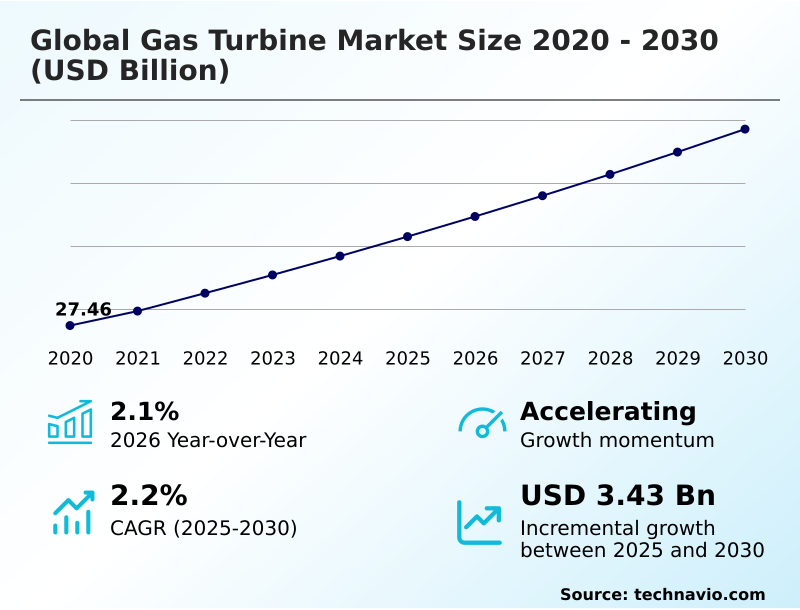
The gas turbine market size is valued to increase by USD 3.43 billion, at a CAGR of 2.2% from 2025 to 2030. Integration of gas turbines as grid stability solutions for renewable energy will drive the gas turbine market.
Major Market Trends & Insights
- APAC dominated the market and accounted for a 48.5% growth during the forecast period.
- By Product - Heavy-duty gas turbine segment was valued at USD 20.72 billion in 2024
- By Technology - CCGT segment accounted for the largest market revenue share in 2024
Market Size & Forecast
- Market Opportunities: USD 6.26 billion
- Market Future Opportunities: USD 3.43 billion
- CAGR from 2025 to 2030 : 2.2%
Market Summary
- The gas turbine market is undergoing a significant transformation, driven by the dual needs of decarbonization and grid reliability. The expansion of intermittent renewable energy sources necessitates the deployment of gas turbines as a critical grid stability solution, offering the fast-ramping capabilities required to balance supply and demand.
- This role is evolving beyond a transitional phase, with significant investments in hydrogen-ready combustion system technology to ensure long-term viability. A key trend is the rise of on-site power generation for energy-intensive facilities like data centers, which utilize decentralized energy system configurations to guarantee operational continuity.
- For instance, a hyperscale data center operator may deploy a combined heat and power (CHP) system to ensure an uninterruptible power supply, using digital twin technology for predictive maintenance analytics to maintain uptime.
- However, the industry faces challenges related to emissions compliance and the potential for stranded asset risk, pushing for greater fuel flexibility and the adoption of advanced materials to improve the thermal efficiency of both ccgt and ocgt plants. This complex landscape requires a focus on lifecycle management and innovative fleet optimization service models.
What will be the Size of the Gas Turbine Market during the forecast period?
Get Key Insights on Market Forecast (PDF) Get Free Sample
How is the Gas Turbine Market Segmented?
The gas turbine industry research report provides comprehensive data (region-wise segment analysis), with forecasts and estimates in "USD million" for the period 2026-2030, as well as historical data from 2020-2024 for the following segments.
- Product
- Heavy-duty gas turbine
- Aeroderivative gas turbine
- Technology
- CCGT
- OCGT
- End-user
- Energy and utilities
- Oil and gas
- Aerospace and defense
- Manufacturing
- Marine
- Capacity
- Above 300 MW
- More than 41-120 MW
- More than 121-300 MW
- Less than 40 MW
- Geography
- APAC
- China
- India
- Japan
- North America
- US
- Canada
- Mexico
- Europe
- Germany
- UK
- France
- Middle East and Africa
- UAE
- Saudi Arabia
- South Africa
- South America
- Brazil
- Argentina
- Rest of World (ROW)
- APAC
By Product Insights
The heavy-duty gas turbine segment is estimated to witness significant growth during the forecast period.
The heavy-duty gas turbine segment is central to large-scale utility power, providing reliable base-load power generation.
These systems are key components in combined cycle gas turbine (ccgt) plants, which maximize thermal efficiency by using exhaust heat recovery in a heat recovery steam generator (hrsg).
The market is advancing toward high-firing temperature turbine designs that use specialized turbine blade alloys and advanced cooling technology.
This innovation supports a clear decarbonization pathway, as new units are engineered for future fuel blends, including demonstrated capabilities for operating on mixtures with over 30% hydrogen.
This adaptability, combined with their role in providing ancillary grid services, ensures their long-term viability and requires sophisticated lifecycle management for successful project execution.
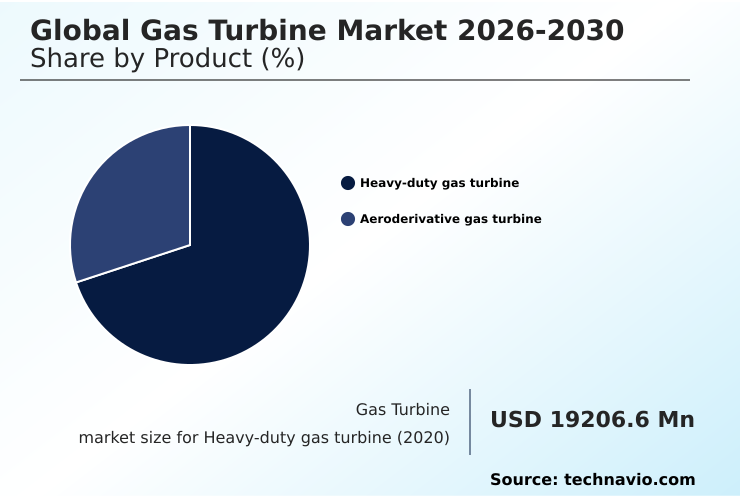
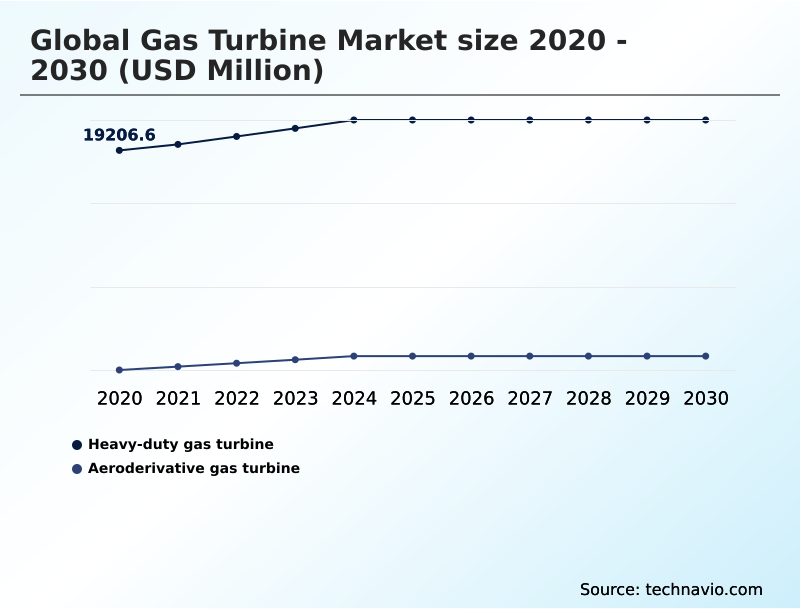
The Heavy-duty gas turbine segment was valued at USD 20.72 billion in 2024 and showed a gradual increase during the forecast period.
Regional Analysis
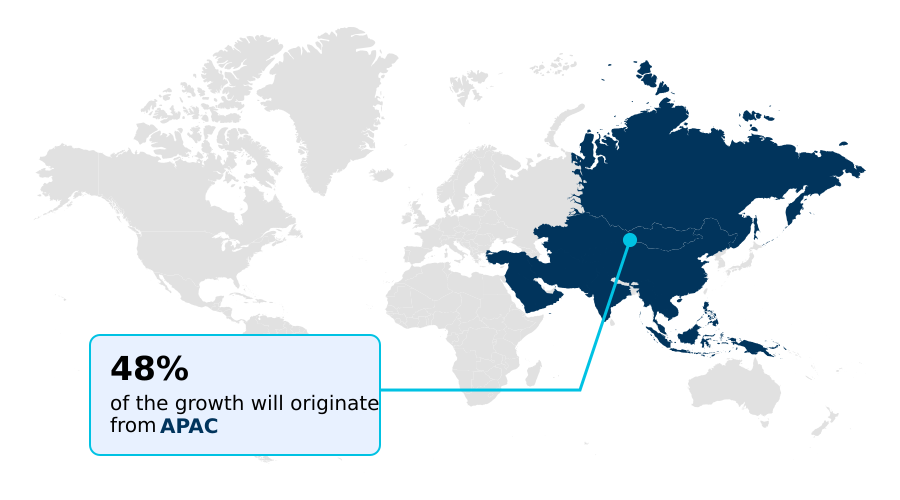
APAC is estimated to contribute 48.5% to the growth of the global market during the forecast period.Technavio’s analysts have elaborately explained the regional trends and drivers that shape the market during the forecast period.
See How Gas Turbine Market Demand is Rising in APAC Get Free Sample
The geographic landscape is varied, with APAC leading growth at a rate nearly double that of North America. This growth is driven by greenfield project investments in new capacity to bolster energy security.
In contrast, mature markets like Europe and North America focus on modernizing existing fleets with the h-class gas turbine and advanced materials like ceramic matrix composites (cmc) and thermal barrier coatings (tbc) to improve the capacity factor of plants.
As a key rotational inertia provider, these turbines ensure grid stability globally. Innovation in high-pressure combustion and the potential for sustainable aviation fuel (saf) derivatives are also key regional differentiators.
The varied demand affects project execution strategies, from deploying a trailer-mounted turbine unit for rapid needs to complex, long-term installations, all while managing operational readiness and a competitive levelized cost of energy (lcoe).
Market Dynamics
Our researchers analyzed the data with 2025 as the base year, along with the key drivers, trends, and challenges. A holistic analysis of drivers will help companies refine their marketing strategies to gain a competitive advantage.
- Strategic decision-making in the power generation sector involves a detailed analysis of the efficiency of ccgt vs ocgt plants, especially when considering the gas turbine role in grid stability. For emerging applications, the selection of a gas turbine for data center power is becoming critical. Operators are carefully evaluating aeroderivative turbine maintenance costs against the benefits of their flexibility.
- A major industry focus is on future-proofing assets through hydrogen blending in gas turbines and exploring ammonia co-firing in f-class turbines. The use of a digital twin for turbine optimization enables predictive maintenance for turbine fleets, which has been shown to reduce unplanned downtime by over 20% compared to scheduled servicing.
- This is vital for both heavy-duty turbine for base-load power applications and gas turbine mechanical drive applications. Technologies such as thermal barrier coatings for blades and dry low emissions combustion benefits are now standard considerations. Industrial users are implementing chp systems for industrial manufacturing, while utility operators focus on upgrading turbines for fuel flexibility to integrate with renewables.
- For new projects, understanding modular power solutions for remote sites and gas turbine applications in lng plants is essential. Engineers are also managing thermal stress in turbines to extend the lifecycle cost of h-class turbines, with carbon capture for gas power plants becoming a key consideration for regulatory compliance.
What are the key market drivers leading to the rise in the adoption of Gas Turbine Industry?
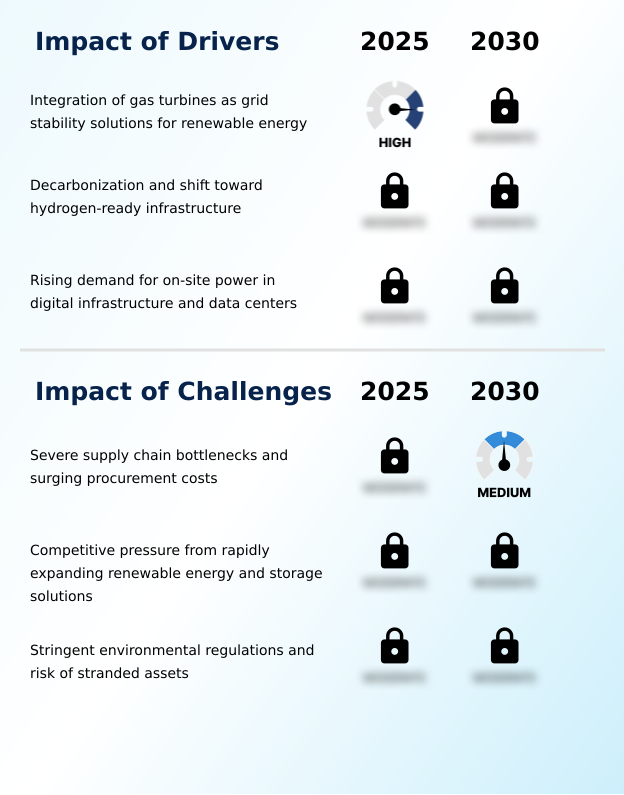
- A key market driver is the integration of gas turbines as critical grid stability solutions to support the expansion of renewable energy.
- Market growth is driven by the need for gas turbines as a primary grid stability solution. As renewable energy sources expand, the fast-ramping generation capability of a dispatchable power asset becomes essential for peak shaving application and grid balancing.
- A significant driver is the demand for on-site power generation, with systems configured for industrial cogeneration and combined heat and power (chp) to support industrial electrification. This is particularly relevant for the independent power producer (ipp) sector.
- Furthermore, the technology is a crucial energy transition asset, with the development of the hydrogen-ready combustion system for models like the f-class gas turbine.
- These systems offer enhanced fuel flexibility, with capabilities to operate on hydrogen blends of 30% or more, bolstering energy security.
What are the market trends shaping the Gas Turbine Industry?
- A key market trend is the acceleration of ammonia and hydrogen co-firing, reflecting a strategic industry push toward deep decarbonization.
- Key trends are reshaping the market, led by the adoption of digital twin technology for predictive maintenance analytics, which optimizes the health of critical hot-section components and informs fleet optimization service contracts. The push for carbon-neutral fuel sources is accelerating ammonia co-firing capability in advanced j-class gas turbine models, enhancing grid resilience.
- Concurrently, there is a rise in decentralized energy systems, particularly for brownfield redevelopment projects where an uninterruptible power supply (ups) is crucial. These systems often use the aeroderivative gas turbine, which can reach full power in under 10 minutes, a significant advantage over other thermal assets.
- This shift toward high-efficiency solutions, where a combined cycle plant can be up to 50% more efficient, is supported by evolving commercial models like the power purchase agreement (ppa).
What challenges does the Gas Turbine Industry face during its growth?
- A key challenge affecting industry growth involves severe supply chain bottlenecks and surging procurement costs.
- The market faces significant hurdles, including supply chain constraints that delay the delivery of critical components like the single-crystal turbine blade, extending project timelines by several years. This impacts everything from large-scale natural gas liquefaction projects to the deployment of a modular power solution.
- Simultaneously, there is a high stranded asset risk due to evolving regulations that mandate stringent emissions compliance and nitrogen oxide (nox) abatement, pushing operators toward investments in carbon capture and storage (ccs) or advanced gas path (agp) upgrades.
- While technologies like dry low-emissions (dle) combustion are standard in new open cycle gas turbine (ocgt) and mechanical drive system units, the cost of retrofitting older fleets creates financial pressure, complicating aftermarket service contract renewals and decisions around providing balancing capacity.
Exclusive Technavio Analysis on Customer Landscape
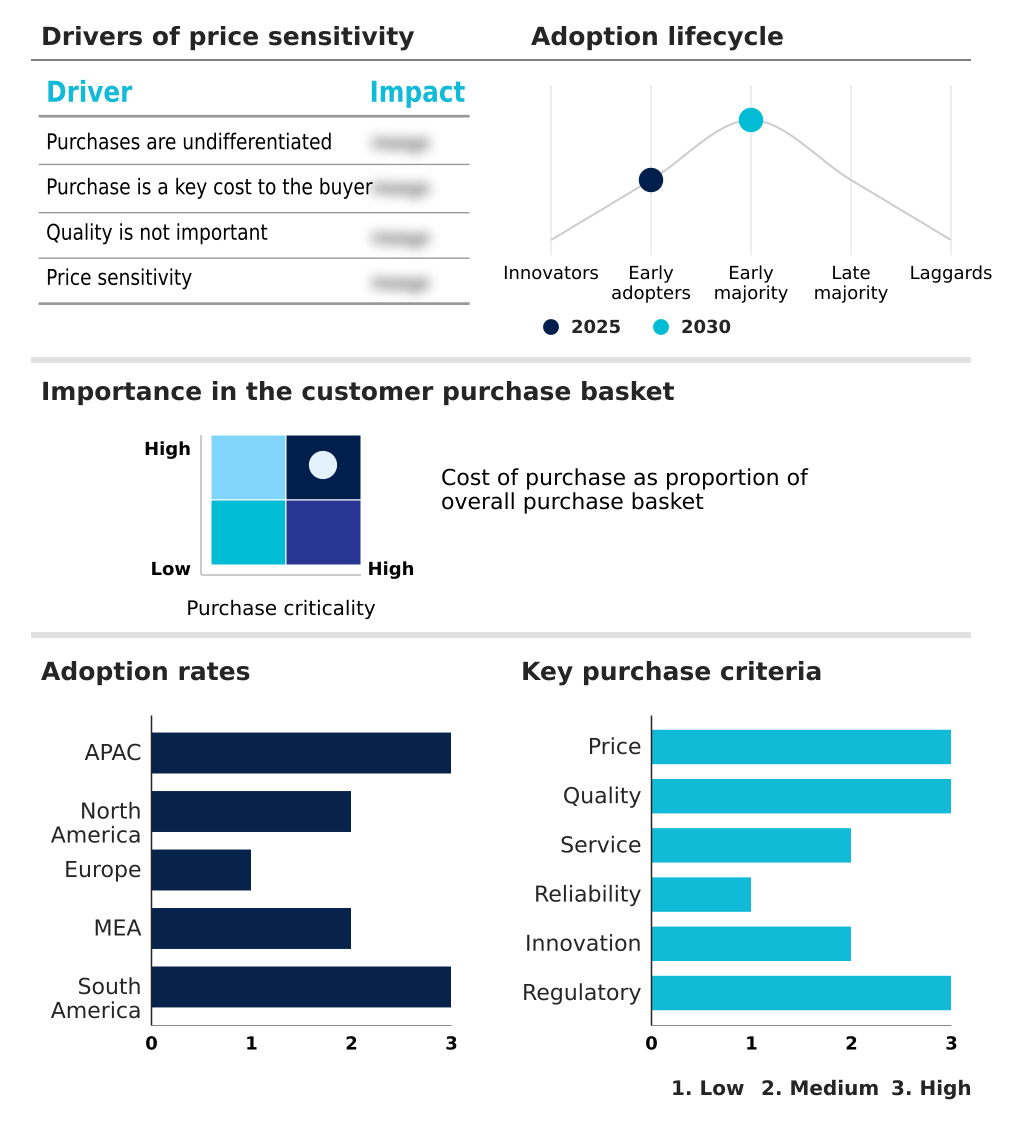
The gas turbine market forecasting report includes the adoption lifecycle of the market, covering from the innovator’s stage to the laggard’s stage. It focuses on adoption rates in different regions based on penetration. Furthermore, the gas turbine market report also includes key purchase criteria and drivers of price sensitivity to help companies evaluate and develop their market growth analysis strategies.
Customer Landscape of Gas Turbine Industry
Competitive Landscape
Companies are implementing various strategies, such as strategic alliances, gas turbine market forecast, partnerships, mergers and acquisitions, geographical expansion, and product/service launches, to enhance their presence in the industry.
Ansaldo Energia S.p.A. - Offers a comprehensive portfolio including aeroderivative, industrial, and heavy-duty gas turbines, designed for a wide spectrum of power generation and mechanical drive applications.
The industry research and growth report includes detailed analyses of the competitive landscape of the market and information about key companies, including:
- Ansaldo Energia S.p.A.
- Baker Hughes Co.
- Bharat Heavy Electricals Ltd.
- Capstone Green Energy Corp.
- Doosan Enerbility Co. Ltd.
- GE Vernova Inc.
- HTC Corp.
- IHI Corp.
- Kawasaki Heavy Industries Ltd.
- MAN Energy Solutions SE
- Mitsubishi Heavy Industries
- Motor Sich JSC
- Rolls Royce Holdings Plc
- RTX Corp.
- Shanghai Electric Group Co.
- Siemens Energy AG
- Solar Turbines Inc.
- Vericor Power Systems
Qualitative and quantitative analysis of companies has been conducted to help clients understand the wider business environment as well as the strengths and weaknesses of key industry players. Data is qualitatively analyzed to categorize companies as pure play, category-focused, industry-focused, and diversified; it is quantitatively analyzed to categorize companies as dominant, leading, strong, tentative, and weak.
Recent Development and News in Gas turbine market
- In March, 2025, Siemens Energy AG secured a $1.6 billion project to supply six SGT6-9000HL gas turbines and other equipment for two gas-fired power plants in Saudi Arabia, adding 3.6 gigawatts of capacity.
- In June, 2025, GE Vernova Inc. received an order for six LM2500XPRESS aeroderivative gas turbine packages to deliver approximately 224 megawatts and improve electricity reliability in Puerto Rico.
- In July, 2025, GE Vernova and Crusoe announced an agreement for 29 LM2500XPRESS aeroderivative gas turbines to power AI data centers, expected to generate nearly 1 gigawatt of electricity.
- In October, 2025, Siemens Energy AG agreed to supply ten gas turbines to Xcel Energy for two new power plants in Texas and New Mexico to strengthen grid reliability amid surging electricity demand.
Dive into Technavio’s robust research methodology, blending expert interviews, extensive data synthesis, and validated models for unparalleled Gas Turbine Market insights. See full methodology.
| Market Scope | |
|---|---|
| Page number | 324 |
| Base year | 2025 |
| Historic period | 2020-2024 |
| Forecast period | 2026-2030 |
| Growth momentum & CAGR | Accelerate at a CAGR of 2.2% |
| Market growth 2026-2030 | USD 3427.8 million |
| Market structure | Fragmented |
| YoY growth 2025-2026(%) | 2.1% |
| Key countries | China, India, Japan, South Korea, Australia, Indonesia, US, Canada, Mexico, Germany, UK, France, Russia, Italy, Spain, UAE, Saudi Arabia, South Africa, Egypt, Qatar, Brazil, Argentina and Chile |
| Competitive landscape | Leading Companies, Market Positioning of Companies, Competitive Strategies, and Industry Risks |
Research Analyst Overview
- The gas turbine market is navigating a complex transition, balancing immediate power needs with long-term decarbonization goals. A central theme is the strategic shift toward the hydrogen-ready combustion system, a move compelling boardroom-level decisions on capital expenditure.
- Companies must weigh the upfront investment in an f-class gas turbine or h-class gas turbine with advanced gas path (agp) features against the future risk of asset obsolescence. The performance gap is significant, with modern units featuring advanced cooling technology and high-pressure combustion achieving thermal efficiencies that are multiple percentage points higher than legacy equipment.
- The industry's evolution is evident across all applications, from the heavy-duty gas turbine used for base-load power generation to the flexible aeroderivative gas turbine in peak shaving application. Innovations in turbine blade alloys and ceramic matrix composites (cmc) are enabling high-firing temperature turbine designs. Concurrently, demand for combined heat and power (chp) and industrial cogeneration is rising.
- Technologies like digital twin technology and predictive maintenance analytics are becoming standard for managing hot-section component health, while the deployment of a modular power solution, including the trailer-mounted turbine unit, addresses decentralized energy system needs.
- The viability of sustainable aviation fuel (saf) and advancements in dry low-emissions (dle) combustion, single-crystal turbine blade manufacturing, and thermal barrier coatings (tbc) further define the competitive landscape for both mechanical drive system and power generation, including combined cycle gas turbine (ccgt) and open cycle gas turbine (ocgt) plants, and even natural gas liquefaction facilities where dispatchable power asset reliability with minimal exhaust heat recovery loss is crucial.
What are the Key Data Covered in this Gas Turbine Market Research and Growth Report?
-
What is the expected growth of the Gas Turbine Market between 2026 and 2030?
-
USD 3.43 billion, at a CAGR of 2.2%
-
-
What segmentation does the market report cover?
-
The report is segmented by Product (Heavy-duty gas turbine, and Aeroderivative gas turbine), Technology (CCGT, and OCGT), End-user (Energy and utilities, Oil and gas, Aerospace and defense, Manufacturing, and Marine), Capacity (Above 300 MW, More than 41-120 MW, More than 121-300 MW, and Less than 40 MW) and Geography (APAC, North America, Europe, Middle East and Africa, South America)
-
-
Which regions are analyzed in the report?
-
APAC, North America, Europe, Middle East and Africa and South America
-
-
What are the key growth drivers and market challenges?
-
Integration of gas turbines as grid stability solutions for renewable energy, Severe supply chain bottlenecks and surging procurement costs
-
-
Who are the major players in the Gas Turbine Market?
-
Ansaldo Energia S.p.A., Baker Hughes Co., Bharat Heavy Electricals Ltd., Capstone Green Energy Corp., Doosan Enerbility Co. Ltd., GE Vernova Inc., HTC Corp., IHI Corp., Kawasaki Heavy Industries Ltd., MAN Energy Solutions SE, Mitsubishi Heavy Industries, Motor Sich JSC, Rolls Royce Holdings Plc, RTX Corp., Shanghai Electric Group Co., Siemens Energy AG, Solar Turbines Inc. and Vericor Power Systems
-
Market Research Insights
- Market dynamics are increasingly shaped by the push for greater operational efficiency and asset longevity. Strategic investments are geared toward upgrades that enhance the operational readiness of existing fleets, with some modernization projects delivering thermal efficiency gains of nearly 1% and power output increases exceeding 10%.
- This focus on performance is critical for managing a competitive levelized cost of energy (lcoe), a key factor in securing long-term power purchase agreement (ppa) structures with utilities. The need for reliable balancing capacity to support renewables is driving demand for flexible assets that can maintain grid frequency regulation.
- As a result, companies are prioritizing technologies that improve the overall capacity factor of plants, ensuring assets remain profitable and essential components of the energy mix.
We can help! Our analysts can customize this gas turbine market research report to meet your requirements.
 RIA -
RIA - 
