



Ophthalmoplegia Market Size 2024-2028
The ophthalmoplegia market size is forecast to increase by USD 435.8 million at a CAGR of 6% between 2023 and 2028.
- The market is experiencing significant growth due to several key factors. The increasing geriatric population is a major driver, as ophthalmoplegia is more prevalent in older adults. Neurological disorders, such as Parkinson's disease and myasthenia gravis, which often cause ophthalmoplegia, are on the rise, further fueling market growth. Moreover, imaging studies, such as magnetic resonance imaging (MRI) or computed tomography (CT) scans, can help identify any structural abnormalities or damage to the brain or nerves. Additionally, the limited treatment options for ophthalmoplegia create a significant unmet need, providing opportunities for new innovations. These trends are shaping the future of the market, making it an area of interest for investors and industry professionals. Despite these opportunities, challenges remain, including the high cost of treatment and the complex nature of the condition. Addressing these challenges and advancing research and development efforts will be crucial for market growth.
What will be the Size of the Ophthalmoplegia Market During the Forecast Period?

- The market encompasses a range of conditions characterized by weakness or paralysis of the eye muscles, resulting in impaired eye movement and alignment. This market includes both external and internal ophthalmoplegias, which can be caused by various factors such as nerve damage from systemic conditions, genetic mutations, or mitochondrial dysfunction. The extraocular muscles, responsible for eye movement, pupil constriction, and lens adjustment, are primarily affected. Diagnosing ophthalmoplegia involves a multidisciplinary approach, including clinical examinations, imaging studies, blood tests, electromyography (EMG), and biopsies. Symptomatic management is the primary treatment approach, focusing on relieving symptoms and improving quality of life. Surgical interventions may be considered in certain cases to correct eye alignment or improve muscle function.
- Cranial nerves, including the oculomotor nerve, trochlear nerve, abducens nerve, superior rectus, and inferior rectus, are often involved in ophthalmoplegia. These nerves transmit signals from the brain to the eye muscles, enabling coordinated eye movement. Understanding the underlying causes of ophthalmoplegia is essential for effective diagnosis and treatment.
How is this Ophthalmoplegia Industry segmented and which is the largest segment?
The ophthalmoplegia industry research report provides comprehensive data (region-wise segment analysis), with forecasts and estimates in "USD million" for the period 2024-2028, as well as historical data from 2018-2022 for the following segments.
- End-user
- Hospitals
- Clinics
- Ambulatory clinics
- Product Type
- Pharmaceuticals
- Medical devices
- Geography
- North America
- Canada
- US
- Europe
- Germany
- UK
- France
- Italy
- Asia
- India
- Japan
- Rest of World (ROW)
- North America
By End-user Insights
- The hospitals segment is estimated to witness significant growth during the forecast period.
Ophthalmoplegia, a disorder characterized by weakness or paralysis of the eye muscles, primarily affects the extraocular muscles responsible for eye movement. This condition can manifest as external ophthalmoplegia, where the eyelids droop, or internal ophthalmoplegia, causing difficulty controlling muscles and coordinating eye movements. Symptoms include weakness, double vision, blurred vision, and difficulty adjusting the pupil or lens. Causes range from nerve damage due to systemic conditions like multiple sclerosis, trauma, infarction, and infection to genetic mutations and mitochondrial dysfunction. Diagnosis involves a multidisciplinary approach, including clinical examinations, imaging studies, blood tests, electromyography (EMG), and biopsies. Treatment options include symptomatic management and surgical interventions.
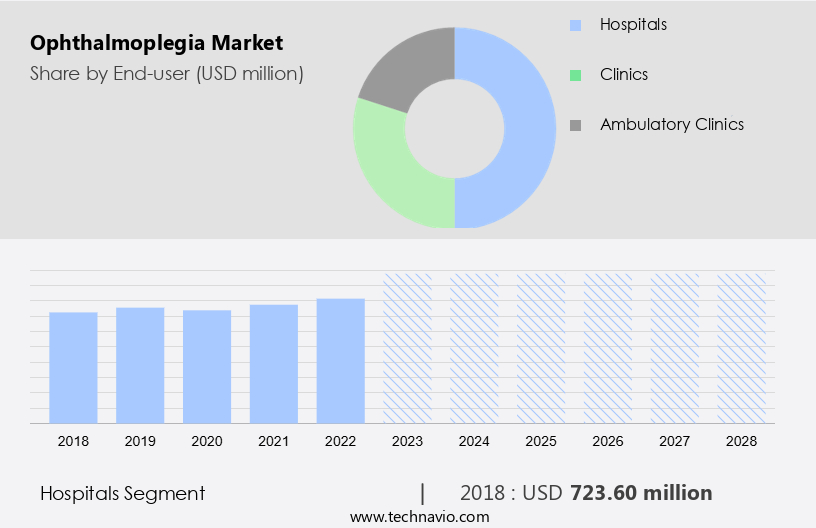
Get a glance at the market report of share of various segments Request Free Sample
The hospitals segment was valued at USD 723.60 million in 2018 and showed a gradual increase during the forecast period.
Regional Analysis
- North America is estimated to contribute 44% to the growth of the global market during the forecast period.
Technavio's analysts have elaborately explained the regional trends and drivers that shape the market during the forecast period.

For more insights on the market size of various regions, Request Free Sample
The North American market for ophthalmoplegia, a neurological condition characterized by weakness or paralysis of the eye muscles, is experiencing notable growth. Factors contributing to this expansion include the region's advanced healthcare infrastructure, marked by substantial healthcare expenditure and sophisticated medical facilities. Leading pharmaceutical companies and research institutions in North America foster continuous innovation in diagnostic technologies and treatment options. High levels of awareness among healthcare providers and patients, coupled with comprehensive insurance coverage, result in increased diagnosis rates and higher adoption of treatment protocols. A well-established network of neuro-ophthalmology centers and a skilled healthcare workforce ensure the delivery of superior patient care.
Market Dynamics
Our researchers analyzed the data with 2023 as the base year, along with the key drivers, trends, and challenges. A holistic analysis of drivers will help companies refine their marketing strategies to gain a competitive advantage.
What are the key market drivers leading to the rise In the adoption of Ophthalmoplegia Industry?
Growing geriatric population is the key driver of the market.
- The market is experiencing significant growth due to the increasing population of older adults. By 2030, the global population aged 60 and above is projected to reach 1.4 billion, up from 1 billion in 2020. This demographic shift is driving demand for ophthalmoplegia treatments, as eye muscle disorders such as external and internal ophthalmoplegia become more common in older adults. These conditions can result from nerve damage caused by systemic conditions, genetic mutations, or mitochondrial dysfunction. Symptoms may include weakness, drooping eyelids, difficulty controlling muscles, and coordinate eyes, leading to double vision, blurred vision, and muscle weakness. Conditions affecting specific cranial nerves, such as the oculomotor nerve, trochlear nerve, abducens nerve, superior rectus, and inferior rectus, can also cause ophthalmoplegia.
- Diagnosis typically involves a multidisciplinary approach, including clinical examinations, imaging studies, blood tests, electromyography (EMG), and biopsies. Treatment options range from symptomatic management to surgical interventions, aimed at improving quality of life and relieving symptoms. Conditions contributing to ophthalmoplegia include congenital disorders, systemic disorders such as multiple sclerosis, trauma, infarction, mitochondrial diseases, migraines, thyroid disease, stroke, brain injury, and infection.
What are the market trends shaping the Ophthalmoplegia Industry?
Increasing incidence of neurological disorders is the upcoming market trend.
- Neurological disorders, including multiple sclerosis, stroke, brain tumors, and mitochondrial diseases, are a leading cause of illness and disability worldwide, affecting over one-third of the global population, according to a WHO study published in 2021. These conditions can result in ophthalmoplegia, characterized by eye muscle weakness or paralysis. Ophthalmoplegia affects various eye muscles, including those controlled by the oculomotor, trochlear, abducens, superior rectus, and inferior rectus nerves. Symptoms include weakness, drooping eyelids, difficulty controlling muscles, and coordinate eyes, leading to double vision, blurred vision, and muscle weakness. Conditions causing ophthalmoplegia include congenital disorders, systemic diseases such as multiple sclerosis, trauma, infarction, infection, and mitochondrial diseases.
- Diagnosis involves clinical examinations, imaging studies, blood tests, electromyography (EMG), and biopsies. Treatment includes symptomatic management and surgical interventions to improve quality of life and provide relief from symptoms.
What challenges does the Ophthalmoplegia Industry face during its growth?
Limited treatment options for ophthalmoplegia is a key challenge affecting the industry growth.
- Ophthalmoplegia, a condition characterized by weakness or paralysis of the eye muscles, presents a considerable challenge for the global market due to the limited treatment options available. The current therapeutic landscape primarily consists of corticosteroids, immunosuppressants, and surgical interventions for managing symptoms. However, these treatments may not effectively address all forms of the disease or provide optimal outcomes for patients, particularly those with rare types or those unresponsive to standard therapies. The various forms of ophthalmoplegia include external and internal, affecting the extraocular muscles responsible for eye movement, pupil constriction, and lens adjustment. Nerve damage from systemic conditions, genetic mutations, mitochondrial dysfunction, and other causes can result in muscle disorders like ophthalmoplegia.
- Symptoms include weakness, drooping eyelids, difficulty controlling muscles, and coordinating eyes, leading to double vision, blurred vision, and muscle weakness. Conditions like congenital ophthalmoplegia, multiple sclerosis, trauma, infarction, mitochondrial diseases, migraines, thyroid disease, stroke, brain injury, and infection can cause ophthalmoplegia. A multidisciplinary approach, including clinical examinations, imaging studies, blood tests, electromyography (EMG), and biopsies, is crucial for diagnosing the condition. Symptomatic management and surgical interventions are the primary treatment modalities, focusing on improving quality of life and providing symptom relief. Cranial nerves, such as the oculomotor, trochlear, abducens, superior rectus, and inferior rectus, can be affected, impacting lateral eye movement and nerve fibers.
Exclusive Customer Landscape
The ophthalmoplegia market forecasting report includes the adoption lifecycle of the market, covering from the innovator's stage to the laggard's stage. It focuses on adoption rates in different regions based on penetration. Furthermore, the ophthalmoplegia market report also includes key purchase criteria and drivers of price sensitivity to help companies evaluate and develop their market growth analysis strategies.
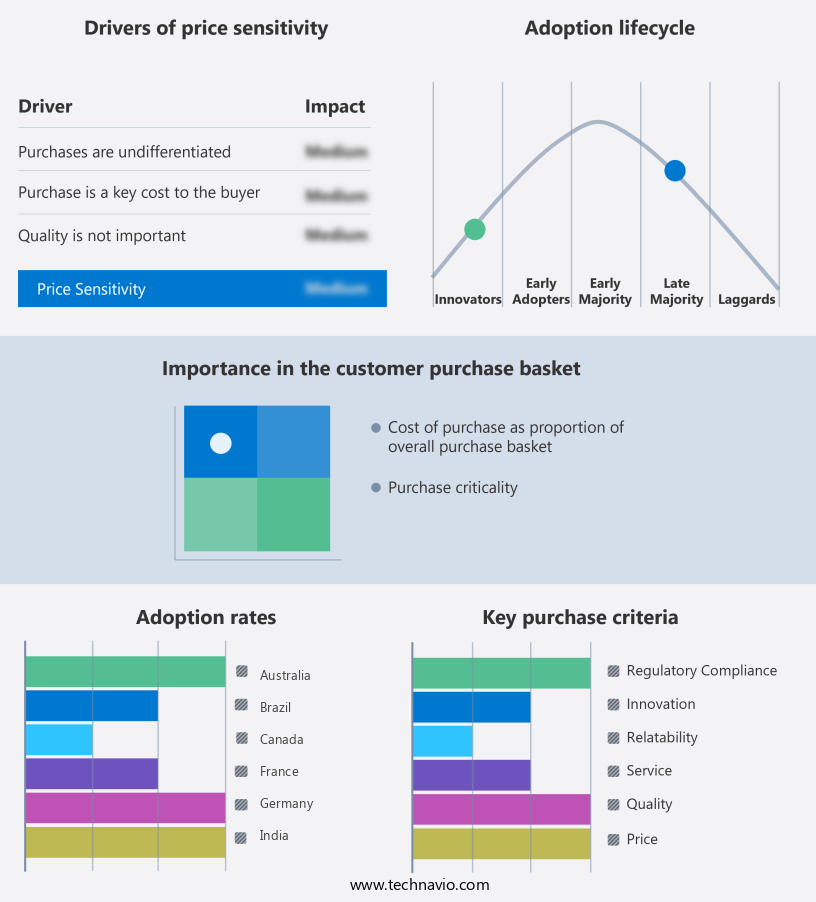
Customer Landscape
Key Companies & Market Insights
Companies are implementing various strategies, such as strategic alliances, ophthalmoplegia market forecast, partnerships, mergers and acquisitions, geographical expansion, and product/service launches, to enhance their presence in the industry.
The industry research and growth report includes detailed analyses of the competitive landscape of the market and information about key companies, including:
- AbbVie Inc.
- Agnitio Pharma
- Atom Pharma
- Care Formulation Labs Pvt Ltd
- Cellera Farma
- Deutsche Pharma Laboratories
- FarmaSyn SA
- GlaxoSmithKline Plc
- Innovative Pharmaceuticals Pvt Ltd
- Medytox
- Merz Pharma GmbH and Co KGaA
- Novartis AG
- Orchidia Pharmaceutical Industries
- Pfizer Inc.
- Sally Pharmacies
- Symbiotec Pharmalab Pvt. Ltd
Qualitative and quantitative analysis of companies has been conducted to help clients understand the wider business environment as well as the strengths and weaknesses of key industry players. Data is qualitatively analyzed to categorize companies as pure play, category-focused, industry-focused, and diversified; it is quantitatively analyzed to categorize companies as dominant, leading, strong, tentative, and weak.
Research Analyst Overview
Ophthalmoplegia refers to the weakness or paralysis of the eye muscles, resulting in impaired eye movement and coordination. This condition can be categorized into external and internal ophthalmoplegia, both of which affect the extraocular muscles that control various aspects of eye function. External ophthalmoplegia is characterized by weakness or paralysis of the muscles that move the eyelids and the muscles that control lateral eye movement. Symptoms may include drooping eyelids and difficulty controlling muscle movements, leading to double vision or blurred vision In the affected eye. On the other hand, internal ophthalmoplegia affects the muscles that control pupil constriction, lens adjustment, and eye alignment.
In addition, symptoms may include weakness or paralysis of the muscles that move the eye up, down, or inward, resulting in difficulty coordinating eye movements and maintaining focus. The causes of ophthalmoplegia are diverse and multifaceted. They can be attributed to nerve damage due to various systemic conditions, genetic mutations, or mitochondrial dysfunction. Systemic disorders such as multiple sclerosis, trauma, infarction, mitochondrial diseases, migraines, thyroid disease, stroke, brain injury, and brain tumor can all lead to ophthalmoplegia. Diagnosing ophthalmoplegia involves a multidisciplinary approach that may include clinical examinations, imaging studies, blood tests, electromyography (EMG), and biopsies. Clinical examinations assess the function of the cranial nerves, including the oculomotor nerve, trochlear nerve, abducens nerve, superior rectus, and inferior rectus.
Moreover, blood tests can help identify underlying systemic conditions or genetic mutations. EMG and biopsies can help diagnose muscle disorders or nerve damage. Symptomatic management of ophthalmoplegia may involve a combination of pharmacological interventions and surgical procedures. Pharmacological interventions may include medications to relieve muscle spasms, reduce inflammation, or improve eye alignment. Surgical interventions may involve correcting muscle imbalances or repairing damaged nerves. The ultimate goal of treatment is to improve quality of life by reducing symptoms and improving eye function.
|
Market Scope |
|
|
Report Coverage |
Details |
|
Page number |
195 |
|
Base year |
2023 |
|
Historic period |
2018-2022 |
|
Forecast period |
2024-2028 |
|
Growth momentum & CAGR |
Accelerate at a CAGR of 6% |
|
Market growth 2024-2028 |
USD 435.8 million |
|
Market structure |
Fragmented |
|
YoY growth 2023-2024(%) |
5.3 |
|
Key countries |
US, Germany, Japan, UK, France, India, Brazil, Canada, Australia, and Italy |
|
Competitive landscape |
Leading Companies, market growth and forecasting , Market Positioning of Companies, Competitive Strategies, and Industry Risks |
What are the Key Data Covered in this Ophthalmoplegia Market Research and Growth Report?
- CAGR of the Ophthalmoplegia industry during the forecast period
- Detailed information on factors that will drive the growth and forecasting between 2024 and 2028
- Precise estimation of the size of the market and its contribution of the industry in focus to the parent market
- Accurate predictions about upcoming growth and trends and changes in consumer behaviour
- Growth of the market across North America, Europe, Asia, and Rest of World (ROW)
- Thorough analysis of the market's competitive landscape and detailed information about companies
- Comprehensive analysis of factors that will challenge the ophthalmoplegia market growth of industry companies
We can help! Our analysts can customize this ophthalmoplegia market research report to meet your requirements.
 RIA -
RIA - 
