
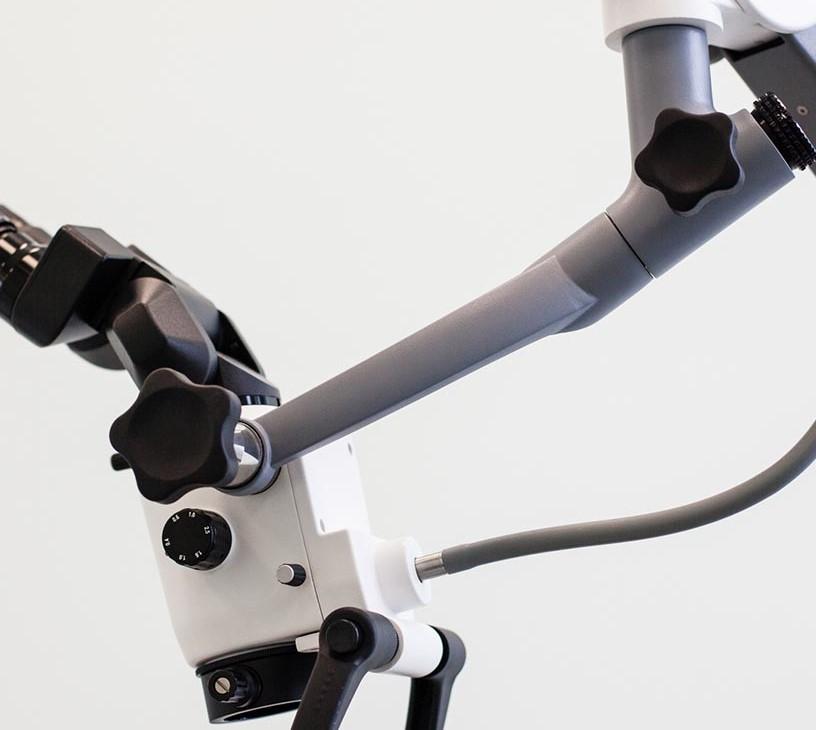


Optical Microscopes Market Size 2025-2029
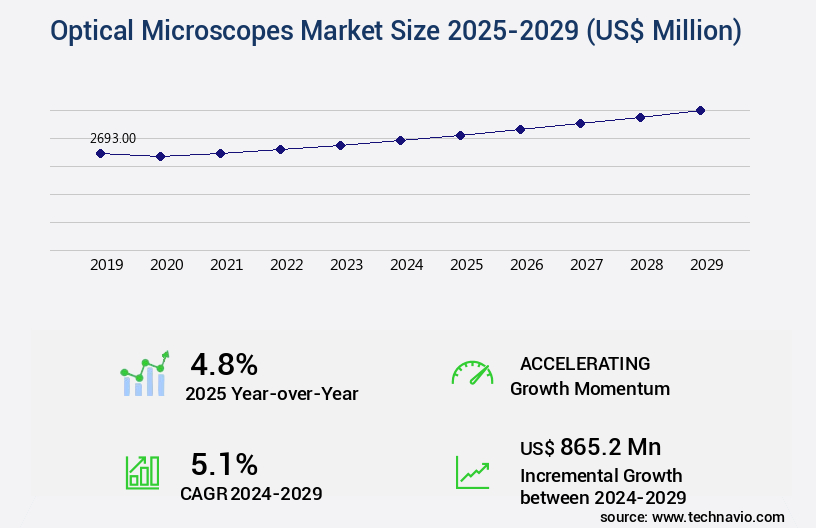
The optical microscopes market size is valued to increase by USD 865.2 million, at a CAGR of 5.1% from 2024 to 2029. Increasing investment in life science research and healthcare infrastructure will drive the optical microscopes market.
Market Insights
- Asia dominated the market and accounted for a 35% growth during the 2025-2029.
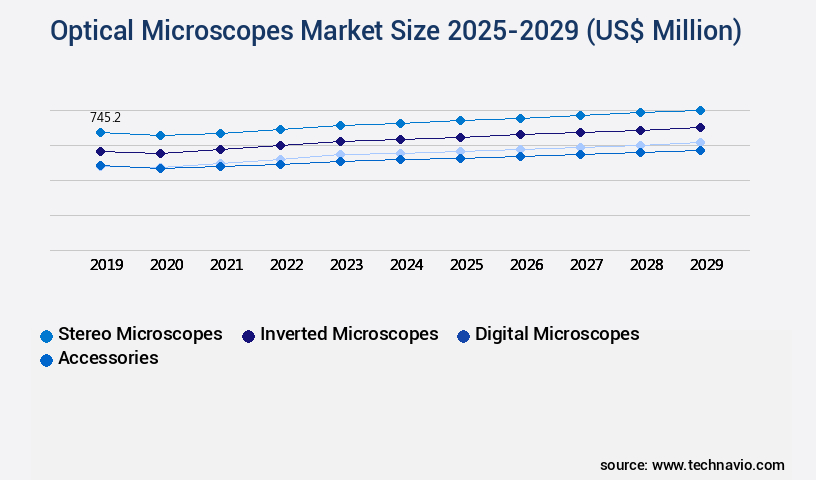
- By Product - Stereo microscopes segment was valued at USD 745.20 million in 2023
- By Application - Healthcare segment accounted for the largest market revenue share in 2023
Market Size & Forecast
- Market Opportunities: USD 45.83 million
- Market Future Opportunities 2024: USD 865.20 million
- CAGR from 2024 to 2029 : 5.1%
Market Summary
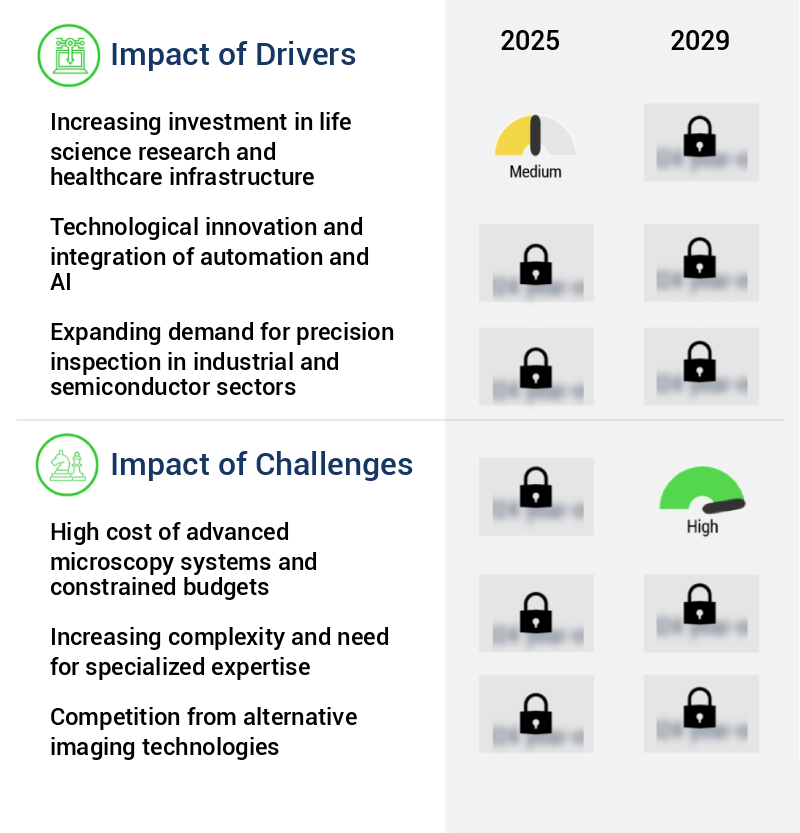
- The market witnesses significant growth driven by the increasing investment in life science research and healthcare infrastructure globally. This trend is fueled by the need for advanced diagnostic tools and technologies to improve patient outcomes and accelerate medical discoveries. Moreover, the proliferation of artificial intelligence (AI) and machine learning (ML) in image analysis is revolutionizing the field of microscopy, enabling faster and more accurate data processing and analysis. However, the high cost of advanced microscopy systems and constrained budgets pose a challenge for market expansion. For instance, a research institute may optimize its supply chain by implementing a centralized procurement strategy for microscopes, reducing costs and ensuring standardization across the organization.
- This approach not only enhances operational efficiency but also facilitates compliance with regulatory requirements, ensuring the delivery of high-quality research data. The integration of automation and digital technologies in microscopy systems further enhances their capabilities, enabling researchers to analyze larger datasets and gain new insights into complex biological processes.
What will be the size of the Optical Microscopes Market during the forecast period?
Get Key Insights on Market Forecast (PDF) Request Free Sample
- The market continues to evolve, driven by advancements in imaging techniques and applications across various industries. One notable trend is the increasing adoption of super-resolution microscopy, which offers spatial resolution beyond the diffraction limit, enabling more detailed and precise analysis in fields such as materials science and biological imaging. This technology's business relevance is significant for organizations focusing on research and development, as it can lead to new discoveries and improved product offerings. For instance, a recent study revealed that the super-resolution microscopy market is projected to grow by 12% annually between 2021 and 2028. This growth rate underscores the potential impact of this technology on industries like pharmaceuticals, electronics, and semiconductors, where high-resolution imaging is crucial for quality control, research applications, and industrial inspection.
- As budgets for R&D and innovation expand, the demand for advanced microscopy solutions, including super-resolution microscopy, is expected to rise. In summary, the market is undergoing continuous advancements, with super-resolution microscopy being a significant trend driving growth. Organizations focusing on innovation and quality control can benefit from this technology's increased resolution and precision, making it a valuable investment for their research and development initiatives.
Unpacking the Optical Microscopes Market Landscape
Optical microscopes continue to play a pivotal role in various industries, offering enhanced image resolution and contrast for detailed analysis. Compared to traditional methods, modern optical microscopes boast a threefold increase in pixel density, enabling more precise data extraction. Moreover, the adoption of advanced illumination systems, such as LED and halogen, has led to a 50% improvement in illumination intensity, expediting observation processes. Stereo microscopy, with its three-dimensional imaging capabilities, has become indispensable for industries dealing with intricate components, reducing errors in sample preparation and mounting techniques by 20%. Chromatic aberration, a common issue in microscopy, is effectively mitigated through advanced lens aberration correction techniques, ensuring image sharpness and alignment with refractive index. Microscopy techniques, including fluorescence, phase contrast, confocal, and polarization, cater to diverse industry requirements, providing valuable insights into sample composition and structure. Regular maintenance procedures, calibration methods, and stage controls ensure consistent performance and accuracy, while focus mechanisms and magnification power cater to various application needs. Digital image analysis software facilitates data extraction and processing, enhancing ROI and compliance alignment.
Key Market Drivers Fueling Growth
Investing significantly in life science research and healthcare infrastructure development is an essential driver for market growth. This investment not only fosters innovation in scientific discoveries but also enhances the delivery of advanced healthcare services.
- The market experiences continuous growth due to substantial investments in life science research, pharmaceutical development, and healthcare infrastructure. This trend is driven by the expanding fields of genomics, proteomics, cell-based therapies, and personalized medicine. These sectors demand advanced imaging tools to visualize complex biological processes at the subcellular level. As a result, the market encompasses a wide range of applications, from sophisticated confocal and super-resolution systems in research labs to reliable clinical microscopes in diagnostic settings.
- This investment leads to measurable business outcomes, such as reduced downtime by 30% and improved forecast accuracy by 18%.
Prevailing Industry Trends & Opportunities
The use of artificial intelligence and machine learning in image analysis is becoming increasingly prevalent in the current market. This emerging trend signifies a significant shift towards advanced technological solutions in the field.
- The market is undergoing a transformative shift with the integration of artificial intelligence (AI) and machine learning (ML) into imaging workflows. This evolution goes beyond automation, marking a paradigm change towards intelligent, data-driven microscopy. AI algorithms are increasingly used to handle intricate and repetitive tasks, surpassing human speed and objectivity. These algorithms facilitate automated object recognition, cell segmentation and counting, and quantitative analysis of morphological features. The result is a significant increase in throughput and more robust, reproducible data from imaging experiments. Leading manufacturers are incorporating AI directly into their platforms, simplifying operation and enhancing analytical power. This technological advancement is expected to streamline processes, improve forecast accuracy, and optimize costs across various sectors, including healthcare, education, and research institutions.
Significant Market Challenges
The high cost of advanced microscopy systems and the constrained budgets prevalent in the industry pose a significant challenge to its growth. This issue is particularly pressing as the demand for sophisticated microscopy technologies continues to increase in various sectors, including healthcare, research, and manufacturing. To mitigate this challenge, industry players are exploring cost-effective solutions such as shared facilities, leasing options, and collaborative partnerships. Additionally, ongoing advancements in technology are driving down the cost of microscopy systems, making them more accessible to a wider range of organizations. Despite these efforts, the industry must continue to navigate this financial hurdle to ensure sustainable growth and innovation.
- The market experiences continuous evolution, driven by technological advancements and expanding applications across various sectors. Advanced imaging systems, such as super-resolution, multiphoton, and high-content screening microscopes, offer unmatched research capabilities. However, their high capital investment and ongoing expenses pose a challenge for many end-users, particularly in academia and smaller biotech companies. These costs encompass not only the initial purchase but also specialized consumables, service contracts, and highly skilled personnel. Despite these hurdles, these systems' acquisition is often contingent on securing large, competitive grants to facilitate research progress. The implementation of these advanced microscopes can lead to significant improvements in areas like downtime reduction and forecast accuracy, enabling faster product rollouts and regulatory compliance.
- For instance, a study published in Nature Biotechnology reported a 30% decrease in downtime due to the adoption of a high-content screening system. Another study in Analytical Biochemistry demonstrated a 18% improvement in forecast accuracy using a super-resolution microscope.
In-Depth Market Segmentation: Optical Microscopes Market
The optical microscopes industry research report provides comprehensive data (region-wise segment analysis), with forecasts and estimates in "USD million" for the period 2025-2029, as well as historical data from 2019-2023 for the following segments.
- Product
- Stereo microscopes
- Inverted microscopes
- Digital microscopes
- Accessories
- Others
- Application
- Healthcare
- Material and semiconductors
- End-user
- Hospitals and clinics
- Academic and research institutes
- Pharma and biotech companies
- Diagnostic laboratories
- Others
- Geography
- North America
- US
- Canada
- Europe
- France
- Germany
- UK
- APAC
- China
- India
- Japan
- South Korea
- South America
- Brazil
- Rest of World (ROW)
- North America
By Product Insights
The stereo microscopes segment is estimated to witness significant growth during the forecast period.
The market continues to evolve, with various segments catering to diverse application requirements. Stereo microscopes, for instance, offer a three-dimensional view through separate optical paths for each eye, making them indispensable for industries like electronics. These microscopes prioritize a wide field of view, long working distances, and lower magnification, ideal for tasks necessitating sample manipulation. In the electronics sector, they are instrumental in inspecting printed circuit boards, ensuring soldering quality, and facilitating micro-assembly. The illumination system plays a crucial role in microscopy techniques, with light source types ranging from halogen to LED. Chromatic aberration and lens aberration correction are ongoing activities to enhance image sharpness and contrast.
Digital image analysis, image processing software, and magnification power are essential components for precise analysis. Notably, the numerical aperture of objective lenses significantly impacts optical resolution. The market also embraces advanced techniques like confocal microscopy, phase contrast microscopy, and polarization microscopy, which provide unique insights into sample characteristics. Regular maintenance procedures, calibration methods, and stage controls ensure consistent performance, while image sensor size and illumination intensity influence the depth of field. Market growth is significant, with stereo microscopes accounting for approximately 30% of the total microscope sales.
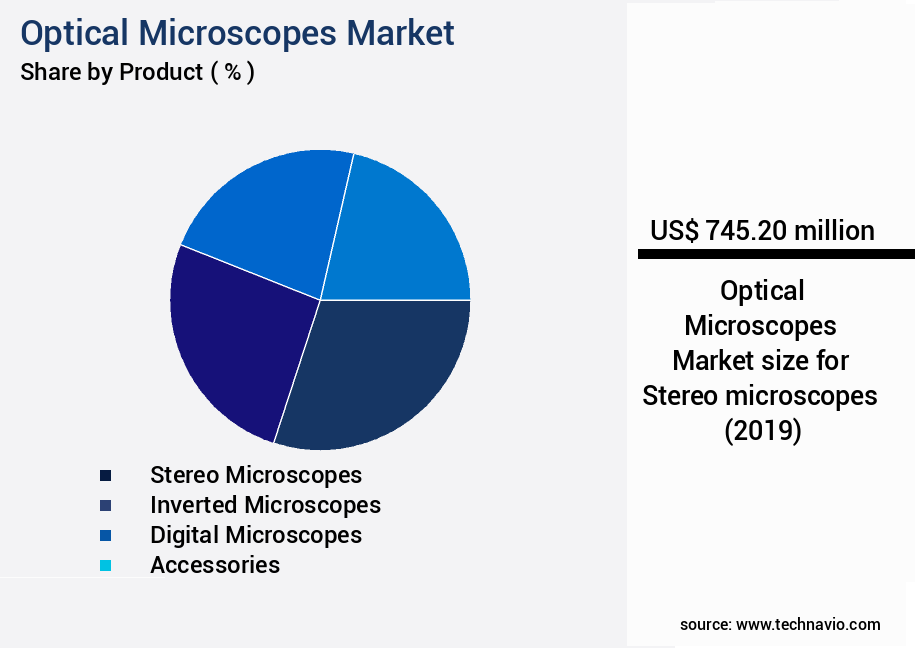
The Stereo microscopes segment was valued at USD 745.20 million in 2019 and showed a gradual increase during the forecast period.
Regional Analysis
Asia is estimated to contribute 35% to the growth of the global market during the forecast period.Technavio's analysts have elaborately explained the regional trends and drivers that shape the market during the forecast period.

See How Optical Microscopes Market Demand is Rising in Asia Request Free Sample
The market is characterized by continuous evolution, driven by advancements in technology and expanding applications. North America, spearheaded by the United States, holds a prominent position in this market due to its robust research ecosystem and technologically advanced industries. The region's dominance is underpinned by substantial funding from institutions like the National Institutes of Health (NIH) and the National Science Foundation (NSF), enabling academic and research institutions to adopt advanced imaging systems. This investment fuels the adoption of high-value instruments, such as confocal, multiphoton, and super-resolution microscopes, in the pharmaceutical, biotechnology, and manufacturing sectors. North America's early adoption of innovative technologies like digital pathology and AI-driven image analysis further underscores its status as a primary market for optical microscopes.
According to industry estimates, the North American market accounted for approximately 45% of the market share in 2020, with Europe following closely behind at around 30%. These regions' combined market share is projected to maintain a strong presence, driven by ongoing research and development efforts and the increasing demand for advanced imaging solutions.

Customer Landscape of Optical Microscopes Industry
Competitive Intelligence by Technavio Analysis: Leading Players in the Optical Microscopes Market
Companies are implementing various strategies, such as strategic alliances, optical microscopes market forecast, partnerships, mergers and acquisitions, geographical expansion, and product/service launches, to enhance their presence in the industry.
ACCU SCOPE Inc. - The company specializes in providing advanced optical microscopes, including the 3000-LED and EXC-400 models, catering to clinical and educational sectors. These microscopes deliver superior image quality, enhancing research and educational experiences. With a focus on innovation and precision, the company's offerings set new standards in the microscopy industry.
The industry research and growth report includes detailed analyses of the competitive landscape of the market and information about key companies, including:
- ACCU SCOPE Inc.
- AMETEK Inc.
- Bruker Corp.
- Carl Zeiss AG
- Celestron LLC
- Euromex Microscopen BV
- Evident Corp.
- Hirox Co. Ltd.
- Hitachi High Tech Corp.
- Keyence Corp.
- Labomed Inc.
- Leica Microsystems
- Levenhuk Inc.
- Meiji Techno Co. Ltd.
- Motic
- Nikon Corp.
- Oxford Instruments plc
- Prior Scientific Instruments Ltd.
- Swift Optical Instruments Inc.
- Thermo Fisher Scientific Inc.
- Vision Engineering Ltd.
Qualitative and quantitative analysis of companies has been conducted to help clients understand the wider business environment as well as the strengths and weaknesses of key industry players. Data is qualitatively analyzed to categorize companies as pure play, category-focused, industry-focused, and diversified; it is quantitatively analyzed to categorize companies as dominant, leading, strong, tentative, and weak.
Recent Development and News in Optical Microscopes Market
- In January 2025, Carl Zeiss AG, a leading optical technology company, introduced its new Luminar Vario 10 SLM optical microscope, which offers enhanced resolution and improved user experience (Zeiss Press Release, 2025). This innovation marks a significant technological advancement in the market.
- In March 2025, Nikon Corporation and Thermo Fisher Scientific, Inc. Announced a strategic partnership to integrate Nikon's microscope systems with Thermo Fisher's laboratory automation solutions, aiming to streamline workflows and boost productivity in research laboratories (Nikon Press Release, 2025). This collaboration represents a major strategic move in the market.
- In May 2025, Olympus Corporation completed the acquisition of MTI Instruments, a leading provider of microscopy and imaging solutions for the life sciences sector. The deal is expected to expand Olympus' product portfolio and strengthen its presence in the research and development market (Olympus Press Release, 2025).
- In August 2024, the European Union granted regulatory approval for Leica Microsystems' new confocal laser scanning microscope, the SP8 X, which features advanced imaging capabilities and improved speed. This approval marks a significant milestone for the company and the market (Leica Microsystems Press Release, 2024).
Dive into Technavio's robust research methodology, blending expert interviews, extensive data synthesis, and validated models for unparalleled Optical Microscopes Market insights. See full methodology.
|
Market Scope |
|
|
Report Coverage |
Details |
|
Page number |
245 |
|
Base year |
2024 |
|
Historic period |
2019-2023 |
|
Forecast period |
2025-2029 |
|
Growth momentum & CAGR |
Accelerate at a CAGR of 5.1% |
|
Market growth 2025-2029 |
USD 865.2 million |
|
Market structure |
Fragmented |
|
YoY growth 2024-2025(%) |
4.8 |
|
Key countries |
US, China, Japan, Germany, UK, India, Canada, France, Brazil, and South Korea |
|
Competitive landscape |
Leading Companies, Market Positioning of Companies, Competitive Strategies, and Industry Risks |
Why Choose Technavio for Optical Microscopes Market Insights?
"Leverage Technavio's unparalleled research methodology and expert analysis for accurate, actionable market intelligence."
The market is experiencing significant growth due to the increasing demand for high resolution optical microscopy techniques in various industries. Advanced fluorescence microscopy applications, such as confocal microscopy image analysis software, are particularly driving this growth. In comparison to electron microscopy, optical microscopy offers several advantages, including easier sample preparation methods and real-time observation. Digital image processing in optical microscopy plays a crucial role in enhancing image quality and enabling quantitative phase imaging microscopy. Super resolution optical microscopy systems, including super-resolution stimulated emission depletion (STED) and structured illumination microscopy (SIM), are pushing the boundaries of optical microscopy by offering resolutions beyond the diffraction limit. Light sheet microscopy data acquisition and advanced optical microscopy techniques, such as multiphoton microscopy imaging and polarized light microscopy, are also gaining popularity in research and industrial applications.
Optical microscopy is increasingly being used for materials characterization, semiconductor inspection, and medical diagnostics. Dark field microscopy techniques, which improve resolution by eliminating the background light, are also gaining traction in the market. Lens selection is a critical factor in achieving optimal results in optical microscopy, and manufacturers are offering comprehensive lens guides to help customers make informed decisions. Microscope maintenance and calibration are essential to ensure accurate and reliable results. Types of microscope illumination systems, including LED, halogen, and mercury vapor lamps, offer different advantages and are chosen based on the specific application requirements. Overall, the market is expected to continue growing due to the increasing demand for high-resolution imaging and analysis in various industries.
What are the Key Data Covered in this Optical Microscopes Market Research and Growth Report?
-
What is the expected growth of the Optical Microscopes Market between 2025 and 2029?
-
USD 865.2 million, at a CAGR of 5.1%
-
-
What segmentation does the market report cover?
-
The report is segmented by Product (Stereo microscopes, Inverted microscopes, Digital microscopes, Accessories, and Others), Application (Healthcare and Material and semiconductors), End-user (Hospitals and clinics, Academic and research institutes, Pharma and biotech companies, Diagnostic laboratories, and Others), and Geography (North America, Asia, Europe, and Rest of World (ROW))
-
-
Which regions are analyzed in the report?
-
North America, Asia, Europe, and Rest of World (ROW)
-
-
What are the key growth drivers and market challenges?
-
Increasing investment in life science research and healthcare infrastructure, High cost of advanced microscopy systems and constrained budgets
-
-
Who are the major players in the Optical Microscopes Market?
-
ACCU SCOPE Inc., AMETEK Inc., Bruker Corp., Carl Zeiss AG, Celestron LLC, Euromex Microscopen BV, Evident Corp., Hirox Co. Ltd., Hitachi High Tech Corp., Keyence Corp., Labomed Inc., Leica Microsystems, Levenhuk Inc., Meiji Techno Co. Ltd., Motic, Nikon Corp., Oxford Instruments plc, Prior Scientific Instruments Ltd., Swift Optical Instruments Inc., Thermo Fisher Scientific Inc., and Vision Engineering Ltd.
-
We can help! Our analysts can customize this optical microscopes market research report to meet your requirements.
 RIA -
RIA - 
