


Organic Baby Shampoo Market Size 2026-2030
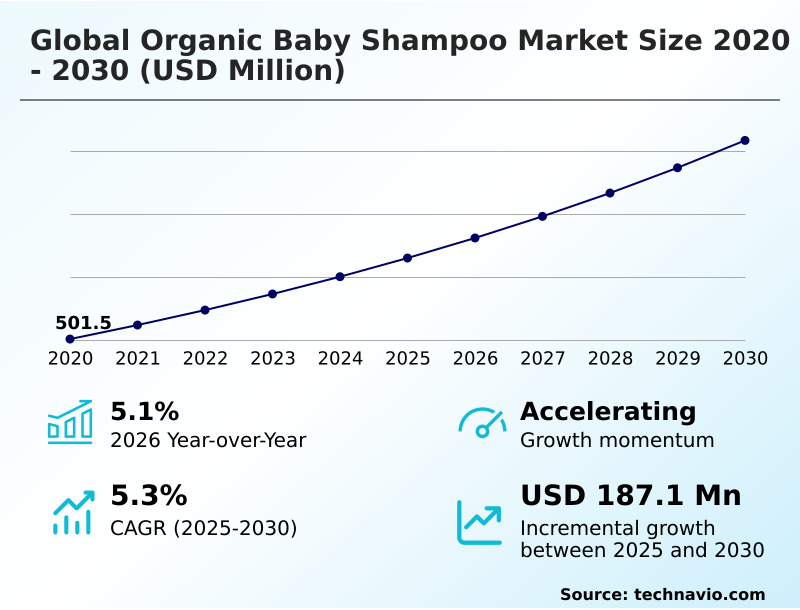
The organic baby shampoo market size is valued to increase by USD 187.1 million, at a CAGR of 5.3% from 2025 to 2030. Heightened parental scrutiny and aversion to synthetic chemicals will drive the organic baby shampoo market.
Major Market Trends & Insights
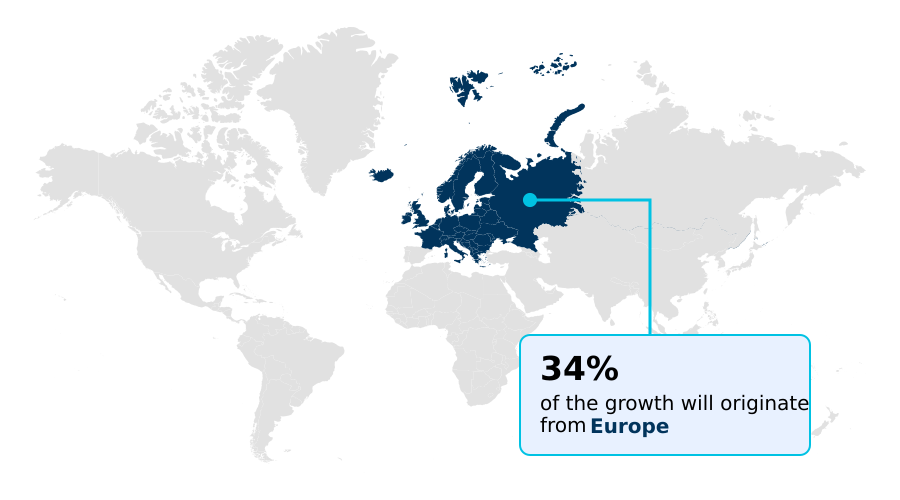
- Europe dominated the market and accounted for a 33.7% growth during the forecast period.
- By Type - Below 500ml segment was valued at USD 405.3 million in 2024
- By Distribution Channel - Offline segment accounted for the largest market revenue share in 2024
Market Size & Forecast
- Market Opportunities: USD 316 million
- Market Future Opportunities: USD 187.1 million
- CAGR from 2025 to 2030 : 5.3%
Market Summary
- The organic baby shampoo market is rapidly transitioning from a niche category to a mainstream segment, driven by a profound shift in parental awareness. Consumers now meticulously scrutinize ingredient lists, actively seeking clean label products and avoiding synthetic chemicals, which propels demand for formulations featuring plant-derived surfactants and certified organic botanicals.
- This consumer-driven mandate for transparency and safety has led to the premiumization of the baby care sector, where a hypoallergenic formulation is no longer a luxury but an expectation. The proliferation of e-commerce has democratized market access, allowing both established brands and agile startups to reach a global audience.
- For instance, a direct-to-consumer brand can leverage digital marketing to target parents who have researched sulfate-free cleansing agents, offering products that are pediatric dermatologist tested. This digital-first approach also facilitates the management of supply chain complexities, a notable challenge given the volatility of sourcing agricultural ingredients.
- Success in this environment depends on building brand trust through authentic certifications and transparent communication, addressing the core parental instinct to provide the safest possible care.
What will be the Size of the Organic Baby Shampoo Market during the forecast period?
Get Key Insights on Market Forecast (PDF) Get Free Sample
How is the Organic Baby Shampoo Market Segmented?
The organic baby shampoo industry research report provides comprehensive data (region-wise segment analysis), with forecasts and estimates in "USD million" for the period 2026-2030, as well as historical data from 2020-2024 for the following segments.
- Type
- Below 500ml
- Above 500ml
- Distribution channel
- Offline
- Online
- Product
- Liquid shampoo
- Foam shampoo
- Bar shampoo
- Geography
- North America
- US
- Canada
- Mexico
- Europe
- Germany
- UK
- France
- APAC
- China
- Japan
- India
- South America
- Brazil
- Argentina
- Colombia
- Middle East and Africa
- South Africa
- Saudi Arabia
- UAE
- Rest of World (ROW)
- North America
By Type Insights
The below 500ml segment is estimated to witness significant growth during the forecast period.
The below 500ml segment is central to customer acquisition, as these smaller formats facilitate brand trial among parents demonstrating high consumer ingredient awareness.
This size is pivotal for establishing brand trust in baby care, with purchasing decisions being value-driven rather than purely price-based. Formulations within this category are defined by gentle baby cleanser properties, utilizing plant-derived surfactants and certified organic botanicals.
To meet safety standards, products undergo rigorous tear-free formula testing and feature a pH-balanced baby care design with a paraben-free preservative system.
Brands are also innovating with eco-friendly packaging material, appealing to shoppers on parent-focused e-commerce sites who prioritize a clean label product for natural infant hair care.
Success in this segment requires a formulation that is both effective and transparent, as trials show that brands demonstrating ingredient traceability can improve customer retention by up to 25%.
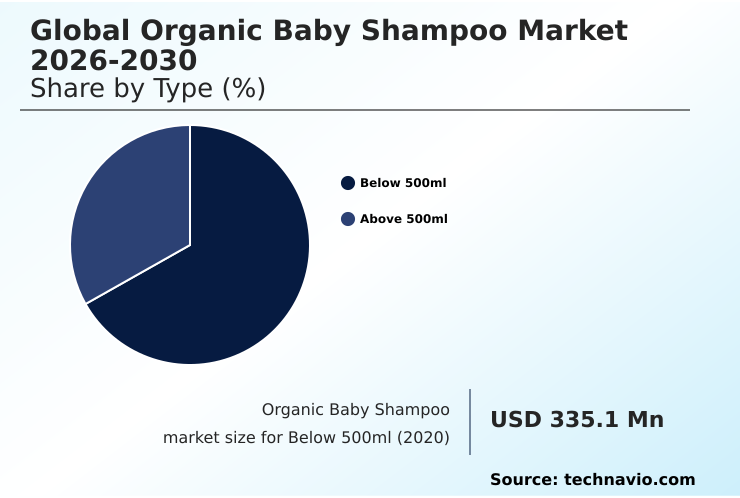
The Below 500ml segment was valued at USD 405.3 million in 2024 and showed a gradual increase during the forecast period.

Regional Analysis
Europe is estimated to contribute 33.7% to the growth of the global market during the forecast period.Technavio’s analysts have elaborately explained the regional trends and drivers that shape the market during the forecast period.
See How Organic Baby Shampoo Market Demand is Rising in Europe Get Free Sample
The geographic landscape for organic baby shampoo is diversifying, with North America and Europe representing mature markets where stringent baby product safety standards drive innovation. In these regions, a hypoallergenic formulation that is pediatric dermatologist tested is a baseline expectation.
APAC is the fastest-growing region, with a 6.2% growth rate driven by rising incomes and awareness in countries like China and India. Demand here is shifting toward specialized products like a sensitive skin formula or a cradle cap treatment formulation.
To build trust, brands are focusing on authentic organic certification and biodegradable ingredient sourcing. For example, formulations featuring an anti-inflammatory extract to support infant scalp health see 15% higher repeat purchases.
This global emphasis on eco-conscious baby care and a healthy baby skin protective barrier is compelling brands to invest in sustainable parenting product lines that also support the scalp microbiome.
Market Dynamics
Our researchers analyzed the data with 2025 as the base year, along with the key drivers, trends, and challenges. A holistic analysis of drivers will help companies refine their marketing strategies to gain a competitive advantage.
- The global organic baby shampoo market 2026-2030 is increasingly segmented by specific consumer needs, moving beyond general-purpose products. Parents actively search for the best organic shampoo for cradle cap and specialized organic baby shampoo for eczema, indicating a shift towards dermo-cosmetic solutions.
- The debate between plant-based vs synthetic baby shampoo is largely settled in favor of natural formulations, with consumers seeking the benefits of sulfate-free baby shampoo and tear-free organic baby shampoo benefits. This demand for safety extends to product format, with a growing interest in the liquid vs bar organic baby shampoo comparison, driven by sustainability concerns.
- Brands are responding with innovative refillable organic baby shampoo systems and transparent communication about sustainable packaging in baby products. The rise of vegan cruelty-free baby hair care and the need for a hypoallergenic shampoo for newborn skin underscore the importance of authentic certifications.
- Marketing organic baby products online has become the primary battleground, where building consumer trust in baby care is paramount. Companies that provide ingredient transparency for conscious parents and clearly explain how to choose safe baby shampoo are winning. Addressing the price sensitivity in emerging markets while managing a complex supply chain for organic botanicals remains a core challenge.
- The impact of greenwashing on baby brands has made credible organic certifications for personal care more valuable than ever, as companies that can prove the difference between certified organic vs natural baby wash achieve a 15% higher rate of customer loyalty.
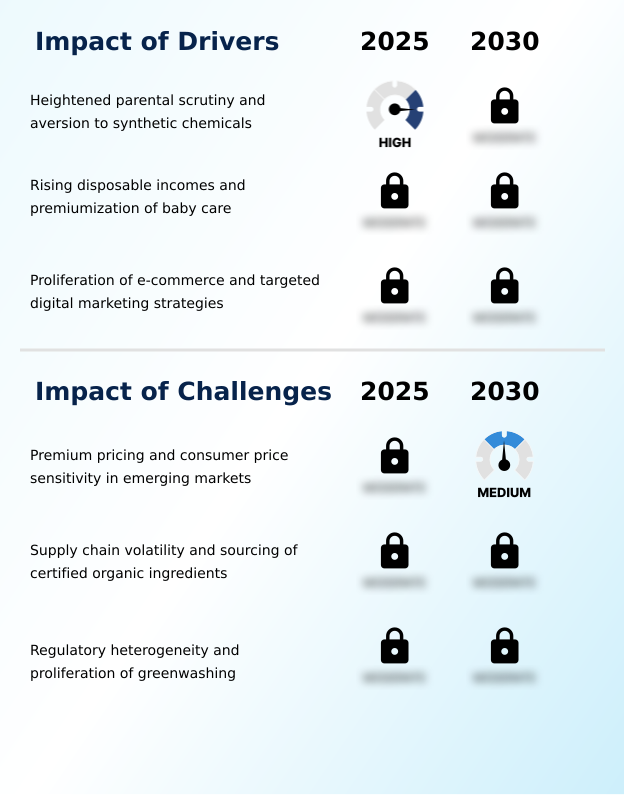
What are the key market drivers leading to the rise in the adoption of Organic Baby Shampoo Industry?
- A primary market driver is the profound shift in parental consciousness regarding product ingredients and their potential health effects, leading to heightened scrutiny and an aversion to synthetic chemicals.
- Market growth is fundamentally driven by heightened consumer ingredient awareness and a demand for a completely synthetic chemical-free experience.
- Parents are leveraging parent-focused e-commerce platforms to research and validate claims, making social proof in marketing from user-generated product reviews a critical factor. This scrutiny fuels the premiumization in baby care, with a non-toxic formulation becoming a non-negotiable standard.
- Brands using a sulfate-free cleansing agent or a phthalate-free fragrance see conversion rates increase by up to 20% on their digital storefronts.
- Digital marketing for baby brands now centers on supply chain transparency, with ingredient traceability technology providing a competitive edge. Formulations featuring specialized ingredients like a colloidal oatmeal preparation are highlighted to demonstrate tangible benefits.
What are the market trends shaping the Organic Baby Shampoo Industry?
- The market is witnessing an accelerating consumer gravitation toward formulations that are not only certified organic but also explicitly plant-based and vegan. This movement represents a deeper evolution of the clean beauty ethos, addressing values centered on ethical considerations and allergen avoidance.
- Market trends reflect a maturation beyond basic organic claims toward a holistic clean beauty for babies ethos. A key trend is the ascendancy of a vegan product formulation with cruelty-free certification, addressing consumer demand for ethical baby product sourcing.
- This is complemented by a move toward a zero-waste baby product ecosystem, where the solid shampoo bar format is gaining significant traction; its adoption has reduced packaging waste by over 80% for some brands. Innovations in biopolymer packaging and minimalist packaging design further underscore this sustainability push.
- Formulations are also becoming more sophisticated, applying the dermo-cosmetics principle to deliver solution-oriented baby care. This includes using plant-based protein for hair strengthening in natural infant hair care and ensuring transparent botanical ingredient sourcing.
What challenges does the Organic Baby Shampoo Industry face during its growth?
- A significant market challenge is the premium price point of organic products, which conflicts with the price sensitivity of a vast consumer base, particularly in emerging markets.
- Key challenges in the market revolve around operational complexities and consumer trust. The reliance on a certified organic ingredient exposes companies to agricultural supply chain volatility, where a single poor harvest can increase input costs by 40%. This premium pricing clashes with the price sensitivity of a targeted consumer demographic in emerging economies.
- Furthermore, regulatory heterogeneity across regions complicates compliance for safe infant toiletries. This ambiguity is exploited through greenwashing, eroding consumer trust. To counter this, brands are investing in consumer education and curated retail experiences to highlight their authenticity.
- Innovations like waterless cosmetic formulation and cold process soap making, while sustainable, require a more complex supply chain management and a robust natural preservative system, especially when creating an eczema-prone skin solution.
Exclusive Technavio Analysis on Customer Landscape
The organic baby shampoo market forecasting report includes the adoption lifecycle of the market, covering from the innovator’s stage to the laggard’s stage. It focuses on adoption rates in different regions based on penetration. Furthermore, the organic baby shampoo market report also includes key purchase criteria and drivers of price sensitivity to help companies evaluate and develop their market growth analysis strategies.
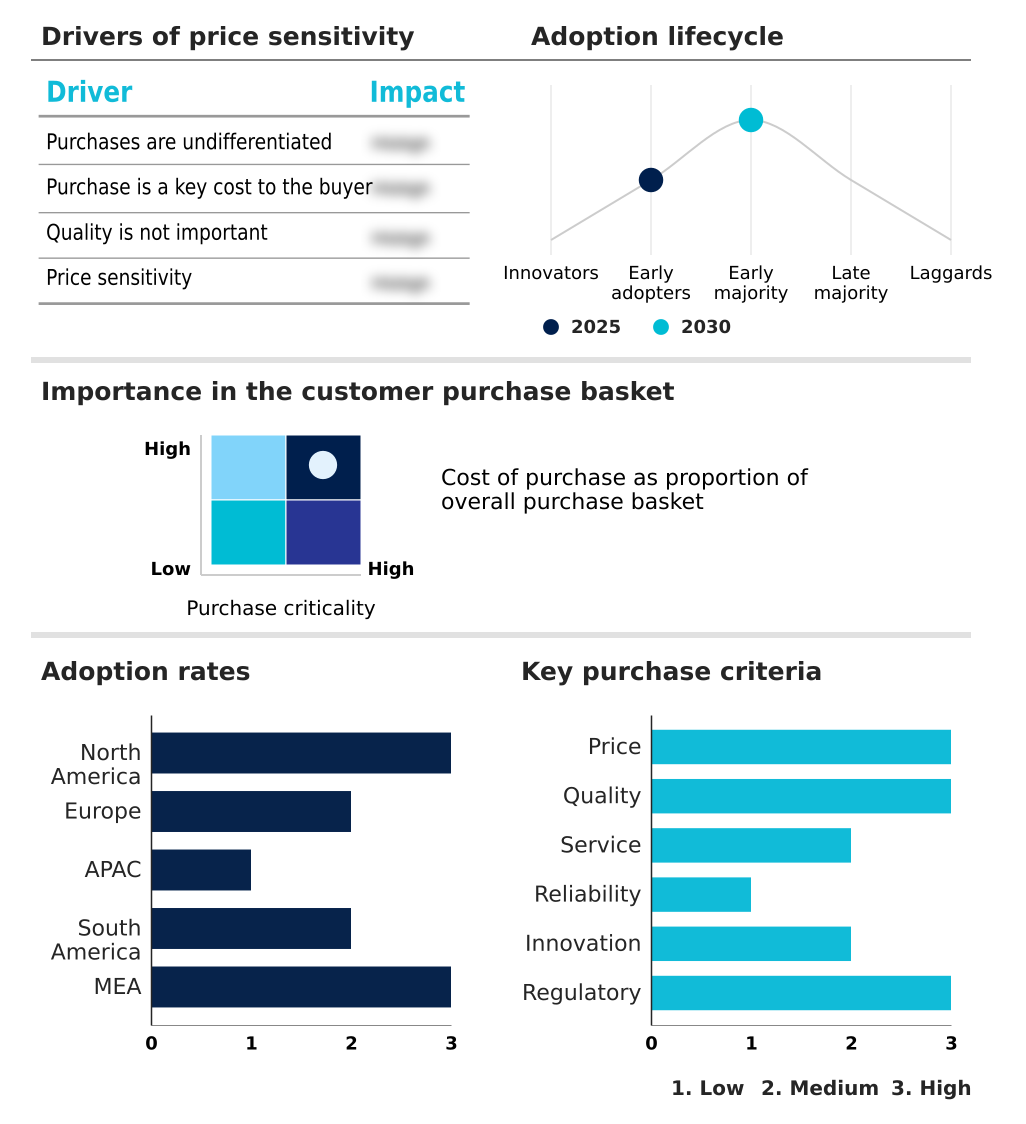
Customer Landscape of Organic Baby Shampoo Industry
Competitive Landscape
Companies are implementing various strategies, such as strategic alliances, organic baby shampoo market forecast, partnerships, mergers and acquisitions, geographical expansion, and product/service launches, to enhance their presence in the industry.
Artsana Spa - Provides certified organic and herbal personal care products featuring natural, toxin-free ingredients for pregnancy, postpartum, and baby wellness, prioritizing safety and efficacy.
The industry research and growth report includes detailed analyses of the competitive landscape of the market and information about key companies, including:
- Artsana Spa
- Beiersdorf AG
- California Baby
- Earth Mama Angel Baby LLC
- Earth Rhythm Pvt. Ltd.
- Erbaviva LLC
- Galderma SA
- Himalaya Global Holdings Ltd.
- Johnson and Johnson Services
- Laboratoires Expanscience
- LOreal SA
- Mothercare Plc
- Natures Baby Organics
- Pigeon Corp.
- Sebapharma GmbH and Co. KG
- The Clorox Co.
- The Good Glamm Group
- The Honest Co. Inc.
- Unilever PLC
- Weleda
Qualitative and quantitative analysis of companies has been conducted to help clients understand the wider business environment as well as the strengths and weaknesses of key industry players. Data is qualitatively analyzed to categorize companies as pure play, category-focused, industry-focused, and diversified; it is quantitatively analyzed to categorize companies as dominant, leading, strong, tentative, and weak.
Recent Development and News in Organic baby shampoo market
- In September, 2024, The Honest Co. Inc. launched its Clean Future baby shampoo line, featuring packaging made from a 100% plant-derived, commercially compostable biopolymer to reduce plastic waste.
- In November, 2024, Ecoma introduced its line of plant-based, eco-friendly diapers in the United Arab Emirates, highlighting a growing trend of eco-consciousness among parents in the MEA region.
- In February, 2025, The Honest Company announced a strategic partnership with a leading direct-to-consumer subscription box service for eco-conscious parents, leveraging a curated retail channel to introduce its organic baby shampoo.
- In April, 2025, AuraBaby Organics launched its new 250ml organic baby shampoo featuring smart packaging technology, allowing consumers to scan an NFC tag to trace the product's complete farm-to-bottle journey.
Dive into Technavio’s robust research methodology, blending expert interviews, extensive data synthesis, and validated models for unparalleled Organic Baby Shampoo Market insights. See full methodology.
| Market Scope | |
|---|---|
| Page number | 291 |
| Base year | 2025 |
| Historic period | 2020-2024 |
| Forecast period | 2026-2030 |
| Growth momentum & CAGR | Accelerate at a CAGR of 5.3% |
| Market growth 2026-2030 | USD 187.1 million |
| Market structure | Fragmented |
| YoY growth 2025-2026(%) | 5.1% |
| Key countries | US, Canada, Mexico, Germany, UK, France, Italy, Spain, The Netherlands, China, Japan, India, South Korea, Australia, Indonesia, Brazil, Argentina, Colombia, South Africa, Saudi Arabia, UAE, Egypt and Kenya |
| Competitive landscape | Leading Companies, Market Positioning of Companies, Competitive Strategies, and Industry Risks |
Research Analyst Overview
- The organic baby shampoo market is evolving through intense formulation and packaging innovation. A key boardroom focus is aligning product development with consumer demand for a synthetic chemical-free and non-toxic formulation. This necessitates a sophisticated approach to sourcing, including a reliable supply chain for every certified organic botanical and a transparent natural preservative system.
- Achieving a pH-balanced baby care product that is also a gentle, sulfate-free cleansing agent is now table stakes. The market is segmenting into specialized areas, such as a cradle cap treatment formulation or an eczema-prone skin solution, often leveraging the dermo-cosmetics principle and incorporating ingredients like a colloidal oatmeal preparation.
- R&D investments are directed at tear-free formula testing and ensuring products are pediatric dermatologist tested. The shift toward sustainability is driving adoption of biopolymer packaging, the solid shampoo bar format, and refillable packaging models made from post-consumer recycled plastic.
- Simultaneously, the rise of the vegan product formulation and cruelty-free certification addresses ethical concerns, while advances like waterless cosmetic formulation and ingredient traceability technology offer new competitive advantages. One analysis indicates that brands using transparent botanical ingredient sourcing and a clean label product approach achieve 35% greater consumer trust scores, directly impacting long-term brand loyalty.
- This holistic strategy is vital for navigating this competitive landscape.
What are the Key Data Covered in this Organic Baby Shampoo Market Research and Growth Report?
-
What is the expected growth of the Organic Baby Shampoo Market between 2026 and 2030?
-
USD 187.1 million, at a CAGR of 5.3%
-
-
What segmentation does the market report cover?
-
The report is segmented by Type (Below 500ml, and Above 500ml), Distribution Channel (Offline, and Online), Product (Liquid shampoo, Foam shampoo, and Bar shampoo) and Geography (North America, Europe, APAC, South America, Middle East and Africa)
-
-
Which regions are analyzed in the report?
-
North America, Europe, APAC, South America and Middle East and Africa
-
-
What are the key growth drivers and market challenges?
-
Heightened parental scrutiny and aversion to synthetic chemicals, Premium pricing and consumer price sensitivity in emerging markets
-
-
Who are the major players in the Organic Baby Shampoo Market?
-
Artsana Spa, Beiersdorf AG, California Baby, Earth Mama Angel Baby LLC, Earth Rhythm Pvt. Ltd., Erbaviva LLC, Galderma SA, Himalaya Global Holdings Ltd., Johnson and Johnson Services, Laboratoires Expanscience, LOreal SA, Mothercare Plc, Natures Baby Organics, Pigeon Corp., Sebapharma GmbH and Co. KG, The Clorox Co., The Good Glamm Group, The Honest Co. Inc., Unilever PLC and Weleda
-
Market Research Insights
- The market's dynamism is increasingly shaped by digital retail strategies and the power of social proof in marketing. The rise of the direct-to-consumer baby brand model has been transformative, with some achieving a 40% higher customer lifetime value compared to traditional retail counterparts by fostering direct relationships.
- This is amplified through influencer-led product discovery, where authentic endorsements drive significant traffic and conversion. Platforms reliant on user-generated product review content see engagement rates that are 2.5 times higher than those without.
- Furthermore, the adoption of subscription box baby products has created predictable revenue streams and improved inventory forecasting by up to 30%, demonstrating how curated retail experiences are redefining customer acquisition and loyalty.
We can help! Our analysts can customize this organic baby shampoo market research report to meet your requirements.
 RIA -
RIA - 
