


Hair Care Market Size 2026-2030
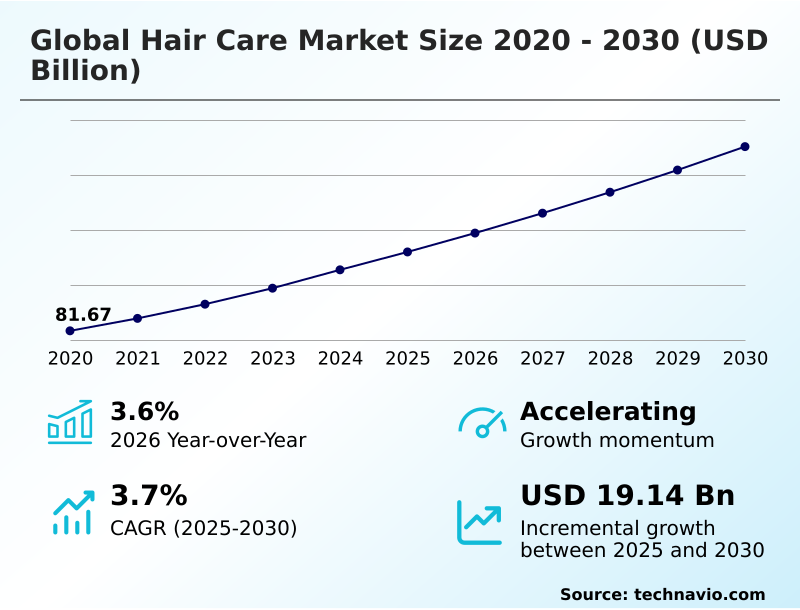
The hair care market size is valued to increase by USD 19.14 billion, at a CAGR of 3.7% from 2025 to 2030. Increasing consumer awareness regarding personal grooming and hair health will drive the hair care market.
Major Market Trends & Insights
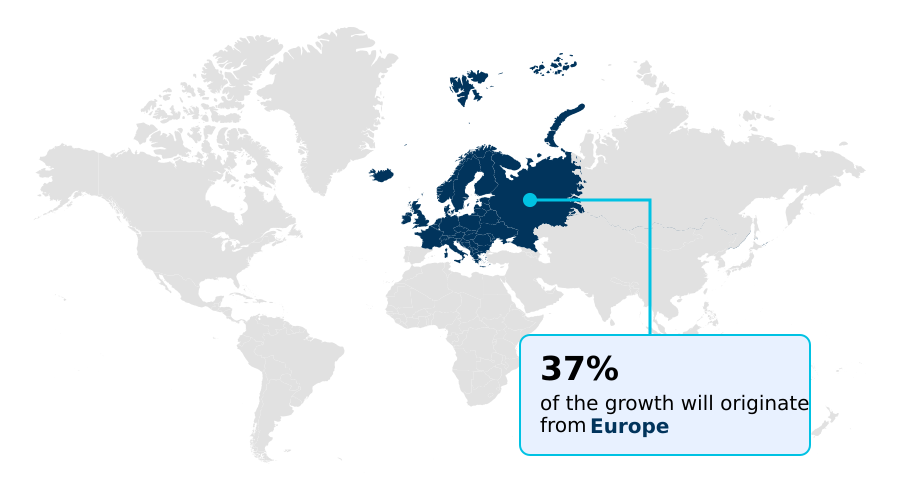
- Europe dominated the market and accounted for a 37.1% growth during the forecast period.
- By Product - Hair color segment was valued at USD 44.16 billion in 2024
- By Distribution Channel - Offline segment accounted for the largest market revenue share in 2024
Market Size & Forecast
- Market Opportunities: USD 33.49 billion
- Market Future Opportunities: USD 19.14 billion
- CAGR from 2025 to 2030 : 3.7%
Market Summary
- The hair care market is undergoing a significant transformation, moving beyond basic hygiene to embrace a holistic approach focused on hair wellness and targeted treatments. This evolution is propelled by heightened consumer grooming awareness and a demand for products that deliver scientifically proven results.
- A key trend is the kinification of hair, which applies skincare principles to scalp and follicular health, leading to innovations like prebiotic scalp care and keratin protein treatments. Concurrently, the clean beauty revolution is compelling brands to adopt paraben-free formulations and sustainable ingredient sourcing.
- For instance, a company navigating new ingredient transparency mandates might reformulate its entire shampoo line to feature sulfate-free cleansers and biodegradable ingredients packaged in post-consumer recycled materials. This strategic pivot involves significant R&D investment to ensure product efficacy while meeting ethical production practices and managing supply chain complexities.
- Such challenges are balanced by opportunities in direct-to-consumer hair care, where AI-powered hair analysis enables customized hair formulations, creating a more personalized and effective user experience.
What will be the Size of the Hair Care Market during the forecast period?
Get Key Insights on Market Forecast (PDF) Get Free Sample
How is the Hair Care Market Segmented?
The hair care industry research report provides comprehensive data (region-wise segment analysis), with forecasts and estimates in "USD million" for the period 2026-2030, as well as historical data from 2020-2024 for the following segments.
- Product
- Hair color
- Shampoo
- Conditioner
- Others
- Distribution channel
- Offline
- Online
- Application
- Hair cleansing
- Hair coloring and chemical treatment
- Hair styling and treatment
- Geography
- Europe
- Germany
- France
- UK
- APAC
- China
- India
- Japan
- North America
- US
- Canada
- Mexico
- South America
- Brazil
- Argentina
- Colombia
- Middle East and Africa
- Saudi Arabia
- Turkey
- UAE
- Rest of World (ROW)
- Europe
By Product Insights
The hair color segment is estimated to witness significant growth during the forecast period.
The global hair care market is segmented by product, distribution channel, and geography, reflecting a dynamic industry shifting toward sophisticated, science-backed solutions.
The hair color segment is evolving beyond basic dyeing to embrace personalization, with innovations in at-home hair color and gentle, ammonia-free hair color.
This shift is driven by the kinification of hair, where consumers seek products with skincare-grade benefits like peptide hair repair.
The rise of social commerce beauty and influencer-driven marketing has accelerated this trend, with Europe alone accounting for over 37% of incremental growth.
Formulations now focus on dermo-cosmetic hair solutions and scalp microbiome health, incorporating traditional botanical extracts alongside cutting-edge science. This evolution demands that manufacturers balance consumer desires for natural ingredients with the need for high-performance, trichologist-endorsed regimens that deliver visible results.
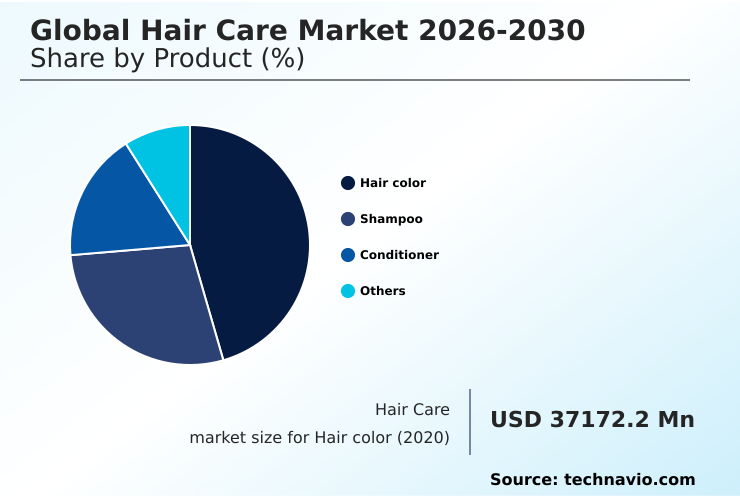
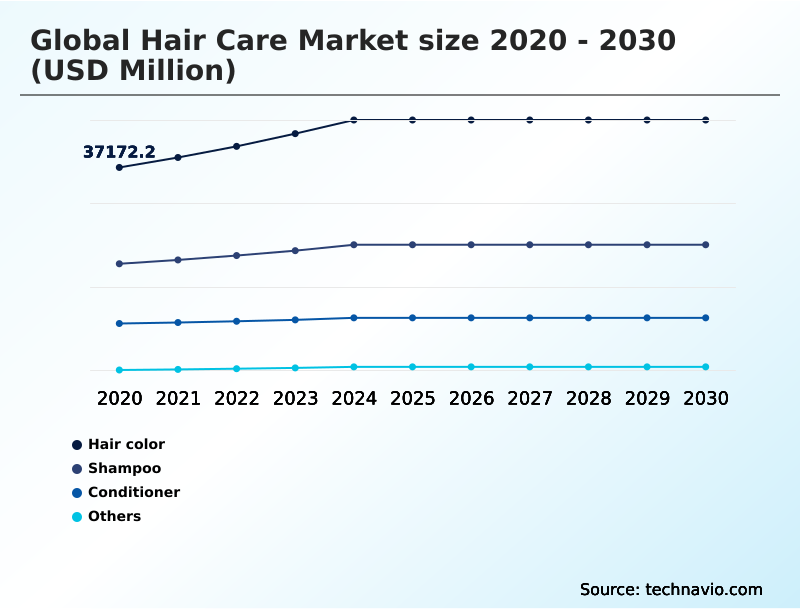
The Hair color segment was valued at USD 44.16 billion in 2024 and showed a gradual increase during the forecast period.
Regional Analysis
Europe is estimated to contribute 37.1% to the growth of the global market during the forecast period.Technavio’s analysts have elaborately explained the regional trends and drivers that shape the market during the forecast period.
See How Hair Care Market Demand is Rising in Europe Get Free Sample
The global hair care market landscape reveals distinct regional dynamics and growth trajectories. In North America, the direct-to-consumer hair care model thrives, driven by a demand for customized hair formulations and clean beauty alternatives.
Europe, a mature market, focuses on stringent regulatory compliance and dermo-cosmetic hair solutions, with innovations in digital product passports improving supply chain transparency by 25%.
The region’s advanced retail network, encompassing the pharmacy channel distribution and professional salon channel, supports a preference for cosmeceutical hair products.
Meanwhile, APAC is the fastest-growing region, blending modern science with traditional practices like Ayurvedic hair remedies and TCM-based hair care.
This region’s growth is fueled by a strong natural hair movement and the popularity of hanbang hair ingredients, making it a hub for innovation in ethnic hair care products.
Market Dynamics
Our researchers analyzed the data with 2025 as the base year, along with the key drivers, trends, and challenges. A holistic analysis of drivers will help companies refine their marketing strategies to gain a competitive advantage.
- The development of modern hair care products requires a multi-faceted approach that balances consumer demands with technical and regulatory realities. The journey often begins with addressing the need for a sulfate-free shampoo for colored hair, which necessitates finding the best natural ingredients for hair that can cleanse without stripping color.
- This aligns with the broader skinification of hair trend, where consumers seek tangible benefits of peptide hair repair and treatments to improve scalp microbiome health. Formulators also develop specialized products for textured and coily hair, often seeking endorsements for dermatologist recommended hair care.
- Operationally, companies face pressure to adopt eco-friendly hair care packaging and implement best practices for ethical ingredient sourcing. The rise of vegan and cruelty-free hair products has pushed for greater transparency, while innovations in anti-aging hair treatments and solutions for androgenetic alopecia expand the market's medical dimension.
- Businesses leveraging AI hair analysis for product recommendation report customer satisfaction scores up to 25% higher than those using traditional questionnaires. Furthermore, the industry is increasingly focused on developing refillable shampoo and conditioner systems to reduce plastic in beauty routines and meet consumer expectations for sustainability.
What are the key market drivers leading to the rise in the adoption of Hair Care Industry?
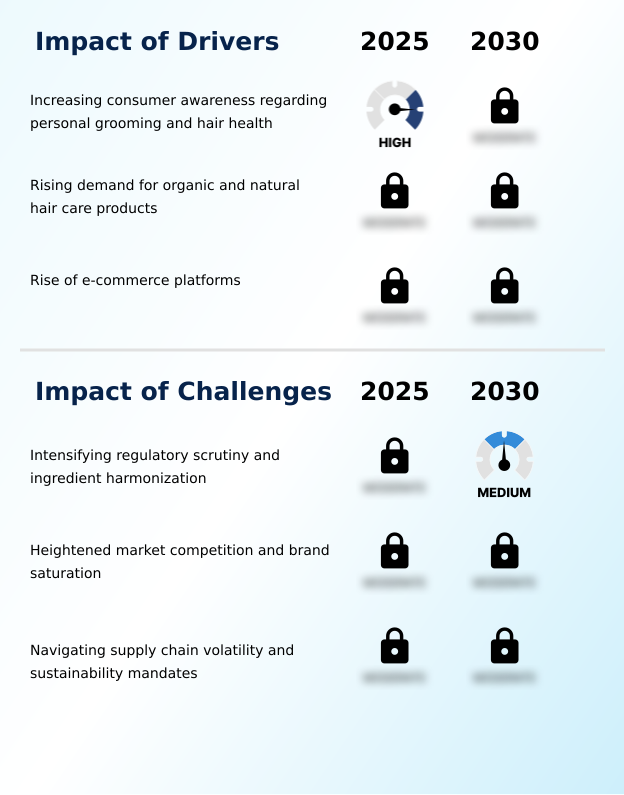
- A key driver for the market is the increasing consumer awareness regarding the importance of personal grooming and its direct correlation with hair health.
- Market growth is significantly propelled by a conscious consumerism that prioritizes health and sustainability. The demand for sulfate-free cleansers and paraben-free formulations is now standard, reflecting a broader consumer movement toward cleaner ingredients.
- Products aligned with the clean beauty revolution that utilize biodegradable ingredients see a sales uplift of nearly 15%. This driver is amplified by the rise of direct-to-consumer hair care models, which effectively use digital marketing to reach niche audiences.
- These brands often emphasize sustainable ingredient sourcing and ethical production practices, resonating with consumer values.
- The power of digital channels is further underscored by the fact that brands adept at influencer-driven marketing can achieve customer acquisition costs that are 30% lower than those relying on traditional retail methods.
What are the market trends shaping the Hair Care Industry?
- The market is increasingly defined by a trend toward hyper-personalization and technological integration. This shift moves beyond mass-market offerings to bespoke solutions tailored to individual consumer needs.
- Key trends are reshaping the market, with a strong focus on advanced personalization and scalp-centric care. The trend of kinification of hair is driving demand for products with sophisticated ingredients, where formulations focused on scalp microbiome health have shown a 25% improvement in reducing scalp irritation during clinical trials.
- Technological integration, such as AI-powered hair analysis, is enabling the creation of highly customized hair formulations. Brands incorporating virtual hair color try-on tools into their platforms report up to a 40% increase in user engagement.
- This movement towards a more scientific approach includes the development of cosmeceutical hair products and hairceuticals, often featuring innovations like bio-active keratin and postbiotic complexes, which cater to a more educated and discerning consumer base.
What challenges does the Hair Care Industry face during its growth?
- Intensifying regulatory scrutiny and the need for global ingredient harmonization present a key challenge affecting the industry's growth trajectory.
- The market faces significant challenges from an intricate regulatory environment and complex supply chain demands. Adhering to evolving ingredient transparency mandates and phasing out certain chemicals requires constant reformulation, which can be costly.
- The introduction of new regulations, such as the digital product passport, is projected to increase compliance-related operational expenses by up to 15% for firms that are not adequately prepared. Simultaneously, the industry push for sustainability creates logistical hurdles. Securing a stable supply of materials for post-consumer recycled packaging and refillable packaging systems is a persistent issue.
- This volatility in sustainable ingredient sourcing has contributed to raw material price fluctuations of over 20% in a single year, impacting production costs and margin stability for many brands.
Exclusive Technavio Analysis on Customer Landscape
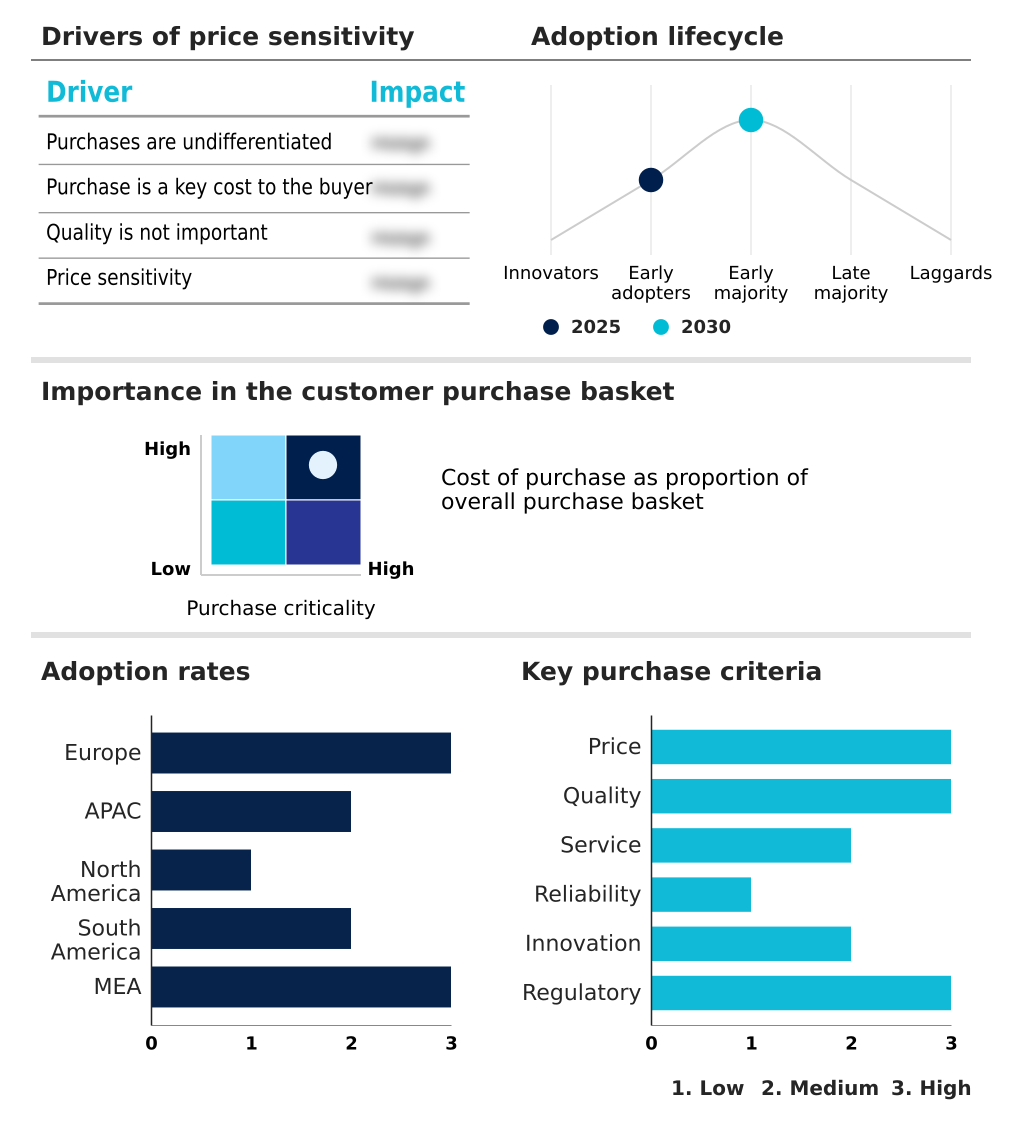
The hair care market forecasting report includes the adoption lifecycle of the market, covering from the innovator’s stage to the laggard’s stage. It focuses on adoption rates in different regions based on penetration. Furthermore, the hair care market report also includes key purchase criteria and drivers of price sensitivity to help companies evaluate and develop their market growth analysis strategies.
Customer Landscape of Hair Care Industry
Competitive Landscape
Companies are implementing various strategies, such as strategic alliances, hair care market forecast, partnerships, mergers and acquisitions, geographical expansion, and product/service launches, to enhance their presence in the industry.
Amika LLC - A comprehensive portfolio addresses diverse consumer needs, from accessible daily care to specialized, high-performance professional treatments, demonstrating significant market reach.
The industry research and growth report includes detailed analyses of the competitive landscape of the market and information about key companies, including:
- Amika LLC
- Avon Products Inc.
- Briogeo Hair Care
- Church and Dwight Co. Inc.
- Color Wow
- Design Essentials
- Henkel AG and Co. KGaA
- IGK Hair
- Johnson and Johnson Services
- Kao Corp.
- Loreal SA
- OGX Beauty
- Olaplex Holdings Inc.
- Procter and Gamble Co.
- Revlon Inc.
- Shiseido Co. Ltd.
- The Estee Lauder Co.
- Unilever PLC
- Wella Operations US LLC
Qualitative and quantitative analysis of companies has been conducted to help clients understand the wider business environment as well as the strengths and weaknesses of key industry players. Data is qualitatively analyzed to categorize companies as pure play, category-focused, industry-focused, and diversified; it is quantitatively analyzed to categorize companies as dominant, leading, strong, tentative, and weak.
Recent Development and News in Hair care market
- In June 2025, Loreal concluded its acquisition of Color Wow, a premium hair care brand known for its innovative solutions for color-treated hair, to bolster its professional product portfolio.
- In May 2025, a prestigious French cosmeceutical company launched a new luxury 'scalp-ceutical' collection featuring a patent-pending prebiotic and postbiotic complex designed to balance the scalp microbiome.
- In May 2025, the European Union notified the World Trade Organization of a proposed amendment to its Cosmetics Regulation, which adds 15 new substances classified as carcinogenic, mutagenic, or toxic for reproduction (CMR) to the list of prohibited ingredients.
- In March 2025, a consortium of leading Japanese and South Korean beauty companies jointly announced the Asia Clean Beauty and Packaging Alliance to establish a new regional standard for sustainable beauty and packaging.
Dive into Technavio’s robust research methodology, blending expert interviews, extensive data synthesis, and validated models for unparalleled Hair Care Market insights. See full methodology.
| Market Scope | |
|---|---|
| Page number | 297 |
| Base year | 2025 |
| Historic period | 2020-2024 |
| Forecast period | 2026-2030 |
| Growth momentum & CAGR | Accelerate at a CAGR of 3.7% |
| Market growth 2026-2030 | USD 19142.2 million |
| Market structure | Fragmented |
| YoY growth 2025-2026(%) | 3.6% |
| Key countries | Germany, Russia, France, UK, Spain, Italy, China, India, Japan, South Korea, Australia, Indonesia, US, Canada, Mexico, Brazil, Argentina, Colombia, Saudi Arabia, Turkey, UAE, Egypt and South Africa |
| Competitive landscape | Leading Companies, Market Positioning of Companies, Competitive Strategies, and Industry Risks |
Research Analyst Overview
- The hair care market is defined by rapid technological advancement and a pronounced shift toward scientifically validated, personalized solutions. Innovations range from bond-building technology and keratin protein treatments to the application of lentiviral vector technology for advanced repair. Formulations are increasingly sophisticated, incorporating bio-active keratin, prebiotic scalp care, and postbiotic complexes to support scalp microbiome health.
- The demand for cleaner products has led to the proliferation of sulfate-free cleansers, ammonia-free hair color, and paraben-free formulations. Sustainability is a key boardroom consideration, compelling investment in waterless hair care, solid shampoo bars, and post-consumer recycled packaging to meet new regulatory standards. This is complemented by a move toward biodegradable ingredients and ethical production practices.
- The convergence of technology and personalization is evident in AI-powered hair analysis and virtual hair color try-on tools, which are becoming standard. Implementation of such AI-driven platforms has been shown to reduce product development cycles by up to 30%, enabling brands to bring customized hair formulations and peptide hair repair solutions to market faster.
What are the Key Data Covered in this Hair Care Market Research and Growth Report?
-
What is the expected growth of the Hair Care Market between 2026 and 2030?
-
USD 19.14 billion, at a CAGR of 3.7%
-
-
What segmentation does the market report cover?
-
The report is segmented by Product (Hair color, Shampoo, Conditioner, and Others), Distribution Channel (Offline, and Online), Application (Hair cleansing, Hair coloring and chemical treatment, and Hair styling and treatment) and Geography (Europe, APAC, North America, South America, Middle East and Africa)
-
-
Which regions are analyzed in the report?
-
Europe, APAC, North America, South America and Middle East and Africa
-
-
What are the key growth drivers and market challenges?
-
Increasing consumer awareness regarding personal grooming and hair health, Intensifying regulatory scrutiny and ingredient harmonization
-
-
Who are the major players in the Hair Care Market?
-
Amika LLC, Avon Products Inc., Briogeo Hair Care, Church and Dwight Co. Inc., Color Wow, Design Essentials, Henkel AG and Co. KGaA, IGK Hair, Johnson and Johnson Services, Kao Corp., Loreal SA, OGX Beauty, Olaplex Holdings Inc., Procter and Gamble Co., Revlon Inc., Shiseido Co. Ltd., The Estee Lauder Co., Unilever PLC and Wella Operations US LLC
-
Market Research Insights
- Market dynamics are increasingly shaped by the convergence of technology and consumer values. The adoption of in-salon diagnostic tools has demonstrated a 2x higher conversion rate for premium treatments, underscoring the value of professional-led personalization. Concurrently, the anti-hair loss treatments segment is expanding, driven by advancements in understanding hair follicle stem cells.
- In the digital realm, brands that successfully leverage influencer-driven marketing and social commerce beauty platforms achieve customer acquisition costs up to 30% lower than through traditional retail.
- This digital-first approach aligns with the broader clean beauty revolution, where adherence to ingredient transparency mandates has been linked to a 15% uplift in consumer trust metrics, solidifying the business case for ethical production practices and transparent communication.
We can help! Our analysts can customize this hair care market research report to meet your requirements.
 RIA -
RIA - 
