



Organic Wine Market Size 2026-2030
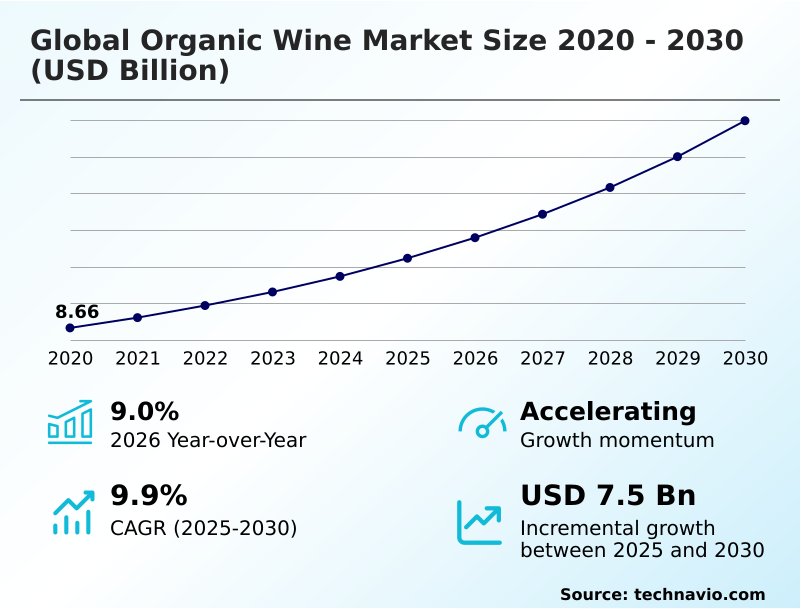
The Organic Wine Market size was valued at USD 12.46 billion in 2025, growing at a CAGR of 9.9% during the forecast period 2026-2030.
Major Market Trends & Insights
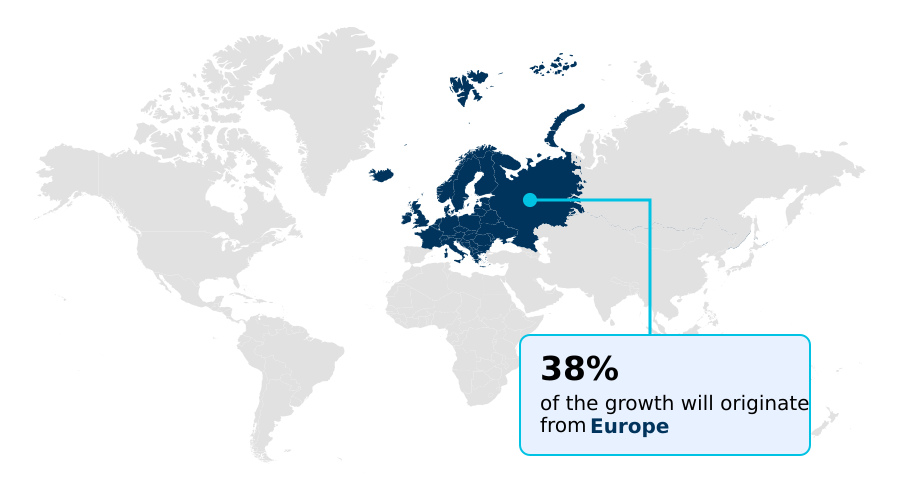
- Europe dominated the market and accounted for a 37.9% growth during the forecast period.
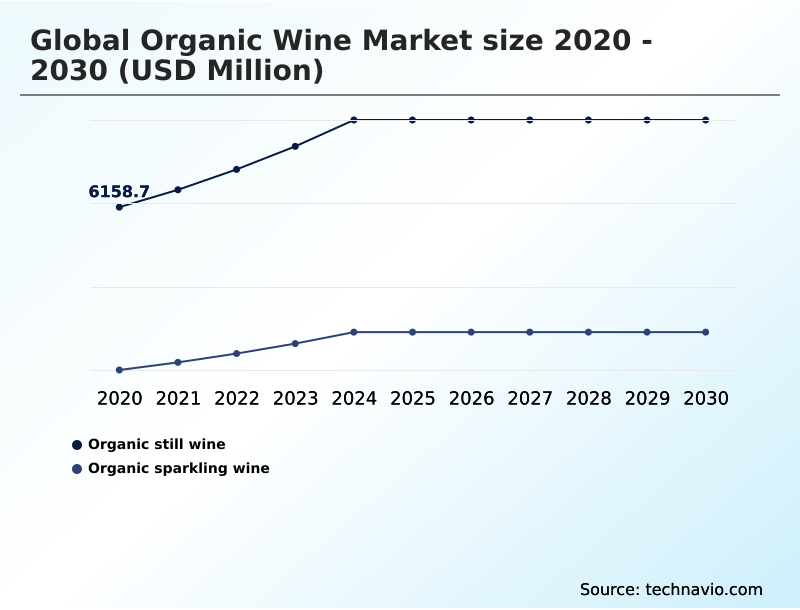
- By Product - Organic still wine segment was valued at USD 8.11 billion in 2024
- By Distribution Channel - Offline segment accounted for the largest market revenue share in 2024
Market Size & Forecast
- Historic Market Opportunities 2020-2024: USD 11.30 billion
- Market Future Opportunities 2025-2030: USD 7.50 billion
- CAGR from 2025 to 2030 : 9.9%
Market Summary
- The organic wine market is expanding steadily, with an annual growth rate consistently above 8%, as consumer demand for sustainably sourced products reshapes the beverage industry. Europe currently accounts for over 36% of the market, closely followed by North America, reflecting strong consumer health awareness in developed economies.
- A key driver is the rising preference for natural beverages, which promotes clean labels and supply chain transparency. For example, a mid-sized winery implementing chemical-free farming and biodynamic farming can leverage digital storytelling to connect with consumers, justifying a 15% price premium over conventional counterparts.
- However, growth is constrained by significant challenges, including high production costs and limited organic grape supply, which can narrow profit margins and slow the pace of vineyard conversion. The adoption of sustainable viticulture is therefore crucial for long-term success.
What will be the Size of the Organic Wine Market during the forecast period?
Get Key Insights on Market Forecast (PDF) Request Free Sample
How is the Organic Wine Market Segmented?
The organic wine industry research report provides comprehensive data (region-wise segment analysis), with forecasts and analysis for the period 2026-2030, as well as historical data from 2020-2024 for the following segments.
- Product
- Organic still wine
- Organic sparkling wine
- Distribution channel
- Offline
- Online
- Product type
- Red organic wine
- White organic wine
- Geography
- Europe
- Germany
- UK
- France
- North America
- US
- Canada
- Mexico
- APAC
- China
- Japan
- India
- South America
- Brazil
- Argentina
- Middle East and Africa
- Saudi Arabia
- UAE
- South Africa
- Rest of World (ROW)
- Europe
How is the Organic Wine Market Segmented by Product?
The organic still wine segment is estimated to witness significant growth during the forecast period.
The organic still wine segment, which accounts for over 70% of total revenue, dominates the market due to strong consumer preference for traditional varietals that offer clear terroir expression.
This segment's growth is outpacing organic sparkling wine by a ratio of more than 2-to-1, driven by perceived health benefits and alignment with the farm-to-table movement.
While the offline channel remains the primary sales route, online distribution channels saw a 15% higher growth rate for organic still wines, fueled by digital storytelling and demand for supply chain transparency.
Producers are also leveraging eco-friendly packaging to appeal to an eco-conscious consumerism base, with these initiatives improving brand authenticity.
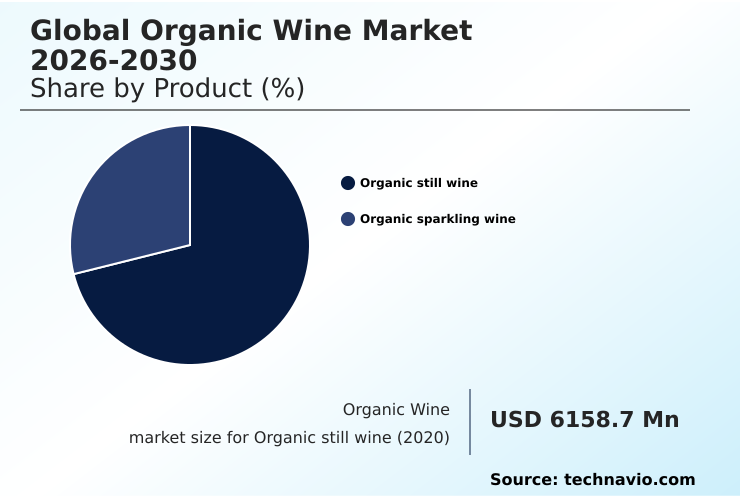
The Organic still wine segment was valued at USD 8.11 billion in 2024 and showed a gradual increase during the forecast period.
How demand for the Organic Wine market is rising in the leading region?
Europe is estimated to contribute 37.9% to the growth of the global market during the forecast period.Technavio’s analysts have elaborately explained the regional trends and drivers that shape the market during the forecast period.
See How Organic Wine Market demand is rising in Europe Request Free Sample
Europe leads the global organic wine market, commanding 37.9% of the growth opportunity, slightly ahead of North America's 34%. This is driven by stringent food safety regulations and deep-rooted consumer health awareness.
Within Europe, Germany leads with a market size over 1.5 times that of France, due to strong retail support and a mature consumer base.
In contrast, the North American market, dominated by the US with a market nearly three times the size of Canada's, is driven by a strong premiumization trend and the expansion of direct-to-consumer sales channels.
Regional strategies differ significantly; European producers often focus on terroir expression and traditional viticulture practices, whereas North American wineries increasingly invest in climate-resilient viticulture and innovative eco-friendly packaging to attract a younger demographic.
What are the key Drivers, Trends, and Challenges in the Organic Wine Market?
Our researchers analyzed the data with 2025 as the base year, along with the key drivers, trends, and challenges. A holistic analysis of drivers will help companies refine their marketing strategies to gain a competitive advantage.
- Consumers increasingly seek answers to specific questions, such as the benefits of organic red wine vs conventional, to make informed purchasing decisions. Research indicates that certain organic red wines can contain up to 30% more health-beneficial polyphenols due to vineyard practices that stress the grapevines naturally.
- For those with sensitivities, the search for the best organic wine without added sulfites has become a key purchasing driver, pushing producers toward minimal intervention winemaking. Similarly, discerning buyers want to know how to find high-quality biodynamic wines, a segment that commands a 10-15% price premium over standard organic offerings due to its holistic farming principles and strict certification.
- These consumer trends are unfolding against a backdrop of significant industry challenges. The impact of climate change on organic vineyards is a critical concern, forcing growers to adopt regenerative agriculture and water-efficient irrigation to ensure long-term viability.
- A thorough organic wine production cost analysis reveals that while expenses for labor and certification are higher, reduced spending on synthetic inputs and the potential for premium pricing can offset these costs, making sustainable viticulture a financially viable model for producers committed to brand authenticity and eco-conscious consumerism.
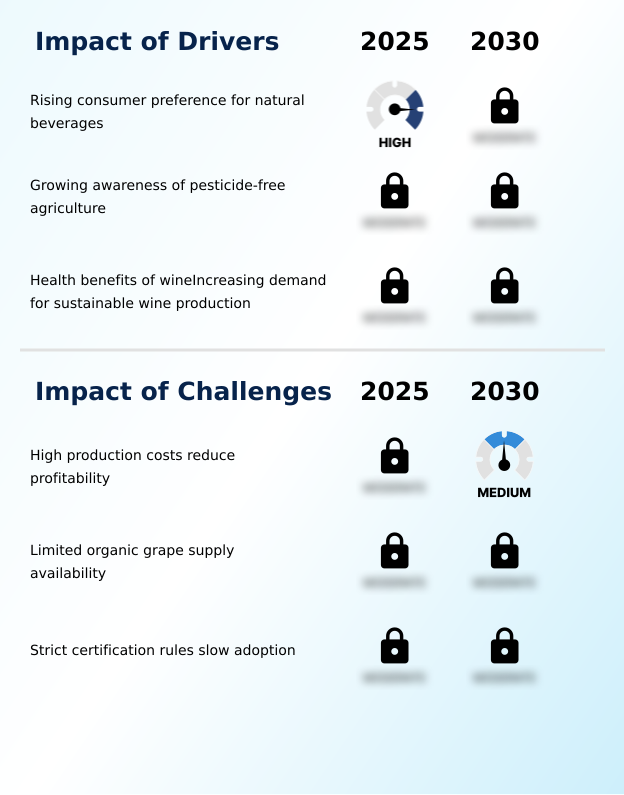
What are the key market drivers leading to the rise in the adoption of Organic Wine Industry?
- The rising consumer preference for natural and clean label beverages stands as a primary driver for the organic wine market's growth.
- Rising consumer preference for natural and clean label beverages is a foundational driver, with over 60% of younger consumers willing to pay a 15% premium for products aligned with their wellness values.
- This demand is reinforced by a growing awareness of the benefits of pesticide-free cultivation, which directly supports the principles of sustainable viticulture and agricultural sustainability.
- Consumers are increasingly educated about the link between chemical-free farming and personal health, leading them to actively seek out organic certifications as a proxy for safety and quality.
- This shift in purchasing criteria compels producers to adopt more transparent and environmentally responsible practices.
What are the market trends shaping the Organic Wine Industry?
- The increasing distribution of organic wines through duty-free retail stores is an emerging trend. This is driven by global travelers' growing preference for premium, sustainable alcohol offerings.
- The expansion of online distribution channels is fundamentally reshaping market access, enabling small producers to achieve brand authenticity with direct-to-consumer sales models that bypass traditional retail gatekeepers. This digital shift has contributed to a 25% increase in market reach for some boutique wineries.
- Concurrently, the increasing prominence of private label development by major retailers is a significant trend; these brands now account for over 10% of organic wine sales in supermarkets and are growing 5% faster than their branded counterparts. This is fueled by improving consumer trust metrics in store brands and affordability.
- A third trend is the strategic placement within duty-free retail expansion, positioning organic wine as a premium, sustainable gift and travel purchase.
What challenges does the Organic Wine Industry face during its growth?
- High production costs associated with chemical-free farming and stringent certification rules present a key challenge to profitability and wider market adoption.
- High production costs remain the most significant challenge, reducing profitability and slowing market expansion. Organic viticulture, which mandates chemical-free farming, often results in yields that are up to 20% lower than conventional methods and increases labor costs significantly. Compounding this issue is the limited organic grape supply, creating production bottlenecks and price volatility.
- Furthermore, navigating the complex and strict certification rules presents a substantial barrier, with compliance and audit expenses adding an average of 5% to a winery's annual overhead. These financial pressures make it difficult for smaller producers to transition to organic practices.
Exclusive Technavio Analysis on Customer Landscape
The organic wine market forecasting report includes the adoption lifecycle of the market, covering from the innovator’s stage to the laggard’s stage. It focuses on adoption rates in different regions based on penetration. Furthermore, the organic wine market report also includes key purchase criteria and drivers of price sensitivity to help companies evaluate and develop their market growth analysis strategies.
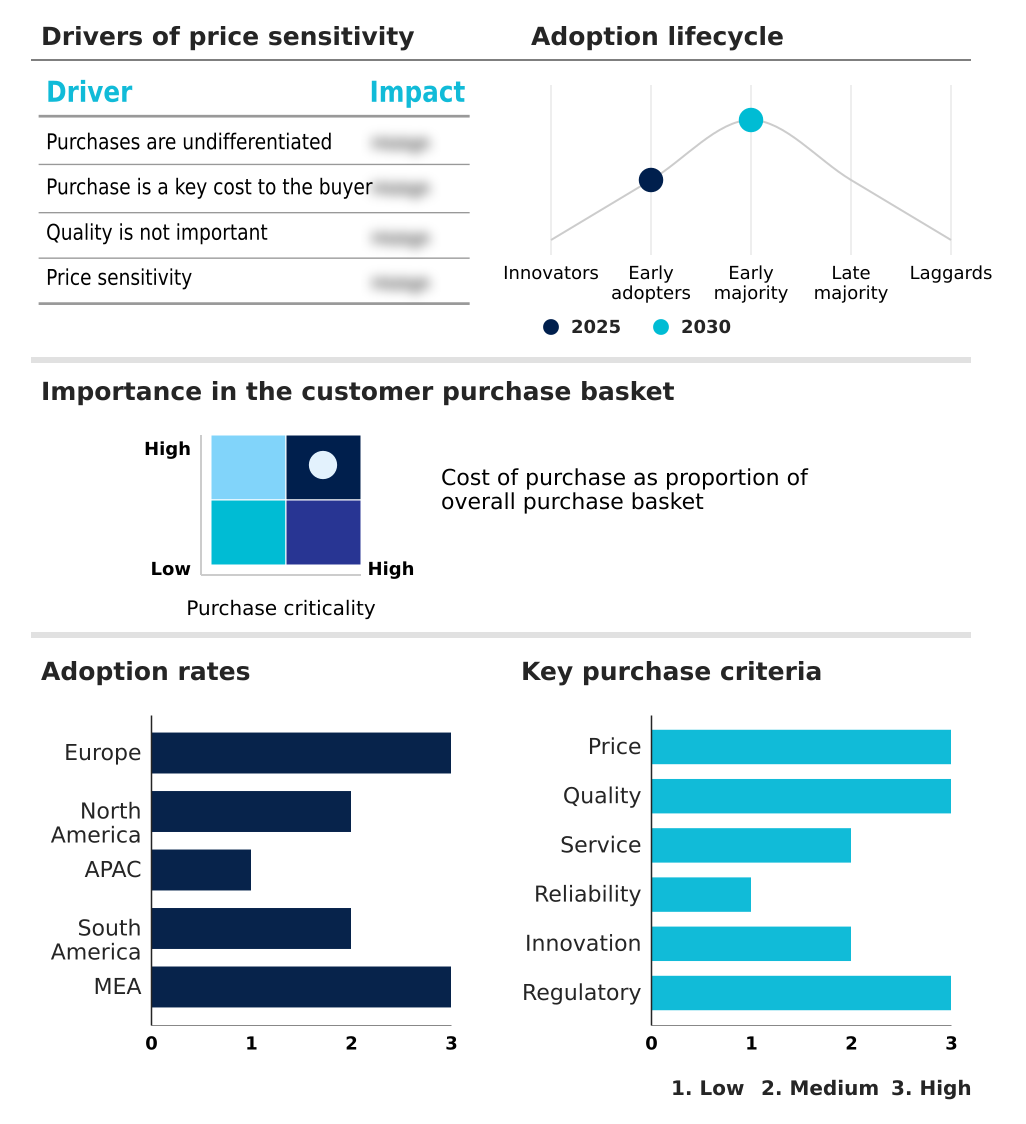
Customer Landscape of Organic Wine Industry
Competitive Landscape
Companies are implementing various strategies, such as strategic alliances, organic wine market forecast, partnerships, mergers and acquisitions, geographical expansion, and product/service launches, to enhance their presence in the industry.
Avondale - Production focuses on handcrafted, premium-quality organic wines, emphasizing unique varietal expressions derived from sustainable viticulture and biodynamic farming principles.
The industry research and growth report includes detailed analyses of the competitive landscape of the market and information about key companies, including:
- Avondale
- Banfi Vintners
- Boisset Family Estates
- Bonterra Organic Vineyards
- Boutinot Ltd.
- Bronco Wine Co.
- Casella Wines Pty Ltd.
- Charlie and Echo
- Emiliana Organic Vineyards
- Frey Vineyards
- Grands Vignobles En Mediterranee SARL
- Grgich Hills Estate
- Harris Organic Wines
- Jackson Family Wines Inc.
- King Estate Winery
- Organic Wine Pty Ltd.
- Radford Dale Pty Ltd.
- The Organic Wine Co.
- Vintage Roots Ltd.
- Winc
Qualitative and quantitative analysis of companies has been conducted to help clients understand the wider business environment as well as the strengths and weaknesses of key industry players. Data is qualitatively analyzed to categorize companies as pure play, category-focused, industry-focused, and diversified; it is quantitatively analyzed to categorize companies as dominant, leading, strong, tentative, and weak.
Market Intelligence Radar: High-Impact Developments & Growth Signals
- In the Brewers industry, the significant increase in craft beer production, driven by microbreweries introducing innovative flavors, has created a consumer expectation for artisanal quality and variety, directly bolstering demand for small-batch and terroir-driven organic wine.
- The rapid shift in alcohol consumption patterns toward premium and super-premium beer, which is up by over 10% in some demographics, has primed consumers to accept higher price points for high-quality alcoholic beverages, benefiting the premiumization trend in the organic wine market.
- Growing consumer demand for gluten-free and low-calorie alcoholic beverages has established a strong health and wellness precedent, creating a direct tailwind for organic wine, which is perceived as a cleaner, more natural alternative that enhances consumer health awareness.
- The expansion of online sales channels for alcoholic beverages, which has improved consumer access to a wider variety of products, has enabled small and medium-sized organic wineries to bypass traditional retail gatekeepers and build direct-to-consumer sales models.
Dive into Technavio’s robust research methodology, blending expert interviews, extensive data synthesis, and validated models for unparalleled Organic Wine Market insights. See full methodology.
| Market Scope | |
|---|---|
| Page number | 283 |
| Base year | 2025 |
| Historic period | 2020-2024 |
| Forecast period | 2026-2030 |
| Growth momentum & CAGR | Accelerate at a CAGR of 9.9% |
| Market growth 2026-2030 | USD 7503.2 million |
| Market structure | Fragmented |
| YoY growth 2025-2026(%) | 9.0% |
| Key countries | Germany, UK, France, Italy, Spain, The Netherlands, US, Canada, Mexico, China, Japan, India, South Korea, Australia, Indonesia, Brazil, Argentina, Chile, Saudi Arabia, UAE, South Africa, Israel and Turkey |
| Competitive landscape | Leading Companies, Market Positioning of Companies, Competitive Strategies, and Industry Risks |
Research Analyst Overview
- The organic wine market ecosystem is a complex interplay of stakeholders, beginning with growers who adhere to strict organic certification standards for viticulture practices, which increases production costs by an average of 15% compared to conventional methods. Wineries and producers transform these grapes, focusing on minimal intervention winemaking to preserve terroir expression.
- Distribution is bifurcated; while the offline channel of retailers and restaurants still accounts for over 85% of sales volume, online distribution channels and direct-to-consumer sales models are growing 20% faster, driven by consumer demand for supply chain transparency and digital storytelling.
- Regulatory bodies enforce labeling laws, while end-consumers, increasingly focused on sustainability and holistic wellness, drive demand, creating a feedback loop that pressures the entire value chain toward greater environmental and social responsibility.
What are the Key Data Covered in this Organic Wine Market Research and Growth Report?
-
What is the expected growth of the Organic Wine Market between 2026 and 2030?
-
The Organic Wine Market is expected to grow by USD 7.50 billion during 2026-2030, registering a CAGR of 9.9%. Year-over-year growth in 2026 is estimated at 9.0%%. This acceleration is shaped by rising consumer preference for natural beverages, which is intensifying demand across multiple end-use verticals covered in the report.
-
-
What segmentation does the market report cover?
-
The report is segmented by Product (Organic still wine, and Organic sparkling wine), Distribution Channel (Offline, and Online), Product Type (Red organic wine, and White organic wine) and Geography (Europe, North America, APAC, South America, Middle East and Africa). Among these, the Organic still wine segment is estimated to witness significant growth during the forecast period, driven by rising adoption across key application areas. Each segment includes detailed qualitative and quantitative analysis, along with historical data from 2020-2024 and forecasts through 2030 with year-over-year growth rates.
-
-
Which regions are analyzed in the report?
-
The report covers Europe, North America, APAC, South America and Middle East and Africa. Europe is estimated to contribute 37.9% to market growth during the forecast period. Country-level analysis includes Germany, UK, France, Italy, Spain, The Netherlands, US, Canada, Mexico, China, Japan, India, South Korea, Australia, Indonesia, Brazil, Argentina, Chile, Saudi Arabia, UAE, South Africa, Israel and Turkey, with dedicated market size tables and year-over-year growth for each.
-
-
What are the key growth drivers and market challenges?
-
The primary driver is rising consumer preference for natural beverages, which is accelerating investment and industry demand. The main challenge is high production costs reduce profitability, creating operational barriers for key market participants. The report quantifies the impact of each driver and challenge across 2026 and 2030 with comparative analysis.
-
-
Who are the major players in the Organic Wine Market?
-
Key vendors include Avondale, Banfi Vintners, Boisset Family Estates, Bonterra Organic Vineyards, Boutinot Ltd., Bronco Wine Co., Casella Wines Pty Ltd., Charlie and Echo, Emiliana Organic Vineyards, Frey Vineyards, Grands Vignobles En Mediterranee SARL, Grgich Hills Estate, Harris Organic Wines, Jackson Family Wines Inc., King Estate Winery, Organic Wine Pty Ltd., Radford Dale Pty Ltd., The Organic Wine Co., Vintage Roots Ltd. and Winc. The report provides qualitative and quantitative analysis categorizing companies as dominant, leading, strong, tentative, and weak based on their market positioning. Company profiles include business segment analysis, SWOT assessment, key offerings, and recent strategic developments.
-
Market Research Insights
- The competitive landscape is characterized by strategic consolidation and a focus on sustainability, with large players accounting for nearly 40% of market innovations. Key vendors such as Bronco Wine Co.
- are expanding their market footprint through acquisitions, while pioneers like Emiliana Organic Vineyards reinforce their leadership through recognized achievements in regenerative agriculture, including advanced composting projects that improve soil health by over 25%. These actions directly address consumer demand for brand authenticity and corporate social responsibility. This focus on sustainable viticulture helps producers differentiate in a crowded market.
- However, the entire industry faces the challenge of high production costs, compelling companies to optimize vineyard management and supply chain logistics to maintain profitability.
We can help! Our analysts can customize this organic wine market research report to meet your requirements.
 RIA -
RIA - 
