



Overhead Conveyor System Market Size 2024-2028
The overhead conveyor system market size is forecast to increase by USD 528.98 million at a CAGR of 5.51% between 2023 and 2028.
- The market witnesses significant growth, driven by the increasing adoption of lean manufacturing practices. Companies are increasingly investing in automated solutions, such as overhead conveyor systems, to streamline production processes and enhance efficiency. Furthermore, the integration of Industry 4.0 technologies, including IoT and AI, with overhead conveyor systems is revolutionizing the manufacturing landscape. These advanced technologies enable real-time monitoring, predictive maintenance, and optimized workflows, leading to increased productivity and cost savings. However, high initial investments required for implementing overhead conveyor systems pose a challenge for market growth. Additionally, regulatory hurdles impact adoption in certain industries, particularly those with stringent safety regulations.
- Supply chain inconsistencies, such as raw material availability and price fluctuations, also temper growth potential. Despite these challenges, the market presents substantial opportunities for companies that can effectively navigate these obstacles and provide innovative, cost-effective solutions to meet the evolving demands of the manufacturing sector. Companies that can successfully integrate Industry 4.0 technologies and offer flexible financing options are expected to gain a competitive edge in this dynamic market.
What will be the Size of the Overhead Conveyor System Market during the forecast period?
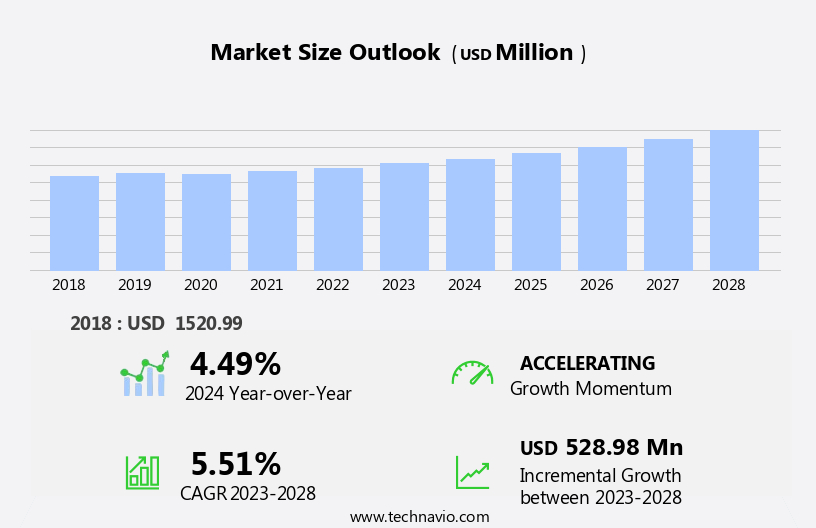
- The market is experiencing significant activity and trends, driven by the need for material handling optimization, process improvement, and operational efficiency in various industries. Process flow analysis plays a crucial role in identifying potential system upgrades and retrofitting solutions to enhance throughput maximization and reduce installation time. Safety regulations mandate the integration of safety features into conveyor systems, ensuring worker safety and product quality control. Maintenance costs are minimized through predictive maintenance, conveyor simulation, and remote monitoring, while system upgrades enable energy efficiency and noise reduction. Industry standards dictate the use of conveyor software for data analytics and process automation, enabling real-time monitoring and optimization of load capacity, track configurations, and speed control.
- Conveyor accessories, such as safety sensors and conveyor components, are essential for ensuring optimal performance and product traceability. Cost reduction is a primary focus, with conveyor training and conveyor simulation enabling efficient use of space utilization and minimizing downtime. Quality control is ensured through rigorous safety regulations and ongoing system upgrades, while compliance with industry standards ensures regulatory adherence and customer trust.
How is this Overhead Conveyor System Industry segmented?
The overhead conveyor system industry research report provides comprehensive data (region-wise segment analysis), with forecasts and estimates in "USD million" for the period 2024-2028, as well as historical data from 2018-2022 for the following segments.
- End-user
- Automotive
- Logistics and e-commerce
- Food and beverage
- Others
- Capacity
- 0 Kg-50 Kg
- 51 Kg-500 Kg
- Above 501 Kg
- Geography
- North America
- US
- Europe
- France
- Germany
- APAC
- China
- Japan
- Rest of World (ROW)
- North America
By End-user Insights
The automotive segment is estimated to witness significant growth during the forecast period.
Overhead conveyor systems play a pivotal role in automotive manufacturing, streamlining production processes and optimizing space utilization. These systems facilitate the continuous and synchronized movement of vehicle components along assembly lines, minimizing cycle times and reducing disruptions. With limited floor space in manufacturing facilities, overhead conveyor systems enable the utilization of vertical spaces for material handling, maximizing floor space for other operations or equipment. Flexibility and modularity are key benefits of overhead conveyor systems, allowing manufacturers to adapt to changing product configurations, production volumes, and process requirements. Advancements in technology have led to the integration of Artificial Intelligence (AI) and conveyor controls in conveyor systems, enhancing material flow and inventory management.
Customized systems cater to specific manufacturing needs, while lean manufacturing principles ensure efficient use of resources. Light-duty and heavy-duty conveyor systems cater to various applications, from food processing to distribution centers. Conveyor design, installation, and maintenance are crucial aspects of implementing overhead conveyor systems. Modular systems offer ease of installation and customization, while conveyor tracks ensure precise material flow. Conveyor safety and indexing conveyors ensure the secure transportation of components, contributing to overall production line efficiency. Inventory management and supply chain optimization are essential in modern manufacturing, and overhead conveyor systems play a significant role in these processes.
Just-in-time (JIT) production relies on the seamless movement of components, which is facilitated by overhead conveyor systems. High-speed conveyors and accumulator conveyors further optimize material flow, ensuring that production lines run smoothly and efficiently.
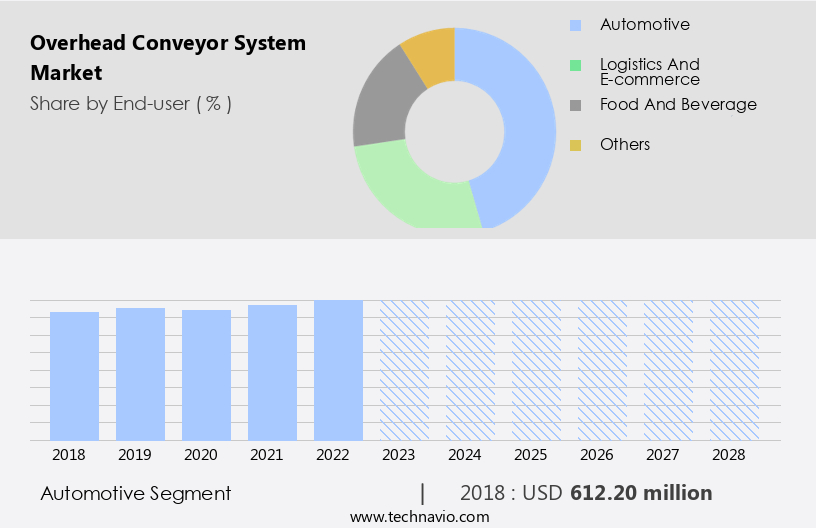
The Automotive segment was valued at USD 612.20 million in 2018 and showed a gradual increase during the forecast period.
Regional Analysis
APAC is estimated to contribute 37% to the growth of the global market during the forecast period. Technavio's analysts have elaborately explained the regional trends and drivers that shape the market during the forecast period.

In APAC, the industrial sector's rapid expansion, fueled by economic growth, urbanization, and infrastructure investments, is driving the demand for overhead conveyor systems. These systems are essential for streamlining material handling and production processes in sectors such as automotive, electronics, food and beverage, and pharmaceuticals. Furthermore, the booming e-commerce industry in APAC, driven by rising Internet penetration and consumer spending, is leading to increased investments in automated material handling solutions, including overhead conveyor systems. E-commerce companies are prioritizing order fulfillment process optimization, reducing lead times, and meeting customer expectations for fast and reliable deliveries through the adoption of these systems.
Additionally, companies are focusing on supply chain optimization to improve responsiveness, reduce lead times, and enhance customer satisfaction. Overhead conveyor systems, including belt conveyors, monorail systems, assembly lines, conveyor design, conveyor trolleys, conveyor installation, lean manufacturing, slat conveyors, light-duty conveyors, artificial intelligence, heavy-duty conveyors, customized systems, supply chain optimization, chain conveyors, inventory management, roller conveyors, material flow, gravity conveyors, distribution centers, modular systems, powered conveyors, conveyor drives, conveyor safety, indexing conveyors, conveyor controls, conveyor tracks, production lines, conveyor maintenance, and accumulator conveyors, play a crucial role in material handling and production processes, making them indispensable for businesses in APAC.
Market Dynamics
Our researchers analyzed the data with 2023 as the base year, along with the key drivers, trends, and challenges. A holistic analysis of drivers will help companies refine their marketing strategies to gain a competitive advantage.
What are the Overhead Conveyor System market drivers leading to the rise in the adoption of Industry?
- The escalating need for lean manufacturing practices serves as the primary market catalyst.
- Overhead conveyor systems play a crucial role in lean manufacturing by supporting just-in-time (JIT) production. These systems provide continuous and automated transport of materials, ensuring their timely delivery to the production line and minimizing the need for excess inventory. By eliminating work-in-progress inventory and reducing bottlenecks, manufacturers can lower storage costs, improve cash flow, and swiftly respond to demand fluctuations. Overhead conveyor systems come in various configurations, including indexing conveyors, high-speed conveyors, and accumulator conveyors. Conveyor controls manage the flow of materials, while conveyor tracks ensure their smooth transportation.
- Effective conveyor maintenance is essential for maintaining productivity and minimizing downtime. High-speed conveyors expedite material handling, while indexing conveyors facilitate precise positioning. Accumulator conveyors store and buffer materials, allowing for controlled release to the production line. The integration of these conveyor types can optimize production lines, enhance efficiency, and support JIT manufacturing.
What are the Overhead Conveyor System market trends shaping the Industry?
- The integration of Industry 4.0 technologies into overhead conveyor systems is a significant market trend. This fusion of advanced technologies, including the Internet Of Things (IoT), automation, and data analytics, enhances the functionality and efficiency of conveyor systems in manufacturing processes.
- Overhead conveyor systems have evolved with Industry 4.0 technologies, integrating sensors and IoT connectivity to enhance their functionality. Embedded sensors monitor various parameters, including speed, temperature, vibration, and load status in real-time. This data is transmitted wirelessly to a centralized control system or cloud-platform, enabling remote monitoring, predictive maintenance, and performance optimization. Leveraging sensor data and IoT devices, predictive maintenance strategies can be implemented to proactively address potential issues and prevent downtime or equipment failure. Two common types of overhead conveyor systems are belt conveyors and slat conveyors, each suitable for different applications.
- Belt conveyors are ideal for transporting heavy loads over long distances, while slat conveyors are more suitable for light-duty applications, such as assembly lines and conveyor trolleys. The adaptability of overhead conveyor systems in various industries, including automotive, electronics, and food processing, makes them an essential component of lean manufacturing processes.
How does Overhead Conveyor System market faces challenges face during its growth?
- The high initial investments required for implementing overhead conveyor systems pose a significant challenge to the industry's growth, as these systems represent a substantial upfront expense for manufacturers.
- Overhead conveyor systems, which include chain, roller, gravity, and customized heavy-duty systems, play a crucial role in material flow and supply chain optimization for businesses. These systems utilize artificial intelligence (AI) technology to enhance efficiency and productivity. However, the substantial upfront investment required for purchasing, installing, and integrating these systems can be a significant barrier for small and medium-sized enterprises (SMEs) or businesses with limited budgets. This investment covers not only the conveyor equipment but also infrastructure modifications and integration with existing systems.
- The high initial cost impacts the return on investment (ROI) calculations and decision-making processes for potential buyers. Despite the long-term benefits, such as labor savings and increased efficiency, the upfront investment must be justified against these potential gains. This evaluation process may lead some businesses to defer or forgo investments in overhead conveyor systems.
Exclusive Customer Landscape
The overhead conveyor system market forecasting report includes the adoption lifecycle of the market, covering from the innovator's stage to the laggard's stage. It focuses on adoption rates in different regions based on penetration. Furthermore, the overhead conveyor system market report also includes key purchase criteria and drivers of price sensitivity to help companies evaluate and develop their market growth analysis strategies.
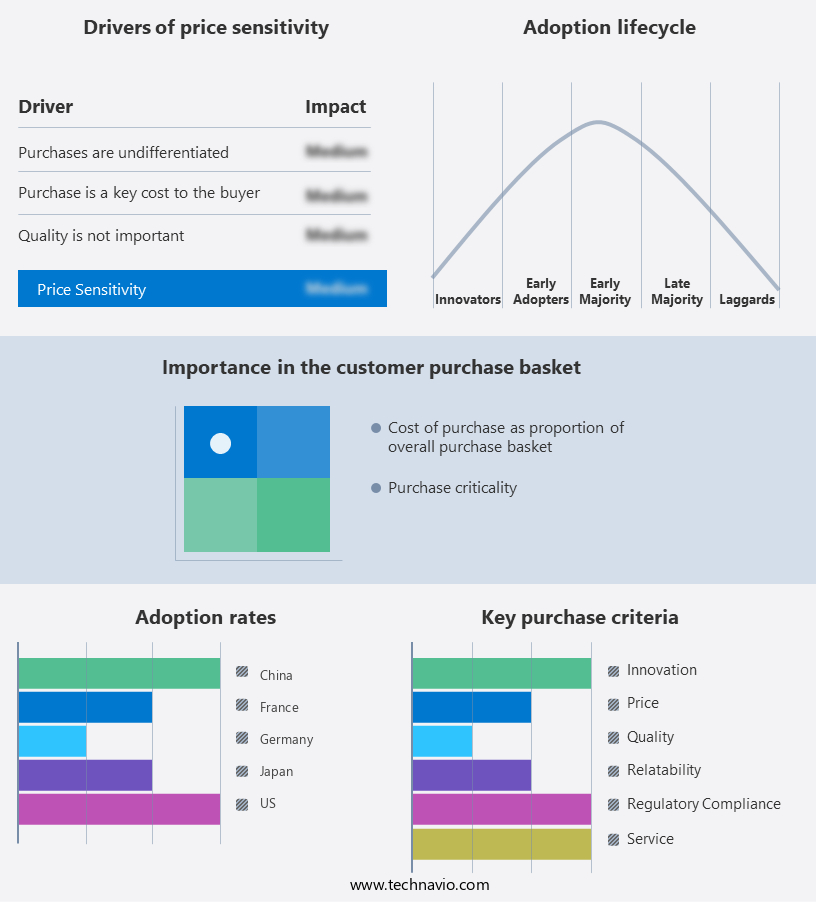
Customer Landscape
Key Companies & Market Insights
Companies are implementing various strategies, such as strategic alliances, overhead conveyor system market forecast, partnerships, mergers and acquisitions, geographical expansion, and product/service launches, to enhance their presence in the industry.
Aravali Engineers - The company specializes in providing overhead conveyor systems, including the C68, Single Line, P and F series (P and F380, P and F400, P and F420), and Shuttle systems.
The industry research and growth report includes detailed analyses of the competitive landscape of the market and information about key companies, including:
- Aravali Engineers
- ArSai Conve Systems
- Bridgeveyor
- Caldan Conveyor A S
- Certina Holding
- Chass Eng.Pvt Ltd.
- Daifuku Co. Ltd
- Durr AG
- Dynamic Conveyor Corp.
- FIVES SAS
- KNAPP AG
- MIDEA Group Co. Ltd.
- NIKO HELM HELLAS SA
- OCS Overhead Conveyor System Ltd
- OMH Group
- Pacline Conveyors Inc.
- psb intralogistics GmbH
- Railtechniek B.V.
- Rapid Industries
- Schonenberger Systeme GmbH
- Siemens AG
- SSI Schafer IT Solutions GmbH
- United Engineering Industries
Qualitative and quantitative analysis of companies has been conducted to help clients understand the wider business environment as well as the strengths and weaknesses of key industry players. Data is qualitatively analyzed to categorize companies as pure play, category-focused, industry-focused, and diversified; it is quantitatively analyzed to categorize companies as dominant, leading, strong, tentative, and weak.
Recent Development and News in Overhead Conveyor System Market
- In February 2024, Bosch Rexroth, a leading industrial technology company, introduced its new EnergyChain FlexLink modular conveyor system. This innovative overhead conveyor system is designed to reduce energy consumption by up to 30% compared to traditional systems, making it an attractive option for manufacturers seeking to improve their sustainability (Bosch Rexroth press release).
- In June 2025, Schneider Electric, a global energy management and automation solutions provider, announced a strategic partnership with Daifuku, a leading material handling solution company. The collaboration aims to integrate Schneider Electric's EcoStruxure architecture with Daifuku's overhead conveyor systems, enabling Advanced Energy management and predictive maintenance capabilities (Schneider Electric press release).
- In August 2024, Siemens AG completed the acquisition of Sivantos AG's building technologies business, including its overhead conveyor system division. This acquisition significantly expanded Siemens' presence in the building technologies market and provided them with a broader product portfolio, strengthening their competitive position (Siemens AG press release).
- In December 2025, the European Union passed the new Circular Economy Action Plan, which includes initiatives to promote the adoption of circular business models and increase the reuse and recycling of materials. This policy change is expected to create new opportunities for manufacturers of overhead conveyor systems that offer energy-efficient and recyclable solutions (European Commission press release).
Research Analyst Overview
The market continues to evolve, with dynamic market activities unfolding across various sectors. Belt conveyors, monorail systems, assembly lines, and conveyor design are integral components of this market, each offering unique advantages in material handling. Conveyor trolleys and conveyor installation are crucial for seamless integration, while lean manufacturing principles drive efficiency and cost savings. Slat conveyors and light-duty conveyors cater to specific applications, with modular systems and space optimization solutions enhancing flexibility. Material flow is optimized through the implementation of conveyor controls, conveyor tracks, and conveyor drives. The integration of artificial intelligence (AI) in conveyor systems further revolutionizes material handling, enabling supply chain optimization and inventory management.
Heavy-duty conveyors and customized systems cater to industries such as food processing, ensuring stringent safety and hygiene standards. Just-in-time (JIT) manufacturing and high-speed conveyors enable production lines to meet increasing demand, while conveyor maintenance and indexing conveyors ensure system reliability. The market's continuous evolution is reflected in the development of new technologies, including gravity conveyors, roller conveyors, and conveyor safety features. Overall, the market for conveyor systems remains a vibrant and innovative space, driven by the ever-changing needs of industries and businesses.
Dive into Technavio's robust research methodology, blending expert interviews, extensive data synthesis, and validated models for unparalleled Overhead Conveyor System Market insights. See full methodology.
|
Market Scope |
|
|
Report Coverage |
Details |
|
Page number |
170 |
|
Base year |
2023 |
|
Historic period |
2018-2022 |
|
Forecast period |
2024-2028 |
|
Growth momentum & CAGR |
Accelerate at a CAGR of 5.51% |
|
Market growth 2024-2028 |
USD 528.98 million |
|
Market structure |
Fragmented |
|
YoY growth 2023-2024(%) |
4.49 |
|
Key countries |
US, China, Japan, Germany, and France |
|
Competitive landscape |
Leading Companies, Market Positioning of Companies, Competitive Strategies, and Industry Risks |
What are the Key Data Covered in this Overhead Conveyor System Market Research and Growth Report?
- CAGR of the Overhead Conveyor System industry during the forecast period
- Detailed information on factors that will drive the growth and forecasting between 2024 and 2028
- Precise estimation of the size of the market and its contribution of the industry in focus to the parent market
- Accurate predictions about upcoming growth and trends and changes in consumer behaviour
- Growth of the market across APAC, North America, Europe, South America, and Middle East and Africa
- Thorough analysis of the market's competitive landscape and detailed information about companies
- Comprehensive analysis of factors that will challenge the overhead conveyor system market growth of industry companies
We can help! Our analysts can customize this overhead conveyor system market research report to meet your requirements.
 RIA -
RIA - 
