


Packaged Coconut Milk Market Size 2024-2028
The packaged coconut milk market size is forecast to increase by USD 1.38 billion at a CAGR of 14.97% between 2023 and 2028.
- The market is witnessing significant growth due to the strong demand for plant-based milk alternatives. Coconut milk's versatility in various culinary applications, particularly in vegan and lactose-intolerant diets, is fueling market expansion. However, high prices and limited awareness about the health benefits of coconut milk pose challenges to market growth. The increasing preference for plant-based diets, especially in North America, is expected to create opportunities for market players. The convenience of various packaging formats, such as pouches, bottles, cans, and milk powder, has also contributed to the market's expansion. Convenience stores and discounters have been major distributors of packaged coconut milk, catering to the growing demand for quick and easy meal solutions. Furthermore, the use of coconut milk in various food and beverage industries, including bakery and confectionery, is another trend driving market growth. Despite these opportunities, the high production cost and limited availability of raw materials in certain regions may hinder market growth.
What will be the Size of the Market During the Forecast Period?
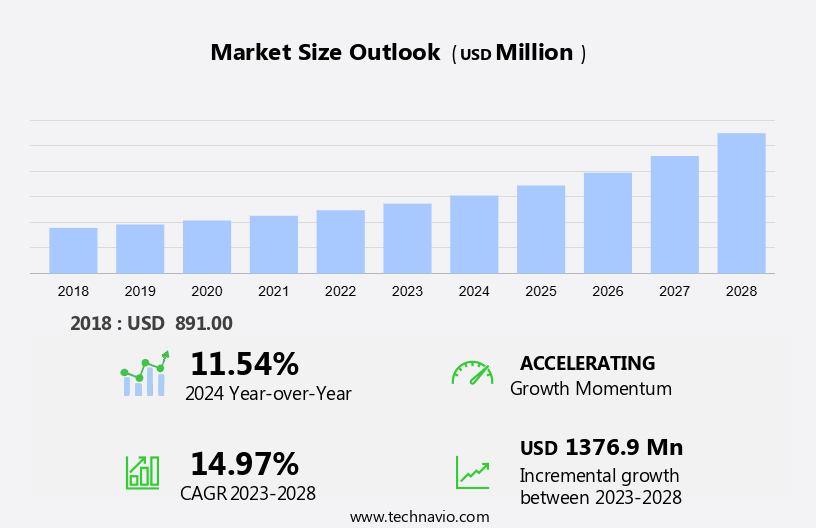
- The market has experienced significant growth in recent years, driven by the increasing preference for dairy-free and lactose-free alternatives. Mature coconuts are the primary source of this product, which is prized for its nutritional content and health benefits. The health-conscious population, including those with obesity, lactose intolerance, and hormone usage concerns, has fueled this demand. Customer preferences have shifted towards more natural and organic options, leading to the rise of organic coconut milk in the market.
- Internet commerce has also played a significant role in the market's growth, enabling customers to purchase products from anywhere at any time. Despite the production decline in some coconut-growing regions, product innovation has kept the market dynamic. New product offerings, such as coconut cream and various packaging formats, have kept consumers engaged and attracted new customers. However, the market faces challenges due to the unhealthy profile of some coconut milk products due to their high saturated fat content and allergens. Balancing the health benefits with the convenience and taste preferences of consumers is a key challenge for dairy producers.
How is this market segmented and which is the largest segment?
The market research report provides comprehensive data (region-wise segment analysis), with forecasts and estimates in "USD million" for the period 2024-2028, as well as historical data from 2018-2022 for the following segments.
- Product
- Conventional
- Organic
- Distribution Channel
- Supermarkets and hypermarkets
- Convenience stores
- Online retail
- Others
- Geography
- North America
- US
- Europe
- Germany
- UK
- France
- APAC
- India
- South America
- Middle East and Africa
- North America
By Product Insights
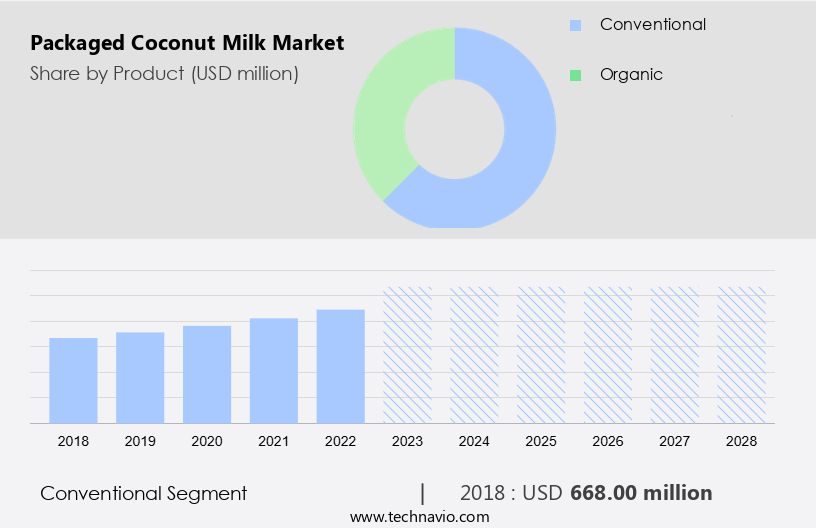
- The conventional segment is estimated to witness significant growth during the forecast period.
Coconut milk is derived from the meat of mature coconuts, which is soaked to extract coconut cream. The cream, rich in fat and used in desserts, is skimmed from the top and marketed as a separate product. The remaining milk is strained several times to achieve the desired consistency and preservation. Conventional coconut milk is produced using farming practices that involve the use of pesticides to prevent pest attacks. Coconut milk is available in various forms, including powder, liquid, pouches, and bottles. Organic and conventional options are available in the market catering to diverse consumer preferences.
The global market is expected to grow due to its increasing popularity as a plant-based alternative to dairy products and its health benefits, which include being rich in fiber, iron, and calcium. The market is driven by factors such as rising health consciousness, increasing vegan population, and growing demand from the food and beverage industry.
Get a glance at the market report of share of various segments Request Free Sample
The conventional segment was valued at USD 668.00 million in 2018 and showed a gradual increase during the forecast period.
Regional Analysis
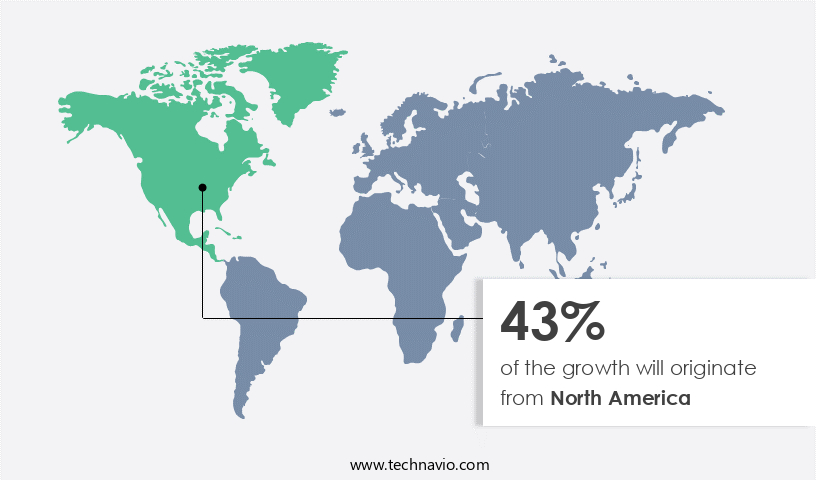
- North America is estimated to contribute 43% to the growth of the global market during the forecast period.
Technavio's analysts have elaborately explained the regional trends and drivers that shape the market during the forecast period.
For more insights on the market share of various regions Request Free Sample
The North American market is witnessing continuous growth due to the rising consumer preference for plant-based and dairy-free alternatives. The increasing population with lactose intolerance and the growing vegan community are major factors fueling the demand for coconut milk as a substitute for traditional dairy milk. Moreover, health-conscious consumers are attracted to coconut milk for its nutritional benefits, including the presence of medium-chain triglycerides (MCTs) and essential nutrients. The market is further driven by the expanding application of coconut milk in various food and beverage products, such as smoothies, desserts, curries, and coffee creamers. The trend towards ethnic and exotic flavors in the culinary industry is also contributing to the popularity of coconut milk in North America.
Market Dynamics
Our researchers analyzed the data with 2023 as the base year, along with the key drivers, trends, and challenges. A holistic analysis of drivers will help companies refine their marketing strategies to gain a competitive advantage.
What are the key market drivers leading to the rise in the adoption of the Packaged Coconut Milk Market?
Strong demand for plant-based milk is the key driver of the market.
- The market for packaged coconut milk has witnessed significant growth due to increasing consumer preferences for dairy-free alternatives and healthier options. Mature coconuts are used to extract this milk, which is rich in nutritional content, including essential minerals and healthy fats. The health benefits associated with coconut milk, such as its ability to support a healthy lifestyle and aid in the management of chronic lifestyle diseases, have resonated with the health-conscious population. Customer preferences for lactose-free and lactose-intolerant-friendly options have driven the demand for coconut milk. Furthermore, the rise in obesity and related health concerns has led many to seek out alternatives to high-calorie dairy products.
- Convenience stores, discounters, and internet commerce channels have expanded their offerings to include coconut milk in various forms, such as liquid, powder, pouches, bottles, and cans. Production decline in traditional dairy industries due to hormone usage and allergens concerns has also contributed to the growth of the coconut milk market. Product innovation in the form of organic coconut milk, coconut cream, and functional food applications, such as in cosmetics and nutraceutical industries, has further fueled demand. The shift towards sustainable living and vegan eating habits has also played a role in the market's expansion. In conclusion, the market is experiencing growth due to increasing consumer awareness of health benefits, dietary preferences, and environmental concerns.
What are the market trends shaping the Packaged Coconut Milk Market?
The increasing use of coconut milk in culinary applications is the upcoming trend in the market.
- The market is experiencing growth due to the rising preference for dairy-free alternatives and increasing health consciousness among consumers. Coconut milk's nutritional content, which includes healthy fats, minerals, and vitamins, aligns with modern health trends. Mature coconuts are used to produce this milk, making it lactose-free and suitable for individuals with lactose intolerance or those following vegan eating habits. Customer preferences for convenient and sustainable living have led to the availability of coconut milk in various formats, including liquid, powder, pouches, bottles, and cans. Its versatility extends beyond food and beverage processing to cosmetics and functional food applications.
- Coconut milk is also used in the production of coconut cream and coconut milk powder. The health-conscious population in the US is increasingly concerned about chronic lifestyle diseases, such as obesity, and is seeking balanced diets. This trend is driving the demand for coconut milk as a healthier alternative to dairy products. The decline in dairy consumption due to hormone usage and allergens in conventional dairy production further boosts market growth. The distribution channel for packaged coconut milk includes convenience stores, discounters, and internet commerce. Product innovation, such as organic coconut milk and sustainable production methods, is also a significant market trend.
What challenges does the Packaged Coconut Milk Market face during its growth?
High prices and limited awareness of coconut milk is a key challenge affecting the market growth.
- The market is witnessing growth due to increasing customer preferences for dairy-free alternatives, driven by health concerns and lactose intolerance. Coconut milk, derived from mature coconuts, offers numerous health benefits, including a balanced diet and nutritional content, making it a popular choice among health-conscious consumers. The market is expanding with product innovation, including various forms such as liquid, powder, pouches, bottles, and cans, catering to diverse consumer needs. Despite these advantages, the market growth is hindered by the higher price of packaged coconut milk compared to traditional dairy products. This price disparity limits penetration and adoption in regions like MEA, South America, and Eastern Europe.
- Additionally, middle-income demographics in developed countries avoid buying packaged vegan foods due to their cost. The price per pound of packaged coconut milk is significantly higher than cow milk, ranging from 1.5 to 2 times the price. Furthermore, the awareness of packaged coconut milk is still limited among consumers, particularly in regions with lower income levels and less focus on healthy lifestyles or sustainable living. However, the growing obesity issue and increasing vegan eating habits are expected to boost market growth. The market also caters to various industries, including food, beverage processing, cosmetics, functional food, nutraceutical industries, and online retail channels.
Exclusive Customer Landscape
The market forecasting report includes the adoption lifecycle of the market, covering from the innovator's stage to the laggard's stage. It focuses on adoption rates in different regions based on penetration. Furthermore, the market report also includes key purchase criteria and drivers of price sensitivity to help companies evaluate and develop their market growth analysis strategies.
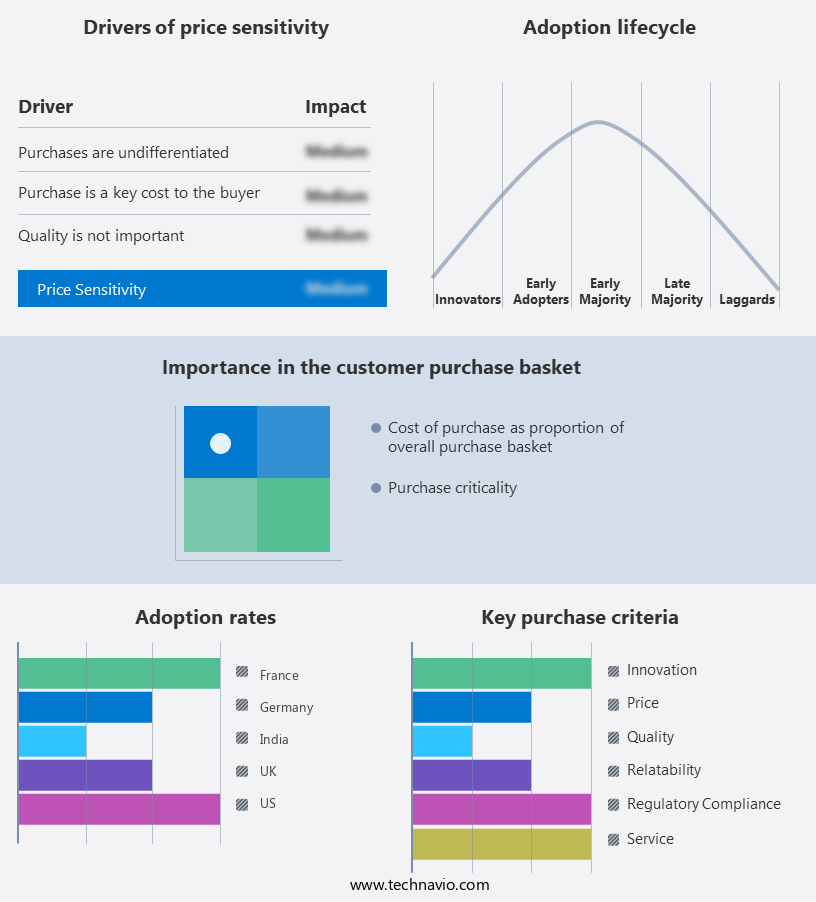
Customer Landscape
Key Companies & Market Insights
Companies are implementing various strategies, such as strategic alliances, market forecast, partnerships, mergers and acquisitions, geographical expansion, and product/service launches, to enhance their presence in the market. The market research and growth report includes detailed analyses of the competitive landscape of the market and information about key companies, including:
- Ahya Coco Organic Food Manufacturing Corp.
- Campbell Soup Co.
- Celebes Coconut Corp.
- Cocomi Bio Organic
- Coconut Palm Group Ltd.
- Dabur India Ltd.
- Danone SA
- Edward and Sons Trading Co.
- Goya Foods Inc.
- Heng Guan Food Industrial Pte Ltd.
- McCormick and Co. Inc.
- Merit Food Products Co. Ltd.
- Nestle SA
- PureHarvest
- Thai Agri Foods Public Co. Ltd.
- Thai Coconut Public Co. Ltd.
- The Coconut Co. UK Ltd.
- The Vita Coco Co. Inc.
- Theppadungporn Coconut Co. Ltd.
- Urban Platter
Qualitative and quantitative analysis of companies has been conducted to help clients understand the wider business environment as well as the strengths and weaknesses of key market players. Data is qualitatively analyzed to categorize companies as pure play, category-focused, industry-focused, and diversified; it is quantitatively analyzed to categorize companies as dominant, leading, strong, tentative, and weak.
Research Analyst Overview
The market has experienced significant growth in recent years, driven by shifting consumer preferences towards dairy-free alternatives and increasing health consciousness. This trend is particularly prominent in mature markets, where consumers are increasingly seeking out nutritious, lactose-free options for their diets. One of the key factors fueling the growth of the coconut milk market is the health benefits associated with this plant-based beverage. Coconut milk is rich in essential nutrients, including calcium, iron, and vitamins C, E, and B12. It is also low in saturated fats and high in fiber, making it an attractive choice for those following a healthy lifestyle or managing health concerns such as obesity, lactose intolerance, or chronic lifestyle diseases.
Furthermore, customer preferences for coconut milk are also influenced by convenience and accessibility. The market caters to various formats, including liquid, powder, pouches, bottles, and cans, making it easily accessible to consumers through various distribution channels. Convenience stores, discounters, and internet commerce platforms have all seen an increase in demand for coconut milk products. The production of coconut milk has also seen innovation, with organic and conventional options available. The organic coconut milk segment is particularly popular among health-conscious consumers, who are willing to pay a premium for products that are free from hormones and other additives. The decline in dairy consumption, driven by concerns over hormone usage and allergens, has also contributed to the growth of the coconut milk market.
|
Market Scope |
|
|
Report Coverage |
Details |
|
Page number |
158 |
|
Base year |
2023 |
|
Historic period |
2018-2022 |
|
Forecast period |
2024-2028 |
|
Growth momentum & CAGR |
Accelerate at a CAGR of 14.97% |
|
Market Growth 2024-2028 |
USD 1.38 billion |
|
Market structure |
Fragmented |
|
YoY growth 2023-2024(%) |
11.54 |
|
Key countries |
US, Germany, France, India, and UK |
|
Competitive landscape |
Leading Companies, Market Positioning of Companies, Competitive Strategies, and Industry Risks |
What are the Key Data Covered in this Market Research and Growth Report?
- CAGR of the market during the forecast period
- Detailed information on factors that will drive the market growth and forecasting between 2024 and 2028
- Precise estimation of the size of the market and its contribution of the market in focus to the parent market
- Accurate predictions about upcoming market growth and trends and changes in consumer behaviour
- Growth of the market across North America, Europe, APAC, South America, and Middle East and Africa
- Thorough analysis of the market's competitive landscape and detailed information about companies
- Comprehensive analysis of factors that will challenge the growth of market companies
We can help! Our analysts can customize this market research report to meet your requirements. Get in touch
 RIA -
RIA - 
