


Packaged Sprouts Market Size 2024-2028
The packaged sprouts market size is forecast to increase by USD 2.65 billion at a CAGR of 10% between 2023 and 2028.
- The market is witnessing significant growth due to several key trends. The increasing prominence of organized retailing is driving market expansion, as more consumers prefer purchasing packaged sprouts from supermarkets and hypermarkets for their convenience and longer shelf life. Another trend is the rising popularity of vegan and vegetarian diets, which are high in nutrients and fiber, making packaged sprouts an attractive option for health and wellness conscious consumers.
- Despite the growth in demand for packaged sprouts, distribution challenges remain due to the perishable nature of the product and the requirement for temperature-controlled supply chains. Producers must tackle these issues to ensure timely delivery while maintaining product quality, meeting the rising consumer demand effectively.
What will be the Packaged Sprouts Market Size During the Forecast Period?

- The market has experienced significant growth due to increasing consumer awareness of the nutritional benefits of sprouts. Rich in essential nutrients such as protein, fiber, vitamins, and minerals, sprouts are an excellent addition to a balanced diet. The demand for packaged sprouts is driven by their convenience and longer shelf life compared to fresh sprouts. However, food safety concerns, particularly regarding potential food poisoning from bacterial contamination during germination, remain a challenge.
- Moreover, to mitigate this risk, manufacturers employ stringent quality control measures, including proper temperature and moisture control during the sprouting process. Various types of sprouts, including bean sprouts (mung bean, adzuki, soybean, lentil, kidney bean, black bean, and garbanzo), pea sprouts (green pea, snow pea), and sprouted grains (brown rice, buckwheat, amaranth, kamut, quinoa, and oat sprouts), cater to diverse consumer preferences.
How is this Packaged Sprouts Industry segmented and which is the largest segment?
The packaged sprouts industry research report provides comprehensive data (region-wise segment analysis), with forecasts and estimates in "USD billion" for the period 2024-2028, as well as historical data from 2018-2022 for the following segments.
- Product
- Bean sprouts
- Brussels sprouts
- Alfalfa sprouts
- Geography
- APAC
- China
- Japan
- Europe
- Germany
- UK
- North America
- US
- Middle East and Africa
- South America
- APAC
By Product Insights
- The bean sprouts segment is estimated to witness significant growth during the forecast period.
The market encompasses various types of sprouts, including bean sprouts, pea sprouts, lentil sprouts, adzuki, garbanzo, soybean, mung bean, black bean, kidney bean, green pea, and snow pea sprouts. Among these, mung bean sprouts are the most widely consumed, with significant consumption in Asia Pacific (APAC), particularly in China and India, which are also the leading producers. Soybean sprouts have gained popularity in South Korea and are increasingly being adopted In the global market. In 2023, APAC was the largest consumer of packaged mung bean sprouts, followed by Europe and North America. Soybean sprouts are another significant category, with increasing demand in various regions. The market is moderately fragmented due to the presence of numerous regional and local companies.
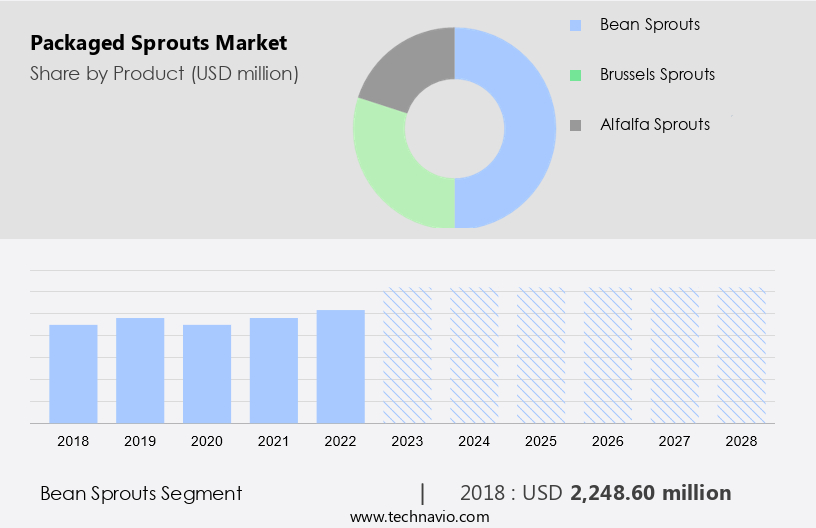
Get a glance at the Packaged Sprouts Industry report of share of various segments Request Free Sample
The bean sprouts segment was valued at USD 2.25 billion in 2018 and showed a gradual increase during the forecast period.
Regional Analysis
- APAC is estimated to contribute 74% to the growth of the global market during the forecast period.
Technavio's analysts have elaborately explained the regional trends and drivers that shape the market during the forecast period.

For more insights on the market share of various regions, Request Free Sample
The market in Asia Pacific (APAC) exhibits moderate fragmentation due to the presence of various regional and global companies. Key countries In the region, including Japan, China, India, South Korea, Australia, New Zealand, the Philippines, Thailand, Indonesia, Sri Lanka, and Singapore, present significant growth opportunities for packaged sprouts suppliers. Mung bean sprouts represent a prominent product segment in APAC, given the region's status as the world's largest producers of mung beans, primarily in India and China. Additionally, there is a growing demand for brussels sprouts in countries such as Australia, the Philippines, and New Zealand. Consumers In the region are increasingly seeking healthy food options, leading to a rise in demand for packaged sprouts, which are rich in nutrients and offer high nutrient levels. Packaged sprouts, including clover, cress, baby carrots, petite peas, tinier vegetables, and sprouted seeds, are gaining popularity as nutritious alternatives to processed and fast foods.
Market Dynamics
Our packaged sprouts market researchers analyzed the data with 2023 as the base year, along with the key drivers, trends, and challenges. A holistic analysis of drivers will help companies refine their marketing strategies to gain a competitive advantage.
What are the key market drivers leading to the rise In the adoption of Packaged Sprouts Industry?
Growing prominence of organized retailing is the key driver of the market.
- Packaged sprouts, including mung bean, adzuki, lentil, soybean, and various vegetable and grain sprouts, have gained popularity as nutritious food options in the market. These sprouts are rich in essential nutrients such as proteins, carbohydrates, enzymes, and various vitamins and minerals, making them valuable additions to a healthy diet. The nutritional benefits of sprouts are well-documented by nutrition experts, with institutions like the Linus Pauling Institute at Oregon State University in Corvallis conducting extensive research. The process of germination, which involves soaking seeds at the right temperature and moisture levels, enhances the nutrient levels in sprouts. Consumption of sprouts has been linked to improved digestion and reduced risk of heart disease, blood sugar imbalances, and food poisoning.
- Furthermore, supermarkets serve as the primary distribution channel for packaged sprouts, catering to the growing demand for healthy foods among health-conscious consumers. The increasing prevalence of supermarkets worldwide, driven by population growth, further boosts the market for packaged sprouts. In addition to traditional sprouts like bean sprouts, pea sprouts, and sprouted grains such as brown rice, buckwheat, amaranth, kamut, quinoa, and oat sprouts, there is a growing trend towards vegetable sprouts and leafy sprouts like radish, broccoli, beet, mustard green, clover, cress, baby carrots, petite peas, and tinier vegetables. Microgreens, which are tender greens like arugula and basil, also fall under this category.
What are the market trends shaping the Packaged Sprouts Industry?
Rising popularity of vegan diet is the upcoming market trend.
- The market has witnessed notable growth due to the increasing preference for nutritious and healthy foods among consumers. With a rise in health-conscious individuals and the vegan population, the demand for sprouts, such as bean sprouts (mung bean, adzuki, soybean, lentil, kidney bean, green pea, snow pea), sprouted grains (brown rice, buckwheat, amaranth, kamut, quinoa, oat sprouts), and vegetable sprouts (radish, broccoli, beet, mustard green, clover, cress, baby carrots, petite peas, tinier vegetables), has increased. These microscale vegetables are rich in essential nutrients, including carbohydrates, proteins, and enzymes, which contribute to improved digestion and overall health. Sprouting seeds involves germination in controlled conditions of temperature and moisture, ensuring the highest nutrient levels.
- Notably, sprouts have been linked to various health benefits, including regulating blood sugar levels, reducing the risk of heart disease, and preventing food poisoning. The Nutrition Professor at the Linus Pauling Institute, Oregon State University, Corvallis, prioritizes the nutrition benefits of sprouts, particularly broccoli sprouts and mung bean sprouts, which are integral components of Asian and vegetarian dishes. The market dynamics for packaged sprouts are driven by the increasing awareness of the health benefits associated with sprouts and the growing preference for plant-based diets. As a result, sprouted foods have become a popular choice for health-conscious consumers. Microgreens and tender greens, such as arugula and basil, are also gaining popularity due to their improved digestion properties and enhanced nutrient levels.
What challenges does the Packaged Sprouts Industry face during its growth?
Distribution challenges in global packaged sprouts market is a key challenge affecting the industry growth.
- Packaged sprouts have gained popularity In the US market due to their nutritional benefits. These microscale vegetables are rich in essential nutrients like carbohydrates, proteins, enzymes, and various vitamins and minerals. Sprouts derived from seeds such as bean sprouts (mung bean, adzuki, garbanzo, soybean, kidney bean, green pea, and snow pea), lentil sprouts, and sprouted grains (brown rice, buckwheat, amaranth, Kamut, quinoa, and oat sprouts) are particularly noteworthy. These nutrient-dense foods are beneficial for digestion, blood sugar management, and heart health. However, the market faces challenges. Retail stores, including supermarkets and large chains of discount or convenience stores, have emerged as significant distribution channels.
- Moreover, while this expansion presents opportunities, it also poses challenges for manufacturers. They face pressure to maintain competitive prices and margins due to retailers' lower profit margins. Retailers demand frequent and smaller product deliveries to minimize warehousing costs. Additionally, they expect manufacturers to innovate with merchandising units like movable shelves to reduce store replenishment costs. Consuming sprouts is a healthy food choice, as they contain high nutrient levels. For instance, broccoli sprouts and mung bean sprouts are rich in glucosinolates, which have anticancer properties. Soybean sprouts are popular in Asian dishes, while vegetarian dishes often include lentil and mung bean sprouts.
Exclusive Customer Landscape
The packaged sprouts market forecasting report includes the adoption lifecycle of the market, covering from the innovator's stage to the laggard's stage. It focuses on adoption rates in different regions based on penetration. Furthermore, the packaged sprouts market report also includes key purchase criteria and drivers of price sensitivity to help companies evaluate and develop their market growth analysis strategies.
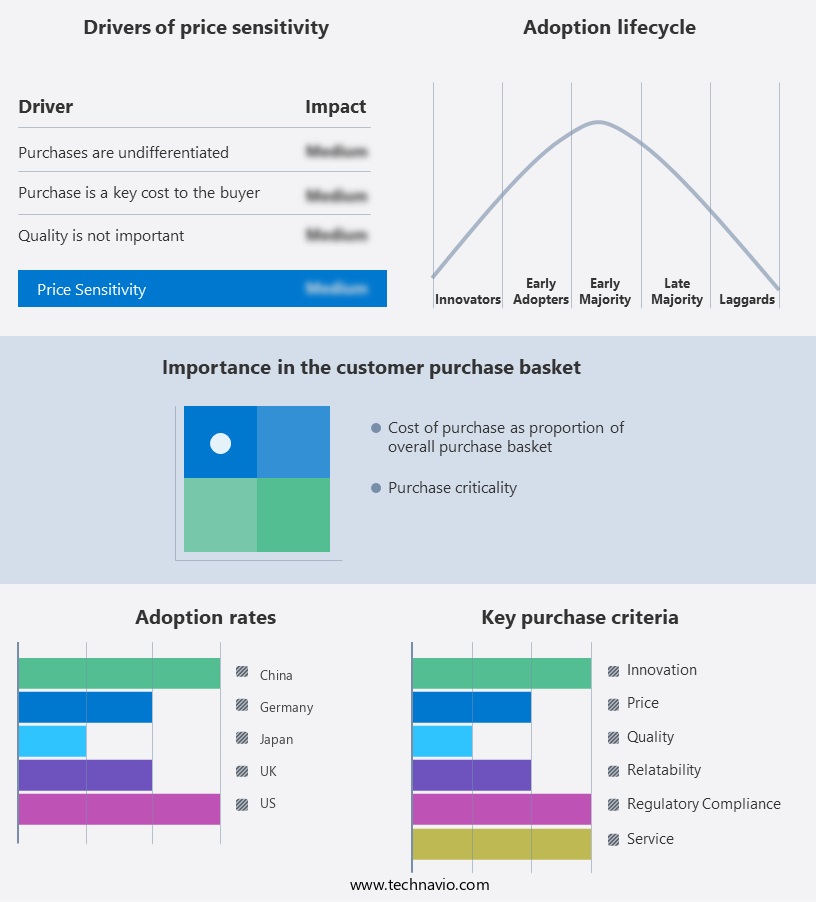
Customer Landscape
Key Companies & Market Insights
Companies are implementing various strategies, such as strategic alliances, packaged sprouts market forecast, partnerships, mergers and acquisitions, geographical expansion, and product/service launches, to enhance their presence In the industry.
The industry research and growth report includes detailed analyses of the competitive landscape of the market and information about key companies, including:
- BrightFresh
- Eatmore Sprouts
- Fuji Natural Foods
- Jonathan Sprouts
- Narita foods Co. Ltd.
- Ocean Mist Farms
- Pulmuone Foods USA
- Sprouts Farmers Market Inc.
- Sun Grown
- T.van der Plas B.V.
Qualitative and quantitative analysis of companies has been conducted to help clients understand the wider business environment as well as the strengths and weaknesses of key industry players. Data is qualitatively analyzed to categorize companies as pure play, category-focused, industry-focused, and diversified; it is quantitatively analyzed to categorize companies as dominant, leading, strong, tentative, and weak.
Research Analyst Overview
Packaged sprouts have emerged as a popular choice for health-conscious consumers seeking nutrient-dense, easy-to-prepare, and eco-friendly food options. This article delves into the intricacies of packaged sprouts, focusing on their nutritional benefits and the science behind their production. Sprouts are tiny, edible seedlings that emerge when seeds are soaked in water and exposed to the right temperature and moisture conditions. The germination process triggers a cascade of biochemical reactions, leading to an increase in essential nutrients. These nutrients include proteins, carbohydrates, fiber, vitamins, and minerals.
In addition, the nutritional profile of sprouts is particularly noteworthy for individuals managing conditions like diabetes and heart disease. For instance, sprouts are rich in complex carbohydrates that provide a steady energy supply, helping to maintain stable blood sugar levels. Moreover, their high protein content makes them an excellent alternative to meat for vegetarians and vegans. Sprouts also contain an array of beneficial enzymes that aid digestion. These enzymes break down complex nutrients, making them easier for the body to absorb. Furthermore, they are rich in antioxidants, which help protect cells from damage caused by free radicals. The production of packaged sprouts involves careful control of temperature and moisture levels to ensure optimal germination.
Moreover, this process can be applied to a wide variety of seeds, including beans such as mung bean, adzuki, garbanzo, soybean, lentil, black bean, and kidney bean, as well as seeds of vegetables like green pea, snow pea, radish, broccoli, beet, mustard green, clover, cress, baby carrots, petite peas, and tinier vegetables. Sprouting also extends to grains like brown rice, buckwheat, amaranth, kamut, quinoa, and oats. These sprouted grains offer enhanced nutritional value, making them a popular choice for health-conscious consumers. Packaged sprouts are versatile and can be incorporated into various dishes, from Asian and vegetarian cuisines to microgreens and tender greens like arugula and basil.
In addition, their nutrient-dense nature makes them an excellent addition to salads, sandwiches, and smoothies. The health benefits of packaged sprouts are well-documented in scientific research. For instance, broccoli sprouts have been shown to contain significantly higher levels of glucosinolates, which are sulfur-containing compounds with potent anticancer properties. Similarly, mung bean sprouts and soybean sprouts are rich in isoflavones, which have been linked to reduced risk of heart disease. Therefore, packaged sprouts represent a fascinating intersection of nutrition, agriculture, and culinary art. Their nutrient-dense nature, ease of preparation, and versatility make them an excellent choice for individuals seeking to improve their overall health and well-being. By understanding the science behind their production and the myriad health benefits they offer, consumers can make informed decisions when incorporating packaged sprouts into their diet.
|
Packaged Sprouts Market Scope |
|
|
Report Coverage |
Details |
|
Page number |
140 |
|
Base year |
2023 |
|
Historic period |
2018-2022 |
|
Forecast period |
2024-2028 |
|
Growth momentum & CAGR |
Accelerate at a CAGR of 10% |
|
Market growth 2024-2028 |
USD 2.65 billion |
|
Market structure |
Concentrated |
|
YoY growth 2023-2024(%) |
8.9 |
|
Key countries |
China, Japan, US, UK, and Germany |
|
Competitive landscape |
Leading Companies, Market Positioning of Companies, Competitive Strategies, and Industry Risks |
What are the Key Data Covered in this Packaged Sprouts Market Research and Growth Report?
- CAGR of the Packaged Sprouts industry during the forecast period
- Detailed information on factors that will drive the Packaged Sprouts growth and forecasting between 2024 and 2028
- Precise estimation of the size of the market and its contribution of the industry in focus to the parent market
- Accurate predictions about upcoming growth and trends and changes in consumer behaviour
- Growth of the market across APAC, Europe, North America, Middle East and Africa, and South America
- Thorough analysis of the market's competitive landscape and detailed information about companies
- Comprehensive analysis of factors that will challenge the packaged sprouts market growth of industry companies
We can help! Our analysts can customize this packaged sprouts market research report to meet your requirements.
 RIA -
RIA - 
