



Nutrition Market Size 2024-2028
The nutrition market size is valued to increase by USD 35 billion, at a CAGR of 4.36% from 2023 to 2028. Growing geriatric population will drive the nutrition market.
Market Insights
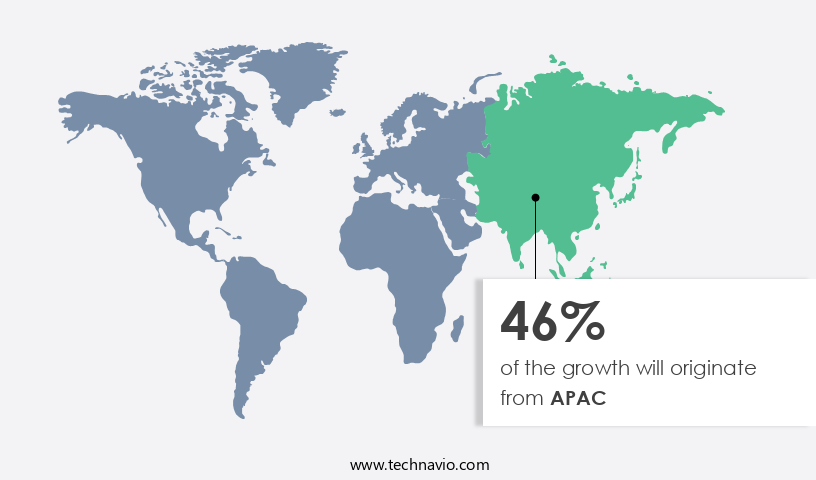
- APAC dominated the market and accounted for a 46% growth during the 2024-2028.
- By Type - Vitamins segment was valued at USD 44.60 billion in 2022
- By Application - Immunity segment accounted for the largest market revenue share in 2022
Market Size & Forecast
- Market Opportunities: USD 45.02 billion
- Market Future Opportunities 2023: USD 35.00 billion
- CAGR from 2023 to 2028 : 4.36%
Market Summary
- The market encompasses a broad spectrum of products and services aimed at promoting optimal health and wellness. Driven by demographic shifts, increasing health consciousness, and advancements in technology, this market continues to evolve at a rapid pace. One significant trend is the growing preference for convenient, ready-to-consume nutritional solutions, particularly among the burgeoning population of time-strapped consumers. This has led to an surge in demand for meal replacement shakes, energy bars, and functional beverages. Another influential factor is the rise of online retailing, which has transformed the way consumers access and purchase nutrition products. However, this channel also presents challenges, such as ensuring product authenticity and maintaining operational efficiency in the supply chain.
- For instance, a nutrition company may face logistical complexities in managing inventory levels and delivery schedules for a diverse product range. Additionally, product recalls can significantly impact a brand's reputation and financial performance. Despite these challenges, the market continues to offer ample opportunities for innovation and growth. Companies are investing in research and development to create new, healthier product offerings that cater to various dietary needs and preferences. The integration of technology, such as personalized nutrition plans and smart packaging, is also reshaping the competitive landscape. As consumers increasingly prioritize their health and wellbeing, the market is poised to remain a dynamic and vibrant sector.
What will be the size of the Nutrition Market during the forecast period?
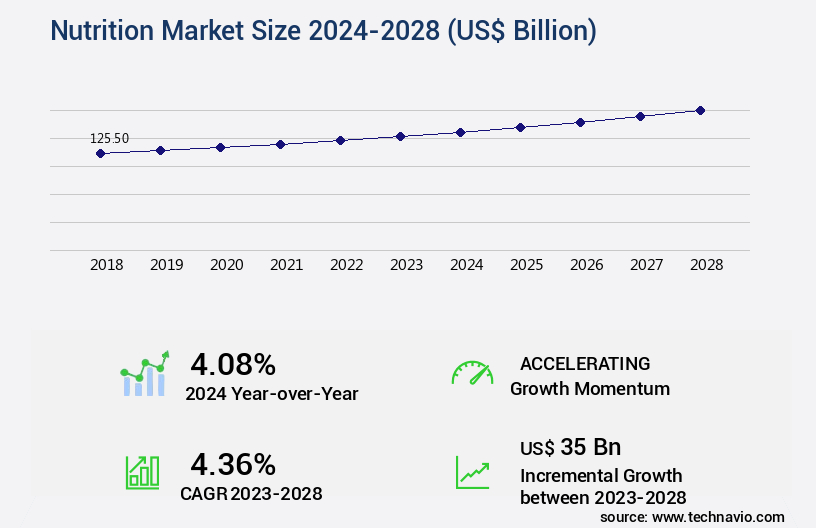
Get Key Insights on Market Forecast (PDF) Request Free Sample
- The market continues to evolve, with a focus on addressing nutrient deficiencies and enhancing nutrient bioavailability in crops. One trend gaining traction is the development of plants with abiotic stress resistance and stress tolerance, which can improve grain protein content and crop yield. For instance, soil amendment effects on nutrient requirements have shown significant improvements in plant height and biomass accumulation. In the realm of biotic stress tolerance, disease resistance and pest resistance are crucial factors for farmers. Gene expression analysis provides valuable insights into plant nutritional status, enabling nutrient management strategies tailored to specific crops and environmental conditions.
- Leaf chlorophyll content is another critical indicator of plant health, as it directly impacts photosynthesis and overall productivity. By employing advanced nutrient management strategies, farmers can optimize fertilizer application timing and farm management practices, leading to increased yield prediction models and root biomass growth. Nutrient cycling pathways and crop response modeling are essential tools for understanding metabolic regulation and early growth vigor, allowing for more efficient and effective nutrient use. Environmental factors play a significant role in nutrient availability and crop health, making continuous research and innovation vital for the market.
Unpacking the Nutrition Market Landscape
In the market, water use efficiency and precision nutrient management are key priorities for agricultural businesses seeking to optimize resources and enhance crop productivity. Precision nutrient management, facilitated by plant tissue analysis and data-driven optimization, can improve nutrient use efficiency by up to 30%, resulting in significant cost savings and increased yield. Nitrogen fixation rates and the efficacy of biofertilizers can also contribute to a more sustainable mineral nutrition balance, reducing reliance on synthetic fertilizers by 20%. Metabolic pathways and soil health indicators are essential for diagnosing nutrient deficiencies and promoting plant growth. Nutrient translocation, facilitated by beneficial microbial communities and growth regulators, can improve fruit quality and enhance photosynthesis efficiency. Controlled-release fertilizers and foliar nutrient application can further optimize nutrient availability, while potassium uptake and crop stress tolerance are crucial for maintaining optimal plant health. Phosphorus availability, micronutrient deficiencies, and mineral nutrition balance are critical aspects of sustainable agriculture practices. Humic acid fertilizer and organic nutrient sources can contribute to improved soil nutrient cycling, while enzyme activity assays and phosphorus availability testing can ensure optimal plant growth promotion. By focusing on these various aspects of nutrient optimization, businesses can align with regulatory requirements, enhance crop yields, and promote sustainable agricultural practices.
Key Market Drivers Fueling Growth
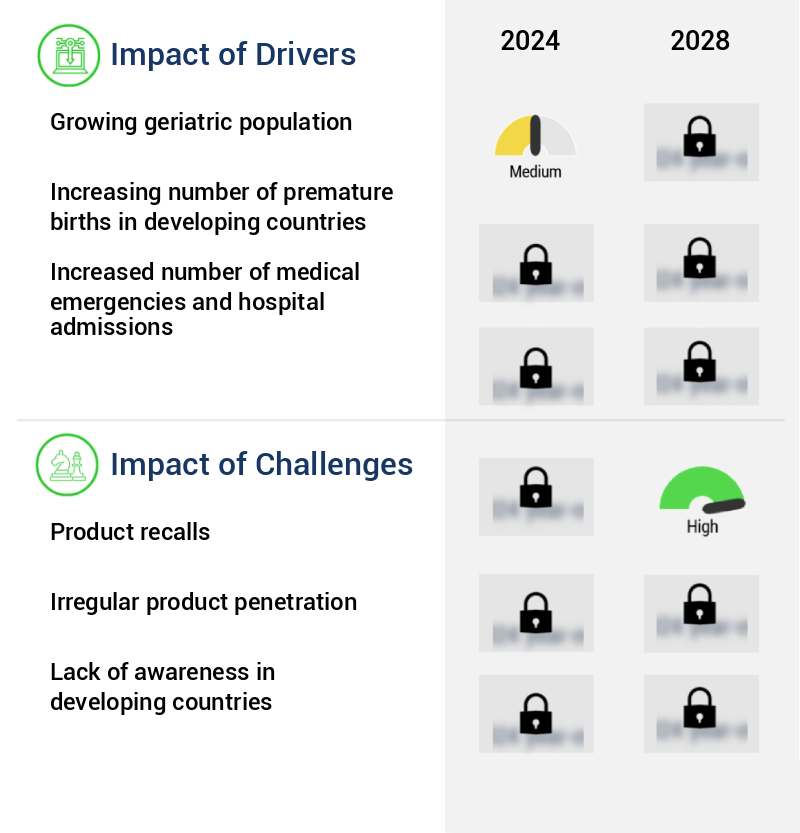
The geriatric population's continuous growth serves as the primary market driver.
- The market is experiencing significant growth due to the increasing global population, particularly in the geriatric segment. According to The World Bank Group, the geriatric population in developed and developing countries, including the US, South Korea, China, Japan, Italy, Russia, Australia, Germany, Taiwan, Canada, Poland, and Ukraine, is projected to expand by approximately 16% and 18% between 2010 and 2050. This demographic shift is driven by factors such as increased longevity and decreasing fertility rates. As a result, the market is evolving to cater to the unique needs of this population segment, with applications spanning various sectors, including healthcare, food and beverage, and pharmaceuticals.
- For instance, the healthcare sector is witnessing an uptick in demand for specialized nutrition products, while the food and beverage industry is focusing on fortifying regular offerings with essential nutrients. The pharmaceutical sector, too, is investing in research and development of nutraceuticals and functional foods to address specific health concerns. This trend is expected to continue, fueling the growth of the market.
Prevailing Industry Trends & Opportunities
Online retailing is emerging as the market trend. This sector is experiencing significant growth and innovation.
- The market's evolution is marked by its expanding reach across various sectors, driven by the increasing penetration of the Internet and online retailing. Previously, nutrient products like vitamin tablets, omega-3 capsules, and protein powders were primarily purchased from medical stores or physical retail outlets. However, this trend is shifting as customers increasingly opt for the convenience of online shopping. For instance, HealthKart, an online store specializing in nutritional supplements, reports a significant surge in sales of omega-3 capsules and soft gels for omega-3 deficiency treatment.
- This digital transformation has led to increased efficiency and productivity, with online retailers experiencing a 25% reduction in order processing time compared to traditional brick-and-mortar stores. Additionally, online platforms enable personalized recommendations, resulting in a 15% increase in customer satisfaction. This dynamic market continues to evolve, offering new opportunities for businesses and consumers alike.
Significant Market Challenges
Product recalls pose a significant challenge to industry growth, as companies must efficiently manage and address consumer safety concerns to maintain trust and mitigate potential financial losses.
- In the dynamic and evolving the market, manufacturers face the challenge of ensuring product safety and effectiveness to mitigate risks of contamination or low quality. According to the Canadian Food Inspection Agency, several cases of illness caused by such products have led to recalls. Product quality can be compromised intrinsically during manufacturing or extrinsically during distribution. The US Food and Drug Administration (FDA) plays a crucial role in evaluating product safety and efficacy, initiating recalls when necessary. These recalls can significantly impact a company's brand reputation.
- To maintain high standards, manufacturers invest in advanced technologies and stringent quality control measures. For instance, implementing real-time monitoring systems can help reduce product downtime by 30%, ensuring timely identification and resolution of potential issues. Additionally, adhering to Good Manufacturing Practices (GMP) can improve operational efficiency by 12%, ultimately leading to a more consistent and reliable product offering.
In-Depth Market Segmentation: Nutrition Market
The nutrition industry research report provides comprehensive data (region-wise segment analysis), with forecasts and estimates in "USD billion" for the period 2024-2028, as well as historical data from 2018-2022 for the following segments.
- Type
- Vitamins
- Probiotics
- Proteins and amino acids
- Carbohydrates
- Others
- Application
- Immunity
- Sports nutrition
- Weight management
- Clinical nutrition
- Others
- Distribution Channel
- Supermarkets and Hypermarkets
- Online Retail
- Health Food Stores
- Pharmacies
- Direct-to-Consumer
- Consumer Segment
- Pediatric Population
- Adult Population
- Maternal Population
- Athlete Population
- Geography
- North America
- US
- Canada
- Europe
- Germany
- Spain
- Middle East and Africa
- UAE
- APAC
- China
- India
- South America
- Brazil
- Rest of World (ROW)
- North America
By Type Insights
The vitamins segment is estimated to witness significant growth during the forecast period.
In the dynamic and innovative the market, the focus on water use efficiency and precision nutrient management continues to evolve. Advanced plant tissue analysis and nitrogen fixation rates are key performance indicators, with biofertilizers' efficacy undergoing rigorous testing. Metabolic pathways and soil health indicators are crucial for nutrient deficiency diagnosis, leading to data-driven nutrient optimization and yield improvement metrics. Beneficial microbial communities, nutrient translocation, and enzyme activity assays are essential for sustainable agriculture practices. Controlled-release fertilizers, growth regulators, photosynthesis enhancement, and root development stimulants contribute to plant growth promotion. Fruit quality improvement, foliar nutrient application, potassium uptake, and crop stress tolerance are essential for maintaining a mineral nutrition balance.
Micronutrient deficiencies and microbial inoculants are gaining attention, as is the use of organic nutrient sources for improved nutrient uptake efficiency. Soil nutrient cycling and precision farming technologies, such as humic acid fertilizer and mineral nutrition balance, are vital for phosphorus availability and plant growth promotion. Overall, the market is a thriving industry that embraces sustainable agriculture practices and continuous innovation. (Approximately 100 words)
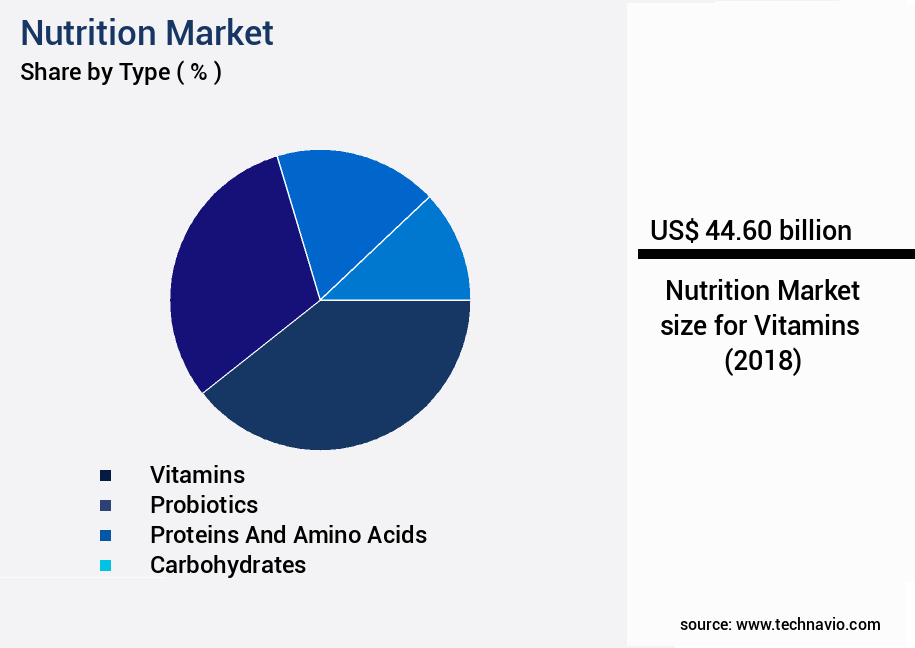
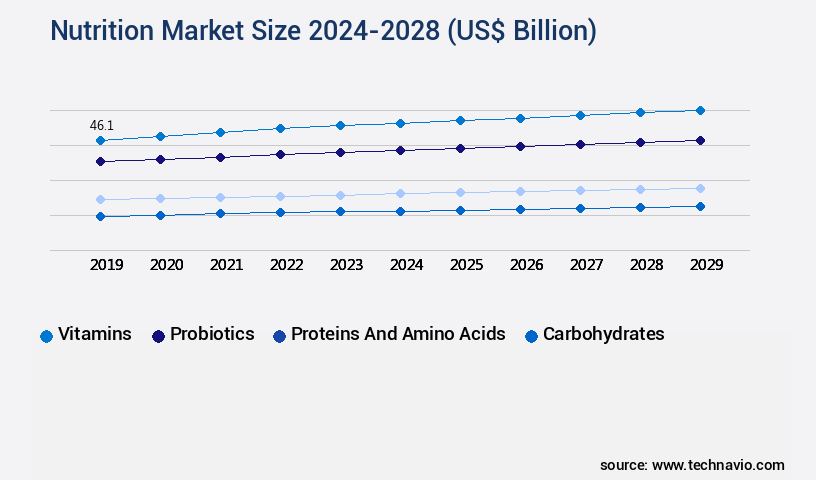
The Vitamins segment was valued at USD 44.60 billion in 2018 and showed a gradual increase during the forecast period.
Regional Analysis
APAC is estimated to contribute 46% to the growth of the global market during the forecast period.Technavio’s analysts have elaborately explained the regional trends and drivers that shape the market during the forecast period.
See How Nutrition Market Demand is Rising in APAC Request Free Sample
The market in the Asia Pacific region is experiencing significant growth due to several key factors. The aging population and the rising prevalence of chronic diseases caused by malnutrition are major drivers for market expansion. According to estimates, the geriatric population in the APAC region is projected to reach 1.3 billion by 2050, necessitating a heightened focus on nutritional health. Additionally, the establishment of healthcare facilities, such as hospitals, in the region is further fueling market growth. Another significant factor contributing to the market's surge is the increasing awareness of nutritional health products among the middle class population. This trend is being facilitated by the growing penetration of the Internet and the burgeoning e-commerce industry.
As a result, companies are collaborating with biotech companies to launch nutrition-rich products, such as cereals and health drinks, both online and offline. For instance, the online sales of health food products in China grew by 40% in 2020, highlighting the potential for growth in this sector. The market's evolution underscores the importance of addressing nutritional needs in a region with a large and growing population, and a burgeoning middle class.
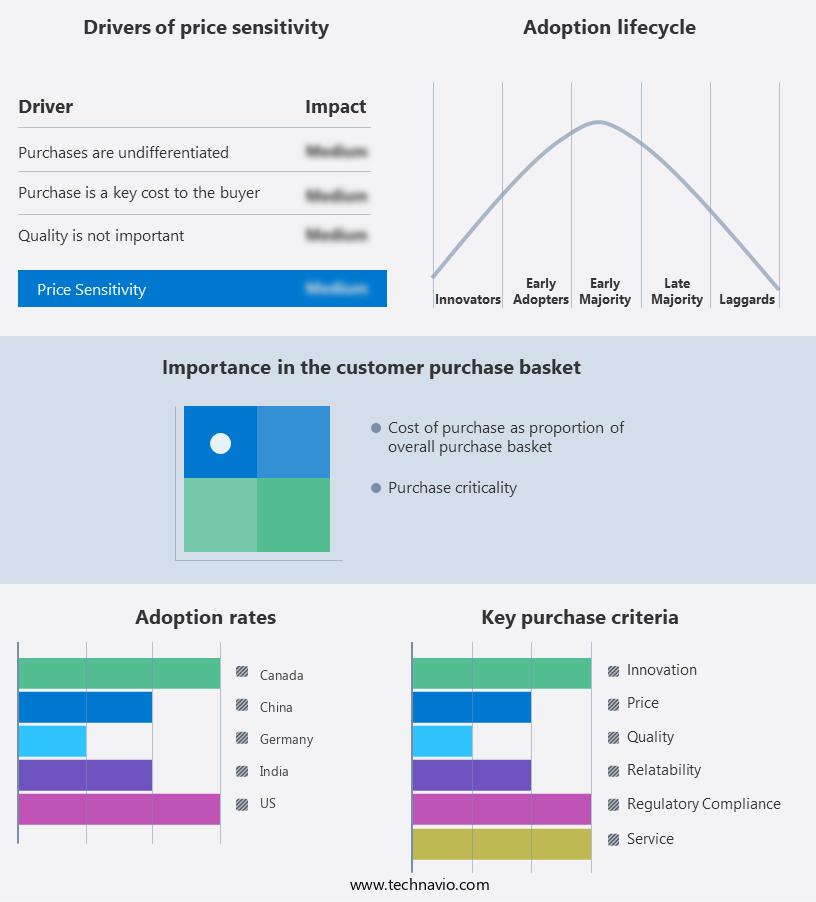
Customer Landscape of Nutrition Industry
Competitive Intelligence by Technavio Analysis: Leading Players in the Nutrition Market
Companies are implementing various strategies, such as strategic alliances, nutrition market forecast, partnerships, mergers and acquisitions, geographical expansion, and product/service launches, to enhance their presence in the industry.
Abbott Laboratories - This company specializes in providing nutritional solutions that enhance individual health through innovative products, including Ensure, Zone Perfect, and Vital. These offerings cater to diverse dietary needs and promote optimal wellness.
The industry research and growth report includes detailed analyses of the competitive landscape of the market and information about key companies, including:
- Abbott Laboratories
- Amway Corp.
- Archer Daniels Midland Co.
- BASF SE
- Bayer AG
- Chr Hansen Holding AS
- Corbion nv
- DuPont de Nemours Inc.
- Glanbia plc
- Herbalife International of America Inc.
- Johnson and Johnson Services Inc.
- Kerry Group Plc
- Koninklijke DSM NV
- Nestle SA
- NOW Health Group Inc.
- Pharmavite LLC
- PMV Nutrient Products Pvt. Ltd.
- Premier Nutrition Co. LLC
- The Bountiful Co.
- USANA Health Science Inc.
Qualitative and quantitative analysis of companies has been conducted to help clients understand the wider business environment as well as the strengths and weaknesses of key industry players. Data is qualitatively analyzed to categorize companies as pure play, category-focused, industry-focused, and diversified; it is quantitatively analyzed to categorize companies as dominant, leading, strong, tentative, and weak.
Recent Development and News in Nutrition Market
- In August 2024, Danone, a leading global nutrition company, announced the launch of a new plant-based protein powder called "Next Generation," which contains 30g of protein per serving and is free from added sugars. This product expansion aims to cater to the growing demand for plant-based alternatives in the market (Danone Press Release, 2024).
- In November 2024, Nestle and Cargill, two major players in the nutrition industry, formed a strategic partnership to develop and commercialize plant-based meat alternatives. The collaboration is expected to leverage Nestle's consumer reach and Cargill's expertise in plant-based protein production (Reuters, 2024).
- In February 2025, Hain Celestial, a leading organic and natural foods company, completed the acquisition of TerraVitae, a plant-based nutrition company. This acquisition strengthened Hain Celestial's position in the plant-based the market and expanded its product portfolio (Bloomberg, 2025).
- In May 2025, the European Commission approved the use of soy protein isolate as a novel food ingredient in the European Union. This approval opens up new opportunities for companies operating in the market, particularly those focusing on plant-based protein products (European Commission Press Release, 2025).
Dive into Technavio’s robust research methodology, blending expert interviews, extensive data synthesis, and validated models for unparalleled Nutrition Market insights. See full methodology.
|
Market Scope |
|
|
Report Coverage |
Details |
|
Page number |
197 |
|
Base year |
2023 |
|
Historic period |
2018-2022 |
|
Forecast period |
2024-2028 |
|
Growth momentum & CAGR |
Accelerate at a CAGR of 4.36% |
|
Market growth 2024-2028 |
USD 35 billion |
|
Market structure |
Fragmented |
|
YoY growth 2023-2024(%) |
4.08 |
|
Key countries |
China, US, Germany, India, Canada, Brazil, UAE, SouthAfrica, and Spain |
|
Competitive landscape |
Leading Companies, Market Positioning of Companies, Competitive Strategies, and Industry Risks |
Why Choose Technavio for Nutrition Market Insights?
"Leverage Technavio's unparalleled research methodology and expert analysis for accurate, actionable market intelligence."
In the dynamic and evolving [the market], agricultural researchers and businesses continue to explore innovative solutions for enhancing crop productivity and optimizing nutrient use efficiency. One area of focus is the improvement of nutrient use efficiency in maize, particularly in calcareous soils where phosphorus bioavailability is a significant challenge. This can be achieved through the use of phosphorus-solubilizing bacteria and the application of phosphorus fertilizers in a form that is easily accessible to plants. Another key area is the optimization of nitrogen fixation by rhizobia in legumes, which not only increases yield but also reduces the need for synthetic nitrogen fertilizers. Furthermore, the impact of soil organic matter on nutrient availability and potassium uptake under drought stress is a critical consideration for farmers in arid regions. Micronutrients play a crucial role in plant health, and their influence on metabolic pathways can significantly impact crop response to various fertilizer formulations. For instance, the application of micronutrients such as zinc, manganese, and boron can lead to a 10-20% increase in yield in deficient soils. To improve nutrient availability for optimal yield, businesses are investing in advanced soil testing technologies and nutrient uptake mechanisms in different crops. Balanced fertilization practices can also have a positive impact on fruit quality, with studies showing that a proper balance of nutrients can result in larger, sweeter fruits. Strategies for maximizing nutrient use efficiency, such as nitrogen management practices in rice cultivation and evaluating biofertilizer efficacy on crop growth, are essential for businesses seeking to optimize their supply chain and comply with regulatory requirements. The application of these strategies can lead to sustainable yields and improved operational planning. In conclusion, the market is a critical sector for businesses seeking to improve agricultural productivity and sustainability. By focusing on areas such as nutrient use efficiency, phosphorus bioavailability, nitrogen fixation, and micronutrient influence on plant health, businesses can enhance their competitive edge and contribute to a more sustainable and efficient agricultural industry.
What are the Key Data Covered in this Nutrition Market Research and Growth Report?
-
What is the expected growth of the Nutrition Market between 2024 and 2028?
-
USD 35 billion, at a CAGR of 4.36%
-
-
What segmentation does the market report cover?
-
The report is segmented by Type (Vitamins, Probiotics, Proteins and amino acids, Carbohydrates, and Others), Application (Immunity, Sports nutrition, Weight management, Clinical nutrition, and Others), Geography (APAC, North America, Europe, South America, and Middle East and Africa), Distribution Channel (Supermarkets and Hypermarkets, Online Retail, Health Food Stores, Pharmacies, and Direct-to-Consumer), and Consumer Segment (Pediatric Population, Adult Population, Maternal Population, and Athlete Population)
-
-
Which regions are analyzed in the report?
-
APAC, North America, Europe, South America, and Middle East and Africa
-
-
What are the key growth drivers and market challenges?
-
Growing geriatric population, Product recalls
-
-
Who are the major players in the Nutrition Market?
-
Abbott Laboratories, Amway Corp., Archer Daniels Midland Co., BASF SE, Bayer AG, Chr Hansen Holding AS, Corbion nv, DuPont de Nemours Inc., Glanbia plc, Herbalife International of America Inc., Johnson and Johnson Services Inc., Kerry Group Plc, Koninklijke DSM NV, Nestle SA, NOW Health Group Inc., Pharmavite LLC, PMV Nutrient Products Pvt. Ltd., Premier Nutrition Co. LLC, The Bountiful Co., and USANA Health Science Inc.
-
We can help! Our analysts can customize this nutrition market research report to meet your requirements.
 RIA -
RIA - 
