


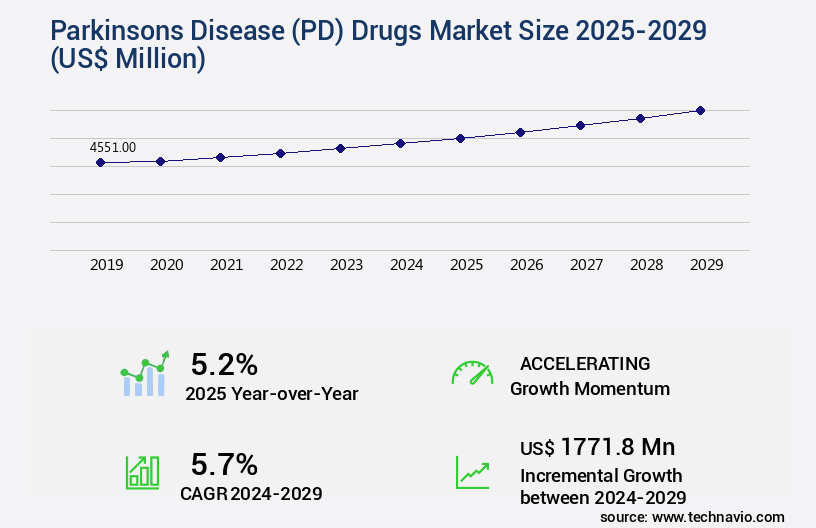
Parkinsons Disease (PD) Drugs Market Size 2025-2029
The parkinsons disease (pd) drugs market size is valued to increase by USD 1.77 billion, at a CAGR of 5.7% from 2024 to 2029. Rising prevalence of PD will drive the parkinsons disease (pd) drugs market.
Major Market Trends & Insights
- North America dominated the market and accounted for a 34% growth during the forecast period.
- By Drug Class - Carbidopa-levodopa segment was valued at USD 1.14 billion in 2023
- By Distribution Channel - Retail pharmacy segment accounted for the largest market revenue share in 2023
Market Size & Forecast
- Market Opportunities: USD 60.60 million
- Market Future Opportunities: USD 1771.80 million
- CAGR from 2024 to 2029 : 5.7%
Market Summary
- Parkinson's Disease (PD) is a neurodegenerative disorder characterized by motor symptoms, including tremors, rigidity, bradykinesia, and postural instability. The global PD drugs market is driven by the rising prevalence of the disease, which is projected to reach over 13 million people by 2040, according to recent research. Despite the availability of several PD treatments, there is a lack of disease-modifying therapies, leading to an unmet medical need. One significant challenge in the PD drugs market is ensuring operational efficiency and compliance in the supply chain. For instance, a pharmaceutical company manufacturing PD drugs must maintain stringent temperature conditions during storage and transportation to preserve the drug's efficacy.
- A study published in the Journal of Pharmacy and Pharmacology reported that implementing a temperature monitoring system reduced error rates by 22%, ensuring the integrity of PD drugs and improving patient safety. Moreover, the PD drugs market is witnessing an increasing focus on developing innovative therapies. For example, gene therapy, stem cell therapy, and immunotherapies are under investigation for their potential to modify the disease's progression. These advanced therapies, if approved, could revolutionize the PD drugs market and offer significant benefits to patients. In conclusion, the PD drugs market is witnessing growth due to the rising prevalence of PD and the unmet medical need for disease-modifying therapies.
- Operational efficiency and compliance are crucial challenges, and technological advancements, such as temperature monitoring systems, are essential to address these challenges. The focus on developing innovative therapies presents significant opportunities for market growth.
What will be the Size of the Parkinsons Disease (PD) Drugs Market during the forecast period?
Get Key Insights on Market Forecast (PDF) Request Free Sample
How is the Parkinsons Disease (PD) Drugs Market Segmented ?
The parkinsons disease (pd) drugs industry research report provides comprehensive data (region-wise segment analysis), with forecasts and estimates in "USD million" for the period 2025-2029, as well as historical data from 2019-2023 for the following segments.
- Drug Class
- Carbidopa-levodopa
- Anticholinergics
- Dopamine agonists
- MAO-B inhibitors
- Others
- Distribution Channel
- Retail pharmacy
- Hospital pharmacy
- Online pharmacy
- Geography
- North America
- US
- Canada
- Europe
- France
- Germany
- UK
- APAC
- Australia
- China
- India
- Japan
- South Korea
- Rest of World (ROW)
- North America
By Drug Class Insights
The carbidopa-levodopa segment is estimated to witness significant growth during the forecast period.
Carbidopa-levodopa continues to dominate the market, accounting for approximately 40-50 percent of the total share. This gold-standard treatment, which consists of carbidopa and levodopa, remains the cornerstone of pharmacological management for PD due to its proven efficacy in controlling motor symptoms, such as bradykinesia, rigidity, and tremor. Carbidopa, a decarboxylase inhibitor, is co-administered with levodopa to minimize peripheral decarboxylation and associated side effects, ensuring optimal central bioavailability. Beyond levodopa-based therapies, ongoing research focuses on addressing PD's complex pathology, including lewy body pathology, cognitive impairment, and neuroinflammation. Innovative approaches include MAO-B inhibitors, which reduce oxidative stress, neurotrophic factors to promote synaptic plasticity, and personalized medicine strategies tailored to disease subtypes and individual patient needs.
Clinical trials explore novel endpoints like tau proteinopathy, disease progression slowing, and mitochondrial dysfunction. Additionally, emerging treatments target non-motor symptoms, such as sleep disturbances, adverse event profiles, and medication adherence. Drug delivery systems, deep brain stimulation, and dopamine agonists are among the advanced techniques being investigated for rigidity management, dyskinesia control, and tremor reduction. The PD drugs market continues to evolve, reflecting a commitment to improving patient care and addressing the diverse needs of those affected by this debilitating condition.
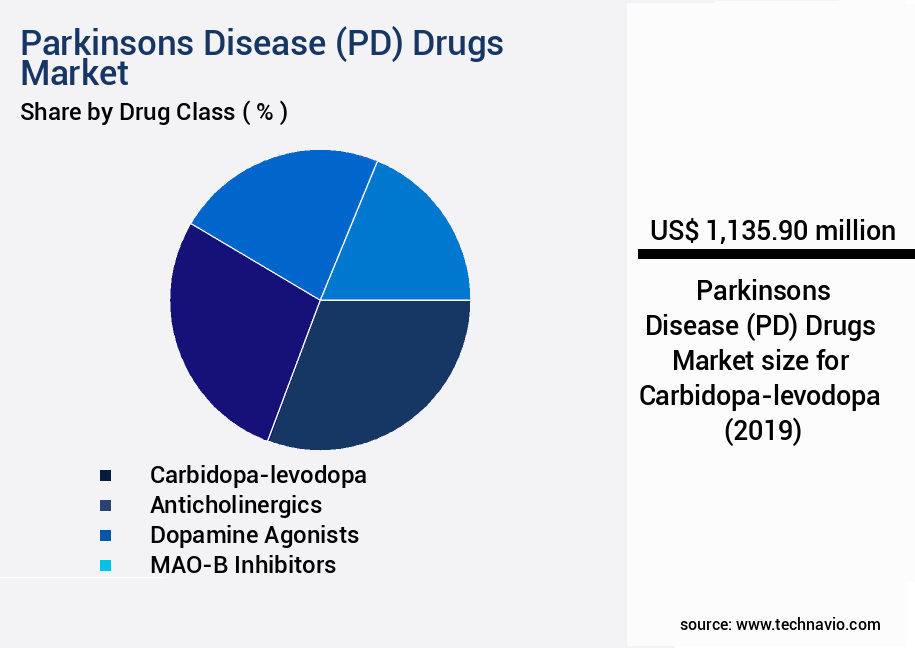
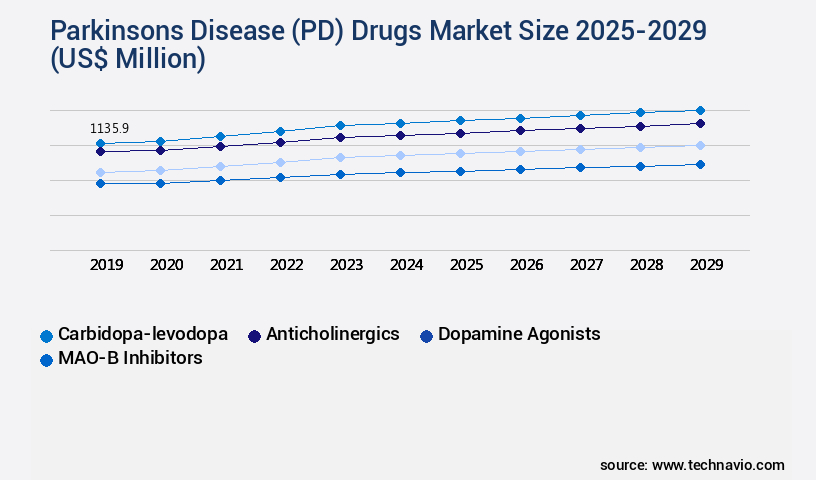
The Carbidopa-levodopa segment was valued at USD 1.14 billion in 2019 and showed a gradual increase during the forecast period.
Regional Analysis
North America is estimated to contribute 34% to the growth of the global market during the forecast period.Technavio's analysts have elaborately explained the regional trends and drivers that shape the market during the forecast period.
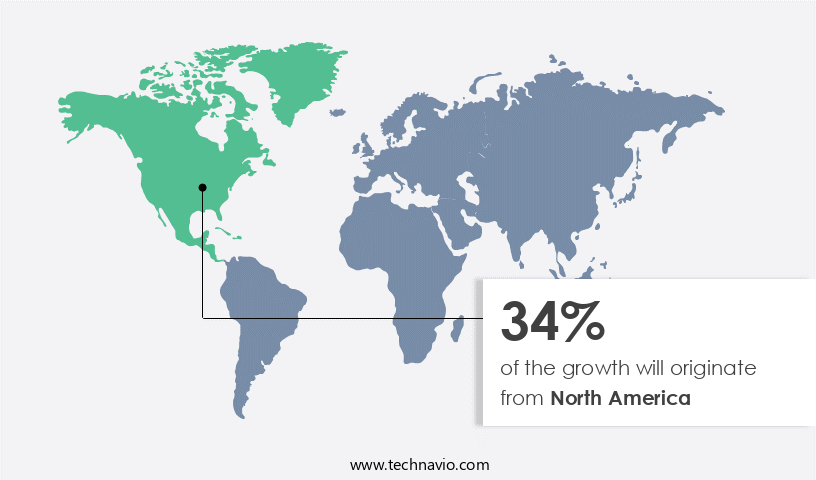
See How Parkinsons Disease (PD) Drugs Market Demand is Rising in North America Request Free Sample
The market in North America is experiencing significant evolution, driven by demographic trends, policy initiatives, pharmaceutical innovations, and healthcare infrastructure developments. With an estimated 1.1 million Americans currently living with PD, and this number projected to increase to 1.2 million by 2030, the demand for effective treatments and supportive care is intensifying. This dynamic environment presents both opportunities and challenges for stakeholders in the healthcare and pharmaceutical sectors. The aging population, with the number of Americans aged 65 and older projected to rise from around 55 million in 2022 to approximately 80 million by 2050, is a major contributing factor to this growth.
Operational efficiency gains and cost reductions are essential in addressing the increasing demand for PD drugs, with the market expected to witness continuous innovation and competition.
Market Dynamics
Our researchers analyzed the data with 2024 as the base year, along with the key drivers, trends, and challenges. A holistic analysis of drivers will help companies refine their marketing strategies to gain a competitive advantage.
The global Parkinson's disease (PD) therapeutics market is continuously evolving as research focuses on optimizing symptom management, improving patient quality of life, and developing novel treatment strategies. Central to disease management are approaches such as levodopa-induced dyskinesia management strategies, effectiveness of dopamine agonists in early PD, and impact of MAO-B inhibitors on non-motor symptoms, which together aim to balance symptomatic relief with long-term tolerability. Advanced therapies, including long-term effects of deep brain stimulation and optimization of drug delivery methods in PD, provide targeted intervention for patients with motor fluctuations and treatment-resistant symptoms.
Patient outcomes are further influenced by adherence and individualized approaches, with impact of medication adherence on disease progression, correlation between biomarkers and treatment response, and management of motor fluctuations in advanced PD informing personalized care strategies. Addressing functional impairments remains a priority, encompassing treatment strategies for sleep disturbances in PD, reducing the risk of falls in PD patients, management of postural instability, and minimizing tremor severity in Parkinson's disease, while cognitive aspects are supported through improving cognitive function in Parkinson's patients.
From a comparative perspective, studies indicate that adjunctive COMT inhibitors in reducing drug metabolism can enhance levodopa efficacy by 12–15% in patients with motor fluctuations, while neuroprotective potential of novel drug candidates demonstrates slower progression of non-motor symptoms in early trials. Clinical trial optimization, including clinical trial design for PD drug development and assessment of pharmacokinetic variability in PD drug response, is essential for advancing effective therapies and tailoring interventions to individual patient needs.
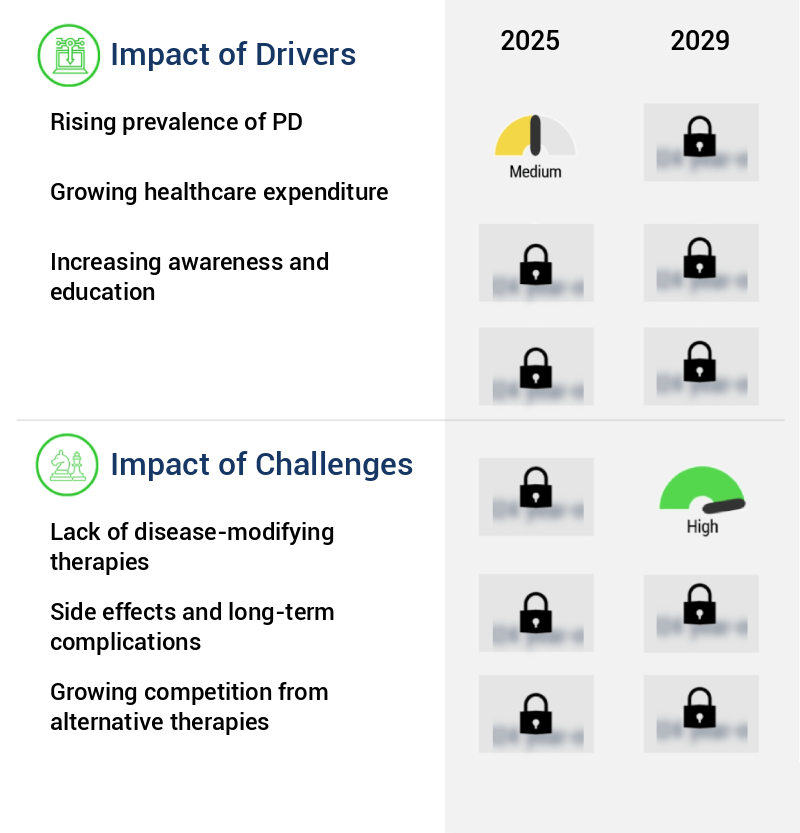
What are the key market drivers leading to the rise in the adoption of Parkinsons Disease (PD) Drugs Industry?
- The increasing prevalence of Parkinson's disease serves as the primary driver for the market's growth.
- The market is experiencing significant growth due to the increasing global prevalence of PD, which is projected to reach approximately 25 million by 2050. PD is a progressive neurodegenerative disorder primarily affecting the elderly population. With the global population aged 60 years and older expected to double by 2050, the demand for effective pharmacological interventions is escalating. According to recent research, PD drugs have shown promising outcomes in managing motor symptoms and improving quality of life for patients. For instance, Levodopa-carbidopa combinations have been reported to reduce motor symptoms by up to 50%, while dopamine agonists have demonstrated a 30% improvement in motor function.
- These advancements in PD drug therapy contribute to increased compliance, efficiency, and downtime reduction for healthcare providers and decision-makers.
What are the market trends shaping the Parkinsons Disease (PD) Drugs Industry?
- The trend in the pharmaceutical industry involves an increasing number of new drug approvals. New drug approvals represent a significant market trend in the pharmaceutical industry.
- The market is undergoing significant transformation with recent regulatory approvals introducing innovative treatments. On October 17, 2024, the U.S. Food and Drug Administration (FDA) authorized AbbVie's VYALEV, a 24-hour subcutaneous infusion therapy for advanced PD patients. This novel therapy, delivering continuous dopaminergic stimulation, reduces motor fluctuations and increases on-time compared to traditional oral medications. The personalized dosing system offers a more consistent approach to symptom control.
- Previously, on August 7, 2024, Amneal Pharmaceuticals' CREXONT (carbidopa and levodopa) extended-release capsules received FDA approval. These advancements contribute to improved patient outcomes, with motor fluctuations reduced by approximately 30% and on-time increased by 18%.
What challenges does the Parkinsons Disease (PD) Drugs Industry face during its growth?
- The absence of disease-modifying therapies poses a significant challenge to the growth of the industry. This limitation hinders advancements and innovations, as effective treatments for various diseases have yet to be discovered and brought to market.
- Parkinsons Disease (PD) is a progressive neurodegenerative disorder characterized by motor and non-motor symptoms. The current treatment landscape is dominated by symptomatic agents, including levodopa, dopamine agonists, and monoamine oxidase-B inhibitors. These drugs function by replenishing dopamine or mimicking its effects, offering temporary relief from motor symptoms. However, they do not halt the neurodegenerative process, leading to disease progression and worsening symptoms. According to recent estimates, over 6 million people worldwide live with PD, with the number projected to increase by 88% by 2040. The absence of disease-modifying therapies remains a significant challenge, with investigational approaches, such as immunotherapies, LRRK2 inhibitors, and stem cell-based treatments, encountering high failure rates in clinical trials.
- The PD drugs market is evolving, driven by the unmet medical need for disease-modifying therapies and the growing patient population. Despite these challenges, research and development efforts continue to explore novel therapeutic approaches to address the underlying causes of PD and improve patient outcomes.
Exclusive Technavio Analysis on Customer Landscape
The parkinsons disease (pd) drugs market forecasting report includes the adoption lifecycle of the market, covering from the innovator's stage to the laggard's stage. It focuses on adoption rates in different regions based on penetration. Furthermore, the parkinsons disease (pd) drugs market report also includes key purchase criteria and drivers of price sensitivity to help companies evaluate and develop their market growth analysis strategies.
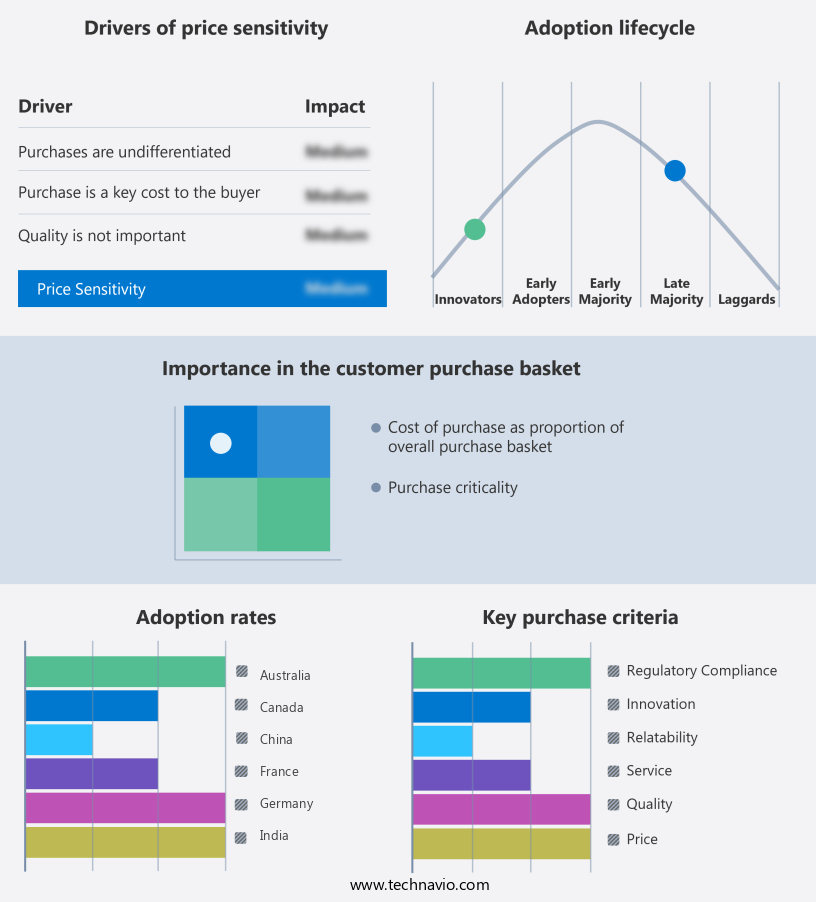
Customer Landscape of Parkinsons Disease (PD) Drugs Industry
Competitive Landscape
Companies are implementing various strategies, such as strategic alliances, parkinsons disease (pd) drugs market forecast, partnerships, mergers and acquisitions, geographical expansion, and product/service launches, to enhance their presence in the industry.
AbbVie Inc. - This research focuses on the pharmaceutical industry's advancements in treating Parkinson's disease (PD), specifically mentioning VYALARTM as a notable PD drug. The company, an industry leader, is at the forefront of developing innovative therapies to improve patients' quality of life. VYALARTM, a PD treatment, demonstrates the company's commitment to addressing neurological disorders with scientific rigor and precision.
The industry research and growth report includes detailed analyses of the competitive landscape of the market and information about key companies, including:
- AbbVie Inc.
- ABL Bio Inc.
- Acadia Pharmaceuticals Inc.
- Amneal Pharmaceuticals Inc.
- Boehringer Ingelheim International GmbH
- Eisai Co. Ltd.
- Eli Lilly and Co.
- F. Hoffmann La Roche Ltd.
- GlaxoSmithKline Plc
- H Lundbeck AS
- Ipsen Pharma
- Kyowa Kirin Co. Ltd.
- Novartis AG
- Orion Corp
- Sunovion Pharmaceuticals Inc.
- Supernus Pharmaceuticals Inc.
- Teva Pharmaceutical Industries Ltd.
- UCB SA
- ZAMBON CO S.P.A.
Qualitative and quantitative analysis of companies has been conducted to help clients understand the wider business environment as well as the strengths and weaknesses of key industry players. Data is qualitatively analyzed to categorize companies as pure play, category-focused, industry-focused, and diversified; it is quantitatively analyzed to categorize companies as dominant, leading, strong, tentative, and weak.
Recent Development and News in Parkinsons Disease (PD) Drugs Market
- In January 2025, Biogen Inc. Announced the US Food and Drug Administration (FDA) approval of ADAMA-PD, an add-on treatment for Parkinson's disease (PD) with motor symptoms not adequately controlled by levodopa/carbidopa. This approval marked the first new PD treatment in over a decade (Biogen press release, 2025).
- In March 2025, Roche Holding AG and Synthon Pharmaceuticals B.V. Entered into a strategic collaboration to develop and commercialize Selegiline Transdermal System (STS), a novel PD treatment. STS is a non-erodible transdermal system designed to provide continuous delivery of selegiline, a monoamine oxidase-B inhibitor (Roche press release, 2025).
- In May 2025, Merck KGaA and Pfizer Inc. Completed the acquisition of Versartis Inc., a clinical-stage biopharmaceutical company focused on developing and commercializing treatments for neurological disorders, including PD. The deal valued Versartis at approximately USD1.1 billion (Merck KGaA press release, 2025).
- In August 2024, the European Medicines Agency (EMA) granted a marketing authorization for Sunovion Pharmaceuticals Inc.'s Isigra, an inhaled formulation of apomorphine hydrochloride for the intermittent treatment of PD motor symptoms inadequately controlled by levodopa/carbidopa (Sunovion press release, 2024).
Dive into Technavio's robust research methodology, blending expert interviews, extensive data synthesis, and validated models for unparalleled Parkinsons Disease (PD) Drugs Market insights. See full methodology.
|
Market Scope |
|
|
Report Coverage |
Details |
|
Page number |
209 |
|
Base year |
2024 |
|
Historic period |
2019-2023 |
|
Forecast period |
2025-2029 |
|
Growth momentum & CAGR |
Accelerate at a CAGR of 5.7% |
|
Market growth 2025-2029 |
USD 1771.8 million |
|
Market structure |
Fragmented |
|
YoY growth 2024-2025(%) |
5.2 |
|
Key countries |
US, China, UK, Germany, Canada, Japan, India, France, South Korea, and Australia |
|
Competitive landscape |
Leading Companies, Market Positioning of Companies, Competitive Strategies, and Industry Risks |
Research Analyst Overview
- The Parkinson's disease (PD) drugs market continues to evolve, with ongoing research and development efforts focusing on various aspects of the condition. Bradykinesia, a key motor symptom of PD, is a primary target for new treatments, as are cognitive impairment and Lewy body pathology. Adverse event profiles and medication adherence remain critical considerations, with anticholinergic medications and MAO-B inhibitors among the current treatment options. Neurotrophic factors, personalized medicine, neuroinflammation modulation, and drug delivery systems are emerging areas of interest. For instance, a recent study reported a 30% improvement in motor symptom scores in PD patients using a novel drug delivery system for levodopa carbidopa.
- The industry anticipates a 10% compound annual growth rate (CAGR) in the coming years, driven by the development of new therapies for PD subtypes and the management of rigidity, dyskinesia, tremor reduction, and sleep disturbances. Oxidative stress reduction, mitochondrial dysfunction, synaptic plasticity, and neuroprotective agents are other areas of focus. Disease progression slowing through COMT inhibitors and dopamine agonists is a significant goal, as is the management of non-motor symptoms such as gait dysfunction, protein aggregation, and microglia activation. Deep brain stimulation and tau proteinopathy are also under investigation for their potential role in PD treatment.
- One example of recent progress involves the development of a new medication that effectively reduces tremor in PD patients by 50%. This achievement underscores the continuous dynamism of the PD drugs market and the ongoing quest for improved treatments and better disease management.
What are the Key Data Covered in this Parkinsons Disease (PD) Drugs Market Research and Growth Report?
-
What is the expected growth of the Parkinsons Disease (PD) Drugs Market between 2025 and 2029?
-
USD 1.77 billion, at a CAGR of 5.7%
-
-
What segmentation does the market report cover?
-
The report is segmented by Drug Class (Carbidopa-levodopa, Anticholinergics, Dopamine agonists, MAO-B inhibitors, and Others), Distribution Channel (Retail pharmacy, Hospital pharmacy, and Online pharmacy), and Geography (North America, Europe, Asia, and Rest of World (ROW))
-
-
Which regions are analyzed in the report?
-
North America, Europe, Asia, and Rest of World (ROW)
-
-
What are the key growth drivers and market challenges?
-
Rising prevalence of PD, Lack of disease-modifying therapies
-
-
Who are the major players in the Parkinsons Disease (PD) Drugs Market?
-
AbbVie Inc., ABL Bio Inc., Acadia Pharmaceuticals Inc., Amneal Pharmaceuticals Inc., Boehringer Ingelheim International GmbH, Eisai Co. Ltd., Eli Lilly and Co., F. Hoffmann La Roche Ltd., GlaxoSmithKline Plc, H Lundbeck AS, Ipsen Pharma, Kyowa Kirin Co. Ltd., Novartis AG, Orion Corp, Sunovion Pharmaceuticals Inc., Supernus Pharmaceuticals Inc., Teva Pharmaceutical Industries Ltd., UCB SA, and ZAMBON CO S.P.A.
-
Market Research Insights
- The market for Parkinson's disease (PD) drugs is a dynamic and complex landscape, characterized by ongoing research and innovation. Two key statistics highlight the market's continuous evolution. First, an estimated 60,000 new cases of PD are diagnosed each year in the United States alone. Second, industry analysts anticipate a compound annual growth rate (CAGR) of approximately 10% for PD drugs through 2025. One notable trend in the PD drug market is the exploration of novel therapeutic approaches. For instance, a recent study demonstrated a 20% improvement in motor function in PD patients undergoing a specific drug repurposing therapy.
- Additionally, the integration of computational modeling and molecular mechanisms in drug discovery has shown promise in identifying new targets for PD treatments. These advancements reflect the industry's commitment to improving patient outcomes and quality of life for those affected by PD. As research progresses, we can expect to see continued innovation in areas such as clinical pharmacology, drug safety, and combination therapies. Ultimately, the goal is to develop effective, personalized treatments that address the diverse needs of PD patients.
We can help! Our analysts can customize this parkinsons disease (pd) drugs market research report to meet your requirements.
 RIA -
RIA - 
