



Pest Control Services Market Size 2026-2030
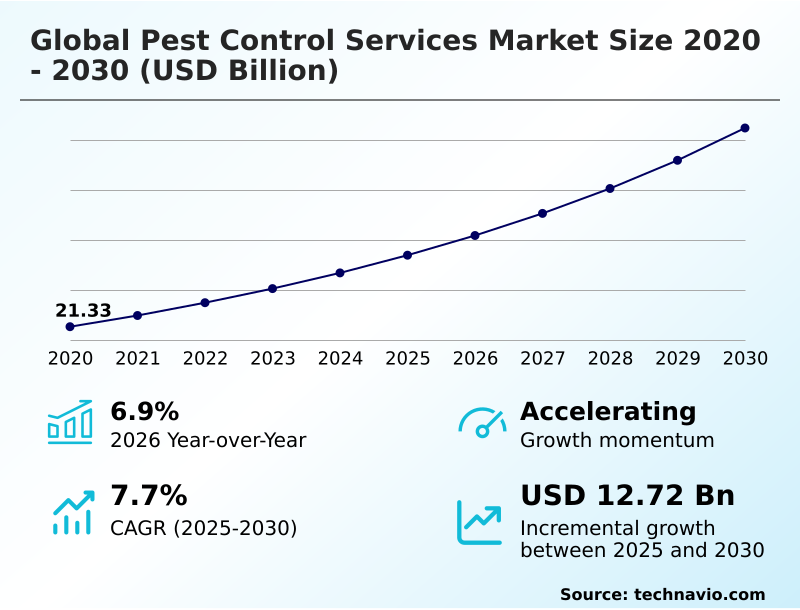
The pest control services market size is valued to increase by USD 12.72 billion, at a CAGR of 7.7% from 2025 to 2030. Rapid urbanization and population growth will drive the pest control services market.
Major Market Trends & Insights
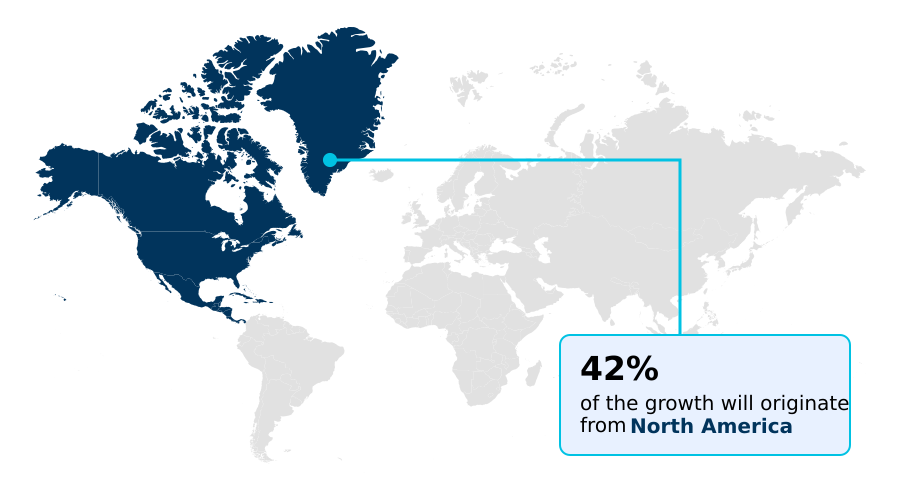
- North America dominated the market and accounted for a 42.5% growth during the forecast period.
- By Application - General pest control segment was valued at USD 22.22 billion in 2024
- By End-user - Residential segment accounted for the largest market revenue share in 2024
Market Size & Forecast
- Market Opportunities: USD 19.87 billion
- Market Future Opportunities: USD 12.72 billion
- CAGR from 2025 to 2030 : 7.7%
Market Summary
- The Pest Control Services Market is evolving beyond traditional extermination, driven by a convergence of environmental, technological, and regulatory dynamics. Heightened awareness of vector-borne diseases and the economic impact of infestations are compelling both commercial and residential sectors to adopt more sophisticated control strategies.
- A core component of this shift is integrated pest management, which emphasizes proactive monitoring and targeted interventions. For instance, a food processing facility can leverage a network of remote sensors to maintain hygiene standards and ensure regulatory compliance, preventing contamination before it occurs. This data-driven approach minimizes chemical usage and aligns with growing consumer demand for sustainable practices.
- The industry also grapples with challenges such as pesticide resistance and labor shortages, which in turn foster innovation in areas like biological controls and autonomous robots. As urban centers expand and global trade facilitates pest migration, the need for professional, technologically advanced services that safeguard public health and property becomes increasingly critical, ensuring sustained market relevance.
What will be the Size of the Pest Control Services Market during the forecast period?
Get Key Insights on Market Forecast (PDF) Get Free Sample
How is the Pest Control Services Market Segmented?
The pest control services industry research report provides comprehensive data (region-wise segment analysis), with forecasts and estimates in "USD million" for the period 2026-2030, as well as historical data from 2020-2024 for the following segments.
- Application
- General pest control
- Termite control
- End-user
- Residential
- Commercial
- Technique
- Chemical control
- Physical control
- Others
- Geography
- North America
- US
- Canada
- Mexico
- Europe
- Germany
- UK
- France
- APAC
- China
- Japan
- India
- South America
- Brazil
- Argentina
- Middle East and Africa
- Saudi Arabia
- UAE
- South Africa
- Rest of World (ROW)
- North America
By Application Insights
The general pest control segment is estimated to witness significant growth during the forecast period.
The general pest control segment is shaped by the need for advanced rodent control and management of common insects.
Adherence to strict food safety protocols and hygiene standards in commercial settings drives demand, while residential pest protection focuses on preventing structural damage and managing vector-borne diseases.
A key strategy is integrated pest management, which combines digital monitoring and data analytics to optimize treatments. This approach, utilizing non-toxic alternatives, has demonstrated a ninety five percent reduction in pest-related incidents in compliant facilities.
The adoption of eco-friendly formulations and preventive pest management plans supports recurring revenue models and enhances professional service reliability, addressing the continuous challenge of urban pest proliferation and the need for effective building material protection.
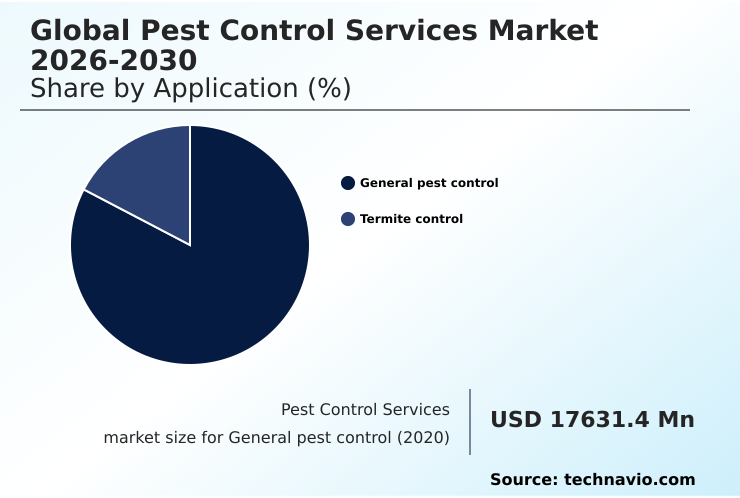
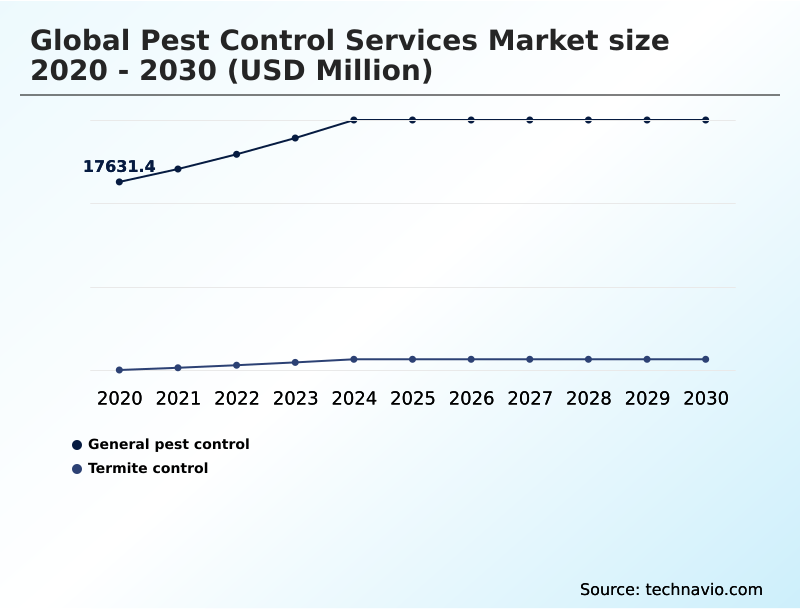
The General pest control segment was valued at USD 22.22 billion in 2024 and showed a gradual increase during the forecast period.
Regional Analysis
North America is estimated to contribute 42.5% to the growth of the global market during the forecast period.Technavio’s analysts have elaborately explained the regional trends and drivers that shape the market during the forecast period.
See How Pest Control Services Market Demand is Rising in North America Get Free Sample
The market's geographic landscape is characterized by diverse growth patterns, with North America representing a significant portion of the opportunity at over 42%, driven by stringent regulations and high adoption of advanced technology.
Concurrently, the APAC region is projected to be a primary engine of expansion, contributing more than a quarter of the market's growth, fueled by rapid urbanization and rising hygiene awareness.
In these regions, the use of sterile environments and advanced heat treatment protocols is becoming standard in commercial sectors. Demand for wildlife exclusion services and effective termite control is rising globally.
Companies are focused on cross-border pest transmission and technician training certification to standardize service quality. These regional dynamics highlight a global shift toward more sophisticated pest management solutions.
Market Dynamics
Our researchers analyzed the data with 2025 as the base year, along with the key drivers, trends, and challenges. A holistic analysis of drivers will help companies refine their marketing strategies to gain a competitive advantage.
- A comprehensive analysis of the global pest control services market reveals complex interactions between multiple strategic factors. The impact of urbanization on general pest control services is a primary driver, creating dense environments where infestations can escalate quickly.
- This has accelerated the effectiveness of digital transformation in termite control, with advanced baiting systems versus traditional termite treatments showing significantly better long-term outcomes. Businesses are increasingly adopting sustainable alternatives to chemical pesticides for commercial use to meet consumer demand and regulatory pressures.
- However, challenges of pesticide resistance in common household pests persist, compelling a shift toward integrated pest management strategies for commercial kitchens. The role of AI in predictive pest monitoring and management is central to this evolution, enabling proactive interventions that reduce reliance on reactive measures. The regulatory compliance impact on pest control service providers is substantial, shaping operational protocols.
- For instance, companies that proactively manage climate change effects on pest migration patterns and address the importance of non-toxic pest control in residential areas often see a 15% higher client retention rate than those who do not, directly influencing operational planning.
- This underscores the need for managing vector-borne diseases through professional pest services and conducting a thorough cost-benefit analysis of preventive pest management programs. Furthermore, addressing workforce retention strategies for pest control technicians and promoting technology adoption for improving operational efficiency in pest control are critical.
- Consolidation trends in the global pest control services market continue, while implementing food safety pest control in processing plants remains a key focus. Innovations such as drone technology applications for large-scale pest inspection and biological control methods for agricultural pest protection are gaining traction.
- Finally, the industry faces ongoing challenges in managing invasive species in new regions and developing eco-friendly formulations for sensitive environments.
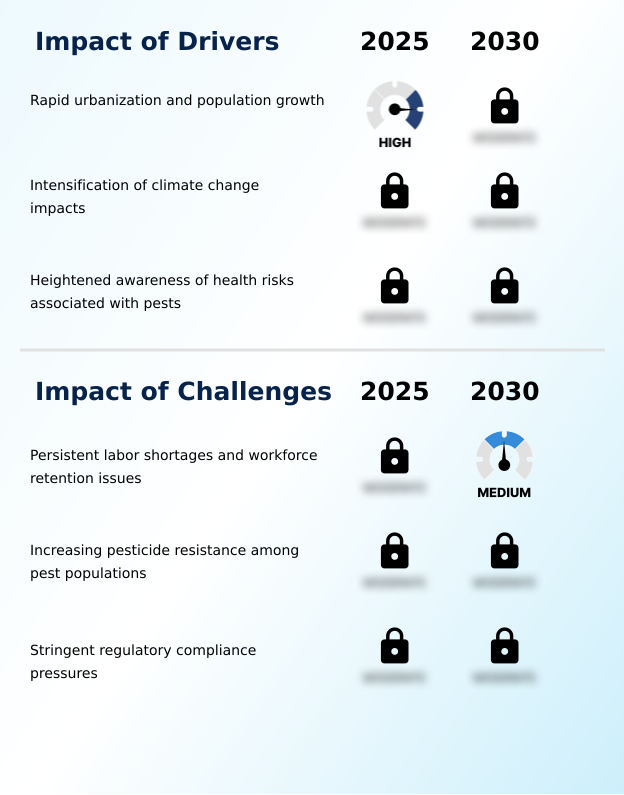
What are the key market drivers leading to the rise in the adoption of Pest Control Services Industry?
- Rapid urbanization and associated population growth are a key driver for the pest control services market, creating denser environments conducive to pest proliferation.
- Market growth is fundamentally driven by rapid urbanization, climate change, and heightened health awareness. Urban pest proliferation, accelerated by dense living conditions, is increasing demand for residential pest protection and commercial services.
- Climate change pest impact expands the geographical range and active seasons of pests, necessitating more robust agricultural pest protection and public health vector control.
- This has led to a 15% increase in demand for year-round service contract models in previously seasonal regions.
- Furthermore, a greater understanding of health risks associated with pests drives the adoption of preventive pest management and stringent food safety pest control.
- These drivers reinforce the need for professional service reliability and support investments in advanced solutions for structural damage prevention and invasive species management.
What are the market trends shaping the Pest Control Services Industry?
- A prominent market trend is the increasing adoption of digital and smart technologies. These innovations are enabling more precise, efficient, and proactive pest management solutions across the industry.
- Key trends reshaping the market include rapid digitalization and a pronounced shift toward sustainability. The adoption of technologies such as smart traps, remote sensors, and insect growth regulators is enabling predictive maintenance schedules, with some platforms improving treatment accuracy by over 30%. This digital transformation facilitates better regulatory compliance and enhances operational efficiency.
- Concurrently, sustainability is driving the use of non-toxic alternatives and biological controls, with demand for eco-friendly pest solutions growing. These trends are supported by industry consolidation trends, where mergers and acquisitions facilitate the scaling of advanced technologies and sustainable pest practices.
- The focus is increasingly on providing recurring revenue models that prioritize asset protection strategies through continuous monitoring and preventive care, aligning with demands for greater environmental stewardship.
What challenges does the Pest Control Services Industry face during its growth?
- Persistent labor shortages and workforce retention issues represent a key challenge affecting industry growth and operational capacity.
- The industry faces significant operational and biological challenges that temper growth. Persistent labor shortages and high workforce retention pest control costs strain service capacity, with some firms reporting a 20% increase in recruitment expenses.
- This issue is compounded by the biological challenge of pesticide resistance, which can elevate treatment costs by up to 25% as it requires more complex chemical control or a shift to physical control methods. Navigating stringent and evolving regulations also adds administrative burdens, demanding constant updates to technician training certification and digital reporting platforms.
- These hurdles pressure companies to innovate in areas like autonomous robots and data analytics to mitigate workforce dependencies and enhance treatment efficacy while ensuring compliance and managing supply chain pest management risks.
Exclusive Technavio Analysis on Customer Landscape
The pest control services market forecasting report includes the adoption lifecycle of the market, covering from the innovator’s stage to the laggard’s stage. It focuses on adoption rates in different regions based on penetration. Furthermore, the pest control services market report also includes key purchase criteria and drivers of price sensitivity to help companies evaluate and develop their market growth analysis strategies.
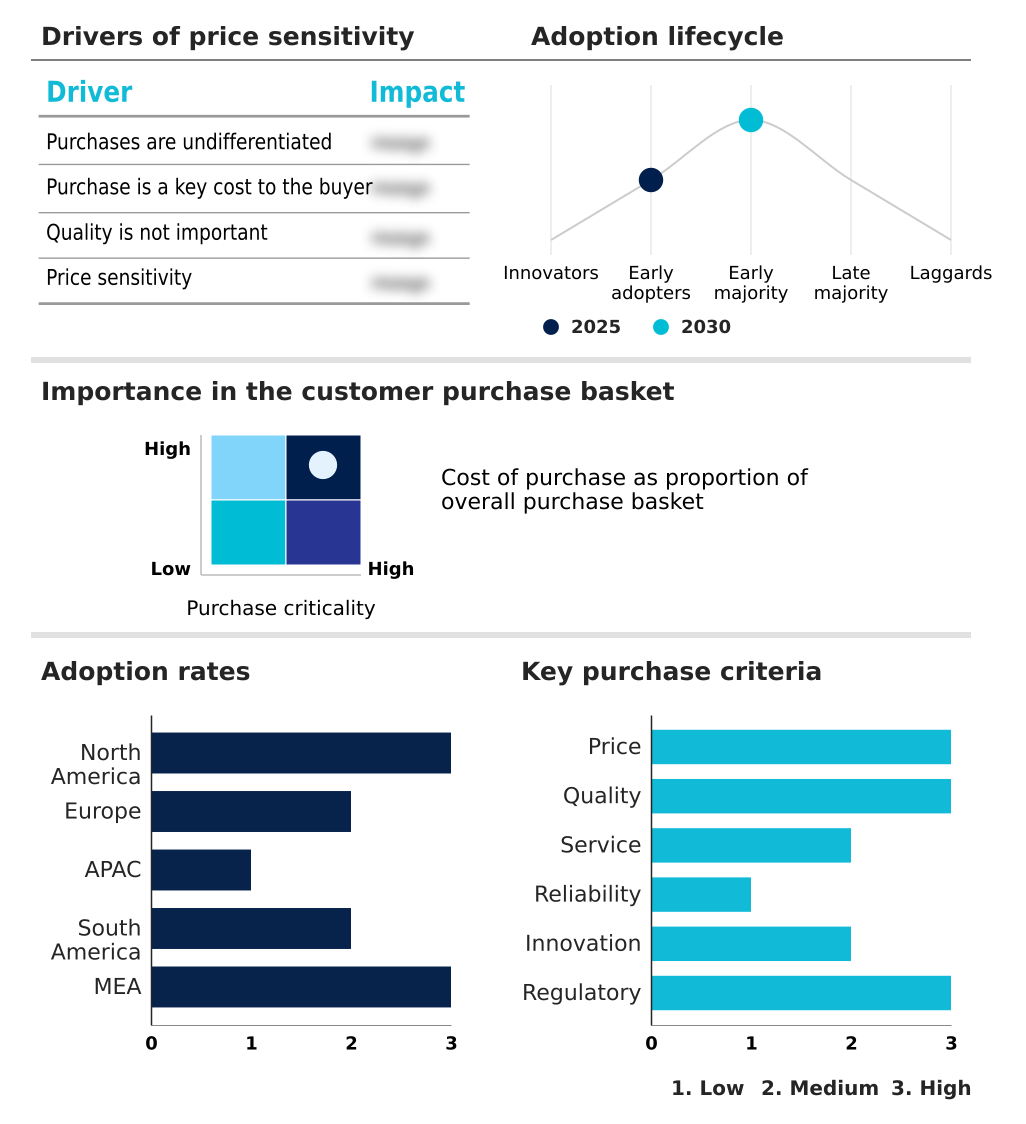
Customer Landscape of Pest Control Services Industry
Competitive Landscape
Companies are implementing various strategies, such as strategic alliances, pest control services market forecast, partnerships, mergers and acquisitions, geographical expansion, and product/service launches, to enhance their presence in the industry.
ABC Home and Commercial Services - Key offerings encompass integrated pest management, specialized termite and rodent control, and digital monitoring solutions designed to ensure residential, commercial, and industrial regulatory compliance.
The industry research and growth report includes detailed analyses of the competitive landscape of the market and information about key companies, including:
- ABC Home and Commercial Services
- Abell Group
- Anticimex International AB
- Aptive Environmental
- Arrow Exterminators Inc.
- Cooks Pest Control Inc.
- Dodson Pest Control Inc.
- Ecolab Inc.
- Green Pest Solutions
- Greenix Pest Control
- Massey Services Inc.
- Moxie Pest Control L.P.
- Pestco Professional Services
- Rentokil Initial plc
- Rollins Inc.
- SANIX Inc.
- Senske Inc.
- Truly Nolen of America Inc.
Qualitative and quantitative analysis of companies has been conducted to help clients understand the wider business environment as well as the strengths and weaknesses of key industry players. Data is qualitatively analyzed to categorize companies as pure play, category-focused, industry-focused, and diversified; it is quantitatively analyzed to categorize companies as dominant, leading, strong, tentative, and weak.
Recent Development and News in Pest control services market
- In June 2025, Anticimex International AB acquired Safe Haven Pest Control, Abbys Pest and Termite Services, and Metro Guard Termite and Pest Control, facilitating its entry into the Texas market.
- In May 2025, Rentokil Initial plc acquired Pestcall Pty Ltd, establishing its presence in the Australian market and reinforcing its footprint in the APAC region.
- In April 2025, Rollins Inc. acquired Saela Holdings LLC, expanding its operational presence in the Pacific Northwest, Mountain West, and Midwestern United States.
- In October 2025, Rentokil Initial plc advanced its global deployment of AI-powered smart traps, enhancing real-time monitoring capabilities and reducing chemical dependency.
Dive into Technavio’s robust research methodology, blending expert interviews, extensive data synthesis, and validated models for unparalleled Pest Control Services Market insights. See full methodology.
| Market Scope | |
|---|---|
| Page number | 286 |
| Base year | 2025 |
| Historic period | 2020-2024 |
| Forecast period | 2026-2030 |
| Growth momentum & CAGR | Accelerate at a CAGR of 7.7% |
| Market growth 2026-2030 | USD 12722.1 million |
| Market structure | Fragmented |
| YoY growth 2025-2026(%) | 6.9% |
| Key countries | US, Canada, Mexico, Germany, UK, France, Italy, Spain, The Netherlands, China, Japan, India, South Korea, Australia, Indonesia, Brazil, Argentina, Chile, Saudi Arabia, UAE, South Africa, Israel and Turkey |
| Competitive landscape | Leading Companies, Market Positioning of Companies, Competitive Strategies, and Industry Risks |
Research Analyst Overview
- The Pest Control Services Market is undergoing a significant transformation, moving from reactive chemical control to proactive, data-driven strategies. This evolution is underpinned by the widespread adoption of integrated pest management, which leverages digital monitoring, remote sensors, and data analytics to enhance efficacy.
- The deployment of smart traps and autonomous robots is becoming increasingly common, particularly in commercial settings requiring stringent hygiene standards and regulatory compliance. The development of non-repellent termiticide and advanced baiting system technologies for termite control offers superior structural protection.
- Physical control methods like thermal remediation, mechanical barriers, and bird deterrents are gaining prominence, alongside non-toxic alternatives such as biopesticides, botanical extracts, and pheromone mating disruption. In response to pesticide resistance, research is focused on insect growth regulators and novel eco-friendly formulations. Innovations such as drone technology for inspection, ultrasonic devices for deterrence, and liquid barrier treatment are reshaping service delivery.
- For board-level consideration, the strategic shift to sustainable solutions, including biological controls like predatory mite and sterile environments, is critical for budgeting, as it aligns with consumer values and can reduce long-term remediation costs by up to 25%. This focus extends to food safety protocols, wildlife exclusion services, and advanced soil treatment and heat treatment protocols.
What are the Key Data Covered in this Pest Control Services Market Research and Growth Report?
-
What is the expected growth of the Pest Control Services Market between 2026 and 2030?
-
USD 12.72 billion, at a CAGR of 7.7%
-
-
What segmentation does the market report cover?
-
The report is segmented by Application (General pest control, and Termite control), End-user (Residential, and Commercial), Technique (Chemical control, Physical control, and Others) and Geography (North America, Europe, APAC, South America, Middle East and Africa)
-
-
Which regions are analyzed in the report?
-
North America, Europe, APAC, South America and Middle East and Africa
-
-
What are the key growth drivers and market challenges?
-
Rapid urbanization and population growth, Persistent labor shortages and workforce retention issues
-
-
Who are the major players in the Pest Control Services Market?
-
ABC Home and Commercial Services, Abell Group, Anticimex International AB, Aptive Environmental, Arrow Exterminators Inc., Cooks Pest Control Inc., Dodson Pest Control Inc., Ecolab Inc., Green Pest Solutions, Greenix Pest Control, Massey Services Inc., Moxie Pest Control L.P., Pestco Professional Services, Rentokil Initial plc, Rollins Inc., SANIX Inc., Senske Inc. and Truly Nolen of America Inc.
-
Market Research Insights
- The market's dynamics are increasingly shaped by a focus on operational efficiency gains and environmental stewardship. The adoption of sustainable pest practices has been shown to improve customer retention models by over 15%, as clients prioritize eco-friendly solutions.
- Similarly, advanced digital reporting platforms enhance professional service reliability and can increase technician productivity by 20% through optimized scheduling and predictive maintenance schedules. Commercial pest services are leveraging these technologies to ensure compliance with stringent healthcare facility hygiene standards.
- This shift toward technology and sustainability is not only a response to regulatory pressures but also a strategic move to build resilient service contract models and achieve long-term asset protection strategies. The emphasis on client education initiatives further strengthens these relationships, moving the industry toward a more collaborative and preventive framework.
We can help! Our analysts can customize this pest control services market research report to meet your requirements.
 RIA -
RIA - 
