



Polyhydroxyalkanoate Market Size 2024-2028
The polyhydroxyalkanoate market size is forecast to increase by USD 26.9 million at a CAGR of 6.31% between 2023 and 2028.
- The market is experiencing significant growth due to the increasing demand for eco-friendly and biodegradable plastics. This trend is particularly noticeable in industries such as food processing and flexible packaging, where the use of PHAs in the production of bags, films, boxes, and sheets is becoming increasingly popular.
- The shift towards sustainable production methods by manufacturers is another key driver for the market, as they seek to reduce their environmental footprint and meet consumer demand for more responsible business practices. However, the cost effectiveness of conventional plastics remains a challenge for the PHA market, limiting its widespread adoption. In the US, the e-retail business is also showing an interest in PHAs due to their potential to replace traditional plastic packaging materials, providing an opportunity for market growth.
What will be the Polyhydroxyalkanoate Market Size During the Forecast Period?
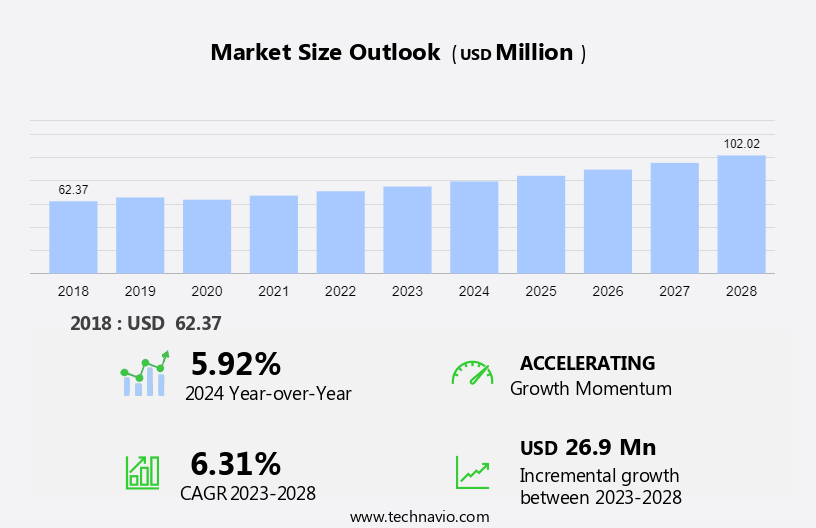
- Polyhydroxyalkanoates (PHAs), a type of biopolymer, have gained significant attention in recent years as potential alternatives to traditional petroleum-based plastics. These environmentally friendly materials offer numerous advantages, making them suitable for various industries, including packaging and food services, biomedical, agriculture, and more. Non-degradable plastics, such as polyvinyl chloride (PVC), have been a major concern due to their negative impact on the environment. As environmental issues continue to rise, the demand for sustainable materials has become increasingly important. PHAs provide an attractive solution, as they are biodegradable and derived from renewable resources.
- Moreover, PHAs are produced through microbial fermentation, using carbon sources like sugars, lipids, or gases. This production process involves genetic engineering and carbon chains synthesis, which results in the formation of PHA granules within the bacteria. The packaging industry is one of the primary markets for PHAs. Biodegradable mulch films made from PHAs can enhance crop growth and reduce the use of synthetic fertilizers and pesticides. Additionally, PHAs can be used as a carbon source for livestock feed, improving animal health and reducing greenhouse gas emissions. These materials can be used to create various products, such as plastic bags, films, boxes, and sheets, offering flexibility and durability while reducing the environmental footprint.
How is this market segmented and which is the largest segment?
The market research report provides comprehensive data (region-wise segment analysis), with forecasts and estimates in "USD million" for the period 2024-2028, as well as historical data from 2018-2022 for the following segments.
- Application
- Packaging
- Biomedical
- Food services
- Agriculture
- Others
- Type
- Copolymerized PHA
- Linear PHA
- Geography
- APAC
- China
- India
- Japan
- Europe
- Germany
- North America
- US
- South America
- Middle East and Africa
- APAC
By Application Insights
The packaging segment is estimated to witness significant growth during the forecast period. In the global market, the demand for polyhydroxyalkanoate (PHA) is increasing due to regulatory pressures against conventional plastics, particularly in the packaging industry. PHAs are biodegradable polymers that are gaining popularity in the food and beverage (F&B) sector for producing containers and packaging materials. The packaging industry can be segmented into rigid and flexible packaging. Rigid packaging includes bottles, loose-fill, cups, pots, and bowls, while flexible packaging includes films and other products. Biodegradable polymers are used extensively in the F&B industry for packaging fresh food, dry snacks, candy, bakery goods, juice bottles, and meat trays. Additionally, they are used in coatings for beverage cups, films, and card stock.
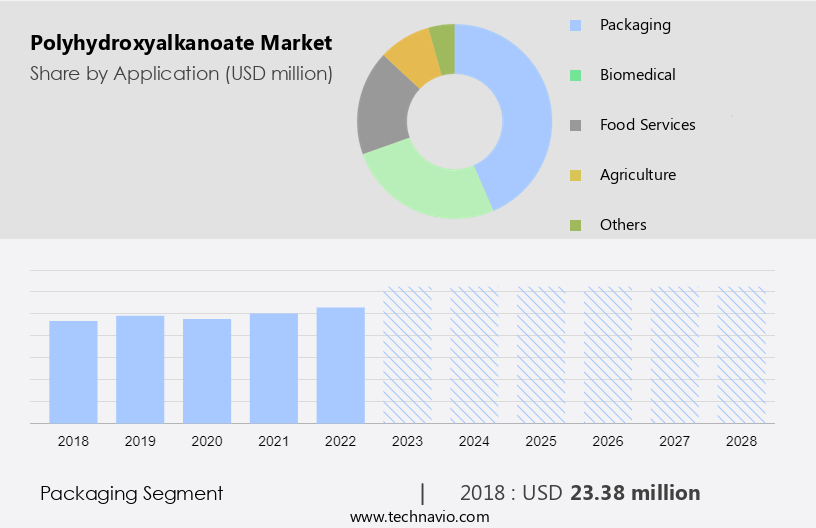
Get a glance at the share of various segments. Request Free Sample
The packaging segment was valued at USD 23.38 million in 2018 and showed a gradual increase during the forecast period.
Regional Analysis
APAC is estimated to contribute 48% to the growth of the global market during the forecast period. Technavio's analysts have elaborately explained the regional trends and drivers that shape the market during the forecast period.
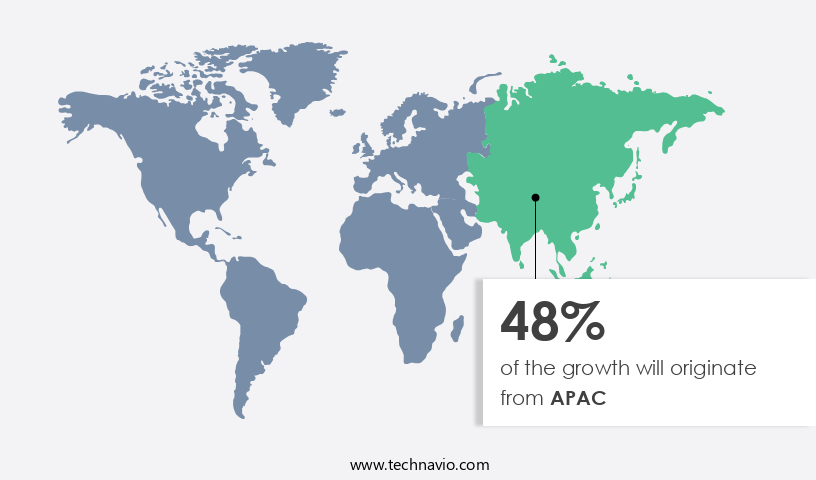
For more insights on the market share of various regions, Request Free Sample
The market in Asia Pacific is poised for substantial expansion over the forecast period. The burgeoning packaging industry and the rise in agricultural activities in this region are key factors fueling the growth of the PHA market. In the packaging sector, the increasing number of e-commerce companies is a significant driver, as these companies seek sustainable alternatives for their packaging needs. Notable e-commerce firms in Asia Pacific are adopting PHA-based plastics due to their biodegradable nature and high-impact strength. PHAs are produced through microbial fermentation and, in recent years, genetic engineering techniques have been employed to enhance the production process. As environmental concerns gain prominence, the demand for eco-friendly biopolymers like PHAs is expected to increase, particularly in industries such as medical, where biocompatibility and biodegradability are crucial. The PHA production technologies continue to evolve, offering opportunities for market expansion.
Market Dynamics
Our researchers analyzed the data with 2023 as the base year, along with the key drivers, trends, and challenges. A holistic analysis of drivers will help companies refine their marketing strategies to gain a competitive advantage.
What are the key market drivers leading to the rise in adoption of Polyhydroxyalkanoate Market?
Increasing demand for biodegradable plastics is the key driver of the market.
- The shift towards sustainable and eco-friendly packaging solutions has led to a heightened focus on biodegradable materials within the plastics and packaging industries. In response to increasing consumer preferences and stringent government regulations, manufacturers are prioritizing the production of biodegradable plastics. For instance, the UK government's ban on single-use plastic items for businesses in October 2023 is expected to boost demand for PHA-based packaging products. This regulatory initiative may result in penalties for non-compliance, further incentivizing businesses to adopt biodegradable alternatives. Consequently, the global market for polyhydroxyalkanoate (PHA), which includes forms such as PHBH and PHBV, is poised for significant growth during the forecast period.
- Moreover, these biodegradable plastics offer several advantages, including biodegradability, versatility, and potential for use in various applications, such as in the production of emulsifiers and biofuels. As carbon capture technology gains traction, the potential applications of PHAs expand, further fueling the market growth.
What are the market trends shaping the Polyhydroxyalkanoate Market?
Increasing adoption of sustainable production methods by manufacturers is the upcoming trend in the market.
- The global market is experiencing significant growth opportunities due to increasing demand for sustainable production methods in the plastic industry. Regulatory pressure on manufacturers to adopt eco-friendly practices is driving this trend, with the packaging and medical industries leading the way. In particular, the use of PHA in packaging applications is anticipated to witness increased demand due to the rising popularity of biodegradable films, compostable waste bags, catering products, film packaging, and rigid packaging.
- Moreover, the food and beverage sector, a major player in the global industry, is a significant application area for PHAs in packaging. Domestic e-commerce and foreign exports are expected to contribute to the market's expansion as consumers and businesses prioritize sustainability. The adoption of PHA is expected to bring about innovative solutions in the plastic industry while adhering to regulatory requirements.
What challenges does Polyhydroxyalkanoate Market face during the growth?
Cost-effectiveness of conventional plastics over PHAs is a key challenge affecting the market growth.
- The market faces a significant hurdle in its competition with conventional plastics due to the higher cost of PHAs. The price range for PHAs is between USD 2,500 and USD 5,200 per ton, which is significantly more expensive than traditional plastics. The primary reason for this price disparity is the high polymerization cost of PHAs, as most production processes are still in their development stages. Consequently, the PHA industry has yet to reach the economies of scale necessary to lower production costs. Additionally, the lack of efficient production technologies and the scarcity of feedstock contribute to the increased production cost of PHAs.
- Moreover, renewable raw materials, such as glucose, used in the manufacturing of PHAs, are becoming increasingly costly, further impeding the market's growth. Despite these challenges, the demand for eco-friendly alternatives to conventional plastics, such as PHAs, is growing, particularly in industries like food processing, flexible packaging, and e-retail businesses. As sustainability becomes a priority for consumers and governments, the market for PHAs is expected to expand. Incorporating PHAs into various applications, such as plastic bags, films, boxes, and sheets, offers numerous benefits, including biodegradability, renewability, and reduced carbon footprint. By investing in research and development, improving production technologies, and securing a steady supply of feedstock, the PHA industry can overcome its cost challenges and meet the growing demand for eco-friendly plastics.
Exclusive Customer Landscape
The market forecasting report includes the adoption lifecycle of the market, covering from the innovator's stage to the laggard's stage. It focuses on adoption rates in different regions based on penetration. Furthermore, the market report also includes key purchase criteria and drivers of price sensitivity to help companies evaluate and develop their market growth analysis strategies.
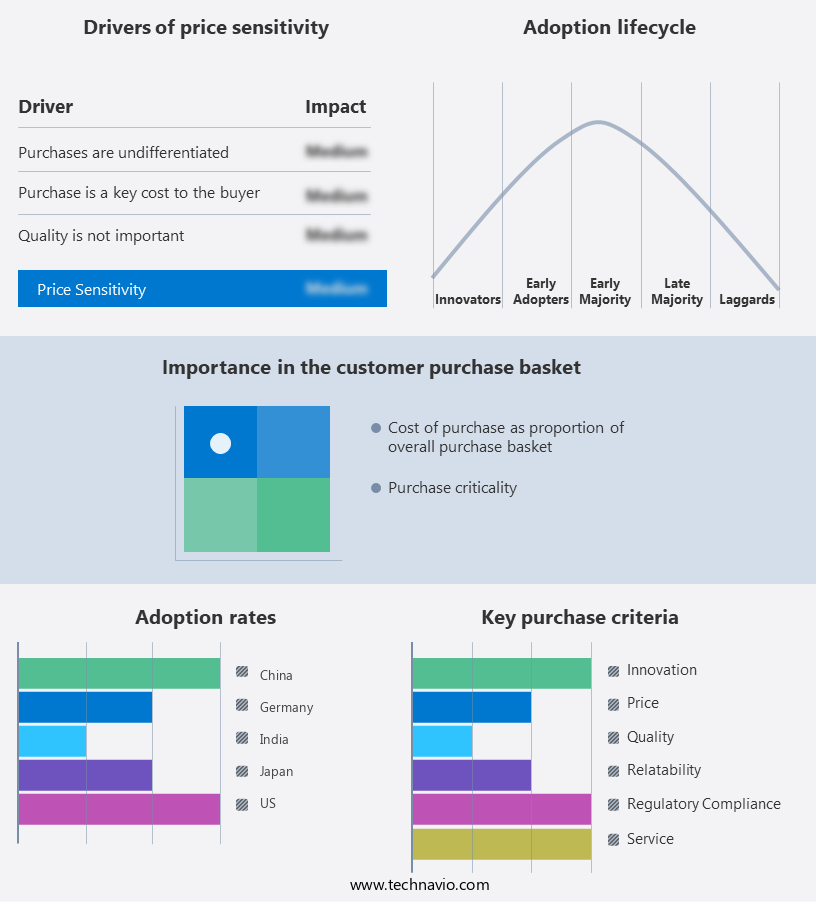
Customer Landscape
Key Companies & Market Insights
Companies are implementing various strategies, such as strategic alliances, market forecast, partnerships, mergers and acquisitions, geographical expansion, and product/service launches, to enhance their presence in the market.
The market research and growth report includes detailed analyses of the competitive landscape of the market and information about key companies, including:
- BASF SE
- Becton Dickinson and Co.
- BIO ON spa
- Bluepha
- BOSK Bioproducts
- CJ CheilJedang Corp.
- Danimer Scientific Inc.
- Genecis
- Kaneka Corp.
- RWDC Industries Ltd.
- Terraverdae Bioworks Inc.
- TianAn Biologic Materials Co. Ltd.
- WinCup
- Yield10 Bioscience Inc.
Qualitative and quantitative analysis of companies has been conducted to help clients understand the wider business environment as well as the strengths and weaknesses of key market players. Data is qualitatively analyzed to categorize companies as pure play, category-focused, industry-focused, and diversified; it is quantitatively analyzed to categorize companies as dominant, leading, strong, tentative, and weak.
Research Analyst Overview
Polyhydroxyalkanoate (PHA) is a type of biopolymer, produced by microbial fermentation using raw materials like cereals, sugars, and organic waste. It is a promising alternative to non-degradable petroleum-based plastics, offering environmental benefits as it is biodegradable. PHA finds applications in various sectors, including packaging & food services, biomedical, and agriculture. In packaging, PHA is used to manufacture plastic bags, films, boxes, and sheets. In the biomedical industry, it is used to produce medical devices, implants, and pharmaceuticals to address genetic disorders such as ulcers, deafness, and vision impairment. PHA is also used in agriculture as a biofertilizer and in waste management practices to convert biomass, dead plants, and waste residues into valuable products.
Moreover, the production of PHA involves the polymerization process of monomers like PHB and PHV, which have different melting points and properties. PHA is also used in the production of biofuels and emulsifiers, and its commercialization is driven by consumer awareness and environmental concerns. PHA production technologies include microbial fermentation and genetic engineering, and the market is expected to grow due to the increasing demand for eco-friendly materials in various industries.
|
Market Scope |
|
|
Report Coverage |
Details |
|
Page number |
166 |
|
Base year |
2023 |
|
Historic period |
2018-2022 |
|
Forecast period |
2024-2028 |
|
Growth momentum & CAGR |
Accelerate at a CAGR of 6.31% |
|
Market growth 2024-2028 |
USD 26.9 million |
|
Market structure |
Concentrated |
|
YoY growth 2023-2024(%) |
5.92 |
|
Key countries |
US, China, Japan, India, and Germany |
|
Competitive landscape |
Leading Companies, Market Positioning of Companies, Competitive Strategies, and Industry Risks |
What are the Key Data Covered in this Market Research and Growth Report?
- CAGR of the market during the forecast period
- Detailed information on factors that will drive the market growth and forecasting between 2024 and 2028
- Precise estimation of the size of the market and its contribution of the market in focus to the parent market
- Accurate predictions about upcoming market growth and trends and changes in consumer behaviour
- Growth of the market across APAC, Europe, North America, South America, and Middle East and Africa
- Thorough analysis of the market's competitive landscape and detailed information about companies
- Comprehensive analysis of factors that will challenge the growth of market companies
We can help! Our analysts can customize this market research report to meet your requirements. Get in touch
 RIA -
RIA - 
