


Polypropylene Random Copolymer Market Analysis, Size, and Forecast 2025-2029: North America (US), Europe (France, Germany, and UK), APAC (Australia, China, India, Japan, and South Korea), South America (Brazil), and Rest of World (ROW)

Polypropylene Random Copolymer Market Analysis, Size, and Forecast 2025-2029:
North America (US), Europe (France, Germany, and UK), APAC (Australia, China, India, Japan, and South Korea), South America (Brazil), and Rest of World (ROW)

Published: Jun 2025 209 Pages SKU: IRTNTR76880

Market Overview at a Glance

$2.12 B
Market Opportunity
5%
CAGR
4.9
YoY growth 2024-2025(%)

Polypropylene Random Copolymer Market Size 2025-2029

The polypropylene random copolymer market size is forecast to increase by USD 2.12 billion at a CAGR of 5% between 2024 and 2029.

  • The market is driven by the increasing demand for lightweight materials in various industries, including automotive and packaging. This trend is fueled by the need for fuel efficiency and cost savings in transportation, as well as the growing preference for sustainable and eco-friendly packaging solutions. In the construction sector, HDPE pipes are a popular choice for applications such as water and gas distribution, sewage systems, and drainage systems. Technological advancements in polymer technology continue to shape the market, with innovations in production processes and product design leading to improved performance and versatility.
  • The environmental impact of polypropylene production, particularly in terms of greenhouse gas emissions and waste generation, is a significant concern for both manufacturers and consumers. Addressing these challenges through sustainable production methods and end-of-life management strategies will be crucial for the long-term growth and success of the market. Companies seeking to capitalize on market opportunities and navigate challenges effectively should focus on innovation, sustainability, and collaboration with stakeholders across the value chain. Key market drivers include advancements in material science and manufacturing processes for PPR and HDPE, as well as the fluctuating cost of crude oil prices.

What will be the Size of the Polypropylene Random Copolymer Market during the forecast period?
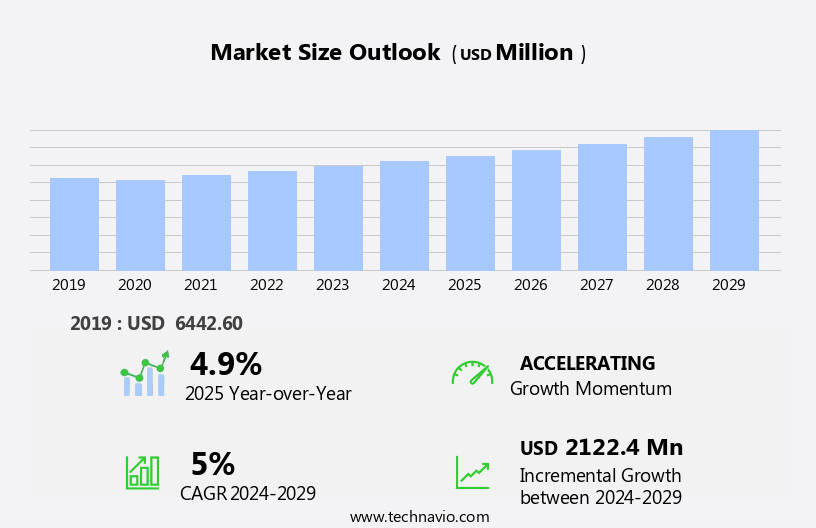
Polypropylene Random Copolymer Market Size

 Explore in-depth regional segment analysis with market size data - historical 2019-2023 and forecasts 2025-2029 - in the full report.  
Request Free Sample

  • The polypropylene (PP) random copolymer market exhibits dynamic growth, driven by its versatile properties and increasing applications in various industries. PP's high flexural modulus and Izod impact strength make it a preferred choice over PE (polyethylene) in manufacturing automotive components and packaging. Waste management sector also utilizes PP in producing polymer composites and blends for recycling purposes. Design for recycling and product lifecycle management are crucial trends shaping the polymer industry. Companies are focusing on using renewable resources and minimizing environmental impact through environmental impact assessments. PET (polyethylene terephthalate), PVC (polyvinyl chloride), PA (polyamide), LDPE (low-density polyethylene), HDPE (high-density polyethylene), PS (polystyrene), and other polymers are undergoing similar transformations.
  • Corporate social responsibility is a significant factor in the market, with manufacturers investing in sustainability reporting and recycling technology. Additive manufacturing and 3D printing are also gaining traction, offering new possibilities for PP applications. Isotactic, atactic, and syndiotactic PP types cater to diverse industries, including automotive, construction, and electronics. Their unique properties, such as tensile modulus and Izod impact strength, contribute to their widespread adoption. These developments enable polypropylene random copolymer to be used in an expanding range of applications, from automotive components to medical devices. However, the market faces challenges related to environmental concerns associated with polypropylene random copolymer production and disposal.

How is this Polypropylene Random Copolymer Industry segmented?

The polypropylene random copolymer industry research report provides comprehensive data (region-wise segment analysis), with forecasts and estimates in "USD million" for the period 2025-2029, as well as historical data from 2019-2023 for the following segments.

  • Application
    • Injection molding
    • Extrusion molding
    • Blow molding
    • Others
  • End-user
    • Packaging
    • Healthcare
    • Building and construction
    • Others
  • Distribution Channel
    • Direct sale
    • Indirect sale
  • Geography
    • North America
      • US
    • Europe
      • France
      • Germany
      • UK
    • APAC
      • Australia
      • China
      • India
      • Japan
      • South Korea
    • South America
      • Brazil
    • Rest of World (ROW)

By Application Insights

The injection molding segment is estimated to witness significant growth during the forecast period. Polypropylene random copolymer is a versatile material widely used in various industries due to its unique properties. In the realm of manufacturing, it is employed in pipe and film extrusion for creating pipes, films, and sheets. The antimicrobial properties of this copolymer make it an excellent choice for pipe applications in the food and water industries. In the realm of packaging, it is used to produce packaging films with enhanced tensile strength and chemical resistance, making them suitable for various applications. Blow molding is another process where polypropylene random copolymer shines, resulting in the production of containers, bottles, and other hollow parts. This might include additives for improved UV resistance, flame retardant, or antimicrobial properties, thus expanding the potential applications of PPR copolymers 

Flame retardancy is a crucial factor in the manufacturing of electrical components, and this copolymer's ability to meet this requirement makes it a popular choice. In the medical field, its heat resistance and high impact strength make it an ideal material for medical devices. Life cycle analysis is increasingly becoming a priority in various industries, and polypropylene random copolymer's circular economy potential is a significant advantage. Carbon fiber reinforcement and mineral fillers are used to enhance the material's properties, leading to applications in woven fabrics, fiber spinning, and chemical resistance. Product design and supply chain management benefit from the material's melt flow rate and ease of processing.

The material's flexibility, durability, and versatility make it a preferred choice for various applications, from household items to industrial components.
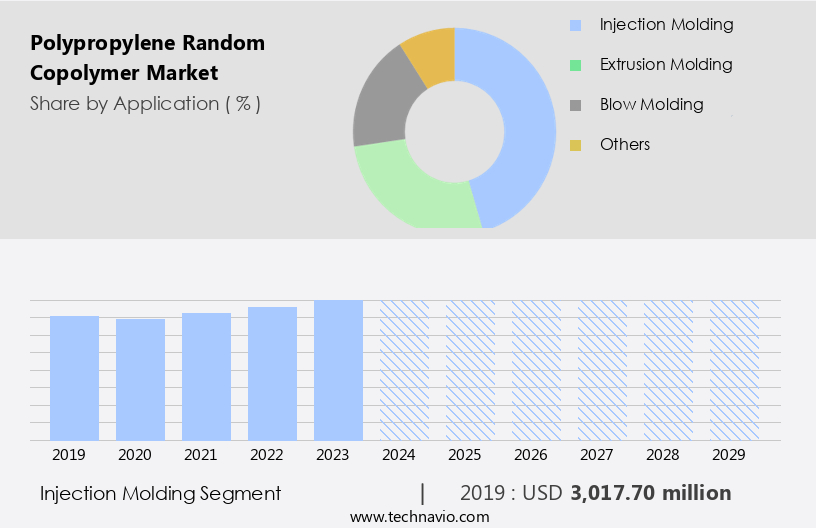
Polypropylene Random Copolymer Market Size

 Download Free Sample Report

The Injection molding segment was valued at USD 3.02 billion in 2019 and showed a gradual increase during the forecast period.

Bio-based polypropylene and nonwoven fabrics are other applications where this copolymer is gaining popularity due to its moisture absorption and antistatic properties. The automotive industry uses polypropylene random copolymer for producing various components, including automotive parts, due to its high impact strength and elongation at break. Injection molding, sheet extrusion, and rotational molding are other processes where this material is extensively used. Industry standards for quality control are met with ease using this copolymer, as it exhibits excellent Vicat softening point, UV resistance, and shore hardness. Its use in electrical components, medical devices, and automotive parts highlights its importance in various industries. These factors contribute to the continued popularity of PPR and HDPE pipes as cost-effective and reliable alternatives to traditional piping materials.

Regional Analysis

APAC is estimated to contribute 64% to the growth of the global market during the forecast period. Technavio's analysts have elaborately explained the regional trends and drivers that shape the market during the forecast period.
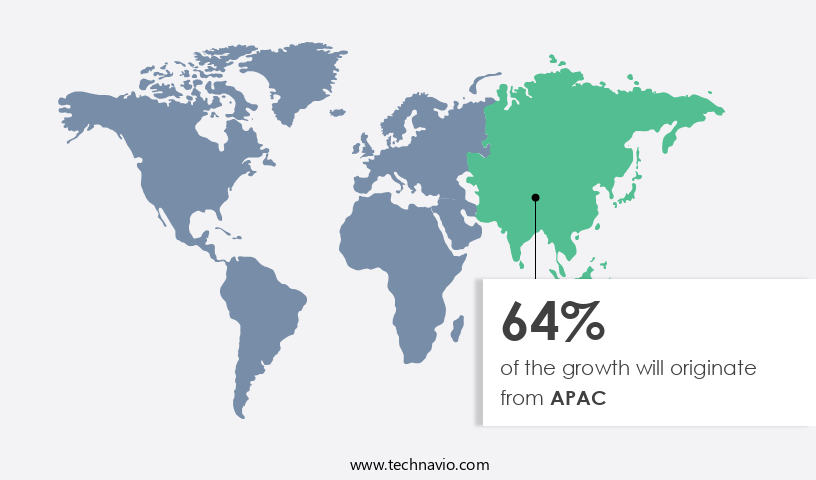
Polypropylene Random Copolymer Market Share by Geography

View Free PDF Sample

The market is witnessing significant growth in the Asia Pacific (APAC) region due to the rapid industrialization and urbanization in countries like China, India, and Southeast Asian nations. This industrial expansion fuels the demand for various materials, including polypropylene random copolymer, which is employed in numerous industries such as automotive, packaging, and construction. In the construction sector, this material is extensively used in applications like pipe extrusion and blow molding due to its desirable properties, including flexibility, durability, and resistance to heat, moisture, and chemicals. The construction industry's boom in APAC, driven by population growth and infrastructure development, significantly contributes to the market's growth.

Polypropylene random copolymer's versatility is evident in its use in pipe extrusion for plumbing systems in residential, commercial, and industrial buildings, making it an essential component in the region's burgeoning construction sector. Furthermore, its use in film extrusion for packaging films, injection molding for automotive components, and profile extrusion for various industrial applications adds to its market appeal. Additionally, the integration of carbon fiber reinforcement, mineral fillers, and glass fiber reinforcement enhances the material's strength and durability, making it a preferred choice for various industries. The circular economy's emphasis on reducing waste and promoting sustainability also boosts the market's growth, as recycled polypropylene is increasingly being used in various applications.

Product design, supply chain management, and quality control are crucial aspects of the market, with industry standards ensuring the production of high-quality polypropylene random copolymer. The market for High-density Polyethylene (HDPE) and Polypropylene Random Copolymer (PPR) has witnessed notable growth due to the superior properties of metallocene-based polyolefins. The material's antimicrobial properties, flame retardancy, antistatic properties, and UV resistance further broaden its applications in various industries.

Market Dynamics

Our researchers analyzed the data with 2024 as the base year, along with the key drivers, trends, and challenges. A holistic analysis of drivers will help companies refine their marketing strategies to gain a competitive advantage.

What are the Polypropylene Random Copolymer market drivers leading to the rise in the adoption of Industry?

  • The market is moving forward by the growing demand for lightweight materials, which is a significant market driver. Polypropylene random copolymer is a versatile material widely used in various industries due to its desirable properties, including heat resistance, flame retardancy, and high tensile strength. In the realm of manufacturing, this copolymer plays a significant role in pipe and film extrusion processes. For instance, in pipe extrusion, it is employed to create pipes with excellent chemical resistance and flexibility. In film extrusion, it is utilized to produce packaging films with antimicrobial properties, extending the shelf life of perishable goods. Moreover, the automotive industry is a major consumer of polypropylene random copolymer due to its lightweight nature, which contributes to improved fuel efficiency and reduced overall vehicle weight.
  • This copolymer is used in the production of automotive components, such as interior parts, bumpers, and various under-the-hood components. The consumer goods industry also values lightweight materials, and polypropylene random copolymer is no exception. Its lightweight nature makes it an ideal choice for manufacturing consumer goods, such as toys, electronics, and household items. This, in turn, has led to increased demand from this sector. Furthermore, polypropylene random copolymer is used in blow molding to create various products, including containers and automotive components. Its heat resistance makes it suitable for use in electrical components, while its antimicrobial properties are beneficial in woven fabrics.

What are the Polypropylene Random Copolymer market trends shaping the Industry?

  • The trend in the market reflects a significant focus on technological advancements in polymer technology. This sector is poised for growth due to innovative developments in polymer science. Polypropylene random copolymers are seeing significant advancements due to innovations in polymer processing techniques. These methods, including advanced extrusion and molding technologies, enable manufacturers to produce copolymers with superior properties, uniformity, and efficiency. New additives and fillers, such as carbon fiber reinforcement and mineral fillers, are being incorporated to enhance specific properties like chemical resistance, UV protection, flame retardancy, and antimicrobial capabilities. This expansion of potential applications is driven by the continuous progress in polymer technology.
  • This shift towards sustainable materials aligns with the growing market demand for environmentally responsible products. In product design and supply chain management, understanding the melt flow rate and other essential properties of polypropylene random copolymers is crucial for optimizing manufacturing processes and ensuring consistent product quality. Nonwoven fabrics are a significant application area for these copolymers due to their excellent strength, flexibility, and chemical resistance. Furthermore, research is underway to develop bio-based and sustainable versions of polypropylene random copolymers using renewable feedstocks and eco-friendly manufacturing processes.

How does Polypropylene Random Copolymer market face challenges during its growth?

  • The expansion of the polypropylene random copolymer industry is confronted by significant environmental concerns, which represent a major challenge to its growth. Polypropylene random copolymer, a thermoplastic material, is gaining significance in the plastics industry due to the increasing focus on sustainability and circular economy. As concerns over plastic pollution grow, there is a global push to reduce the use of single-use plastics and promote recycling. Polypropylene random copolymer is recyclable, making it an attractive option for manufacturers seeking to reduce their environmental footprint. This material's recyclability contributes to the circular economy, which prioritizes the reuse and recycling of resources. Moreover, the demand for polypropylene random copolymer is driven by its desirable properties, such as moisture absorption resistance, high shore hardness, and excellent flexural strength.
  • Its antistatic properties make it suitable for various applications, including injection molding and profile extrusion. The material's Vicat softening point and UV resistance further enhance its appeal. Glass fiber reinforcement is another feature that adds to the material's strength and durability, making it an ideal choice for various industries. The versatility of polypropylene random copolymer, coupled with its sustainability benefits, positions it well for future growth in the plastics industry. Manufacturers are increasingly focusing on developing innovative solutions using this material to meet the evolving demands of consumers and regulatory bodies.

Exclusive Customer Landscape

The polypropylene random copolymer market forecasting report includes the adoption lifecycle of the market, covering from the innovator's stage to the laggard's stage. It focuses on adoption rates in different regions based on penetration. Furthermore, the polypropylene random copolymer market report also includes key purchase criteria and drivers of price sensitivity to help companies evaluate and develop their market growth analysis strategies.
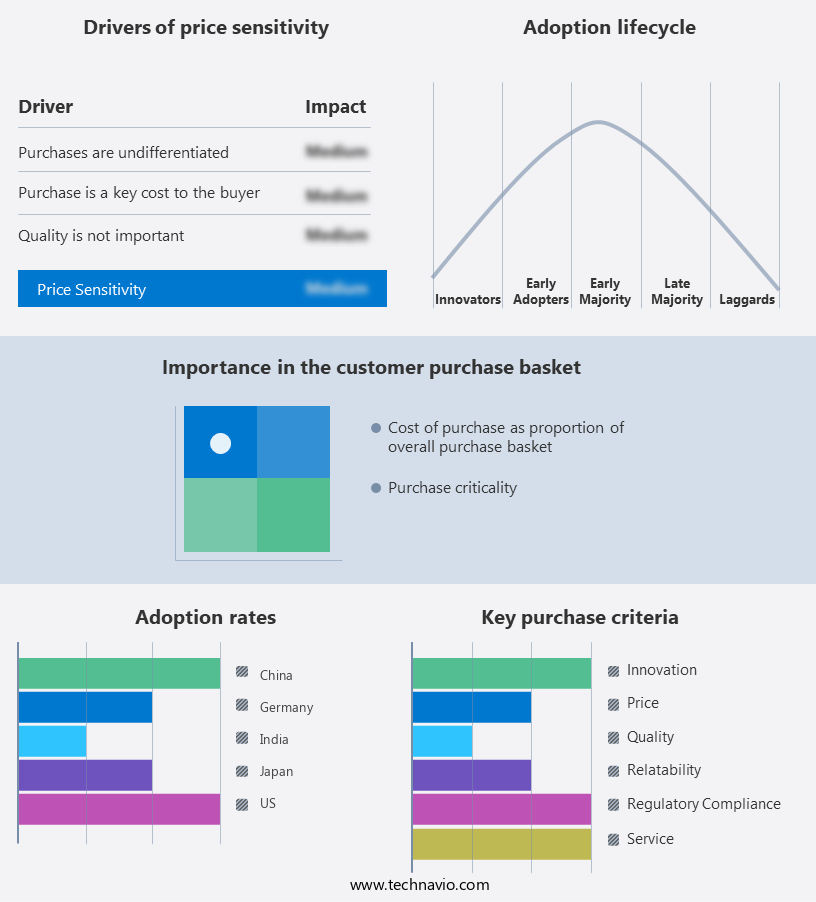
Polypropylene Random Copolymer Market Share by Geography

 Customer Landscape

Key Companies & Market Insights

Companies are implementing various strategies, such as strategic alliances, polypropylene random copolymer market forecast, partnerships, mergers and acquisitions, geographical expansion, and product/service launches, to enhance their presence in the industry.

Argos International - This company specializes in the production and distribution of polypropylene random copolymer, a versatile material applicable to numerous industries.

The industry research and growth report includes detailed analyses of the competitive landscape of the market and information about key companies, including:

  • Argos International
  • Bazan Group
  • China Petrochemical Corp.
  • Exxon Mobil Corp.
  • Formosa Chemicals and Fibre Corp
  • Henan Jinhe Industry Co. Ltd.
  • INEOS Group Holdings S.A.
  • LyondellBasell Industries NV
  • OMV Aktiengesellschaft
  • OQ SAOC
  • Ravago
  • Reliance Industries Ltd.
  • Repsol SA
  • Saudi Basic Industries Corp.
  • Siam Cement PCL
  • Sytyte Oy
  • Viral Enterprise
  • Xiamen Keyuan Plastic Co. Ltd.

Qualitative and quantitative analysis of companies has been conducted to help clients understand the wider business environment as well as the strengths and weaknesses of key industry players. Data is qualitatively analyzed to categorize companies as pure play, category-focused, industry-focused, and diversified; it is quantitatively analyzed to categorize companies as dominant, leading, strong, tentative, and weak.

Recent Development and News in Polypropylene Random Copolymer Market

  • In February 2023, LyondellBasell Industries N.V., a leading plastics, chemicals, and refining company, announced the successful commissioning of its new polypropylene random copolymer (PP RANDCO) line at its Wesseling, Germany site. This expansion will increase the company's PP RANDCO production capacity by 25%, strengthening its market position (LyondellBasell Press Release, 2023).
  • In April 2024, BASF SE, the world's largest chemical producer, and INEOS Styrolution, the leading global styrenics supplier, announced their strategic partnership to develop and commercialize novel PP RANDCO materials. These innovative materials will offer improved processability and enhanced properties for various applications, including automotive and packaging industries (BASF Press Release, 2024).
  • In July 2024, TotalEnergies, a major energy company, completed the acquisition of SABIC's 50% stake in their joint venture, Tecnorama. This acquisition will enable TotalEnergies to expand its PP RANDCO production capacity and solidify its position as a key player in the global market (TotalEnergies Press Release, 2024).

Research Analyst Overview

The market exhibits a dynamic and evolving landscape, driven by the continuous exploration of new applications and advancements in technology. This versatile material, known for its excellent chemical resistance and melt flow properties, finds extensive use in various sectors. In the realm of medical devices, polypropylene random copolymers offer superior biocompatibility and durability, making them indispensable in the production of implants and surgical instruments. Meanwhile, in the realm of life cycle analysis, the material's carbon footprint is under scrutiny, leading to a growing focus on bio-based polypropylene and recycled alternatives. Carbon fiber reinforcement and mineral fillers are increasingly being employed to enhance the tensile strength and heat resistance of polypropylene random copolymers, making them ideal for use in automotive components and electrical components.

The material's antistatic properties and moisture absorption capabilities are also driving demand in consumer products and nonwoven fabrics. Product design and supply chain management are critical aspects of the market, with industry standards continually evolving to meet the demands of various sectors. Melt flow rate, shore hardness, and Vicat softening point are essential factors in determining the suitability of the material for specific applications, from pipe extrusion and film extrusion to injection molding and profile extrusion. As the circular economy gains momentum, the focus on reducing waste and minimizing carbon footprint is driving innovation in the production and use of polypropylene random copolymers.

The material's chemical resistance and versatility make it a valuable asset in the quest for sustainable manufacturing and product design. The ongoing unfolding of market activities reveals a complex and intricate web of trends and patterns, with each application sector presenting unique challenges and opportunities. From the laboratory to the factory floor, the market continues to evolve, driven by the relentless pursuit of innovation and the ever-changing needs of industries worldwide.

The Polypropylene Random Copolymer Market is expanding due to advancements in isotactic polypropylene, syndiotactic polypropylene, and atactic polypropylene, each offering distinct properties for diverse applications. The demand for PP polypropylene is rising across industries, driven by its versatility and cost-effectiveness. The integration of polymer blends enhances material performance, optimizing flexibility and durability. Additionally, the environmental impact assessment of polypropylene usage is crucial, focusing on sustainability and recyclability.

Dive into Technavio's robust research methodology, blending expert interviews, extensive data synthesis, and validated models for unparalleled Polypropylene Random Copolymer Market insights. See full methodology.

Market Scope

Report Coverage

Details

Page number

209

Base year

2024

Historic period

2019-2023

Forecast period

2025-2029

Growth momentum & CAGR

Accelerate at a CAGR of 5%

Market growth 2025-2029

USD 2.12 billion

Market structure

Fragmented

YoY growth 2024-2025(%)

4.9

Key countries

China, US, India, Japan, Australia, Germany, South Korea, France, UK, and Brazil

Competitive landscape

Leading Companies, Market Positioning of Companies, Competitive Strategies, and Industry Risks

Request Free Sample

What are the Key Data Covered in this Polypropylene Random Copolymer Market Research and Growth Report?

  • CAGR of the Polypropylene Random Copolymer industry during the forecast period
  • Detailed information on factors that will drive the growth and forecasting between 2025 and 2029
  • Precise estimation of the size of the market and its contribution of the industry in focus to the parent market
  • Accurate predictions about upcoming growth and trends and changes in consumer behaviour
  • Growth of the market across APAC, Europe, North America, Middle East and Africa, and South America
  • Thorough analysis of the market's competitive landscape and detailed information about companies
  • Comprehensive analysis of factors that will challenge the polypropylene random copolymer market growth of industry companies

We can help! Our analysts can customize this polypropylene random copolymer market research report to meet your requirements.

Get in touch

1 Executive Summary

  • 1.1 Market overview
    • Executive Summary - Chart on Market Overview
    • Executive Summary - Data Table on Market Overview
    • Executive Summary - Chart on Global Market Characteristics
    • Executive Summary - Chart on Market by Geography
    • Executive Summary - Chart on Market Segmentation by Application
    • Executive Summary - Chart on Market Segmentation by End-user
    • Executive Summary - Chart on Market Segmentation by Distribution Channel
    • Executive Summary - Chart on Incremental Growth
    • Executive Summary - Data Table on Incremental Growth
    • Executive Summary - Chart on Company Market Positioning

2 Technavio Analysis

  • 2.1 Analysis of price sensitivity, lifecycle, customer purchase basket, adoption rates, and purchase criteria
    • Analysis of price sensitivity, lifecycle, customer purchase basket, adoption rates, and purchase criteria
  • 2.2 Criticality of inputs and Factors of differentiation
    • Overview on criticality of inputs and factors of differentiation
  • 2.3 Factors of disruption
    • Overview on factors of disruption
  • 2.4 Impact of drivers and challenges
    • Impact of drivers and challenges in 2024 and 2029

3 Market Landscape

  • 3.1 Market ecosystem
    • Parent Market
    • Data Table on - Parent Market
  • 3.2 Market characteristics
    • Market characteristics analysis
  • 3.3 Value chain analysis
    • Value chain analysis

4 Market Sizing

  • 4.1 Market definition
    • Offerings of companies included in the market definition
  • 4.2 Market segment analysis
    • Market segments
  • 4.3 Market size 2024
    • 4.4 Market outlook: Forecast for 2024-2029
      • Chart on Global - Market size and forecast 2024-2029 ($ million)
      • Data Table on Global - Market size and forecast 2024-2029 ($ million)
      • Chart on Global Market: Year-over-year growth 2024-2029 (%)
      • Data Table on Global Market: Year-over-year growth 2024-2029 (%)

    5 Historic Market Size

    • 5.1 Global Polypropylene Random Copolymer Market 2019 - 2023
      • Historic Market Size - Data Table on Global Polypropylene Random Copolymer Market 2019 - 2023 ($ million)
    • 5.2 Application segment analysis 2019 - 2023
      • Historic Market Size - Application Segment 2019 - 2023 ($ million)
    • 5.3 End-user segment analysis 2019 - 2023
      • Historic Market Size - End-user Segment 2019 - 2023 ($ million)
    • 5.4 Distribution Channel segment analysis 2019 - 2023
      • Historic Market Size - Distribution Channel Segment 2019 - 2023 ($ million)
    • 5.5 Geography segment analysis 2019 - 2023
      • Historic Market Size - Geography Segment 2019 - 2023 ($ million)
    • 5.6 Country segment analysis 2019 - 2023
      • Historic Market Size - Country Segment 2019 - 2023 ($ million)

    6 Qualitative Analysis

    • 6.1 Impact of AI on Global Polypropylene Random Copolymer Market

      7 Five Forces Analysis

      • 7.1 Five forces summary
        • Five forces analysis - Comparison between 2024 and 2029
      • 7.2 Bargaining power of buyers
        • Bargaining power of buyers - Impact of key factors 2024 and 2029
      • 7.3 Bargaining power of suppliers
        • Bargaining power of suppliers - Impact of key factors in 2024 and 2029
      • 7.4 Threat of new entrants
        • Threat of new entrants - Impact of key factors in 2024 and 2029
      • 7.5 Threat of substitutes
        • Threat of substitutes - Impact of key factors in 2024 and 2029
      • 7.6 Threat of rivalry
        • Threat of rivalry - Impact of key factors in 2024 and 2029
      • 7.7 Market condition
        • Chart on Market condition - Five forces 2024 and 2029

      8 Market Segmentation by Application

      • 8.1 Market segments
        • Chart on Application - Market share 2024-2029 (%)
        • Data Table on Application - Market share 2024-2029 (%)
      • 8.2 Comparison by Application
        • Chart on Comparison by Application
        • Data Table on Comparison by Application
      • 8.3 Injection molding - Market size and forecast 2024-2029
        • Chart on Injection molding - Market size and forecast 2024-2029 ($ million)
        • Data Table on Injection molding - Market size and forecast 2024-2029 ($ million)
        • Chart on Injection molding - Year-over-year growth 2024-2029 (%)
        • Data Table on Injection molding - Year-over-year growth 2024-2029 (%)
      • 8.4 Extrusion molding - Market size and forecast 2024-2029
        • Chart on Extrusion molding - Market size and forecast 2024-2029 ($ million)
        • Data Table on Extrusion molding - Market size and forecast 2024-2029 ($ million)
        • Chart on Extrusion molding - Year-over-year growth 2024-2029 (%)
        • Data Table on Extrusion molding - Year-over-year growth 2024-2029 (%)
      • 8.5 Blow molding - Market size and forecast 2024-2029
        • Chart on Blow molding - Market size and forecast 2024-2029 ($ million)
        • Data Table on Blow molding - Market size and forecast 2024-2029 ($ million)
        • Chart on Blow molding - Year-over-year growth 2024-2029 (%)
        • Data Table on Blow molding - Year-over-year growth 2024-2029 (%)
      • 8.6 Others - Market size and forecast 2024-2029
        • Chart on Others - Market size and forecast 2024-2029 ($ million)
        • Data Table on Others - Market size and forecast 2024-2029 ($ million)
        • Chart on Others - Year-over-year growth 2024-2029 (%)
        • Data Table on Others - Year-over-year growth 2024-2029 (%)
      • 8.7 Market opportunity by Application
        • Market opportunity by Application ($ million)
        • Data Table on Market opportunity by Application ($ million)

      9 Market Segmentation by End-user

      • 9.1 Market segments
        • Chart on End-user - Market share 2024-2029 (%)
        • Data Table on End-user - Market share 2024-2029 (%)
      • 9.2 Comparison by End-user
        • Chart on Comparison by End-user
        • Data Table on Comparison by End-user
      • 9.3 Packaging - Market size and forecast 2024-2029
        • Chart on Packaging - Market size and forecast 2024-2029 ($ million)
        • Data Table on Packaging - Market size and forecast 2024-2029 ($ million)
        • Chart on Packaging - Year-over-year growth 2024-2029 (%)
        • Data Table on Packaging - Year-over-year growth 2024-2029 (%)
      • 9.4 Healthcare - Market size and forecast 2024-2029
        • Chart on Healthcare - Market size and forecast 2024-2029 ($ million)
        • Data Table on Healthcare - Market size and forecast 2024-2029 ($ million)
        • Chart on Healthcare - Year-over-year growth 2024-2029 (%)
        • Data Table on Healthcare - Year-over-year growth 2024-2029 (%)
      • 9.5 Building and construction - Market size and forecast 2024-2029
        • Chart on Building and construction - Market size and forecast 2024-2029 ($ million)
        • Data Table on Building and construction - Market size and forecast 2024-2029 ($ million)
        • Chart on Building and construction - Year-over-year growth 2024-2029 (%)
        • Data Table on Building and construction - Year-over-year growth 2024-2029 (%)
      • 9.6 Others - Market size and forecast 2024-2029
        • Chart on Others - Market size and forecast 2024-2029 ($ million)
        • Data Table on Others - Market size and forecast 2024-2029 ($ million)
        • Chart on Others - Year-over-year growth 2024-2029 (%)
        • Data Table on Others - Year-over-year growth 2024-2029 (%)
      • 9.7 Market opportunity by End-user
        • Market opportunity by End-user ($ million)
        • Data Table on Market opportunity by End-user ($ million)

      10 Market Segmentation by Distribution Channel

      • 10.1 Market segments
        • Chart on Distribution Channel - Market share 2024-2029 (%)
        • Data Table on Distribution Channel - Market share 2024-2029 (%)
      • 10.2 Comparison by Distribution Channel
        • Chart on Comparison by Distribution Channel
        • Data Table on Comparison by Distribution Channel
      • 10.3 Direct sale - Market size and forecast 2024-2029
        • Chart on Direct sale - Market size and forecast 2024-2029 ($ million)
        • Data Table on Direct sale - Market size and forecast 2024-2029 ($ million)
        • Chart on Direct sale - Year-over-year growth 2024-2029 (%)
        • Data Table on Direct sale - Year-over-year growth 2024-2029 (%)
      • 10.4 Indirect sale - Market size and forecast 2024-2029
        • Chart on Indirect sale - Market size and forecast 2024-2029 ($ million)
        • Data Table on Indirect sale - Market size and forecast 2024-2029 ($ million)
        • Chart on Indirect sale - Year-over-year growth 2024-2029 (%)
        • Data Table on Indirect sale - Year-over-year growth 2024-2029 (%)
      • 10.5 Market opportunity by Distribution Channel
        • Market opportunity by Distribution Channel ($ million)
        • Data Table on Market opportunity by Distribution Channel ($ million)

      11 Customer Landscape

      • 11.1 Customer landscape overview
        • Analysis of price sensitivity, lifecycle, customer purchase basket, adoption rates, and purchase criteria

      12 Geographic Landscape

      • 12.1 Geographic segmentation
        • Chart on Market share by geography 2024-2029 (%)
        • Data Table on Market share by geography 2024-2029 (%)
      • 12.2 Geographic comparison
        • Chart on Geographic comparison
        • Data Table on Geographic comparison
      • 12.3 APAC - Market size and forecast 2024-2029
        • Chart on APAC - Market size and forecast 2024-2029 ($ million)
        • Data Table on APAC - Market size and forecast 2024-2029 ($ million)
        • Chart on APAC - Year-over-year growth 2024-2029 (%)
        • Data Table on APAC - Year-over-year growth 2024-2029 (%)
      • 12.4 Europe - Market size and forecast 2024-2029
        • Chart on Europe - Market size and forecast 2024-2029 ($ million)
        • Data Table on Europe - Market size and forecast 2024-2029 ($ million)
        • Chart on Europe - Year-over-year growth 2024-2029 (%)
        • Data Table on Europe - Year-over-year growth 2024-2029 (%)
      • 12.5 North America - Market size and forecast 2024-2029
        • Chart on North America - Market size and forecast 2024-2029 ($ million)
        • Data Table on North America - Market size and forecast 2024-2029 ($ million)
        • Chart on North America - Year-over-year growth 2024-2029 (%)
        • Data Table on North America - Year-over-year growth 2024-2029 (%)
      • 12.6 Middle East and Africa - Market size and forecast 2024-2029
        • Chart on Middle East and Africa - Market size and forecast 2024-2029 ($ million)
        • Data Table on Middle East and Africa - Market size and forecast 2024-2029 ($ million)
        • Chart on Middle East and Africa - Year-over-year growth 2024-2029 (%)
        • Data Table on Middle East and Africa - Year-over-year growth 2024-2029 (%)
      • 12.7 South America - Market size and forecast 2024-2029
        • Chart on South America - Market size and forecast 2024-2029 ($ million)
        • Data Table on South America - Market size and forecast 2024-2029 ($ million)
        • Chart on South America - Year-over-year growth 2024-2029 (%)
        • Data Table on South America - Year-over-year growth 2024-2029 (%)
      • 12.8 China - Market size and forecast 2024-2029
        • Chart on China - Market size and forecast 2024-2029 ($ million)
        • Data Table on China - Market size and forecast 2024-2029 ($ million)
        • Chart on China - Year-over-year growth 2024-2029 (%)
        • Data Table on China - Year-over-year growth 2024-2029 (%)
      • 12.9 US - Market size and forecast 2024-2029
        • Chart on US - Market size and forecast 2024-2029 ($ million)
        • Data Table on US - Market size and forecast 2024-2029 ($ million)
        • Chart on US - Year-over-year growth 2024-2029 (%)
        • Data Table on US - Year-over-year growth 2024-2029 (%)
      • 12.10 India - Market size and forecast 2024-2029
        • Chart on India - Market size and forecast 2024-2029 ($ million)
        • Data Table on India - Market size and forecast 2024-2029 ($ million)
        • Chart on India - Year-over-year growth 2024-2029 (%)
        • Data Table on India - Year-over-year growth 2024-2029 (%)
      • 12.11 Japan - Market size and forecast 2024-2029
        • Chart on Japan - Market size and forecast 2024-2029 ($ million)
        • Data Table on Japan - Market size and forecast 2024-2029 ($ million)
        • Chart on Japan - Year-over-year growth 2024-2029 (%)
        • Data Table on Japan - Year-over-year growth 2024-2029 (%)
      • 12.12 Australia - Market size and forecast 2024-2029
        • Chart on Australia - Market size and forecast 2024-2029 ($ million)
        • Data Table on Australia - Market size and forecast 2024-2029 ($ million)
        • Chart on Australia - Year-over-year growth 2024-2029 (%)
        • Data Table on Australia - Year-over-year growth 2024-2029 (%)
      • 12.13 Germany - Market size and forecast 2024-2029
        • Chart on Germany - Market size and forecast 2024-2029 ($ million)
        • Data Table on Germany - Market size and forecast 2024-2029 ($ million)
        • Chart on Germany - Year-over-year growth 2024-2029 (%)
        • Data Table on Germany - Year-over-year growth 2024-2029 (%)
      • 12.14 South Korea - Market size and forecast 2024-2029
        • Chart on South Korea - Market size and forecast 2024-2029 ($ million)
        • Data Table on South Korea - Market size and forecast 2024-2029 ($ million)
        • Chart on South Korea - Year-over-year growth 2024-2029 (%)
        • Data Table on South Korea - Year-over-year growth 2024-2029 (%)
      • 12.15 France - Market size and forecast 2024-2029
        • Chart on France - Market size and forecast 2024-2029 ($ million)
        • Data Table on France - Market size and forecast 2024-2029 ($ million)
        • Chart on France - Year-over-year growth 2024-2029 (%)
        • Data Table on France - Year-over-year growth 2024-2029 (%)
      • 12.16 UK - Market size and forecast 2024-2029
        • Chart on UK - Market size and forecast 2024-2029 ($ million)
        • Data Table on UK - Market size and forecast 2024-2029 ($ million)
        • Chart on UK - Year-over-year growth 2024-2029 (%)
        • Data Table on UK - Year-over-year growth 2024-2029 (%)
      • 12.17 Brazil - Market size and forecast 2024-2029
        • Chart on Brazil - Market size and forecast 2024-2029 ($ million)
        • Data Table on Brazil - Market size and forecast 2024-2029 ($ million)
        • Chart on Brazil - Year-over-year growth 2024-2029 (%)
        • Data Table on Brazil - Year-over-year growth 2024-2029 (%)
      • 12.18 Market opportunity by geography
        • Market opportunity by geography ($ million)
        • Data Tables on Market opportunity by geography ($ million)

      13 Drivers, Challenges, and Opportunity/Restraints

      • 13.1 Market drivers
        • 13.2 Market challenges
          • 13.3 Impact of drivers and challenges
            • Impact of drivers and challenges in 2024 and 2029
          • 13.4 Market opportunities/restraints

            14 Competitive Landscape

            • 14.1 Overview
              • 14.2 Competitive Landscape
                • Overview on criticality of inputs and factors of differentiation
              • 14.3 Landscape disruption
                • Overview on factors of disruption
              • 14.4 Industry risks
                • Impact of key risks on business

              15 Competitive Analysis

              • 15.1 Companies profiled
                • Companies covered
              • 15.2 Company ranking index
                • Company ranking index
              • 15.3 Market positioning of companies
                • Matrix on companies position and classification
              • 15.4 Argos International
                • Argos International - Overview
                • Argos International - Product / Service
                • Argos International - Key offerings
                • SWOT
              • 15.5 Bazan Group
                • Bazan Group - Overview
                • Bazan Group - Product / Service
                • Bazan Group - Key offerings
                • SWOT
              • 15.6 China Petrochemical Corp.
                • China Petrochemical Corp. - Overview
                • China Petrochemical Corp. - Business segments
                • China Petrochemical Corp. - Key offerings
                • China Petrochemical Corp. - Segment focus
                • SWOT
              • 15.7 Exxon Mobil Corp.
                • Exxon Mobil Corp. - Overview
                • Exxon Mobil Corp. - Product / Service
                • Exxon Mobil Corp. - Key offerings
                • SWOT
              • 15.8 Formosa Chemicals and Fibre Corp
                • Formosa Chemicals and Fibre Corp - Overview
                • Formosa Chemicals and Fibre Corp - Product / Service
                • Formosa Chemicals and Fibre Corp - Key offerings
                • SWOT
              • 15.9 INEOS Group Holdings S.A.
                • INEOS Group Holdings S.A. - Overview
                • INEOS Group Holdings S.A. - Product / Service
                • INEOS Group Holdings S.A. - Key news
                • INEOS Group Holdings S.A. - Key offerings
                • SWOT
              • 15.10 LyondellBasell Industries NV
                • LyondellBasell Industries NV - Overview
                • LyondellBasell Industries NV - Business segments
                • LyondellBasell Industries NV - Key news
                • LyondellBasell Industries NV - Key offerings
                • LyondellBasell Industries NV - Segment focus
                • SWOT
              • 15.11 OMV Aktiengesellschaft
                • OMV Aktiengesellschaft - Overview
                • OMV Aktiengesellschaft - Business segments
                • OMV Aktiengesellschaft - Key offerings
                • OMV Aktiengesellschaft - Segment focus
                • SWOT
              • 15.12 OQ SAOC
                • OQ SAOC - Overview
                • OQ SAOC - Product / Service
                • OQ SAOC - Key offerings
                • SWOT
              • 15.13 Ravago
                • Ravago - Overview
                • Ravago - Product / Service
                • Ravago - Key offerings
                • SWOT
              • 15.14 Reliance Industries Ltd.
                • Reliance Industries Ltd. - Overview
                • Reliance Industries Ltd. - Business segments
                • Reliance Industries Ltd. - Key news
                • Reliance Industries Ltd. - Key offerings
                • Reliance Industries Ltd. - Segment focus
                • SWOT
              • 15.15 Saudi Basic Industries Corp.
                • Saudi Basic Industries Corp. - Overview
                • Saudi Basic Industries Corp. - Business segments
                • Saudi Basic Industries Corp. - Key offerings
                • Saudi Basic Industries Corp. - Segment focus
                • SWOT
              • 15.16 Siam Cement PCL
                • Siam Cement PCL - Overview
                • Siam Cement PCL - Business segments
                • Siam Cement PCL - Key offerings
                • Siam Cement PCL - Segment focus
                • SWOT
              • 15.17 Sytyte Oy
                • Sytyte Oy - Overview
                • Sytyte Oy - Product / Service
                • Sytyte Oy - Key offerings
                • SWOT
              • 15.18 Viral Enterprise
                • Viral Enterprise - Overview
                • Viral Enterprise - Product / Service
                • Viral Enterprise - Key offerings
                • SWOT

              16 Appendix

              • 16.1 Scope of the report
                • 16.2 Inclusions and exclusions checklist
                  • Inclusions checklist
                  • Exclusions checklist
                • 16.3 Currency conversion rates for US$
                  • Currency conversion rates for US$
                • 16.4 Research methodology
                  • Research methodology
                • 16.5 Data procurement
                  • Information sources
                • 16.6 Data validation
                  • Data validation
                • 16.7 Validation techniques employed for market sizing
                  • Validation techniques employed for market sizing
                • 16.8 Data synthesis
                  • Data synthesis
                • 16.9 360 degree market analysis
                  • 360 degree market analysis
                • 16.10 List of abbreviations
                  • List of abbreviations

                Research Methodology

                Technavio presents a detailed picture of the market by way of study, synthesis, and summation of data from multiple sources. The analysts have presented the various facets of the market with a particular focus on identifying the key industry influencers. The data thus presented is comprehensive, reliable, and the result of extensive research, both primary and secondary.

                INFORMATION SOURCES

                Primary sources

                • Manufacturers and suppliers
                • Channel partners
                • Industry experts
                • Strategic decision makers

                Secondary sources

                • Industry journals and periodicals
                • Government data
                • Financial reports of key industry players
                • Historical data
                • Press releases

                DATA ANALYSIS

                Data Synthesis

                • Collation of data
                • Estimation of key figures
                • Analysis of derived insights

                Data Validation

                • Triangulation with data models
                • Reference against proprietary databases
                • Corroboration with industry experts

                REPORT WRITING

                Qualitative

                • Market drivers
                • Market challenges
                • Market trends
                • Five forces analysis

                Quantitative

                • Market size and forecast
                • Market segmentation
                • Geographical insights
                • Competitive landscape

                Interested in this report?

                Get your sample now to see our research methodology and insights!

                Download Now

                Frequently Asked Questions

                Polypropylene Random Copolymer market growth will increase by $ 2122.4 mn during 2025-2029 .

                The Polypropylene Random Copolymer market is expected to grow at a CAGR of 5% during 2025-2029 .

                Polypropylene Random Copolymer market is segmented by Application( Injection molding, Extrusion molding, Blow molding, Others) End-user( Packaging, Healthcare, Building and construction, Others) Distribution Channel( Direct sale, Indirect sale, North America, Middle East and Africa, South America)

                Argos International, Bazan Group, China Petrochemical Corp., Exxon Mobil Corp., Formosa Chemicals and Fibre Corp, Henan Jinhe Industry Co. Ltd., INEOS Group Holdings S.A., LyondellBasell Industries NV, OMV Aktiengesellschaft, OQ SAOC, Ravago, Reliance Industries Ltd., Repsol SA, Saudi Basic Industries Corp., Siam Cement PCL, Sytyte Oy, Viral Enterprise, Xiamen Keyuan Plastic Co. Ltd. are a few of the key vendors in the Polypropylene Random Copolymer market.

                APAC will register the highest growth rate of 64% among the other regions. Therefore, the Polypropylene Random Copolymer market in APAC is expected to garner significant business opportunities for the vendors during the forecast period.

                China, US, India, Japan, Australia, Germany, South Korea, France, UK, Brazil

                • Increasing demand for lightweight materialsThe automotive industry is a major consumer of lightweight materials to improve fuel efficiency and reduce overall vehicle weight. Being a lightweight polymer is the driving factor this market.
                • polypropylene random copolymer is used in the manufacturing of automotive components is the driving factor this market.
                • such as interior parts is the driving factor this market.
                • bumpers is the driving factor this market.
                • and various under-the-hood components. The demand for fuel-efficient vehicles and the pursuit of sustainability in the automotive sector drive the use of polypropylene random copolymer to meet these objectives. The consumer goods industry increasingly values lightweight materials for products such as toys is the driving factor this market.
                • electronics is the driving factor this market.
                • and household items. Polypropylene random copolymers lightweight nature makes it suitable for manufacturing consumer goods is the driving factor this market.
                • leading to increased demand from this sector. The demand for lightweight packaging materials is on the rise due to factors such as growth in e-commerce is the driving factor this market.
                • demand for convenience is the driving factor this market.
                • and sustainability. Polypropylene random copolymer is used in the packaging industry for applications like containers is the driving factor this market.
                • caps is the driving factor this market.
                • and closures is the driving factor this market.
                • contributing to the overall demand for lightweight packaging solutions. In addition to this is the driving factor this market.
                • lightweight materials contribute to energy efficiency in various infrastructure projects. Whether used in pipes for plumbing systems or in other construction components is the driving factor this market.
                • the lightweight nature of polypropylene random copolymer can promote energy efficiency in buildings and infrastructure. The ease of handling and installation associated with lightweight materials is a practical consideration in various industries. Polypropylene random copolymers lightweight characteristics can result in easier transportation and handling on construction sites and quicker installation is the driving factor this market.
                • thereby reducing overall project timelines and costs. Thus is the driving factor this market.
                • the increasing demand for lightweight materials will enhance the growth of the global polypropylene random copolymer market during the forecast period. is the driving factor this market.

                The Polypropylene Random Copolymer market vendors should focus on grabbing business opportunities from the Injection molding segment as it accounted for the largest market share in the base year.
