



PPR Pipe Market Size 2026-2030
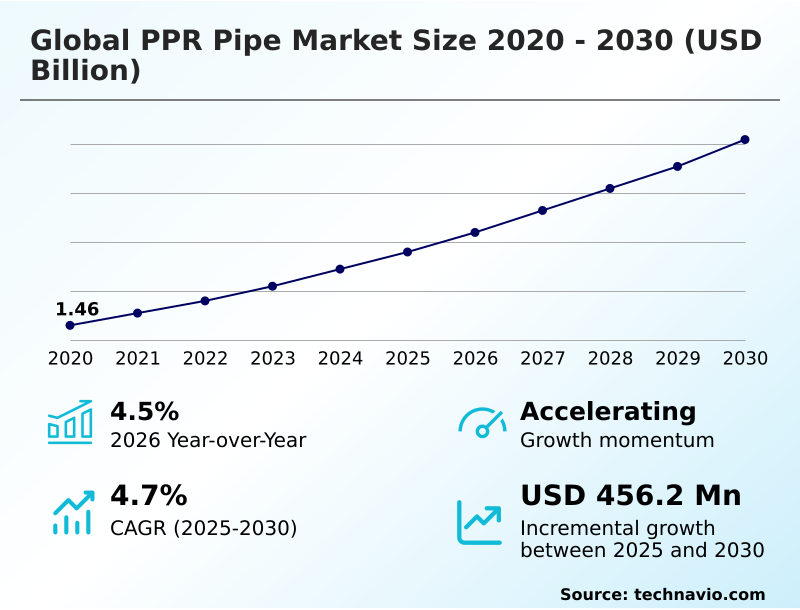
The ppr pipe market size is valued to increase by USD 456.2 million, at a CAGR of 4.7% from 2025 to 2030. Growth in construction and infrastructure will drive the ppr pipe market.
Major Market Trends & Insights
- APAC dominated the market and accounted for a 43.8% growth during the forecast period.
- By Type - HCW PPR pipes segment was valued at USD 930.7 million in 2024
- By Application - Commercial segment accounted for the largest market revenue share in 2024
Market Size & Forecast
- Market Opportunities: USD 752.9 million
- Market Future Opportunities: USD 456.2 million
- CAGR from 2025 to 2030 : 4.7%
Market Summary
- The ppr pipe market is shaped by a transition toward advanced thermoplastic solutions in industrial and residential sectors, driven by superior material properties. Key advantages include exceptional corrosion resistance, high-temperature resistance, and the reliability of heat fusion welding, which creates a leak-proof joint. This makes ppr pipe ideal for potable water systems and complex hvac applications.
- A critical business scenario involves the modernization of aging urban water infrastructure. Municipalities are replacing corroded metallic pipes with polymer-based systems to improve water quality and reduce maintenance costs, leveraging PPR's scaling resistance and 50+ year service life. This shift is supported by green building certifications that mandate the use of non-toxic material and energy-efficient components.
- Innovations like fiberglass-reinforced pipes and multilayer composite pipes are expanding applications into high-pressure industrial fluid transport, where chemical inertness is crucial. The market's trajectory is toward intelligent fluid handling systems, integrating smart plumbing technologies to enhance operational efficiency and resource management.
- This evolution is driven by the need for durable piping infrastructure that aligns with modern sustainability and performance standards, ensuring long-term value in a competitive construction landscape.
What will be the Size of the PPR Pipe Market during the forecast period?
Get Key Insights on Market Forecast (PDF) Get Free Sample
How is the PPR Pipe Market Segmented?
The ppr pipe industry research report provides comprehensive data (region-wise segment analysis), with forecasts and estimates in "USD million" for the period 2026-2030, as well as historical data from 2020-2024 for the following segments.
- Type
- HCW PPR pipes
- Composite PPR pipes
- Application
- Commercial
- Residential
- Industrial
- Agriculture
- End-user
- Construction and contracting firms
- Plumbing and HVAC specialists
- Industrial facilities
- Geography
- APAC
- China
- Japan
- India
- North America
- US
- Canada
- Mexico
- Europe
- Germany
- UK
- France
- Middle East and Africa
- Saudi Arabia
- UAE
- South Africa
- South America
- Brazil
- Argentina
- Rest of World (ROW)
- APAC
By Type Insights
The hcw ppr pipes segment is estimated to witness significant growth during the forecast period.
The global ppr pipe market is segmented by type, including HCW PPR pipes, which are pivotal for modern pressurized plumbing and hot water applications.
This segment is defined by its exceptional thermal stability and high-temperature resistance, making it a superior thermoplastic piping solution. The material's inherent impact strength prevents cracking under stress.
A key differentiator is the use of heat fusion welding, which creates a monolithic, leak-proof joint, a critical feature for both potable water systems and domestic hot water systems.
Adherence to green building certifications is driving adoption, as these pipes are a non-toxic material. In high-rise residential projects, advanced sound-insulated pipe variants offer enhanced occupant comfort, improving acoustic performance by up to 25% compared to conventional systems.
This focus on performance and sustainability underpins the demand for these durable piping infrastructure components.
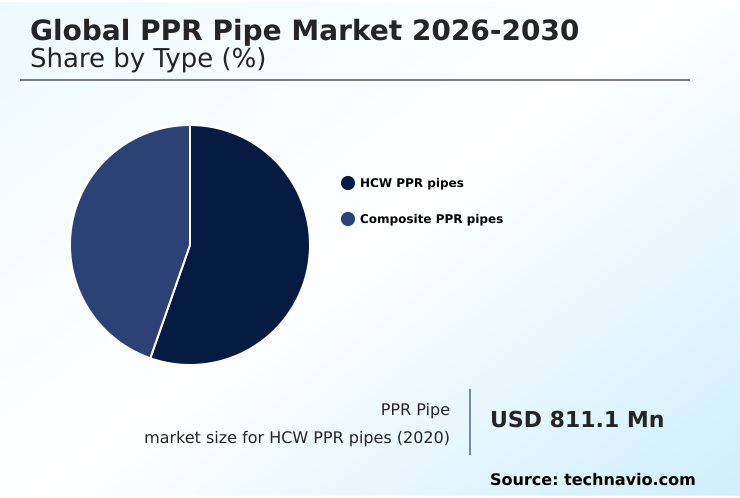
The HCW PPR pipes segment was valued at USD 930.7 million in 2024 and showed a gradual increase during the forecast period.

Regional Analysis
APAC is estimated to contribute 43.8% to the growth of the global market during the forecast period.Technavio’s analysts have elaborately explained the regional trends and drivers that shape the market during the forecast period.

See How PPR Pipe Market Demand is Rising in APAC Get Free Sample
The market's geographic landscape is led by APAC, which accounts for 43.8% of the incremental growth, driven by massive urban water projects and demand for durable piping infrastructure.
In this region, the adoption of antimicrobial ppr piping in new healthcare facilities has seen a significant uptake.
North America is characterized by stringent green building certifications, promoting the use of pre-insulated ppr systems to enhance energy efficiency in hvac applications, contributing to 26.72% of growth.
In Europe, the focus is on plumbing network modernization and district heating projects, where the low linear thermal expansion of composite ppr pipes is a key advantage.
The Middle East leverages the material's high-temperature resistance for large-scale municipal water grid expansions, addressing extreme climate challenges and driving demand for advanced fluid transport solutions.
Market Dynamics
Our researchers analyzed the data with 2025 as the base year, along with the key drivers, trends, and challenges. A holistic analysis of drivers will help companies refine their marketing strategies to gain a competitive advantage.
- Strategic decision-making in the ppr pipe market requires a nuanced understanding of specific use cases. For instance, the debate over ppr vs cpvc in residential plumbing often centers on jointing technology and long-term durability, where PPR's fusion welding offers distinct advantages.
- The cost benefits of ppr pipe installation become apparent when considering reduced labor time and the elimination of solvents and glues. In sustainable energy applications, the use of ppr pipe for geothermal heating systems is growing due to its thermal efficiency and resistance to corrosion.
- For more demanding structural needs, the advantages of fiberglass-reinforced ppr pipes include higher pressure ratings and reduced sagging. Industrially, ppr pipe for compressed air applications is preferred because its smooth interior prevents pressure loss and contamination. The low thermal expansion coefficient of composite ppr makes it ideal for long, straight runs in commercial buildings.
- When using ppr for industrial chemical transport, material compatibility must be verified, but its inertness is a key benefit. It is also a leading choice for ppr pipe in radiant floor heating. The superior longevity of ppr pipes in hot water applications surpasses many alternatives. Proper installation techniques for large-diameter ppr are critical for municipal projects.
- Meanwhile, ppr pipe for food grade applications meets strict hygiene standards. Firms analyzing the environmental impact of ppr pipe production find its lifecycle footprint is lower than that of metallic pipes by over 20%.
- Other key considerations include ppr pipe resistance to uv degradation for outdoor use, how to ensure leak-proof ppr joints, and detailed analysis of ppr pipe use in high-rise building applications. The choice between comparing ppr and pex for plumbing often depends on project-specific requirements like flexibility versus rigidity, highlighting the importance of evaluating the maintenance requirements for ppr piping systems.
What are the key market drivers leading to the rise in the adoption of PPR Pipe Industry?
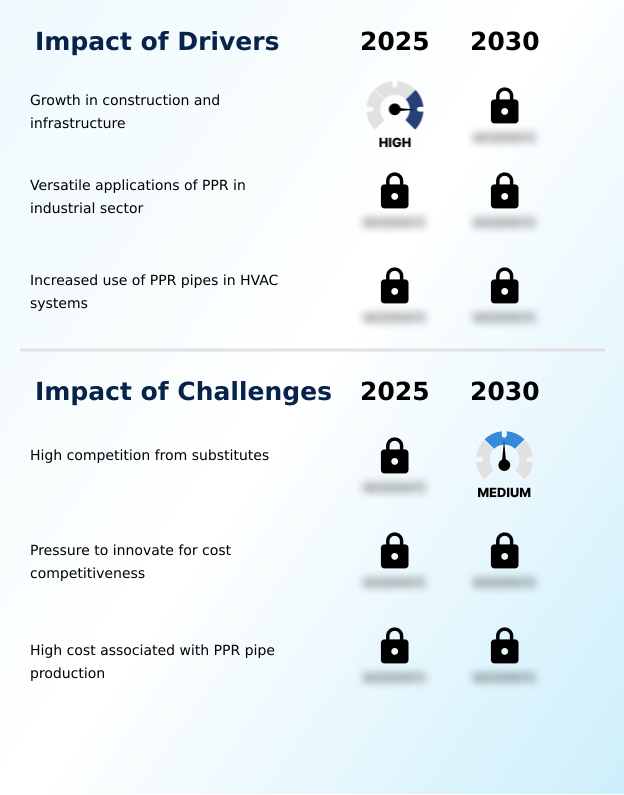
- The primary driver for market growth is the sustained expansion of construction and infrastructure development projects globally.
- Market growth is strongly driven by expanding construction and the versatile use of PPR in the industrial sector. The material's ability to handle high temperatures and pressures makes it ideal for condensate return lines and other industrial process piping.
- In HVAC, the push for energy efficiency has spurred a 25% year-over-year increase in the use of PPR for chilled water systems due to its superior insulation properties.
- Government-led water distribution upgrades and infrastructure modernization programs are accelerating the shift from metal to polymer pipes to enhance long-term hydrostatic strength and reduce leakage. This transition has proven to lower maintenance costs by over 40% in municipal applications.
- The demand for reliable fluid transport solutions across residential, commercial, and industrial segments ensures a robust and expanding market.
What are the market trends shaping the PPR Pipe Industry?
- The market is increasingly influenced by renovation and replacement activities in aging infrastructure. This trend boosts demand for durable and efficient piping solutions.
- A defining market trend is the rising demand for lightweight construction materials that accelerate project timelines and reduce labor costs. The adoption of pre-fabricated construction modules has driven a 30% increase in the specification of polymer-based systems, where PPR's ease of handling is a key advantage.
- Renovation and replacement of aging infrastructure, particularly in urban centers, are boosting the need for plumbing network modernization. This trend favors materials with proven scaling resistance and a long service life. Furthermore, the growing emphasis on sustainable construction materials has led to the widespread adoption of eco-friendly building materials in projects seeking green certifications.
- The pipe extrusion process is also evolving to incorporate more recycled content, aligning with circular economy principles and improving the market's environmental credentials.
What challenges does the PPR Pipe Industry face during its growth?
- Significant market growth is constrained by intense competition from substitute piping materials with varied performance and cost advantages.
- A significant challenge is the intense competition from substitute materials like CPVC and PEX, which are well-entrenched in certain regional markets. This pressure forces manufacturers to innovate and manage fluctuating polymer resin prices to remain cost-competitive.
- The high capital investment required for advanced extrusion equipment and the ongoing costs of pressure rating verification to meet international standards pose barriers for smaller players. Moreover, pipe material degradation concerns with lower-quality alternatives can impact the overall market reputation.
- The industry must address the high initial cost associated with premium composite pipes, which can be up to 20% higher than standard variants, by effectively communicating long-term value propositions related to durability and reduced operational expenditure, especially in specialized industrial applications.
Exclusive Technavio Analysis on Customer Landscape
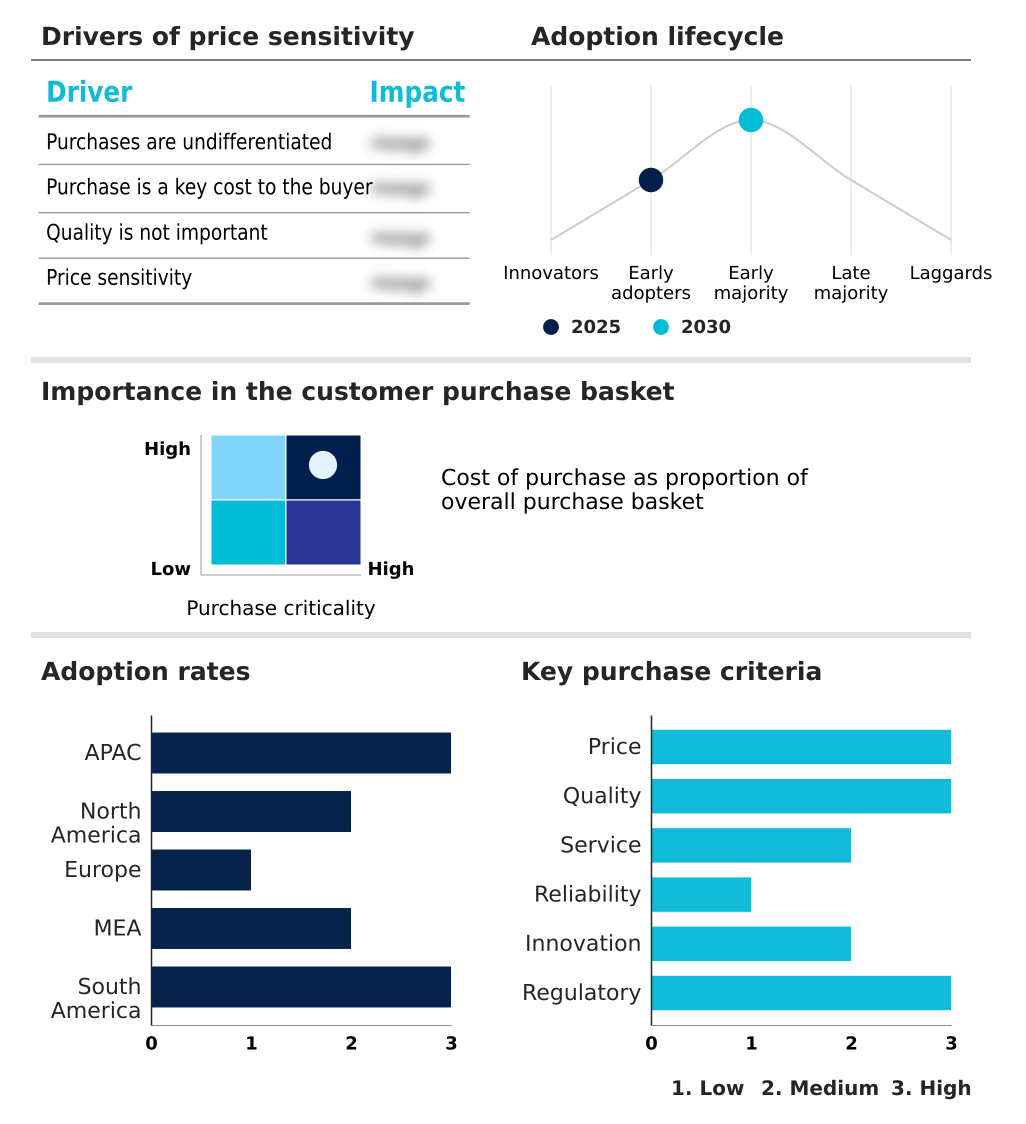
The ppr pipe market forecasting report includes the adoption lifecycle of the market, covering from the innovator’s stage to the laggard’s stage. It focuses on adoption rates in different regions based on penetration. Furthermore, the ppr pipe market report also includes key purchase criteria and drivers of price sensitivity to help companies evaluate and develop their market growth analysis strategies.
Customer Landscape of PPR Pipe Industry
Competitive Landscape
Companies are implementing various strategies, such as strategic alliances, ppr pipe market forecast, partnerships, mergers and acquisitions, geographical expansion, and product/service launches, to enhance their presence in the industry.
APL Apollo Tubes Ltd. - Offerings include specialized PPR plumbing pipes and complete systems engineered for reliable performance in residential hot and cold water applications.
The industry research and growth report includes detailed analyses of the competitive landscape of the market and information about key companies, including:
- APL Apollo Tubes Ltd.
- Euroaqua Plumtek Pvt. Ltd.
- Formul Plastik AS
- Georg Fischer Ltd.
- KPT Piping System
- Kunststoff Pipes LLP
- Ningbo Sunplast Pipe Co. Ltd.
- Northeast Polypipes LLP
- Polyraj Pipes LLP
- Rietti Group Srl
- RIIFO Group Co. Ltd.
- Rockwell Industries Ltd.
- Savoir Faire Manufacturing Co.
- Shree Harikrishna Group
- Tianjin Pipe Industry Co. Ltd.
- Tommur Industry Co. Ltd.
- Vasen
- Vectus Industries Ltd.
Qualitative and quantitative analysis of companies has been conducted to help clients understand the wider business environment as well as the strengths and weaknesses of key industry players. Data is qualitatively analyzed to categorize companies as pure play, category-focused, industry-focused, and diversified; it is quantitatively analyzed to categorize companies as dominant, leading, strong, tentative, and weak.
Recent Development and News in Ppr pipe market
- In March, 2025, Euroaqua Plumtek Pvt. Ltd. introduced a new generation of high-heat-stabilized HCW PPR pipes, utilizing advanced molecular structuring to enhance long-term hydrostatic strength at elevated temperatures.
- In January, 2025, Georg Fischer Ltd. integrated the Uponor brand to offer advanced building flow solutions, leading to the introduction of pre-insulated plastic piping systems designed to enhance thermal energy efficiency.
- In February, 2025, APL Apollo Tubes Ltd. responded to India's expanded 'Nal Se Jal' initiative by increasing production capacity for high-durability polypropylene random copolymer solutions to meet rising demand for rural piped water projects.
- In May, 2025, RIIFO Group Co. Ltd. launched a mass-flow series of polypropylene random copolymer pipes featuring a patented swallow-tailed structure to eliminate leakage risks from thermal expansion in metal and plastic components.
Dive into Technavio’s robust research methodology, blending expert interviews, extensive data synthesis, and validated models for unparalleled PPR Pipe Market insights. See full methodology.
| Market Scope | |
|---|---|
| Page number | 292 |
| Base year | 2025 |
| Historic period | 2020-2024 |
| Forecast period | 2026-2030 |
| Growth momentum & CAGR | Accelerate at a CAGR of 4.7% |
| Market growth 2026-2030 | USD 456.2 million |
| Market structure | Fragmented |
| YoY growth 2025-2026(%) | 4.5% |
| Key countries | China, Japan, India, South Korea, Australia, Indonesia, US, Canada, Mexico, Germany, UK, France, Italy, Spain, The Netherlands, Saudi Arabia, UAE, South Africa, Israel, Turkey, Brazil, Argentina and Chile |
| Competitive landscape | Leading Companies, Market Positioning of Companies, Competitive Strategies, and Industry Risks |
Research Analyst Overview
- The ppr pipe market is evolving from a commodity to a specialized thermoplastic piping solution, driven by innovations that enhance structural integrity and performance. Boardroom decisions are increasingly influenced by the total cost of ownership, where PPR's corrosion resistance and minimal maintenance offer significant long-term savings.
- The adoption of heat fusion welding creates a leak-proof joint, a critical factor in mitigating risk in high-value commercial and industrial settings, reducing potential water damage liabilities by over 60% compared to mechanically joined systems. The material's inherent thermal stability and high-temperature resistance make it essential for energy-efficient hvac applications and potable water systems.
- As regulations tighten, features like non-toxic material composition and chemical inertness become key differentiators. Innovations such as multilayer composite pipes and fiberglass-reinforced pipes address challenges like linear thermal expansion, expanding use cases.
- The market's direction is toward integrated fluid handling systems that leverage PPR's low thermal conductivity and smooth inner surface for optimal efficiency, supported by rigorous pressure rating verification and a focus on sustainability.
What are the Key Data Covered in this PPR Pipe Market Research and Growth Report?
-
What is the expected growth of the PPR Pipe Market between 2026 and 2030?
-
USD 456.2 million, at a CAGR of 4.7%
-
-
What segmentation does the market report cover?
-
The report is segmented by Type (HCW PPR pipes, and Composite PPR pipes), Application (Commercial, Residential, Industrial, and Agriculture), End-user (Construction and contracting firms, Plumbing and HVAC specialists, and Industrial facilities) and Geography (APAC, North America, Europe, Middle East and Africa, South America)
-
-
Which regions are analyzed in the report?
-
APAC, North America, Europe, Middle East and Africa and South America
-
-
What are the key growth drivers and market challenges?
-
Growth in construction and infrastructure, High competition from substitutes
-
-
Who are the major players in the PPR Pipe Market?
-
APL Apollo Tubes Ltd., Euroaqua Plumtek Pvt. Ltd., Formul Plastik AS, Georg Fischer Ltd., KPT Piping System, Kunststoff Pipes LLP, Ningbo Sunplast Pipe Co. Ltd., Northeast Polypipes LLP, Polyraj Pipes LLP, Rietti Group Srl, RIIFO Group Co. Ltd., Rockwell Industries Ltd., Savoir Faire Manufacturing Co., Shree Harikrishna Group, Tianjin Pipe Industry Co. Ltd., Tommur Industry Co. Ltd., Vasen and Vectus Industries Ltd.
-
Market Research Insights
- The market is propelled by a convergence of demand for sustainable construction materials and the modernization of infrastructure. In the push for energy efficiency, the adoption of PPR in chilled water systems and district heating projects has reduced thermal loss by up to 15% compared to uninsulated metal pipes.
- The expansion of high-tech manufacturing facilities and pharmaceutical cooling systems creates demand for high-purity piping, where PPR's inertness is critical. Government-backed urban water projects, particularly in emerging economies, are replacing legacy systems, contributing to a 40% increase in the specification of large-diameter ppr pipes for municipal water grid upgrades. This shift improves long-term reliability and lowers operational costs.
- The use of pre-fabricated construction modules further accelerates adoption, as PPR's lightweight nature and predictable jointing simplify off-site assembly, cutting installation times significantly.
We can help! Our analysts can customize this ppr pipe market research report to meet your requirements.
 RIA -
RIA - 
