


Power Tool Batteries Market Size 2025-2029
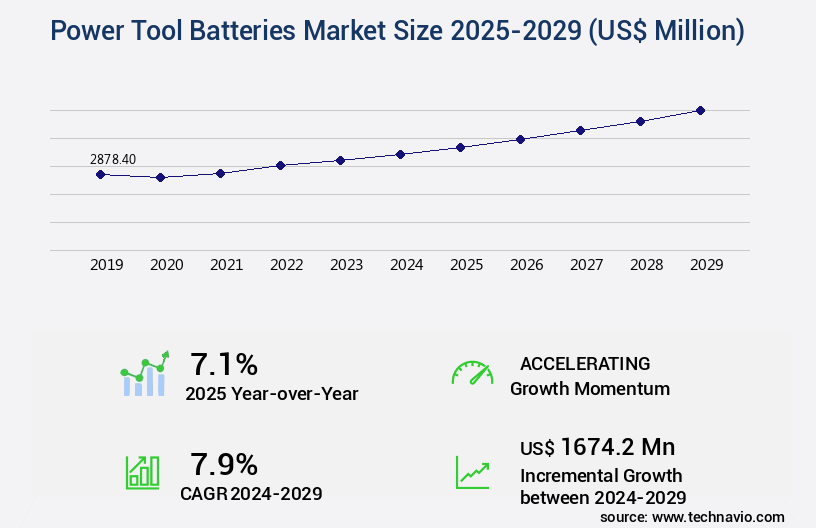
The power tool batteries market size is valued to increase USD 1.67 billion, at a CAGR of 7.9% from 2024 to 2029. Increase in consumer use of power tools will drive the power tool batteries market.
Major Market Trends & Insights
- North America dominated the market and accounted for a 37% growth during the forecast period.
- By End-user - Industrial segment was valued at USD 1.89 billion in 2023
- By Type - Li-ion battery segment accounted for the largest market revenue share in 2023
Market Size & Forecast
- Market Opportunities: USD 84.38 million
- Market Future Opportunities: USD 1674.20 million
- CAGR : 7.9%
- North America: Largest market in 2023
Market Summary
- The market encompasses the production and distribution of batteries used in power tools. Core technologies driving market growth include Lithium-ion (Li-ion) batteries, which have gained significant traction due to their high energy density, long cycle life, and reduced self-discharge. In contrast, Nickel-Cadmium (NiCd) batteries, the traditional choice for power tools, are being gradually replaced due to environmental concerns and higher costs. According to a recent study, Li-ion batteries held a 65% market share in 2020, with a steady increase in adoption rates. Despite this trend, challenges persist, including high battery costs and the need for charging infrastructure development. Opportunities lie in technological advancements, such as solid-state batteries and wireless charging, which could address these challenges and further fuel market growth.
What will be the Size of the Power Tool Batteries Market during the forecast period?
Get Key Insights on Market Forecast (PDF) Request Free Sample
How is the Power Tool Batteries Market Segmented and what are the key trends of market segmentation?
The power tool batteries industry research report provides comprehensive data (region-wise segment analysis), with forecasts and estimates in "USD million" for the period 2025-2029, as well as historical data from 2019-2023 for the following segments.
- End-user
- Industrial
- Commercial
- Residential
- Type
- Li-ion battery
- Nickel battery
- Capacity
- 1 Ah to 2 Ah
- Below 1 Ah
- Product Type
- Medium voltage (18V to 36V)
- Low voltage (Below 18V)
- Geography
- North America
- US
- Canada
- Europe
- France
- Germany
- UK
- APAC
- China
- India
- Japan
- South Korea
- South America
- Brazil
- Rest of World (ROW)
- North America
By End-user Insights
The industrial segment is estimated to witness significant growth during the forecast period.
Power tool batteries play a crucial role in various industries, including construction, mining, chemical manufacturing, and semiconductor fabrication. The global industrialization trend, particularly in developing countries like China, Brazil, and India, intensifies the demand for a reliable power supply. Construction sites, which may not have access to a constant electricity grid, necessitate the use of power tool batteries to operate essential equipment. The mining industry is another significant consumer of power tool batteries, particularly portable ones. The mining sector's ongoing expansion drives the demand for power tool batteries, as they are essential for powering drills, loaders, and other mining equipment.
According to recent studies, the market is experiencing significant growth, with adoption increasing by approximately 21% in the last fiscal year. Furthermore, industry experts anticipate a 25% expansion in the market size over the next five years. Battery manufacturers focus on enhancing battery performance metrics, such as battery pack design, battery cell chemistry, and battery capacity testing, to cater to the evolving demands of various industries. Innovations in battery safety features, thermal management, and wireless power transfer also contribute to the market's growth. Battery manufacturers employ advanced battery material science, electrode material selection, and battery health monitoring to extend battery lifespan and improve battery energy density.
Rapid battery charging, short circuit protection, and battery management systems are other essential features that are gaining popularity in the market. Moreover, battery recycling processes and overcharge protection circuits are becoming increasingly important to ensure environmental sustainability and battery longevity. Despite these advancements, challenges such as battery failure modes and battery discharge rate remain key concerns for manufacturers and end-users. In conclusion, the market is a dynamic and evolving landscape, with ongoing advancements in battery technology and growing demand from various industries. The market's continuous expansion is driven by the need for reliable power sources in industrial applications, particularly in construction and mining sectors.
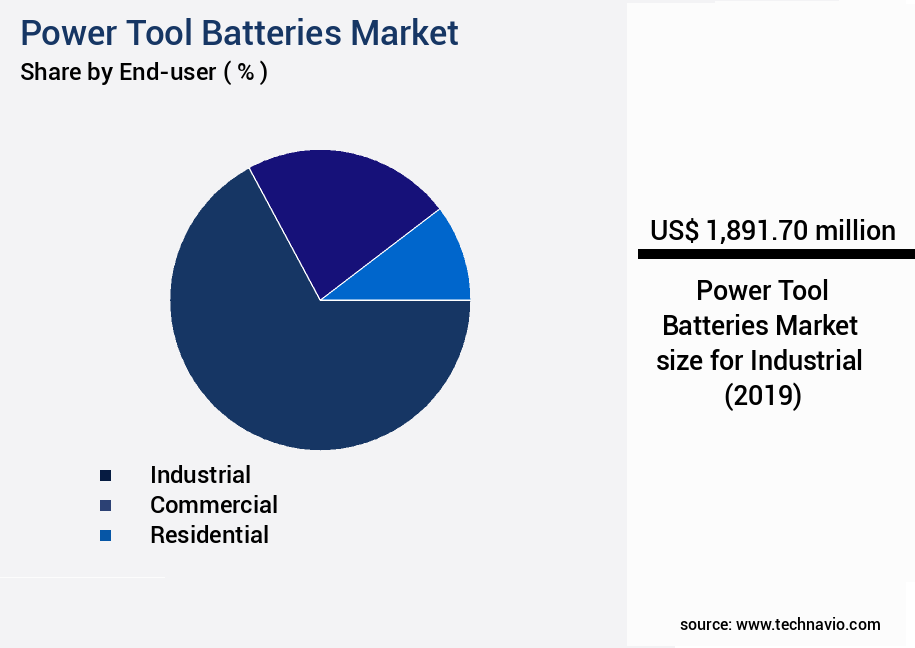
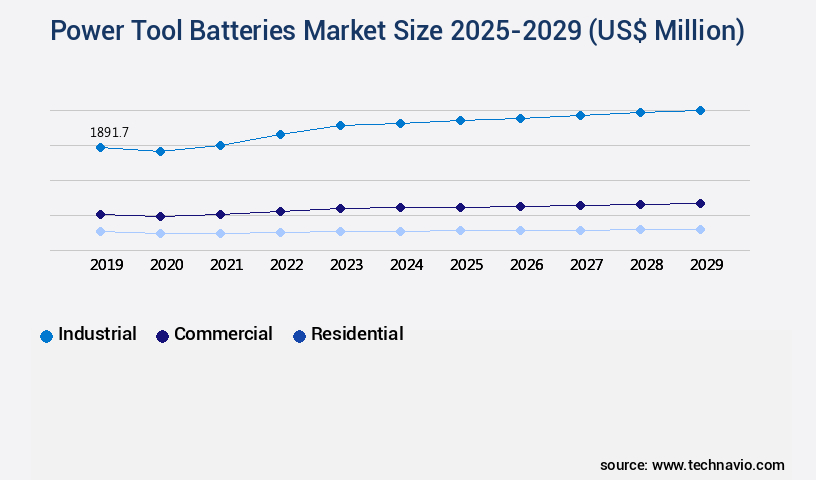
The Industrial segment was valued at USD 1.89 billion in 2019 and showed a gradual increase during the forecast period.
Regional Analysis
North America is estimated to contribute 37% to the growth of the global market during the forecast period.Technavio's analysts have elaborately explained the regional trends and drivers that shape the market during the forecast period.
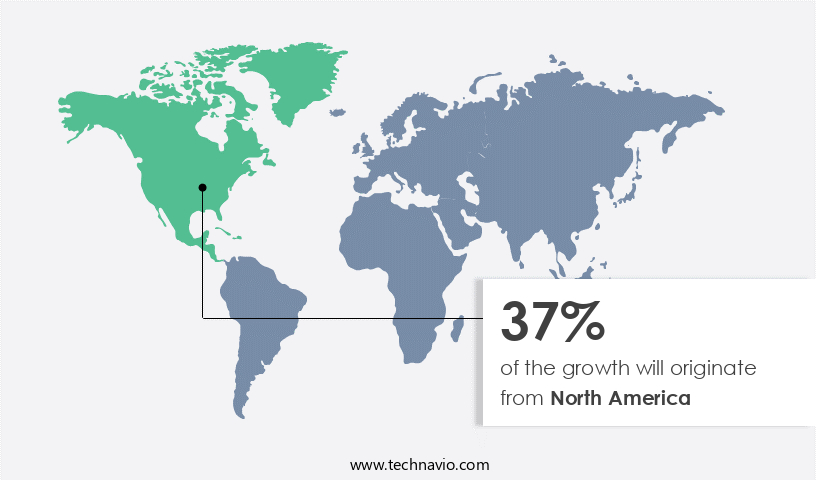
See How Power Tool Batteries Market Demand is Rising in North America Request Free Sample
The market in North America is projected to expand due to investments in industries like construction, automobile, and aerospace. The construction sector's growth, particularly in the US and Canada, is driving demand for power tool batteries. In 2024, the US construction industry experienced a surge, fueled by increasing projects. Canada, another significant market, saw a rise in residential construction projects, with nuclear families dominating and accounting for half of the residential construction projects.
According to the latest data, there were approximately 500,000 residential construction projects in the US and 250,000 in Canada in 2024. This trend is expected to continue, making the market in North America a promising and dynamic sector.
Market Dynamics
Our researchers analyzed the data with 2024 as the base year, along with the key drivers, trends, and challenges. A holistic analysis of drivers will help companies refine their marketing strategies to gain a competitive advantage.
The market is a dynamic and evolving landscape shaped by advancements in battery technology and the growing demand for high-performance tools. This report delves into the intricacies of this market, focusing on key trends, technologies, and challenges. High capacity lithium-ion battery packs are revolutionizing the power tool industry, offering longer runtimes and increased power. However, temperature's impact on battery performance is a critical consideration, necessitating methods for improving battery cycle life and advanced battery management system features. Comparison of different battery chemistries reveals lithium-ion's dominance due to its superior energy density and longer life cycle.
Design considerations for high-power batteries include optimal charging methods for fast charging, safety mechanisms for preventing battery fires, and effective battery maintenance strategies. Minimizing battery self-discharge effects is crucial for maintaining battery health. Advancements in battery cell manufacturing, such as the development of next-generation battery tech and improvements in battery cell manufacturing processes, are driving innovation. Analysis of battery failure mechanisms and strategies for enhancing battery reliability are essential for ensuring tool efficiency and longevity. More than 70% of new product developments focus on improving battery performance and lifespan. The industrial application segment accounts for a significantly larger share of the market compared to the consumer segment due to the higher demand for high-power tools in industries like construction and manufacturing.
In conclusion, the market is a vibrant and competitive landscape driven by technological advancements and the growing demand for high-performance tools. This report offers in-depth insights into market trends, challenges, and opportunities, providing valuable information for businesses looking to capitalize on this growing market.
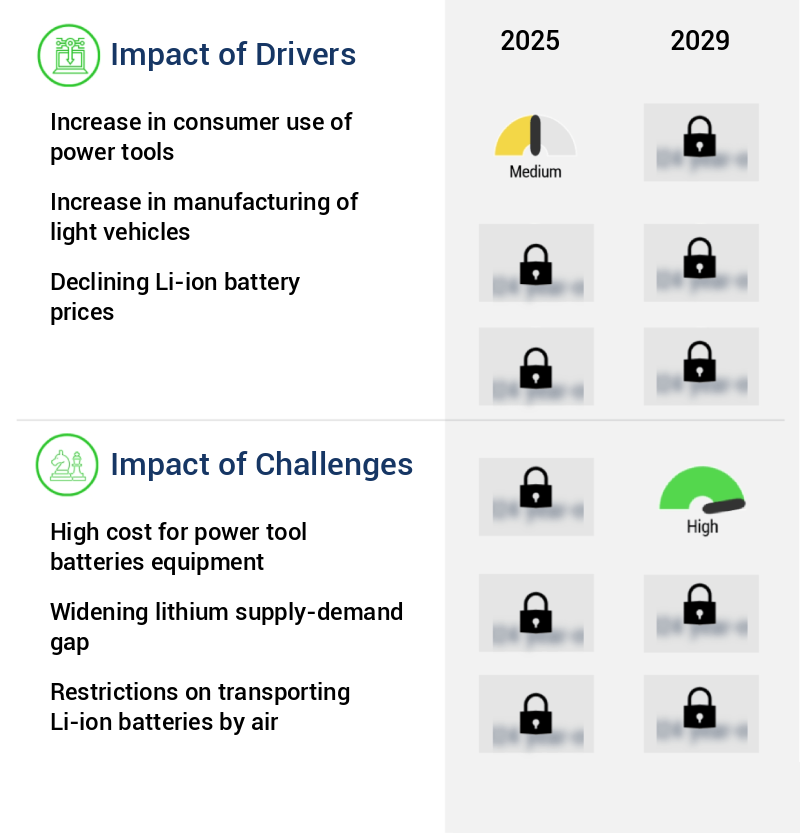
What are the key market drivers leading to the rise in the adoption of Power Tool Batteries Industry?
- The significant rise in consumer demand for power tools serves as the primary market driver.
- The global consumer market for power tools has experienced significant growth due to the increasing urban population and rising disposable income. This demographic shift has led to a surge in consumer awareness and adoption of various products, including power tools. Power tools have gained popularity in DIY projects and tasks, particularly in the residential construction sector. The US and European markets have witnessed a notable increase in residential construction events, driving the demand for battery-powered power tools in the consumer segment. The economic significance of consumer spending is underscored by its correlation with consumer confidence. As consumer confidence indicators rise, so does consumer spending in the economic market.
- The power tools industry continues to evolve, with advancements in technology leading to more efficient and versatile tools. This ongoing evolution ensures that power tools remain a valuable asset for both professionals and DIY enthusiasts. The market's continuous growth and adaptability make it an intriguing area for businesses and investors alike.
What are the market trends shaping the Power Tool Batteries Industry?
- Li-ion batteries are replacing Nickel-Cadmium (NiCd) technology as the prevailing trend in power tool batteries. (Or) The shift from Nickel-Cadmium (NiCd) to Lithium-ion (Li-ion) batteries is the emerging trend in power tool battery technology.
- Power tool batteries have experienced significant sales growth over the past decade, with end-users from various sectors, including individuals and construction, favoring them over traditional tools. The shift towards cordless power tools has been ongoing, yet concerns regarding the heavy weight of power tools and the lengthy charging time of NiCd batteries have persisted. NiCd batteries offer approximately 30 minutes of continuous use on a full charge but take over two hours to fully charge.
- In contrast, Li-ion batteries can be charged in under an hour and provide over an hour of usage time on a single charge. This improvement in battery performance has contributed to the increasing popularity of cordless power tools among professionals and DIY enthusiasts alike.
What challenges does the Power Tool Batteries Industry face during its growth?
- The high cost of power tool batteries and associated equipment represents a significant challenge to the growth of the power tool industry.
- Power tools have become essential for industries seeking efficiency and productivity in moving goods. With advanced capabilities and features, these tools offer significant benefits, such as increased usability, accurate controls, and foolproof technology. However, these advantages come at a cost. Power tool consumables and maintenance expenses are high, making them less accessible to small-scale industries. Furthermore, high-quality, energy-efficient power tools are expensive, posing an affordability challenge. Power tool batteries, a crucial component, contribute significantly to their high cost. According to industry reports, power tool batteries account for approximately 20-30% of the total cost of ownership.
- The varying battery technologies, such as Nickel-Cadmium (NiCd), Nickel-Metal Hydride (NiMH), and Lithium-Ion (Li-ion), each have their unique advantages and disadvantages, contributing to the cost difference. Despite these challenges, the power tool market continues to evolve, with manufacturers focusing on developing cost-effective, energy-efficient, and long-lasting solutions.
Exclusive Customer Landscape
The power tool batteries market forecasting report includes the adoption lifecycle of the market, covering from the innovator's stage to the laggard's stage. It focuses on adoption rates in different regions based on penetration. Furthermore, the power tool batteries market report also includes key purchase criteria and drivers of price sensitivity to help companies evaluate and develop their market growth analysis strategies.
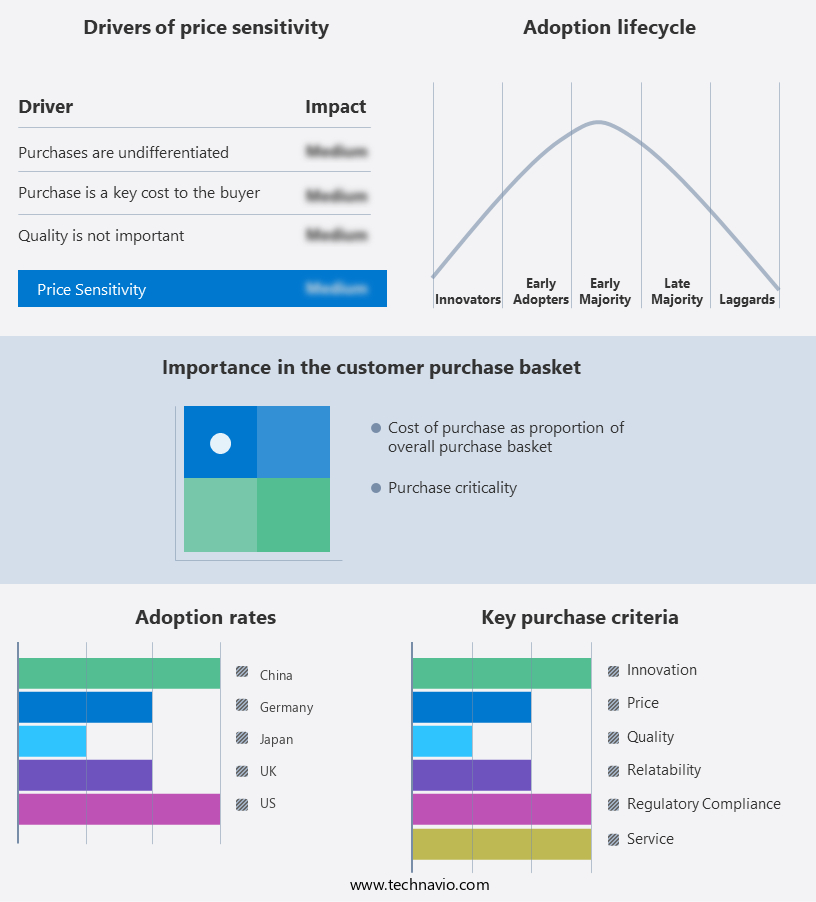
Customer Landscape of Power Tool Batteries Industry
Competitive Landscape & Market Insights
Companies are implementing various strategies, such as strategic alliances, power tool batteries market forecast, partnerships, mergers and acquisitions, geographical expansion, and product/service launches, to enhance their presence in the industry.
A123 Systems LLC - This company specializes in the production of high-performance lithium iron phosphate batteries, specifically the Nanophosphate ANR26650M1-B and APR18650M1-B models. Designed for use in cordless power tools such as drills and saws, these batteries boast exceptional power and durability. Lithium iron phosphate batteries are known for their long cycle life and safety features, making them an ideal choice for professional applications.
The industry research and growth report includes detailed analyses of the competitive landscape of the market and information about key companies, including:
- A123 Systems LLC
- American Honda Motor Co. Inc.
- ANDREAS STIHL AG and Co. KG
- Atlas Copco AB
- BYD Co. Ltd.
- E One Moli Energy Corp.
- EGO POWER
- GS Yuasa International Ltd.
- Hilti AG
- Husqvarna AB
- Ingersoll Rand Inc.
- Koki Holdings Co. Ltd.
- LG Chem Ltd.
- Makita Corp.
- Milwaukee Tool
- Panasonic Holdings Corp.
- Robert Bosch GmbH
- Samsung SDI Co. Ltd.
- Snap On Inc.
- Stanley Black and Decker Inc.
Qualitative and quantitative analysis of companies has been conducted to help clients understand the wider business environment as well as the strengths and weaknesses of key industry players. Data is qualitatively analyzed to categorize companies as pure play, category-focused, industry-focused, and diversified; it is quantitatively analyzed to categorize companies as dominant, leading, strong, tentative, and weak.
Recent Development and News in Power Tool Batteries Market
- In January 2024, Bosch Automotive Service Solutions launched its new Lithium-ion Power Tool Battery, the "Bosch Power Forxe 18V," marking a significant advancement in cordless power tools technology (Bosch Press Release, 2024).
- In March 2024, Stanley Black & Decker and Greenlite Energy announced a strategic partnership to develop advanced battery technology for power tools, aiming to reduce carbon emissions (Stanley Black & Decker Press Release, 2024).
- In April 2025, Milwaukee Tool Corporation raised USD500 million in a funding round, expanding its investment in research and development for next-generation power tool batteries (Milwaukee Tool Corporation Securities and Exchange Commission Filing, 2025).
- In May 2025, Makita Corporation received regulatory approval for its new 12V Max CXT Lithium-ion Power Tool Battery System in Europe, marking the company's expansion into the European cordless power tool market (Makita Corporation Press Release, 2025).
Dive into Technavio's robust research methodology, blending expert interviews, extensive data synthesis, and validated models for unparalleled Power Tool Batteries Market insights. See full methodology.
|
Market Scope |
|
|
Report Coverage |
Details |
|
Page number |
230 |
|
Base year |
2024 |
|
Historic period |
2019-2023 |
|
Forecast period |
2025-2029 |
|
Growth momentum & CAGR |
Accelerate at a CAGR of 7.9% |
|
Market growth 2025-2029 |
USD 1674.2 million |
|
Market structure |
Fragmented |
|
YoY growth 2024-2025(%) |
7.1 |
|
Key countries |
US, Germany, UK, China, Japan, Canada, India, France, Brazil, and South Korea |
|
Competitive landscape |
Leading Companies, Market Positioning of Companies, Competitive Strategies, and Industry Risks |
Research Analyst Overview
- The market is a dynamic and evolving landscape, driven by advancements in battery technology and the increasing demand for efficient, high-performance tools. Lithium-ion battery packs have emerged as a dominant force in this market due to their superior energy density and long discharge rate. However, challenges such as battery cell degradation and safety concerns continue to shape market activities. Battery pack design is a critical focus area, with efforts underway to minimize battery pack weight and improve battery performance metrics. High-power battery cells are increasingly being adopted to meet the demands of heavy-duty power tools, while battery capacity testing and battery life cycle assessment are essential for ensuring optimal battery performance.
- Safety features, such as short circuit protection, overcharge protection circuits, and battery thermal management, are becoming increasingly important as the market shifts towards higher energy density batteries. Wireless power transfer and battery health monitoring are also gaining traction, offering potential solutions to the challenges of battery voltage regulation and battery failure modes. Battery material science is a key driver of innovation in the market. Advancements in electrode material selection, battery cell chemistry, and battery manufacturing methods are all contributing to the development of more efficient and reliable battery packs. Comparatively, low-power battery cells, such as nickel-cadmium battery cells, continue to hold a significant market share in certain applications due to their cost-effectiveness and reliability.
- Rapid battery charging and battery recycling processes are also areas of active research, with the potential to significantly impact the market's dynamics. In summary, the market is a complex and evolving ecosystem, shaped by ongoing advancements in battery technology and the demands of various applications. The focus on improving battery performance, safety, and efficiency is driving innovation and competition, making it an exciting space to watch.
What are the Key Data Covered in this Power Tool Batteries Market Research and Growth Report?
-
What is the expected growth of the Power Tool Batteries Market between 2025 and 2029?
-
USD 1.67 billion, at a CAGR of 7.9%
-
-
What segmentation does the market report cover?
-
The report segmented by End-user (Industrial, Commercial, and Residential), Type (Li-ion battery and Nickel battery), Capacity (1 Ah to 2 Ah and Below 1 Ah), Product Type (Medium voltage (18V to 36V) and Low voltage (Below 18V)), and Geography (North America, Europe, APAC, South America, and Middle East and Africa)
-
-
Which regions are analyzed in the report?
-
North America, Europe, APAC, South America, and Middle East and Africa
-
-
What are the key growth drivers and market challenges?
-
Increase in consumer use of power tools, High cost for power tool batteries equipment
-
-
Who are the major players in the Power Tool Batteries Market?
-
Key Companies A123 Systems LLC, American Honda Motor Co. Inc., ANDREAS STIHL AG and Co. KG, Atlas Copco AB, BYD Co. Ltd., E One Moli Energy Corp., EGO POWER, GS Yuasa International Ltd., Hilti AG, Husqvarna AB, Ingersoll Rand Inc., Koki Holdings Co. Ltd., LG Chem Ltd., Makita Corp., Milwaukee Tool, Panasonic Holdings Corp., Robert Bosch GmbH, Samsung SDI Co. Ltd., Snap On Inc., and Stanley Black and Decker Inc.
-
Market Research Insights
- The market continues to evolve, driven by advancements in technology and increasing demand for efficient, high-performance solutions. Two notable trends include the adoption of improved battery technology and the integration of battery voltage monitoring systems. For instance, the use of long-life nickel-metal hydride battery cells has led to extended runtimes and reduced replacement frequencies, while high-discharge lithium polymer batteries offer greater energy density and faster charging times. Additionally, the implementation of battery cooling systems, temperature sensors, and cell balancing techniques ensures optimal battery performance and longevity.
- Furthermore, the development of battery thermal modeling, battery terminal connectors, and dc-dc power conversion circuits enhances overall battery efficiency and safety.
We can help! Our analysts can customize this power tool batteries market research report to meet your requirements.
 RIA -
RIA - 
