


Purging Compound Market Size 2024-2028
The purging compound market size is forecast to increase by USD 202.72 million, at a CAGR of 5.67% between 2023 and 2028.
- The market is witnessing significant growth, primarily driven by the increasing demand from the thermoplastic industry. This sector's expansion is attributed to the rising production of thermoplastics and the subsequent need for efficient purging solutions to maintain product quality and reduce downtime, such as injection molded plastics, prior to processing new batches. Another key trend shaping the market is the development of eco-friendly and bio-based purging compounds. As environmental concerns become increasingly important, companies are investing in sustainable alternatives to traditional purging compounds. However, the market faces challenges, including volatile prices of purging compounds.
- This price instability can impact the profitability of manufacturers and may necessitate the exploration of cost-effective solutions or alternative materials. To capitalize on market opportunities and navigate challenges effectively, companies must stay informed of industry trends and price fluctuations, and continuously evaluate their product offerings and pricing strategies.
What will be the Size of the Purging Compound Market during the forecast period?
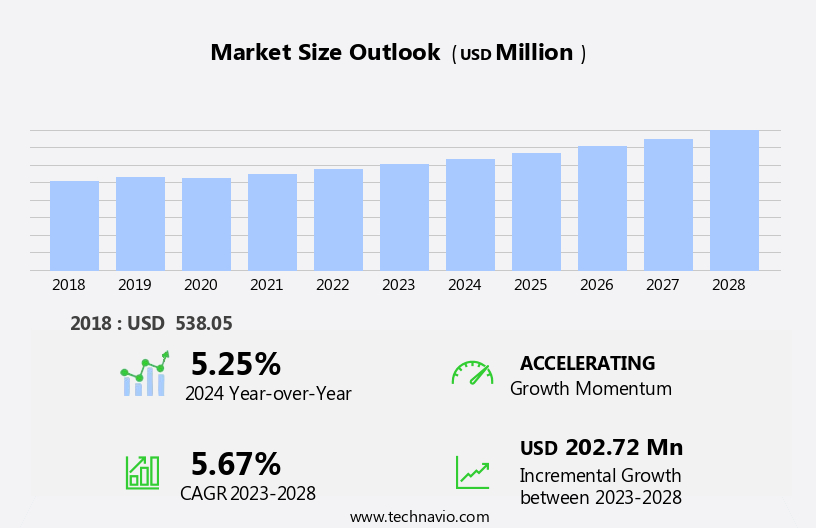
The market continues to evolve, driven by the dynamic needs of various industries. These compounds play a crucial role in moisture absorption, ensuring the optimal performance of electronic components in diverse applications. In the realm of industrial automation, for instance, purging compounds are essential for maintaining dielectric strength and electrical resistivity in printed circuit boards. Moreover, in the sector of automotive electronics, purging compounds are employed for corrosion protection and moisture proofing, enhancing the longevity of electrical systems. In the aerospace industry, these materials contribute to the production of flame retardants and high-temperature resistance coatings, ensuring the safety and reliability of electronic components.
The application methods and coating thicknesses of purging compounds vary, with vacuum degassing and roller coating being common techniques. The choice of resin, such as polyurethane, silicone, or acrylic, depends on the specific requirements of the application. For instance, polyurethane resin offers excellent chemical resistance, while silicone resin is known for its moisture absorption properties. The evolving patterns in the market are also influenced by technological advancements. For example, the development of anti-static additives and UV stabilizers has expanded the scope of these materials in Consumer Electronics and other sectors. Furthermore, the ongoing research and development efforts in epoxy resins and pot life modifiers continue to shape the market landscape.
In summary, the market is a continuously evolving landscape, with applications spanning industrial automation, automotive electronics, aerospace, Medical Devices, and consumer electronics. The choice of resin, application method, and coating thickness depend on the specific requirements of each application, with ongoing research and development efforts shaping the market's future trajectory.
How is this Purging Compound Industry segmented?
The purging compound industry research report provides comprehensive data (region-wise segment analysis), with forecasts and estimates in "USD million" for the period 2024-2028, as well as historical data from 2018-2022 for the following segments.
- Type
- Mechanical purge
- Chemical purge
- Liquid purge
- Technique
- Injection molding
- Blow molding
- Extrusion
- Geography
- North America
- US
- Europe
- Germany
- APAC
- China
- India
- Japan
- Rest of World (ROW)
- North America
By Type Insights
The mechanical purge segment is estimated to witness significant growth during the forecast period.
In the realm of industrial manufacturing, the utilization of purging compounds is a crucial aspect of plastic processing. These compounds facilitate the efficient cleaning of machinery during material transitions, eliminating the need for costly downtime and enhancing overall production efficiency. The process commences with machinery preparation, ensuring it reaches the optimal temperature for seamless material transitions. Subsequently, purging compounds, comprised of mechanical cleaning agents such as abrasives, are introduced into the machinery. These agents physically scrub the internal surfaces, effectively removing residual materials and contaminants. The result is a thorough cleaning of extruders, injection molding machines, and other plastic processing equipment.
Moreover, purging compounds offer additional benefits, including the removal of color contamination and excess material. The mechanical action of the compound ensures a comprehensive cleaning, enabling the production of high-quality plastic components. In various industries, such as automotive electronics, aerospace electronics, medical devices, military applications, and consumer electronics, purging compounds play a vital role in maintaining the integrity of the manufacturing process. The formulation of purging compounds encompasses a range of components, including curing agents, acrylic resin, silicone resin, flame retardants, and polyamide resin. These materials contribute to the compound's ability to effectively clean machinery, ensuring the production of superior plastic components.
Application methods vary, with dip coating, roller coating, and spray application being common techniques. Surface preparation is essential, and vacuum degassing is often employed to remove air bubbles and improve coating adhesion. Purging compounds exhibit desirable properties such as high tensile strength, chemical resistance, and excellent moisture absorption and moisture proofing capabilities. These attributes contribute to the compounds' effectiveness in various applications, including EMI and RFI shielding, Conformal Coating, and corrosion protection. Furthermore, the compounds' ability to withstand high temperatures and exhibit excellent thermal conductivity makes them suitable for use in high-performance applications. In summary, the use of purging compounds in industrial manufacturing is an essential aspect of maintaining production efficiency and ensuring the production of high-quality plastic components.
The compounds' versatility and ability to address various manufacturing challenges make them indispensable in numerous industries.
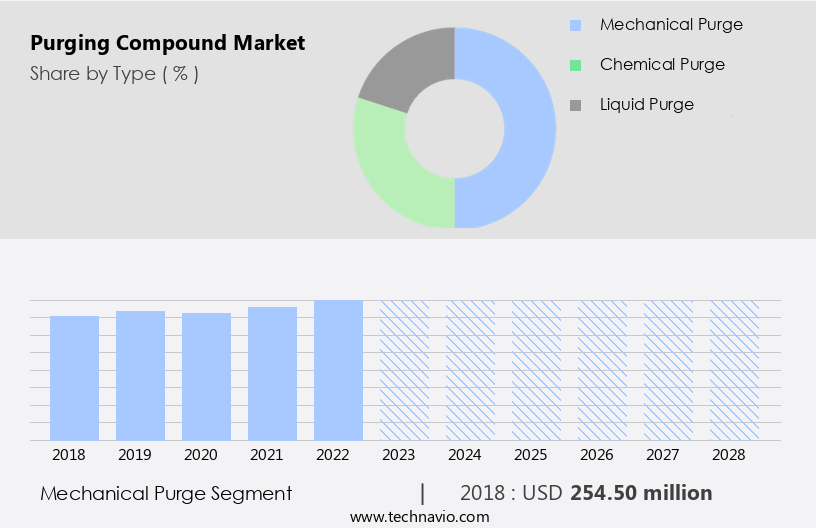
The Mechanical purge segment was valued at USD 254.50 million in 2018 and showed a gradual increase during the forecast period.
Regional Analysis
APAC is estimated to contribute 42% to the growth of the global market during the forecast period.Technavio's analysts have elaborately explained the regional trends and drivers that shape the market during the forecast period.
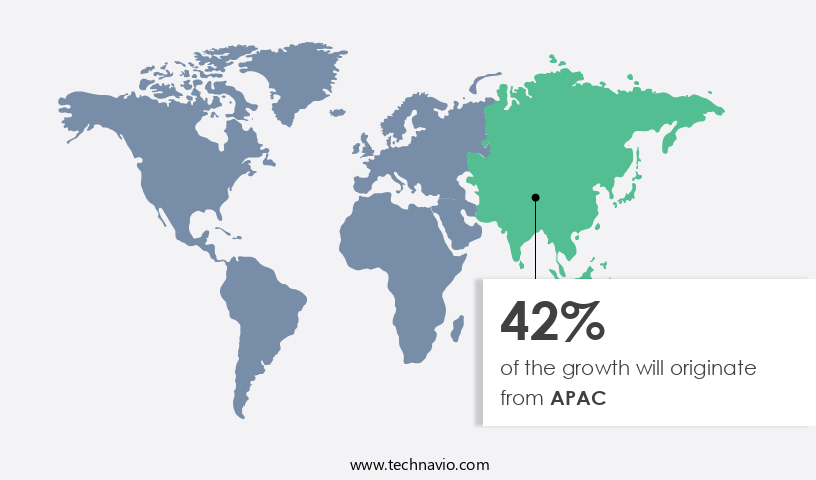
The purging compounds market in the APAC region is experiencing significant growth, fueled by the region's vibrant and expanding manufacturing sector. Countries like China, India, and those in Southeast Asia are witnessing a surge in production across industries such as automotive, electronics, and packaging. This manufacturing growth necessitates efficient machinery maintenance solutions, leading to increased usage of purging compounds in Asia Pacific. The adoption of advanced plastic processing technologies, including injection molding and extrusion, is driving the demand for purging compounds. These technologies enable industries to enhance production capabilities, ensuring seamless transitions between various materials and colors, minimizing downtime, and optimizing overall efficiency.
Purging compounds play a crucial role in the manufacturing process by eliminating residual polymers and contaminants from processing equipment. Their application is essential in various industries, including electronics, where they are used for RFI and EMI shielding in printed circuit boards and electronic components. In medical devices and military applications, they provide corrosion protection and moisture proofing. In aerospace electronics, they ensure chemical resistance and high temperature resistance. The versatility of purging compounds extends to consumer electronics, where they are used for conformal coating and moisture absorption control. They are also used in automotive electronics for electrical resistivity and thermal conductivity enhancement, and in industrial applications for improving tensile strength and surface preparation.
The market trends include the development of new application methods, such as dip coating and roller coating, and advancements in curing agents and curing temperatures to enhance the pot life and reduce curing time. Vacuum degassing is another emerging trend to ensure better coating thickness and chemical resistance. In summary, the purging compounds market in the APAC region is witnessing robust growth due to the increasing manufacturing demand and the adoption of advanced plastic processing technologies. Their diverse applications across various industries, including electronics, medical devices, military applications, aerospace electronics, and automotive electronics, make them an indispensable component in the manufacturing process.
The ongoing research and development in curing agents, application methods, and other properties further strengthen the market's growth potential.
Market Dynamics
Our researchers analyzed the data with 2023 as the base year, along with the key drivers, trends, and challenges. A holistic analysis of drivers will help companies refine their marketing strategies to gain a competitive advantage.
What are the key market drivers leading to the rise in the adoption of Purging Compound Industry?
- The thermoplastic industry's growing requirement for purging compounds serves as the primary market driver.
- The market: Enhancing Temperature Resistance and Protection for Aerospace and Consumer Electronics Purging compounds are essential materials used in various industries for ensuring efficient production processes and maintaining product quality. In the electronics sector, these compounds play a crucial role in providing temperature resistance, moisture proofing, and corrosion protection to components, particularly in aerospace electronics and consumer electronics. Silicone resin and polyamide resin are commonly used purging compounds due to their excellent properties, such as high tensile strength and resistance to heat, chemicals, and moisture. These compounds are applied through dip coating or other methods to create a protective layer on electronic components.
- Flame retardants are another essential component of purging compounds, ensuring the safety of electronic devices by preventing the spread of fires. The curing time of these compounds is a critical factor, as it impacts the overall production process and the final product's quality. In the aerospace industry, purging compounds are indispensable for producing moisture-proof and temperature-resistant components that can withstand extreme conditions. Similarly, in consumer electronics, these compounds ensure the durability and reliability of devices by protecting them from environmental factors and wear and tear. Overall, the market is driven by the increasing demand for advanced and durable electronic components across various industries.
- The market is expected to grow due to the continuous innovation in materials and production processes, leading to improved performance and cost-effectiveness.
What are the market trends shaping the Purging Compound Industry?
- The development of environmentally friendly and bio-based purging compounds is an emerging trend in the industry. These compounds, which are used to clean and prepare machinery for production of new materials, are becoming increasingly important due to growing concerns about sustainability and reducing the environmental impact of manufacturing processes.
- Purging compounds are essential materials used in various industries for moisture absorption and improving dielectric strength in applications where electrical resistivity is crucial. These compounds are commonly applied through methods such as roller coating and spraying, with coating thickness varying based on specific requirements. The compounds, often made from polyurethane resin, offer excellent chemical resistance, making them suitable for use in automotive electronics and other industries. Vacuum degassing is a critical process in the production of purging compounds to remove air bubbles and ensure consistent product quality. The compounds' ability to absorb moisture effectively and maintain dielectric strength under harsh operating conditions makes them indispensable in numerous applications.
- Application methods and coating thicknesses can significantly impact the performance of purging compounds. Surface preparation is essential to ensure proper adhesion and optimal results. Electrical resistivity is a critical factor in determining the suitability of purging compounds for various applications. In recent research, advancements in manufacturing techniques and formulation development have led to improved product performance and expanded applications for purging compounds. These innovations continue to drive growth in the market.
What challenges does the Purging Compound Industry face during its growth?
- The volatile pricing of purging compounds poses a significant challenge to the industry's growth trajectory, necessitating careful cost management and supply chain strategies.
- The market is a significant sector in the manufacturing industry, driven by the demand for high-performance coatings in various applications. These compounds, which include epoxy and polyester resins, are essential in enhancing the properties of conformal coatings, such as thermal conductivity, solvent resistance, and UV stabilization. Manufacturers incorporate anti-static additives to prevent electrostatic discharge during the application process. The pot life of these compounds is critical, ensuring they remain workable for a sufficient period without curing prematurely. Curing temperature plays a crucial role in the production process, affecting the final product's quality and performance. Epoxy resins are popular due to their excellent adhesive properties, while polyester resins offer better flexibility and chemical resistance.
- Both types of resins benefit from the addition of purging compounds, resulting in superior coatings for various industries, including electronics, automotive, and aerospace. In recent research, thermal conductivity and UV stabilizers have emerged as key trends, with manufacturers focusing on producing compounds that improve heat dissipation and protect against UV radiation. As the market continues to evolve, innovation in formulation and application methods will drive growth and enhance the overall value proposition for customers.
Exclusive Customer Landscape
The purging compound market forecasting report includes the adoption lifecycle of the market, covering from the innovator's stage to the laggard's stage. It focuses on adoption rates in different regions based on penetration. Furthermore, the purging compound market report also includes key purchase criteria and drivers of price sensitivity to help companies evaluate and develop their market growth analysis strategies.
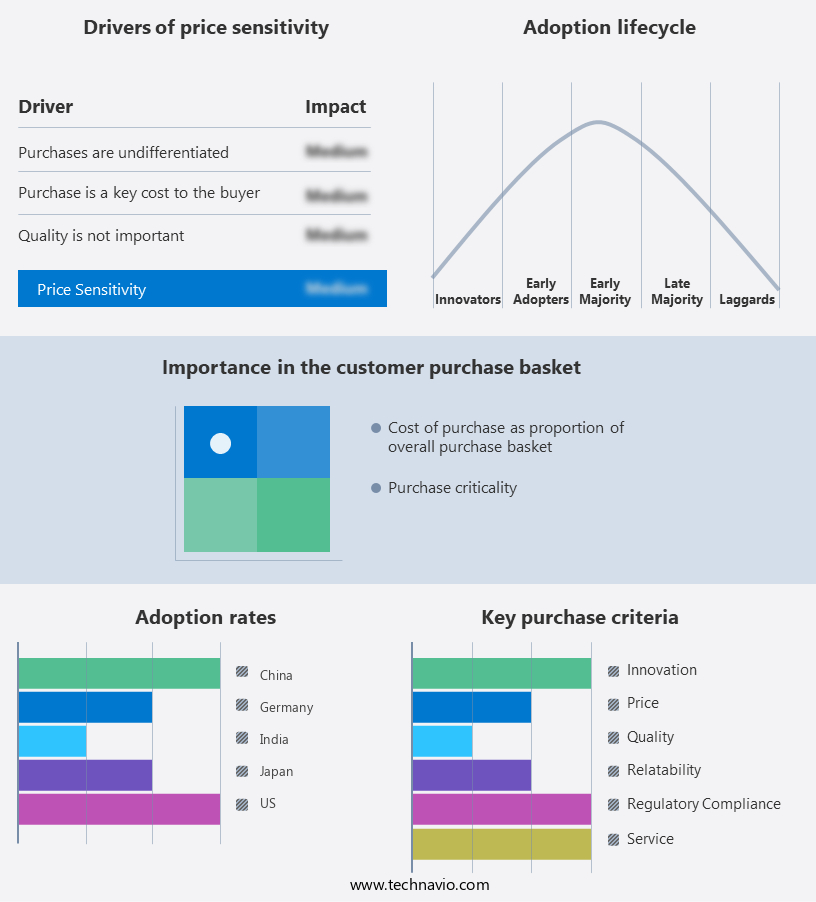
Customer Landscape
Key Companies & Market Insights
Companies are implementing various strategies, such as strategic alliances, purging compound market forecast, partnerships, mergers and acquisitions, geographical expansion, and product/service launches, to enhance their presence in the industry.
3M Co. - The company specializes in providing advanced purging solutions to enhance manufacturing efficiency. Our offerings include high-performance compounds, such as 3M Scotch Weld Purge Material 3756, designed to minimize material contamination during plastic welding processes. By utilizing these compounds, manufacturers can reduce production downtime, improve product quality, and lower overall costs. Our commitment to innovation and excellence ensures that our customers receive the most effective and reliable purging solutions available in the market.
The industry research and growth report includes detailed analyses of the competitive landscape of the market and information about key companies, including:
- 3M Co.
- Asahi Kasei Corp.
- BASF SE
- Daicel Corp.
- Dow Chemical Co.
- DuPont de Nemours Inc.
- Flamingo Additives and Colourants LLP
- Formosa Plastics Corp.
- Freudenberg and Co. KG
- K. Sakai and Co. Ltd.
- KURARAY Co. Ltd.
- Mitsubishi Chemical Group Corp.
- Neutrex Inc.
- Novanative Plastix Solutions Pvt. Ltd.
- Plastic Solutions International LLC
- Premix Oy
- RapidPurge
- Shuman Plastics Inc.
- Slide Products Inc.
- Ultra System SA
Qualitative and quantitative analysis of companies has been conducted to help clients understand the wider business environment as well as the strengths and weaknesses of key industry players. Data is qualitatively analyzed to categorize companies as pure play, category-focused, industry-focused, and diversified; it is quantitatively analyzed to categorize companies as dominant, leading, strong, tentative, and weak.
Recent Development and News in Purging Compound Market
- In February 2024, DuPont announced the launch of its new purging compound, Elite Purging Compound 2000, designed to improve production efficiency and reduce waste in the plastics industry (DuPont Press Release, 2024). This innovative product is expected to significantly enhance the performance of injection molding machines, leading to increased demand and market growth.
- In May 2025, BASF and Sabic entered into a strategic partnership to expand their purging compound production capacity by 50%, aiming to meet the increasing demand for high-performance purging compounds in various industries (BASF Press Release, 2025). This collaboration is expected to strengthen their market position and drive growth in the market.
- In August 2025, Clariant, a leading specialty chemical company, received regulatory approval from the European Chemicals Agency (ECHA) for its new purging compound, Masterbatches EcoPURGE, which is free of volatile organic compounds (VOCs) (Clariant Press Release, 2025). This approval is a significant milestone for Clariant, as it allows them to cater to the growing demand for eco-friendly purging compounds in the European market.
- In November 2025, LG Chem invested USD100 million in its purging compound production facility in South Korea, aiming to increase its production capacity by 30% (LG Chem Press Release, 2025). This investment will enable LG Chem to meet the growing demand for purging compounds in the Asian market and expand its market share.
Research Analyst Overview
- The market encompasses various encapsulation processes and materials, including military grade encapsulation materials and thermal curing processes. Conformal coating equipment and moisture barriers play a crucial role in the production of conformal coatings for high-reliability applications. Automated dispensing systems and one-part systems are increasingly popular for their efficiency and ease of use. Dielectric materials and thermal management are key considerations in the development of conformal coatings and potting compounds for aerospace grade and other high-performance applications. Potting machines and hybrid materials enable effective encapsulation in clean room environments, while molding compounds and robotic application methods streamline production.
- Testing standards and quality control are essential for ensuring the reliability of conformal coatings and purging compounds in various industries, including electronics and automotive. Thermal interface materials, such as casting resins and heat sinks, are also integral to thermal management and the overall performance of purging compounds. In summary, the market is characterized by continuous innovation in encapsulation processes, materials, and equipment. Thermal management, reliability testing, and clean room applications remain key drivers of growth, with a focus on improving efficiency, reducing costs, and enhancing the overall performance of purging compounds in high-reliability applications.
Dive into Technavio's robust research methodology, blending expert interviews, extensive data synthesis, and validated models for unparalleled Purging Compound Market insights. See full methodology.
|
Market Scope |
|
|
Report Coverage |
Details |
|
Page number |
158 |
|
Base year |
2023 |
|
Historic period |
2018-2022 |
|
Forecast period |
2024-2028 |
|
Growth momentum & CAGR |
Accelerate at a CAGR of 5.67% |
|
Market growth 2024-2028 |
USD 202.72 million |
|
Market structure |
Fragmented |
|
YoY growth 2023-2024(%) |
5.25 |
|
Key countries |
US, China, Japan, India, and Germany |
|
Competitive landscape |
Leading Companies, Market Positioning of Companies, Competitive Strategies, and Industry Risks |
What are the Key Data Covered in this Purging Compound Market Research and Growth Report?
- CAGR of the Purging Compound industry during the forecast period
- Detailed information on factors that will drive the growth and forecasting between 2024 and 2028
- Precise estimation of the size of the market and its contribution of the industry in focus to the parent market
- Accurate predictions about upcoming growth and trends and changes in consumer behaviour
- Growth of the market across APAC, North America, Europe, Middle East and Africa, and South America
- Thorough analysis of the market's competitive landscape and detailed information about companies
- Comprehensive analysis of factors that will challenge the purging compound market growth of industry companies
We can help! Our analysts can customize this purging compound market research report to meet your requirements.
 RIA -
RIA - 
