



Quality Management Software Market Size 2025-2029
The quality management software market size is forecast to increase by USD 7.64 billion, at a CAGR of 10.7% between 2024 and 2029.
- The market is experiencing significant growth, driven primarily by the increasing adoption of cloud-based and Software-as-a-Service (SaaS) solutions. This shift towards cloud and SaaS offerings is facilitated by their flexibility, scalability, and cost-effectiveness. Also, advanced technologies such as Artificial Intelligence (AI), Machine Learning (ML), and data analytics are transforming quality management processes. However, this market landscape is not without challenges. Open-source quality management software providers pose a threat with their lower costs and customizable solutions, potentially attracting price-sensitive buyers. Companies must navigate this competitive landscape by focusing on differentiating their offerings through advanced features, robust integrations, and exceptional customer support.
- To capitalize on opportunities, organizations should prioritize continuous improvement, data-driven decision-making, and regulatory compliance. By addressing these challenges and leveraging the benefits of cloud and SaaS solutions, market participants can effectively meet the evolving needs of their customers and stay competitive in the dynamic market.
What will be the Size of the Quality Management Software Market during the forecast period?

Explore in-depth regional segment analysis with market size data - historical 2019-2023 and forecasts 2025-2029 - in the full report.
Request Free Sample
The market continues to evolve, driven by the ever-changing needs of businesses across various sectors. This dynamic market is characterized by the integration of various elements, including continuous improvement, external audits, quality procedures, on-premise solutions, support and maintenance, lean manufacturing, statistical process control, cost reduction, supplier management, customer satisfaction, user experience, efficiency improvement, six sigma, quality policy, consulting services, and more. Error prevention and training services play a crucial role in ensuring the effective implementation of quality management systems. Lean manufacturing and statistical process control help organizations minimize waste and improve productivity. Six sigma methodologies enable businesses to identify and eliminate defects, while user experience and customer satisfaction are key focus areas for service quality management.
Cloud-based solutions and subscription models offer flexibility and scalability, while regulatory compliance and risk management are essential components of any comprehensive quality management strategy. Quality metrics and dashboards provide valuable insights into performance, enabling continuous improvement and root cause analysis. Industry best practices and implementation services are essential for organizations seeking to optimize their quality management processes. Internal audits and quality culture are vital for maintaining a strong focus on quality, while data security and document management ensure data privacy and regulatory compliance. Quality assurance testing, process mapping, and quality gates are essential tools for ensuring product quality, while non-conformance management and quality records help organizations address and resolve issues effectively.
Quality objectives and project quality management are critical for aligning quality efforts with business goals. Mobile applications and quality reviews offer additional opportunities for enhancing quality management processes and improving operational efficiency. Consulting services provide expert guidance and support for organizations embarking on their quality management journey. In this ever-evolving landscape, organizations must remain agile and adaptable, continuously refining their quality management strategies to meet the changing needs of their customers and stakeholders.
How is this Quality Management Software Industry segmented?
The quality management software industry research report provides comprehensive data (region-wise segment analysis), with forecasts and estimates in "USD million" for the period 2025-2029, as well as historical data from 2019-2023 for the following segments.
- Application
- IT and telecom
- Transportation and logistics
- Consumer goods and retail
- Healthcare
- Banking
- Deployment
- On-premises
- Cloud-based
- Sector
- Large enterprises
- SMEs
- Geography
- North America
- US
- Canada
- Europe
- France
- Germany
- Italy
- UK
- APAC
- China
- India
- Japan
- South Korea
- Rest of World (ROW)
- North America
.
By Application Insights
The it and telecom segment is estimated to witness significant growth during the forecast period.
In today's IT and telecom industry, companies are prioritizing the effective management of human capital to meet their business objectives. Quality management software is becoming increasingly essential for these organizations, enabling them to streamline processes, improve efficiency, and ensure regulatory compliance. The software market encompasses various components, including design of experiments, data security, document management, process capability analysis, quality assurance, data analysis, quality manual, user interface, value stream mapping, quality tools, project quality management, quality records, non-conformance management, product quality management, external audits, quality procedures, on-premise solutions, support and maintenance, lean manufacturing, statistical process control, cost reduction, supplier management, customer satisfaction, user experience, efficiency improvement, six sigma, quality policy, consulting services, error prevention, training services, quality management system, subscription models, quality reviews, training and development, service quality management, cloud-based solutions, quality metrics, risk management, regulatory compliance, quality dashboards, compliance auditing, compliance management, continuous improvement, root cause analysis, industry best practices, implementation services, internal audits, quality culture, quality control, data privacy, quality reporting, process mapping, quality assurance testing, quality gates, mobile applications, and quality objectives.
With the growing importance of advanced technologies, IT and telecom companies are investing in these solutions to manage their workforce effectively and maintain a competitive edge. The adoption of freelancers and independent contractors is also on the rise, necessitating robust quality management systems to ensure consistent performance and adherence to organizational standards.
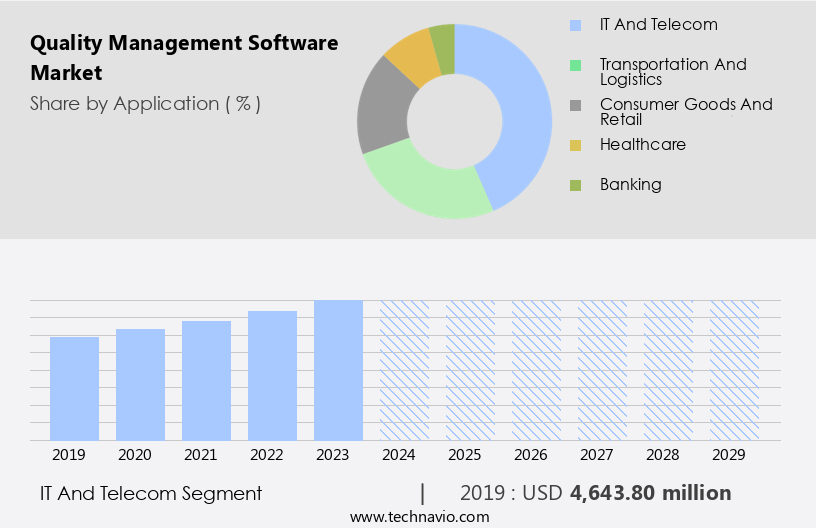
The IT and telecom segment was valued at USD 4.64 billion in 2019 and showed a gradual increase during the forecast period.
Regional Analysis
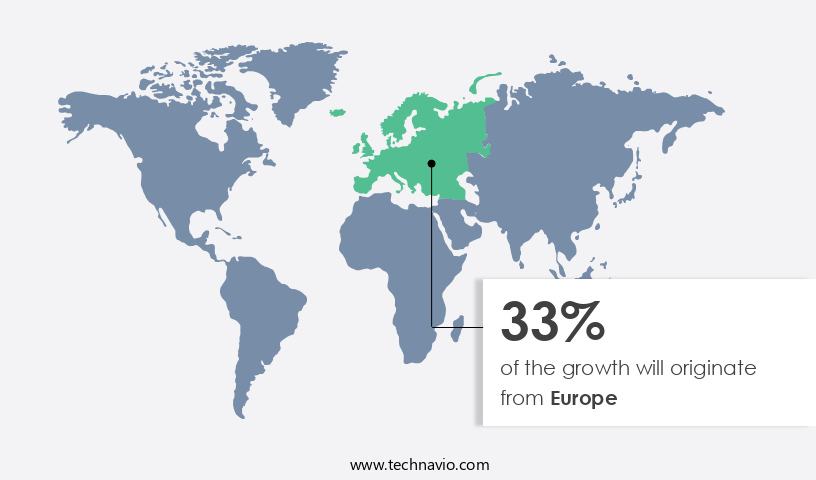
Europe is estimated to contribute 33% to the growth of the global market during the forecast period. Technavio's analysts have elaborately explained the regional trends and drivers that shape the market during the forecast period.
In the advanced technological landscape of North America, the market is experiencing significant growth. The IT and telecom, healthcare, BFSI, manufacturing, retail, and e-commerce industries are major contributors to this expansion. The region's industries require sophisticated quality management systems due to their maturity and technological prowess. Top companies' presence and penetration further fuel the market's growth. Compliance with stringent quality management standards, including AS9100 Rev.D, IATF 16949, and ISO 9001, is a significant driving force for the implementation of quality management software across various industries in North America. Data security, document management, process capability analysis, quality assurance, data analysis, and user interface are essential features that businesses demand from quality management software.
Value stream mapping, quality tools, project quality management, quality records, non-conformance management, product quality management, external audits, quality procedures, on-premise solutions, support and maintenance, lean manufacturing, statistical process control, cost reduction, supplier management, customer satisfaction, user experience, efficiency improvement, six sigma, quality policy, consulting services, error prevention, training services, quality management system, subscription models, quality reviews, training and development, service quality management, cloud-based solutions, quality metrics, risk management, regulatory compliance, quality dashboards, compliance auditing, compliance management, continuous improvement, root cause analysis, industry best practices, implementation services, internal audits, quality culture, quality control, data privacy, quality reporting, process mapping, quality assurance testing, quality gates, mobile applications, and quality objectives are all integral components of this evolving market.
The integration of advanced technologies, such as artificial intelligence, machine learning, and the Internet of Things, is revolutionizing the market. These technologies enable real-time data analysis, predictive maintenance, and continuous improvement, leading to increased efficiency and cost reduction. Additionally, the growing emphasis on supplier management and customer satisfaction is further fueling the market's growth. In conclusion, the North American market is witnessing significant growth due to the region's advanced technological landscape, the maturity of its industries, and the increasing demand for stringent compliance with international technical specifications and quality management standards. The integration of advanced technologies is revolutionizing the market, enabling real-time data analysis, predictive maintenance, and continuous improvement.
Market Dynamics
Our researchers analyzed the data with 2024 as the base year, along with the key drivers, trends, and challenges. A holistic analysis of drivers will help companies refine their marketing strategies to gain a competitive advantage.
What are the key market drivers leading to the rise in the adoption of Quality Management Software Industry?
- The increasing adoption of cloud-based quality management software solutions serves as the primary growth driver for the market.
- The global market for quality management software is experiencing significant growth due to the increasing adoption of cloud computing solutions. This shift is driven by the cost savings and flexibility offered by cloud services, enabling organizations to reduce their capital expenditure (CAPEX) and operational expenditure (OPEX) by avoiding the need to establish their own data centers. Small businesses and startups are particularly benefiting from this trend, as they can easily scale their hardware and resources as needed. Cloud-based quality management software provides several advantages, including quick implementation, improved customer experience, and enhanced data accessibility. Key features of this software include design of experiments, data security, document management, process capability analysis, quality assurance, data analysis, quality manual, user interface, value stream mapping, quality tools, project quality management, quality records, non-conformance management, and product quality management.
- These tools enable organizations to streamline their operations, improve efficiency, and maintain high product quality. The market is expected to continue growing as more businesses recognize the benefits of implementing quality management software in their operations.
What are the market trends shaping the Quality Management Software Industry?
- The increasing preference for Software-as-a-Service (SaaS) quality management software solutions represents a significant market trend. This shift towards cloud-based applications offers numerous benefits, including cost savings, scalability, and ease of use.
- The Quality Management Software (QMS) market has witnessed significant growth due to the increasing adoption of advanced solutions by enterprises. External audits and the need for adherence to quality procedures have driven the demand for these systems. SMEs, in particular, are shifting towards Software-as-a-Service (SaaS) solutions for their faster and cost-effective implementation. SaaS-based QMS does not necessitate any software installation, as it is maintained by the service provider's data center. Users access the software on a subscription basis, which includes support and maintenance costs and system upgrades. The benefits of SaaS-based QMS extend beyond cost savings.
- These solutions offer enhanced data security and scalability, making them an attractive choice for businesses. Lean manufacturing, Six Sigma, and Statistical Process Control (SPC) are some of the critical quality methodologies that QMS supports. Moreover, these systems facilitate efficient supplier management, cost reduction, and improvement in customer satisfaction. User experience is a significant focus area, ensuring an immersive and harmonious interface. Consulting services are increasingly being integrated into QMS to provide comprehensive solutions. QMS solutions enable businesses to streamline their quality policies and adhere to industry regulations, ultimately improving overall business performance. In conclusion, the QMS market is expected to grow further due to its ability to enhance operational efficiency, reduce costs, and improve customer satisfaction.
What challenges does the Quality Management Software Industry face during its growth?
- The expansion of open-source quality management software providers poses a significant challenge to the industry's growth trajectory.
- The market experiences ongoing competition from open-source providers, offering free solutions such as FlinkISO and Odoo. These options cater to small and medium-sized enterprises (SMEs) with budget constraints, providing a wide array of tools and applications that cover essential quality management functionalities. Open-source software's versatility is demonstrated through its compatibility with various platforms, including Linux, Mac, Windows, Android, and iOS. In developing countries like India and China, SMEs are increasingly adopting these solutions due to their affordability and ability to meet quality management requirements without substantial investment. Subscription models have gained popularity in the market, enabling businesses to access advanced features and updates continuously.
- Cloud-based solutions have become increasingly prevalent, offering benefits such as ease of use, scalability, and cost savings. Service quality management, risk management, and regulatory compliance are critical areas of focus for businesses, and quality management software plays a crucial role in addressing these concerns. Quality reviews, training services, and training and development are essential components of a comprehensive quality management system. Quality metrics and compliance auditing are essential for measuring and improving service quality and ensuring regulatory compliance. Quality dashboards provide real-time insights into key performance indicators (KPIs), enabling businesses to make data-driven decisions and optimize their quality management processes.
- Cloud-based solutions offer advanced risk management capabilities, allowing businesses to identify, assess, and mitigate potential risks proactively. Compliance management is another critical area where quality management software can add value, helping businesses stay up-to-date with the latest regulations and standards. By implementing a robust quality management system, businesses can improve their overall efficiency, reduce errors, and enhance customer satisfaction.
Exclusive Customer Landscape
The quality management software market forecasting report includes the adoption lifecycle of the market, covering from the innovator's stage to the laggard's stage. It focuses on adoption rates in different regions based on penetration. Furthermore, the quality management software market report also includes key purchase criteria and drivers of price sensitivity to help companies evaluate and develop their market growth analysis strategies.
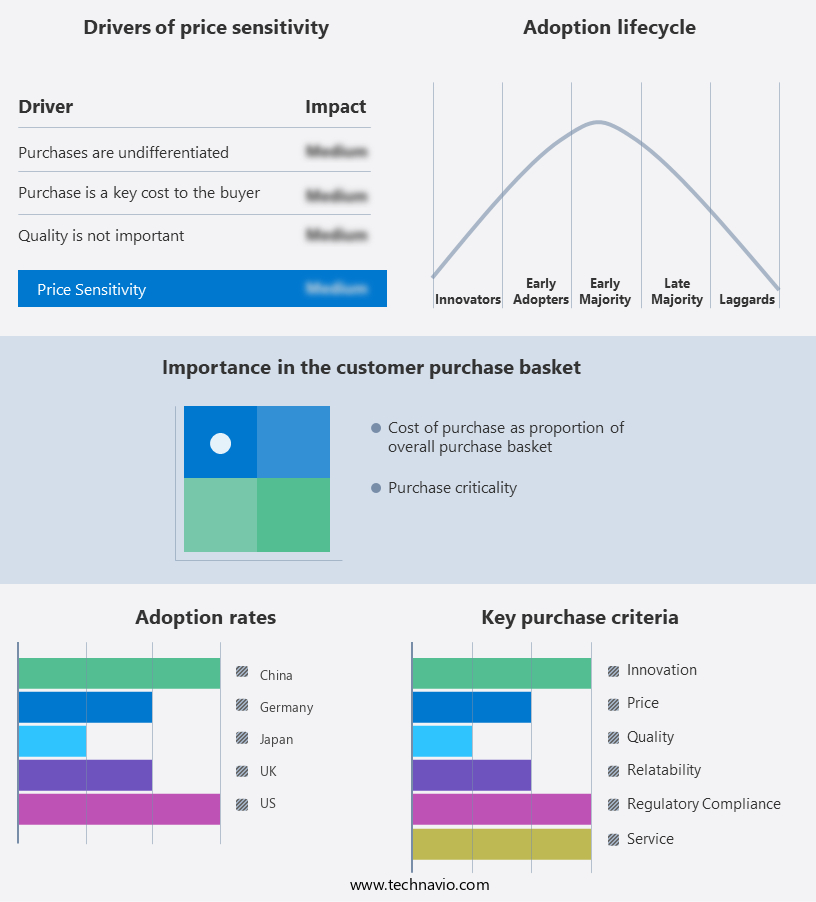
Customer Landscape
Key Companies & Market Insights
Companies are implementing various strategies, such as strategic alliances, quality management software market forecast, partnerships, mergers and acquisitions, geographical expansion, and product/service launches, to enhance their presence in the industry.
Aras Corp. - This company specializes in providing advanced quality management solutions, including the Aras quality management system.
The industry research and growth report includes detailed analyses of the competitive landscape of the market and information about key companies, including:
- Aras Corp.
- Autodesk Inc.
- Cority Software Inc.
- Dassault Systemes SE
- Hewlett Packard Enterprise Co.
- Hexagon AB
- Honeywell International Inc.
- Intelex Technologies ULC
- IQVIA Holdings Inc.
- MasterControl Solutions Inc.
- MetricStream Inc.
- Microsoft Corp.
- Oracle Corp.
- Parasoft Corp.
- PSC Software
- QT9 Software Inc.
- SAP SE
- Siemens AG
- UniPoint Software Inc.
- Wolters Kluwer NV
Qualitative and quantitative analysis of companies has been conducted to help clients understand the wider business environment as well as the strengths and weaknesses of key industry players. Data is qualitatively analyzed to categorize companies as pure play, category-focused, industry-focused, and diversified; it is quantitatively analyzed to categorize companies as dominant, leading, strong, tentative, and weak.
Recent Development and News in Quality Management Software Market
- In February 2024, SAP SE announced the launch of its new quality management solution, SAP Quality Management Solution (SQMS), which integrates with the SAP S/4HANA platform. This offering aims to help businesses manage and improve product and process quality in real-time (SAP Press Release, 2024).
- In May 2024, IBM and Dassault Systèmes entered into a strategic partnership to integrate IBM's Watson AI capabilities with Dassault Systèmes' 3DEXPERIENCE platform. This collaboration is expected to enhance quality management by providing predictive analytics and automation for manufacturing processes (IBM Press Release, 2024).
- In October 2024, IQMS, an HCL Technologies company, secured a significant investment from HCL to accelerate its growth in the market. The investment will support the development of new products and services, as well as expansion into new markets (Business Wire, 2024).
- In January 2025, the European Union's Medical Devices Regulation (MDR) came into effect, mandating stricter quality requirements for medical devices. This regulatory change is expected to drive demand for advanced quality management software solutions in the healthcare sector (European Commission, 2020).
Research Analyst Overview
- The market is experiencing dynamic shifts with the increasing adoption of various solutions to enhance business operations. On-premise solutions continue to dominate, providing organizations with control over their data. However, mobile applications are gaining traction, enabling real-time monitoring and user-friendly access. Subscription models are becoming increasingly popular, offering flexibility and cost savings. Service quality management and statistical process control remain essential components, with quality control charts and process control charts playing pivotal roles in error prevention. Consulting services and implementation services ensure industry best practices are followed, while efficiency improvement and data security are critical concerns. Data visualization and data privacy are essential for effective data management and regulatory compliance.
- Cloud-based solutions are on the rise, offering cost reduction, ease of use, and scalability. Training services and support and maintenance ensure smooth implementation and ongoing system optimization. Compliance auditing, cost reduction, and process monitoring are crucial aspects of quality management, with process optimization and process capability indices driving continuous improvement. Quality reporting and user experience are essential for effective communication and user satisfaction. SPC software, quality assurance testing, and quality data collection are integral parts of the quality management process.
Dive into Technavio's robust research methodology, blending expert interviews, extensive data synthesis, and validated models for unparalleled Quality Management Software Market insights. See full methodology.
|
Market Scope |
|
|
Report Coverage |
Details |
|
Page number |
227 |
|
Base year |
2024 |
|
Historic period |
2019-2023 |
|
Forecast period |
2025-2029 |
|
Growth momentum & CAGR |
Accelerate at a CAGR of 10.7% |
|
Market growth 2025-2029 |
USD 7641.3 million |
|
Market structure |
Fragmented |
|
YoY growth 2024-2025(%) |
9.8 |
|
Key countries |
US, Canada, China, UK, Japan, India, Germany, France, South Korea, and Italy |
|
Competitive landscape |
Leading Companies, Market Positioning of Companies, Competitive Strategies, and Industry Risks |
What are the Key Data Covered in this Quality Management Software Market Research and Growth Report?
- CAGR of the Quality Management Software industry during the forecast period
- Detailed information on factors that will drive the growth and forecasting between 2025 and 2029
- Precise estimation of the size of the market and its contribution of the industry in focus to the parent market
- Accurate predictions about upcoming growth and trends and changes in consumer behaviour
- Growth of the market across North America, Europe, APAC, Middle East and Africa, and South America
- Thorough analysis of the market's competitive landscape and detailed information about companies
- Comprehensive analysis of factors that will challenge the quality management software market growth of industry companies
We can help! Our analysts can customize this quality management software market research report to meet your requirements.
 RIA -
RIA - 
