


Quartz Glass Market Size 2025-2029
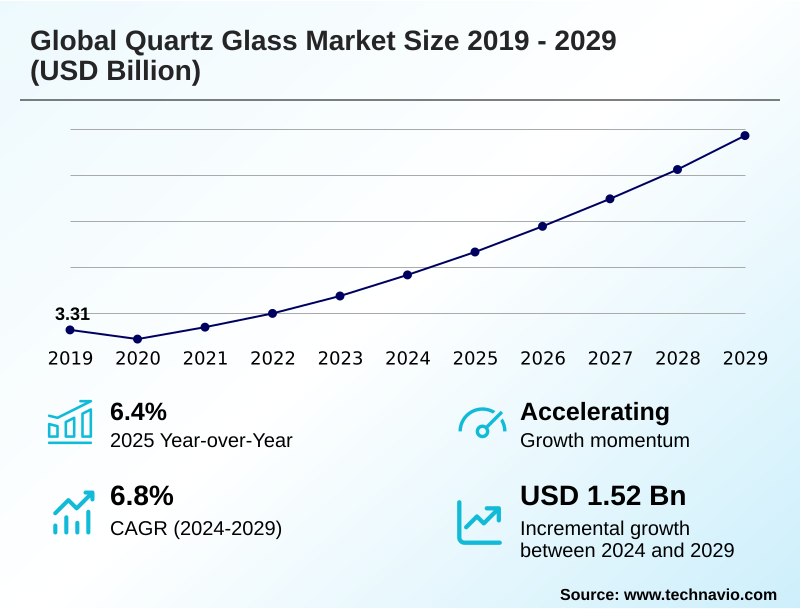
The quartz glass market size is valued to increase by USD 1.52 billion, at a CAGR of 6.8% from 2024 to 2029. Growth in semiconductor industry will drive the quartz glass market.
Major Market Trends & Insights
- APAC dominated the market and accounted for a 49.5% growth during the forecast period.
- By Product Type - Fused quartz glass segment was valued at USD 1.30 billion in 2023
- By Application - Semiconductors and electronics segment accounted for the largest market revenue share in 2023
Market Size & Forecast
- Market Opportunities: USD 2.12 billion
- Market Future Opportunities: USD 1.52 billion
- CAGR from 2024 to 2029 : 6.8%
Market Summary
- The quartz glass market is sustained by its indispensable role in high-technology sectors, where materials with exceptional purity and performance are paramount. Its unique properties, including low thermal expansion and superior chemical inertness, make it a critical enabler for industries pushing the boundaries of innovation.
- A key driver is the relentless advancement in semiconductor manufacturing, where fused quartz glass is used in high-temperature wafer processing. As chip designs become more complex, the demand for flawless materials intensifies, pushing manufacturers to refine production. For instance, in a typical fabrication plant, optimizing quartz component quality can reduce wafer contamination incidents by over 20%, directly improving production yields.
- Beyond electronics, the expansion of global fiber optic networks and the growth in solar energy depend on high-purity quartz. However, the industry grapples with high production costs and supply chain vulnerabilities tied to scarce, high-purity raw materials. This dynamic creates a competitive environment where technological innovation and process efficiency are crucial for maintaining market leadership.
What will be the Size of the Quartz Glass Market during the forecast period?
Get Key Insights on Market Forecast (PDF) Get Free Sample
How is the Quartz Glass Market Segmented?
The quartz glass industry research report provides comprehensive data (region-wise segment analysis), with forecasts and estimates in "USD million" for the period 2025-2029, as well as historical data from 2019-2023 for the following segments.
- Product type
- Fused quartz glass
- Synthetic quartz glass
- Opaque quartz glass
- Clear quartz glass
- Application
- Semiconductors and electronics
- Photovoltaics and solar energy
- Optical and telecommunication components
- Lighting and lamp manufacturing
- Others
- Distribution channel
- Direct supply to OEMs
- Authorised distributors
- Online industrial portals
- Speciality materials retailers
- Geography
- APAC
- China
- Japan
- South Korea
- North America
- US
- Canada
- Mexico
- Europe
- Germany
- France
- UK
- Middle East and Africa
- Saudi Arabia
- UAE
- South Africa
- South America
- Brazil
- Argentina
- Colombia
- Rest of World (ROW)
- APAC
By Product Type Insights
The fused quartz glass segment is estimated to witness significant growth during the forecast period.
The global quartz glass market 2025-2029 is segmented by product, application, and geography, reflecting diverse industrial requirements. The fused quartz glass segment is defined by its production from natural silica sand, offering robust physical properties for broad use.
Its excellent thermal shock resistance and high-temperature stability make it vital for components like quartz furnace tubes and industrial furnace liners where cost-effectiveness is prioritized. This material's low thermal expansion ensures dimensional integrity in demanding thermal cycling.
In photovoltaics, it is used for high-purity quartz crucibles essential for photovoltaic silicon production.
While less pure than synthetic variants, manufacturing advancements have improved its quality, expanding its use into areas such as halogen lamp envelopes, where it delivers 95% transmission efficiency in the visible spectrum.
Other segments include semiconductor etch chambers and aerospace optical windows.
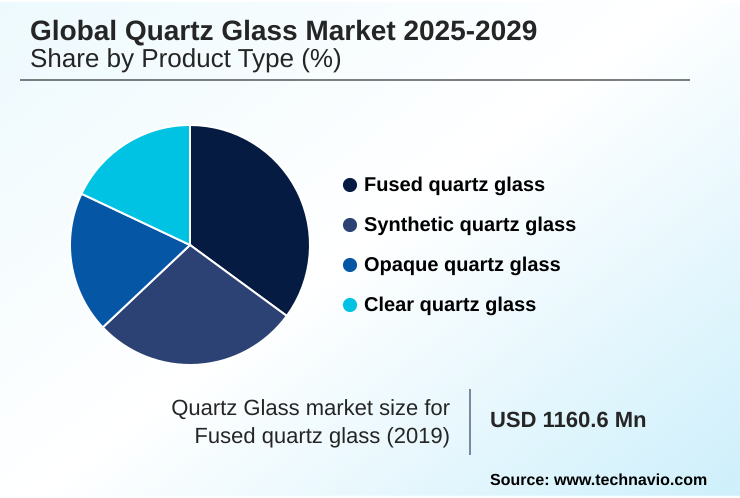
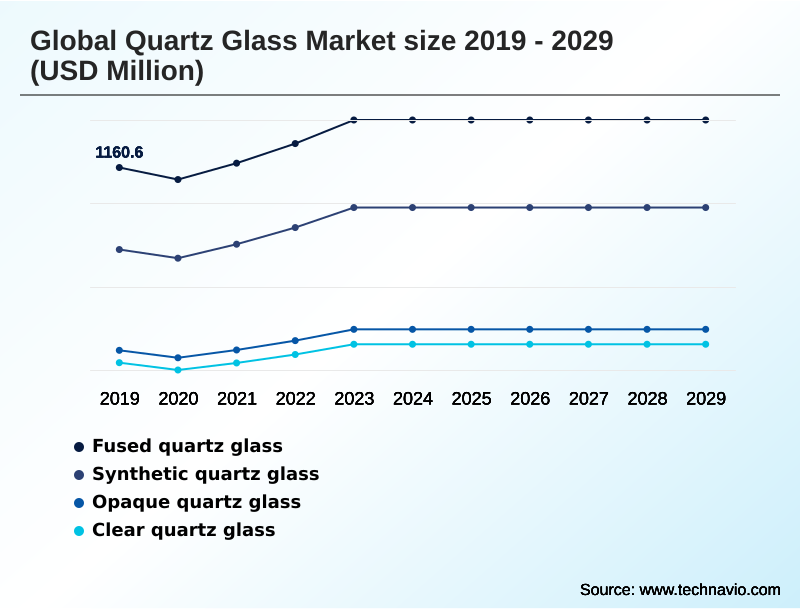
The Fused quartz glass segment was valued at USD 1.30 billion in 2023 and showed a gradual increase during the forecast period.
Regional Analysis
APAC is estimated to contribute 49.5% to the growth of the global market during the forecast period.Technavio’s analysts have elaborately explained the regional trends and drivers that shape the market during the forecast period.
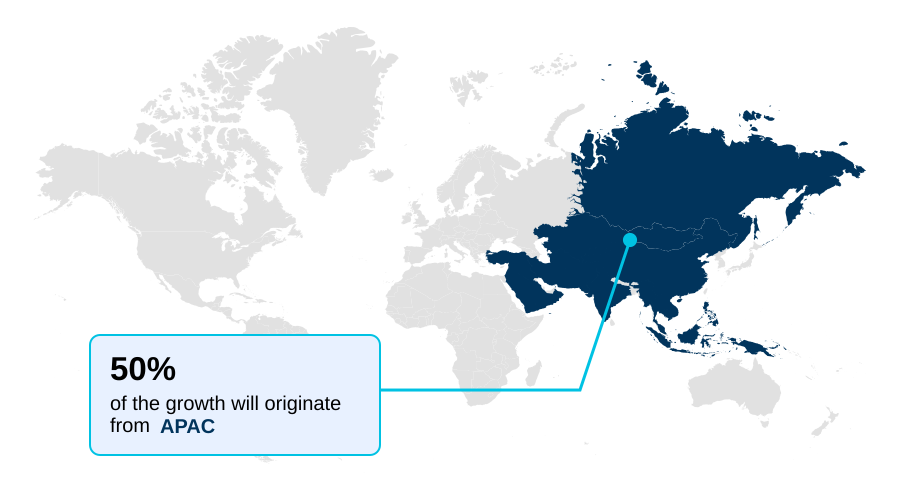
See How Quartz Glass Market Demand is Rising in APAC Get Free Sample
The geographic landscape is dominated by the APAC region, which accounts for nearly 50% of the market's incremental growth, driven by its heavy concentration of semiconductor and electronics manufacturing.
These industries require a steady supply of synthetic quartz glass and amorphous silicon dioxide for advanced applications like deep ultraviolet lithography. North America follows, with its robust research and aerospace sectors demanding radiation resistant glass and materials for laser optics.
Europe’s market is mature, focusing on specialized industrial and medical applications using materials with high UV transparency. The region's focus on custom-machined fused quartz labware contributes to its stability.
In comparison, the market share in South America is less than 5%, reflecting a more nascent industrial base.
Market Dynamics
Our researchers analyzed the data with 2024 as the base year, along with the key drivers, trends, and challenges. A holistic analysis of drivers will help companies refine their marketing strategies to gain a competitive advantage.
- Strategic decision-making in the quartz glass for semiconductor manufacturing sector is increasingly complex, balancing cost against the stringent requirements for purity and performance. The adoption of synthetic quartz in EUV lithography is a necessity for next-generation chip fabrication, influencing capital expenditure on production equipment.
- Simultaneously, the expansion of global connectivity relies on fused silica for optical fiber networks, where material consistency is paramount for minimizing signal loss. For renewable energy initiatives, the efficiency of high-purity quartz in solar cell production directly impacts project viability, with improved crucible quality leading to a nearly 10% increase in solar cell efficiency compared to standard materials.
- The use of opaque quartz for industrial furnaces offers a clear operational advantage in thermal management, while the selection of clear quartz in UV disinfection lamps is driven by public health standards. Understanding low thermal expansion quartz applications and the chemical inertness of quartz in reactors is critical for both product development and operational planning.
- The market for large-diameter quartz tubes for solar and custom-machined fused quartz labware is also expanding. From quartz glass for high-power lasers to translucent fused quartz for medical devices, material specification dictates success. The use of high-density opaque quartz in plasma etching and crystal-clear synthetic quartz ingots highlights the diverse material science involved.
- Finally, applications from quartz glass for precision metrology and fabricating fused quartz for spectroscopy cells to fused silica rods for diffusion tubes, synthetic quartz blanks for camera lenses, high-purity silica for wafer boats, and fused quartz cylinders for industrial furnaces all underscore the material's critical role.
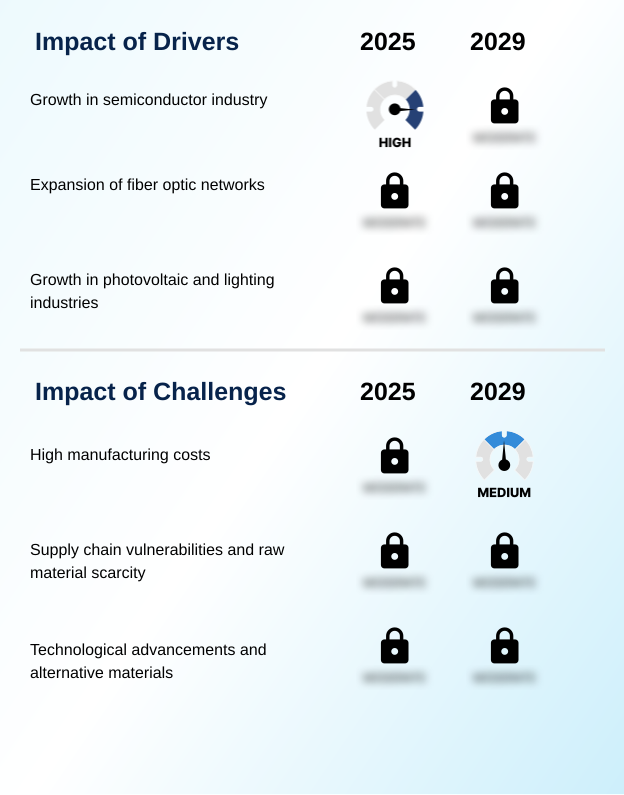
What are the key market drivers leading to the rise in the adoption of Quartz Glass Industry?
- The burgeoning growth of the global semiconductor industry, which relies on quartz glass for nearly every stage of manufacturing, stands as the primary driver for the market.
- The primary market driver is the sustained growth of the global semiconductor industry, which consumes a vast amount of quartz glass.
- As demand for advanced electronics escalates, so does the need for high-performance components like fused quartz glass with exceptional optical homogeneity. This directly translates to increased production, with some fabs increasing their quartz component consumption by 15% year-over-year.
- Another significant driver is the expansion of fiber optic networks, fueled by the global surge in data consumption. High-temperature stability is crucial for manufacturing optical fiber preforms. The growth of the photovoltaic and specialized lighting industries also propels demand.
- In the solar sector, high-purity quartz crucibles are essential for producing efficient solar cells. Meanwhile, the lighting industry's reliance on quartz for high-intensity and UV lamps, which can achieve operational lifespans 50% longer than alternatives, continues to fuel the market.
What are the market trends shaping the Quartz Glass Industry?
- A paramount trend shaping the market is the escalating demand for ultra-high purity quartz. This is driven primarily by advancements in the semiconductor industry toward smaller manufacturing nodes.
- The market is witnessing a significant trend toward materials with exceptional purity and advanced fabrication. Demand for ultra-high purity quartz is escalating, driven by semiconductor manufacturing processes that require minimal contaminants to achieve high chip yields, with some applications measuring impurities in parts per trillion. This shift has led to process improvements that reduce metallic contaminants by over 40%.
- Concurrently, technological advancements in fabrication, including laser processing and automated machining of components for monocrystalline silicon growth, enable the production of complex geometries with tighter tolerances. These innovations, applied to quartz for quantum computing, have resulted in a 25% reduction in lead times for custom prototypes.
- Sustainability is also a key influencer, with manufacturers investing in energy-efficient furnaces to reduce the carbon footprint associated with producing materials with reduced hydroxyl content.
What challenges does the Quartz Glass Industry face during its growth?
- The inherently high manufacturing cost, driven by energy-intensive processes and expensive raw materials, remains a primary challenge confronting the global market.
- A primary challenge facing the market is the high manufacturing cost, driven by energy-intensive processes and expensive raw materials like synthetic quartz glass. These costs can limit adoption in price-sensitive applications, where alternative materials, despite offering 20% lower performance, might be chosen. Supply chain vulnerabilities present another significant hurdle.
- The industry relies on a few sources for the purest raw materials needed for applications like spectroscopy cells and aerospace optical windows, making it susceptible to geopolitical risks and price volatility. This has led to lead times increasing by up to 30% in some cases.
- Additionally, the threat of alternative materials, such as advanced ceramics for industrial furnace liners or composites for plasma etching parts, forces continuous innovation in quartz glass to maintain its competitive advantage.
Exclusive Technavio Analysis on Customer Landscape
The quartz glass market forecasting report includes the adoption lifecycle of the market, covering from the innovator’s stage to the laggard’s stage. It focuses on adoption rates in different regions based on penetration. Furthermore, the quartz glass market report also includes key purchase criteria and drivers of price sensitivity to help companies evaluate and develop their market growth analysis strategies.
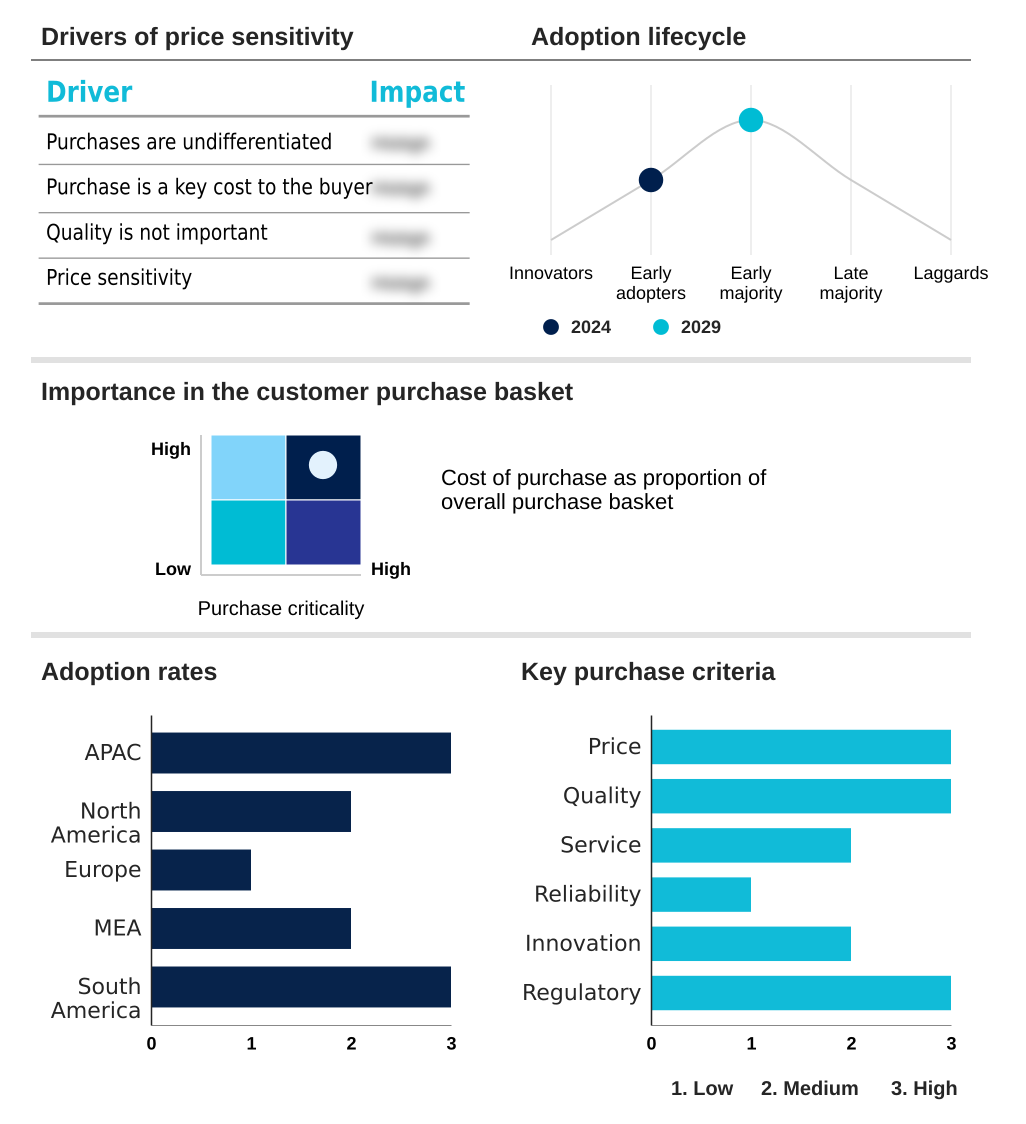
Customer Landscape of Quartz Glass Industry
Competitive Landscape
Companies are implementing various strategies, such as strategic alliances, quartz glass market forecast, partnerships, mergers and acquisitions, geographical expansion, and product/service launches, to enhance their presence in the industry.
AGC Inc. - Delivering high-purity synthetic fused silica and custom-fabricated quartz components for advanced semiconductor, optical, and telecommunication applications.
The industry research and growth report includes detailed analyses of the competitive landscape of the market and information about key companies, including:
- AGC Inc.
- CoorsTek Inc.
- Corning Inc.
- Feilihua Quartz Glass Ltd.
- Helios Quartz Group
- Heraeus Covantics
- HOYA CORP.
- Insanco Inc.
- Jiurui Quartz Products Co. Ltd.
- MARUWA CO. LTD.
- Momentive Technologies Inc.
- Ohara Corp.
- Pacific Quartz Inc.
- Pegasus Glass
- QSIL SE
- Raesch Quarz GmbH
- S and S Optical Inc.
- Shengfan Quartz Co. Ltd.
- Shin-Etsu Quartz Co. Ltd.
- Technical Glass Products Inc.
- Tosoh Quartz Inc.
- Zhong Cheng Quartz Glass Ltd.
Qualitative and quantitative analysis of companies has been conducted to help clients understand the wider business environment as well as the strengths and weaknesses of key industry players. Data is qualitatively analyzed to categorize companies as pure play, category-focused, industry-focused, and diversified; it is quantitatively analyzed to categorize companies as dominant, leading, strong, tentative, and weak.
Recent Development and News in Quartz glass market
- In May 2025, QSIL SE announced a significant investment in energy-efficient melting technologies to upgrade its production facilities and reduce carbon emissions associated with its manufacturing processes.
- In April 2025, Shin-Etsu Quartz Co. Ltd. announced an expansion of its ultra-high purity synthetic quartz glass production capacity to meet rising demand from leading-edge semiconductor manufacturers for EUV lithography materials.
- In March 2025, Heraeus Quarzglas unveiled a new generation of automated fabrication lines for custom-designed quartz components, focusing on enhanced precision and reduced lead times for the quantum computing and advanced photonics sectors.
- In February 2025, Verizon Communications Inc. detailed its accelerated plans for expanding its fiber optic network footprint across major US metropolitan areas, directly bolstering demand for quartz glass as a core material for optical fibers.
Dive into Technavio’s robust research methodology, blending expert interviews, extensive data synthesis, and validated models for unparalleled Quartz Glass Market insights. See full methodology.
| Market Scope | |
|---|---|
| Page number | 316 |
| Base year | 2024 |
| Historic period | 2019-2023 |
| Forecast period | 2025-2029 |
| Growth momentum & CAGR | Accelerate at a CAGR of 6.8% |
| Market growth 2025-2029 | USD 1516.7 million |
| Market structure | Fragmented |
| YoY growth 2024-2025(%) | 6.4% |
| Key countries | China, Japan, South Korea, India, Australia, Indonesia, US, Canada, Mexico, Germany, France, UK, Italy, Spain, The Netherlands, Saudi Arabia, UAE, South Africa, Israel, Turkey, Brazil, Argentina and Colombia |
| Competitive landscape | Leading Companies, Market Positioning of Companies, Competitive Strategies, and Industry Risks |
Research Analyst Overview
- The global quartz glass market 2025-2029 is fundamentally driven by its critical role as an enabling material in high-tech industries. Its value is defined by properties like ultra-high purity quartz, exceptional thermal shock resistance, and a low thermal expansion coefficient. The semiconductor sector's demand for flawless photomask substrates, semiconductor etch chambers, and EUV lithography components underpins market stability.
- Components such as quartz furnace tubes and high-purity quartz crucibles are integral to wafer processing equipment. Boardroom decisions are increasingly influenced by the need to secure a stable supply of these materials, as a disruption in the availability of high-purity optical fiber preforms can delay infrastructure projects by months.
- The material's chemical inertness, UV transparency, and high-temperature stability are non-negotiable for advanced applications. Innovations in processing the core silicon dioxide matrix, achieving hydroxyl content reduction, and ensuring superior optical homogeneity in clear quartz glass, synthetic quartz glass, and fused quartz glass are key differentiators.
- The development of specialized opaque quartz glass and radiation resistant glass for niche applications further expands its utility, with advanced fabrication techniques enabling a 30% reduction in component defects for deep ultraviolet lithography systems.
What are the Key Data Covered in this Quartz Glass Market Research and Growth Report?
-
What is the expected growth of the Quartz Glass Market between 2025 and 2029?
-
USD 1.52 billion, at a CAGR of 6.8%
-
-
What segmentation does the market report cover?
-
The report is segmented by Product Type (Fused quartz glass, Synthetic quartz glass, Opaque quartz glass, and Clear quartz glass), Application (Semiconductors and electronics, Photovoltaics and solar energy, Optical and telecommunication components, Lighting and lamp manufacturing, and Others), Distribution Channel (Direct supply to OEMs, Authorised distributors, Online industrial portals, and Speciality materials retailers) and Geography (APAC, North America, Europe, Middle East and Africa, South America)
-
-
Which regions are analyzed in the report?
-
APAC, North America, Europe, Middle East and Africa and South America
-
-
What are the key growth drivers and market challenges?
-
Growth in semiconductor industry, High manufacturing costs
-
-
Who are the major players in the Quartz Glass Market?
-
AGC Inc., CoorsTek Inc., Corning Inc., Feilihua Quartz Glass Ltd., Helios Quartz Group, Heraeus Covantics, HOYA CORP., Insanco Inc., Jiurui Quartz Products Co. Ltd., MARUWA CO. LTD., Momentive Technologies Inc., Ohara Corp., Pacific Quartz Inc., Pegasus Glass, QSIL SE, Raesch Quarz GmbH, S and S Optical Inc., Shengfan Quartz Co. Ltd., Shin-Etsu Quartz Co. Ltd., Technical Glass Products Inc., Tosoh Quartz Inc. and Zhong Cheng Quartz Glass Ltd.
-
Market Research Insights
- The market's dynamics are shaped by intense technological demands, where material performance directly impacts end-product viability. The shift toward precision metrology tools and advanced photonics components necessitates materials with unparalleled quality, driving innovation in custom fabricated quartz.
- In semiconductor applications, the use of superior quartz in plasma etching parts has been shown to improve process uniformity by up to 15%, a critical factor for chip yield. Similarly, the development of high-efficiency germicidal UV lamps relies on quartz with specific transmission properties, where a 5% improvement in UV throughput can significantly enhance sterilization efficacy.
- This focus on performance is also evident in photovoltaic silicon production, where crucible purity is essential. These factors, combined with supply chain pressures for molten metal handling materials and components for UV curing systems, create a landscape where technical superiority and operational efficiency define competitive advantage.
We can help! Our analysts can customize this quartz glass market research report to meet your requirements.
 RIA -
RIA - 
