



Rapeseed Oil Market Size 2024-2028
The rapeseed oil market size is valued to increase by USD 10.10 billion, at a CAGR of 4.5% from 2023 to 2028. Health benefits associated with rapeseed oil will drive the rapeseed oil market.
Market Insights
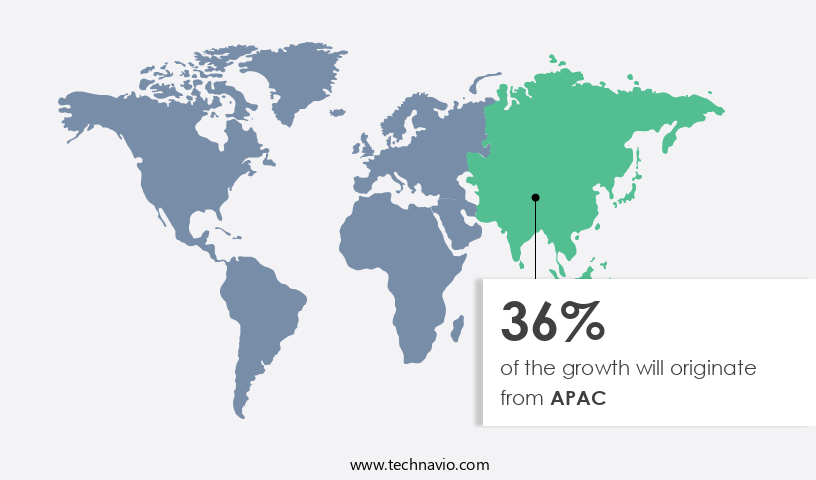
- APAC dominated the market and accounted for a 36% growth during the 2024-2028.
- By Distribution Channel - Offline segment was valued at USD 31.36 billion in 2022
- By Type - Refined segment accounted for the largest market revenue share in 2022
Market Size & Forecast
- Market Opportunities: USD 41.30 billion
- Market Future Opportunities 2023: USD 10.10 billion
- CAGR from 2023 to 2028 : 4.5%
Market Summary
- Rapeseed oil, derived from the seeds of the rapeseed plant, has gained significant attention in the global market due to its numerous health benefits. Rich in monounsaturated and polyunsaturated fatty acids, rapeseed oil is recognized for its ability to reduce bad cholesterol levels and improve heart health. The increasing consumer preference toward opting for healthy substitutes and the rise of veganism have fueled the demand for rapeseed oil. However, the market faces challenges, primarily related to certification. Producers must adhere to stringent regulations to ensure their products meet the standards set by various organizations. For instance, the European Union's Common Agricultural Policy (CAP) requires rapeseed oil to be free of erucic acid, a potential health hazard, to be labeled as "rapeseed oil." This certification process adds to the operational costs and complexity of the supply chain.
- Despite these challenges, rapeseed oil producers are exploring ways to optimize their operations and maintain compliance. For example, they are investing in advanced technologies to monitor and control the erucic acid content in their oil. By doing so, they can streamline their production process, reduce costs, and ensure the highest quality of their products. This focus on operational efficiency and regulatory compliance is essential for maintaining a competitive edge in The market.
What will be the size of the Rapeseed Oil Market during the forecast period?
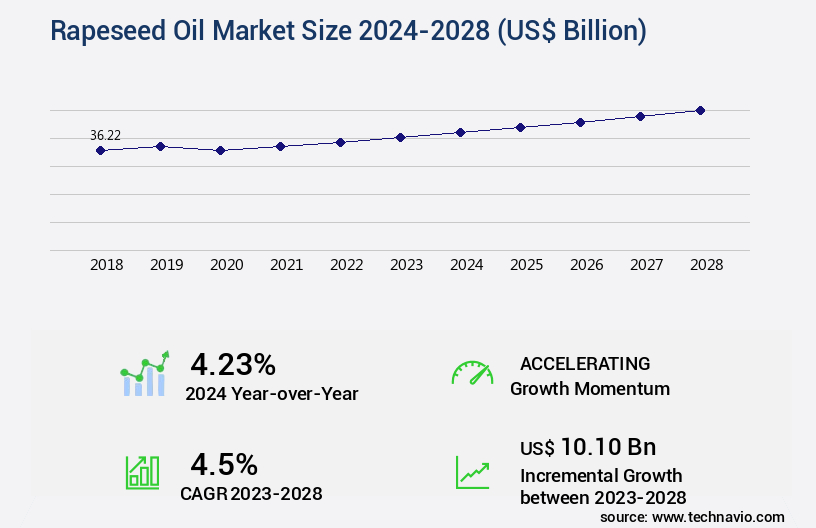
Get Key Insights on Market Forecast (PDF) Request Free Sample
- Rapeseed oil, derived from the seeds of Brassica napus and Brassica rapa plants, has emerged as a significant player in the global edible oils market. This versatile oil is renowned for its neutral flavor and high smoke point, making it an ideal choice for various culinary applications. In the realm of industrial manufacturing, rapeseed oil's unique properties, such as its energy efficiency, stability improvement, and rancidity prevention, have been instrumental in its adoption. One notable trend in the market is the increasing focus on sustainability. Companies are investing in sustainable cultivation practices, such as crop management and wastewater treatment, to minimize environmental impact.
- For instance, rapeseed cultivation can contribute to reduced greenhouse gas emissions and improved nitrogen use efficiency compared to other oilseed crops. Moreover, byproduct utilization, including the production of biodiesel and animal feed, further enhances the economic viability of rapeseed oil production. In the context of product strategy, understanding the nutritional value and health benefits of rapeseed oil is crucial. Rich in monounsaturated and polyunsaturated fatty acids, rapeseed oil is a valuable source of essential nutrients. Its functional properties, including its ability to enhance sensory attributes and extend shelf life, add to its appeal in the food industry. Additionally, rapeseed oil's antioxidant activity contributes to food safety regulations by inhibiting lipid peroxidation.
- Rapeseed oil's rheological properties, including its energy efficiency and stability improvement, are essential considerations for companies focusing on process optimization and harvesting techniques. Enzymatic hydrolysis and glycerol production are crucial aspects of rapeseed oil processing, ensuring optimal oil yield and quality assurance. With these factors in mind, companies can make informed decisions regarding their rapeseed oil sourcing, production, and distribution strategies.
Unpacking the Rapeseed Oil Market Landscape
Rapeseed oil, derived from the seeds of Brassica napus and Brassica rapa plants, is a versatile vegetable oil widely used in both industrial and food sectors. Compared to other oilseeds, rapeseed boasts a lower erucic acid content, making it an ideal choice for industrial applications. In the oil extraction process, both cold pressing and expeller pressing methods are employed to maintain industrial grade quality, while screw pressing and hydraulic pressing are used for higher throughput. The winterization process ensures oxidative stability by removing unwanted components, resulting in improved ROI through extended shelf life. Seed conditioning and cleaning are crucial pre-processing techniques to enhance the efficiency of oil extraction. The degumming process, a critical step in refining, reduces fiber content and improves oil clarity. Food grade quality rapeseed oil undergoes additional refining processes, such as neutralization, deodorization, and bleaching, to meet stringent quality control parameters. The oil's moisture content and saponification value are essential indicators of its purity and quality. Rapeseed oil's fatty acid composition makes it an excellent candidate for biodiesel production. Its iodine value and heavy metals content are closely monitored to ensure compliance with regulatory standards. Overall, the adoption of advanced seed processing techniques and oil extraction methods has led to significant improvements in the market, ensuring its position as a preferred choice for various industries.
Key Market Drivers Fueling Growth
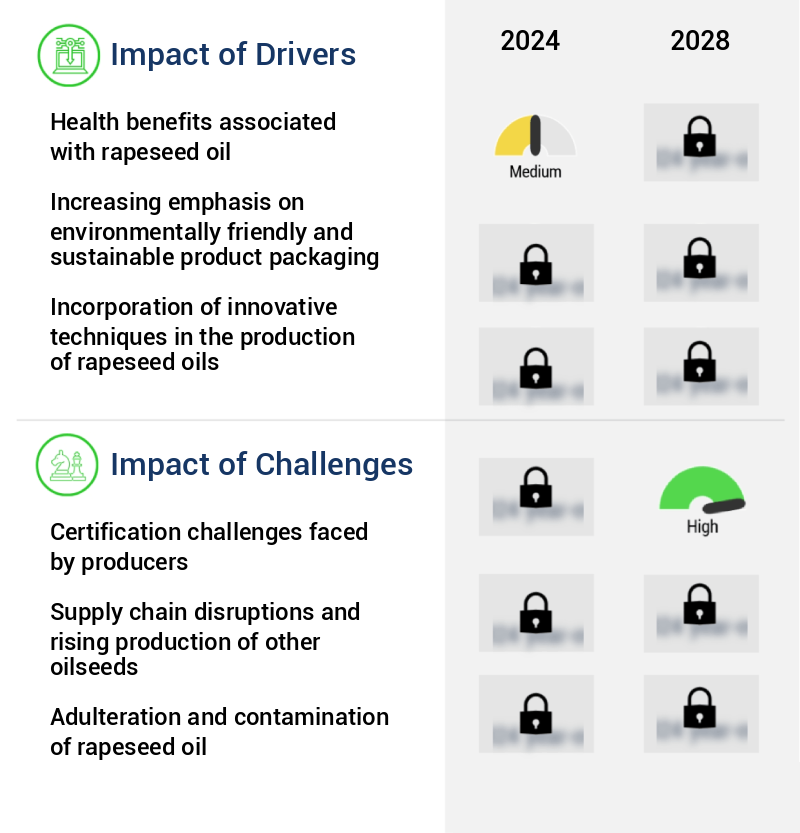
The primary factor driving the market is the health benefits linked to rapeseed oil. This oil, rich in monounsaturated fats and essential nutrients, is increasingly recognized for its role in promoting heart health, reducing inflammation, and enhancing the overall well-being of consumers. Consequently, its popularity continues to grow among health-conscious individuals and the food industry alike.
- The market is experiencing significant growth due to the increasing consumer awareness and preference for healthier cooking options. Rapeseed oil, rich in polyunsaturated and monounsaturated fats, contains a lower amount of unhealthy saturated fat compared to other cooking oils. This makes it an ideal choice for consumers seeking to maintain healthy cholesterol levels. The market's expansion is further fueled by rapeseed oil's substantial omega-3 fatty acid content. According to recent studies, the consumption of omega-3 fatty acids can lead to improved heart health and brain function. As a result, The market is poised for steady growth during the forecast period.
- Additionally, rapeseed oil's versatility extends to various industries, including food processing, cosmetics, and industrial applications, further boosting market growth. For instance, in the food industry, rapeseed oil is used in the production of biodiesel, while in cosmetics, it is used as a base for various skincare and haircare products. These applications not only expand the market's reach but also contribute to its robust growth.
Prevailing Industry Trends & Opportunities
Consumer preferences are shifting towards healthier options and veganism. This trend is gaining momentum in the upcoming market.
- Rapeseed oil, derived from rapeseeds, has experienced notable growth in popularity due to its nutritional benefits and versatile applications across multiple sectors. Rich in polyphenols, antioxidants, vitamins, and minerals, rapeseed oil is increasingly preferred in the food industry for its health advantages. Consumer demand for functional, naturally derived products has driven retail sales significantly. In addition to food, rapeseed oil finds extensive use in personal care products such as oils, creams, and lotions.
- This versatile ingredient is abundant globally, making it easily accessible in grocery stores. Rapeseed oil's high calcium, magnesium, and potassium content contribute to increased energy, stabilized blood sugar, and improved digestion. These benefits, coupled with its wide availability and versatility, continue to fuel market growth.
Significant Market Challenges
The certification challenges encountered by industry producers significantly impact the industry's growth trajectory.
- Rapeseed oil, derived from the seeds of the rapeseed plant, is a versatile vegetable oil with an evolving market landscape. Its applications span various sectors, including food, industrial, and biodiesel production. Obtaining rapeseed oil certified as an organic product involves intricate certification processes. These proceedings include lengthy government approvals and international validation, which can be costly. Organic certification agencies scrutinize every ingredient used and the production process, necessitating detailed documentation and reviews. Companies must pay for these assessments and the travel of certifying authorities. Despite the challenges, the benefits are significant. For instance, organic rapeseed oil production can lead to reduced environmental impact and improved product quality.
- Additionally, organic certification can enhance a company's reputation and market access, with some consumers willing to pay a premium for certified organic products. For example, a study revealed that organic food sales in the European Union increased by 12% between 2016 and 2018. Another study indicated that organic farming practices can lead to a 30% reduction in operational costs due to improved soil health and reduced pesticide use.
In-Depth Market Segmentation: Rapeseed Oil Market
The rapeseed oil industry research report provides comprehensive data (region-wise segment analysis), with forecasts and estimates in "USD billion" for the period 2024-2028, as well as historical data from 2018-2022 for the following segments.
- Distribution Channel
- Offline
- Online
- Type
- Refined
- Unrefined
- Organic
- Application
- Food and Beverage (Cooking, Baking)
- Biofuel
- Cosmetics
- Industrial
- Geography
- North America
- US
- Canada
- Europe
- France
- Germany
- Italy
- Russia
- UK
- Middle East and Africa
- South Africa
- UAE
- APAC
- China
- India
- Japan
- South Korea
- South America
- Argentina
- Brazil
- Rest of World (ROW)
- North America
By Distribution Channel Insights
The offline segment is estimated to witness significant growth during the forecast period.
The market continues to evolve, with various processing techniques shaping its production and quality. Ercnic acid content is crucial, with industrial grade quality often requiring low levels. Screw pressing and expeller pressing are common extraction methods, while winterization and degumming processes refine the oil. Cold pressing extraction maintains oil's oxidative stability, while solvent extraction ensures high yield. Seed conditioning, cleaning, and fiber content reduction are essential pre-processing steps. Quality control parameters include moisture content, saponification value, iodine value, heavy metals, and pesticide residues. Biodiesel production from rapeseed oil is a significant application, with fatty acid composition a key factor.
Refining processes like neutralization, bleaching, and deodorization further enhance the oil's quality. Hydraulic pressing and chemical refining are alternative methods used in the industry. Overall, The market is driven by increasing consumer demand and advancements in seed processing techniques. Approximately 70% of rapeseed oil is consumed in food applications, highlighting its versatility and importance in the edible oil sector.
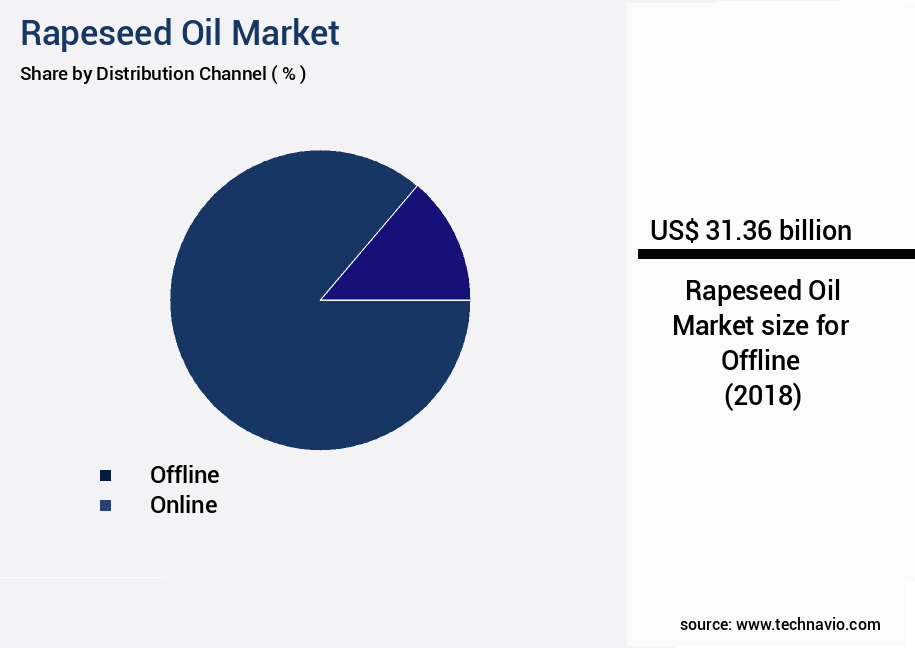
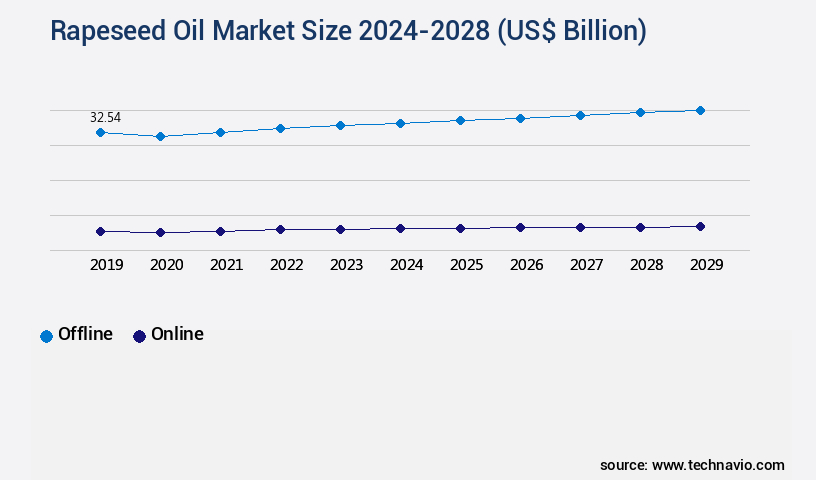
The Offline segment was valued at USD 31.36 billion in 2018 and showed a gradual increase during the forecast period.
Regional Analysis
APAC is estimated to contribute 36% to the growth of the global market during the forecast period.Technavio’s analysts have elaborately explained the regional trends and drivers that shape the market during the forecast period.
See How Rapeseed Oil Market Demand is Rising in APAC Request Free Sample
The Asia-Pacific (APAC) region dominates The market, fueled by escalating demand for healthier edible oils and the expanding biodiesel industry. China, India, and Japan are key contributors to this market, with China being the largest consumer and importer. Favorable climatic conditions and advanced agricultural practices in the region bolster rapeseed oil production. In China, rapeseed oil is extensively used in cooking, underpinning its significant consumption. India, with its burgeoning population and shifting dietary preferences towards healthier oils, experiences a surging demand for rapeseed oil.
Both countries are investing in domestic production to decrease reliance on imports and enhance operational efficiency. Rapeseed oil production in China and India collectively accounted for approximately 75% of the global production in 2020. This regional focus on rapeseed oil production and consumption underscores its pivotal role in the global market.
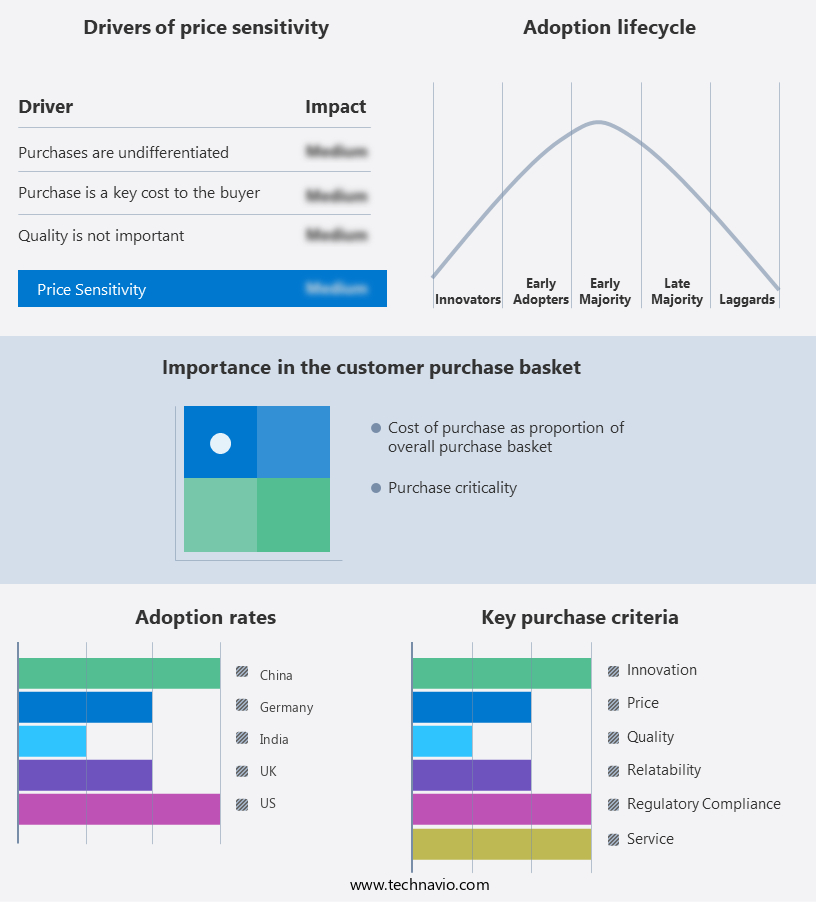
Customer Landscape of Rapeseed Oil Industry
Competitive Intelligence by Technavio Analysis: Leading Players in the Rapeseed Oil Market
Companies are implementing various strategies, such as strategic alliances, rapeseed oil market forecast, partnerships, mergers and acquisitions, geographical expansion, and product/service launches, to enhance their presence in the industry.
Alicorp SAA - This company specializes in producing and supplying a range of rapeseed oil-based products, encompassing vegetable oils, fats, cooking oils, shortenings, margarines, mayonnaise, and specialty ingredients. Their offerings cater to various culinary applications, showcasing the versatility and utility of rapeseed oil within the food industry.
The industry research and growth report includes detailed analyses of the competitive landscape of the market and information about key companies, including:
- Alicorp SAA
- Amazon.com Inc.
- Archer Daniels Midland Co.
- Bunge Ltd.
- Cargill Inc.
- COFCO Corp.
- Farrington Oils
- Hillfarm Oils Ltd.
- Israbar Oils & Grains
- KOYO KAIUN Co. Ltd.
- Littleseed
- Louis Dreyfus Co. BV
- Nisshin OilliO Group Ltd.
- NMGK Group
- Ola Oils
- OLVEA Vegetable Oils
- Southern Oil (PTY) Ltd.
- Viterra Inc.
- Walter Rau Neusser
- Wilmar International Ltd.
Qualitative and quantitative analysis of companies has been conducted to help clients understand the wider business environment as well as the strengths and weaknesses of key industry players. Data is qualitatively analyzed to categorize companies as pure play, category-focused, industry-focused, and diversified; it is quantitatively analyzed to categorize companies as dominant, leading, strong, tentative, and weak.
Recent Development and News in Rapeseed Oil Market
- In January 2024, Archer Daniels Midland Company (ADM) announced the expansion of its rapeseed crushing capacity in Europe by 50%, making it the largest rapeseed crusher in the continent. This strategic move aimed to meet the growing demand for biodiesel and rapeseed oil in the region (ADM press release).
- In March 2024, Cargill and Bunge Limited, two leading agribusiness companies, formed a joint venture to build a rapeseed crushing plant in Russia. The new facility, expected to be operational by 2026, will have an initial processing capacity of 1.5 million tons per year, making it one of the largest in the world (Cargill and Bunge press release).
- In May 2024, the European Union (EU) approved the renewal of the biodiesel support policy, ensuring the continued growth of the market in Europe. The policy includes a €15 billion budget for the period 2022-2030 to incentivize the production and use of biodiesel (European Commission press release).
- In August 2025, Wilmar International, a leading agribusiness company, launched a new high oleic rapeseed oil in the US market. The new product offers improved stability and longer frying life, making it an attractive alternative to traditional soybean and palm oils in the food industry (Wilmar International press release).
Dive into Technavio’s robust research methodology, blending expert interviews, extensive data synthesis, and validated models for unparalleled Rapeseed Oil Market insights. See full methodology.
|
Market Scope |
|
|
Report Coverage |
Details |
|
Page number |
143 |
|
Base year |
2023 |
|
Historic period |
2018-2022 |
|
Forecast period |
2024-2028 |
|
Growth momentum & CAGR |
Accelerate at a CAGR of 4.5% |
|
Market growth 2024-2028 |
USD 10.10 billion |
|
Market structure |
Fragmented |
|
YoY growth 2023-2024(%) |
4.23 |
|
Key countries |
Brazil, South Africa, UAE, US, Canada, Germany, UK, China, France, Italy, Japan, India, South Korea, Argentina, and Russia |
|
Competitive landscape |
Leading Companies, Market Positioning of Companies, Competitive Strategies, and Industry Risks |
Why Choose Technavio for Rapeseed Oil Market Insights?
"Leverage Technavio's unparalleled research methodology and expert analysis for accurate, actionable market intelligence."
The market is a significant player in the global edible oils and biodiesel industries. The production of rapeseed oil fatty acid methyl esters (FAMEs) for biodiesel is a key business function driving market growth. Optimizing the rapeseed oil extraction process is essential to improve yield and reduce production costs. Technological advancements in the optimization of extraction methods, such as enzymatic modification, have shown a 10% increase in oil yield compared to traditional methods. Maintaining the oxidative stability of rapeseed oil is crucial for both food and industrial applications. Refining rapeseed oil is an effective way to enhance its oxidative stability and meet regulatory compliance requirements. However, refining can impact rapeseed oil quality parameters, such as erucic acid content, which is a critical factor in determining its nutritional value and application in food and cosmetic industries. The assessment of rapeseed oil quality parameters, including determination of erucic acid content and evaluation of sensory properties, is essential for supply chain management and operational planning. The impact of storage conditions on rapeseed oil quality is also a critical consideration for businesses involved in its production and distribution. Rapeseed oil byproduct utilization in biodiesel production is another business opportunity, with potential cost savings and increased sustainability. The physical and chemical properties of rapeseed oil, such as its high biodiesel yield and favorable fatty acid composition, make it an attractive feedstock for biodiesel production. In conclusion, the market offers numerous business opportunities, from optimizing production processes to enhancing product quality and exploring new applications. Understanding the chemical composition of rapeseed oil, including its fatty acid profile and sensory properties, is essential for businesses to make informed decisions and stay competitive in this dynamic market.
What are the Key Data Covered in this Rapeseed Oil Market Research and Growth Report?
-
What is the expected growth of the Rapeseed Oil Market between 2024 and 2028?
-
USD 10.10 billion, at a CAGR of 4.5%
-
-
What segmentation does the market report cover?
-
The report is segmented by Distribution Channel (Offline and Online), Geography (APAC, Europe, North America, South America, and Middle East and Africa), Type (Refined, Unrefined, and Organic), and Application (Food and Beverage (Cooking, Baking), Biofuel, Cosmetics, and Industrial)
-
-
Which regions are analyzed in the report?
-
APAC, Europe, North America, South America, and Middle East and Africa
-
-
What are the key growth drivers and market challenges?
-
Health benefits associated with rapeseed oil, Certification challenges faced by producers
-
-
Who are the major players in the Rapeseed Oil Market?
-
Alicorp SAA, Amazon.com Inc., Archer Daniels Midland Co., Bunge Ltd., Cargill Inc., COFCO Corp., Farrington Oils, Hillfarm Oils Ltd., Israbar Oils & Grains, KOYO KAIUN Co. Ltd., Littleseed, Louis Dreyfus Co. BV, Nisshin OilliO Group Ltd., NMGK Group, Ola Oils, OLVEA Vegetable Oils, Southern Oil (PTY) Ltd., Viterra Inc., Walter Rau Neusser, and Wilmar International Ltd.
-
We can help! Our analysts can customize this rapeseed oil market research report to meet your requirements.
 RIA -
RIA - 
