



Recommerce Platforms Market Size 2026-2030
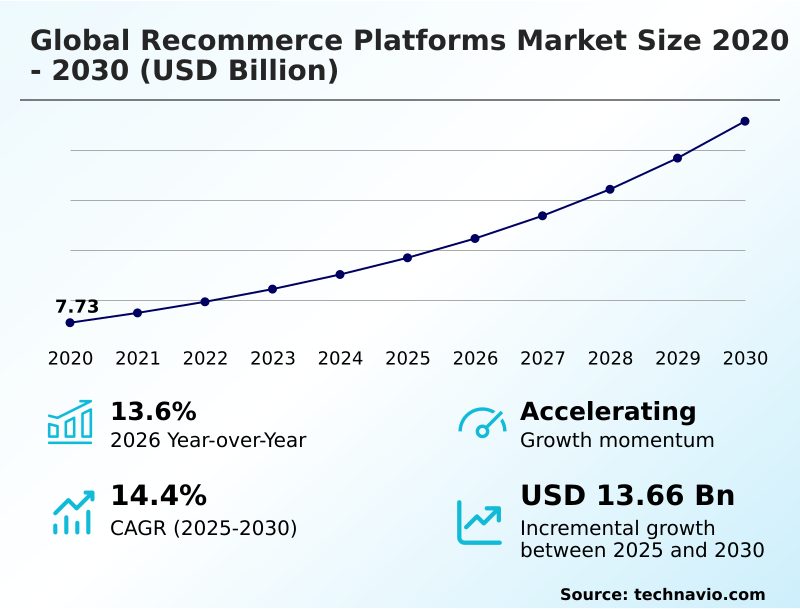
The recommerce platforms market size is valued to increase by USD 13.66 billion, at a CAGR of 14.4% from 2025 to 2030. Increasing consumer commitment to circular economy and environmental sustainability will drive the recommerce platforms market.
Major Market Trends & Insights
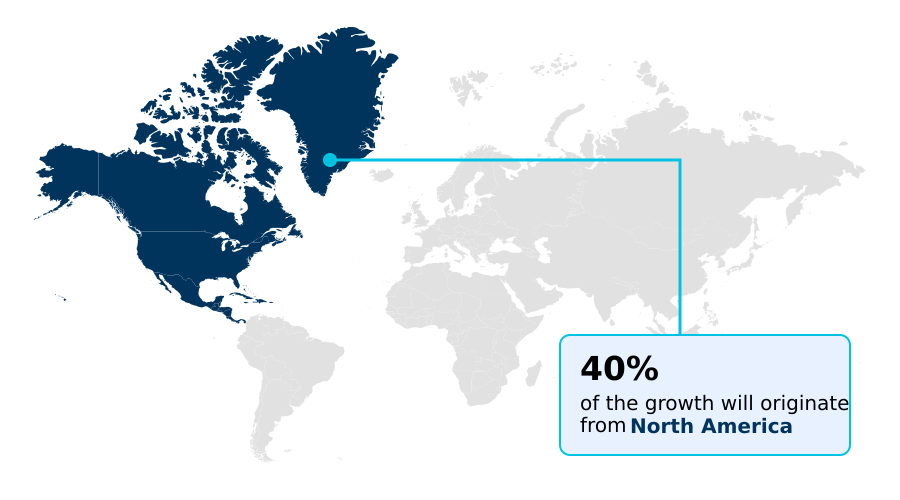
- North America dominated the market and accounted for a 40.3% growth during the forecast period.
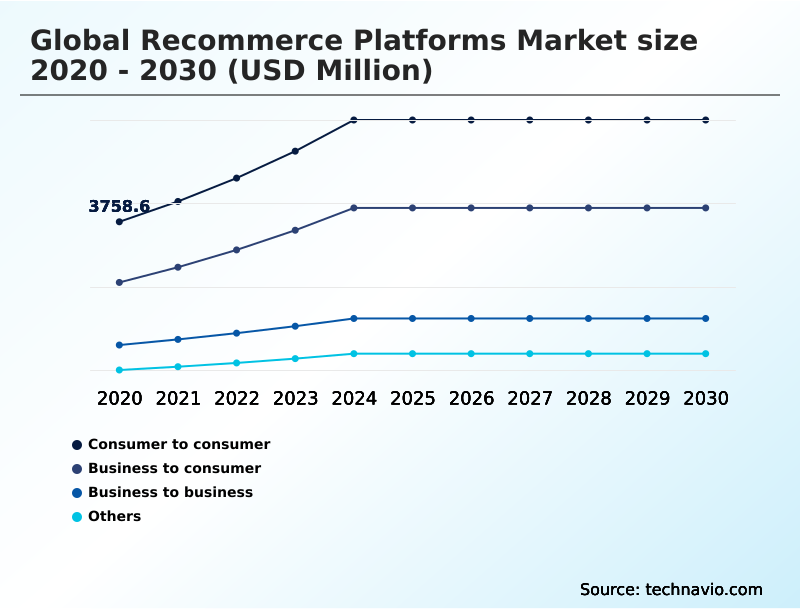
- By Business Segment - Consumer to consumer segment was valued at USD 6.00 billion in 2024
- By Product - Fashion and apparel segment accounted for the largest market revenue share in 2024
Market Size & Forecast
- Market Opportunities: USD 20.15 billion
- Market Future Opportunities: USD 13.66 billion
- CAGR from 2025 to 2030 : 14.4%
Market Summary
- The recommerce platforms market is undergoing a significant transformation, propelled by a consumer shift toward sustainable consumption and the principles of a circular economy. These digital marketplaces facilitate the trading of pre-owned goods, extending product lifecycles and offering cost-effective alternatives to new items.
- Growth is driven by technological advancements in AI for pricing and authentication, alongside the strategic adoption of resale-as-a-service models by traditional brands. This integration allows retailers to enter the secondary market, enhancing customer loyalty and creating new revenue streams.
- For instance, an apparel brand can implement a trade-in program powered by a recommerce platform, managing the entire reverse logistics process from customer returns to inspection, refurbishment, and resale. This creates a closed-loop system that captures residual product value.
- However, the industry faces challenges related to logistical complexity, regulatory fragmentation, and the persistent risk of counterfeit goods, which requires continuous investment in sophisticated verification technologies and scalable operational infrastructure to maintain consumer trust. The market for recommerce platforms continues to mature as it becomes a more integral part of the global retail ecosystem.
What will be the Size of the Recommerce Platforms Market during the forecast period?
Get Key Insights on Market Forecast (PDF) Get Free Sample
How is the Recommerce Platforms Market Segmented?
The recommerce platforms industry research report provides comprehensive data (region-wise segment analysis), with forecasts and estimates in "USD million" for the period 2026-2030, as well as historical data from 2020-2024 for the following segments.
- Business segment
- Consumer to consumer
- Business to consumer
- Business to business
- Others
- Product
- Fashion and apparel
- Electronics and appliances
- Furniture and home goods
- Automobiles and mobility
- Others
- Platform
- Mobile apps
- Web platforms
- Geography
- North America
- US
- Canada
- Mexico
- Europe
- Germany
- UK
- France
- APAC
- China
- India
- Japan
- South America
- Brazil
- Argentina
- Middle East and Africa
- South Africa
- UAE
- Saudi Arabia
- Rest of World (ROW)
- North America
By Business Segment Insights
The consumer to consumer segment is estimated to witness significant growth during the forecast period.
The consumer-to-consumer segment, a cornerstone of the recommerce platforms market, relies on decentralized peer-to-peer resale networks. Growth is facilitated by mobile resale applications and online thrift store software that simplify user-generated listings and transactions.
Key to this model's success is fostering trust through peer-to-peer exchange security, robust resale payment gateways, and effective user-generated content moderation. Leading platforms are leveraging ai-powered merchandising and integrating social commerce resale features to enhance discovery and user engagement.
The implementation of circularity reporting standards is also becoming crucial for validating environmental claims. As platforms mature, advanced item-level processing and automated pricing engines have reduced dispute rates by over 15%, solidifying the viability of these large-scale, user-driven marketplaces.
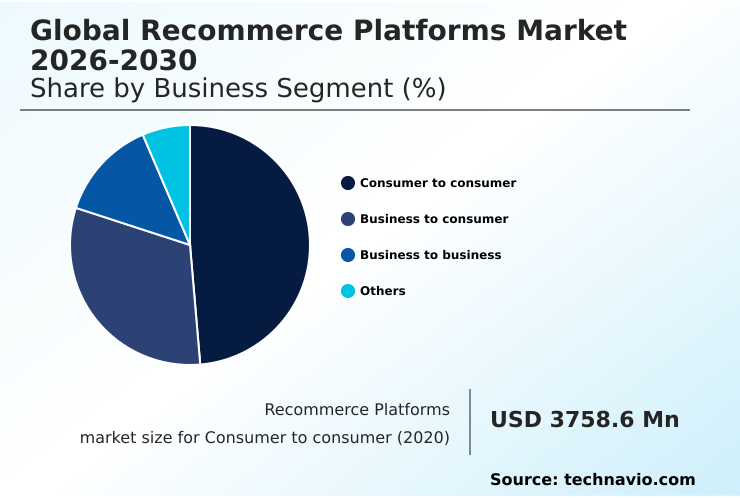
The Consumer to consumer segment was valued at USD 6.00 billion in 2024 and showed a gradual increase during the forecast period.
Regional Analysis
North America is estimated to contribute 40.3% to the growth of the global market during the forecast period.Technavio’s analysts have elaborately explained the regional trends and drivers that shape the market during the forecast period.
See How Recommerce Platforms Market Demand is Rising in North America Get Free Sample
The geographic landscape of the recommerce platforms market is characterized by mature, high-value transactions in North America and rapid, mobile-first expansion in APAC.
North America accounts for over 40% of the market, driven by sophisticated consumers and the widespread adoption of white-label recommerce solutions by established retailers. Platforms in this region utilize advanced condition assessment technology and high-resolution image recognition to build trust.
In contrast, APAC is the fastest-growing region, with a growth rate nearing 15.3%, fueled by demand for refurbished electronics resale. The European market is heavily influenced by regulation, compelling platforms to integrate features like a digital authenticity certificate.
Successful expansion requires localized recommerce logistics and a product authentication service tailored to regional consumer preferences, including specialized trade-in program integration for used apparel online stores and vintage clothing marketplaces.
Market Dynamics
Our researchers analyzed the data with 2025 as the base year, along with the key drivers, trends, and challenges. A holistic analysis of drivers will help companies refine their marketing strategies to gain a competitive advantage.
- Strategically, the future of online thrift stores and the broader secondary market hinges on successfully implementing a resale-as-a-service model, which allows brands to control their secondhand presence. A key challenge remains in authenticating high-value pre-owned goods, where the use of AI in product condition assessment is becoming standard.
- Optimizing recommerce platform UX is critical for customer acquisition in the resale market, especially as competition among the best c2c marketplace platforms intensifies. For enterprises, building a circular economy business requires mastering the art of managing reverse logistics for recommerce. Technology offers solutions, such as using blockchain for supply chain transparency to validate an item's history.
- Businesses that are scaling peer-to-peer resale operations are focusing on automation to handle volume efficiently. Furthermore, calculating resale value with AI helps in setting competitive prices for both B2C recommerce strategy examples and individual sellers. Integrating digital product passports is no longer optional in regulated markets, addressing challenges in cross-border recommerce.
- Top recommerce software providers now offer these features as part of their core package. Success in the recommerce platform for electronics and secondhand luxury fashion trends depends on a brand's ability to reduce its carbon footprint via recommerce, a metric that resonates strongly with modern consumers.
- Proactive integration of these strategies has been shown to improve asset recovery value by more than 20% compared to traditional liquidation methods, highlighting the financial incentive behind the recommerce impact on retail.
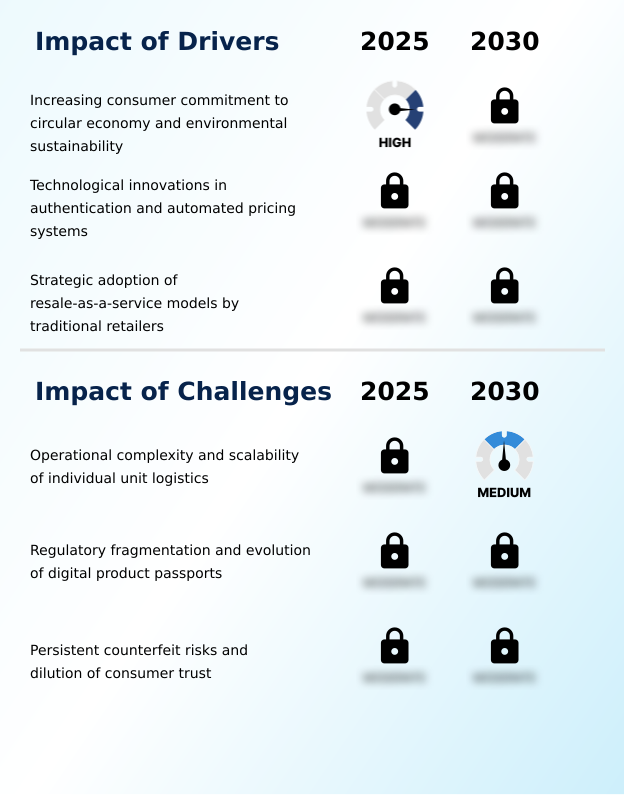
What are the key market drivers leading to the rise in the adoption of Recommerce Platforms Industry?
- A primary market driver is the increasing consumer commitment to the circular economy and environmental sustainability, which boosts demand for pre-owned goods.
- Market growth is primarily propelled by the strategic adoption of the resale-as-a-service model, enabling traditional retailers to launch a brand-approved resale channel and enter the circular economy.
- This approach boosts customer retention by over 30% and provides a new revenue stream. Technological innovations in authentication and pricing are also critical drivers, with a certified pre-owned program enhancing consumer trust and allowing for resale value optimization.
- These circular economy platforms facilitate a closed-loop retail model, which is increasingly appealing to environmentally conscious consumers. The expansion of b2c refurbished sales and asset recovery services further fuels the market by professionalizing the supply of secondhand goods.
- This institutionalization of the secondary market, driven by circular fashion technology, is making recommerce an indispensable component of modern retail strategy.
What are the market trends shaping the Recommerce Platforms Industry?
- The proliferation of generative AI is a prominent trend, enabling automated merchandising and hyper-personalized customer experiences on resale platforms.
- Key trends are reshaping recommerce platforms, with the integration of generative AI merchandising at the forefront. This technology, coupled with an automated pricing engine, reduces listing times by over 50% and enhances the discovery of unique items in a sustainable e-commerce model.
- Another significant trend is the shift toward a hyper-local delivery system, which lowers shipping costs and carbon footprints, particularly for online consignment platforms. The move toward transparency is driving the adoption of the digital product passport, often secured with blockchain-based provenance tracking, to verify an item's history. This is especially critical for luxury resale authentication.
- Furthermore, resale inventory management is becoming more sophisticated, with tools like an embedded trade-in value calculator improving inventory acquisition by over 20% and solidifying the operational backbone of the circular economy.
What challenges does the Recommerce Platforms Industry face during its growth?
- A key market challenge is the operational complexity and limited scalability associated with managing the logistics of individual, non-standardized units.
- The primary market challenge is the operational complexity of managing a non-standardized resale supply chain, where individual unit logistics contribute significantly to overhead. Return rates for pre-owned goods marketplaces can be up to two times higher than in traditional retail, increasing reverse logistics costs.
- Furthermore, the risk of counterfeit goods requires a robust counterfeit detection algorithm, with authentication costs for luxury items sometimes exceeding 15% of the final sale price. Regulatory fragmentation presents another hurdle, especially for cross-border resale compliance and c2c marketplace integration across different legal jurisdictions.
- This complex environment demands sophisticated solutions for platforms specializing in categories from secondhand market platforms for fashion to furniture recommerce logistics, making scalability a persistent challenge.
Exclusive Technavio Analysis on Customer Landscape
The recommerce platforms market forecasting report includes the adoption lifecycle of the market, covering from the innovator’s stage to the laggard’s stage. It focuses on adoption rates in different regions based on penetration. Furthermore, the recommerce platforms market report also includes key purchase criteria and drivers of price sensitivity to help companies evaluate and develop their market growth analysis strategies.
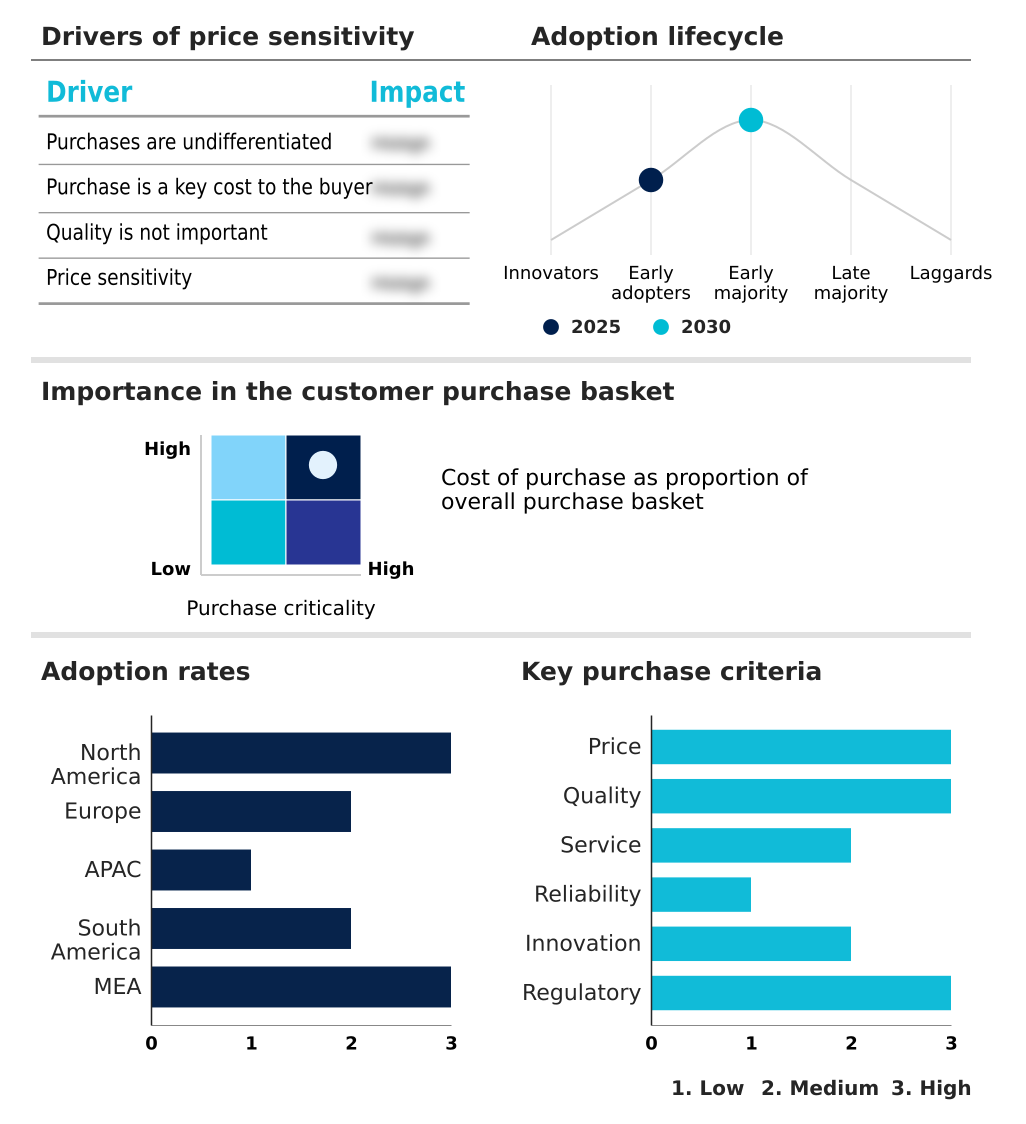
Customer Landscape of Recommerce Platforms Industry
Competitive Landscape
Companies are implementing various strategies, such as strategic alliances, recommerce platforms market forecast, partnerships, mergers and acquisitions, geographical expansion, and product/service launches, to enhance their presence in the industry.
BACK MARKET Inc. - Recommerce platforms offer a marketplace for pre-owned goods, emphasizing sustainability and value through verified refurbishment, secure transactions, and diverse product categories.
The industry research and growth report includes detailed analyses of the competitive landscape of the market and information about key companies, including:
- BACK MARKET Inc.
- Chairish Inc.
- Depop Ltd.
- eBay Inc.
- ecoATM LLC.
- Fashionphile Group LLC
- Grailed LLC
- Mercari Inc.
- Rebag
- Refurbed Marketplace GmbH
- Sellhelp AB
- Shopify Inc.
- SidelineSwap Inc
- StockX LLC
- Swappa LLC
- The RealReal Inc.
- ThredUp Inc.
- Vestiaire Collective
- VINTED INC.
- Wallapop
Qualitative and quantitative analysis of companies has been conducted to help clients understand the wider business environment as well as the strengths and weaknesses of key industry players. Data is qualitatively analyzed to categorize companies as pure play, category-focused, industry-focused, and diversified; it is quantitatively analyzed to categorize companies as dominant, leading, strong, tentative, and weak.
Recent Development and News in Recommerce platforms market
- In May 2025, ThredUp expanded its Resale-as-a-Service partnership with three major European retailers, integrating its technology to power their white-label recommerce programs.
- In March 2025, The RealReal deployed a proprietary AI and blockchain-based authentication system, reportedly improving counterfeit detection accuracy for high-value watches by 20%.
- In January 2025, Vestiaire Collective launched a dedicated platform feature to help sellers comply with the EU's Digital Product Passport mandate, providing tools to manage product lifecycle data.
- In November 2024, Back Market secured $150 million in a funding round to accelerate its expansion into the APAC market and build new refurbishment centers in the region.
Dive into Technavio’s robust research methodology, blending expert interviews, extensive data synthesis, and validated models for unparalleled Recommerce Platforms Market insights. See full methodology.
| Market Scope | |
|---|---|
| Page number | 304 |
| Base year | 2025 |
| Historic period | 2020-2024 |
| Forecast period | 2026-2030 |
| Growth momentum & CAGR | Accelerate at a CAGR of 14.4% |
| Market growth 2026-2030 | USD 13659.5 million |
| Market structure | Fragmented |
| YoY growth 2025-2026(%) | 13.6% |
| Key countries | US, Canada, Mexico, Germany, UK, France, Italy, Spain, The Netherlands, China, India, Japan, South Korea, Australia, Indonesia, Brazil, Argentina, Chile, South Africa, UAE, Saudi Arabia, Israel and Turkey |
| Competitive landscape | Leading Companies, Market Positioning of Companies, Competitive Strategies, and Industry Risks |
Research Analyst Overview
- The recommerce platforms market is defined by a complex interplay of technology and logistics, centered on extending product lifecycles within a circular economy. The adoption of a resale-as-a-service model has become a pivotal strategy, allowing brands to launch a certified pre-owned program with minimal infrastructure investment. Success hinges on efficient item-level processing and a scalable reverse logistics management framework.
- At the core of consumer trust is the product authentication service, which increasingly relies on high-resolution image recognition and a sophisticated counterfeit detection algorithm. The most advanced platforms utilize a blockchain-based provenance tracking system to issue a digital authenticity certificate for each item. Operationally, an automated pricing engine and inventory recovery AI are essential for resale value optimization.
- Boardroom decisions are now heavily influenced by circularity reporting standards, with platforms that master user-generated content moderation and condition assessment technology achieving up to 30% higher average transaction values. The evolution toward white-label recommerce solutions and integrated AI-powered merchandising is reshaping the competitive landscape.
What are the Key Data Covered in this Recommerce Platforms Market Research and Growth Report?
-
What is the expected growth of the Recommerce Platforms Market between 2026 and 2030?
-
USD 13.66 billion, at a CAGR of 14.4%
-
-
What segmentation does the market report cover?
-
The report is segmented by Business Segment (Consumer to consumer, Business to consumer, Business to business, and Others), Product (Fashion and apparel, Electronics and appliances, Furniture and home goods, Automobiles and mobility, and Others), Platform (Mobile apps, and Web platforms) and Geography (North America, Europe, APAC, South America, Middle East and Africa)
-
-
Which regions are analyzed in the report?
-
North America, Europe, APAC, South America and Middle East and Africa
-
-
What are the key growth drivers and market challenges?
-
Increasing consumer commitment to circular economy and environmental sustainability, Operational complexity and scalability of individual unit logistics
-
-
Who are the major players in the Recommerce Platforms Market?
-
BACK MARKET Inc., Chairish Inc., Depop Ltd., eBay Inc., ecoATM LLC., Fashionphile Group LLC, Grailed LLC, Mercari Inc., Rebag, Refurbed Marketplace GmbH, Sellhelp AB, Shopify Inc., SidelineSwap Inc, StockX LLC, Swappa LLC, The RealReal Inc., ThredUp Inc., Vestiaire Collective, VINTED INC. and Wallapop
-
Market Research Insights
- The dynamics of the recommerce platforms market are shaped by the strategic integration of brand-approved resale channels and advanced circular fashion technology. Platforms adopting a robust b2c refurbished sales model report up to a 40% increase in inventory velocity for high-demand electronics.
- Meanwhile, the implementation of a comprehensive trade-in value calculator within a mobile resale application can boost customer lifetime value by over 25% by encouraging repeat engagement. Effective resale inventory management, powered by predictive analytics, enables asset recovery services to achieve higher yields on liquidated stock.
- Security remains paramount, with peer-to-peer exchange security protocols reducing fraudulent transactions by over 60% on leading marketplaces. This focus on trust, efficiency, and value creation defines the competitive landscape.
We can help! Our analysts can customize this recommerce platforms market research report to meet your requirements.
 RIA -
RIA - 
