


Craft Vodka Market Size 2024-2028
The craft vodka market size is forecast to increase by USD 755 million at a CAGR of 5.77% between 2023 and 2028.
- The market is experiencing significant growth, driven by the increasing demand for flavored vodka and the influence of social media and blogging sites. Consumers are increasingly seeking unique and authentic tasting experiences, leading to a rise In the popularity of craft vodka produced from organic fruits and vegetables. However, the market faces challenges from increasing competition In the alcoholic beverages sector, particularly from whisky and non-alcoholic beverages. Producers must differentiate themselves through innovative flavors, sustainable production methods, and effective marketing strategies to remain competitive. Organic and locally sourced ingredients are also becoming key selling points for craft vodka brands, appealing to health and wellness conscious consumers and those seeking authentic, artisanal products. Overall, the market is expected to continue growing, driven by these trends and the evolving preferences of consumers.
What will be the Size of the Market During the Forecast Period?

- The market experiences continuous growth, fueled by the increasing demand for unique and premium spirits. Craft distilleries are at the forefront of this trend, producing newly formulated products with distinct flavor profiles that differentiate them from mass-produced counterparts. These artisanal spirits often incorporate local ingredients and regional origins, adding authenticity and appeal to consumers. Flavored craft vodkas represent a significant segment of this market, with unique and innovative flavors capturing the attention of consumers. While traditional vodka remains popular, the preference for flavored variants is on the rise. The use of premium and organic ingredients in craft vodka production further enhances its allure.
- Craft spirits, including craft vodkas, are gaining traction in various markets, with consumers seeking authentic and authentic experiences. Neighborhood companies producing small quantities of spirits In their communities resonate with consumers, creating a sense of connection and loyalty. Despite the growth of the market, competition remains fierce. However, the focus on unique flavors and premium ingredients sets craft distilleries apart, ensuring their continued relevance In the spirits industry. While whisky and other spirits categories also experience growth, craft vodka maintains its position as a popular choice for consumers seeking exceptional and distinctive spirits.
How is this Craft Vodka Industry segmented and which is the largest segment?
The craft vodka industry research report provides comprehensive data (region-wise segment analysis), with forecasts and estimates in "USD million" for the period 2024-2028, as well as historical data from 2018-2022 for the following segments.
- Product
- Large craft distiller
- Medium craft distiller
- Small craft distiller
- Distribution Channel
- On-trade channel
- Off-trade channel
- Geography
- North America
- Canada
- US
- Europe
- Germany
- UK
- APAC
- China
- South America
- Middle East and Africa
- North America
By Product Insights
- The large craft distiller segment is estimated to witness significant growth during the forecast period.
The market encompasses small-scale distilleries producing unique, artisanal spirits in contrast to mass-produced counterparts. Key players in this sector include Tito's Handmade Vodka and Heaven Hill Brands, who create craft vodkas in large quantities, generating significant revenues. Newly formulated flavored craft vodkas, such as Deep Eddy Vodka, and ethnic premium vodkas contribute to the market's growth. Regulatory modifications, including alcohol laws and licensing, facilitate the expansion of craft vodka distilleries, enabling regional origins and premium ingredients. Craftsmanship and essential ingredients, like gluten-free grains and unusual barrels, distinguish these spirits from mass-produced substitutes. Consumer preferences for distinct flavors and healthier, purer organic spirits drive the demand for craft vodkas in bars, restaurants, and specialty liquor stores.

Get a glance at the Craft Vodka Industry report of share of various segments Request Free Sample
The large craft distiller segment was valued at USD 1.07 billion in 2018 and showed a gradual increase during the forecast period.
Regional Analysis
- North America is estimated to contribute 46% to the growth of the global market during the forecast period.
Technavio's analysts have elaborately explained the regional trends and drivers that shape the market during the forecast period.

For more insights on the market share of various regions, Request Free Sample
The US market holds a significant share In the North American region, exceeding 50% of the overall market revenue. Major contributors to this market are the US and Canada, accounting for approximately 85% of the regional revenues. The US market is moderately fragmented, with numerous local and international players. Notable companies include Sazerac Co. Inc. And Fifth Generation Inc. Canada is an emerging market, with a consistent growth trend in craft vodka imports over the past five years. Unique flavor profiles, locally sourced ingredients, and artisanal production methods distinguish craft vodkas from mass-produced counterparts. Deep Eddy Vodka, Heaven Hill Brands, and other craft distilleries offer flavored vodkas, while some focus on ethnic premium vodkas and super-premium varieties.
Market Dynamics
Our researchers analyzed the data with 2023 as the base year, along with the key drivers, trends, and challenges. A holistic analysis of drivers will help companies refine their marketing strategies to gain a competitive advantage.
What are the key market drivers leading to the rise In the adoption of Craft Vodka Industry?
Increased demand for flavored vodka is the key driver of the market.
- The market is experiencing significant growth due to the rising demand for unique, small-batch spirits with distinct flavor profiles. Consumers, particularly millennials and women, are drawn to the creative and individualistic nature of craft vodka. These consumers seek out flavored craft vodka offerings from artisanal distilleries, which provide a more authentic and personalized experience compared to mass-produced counterparts. Unique flavor profiles are a key selling factor for craft vodka, with companies like Deep Eddy Vodka and Heaven Hill Brands leading the way. Ethnic premium vodkas and super-premium varieties are also gaining popularity, as consumers are willing to pay a premium for high-quality, artisanal goods.
- Craft spirits, including vodka, are produced in smaller quantities using local ingredients and regional origins. Premium ingredients, such as organic and gluten-free grains, are often used to create purer, more natural spirits. Mixology and cocktails have become a significant part of the craft vodka experience, with mixologists and bartenders experimenting with distinct flavors to create unique and innovative drinks. The regulatory environment for alcoholic beverages is undergoing modifications, with labeling requirements and licensing and permit processes evolving to accommodate the growth of craft distilleries. Economic variables, such as consumer spending patterns and economic instability, can impact the profitability of smaller manufacturers.
What are the market trends shaping the Craft Vodka Industry?
Impact of social media and blogging sites is the upcoming market trend.
- The market experiences significant growth due to the increasing popularity of unique flavor profiles in spirits. Newly formulated craft vodkas from artisanal distilleries captivate consumers, with brands like Deep Eddy Vodka leading the way. These neighborhood companies produce small quantities using local ingredients, creating a sense of regional origins and premium quality. Ethnic premium vodkas and super-premium varieties also contribute to the market expansion. Social media platforms, such as YouTube, Instagram, Facebook, and Pinterest, play a pivotal role In the market's growth. They facilitate customer engagement, product reviews, and marketing campaigns for craft vodka distilleries. significant figures, including mixologists and bartenders, promote these distinct flavors through craft cocktails and high-end spirits.
- Health and wellness trends favor purer, organic spirits made with natural ingredients. As a result, craft vodka distilleries focus on using organic ingredients and gluten-free production methods. Consumer spending patterns, including economic variables, influence market dynamics. Smaller manufacturers face regulatory obstacles, such as licenses and permits, but successful branding and marketing techniques help overcome these challenges. Unique selling factors, such as unusual barrels, exotic ingredients, and modifications to labeling, set craft vodka apart from mass-produced substitutes. Consumer tastes continue to evolve, with an increasing preference for non-alcoholic beverages and other spirits. Despite these changes, craft vodka remains a profitable sector In the alcoholic beverages industry.
What challenges does the Craft Vodka Industry face during its growth?
Increasing competition from other alcoholic beverages is a key challenge affecting the industry growth.
- The market encounters challenges from expanding consumer preferences toward other spirits, including tequila, rum, brandy, mezcal, and whiskey. Whiskey manufacturers introduce new flavors to attract younger consumers. Additionally, the increase in popularity of craft beer and craft whiskies may impact the growth of craft vodka. However, evolving consumer tastes and a desire for experimentation offer opportunities for innovation. To succeed in this competitive landscape, craft vodka producers must prioritize unique marketing strategies and superior product development. Regulatory modifications, such as labeling requirements for alcoholic beverages, present regulatory obstacles that manufacturers must navigate. Despite these challenges, the market's potential lies in its ability to offer unique flavor profiles and artisanal varieties, including gluten-free and flavored craft vodkas.
- The success of brands like Deep Eddy Vodka and Heaven Hill Brands demonstrates the potential for profitability through high-end spirits, mixology, and craft cocktails. The future of craft vodka depends on its ability to adapt to changing consumer tastes, economic variables, and regulatory environments.
Exclusive Customer Landscape
The market forecasting report includes the adoption lifecycle of the market, covering from the innovator's stage to the laggard's stage. It focuses on adoption rates in different regions based on penetration. Furthermore, the market report also includes key purchase criteria and drivers of price sensitivity to help companies evaluate and develop their market growth analysis strategies.
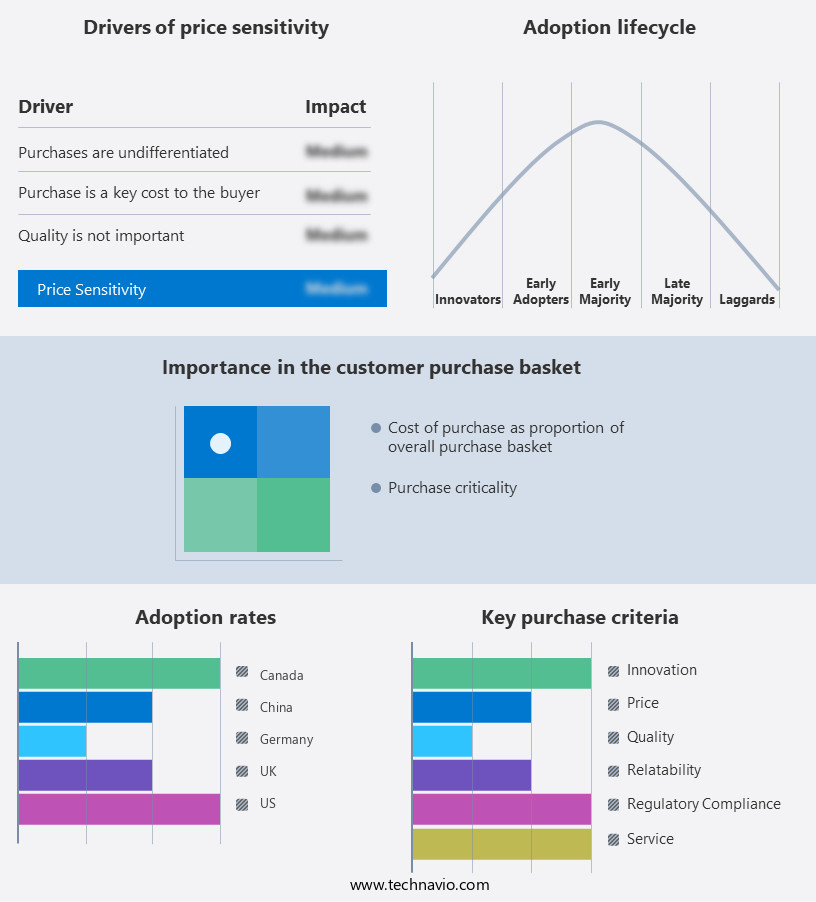
Customer Landscape
Key Companies & Market Insights
Companies are implementing various strategies, such as strategic alliances, market forecast, partnerships, mergers and acquisitions, geographical expansion, and product/service launches, to enhance their presence in the industry.
The industry research and growth report includes detailed analyses of the competitive landscape of the market and information about key companies, including:
- 44 North Vodka
- 619 Spirits North Park
- Alcobrew Distilleries India Ltd.
- Bainbridge Organic Distillers
- Beam Suntory Inc.
- BrewDog Plc
- Candella Micro Distillery
- Cardinal Spirits
- Charbay Distillery
- Diageo Plc
- Fifth Generation Inc.
- Hanson Spirits LLC
- Long Road Distellers
- Pernod Ricard SA
- Rogue Ales and Spirits
- Sazerac Co. Inc.
- St. George Spirits
- Toms Town Distilling Co
- William Grant and Sons Ltd
- Woody Creek Distellers
Qualitative and quantitative analysis of companies has been conducted to help clients understand the wider business environment as well as the strengths and weaknesses of key industry players. Data is qualitatively analyzed to categorize companies as pure play, category-focused, industry-focused, and diversified; it is quantitatively analyzed to categorize companies as dominant, leading, strong, tentative, and weak.
Research Analyst Overview
The market has experienced significant growth in recent years, driven by the increasing demand for unique and authentic spirits. Newly formulated products from craft distilleries have gained popularity among consumers seeking distinct flavor profiles. These artisanal varieties often use local ingredients and premium ingredients, setting them apart from mass-produced counterparts. Craft spirits, including vodka, have become a staple In the world of mixology and cocktails. Bartenders and mixologists have embraced these unique offerings, incorporating them into their creations at bars, restaurants, and internet platforms. Successful branding and marketing techniques have also contributed to the market's growth. Ethnic premium vodkas and super-pure organic spirits have gained traction In the market.
In addition, consumers are increasingly seeking out spirits with natural ingredients and healthier options, leading to a rise In the production of gluten-free and flavored craft vodkas. Unusual barrels and exotic ingredients have also been used to create unique and intriguing flavor profiles. The regulatory environment for alcoholic beverages has undergone modifications, with changes to laws and labeling requirements impacting the industry. Craft vodka distilleries must navigate the complexities of obtaining licenses and permits to operate. Economic variables, such as consumer spending patterns and recessions, can also impact profitability. Despite these challenges, smaller manufacturers continue to thrive, producing higher-quality goods in smaller batches.
Furthermore, the market is characterized by its regional origins and artisanal production methods. The values and unique selling factors of these neighborhood companies resonate with consumers seeking authentic and unique goods. The market for craft vodka is not limited to traditional retail locations. Consumers can now find these spirits at specialty liquor stores and online platforms. Wider distribution has led to increased brand familiarity and accessibility, making craft vodka a popular choice for consumers looking to explore new and exciting flavors. The success of craft vodka has also led to the emergence of artisan vodka and other spirits, such as whisky and gin. These offerings provide consumers with even more options to explore the world of craft spirits. The future of the market looks bright, with continued innovation and growth expected.
|
Market Scope |
|
|
Report Coverage |
Details |
|
Page number |
163 |
|
Base year |
2023 |
|
Historic period |
2018-2022 |
|
Forecast period |
2024-2028 |
|
Growth momentum & CAGR |
Accelerate at a CAGR of 5.77% |
|
Market growth 2024-2028 |
USD 755 million |
|
Market structure |
Fragmented |
|
YoY growth 2023-2024(%) |
5.12 |
|
Key countries |
US, UK, Germany, China, and Canada |
|
Competitive landscape |
Leading Companies, market growth and forecasting , Market Positioning of Companies, Competitive Strategies, and Industry Risks |
What are the Key Data Covered in this Craft Vodka Market Research and Growth Report?
- CAGR of the Craft Vodka industry during the forecast period
- Detailed information on factors that will drive the growth and forecasting between 2024 and 2028
- Precise estimation of the size of the market and its contribution of the industry in focus to the parent market
- Accurate predictions about upcoming growth and trends and changes in consumer behaviour
- Growth of the market across North America, Europe, APAC, South America, and Middle East and Africa
- Thorough analysis of the market's competitive landscape and detailed information about companies
- Comprehensive analysis of factors that will challenge the craft vodka market growth of industry companies
We can help! Our analysts can customize this craft vodka market research report to meet your requirements.