
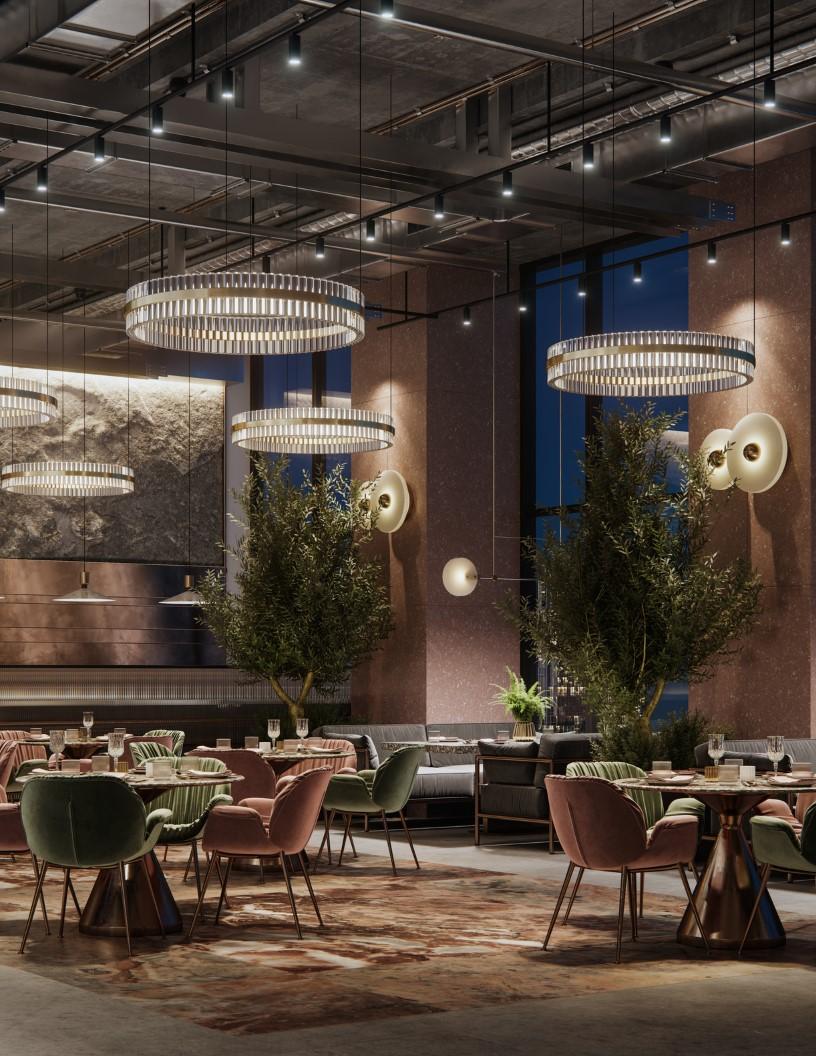


Residential Architectural Lighting Market Size 2025-2029
The residential architectural lighting market size is forecast to increase by USD 1.28 billion at a CAGR of 7% between 2024 and 2029.
- The market is experiencing significant growth due to several key trends. First, the increasing urbanization worldwide is driving demand for energy-efficient lighting solutions. LED chips and HPS lamps, in particular, are gaining popularity due to their energy savings and long lifespan. Additionally, the integration of voice control technology, such as Google Assistant, into lighting systems is becoming increasingly common. The Lumary App, for instance, allows users to control their lighting using their voice or smartphone. Smart lighting systems are gaining popularity in residential spaces, offering features like IoT integration, voice control through assistants like Google Assistant, and customizable lighting solutions. Wireless communication protocols, including Wi-Fi, are also becoming standard in residential lighting systems, enabling seamless connectivity and remote control capabilities. Decorative luxury lighting continues to be a significant market segment, as homeowners seek to enhance the aesthetic appeal of their homes. The future of residential architectural lighting lies in adaptive lighting systems, AR technology, and smart home integration. However, companies must address concerns regarding product recalls and ensure the quality and safety of their offerings to maintain customer trust. Overall, the market is poised for continued growth as technology and consumer preferences evolve.
What will be the Size of the Market During the Forecast Period?
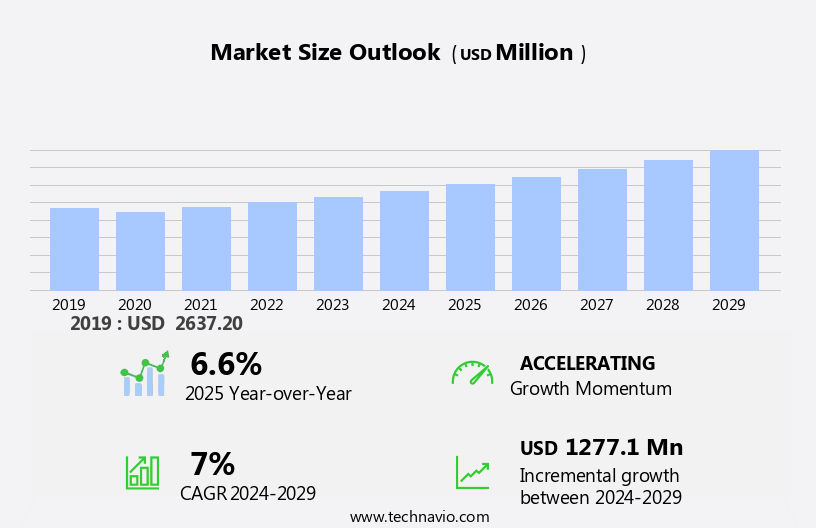
- The market is experiencing significant growth, driven by the increasing demand for energy-efficient solutions and the integration of smart technology. This market encompasses various applications, including residential buildings, public spaces, cultural landmarks, and airport projects. Energy-efficient LEDs have become the preferred choice for architectural lighting due to their longevity, energy savings, and versatility. These lights offer a wide range of color temperatures and color rendering indices, making them suitable for various applications. The use of LED technology not only enhances the aesthetics of a space but also contributes to energy conservation. Smart lighting systems, enabled by IoT and smart controls, are gaining popularity in residential architectural lighting. These systems offer features such as voice control through assistants like Google Assistant and can be controlled via mobile applications like the Lumary app. The integration of these technologies enhances the user experience and provides energy efficiency benefits.
- Lighting manufacturers and designers are focusing on developing advanced lighting solutions to cater to the evolving needs of the market. LED chips, such as Colourtune, are being used to create energy-efficient, high-performance lighting. HPS lamps, while still in use, are being gradually replaced by LEDs due to their higher energy consumption. Decorative luxury lighting continues to be an essential part of the market. Aesthetically appealing designs and energy efficiency are key considerations for manufacturers and designers in this segment. Heat dissipation is another critical factor, as LEDs generate heat during operation, and effective heat management is necessary to ensure their longevity. Brand recognition plays a significant role in the market. Consumers prefer established brands that offer high-quality products and reliable customer support. Lumary, for instance, is a leading player in the market, known for its innovative lighting solutions and commitment to energy efficiency. In conclusion, the market is witnessing growth due to the increasing demand for energy-efficient solutions and the integration of smart technology.
How is this market segmented and which is the largest segment?
The market research report provides comprehensive data (region-wise segment analysis), with forecasts and estimates in "USD million" for the period 2025-2029, as well as historical data from 2019-2023 for the following segments.
- Type
- LED
- HID
- Others
- Application
- Indoor
- Outdoor
- Geography
- APAC
- China
- India
- Japan
- South Korea
- Europe
- Germany
- UK
- France
- Italy
- North America
- Canada
- US
- Middle East and Africa
- South America
- APAC
By Type Insights
- The LED segment is estimated to witness significant growth during the forecast period.
The market is witnessing significant growth, driven by the adoption of energy-efficient and customizable lighting solutions. LED technology, which utilizes light-emitting diodes, is leading the market due to its advanced features and superior performance. Unlike traditional lighting technologies such as high-intensity discharge (HID) and incandescent bulbs, LEDs consume less energy and generate minimal heat. This makes them an ideal choice for various applications in residential settings, including accent lighting, task lighting, and ambient lighting. Moreover, the increasing popularity of smart home integration and Bluetooth connectivity is fueling the demand for LED lighting systems. Hence, such factors are fuelling the growth of this segment during the forecast period.
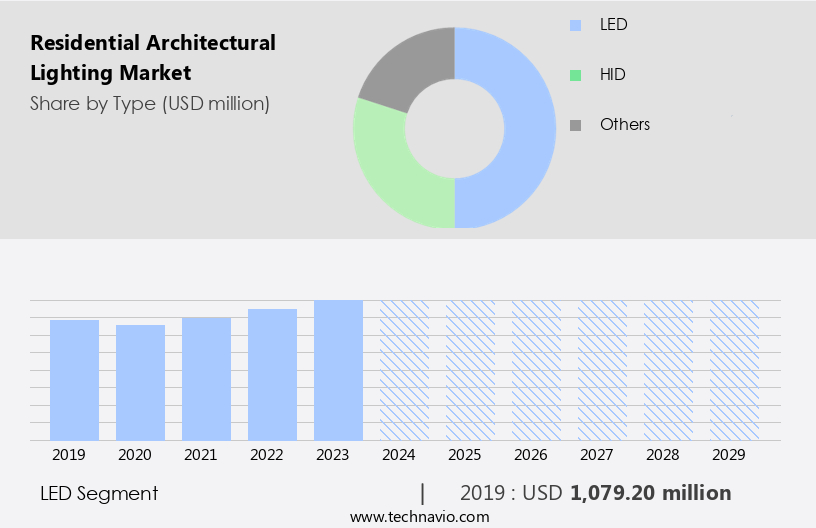
Get a glance at the market report of share of various segments Request Free Sample
The LED segment was valued at USD 1.08 billion in 2019 and showed a gradual increase during the forecast period.
Regional Analysis
- APAC is estimated to contribute 40% to the growth of the global market during the forecast period.
Technavio's analysts have elaborately explained the regional trends and drivers that shape the market during the forecast period.
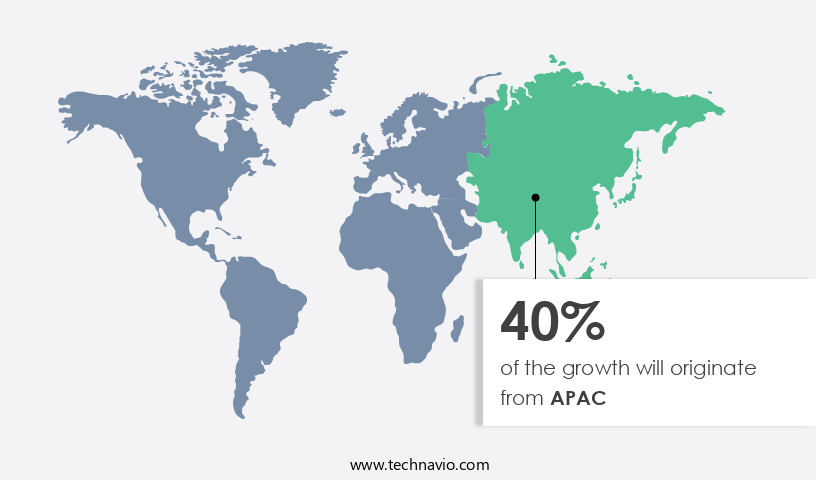
For more insights on the market share of various regions Request Free Sample
The Asia-Pacific (APAC) region's urbanization trend is fueling the growth of the market. With an increasing number of people moving to urban areas, the demand for modern and visually appealing residential lighting solutions has escalated. According to recent statistics, China's urbanization rate reached 66.16% in 2023, signifying a notable shift towards urban living. This urban transformation is driving the need for advanced lighting systems in residential buildings, public spaces, and cultural landmarks. Similarly, India is undergoing a significant urban metamorphosis. This trend is leading to a heightened demand for energy-efficient LED lighting and smart lighting systems in residential properties.
Moreover, lighting manufacturers and designers are responding to this demand by introducing innovative solutions that cater to the unique requirements of urban dwellers. The integration of technology into architectural lighting is a key trend, with smart lighting systems offering energy savings and enhanced aesthetics. Airport projects are another area where architectural lighting plays a crucial role. These spaces require lighting solutions that are both functional and visually appealing, creating a welcoming and comfortable environment for travelers. As the APAC region continues to urbanize, the market is poised for significant growth. This trend is expected to continue as urbanization rates increase and the demand for modern, energy-efficient lighting solutions continues to rise.
Market Dynamics
Our researchers analyzed the data with 2024 as the base year, along with the key drivers, trends, and challenges. A holistic analysis of drivers will help companies refine their marketing strategies to gain a competitive advantage.
What are the key market drivers leading to the rise in adoption of Residential Architectural Lighting Market?
Rising urbanization globally is the key driver of the market.
- The market is experiencing notable growth due to the increasing urban population. According to recent statistics, over half of the global population, which is approximately 4.4 billion people, currently reside in urban areas. This trend is projected to continue, with estimates suggesting that by 2050, around 70% of the world's population will live in cities. The demand for residential architectural lighting solutions is being fueled by this urbanization trend. The construction of new residential properties to accommodate the growing urban population is a significant factor driving the need for these lighting solutions. For instance, by 2030, it's anticipated that around 600 million people in India will be living in urban centers, necessitating the construction of approximately 25 million additional mid-end and affordable housing units.
- Advancements in lighting technology, such as LED and IoT integration, are also contributing to the market's growth. Smart controls, including ColorTune and TruTone, are becoming increasingly popular, allowing for energy-efficient and customizable lighting options. IoT integration enables remote control and automation of lighting systems, adding convenience and reducing energy consumption. In summary, the market is experiencing growth due to urbanization, the need for new housing units, and advancements in lighting technology. Smart controls and IoT integration are key trends in the market, offering energy-efficient and customizable lighting solutions.
What are the market trends shaping the Residential Architectural Lighting Market?
The launch of innovative products is the upcoming trend in the market.
- The market is experiencing a notable shift towards advanced technology and design-focused innovations. Companies are consistently introducing new lighting solutions that cater to both energy efficiency and aesthetic appeal. On October 10, 2024, A-Light, a subsidiary of Acuity Brands, introduced the Mira architectural luminaire. This product offers indirect illumination by reflecting light off ceilings and walls, utilizing an asymmetric distribution pattern.
- The Mira luminaire delivers up to 2302 lumens per foot, ensuring adequate and even lighting throughout residential spaces. This innovation underscores the industry's commitment to creating functional and visually appealing lighting systems. With the integration of voice control through Google Assistant and the Lumary App, homeowners can effortlessly manage their lighting settings using wireless communication protocols such as Wi-Fi. The focus on energy efficiency is further highlighted through the use of LED chips and the phasing out of HPS lamps. Decorative luxury lighting continues to gain popularity, offering homeowners a wide range of versatile and efficient lighting options.
What challenges does Residential Architectural Lighting Market face during the growth?
Vendor concerns regarding product recalls is a key challenge affecting the market growth.
- In the market, recalls can significantly impact companies, jeopardizing brand recognition and financial stability. Recalls are frequently initiated due to safety concerns, such as fire hazards, which may result from manufacturing defects or component failures. For instance, on July 11, 2024, Best Lighting Products announced a recall of approximately 710,600 LED High Bay Light Fixtures due to a potential fire risk. The root cause was the degradation of plastic pins securing the LED board, which could lead to the board coming loose and making contact with the lens or flammable materials. These fixtures, sold between May 2017 and May 2024, were used primarily in commercial settings and included various model numbers.
- To mitigate the risks associated with recalls, it is crucial for companies to prioritize lighting precision, smart lighting solutions, and heat dissipation in their product offerings. By doing so, they can enhance safety, improve energy efficiency, and maintain a strong market presence. Incorporating human-centric lighting principles can further differentiate their offerings and cater to the evolving needs of various end-users, including retail outlets, hospitality establishments, healthcare facilities, and educational institutions.
Exclusive Customer Landscape
The market forecasting report includes the adoption lifecycle of the market, covering from the innovator's stage to the laggard's stage. It focuses on adoption rates in different regions based on penetration. Furthermore, the market report also includes key purchase criteria and drivers of price sensitivity to help companies evaluate and develop their market growth analysis strategies.
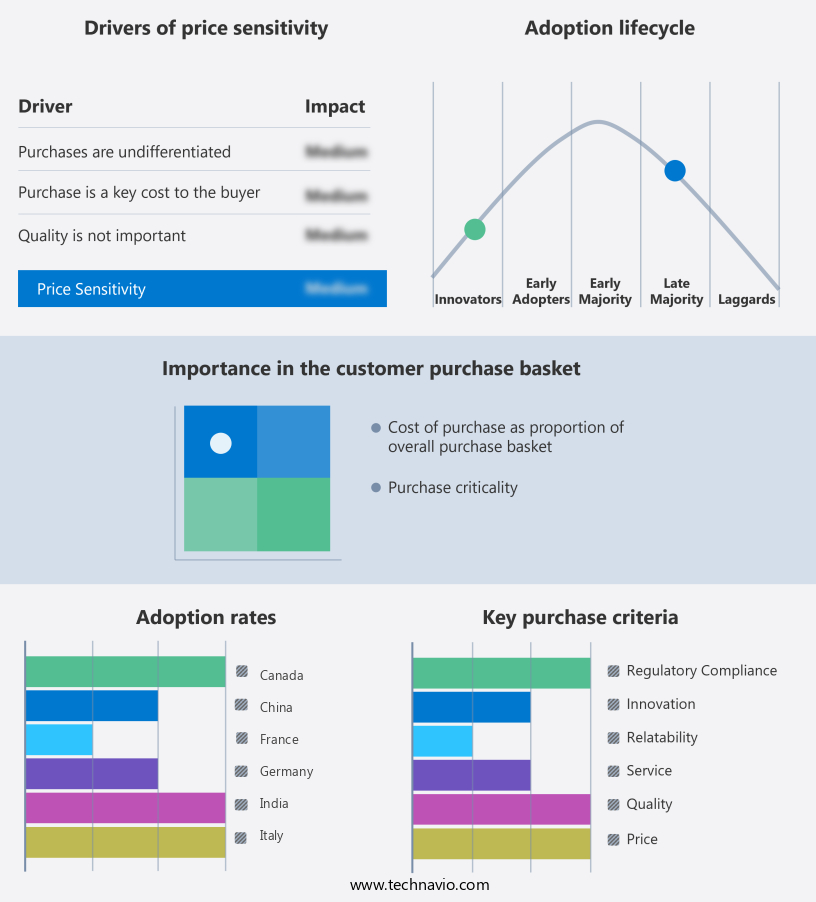
Customer Landscape
Key Companies & Market Insights
Companies are implementing various strategies, such as strategic alliances, market forecasts, partnerships, mergers and acquisitions, geographical expansion, and product/service launches, to enhance their presence in the market. The market research and growth report includes detailed analyses of the competitive landscape of the market and information about key companies, including:
- Acuity Brands Inc.
- Cree Lighting
- Crompton Greaves Consumer Electricals Ltd.
- Delta Light NV
- Eaton Corp plc
- ERCO GmbH
- Fagerhults Belysning AB
- Halla a.s
- Hubbell Inc.
- Kichler Lighting LLC
- LEDVANCE GmbH
- Lutron Electronics Co. Inc.
- OSRAM GmbH
- RAB Lighting Inc.
- Signify NV
- SLV GmbH
- Targetti Sankey S.r.l.
- Universal Remote Control Inc
- We-Ef
- Wipro Lighting
- Zumtobel Group AG
Qualitative and quantitative analysis of companies has been conducted to help clients understand the wider business environment as well as the strengths and weaknesses of key market players. Data is qualitatively analyzed to categorize companies as pure play, category-focused, industry-focused, and diversified; it is quantitatively analyzed to categorize companies as dominant, leading, strong, tentative, and weak.
Research Analyst Overview
The market is witnessing significant growth due to the increasing demand for energy-efficient LEDs and smart lighting systems in residential buildings. The integration of IoT technology in lighting solutions has enabled the creation of customizable and voice-controlled lighting systems using apps like Lumary and Google Assistant. These systems offer energy efficiency, precision, and human-centric lighting, catering to the needs of various sectors such as retail outlets, hospitality establishments, healthcare facilities, and educational institutions. The adoption of LED technology, including LED chips and HPS lamps, in indoor and outdoor lighting has led to energy conservation and reduced energy consumption. The market is also witnessing the emergence of innovative lighting solutions, such as OLEDs and adaptive lighting systems, which offer visual appeal and energy efficiency.
Additionally, lighting manufacturers and designers are focusing on creating aesthetically appealing and architecturally precise lighting solutions that enhance brand recognition and add value to residential buildings. The market is also witnessing a trend towards smart home integration and the use of wireless communication protocols like Wi-Fi and Bluetooth for lighting control. Consumer education and construction projects, including renovation and retrofitting, are driving the demand for energy-efficient lighting solutions and smart lighting systems. The market is expected to continue growing as smart cities adopt innovative lighting solutions to improve energy efficiency and enhance the visual appeal of public spaces and cultural landmarks.
|
Market Scope |
|
|
Report Coverage |
Details |
|
Page number |
200 |
|
Base year |
2024 |
|
Historic period |
2019-2023 |
|
Forecast period |
2025-2029 |
|
Growth momentum & CAGR |
Accelerate at a CAGR of 7% |
|
Market growth 2025-2029 |
USD 1.28 billion |
|
Market structure |
Fragmented |
|
YoY growth 2024-2025(%) |
6.6 |
|
Key countries |
US, China, Germany, UK, India, Canada, Japan, South Korea, France, and Italy |
|
Competitive landscape |
Leading Companies, Market Positioning of Companies, Competitive Strategies, and Industry Risks |
What are the Key Data Covered in this Market Research and Growth Report?
- CAGR of the market during the forecast period
- Detailed information on factors that will drive the market growth and forecasting between 2025 and 2029
- Precise estimation of the size of the market and its contribution of the market in focus to the parent market
- Accurate predictions about upcoming market growth and trends and changes in consumer behaviour
- Growth of the market across APAC, Europe, North America, Middle East and Africa, and South America
- Thorough analysis of the market's competitive landscape and detailed information about companies
- Comprehensive analysis of factors that will challenge the growth of market companies
We can help! Our analysts can customize this market research report to meet your requirements. Get in touch
 RIA -
RIA - 
