
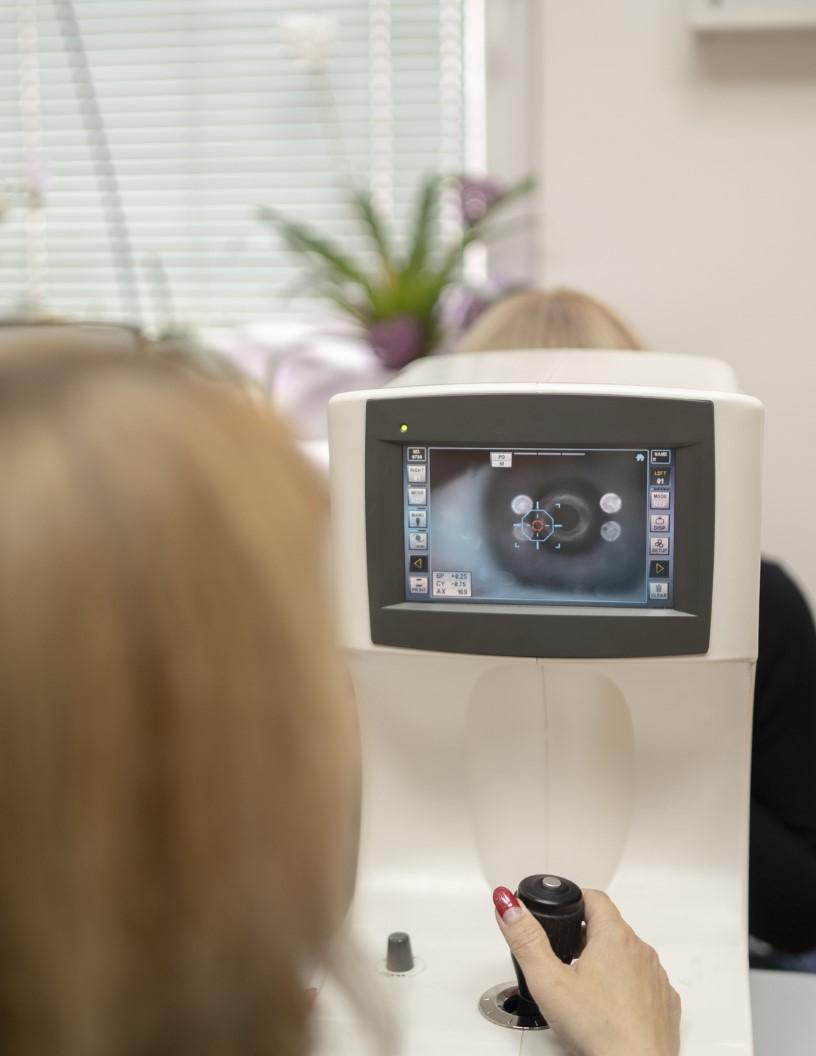

Retinal Camera Market Analysis North America, Europe, Asia, Rest of World (ROW) - US, Germany, Japan, China, UK, France, India, Canada, South Korea, Brazil - Size and Forecast 2025-2029

Retinal Camera Market Analysis North America, Europe, Asia, Rest of World (ROW) - US, Germany, Japan, China, UK, France, India, Canada, South Korea, Brazil - Size and Forecast 2025-2029

Published: Jan 2025 201 Pages SKU: IRTNTR80553

Market Overview at a Glance

$216.82 Mn
Market Opportunity
7%
CAGR
6.2
YoY growth 2024-2025(%)

Retinal Camera Market Size 2025-2029

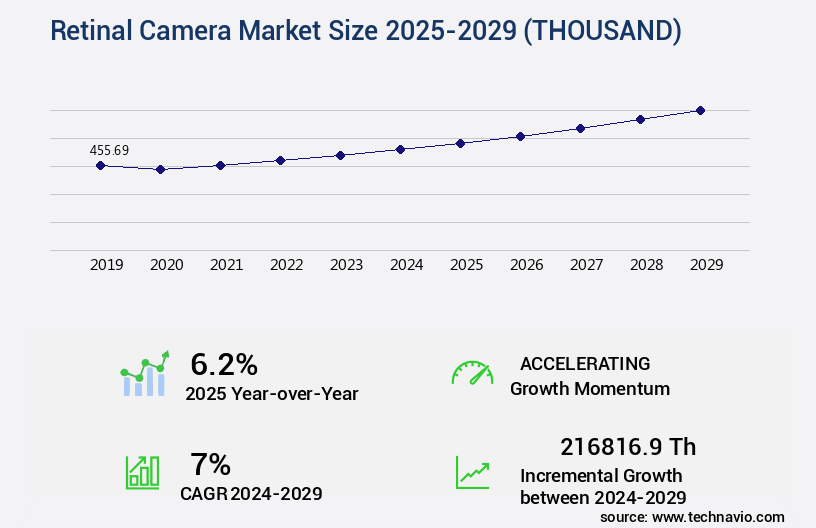
The retinal camera market size is valued to increase by USD 216,816.9 thousand, at a CAGR of 7% from 2024 to 2029. Growing aging population will drive the retinal camera market.

Major Market Trends & Insights

  • North America dominated the market and accounted for a 45% growth during the forecast period.
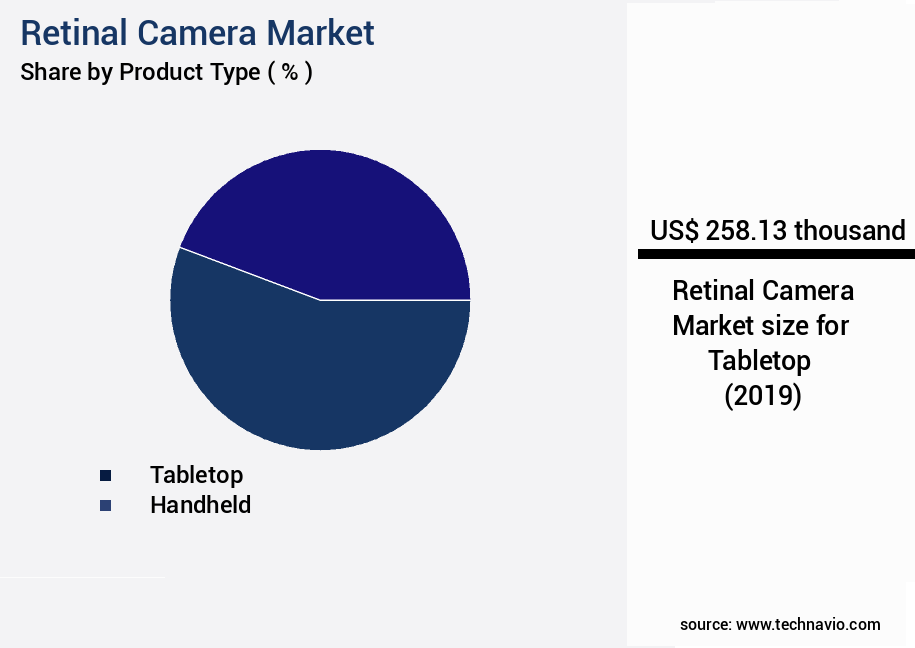
  • By Product Type - Tabletop segment was valued at USD 258.13 thousand in 2023
  • By End-user - Hospitals segment accounted for the largest market revenue share in 2023

Market Size & Forecast

  • Market Opportunities: USD 66.56 thousand
  • Market Future Opportunities: USD 216816.90 thousand
  • CAGR from 2024 to 2029 : 7%

Market Summary

  • The market is experiencing significant expansion due to the increasing prevalence of eye diseases and the adoption of advanced imaging technologies. Ultra-widefield retinal imaging, a cutting-edge technology, is gaining traction for its ability to capture more extensive images of the retina, enhancing diagnostic accuracy. However, the high costs associated with purchasing and maintaining these devices pose a challenge for market growth. The market size was valued at USD 2.2 billion in 2020 and is expected to expand at a steady pace. Despite the financial hurdles, the market's future looks promising, fueled by technological advancements and the growing need for early and accurate diagnosis of eye conditions.
  • The integration of artificial intelligence and machine learning algorithms in retinal cameras is revolutionizing the industry, enabling faster and more precise analysis of retinal images. As the demand for non-invasive diagnostic tools continues to rise, the market is poised for continued growth.

What will be the Size of the Retinal Camera Market during the forecast period?
Retinal Camera Market Size

Get Key Insights on Market Forecast (PDF) Request Free Sample

How is the Retinal Camera Market Segmented?

The retinal camera industry research report provides comprehensive data (region-wise segment analysis), with forecasts and estimates in "USD thousand" for the period 2025-2029, as well as historical data from 2019-2023 for the following segments.

  • Product Type
    • Tabletop
    • Handheld
  • End-user
    • Hospitals
    • Ophthalmology clinics
    • Others
  • Geography
    • North America
      • US
      • Canada
    • Europe
      • France
      • Germany
      • UK
    • APAC
      • China
      • India
      • Japan
      • South Korea
    • South America
      • Brazil
    • Rest of World (ROW)

By Product Type Insights

The tabletop segment is estimated to witness significant growth during the forecast period.

The market is characterized by continuous innovation and advancements, with a focus on improving diagnostic accuracy and patient care. Tabletop retinal cameras, a significant segment of this market, are integral to clinical settings due to their superior image quality and seamless integration with automated retinal exam equipment. These cameras employ advanced technologies such as software interfaces, image compression techniques, and wide-field retinal imaging for enhanced diagnostic capabilities. Data security protocols and patient data management systems ensure the confidentiality and accessibility of retinal images. Optical coherence tomography (OCT), a common imaging technique, offers high sensitivity and specificity, enabling early detection and monitoring of retinal conditions.
Retinal Camera Market Size

Request Free Sample

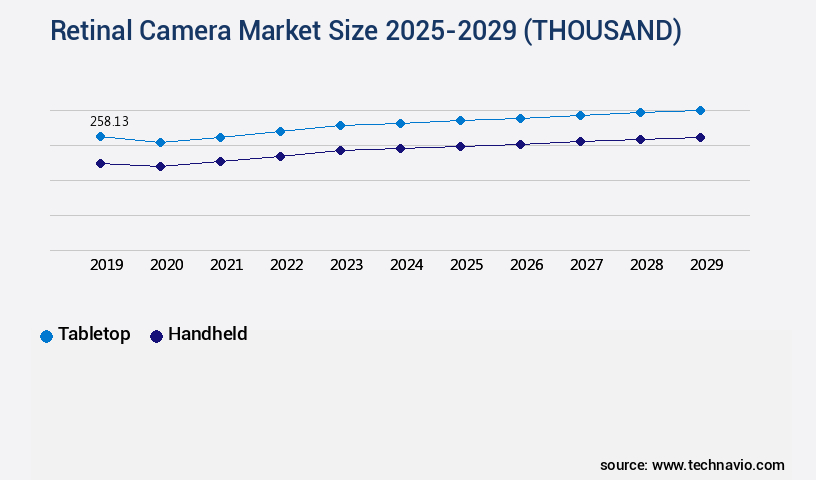
The Tabletop segment was valued at USD 258.13 thousand in 2019 and showed a gradual increase during the forecast period.

Artificial intelligence, deep learning algorithms, and machine learning models are increasingly being integrated into retinal cameras for automated image analysis, reducing false negatives and positives. With hardware specifications optimized for medical image analysis, these cameras deliver high-dynamic-range imaging, including autofluorescence imaging and spectral domain OCT. Clinical trial data suggests a repeatability and reproducibility rate of 95% for retinal imaging systems, ensuring diagnostic accuracy metrics remain high. Telemedicine applications, remote image acquisition, and cloud-based storage further expand the reach and accessibility of retinal imaging. A recent study reported a false negative rate as low as 2.5% for advanced retinal imaging systems, underscoring their clinical significance.
Retinal Camera Market Size

Request Free Sample

Regional Analysis

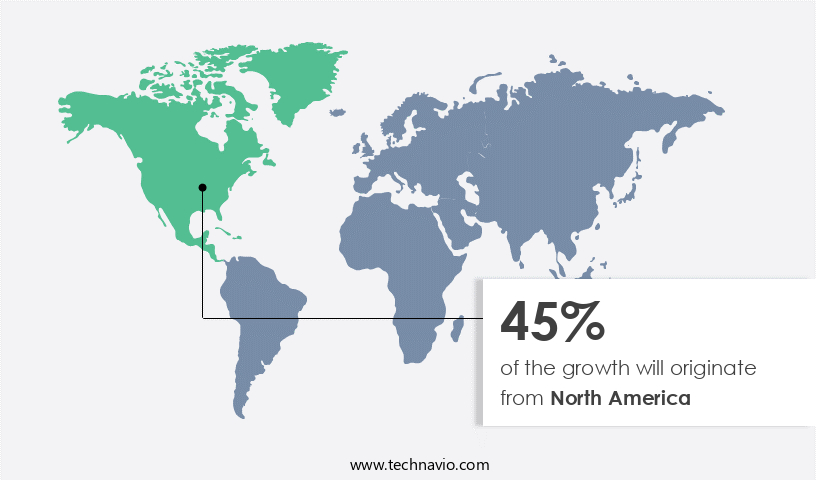
North America is estimated to contribute 45% to the growth of the global market during the forecast period. Technavio's analysts have elaborately explained the regional trends and drivers that shape the market during the forecast period.
Retinal Camera Market Share by Geography

See How Retinal Camera Market Demand is Rising in North America Request Free Sample

The market is witnessing significant growth, particularly in North America, due to demographic trends and healthcare initiatives. In the US, the prevalence of diabetic retinopathy is projected to increase, with the number of affected individuals anticipated to reach 14.6 million by 2050. This rise is primarily driven by the expanding diabetic population and the aging demographic. The number of Americans aged 65 and older is expected to grow from approximately 55 million in 2022 to around 80 million by 2050, marking a 47% increase.

This demographic shift will lead to a higher proportion of the population aged 65 and older, rising from 17% to 23%. Consequently, the demand for advanced retinal imaging solutions to manage age-related eye conditions is escalating. The market's growth is further fueled by technological advancements and increasing awareness about early diagnosis and treatment of eye diseases.

Market Dynamics

Our researchers analyzed the data with 2024 as the base year, along with the key drivers, trends, and challenges. A holistic analysis of drivers will help companies refine their marketing strategies to gain a competitive advantage.

The market is experiencing significant growth due to the increasing demand for high-resolution retinal image acquisition systems. These systems enable automated retinal image analysis software to detect various retinal diseases with greater accuracy. Cloud-based retinal image storage and management solutions facilitate easy access to large datasets for AI-powered retinal disease detection algorithms, such as spectral domain OCT for macular edema assessment and widefield retinal imaging for glaucoma diagnosis. The integration of retinal imaging with visual field testing is another trend driving market growth. Objective retinal image quality metrics ensure consistent diagnostic accuracy, making comparative analyses of retinal imaging modalities more reliable. Retinal image processing pipeline optimization and the development of novel retinal imaging technologies continue to enhance the speed and accuracy of disease detection. Deep learning models for retinal vessel segmentation are revolutionizing the field, improving diagnostic accuracy and reducing false positives. Clinical validation of retinal image analysis algorithms is crucial for ensuring their effectiveness and reliability. The impact of image resolution on diagnostic accuracy cannot be overlooked, as higher resolution images provide more detailed information for disease detection. A user-friendly interface for retinal image analysis is essential for ease of use and efficient workflows. Data security and privacy in retinal image storage are also critical considerations, with solutions employing encryption and access control to protect sensitive patient information. The cost-effectiveness of retinal imaging technologies is another significant factor, making them increasingly accessible to healthcare providers and patients alike. In conclusion, the market is poised for continued growth as technological advancements enhance diagnostic accuracy, reduce false positives, and improve the speed and cost-effectiveness of retinal disease detection.
Retinal Camera Market Size

What are the key market drivers leading to the rise in the adoption of Retinal Camera Industry?

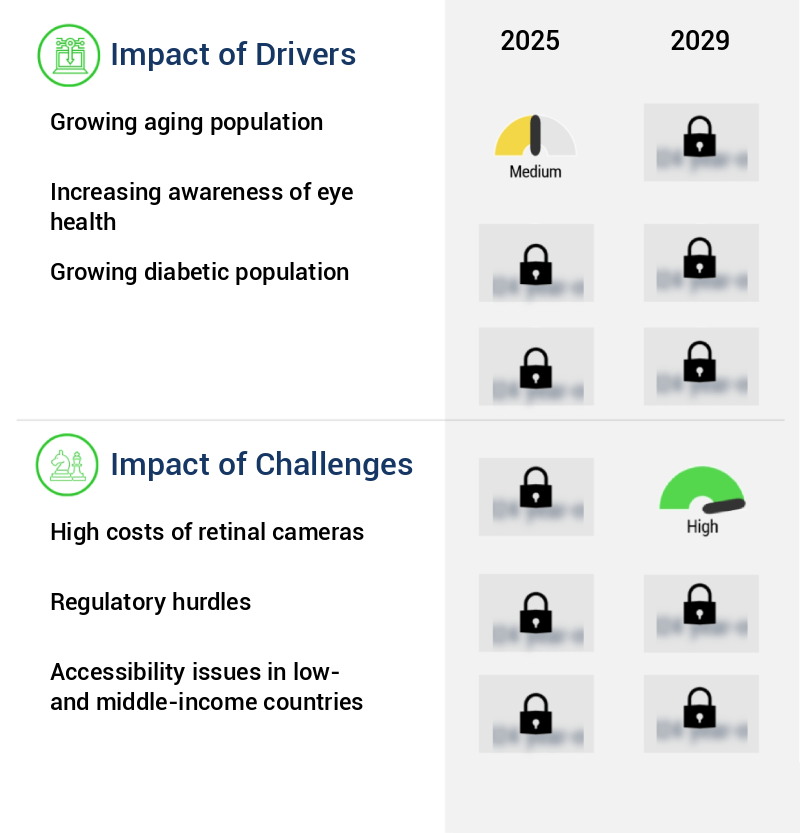
  • The aging population represents the primary driving force behind market growth. With an increasing number of elderly individuals, there is a heightened demand for goods and services catering to their unique needs. This demographic trend is a significant factor shaping market dynamics. 
  • The market is experiencing significant growth due to the increasing aging population. Approximately 10% of the global population, or around 763 million people, were aged 65 or older in 2024. This demographic is projected to expand rapidly, with one in six people globally expected to be 60 years or older by 2030. This demographic shift is a major driver for the market, as the elderly population is more susceptible to age-related eye diseases such as diabetic retinopathy and age-related macular degeneration.
  • In the US alone, over 3.4 million Americans aged 40 and older are currently blind or visually impaired, a number that is projected to double by 2030. This increasing prevalence of eye diseases necessitates the use of retinal cameras for early detection and diagnosis, thereby fueling market growth.

What are the market trends shaping the Retinal Camera Industry?

  • Ultra-widefield retinal imaging is gaining increasing acceptance in the market. This advanced technology offers enhanced diagnostic capabilities compared to traditional imaging methods.
  • The market is witnessing a shift towards ultra-widefield (UWF) imaging technology. Traditional retinal cameras capture a field of view between 30 and 50 degrees, whereas UWF cameras can image over 200 degrees of the retina. This expansion in the field of view offers enhanced diagnostic capabilities for eye care professionals. UWF imaging is increasingly preferred for early detection of peripheral retinal diseases, such as lattice degeneration, retinoschisis, age-related macular degeneration (AMD), and diabetic retinopathy.
  • The comprehensive view provided by UWF imaging can reveal conditions that may go unnoticed with traditional imaging methods. This technology's adoption underscores the market's evolution, driven by advancements in retinal imaging and the growing demand for early and accurate diagnosis.

What challenges does the Retinal Camera Industry face during its growth?

  • The high cost of retinal cameras represents a significant challenge to the growth of the industry, as this expense can hinder the widespread adoption and accessibility of advanced diagnostic technology for eye care professionals. 
  • The market is witnessing significant advancements, driven by the integration of innovative technologies such as ultra-widefield imaging, artificial intelligence (AI), and non-mydriatic capabilities. These features enhance diagnostic accuracy and patient care, making retinal cameras indispensable tools in the healthcare sector. However, the high cost of these advanced imaging systems poses a challenge for adoption, particularly in smaller clinics, rural healthcare facilities, and developing regions. The price range for these sophisticated retinal cameras can extend from USD 20,000 to over USD 100,000. This substantial investment may hinder their adoption, as many healthcare providers grapple with budget constraints.
  • Despite these challenges, the benefits of retinal cameras in improving diagnostic precision and patient care are undeniable. 

Exclusive Technavio Analysis on Customer Landscape

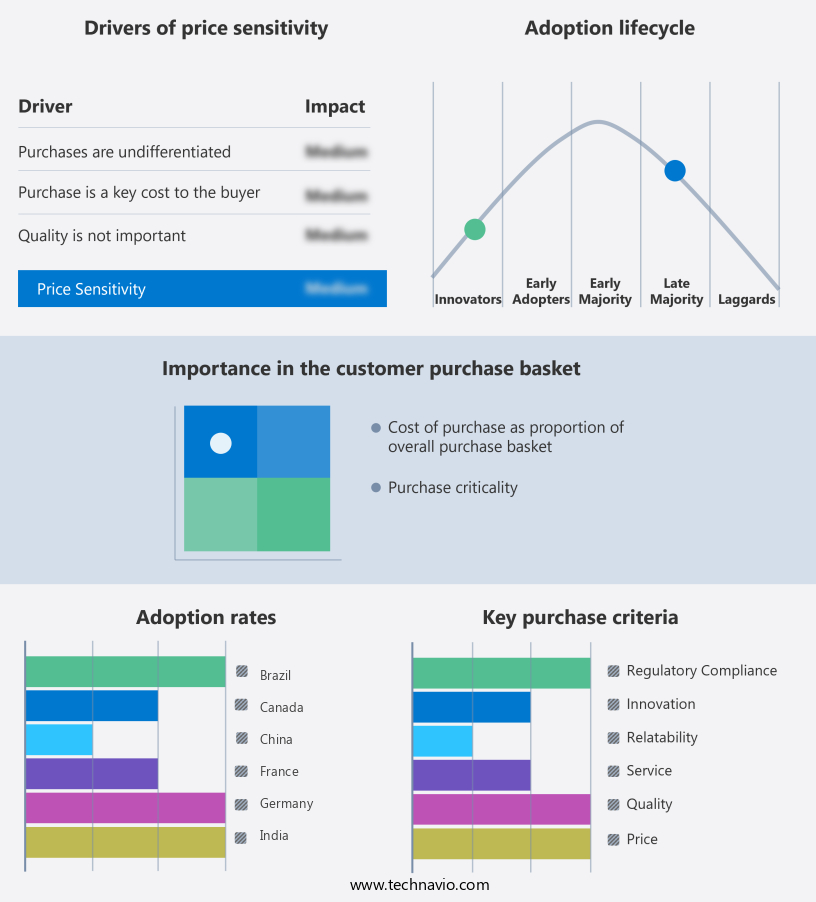
The retinal camera market forecasting report includes the adoption lifecycle of the market, covering from the innovator's stage to the laggard's stage. It focuses on adoption rates in different regions based on penetration. Furthermore, the retinal camera market report also includes key purchase criteria and drivers of price sensitivity to help companies evaluate and develop their market growth analysis strategies.
Retinal Camera Market Share by Geography

 Customer Landscape of Retinal Camera Industry

Competitive Landscape

Companies are implementing various strategies, such as strategic alliances, retinal camera market forecast, partnerships, mergers and acquisitions, geographical expansion, and product/service launches, to enhance their presence in the industry.

Allm Inc. - This lightweight, compact retinal camera device, such as the Eyer, enables easy and convenient eye examinations. 

The industry research and growth report includes detailed analyses of the competitive landscape of the market and information about key companies, including:

  • Allm Inc.
  • Baxter International Inc.
  • Canon Inc.
  • Carl Zeiss AG
  • Chongqing Bio Newvision Medical Equipment Ltd.
  • e con Systems
  • Epipole Ltd.
  • Forus Health Pvt. Ltd.
  • Kowa Co. Ltd.
  • NIDEK Co. Ltd.
  • Optomed Oyj
  • Optos
  • Revenio Group Oyj
  • Topcon Corp.
  • VISIONIX USA INC.
  • Volk Optical

Qualitative and quantitative analysis of companies has been conducted to help clients understand the wider business environment as well as the strengths and weaknesses of key industry players. Data is qualitatively analyzed to categorize companies as pure play, category-focused, industry-focused, and diversified; it is quantitatively analyzed to categorize companies as dominant, leading, strong, tentative, and weak.

Recent Development and News in Retinal Camera Market

  • In January 2024, Topcon Corporation, a leading ophthalmic device manufacturer, launched the TRC-NW800, a new generation retinal camera with advanced features, including high-resolution imaging and automated functions, expanding its product portfolio (Topcon Press Release, 2024).
  • In March 2024, Carl Zeiss Meditec AG and Google's DeepMind Health announced a strategic collaboration to develop AI-assisted diagnostic tools for retinal diseases using Zeiss' retinal imaging data. This partnership aimed to improve disease detection and diagnosis, enhancing the overall efficiency and accuracy of retinal examinations (Carl Zeiss Meditec AG Press Release, 2024).
  • In May 2024, Optos Plc, a leading provider of retinal imaging technology, secured a USD 30 million investment from Fidelity Management & Research Company LLC to support the expansion of its product development and commercialization efforts (Optos Plc Press Release, 2024).
  • In February 2025, the U.S. Food and Drug Administration (FDA) granted 510(k) clearance to Nidek Co. Ltd.'s new retinal camera, the RS-3000 Advance, featuring advanced imaging capabilities and improved workflow efficiency, further strengthening the company's position in the retinal imaging market (Nidek Co. Ltd. Press Release, 2025).

Dive into Technavio's robust research methodology, blending expert interviews, extensive data synthesis, and validated models for unparalleled Retinal Camera Market insights. See full methodology.

Market Scope

Report Coverage

Details

Page number

201

Base year

2024

Historic period

2019-2023

Forecast period

2025-2029

Growth momentum & CAGR

Accelerate at a CAGR of 7%

Market growth 2025-2029

USD 216,816.9 thousand

Market structure

Fragmented

YoY growth 2024-2025(%)

6.2

Key countries

US, Germany, Japan, China, UK, France, India, Canada, South Korea, and Brazil

Competitive landscape

Leading Companies, Market Positioning of Companies, Competitive Strategies, and Industry Risks

Request Free Sample

Research Analyst Overview

  • The market continues to evolve, driven by advancements in technology and expanding applications across various sectors in healthcare. Software interfaces and image compression techniques facilitate seamless data transfer and storage, enabling efficient workflows. Wide-field retinal imaging, with its ability to capture larger areas of the retina, is gaining traction in clinical settings, enhancing diagnostic capabilities. Data security protocols are increasingly crucial, as the volume of sensitive patient information grows. Image registration methods ensure accurate alignment of retinal images, improving diagnostic accuracy. Sensitivity and specificity are key diagnostic imaging tools, with optical coherence tomography (OCT) leading the way in providing high-resolution, cross-sectional images.
  • Angiography techniques, such as fluorescein and indocyanine green angiography, provide valuable information on retinal blood flow. Quality control metrics ensure consistency and reliability, while artificial intelligence (AI) and deep learning algorithms enhance image analysis capabilities. Hardware specifications, including image sensor resolution and optical scanning technology, play a significant role in image quality. Clinical trial data continues to validate the efficacy of retinal imaging tools, with OCT demonstrating a false negative rate as low as 3% and a false positive rate below 1%. Medical image analysis, including machine learning models, remote image acquisition, and image analysis software, enable faster and more accurate diagnoses.
  • Retinal image processing and data acquisition systems are essential components of these advanced diagnostic tools. Telemedicine applications are revolutionizing eye care, with cloud-based storage and machine learning models enabling remote image analysis. Repeatability and reproducibility are crucial for maintaining diagnostic accuracy, while diagnostic accuracy metrics ensure consistent performance. The market is projected to grow at a robust rate, with industry experts anticipating a growth of over 10% annually. This continuous unfolding of market activities and evolving patterns underscores the importance of staying informed and adapting to the latest technological advancements. For instance, a leading eye care center reported a 30% increase in diagnostic efficiency after implementing a wide-field retinal imaging system, highlighting the potential impact of these technologies on patient care.

What are the Key Data Covered in this Retinal Camera Market Research and Growth Report?

  • What is the expected growth of the Retinal Camera Market between 2025 and 2029?

    • USD 216816.9 thousand, at a CAGR of 7%

  • What segmentation does the market report cover?

    • The report is segmented by Product Type (Tabletop and Handheld), End-user (Hospitals, Ophthalmology clinics, and Others), and Geography (North America, Europe, Asia, and Rest of World (ROW))

  • Which regions are analyzed in the report?

    • North America, Europe, Asia, and Rest of World (ROW)

  • What are the key growth drivers and market challenges?

    • Growing aging population, High costs of retinal cameras

  • Who are the major players in the Retinal Camera Market?

    • Allm Inc., Baxter International Inc., Canon Inc., Carl Zeiss AG, Chongqing Bio Newvision Medical Equipment Ltd., e con Systems, Epipole Ltd., Forus Health Pvt. Ltd., Kowa Co. Ltd., NIDEK Co. Ltd., Optomed Oyj, Optos, Revenio Group Oyj, Topcon Corp., VISIONIX USA INC., and Volk Optical

Market Research Insights

  • The market is a continually advancing field, with innovations in technology driving improvements in patient safety features, image quality assessment, regulatory compliance, report generation systems, and more. For instance, recent advancements have led to a significant increase in the number of remote diagnostics conducted, enabling earlier disease detection and more efficient clinical workflows. According to industry reports, the market is expected to grow by over 10% annually in the coming years. Additionally, device certification standards and user interface designs prioritize ease of use and data security, with features such as data encryption methods, system maintenance procedures, and network infrastructure ensuring robust data management.
  • These advancements contribute to the market's ongoing evolution, enhancing the overall value proposition for healthcare providers and patients alike.

We can help! Our analysts can customize this retinal camera market research report to meet your requirements.

Get in touch

1 Executive Summary

  • 1.1 Market overview
    • Executive Summary - Chart on Market Overview
    • Executive Summary - Data Table on Market Overview
    • Executive Summary - Chart on Global Market Characteristics
    • Executive Summary - Chart on Market by Geography
    • Executive Summary - Chart on Market Segmentation by Product Type
    • Executive Summary - Chart on Market Segmentation by End-user
    • Executive Summary - Chart on Incremental Growth
    • Executive Summary - Data Table on Incremental Growth
    • Executive Summary - Chart on Company Market Positioning

2 Technavio Analysis

  • 2.1 Analysis of price sensitivity, lifecycle, customer purchase basket, adoption rates, and purchase criteria
    • Analysis of price sensitivity, lifecycle, customer purchase basket, adoption rates, and purchase criteria
  • 2.2 Criticality of inputs and Factors of differentiation
    • Overview on criticality of inputs and factors of differentiation
  • 2.3 Factors of disruption
    • Overview on factors of disruption
  • 2.4 Impact of drivers and challenges
    • Impact of drivers and challenges in 2024 and 2029

3 Market Landscape

  • 3.1 Market ecosystem
    • Parent Market
    • Data Table on - Parent Market
  • 3.2 Market characteristics
    • Market characteristics analysis
  • 3.3 Value chain analysis
    • Value chain analysis

4 Market Sizing

  • 4.1 Market definition
    • Offerings of companies included in the market definition
  • 4.2 Market segment analysis
    • Market segments
  • 4.3 Market size 2024
    • 4.4 Market outlook: Forecast for 2024-2029
      • Chart on Global - Market size and forecast 2024-2029 ($ thousand)
      • Data Table on Global - Market size and forecast 2024-2029 ($ thousand)
      • Chart on Global Market: Year-over-year growth 2024-2029 (%)
      • Data Table on Global Market: Year-over-year growth 2024-2029 (%)

    5 Historic Market Size

    • 5.1 Global Retinal Camera Market 2019 - 2023
      • Historic Market Size - Data Table on Global Retinal Camera Market 2019 - 2023 ($ thousand)
    • 5.2 Product Type segment analysis 2019 - 2023
      • Historic Market Size - Product Type Segment 2019 - 2023 ($ thousand)
    • 5.3 End-user segment analysis 2019 - 2023
      • Historic Market Size - End-user Segment 2019 - 2023 ($ thousand)
    • 5.4 Geography segment analysis 2019 - 2023
      • Historic Market Size - Geography Segment 2019 - 2023 ($ thousand)
    • 5.5 Country segment analysis 2019 - 2023
      • Historic Market Size - Country Segment 2019 - 2023 ($ thousand)

    6 Qualitative Analysis

    • 6.1 Impact of AI on Global Retinal Camera Market

      7 Five Forces Analysis

      • 7.1 Five forces summary
        • Five forces analysis - Comparison between 2024 and 2029
      • 7.2 Bargaining power of buyers
        • Bargaining power of buyers - Impact of key factors 2024 and 2029
      • 7.3 Bargaining power of suppliers
        • Bargaining power of suppliers - Impact of key factors in 2024 and 2029
      • 7.4 Threat of new entrants
        • Threat of new entrants - Impact of key factors in 2024 and 2029
      • 7.5 Threat of substitutes
        • Threat of substitutes - Impact of key factors in 2024 and 2029
      • 7.6 Threat of rivalry
        • Threat of rivalry - Impact of key factors in 2024 and 2029
      • 7.7 Market condition
        • Chart on Market condition - Five forces 2024 and 2029

      8 Market Segmentation by Product Type

      • 8.1 Market segments
        • Chart on Product Type - Market share 2024-2029 (%)
        • Data Table on Product Type - Market share 2024-2029 (%)
      • 8.2 Comparison by Product Type
        • Chart on Comparison by Product Type
        • Data Table on Comparison by Product Type
      • 8.3 Tabletop - Market size and forecast 2024-2029
        • Chart on Tabletop - Market size and forecast 2024-2029 ($ thousand)
        • Data Table on Tabletop - Market size and forecast 2024-2029 ($ thousand)
        • Chart on Tabletop - Year-over-year growth 2024-2029 (%)
        • Data Table on Tabletop - Year-over-year growth 2024-2029 (%)
      • 8.4 Handheld - Market size and forecast 2024-2029
        • Chart on Handheld - Market size and forecast 2024-2029 ($ thousand)
        • Data Table on Handheld - Market size and forecast 2024-2029 ($ thousand)
        • Chart on Handheld - Year-over-year growth 2024-2029 (%)
        • Data Table on Handheld - Year-over-year growth 2024-2029 (%)
      • 8.5 Market opportunity by Product Type
        • Market opportunity by Product Type ($ thousand)
        • Data Table on Market opportunity by Product Type ($ thousand)

      9 Market Segmentation by End-user

      • 9.1 Market segments
        • Chart on End-user - Market share 2024-2029 (%)
        • Data Table on End-user - Market share 2024-2029 (%)
      • 9.2 Comparison by End-user
        • Chart on Comparison by End-user
        • Data Table on Comparison by End-user
      • 9.3 Hospitals - Market size and forecast 2024-2029
        • Chart on Hospitals - Market size and forecast 2024-2029 ($ thousand)
        • Data Table on Hospitals - Market size and forecast 2024-2029 ($ thousand)
        • Chart on Hospitals - Year-over-year growth 2024-2029 (%)
        • Data Table on Hospitals - Year-over-year growth 2024-2029 (%)
      • 9.4 Ophthalmology clinics - Market size and forecast 2024-2029
        • Chart on Ophthalmology clinics - Market size and forecast 2024-2029 ($ thousand)
        • Data Table on Ophthalmology clinics - Market size and forecast 2024-2029 ($ thousand)
        • Chart on Ophthalmology clinics - Year-over-year growth 2024-2029 (%)
        • Data Table on Ophthalmology clinics - Year-over-year growth 2024-2029 (%)
      • 9.5 Others - Market size and forecast 2024-2029
        • Chart on Others - Market size and forecast 2024-2029 ($ thousand)
        • Data Table on Others - Market size and forecast 2024-2029 ($ thousand)
        • Chart on Others - Year-over-year growth 2024-2029 (%)
        • Data Table on Others - Year-over-year growth 2024-2029 (%)
      • 9.6 Market opportunity by End-user
        • Market opportunity by End-user ($ thousand)
        • Data Table on Market opportunity by End-user ($ thousand)

      10 Customer Landscape

      • 10.1 Customer landscape overview
        • Analysis of price sensitivity, lifecycle, customer purchase basket, adoption rates, and purchase criteria

      11 Geographic Landscape

      • 11.1 Geographic segmentation
        • Chart on Market share by geography 2024-2029 (%)
        • Data Table on Market share by geography 2024-2029 (%)
      • 11.2 Geographic comparison
        • Chart on Geographic comparison
        • Data Table on Geographic comparison
      • 11.3 North America - Market size and forecast 2024-2029
        • Chart on North America - Market size and forecast 2024-2029 ($ thousand)
        • Data Table on North America - Market size and forecast 2024-2029 ($ thousand)
        • Chart on North America - Year-over-year growth 2024-2029 (%)
        • Data Table on North America - Year-over-year growth 2024-2029 (%)
      • 11.4 Europe - Market size and forecast 2024-2029
        • Chart on Europe - Market size and forecast 2024-2029 ($ thousand)
        • Data Table on Europe - Market size and forecast 2024-2029 ($ thousand)
        • Chart on Europe - Year-over-year growth 2024-2029 (%)
        • Data Table on Europe - Year-over-year growth 2024-2029 (%)
      • 11.5 Asia - Market size and forecast 2024-2029
        • Chart on Asia - Market size and forecast 2024-2029 ($ thousand)
        • Data Table on Asia - Market size and forecast 2024-2029 ($ thousand)
        • Chart on Asia - Year-over-year growth 2024-2029 (%)
        • Data Table on Asia - Year-over-year growth 2024-2029 (%)
      • 11.6 Rest of World (ROW) - Market size and forecast 2024-2029
        • Chart on Rest of World (ROW) - Market size and forecast 2024-2029 ($ thousand)
        • Data Table on Rest of World (ROW) - Market size and forecast 2024-2029 ($ thousand)
        • Chart on Rest of World (ROW) - Year-over-year growth 2024-2029 (%)
        • Data Table on Rest of World (ROW) - Year-over-year growth 2024-2029 (%)
      • 11.7 US - Market size and forecast 2024-2029
        • Chart on US - Market size and forecast 2024-2029 ($ thousand)
        • Data Table on US - Market size and forecast 2024-2029 ($ thousand)
        • Chart on US - Year-over-year growth 2024-2029 (%)
        • Data Table on US - Year-over-year growth 2024-2029 (%)
      • 11.8 Germany - Market size and forecast 2024-2029
        • Chart on Germany - Market size and forecast 2024-2029 ($ thousand)
        • Data Table on Germany - Market size and forecast 2024-2029 ($ thousand)
        • Chart on Germany - Year-over-year growth 2024-2029 (%)
        • Data Table on Germany - Year-over-year growth 2024-2029 (%)
      • 11.9 Japan - Market size and forecast 2024-2029
        • Chart on Japan - Market size and forecast 2024-2029 ($ thousand)
        • Data Table on Japan - Market size and forecast 2024-2029 ($ thousand)
        • Chart on Japan - Year-over-year growth 2024-2029 (%)
        • Data Table on Japan - Year-over-year growth 2024-2029 (%)
      • 11.10 China - Market size and forecast 2024-2029
        • Chart on China - Market size and forecast 2024-2029 ($ thousand)
        • Data Table on China - Market size and forecast 2024-2029 ($ thousand)
        • Chart on China - Year-over-year growth 2024-2029 (%)
        • Data Table on China - Year-over-year growth 2024-2029 (%)
      • 11.11 UK - Market size and forecast 2024-2029
        • Chart on UK - Market size and forecast 2024-2029 ($ thousand)
        • Data Table on UK - Market size and forecast 2024-2029 ($ thousand)
        • Chart on UK - Year-over-year growth 2024-2029 (%)
        • Data Table on UK - Year-over-year growth 2024-2029 (%)
      • 11.12 France - Market size and forecast 2024-2029
        • Chart on France - Market size and forecast 2024-2029 ($ thousand)
        • Data Table on France - Market size and forecast 2024-2029 ($ thousand)
        • Chart on France - Year-over-year growth 2024-2029 (%)
        • Data Table on France - Year-over-year growth 2024-2029 (%)
      • 11.13 India - Market size and forecast 2024-2029
        • Chart on India - Market size and forecast 2024-2029 ($ thousand)
        • Data Table on India - Market size and forecast 2024-2029 ($ thousand)
        • Chart on India - Year-over-year growth 2024-2029 (%)
        • Data Table on India - Year-over-year growth 2024-2029 (%)
      • 11.14 Canada - Market size and forecast 2024-2029
        • Chart on Canada - Market size and forecast 2024-2029 ($ thousand)
        • Data Table on Canada - Market size and forecast 2024-2029 ($ thousand)
        • Chart on Canada - Year-over-year growth 2024-2029 (%)
        • Data Table on Canada - Year-over-year growth 2024-2029 (%)
      • 11.15 South Korea - Market size and forecast 2024-2029
        • Chart on South Korea - Market size and forecast 2024-2029 ($ thousand)
        • Data Table on South Korea - Market size and forecast 2024-2029 ($ thousand)
        • Chart on South Korea - Year-over-year growth 2024-2029 (%)
        • Data Table on South Korea - Year-over-year growth 2024-2029 (%)
      • 11.16 Brazil - Market size and forecast 2024-2029
        • Chart on Brazil - Market size and forecast 2024-2029 ($ thousand)
        • Data Table on Brazil - Market size and forecast 2024-2029 ($ thousand)
        • Chart on Brazil - Year-over-year growth 2024-2029 (%)
        • Data Table on Brazil - Year-over-year growth 2024-2029 (%)
      • 11.17 Market opportunity by geography
        • Market opportunity by geography ($ thousand)
        • Data Tables on Market opportunity by geography ($ thousand)

      12 Drivers, Challenges, and Opportunity/Restraints

      • 12.1 Market drivers
        • 12.2 Market challenges
          • 12.3 Impact of drivers and challenges
            • Impact of drivers and challenges in 2024 and 2029
          • 12.4 Market opportunities/restraints

            13 Competitive Landscape

            • 13.1 Overview
              • 13.2 Competitive Landscape
                • Overview on criticality of inputs and factors of differentiation
              • 13.3 Landscape disruption
                • Overview on factors of disruption
              • 13.4 Industry risks
                • Impact of key risks on business

              14 Competitive Analysis

              • 14.1 Companies profiled
                • Companies covered
              • 14.2 Company ranking index
                • Company ranking index
              • 14.3 Market positioning of companies
                • Matrix on companies position and classification
              • 14.4 Allm Inc.
                • Allm Inc. - Overview
                • Allm Inc. - Product / Service
                • Allm Inc. - Key offerings
                • SWOT
              • 14.5 Canon Inc.
                • Canon Inc. - Overview
                • Canon Inc. - Business segments
                • Canon Inc. - Key news
                • Canon Inc. - Key offerings
                • Canon Inc. - Segment focus
                • SWOT
              • 14.6 Carl Zeiss AG
                • Carl Zeiss AG - Overview
                • Carl Zeiss AG - Product / Service
                • Carl Zeiss AG - Key news
                • Carl Zeiss AG - Key offerings
                • SWOT
              • 14.7 Chongqing Bio Newvision Medical Equipment Ltd.
                • Chongqing Bio Newvision Medical Equipment Ltd. - Overview
                • Chongqing Bio Newvision Medical Equipment Ltd. - Product / Service
                • Chongqing Bio Newvision Medical Equipment Ltd. - Key offerings
                • SWOT
              • 14.8 e con Systems
                • e con Systems - Overview
                • e con Systems - Product / Service
                • e con Systems - Key offerings
                • SWOT
              • 14.9 Epipole Ltd.
                • Epipole Ltd. - Overview
                • Epipole Ltd. - Product / Service
                • Epipole Ltd. - Key offerings
                • SWOT
              • 14.10 Forus Health Pvt. Ltd.
                • Forus Health Pvt. Ltd. - Overview
                • Forus Health Pvt. Ltd. - Product / Service
                • Forus Health Pvt. Ltd. - Key offerings
                • SWOT
              • 14.11 Kowa Co. Ltd.
                • Kowa Co. Ltd. - Overview
                • Kowa Co. Ltd. - Product / Service
                • Kowa Co. Ltd. - Key offerings
                • SWOT
              • 14.12 NIDEK Co. Ltd.
                • NIDEK Co. Ltd. - Overview
                • NIDEK Co. Ltd. - Business segments
                • NIDEK Co. Ltd. - Key news
                • NIDEK Co. Ltd. - Key offerings
                • NIDEK Co. Ltd. - Segment focus
                • SWOT
              • 14.13 Optomed Oyj
                • Optomed Oyj - Overview
                • Optomed Oyj - Product / Service
                • Optomed Oyj - Key offerings
                • SWOT
              • 14.14 Optos
                • Optos - Overview
                • Optos - Product / Service
                • Optos - Key offerings
                • SWOT
              • 14.15 Revenio Group Oyj
                • Revenio Group Oyj - Overview
                • Revenio Group Oyj - Product / Service
                • Revenio Group Oyj - Key offerings
                • SWOT
              • 14.16 Topcon Corp.
                • Topcon Corp. - Overview
                • Topcon Corp. - Business segments
                • Topcon Corp. - Key offerings
                • Topcon Corp. - Segment focus
                • SWOT
              • 14.17 VISIONIX USA INC.
                • VISIONIX USA INC. - Overview
                • VISIONIX USA INC. - Product / Service
                • VISIONIX USA INC. - Key offerings
                • SWOT
              • 14.18 Volk Optical
                • Volk Optical - Overview
                • Volk Optical - Product / Service
                • Volk Optical - Key offerings
                • SWOT

              15 Appendix

              • 15.1 Scope of the report
                • 15.2 Inclusions and exclusions checklist
                  • Inclusions checklist
                  • Exclusions checklist
                • 15.3 Currency conversion rates for US$
                  • Currency conversion rates for US$
                • 15.4 Research methodology
                  • Research methodology
                • 15.5 Data procurement
                  • Information sources
                • 15.6 Data validation
                  • Data validation
                • 15.7 Validation techniques employed for market sizing
                  • Validation techniques employed for market sizing
                • 15.8 Data synthesis
                  • Data synthesis
                • 15.9 360 degree market analysis
                  • 360 degree market analysis
                • 15.10 List of abbreviations
                  • List of abbreviations

                Research Methodology

                Technavio presents a detailed picture of the market by way of study, synthesis, and summation of data from multiple sources. The analysts have presented the various facets of the market with a particular focus on identifying the key industry influencers. The data thus presented is comprehensive, reliable, and the result of extensive research, both primary and secondary.

                INFORMATION SOURCES

                Primary sources

                • Manufacturers and suppliers
                • Channel partners
                • Industry experts
                • Strategic decision makers

                Secondary sources

                • Industry journals and periodicals
                • Government data
                • Financial reports of key industry players
                • Historical data
                • Press releases

                DATA ANALYSIS

                Data Synthesis

                • Collation of data
                • Estimation of key figures
                • Analysis of derived insights

                Data Validation

                • Triangulation with data models
                • Reference against proprietary databases
                • Corroboration with industry experts

                REPORT WRITING

                Qualitative

                • Market drivers
                • Market challenges
                • Market trends
                • Five forces analysis

                Quantitative

                • Market size and forecast
                • Market segmentation
                • Geographical insights
                • Competitive landscape

                Interested in this report?

                Get your sample now to see our research methodology and insights!

                Download Now

                Frequently Asked Questions

                Retinal Camera market growth will increase by $ 216816.9 thousand during 2025-2029.

                The Retinal Camera market is expected to grow at a CAGR of 7% during 2025-2029.

                Retinal Camera market is segmented by Product Type( Tabletop, Handheld) End-user( Hospitals, Ophthalmology clinics, Others)

                Allm Inc., Baxter International Inc., Canon Inc., Carl Zeiss AG, Chongqing Bio Newvision Medical Equipment Ltd., e con Systems, Epipole Ltd., Forus Health Pvt. Ltd., Kowa Co. Ltd., NIDEK Co. Ltd., Optomed Oyj, Optos, Revenio Group Oyj, Topcon Corp., VISIONIX USA INC., Volk Optical are a few of the key vendors in the Retinal Camera market.

                North America will register the highest growth rate of 45% among the other regions. Therefore, the Retinal Camera market in North America is expected to garner significant business opportunities for the vendors during the forecast period.

                US, Germany, Japan, China, UK, France, India, Canada, South Korea, Brazil

                • Growing aging populationThe global retinal camera market is significantly driven by the growing aging population. As of 2024 is the driving factor this market.
                • approximately 10% of the global population was aged 65 or older. This demographic is expected to expand rapidly is the driving factor this market.
                • with projections indicating that by 2030 is the driving factor this market.
                • one in six people globally will be 60 years or older. This increase in the elderly population is a major factor contributing to the rising demand for retinal cameras.According to the Centers for Disease Control and Prevention (CDC) is the driving factor this market.
                • in US is the driving factor this market.
                • over 3.4 million Americans aged 40 years and older are currently blind or visually impaired is the driving factor this market.
                • a number that is expected to double by 2030. This surge underscores the critical need for advanced diagnostic tools to manage and treat age-related eye conditions. Retinal cameras play a vital role in detecting and monitoring diseases such as age-related macular degeneration (AMD) is the driving factor this market.
                • diabetic retinopathy is the driving factor this market.
                • and glaucoma is the driving factor this market.
                • which are prevalent among the elderly.The aging population is more susceptible to chronic eye conditions that require regular monitoring and early intervention to prevent severe vision loss. Retinal cameras provide high-resolution images of the retina is the driving factor this market.
                • enabling healthcare professionals to diagnose and manage these conditions effectively. The ability to detect retinal diseases early allows for timely treatment is the driving factor this market.
                • which can significantly improve patient outcomes and quality of life.Moreover is the driving factor this market.
                • the increasing prevalence of diabetes among the aging population further drives the demand for retinal cameras. Diabetic retinopathy is the driving factor this market.
                • a common complication of diabetes is the driving factor this market.
                • is a leading cause of blindness in older adults. Regular retinal screenings are essential for early detection and management of this condition is the driving factor this market.
                • highlighting the importance of retinal cameras in preventive eye care.In summary is the driving factor this market.
                • the growing aging population is a key driver of the global retinal camera market. The rising number of elderly individuals is the driving factor this market.
                • coupled with the high prevalence of age-related eye diseases is the driving factor this market.
                • underscores the need for advanced retinal imaging solutions. As the global population continues to age is the driving factor this market.
                • the demand for retinal cameras is expected to increase is the driving factor this market.
                • supporting the early detection and effective management of retinal conditions. is the driving factor this market.

                The Retinal Camera market vendors should focus on grabbing business opportunities from the Tabletop segment as it accounted for the largest market share in the base year.
